There’s a version of this trip that sounds slightly terrifying. Flying into a country where you don’t speak the language, hauling gear through an airport, taking a bus into the mountains, and then trusting your body to a wall of rock you’ve only read about on forums. I get it. When I was planning my first solo trips to unfamiliar places, that kind of uncertainty kept me staring at my laptop instead of actually booking flights.
But here’s what I’ve learned from years of slow travel across four continents: the places that feel the most intimidating on paper are often the ones that hand you the most confidence once you’re actually there. And South and Central America might be the most underestimated rock climbing region in the world.
The numbers alone are staggering. theCrag, the world’s largest collaborative climbing database, lists over 34,000 documented routes across South America alone, with everything from beginner-friendly sport climbing crags 30 minutes outside capital cities to multi-pitch granite towers that take seasoned climbers weeks to explore. Add Central America into the picture, and you have an entire continent’s worth of walls, cliffs, and bouldering fields waiting, most of them far less crowded than Yosemite or the Dolomites.
This guide is not a list of every crag in Latin America. It’s a practical, region-by-region breakdown of the spots that genuinely matter, what to expect at each one, how to get there, and how to make the logistics actually work whether you’re a beginner, a solo traveler, or someone who has never climbed outside their home country before.
A Note on Skill Levels Before We Start
Throughout this guide, I’ll flag each destination with a general skill recommendation. “Beginner-friendly” means there are bolted, well-protected sport routes in the 5.6 to 5.10 range where you can learn or practice without committing to long runouts. “Intermediate” means you’ll get the most out of the area if you’re comfortable leading sport routes in the 5.10 to 5.11 range and have some multi-pitch experience. “Advanced/trad” destinations assume solid crack climbing skills and comfort with gear-protected routes. Most regions span all levels, but some are far better suited to experienced climbers.
Colombia: Suesca, the Weekend Crag That Converts People
If you want a soft entry into climbing in South America, Suesca is about as welcoming as it gets. About 90 minutes north of Bogotá by road, the Suesca Rocks stretch for over two kilometers, with more than 400 routes on sandstone walls that reach up to 130 meters tall. The Colombian climbing community has been training here for generations and some of the country’s most accomplished climbers, including those who have gone on to attempt Everest and K2, learned their craft on these walls.
What makes Suesca so valuable for first-timers is the infrastructure around it. There are certified local guide companies operating on-site, routes are well-bolted in the easier grades, and the atmosphere on weekends is genuinely social. You are not showing up to an empty cliff face hoping to figure it out alone. You will almost certainly end up sharing a belay ledge with someone who has been climbing here for years and is happy to point you toward the right routes. Colombia’s official tourism authority describes the Suesca Rocks as one of the country’s premier adventure destinations, with guided experiences starting from around $65 USD per person for a full day.
Getting there independently costs almost nothing. The local bus from Bogotá into Suesca runs about 5,800 COP, which works out to roughly $1.50 USD.
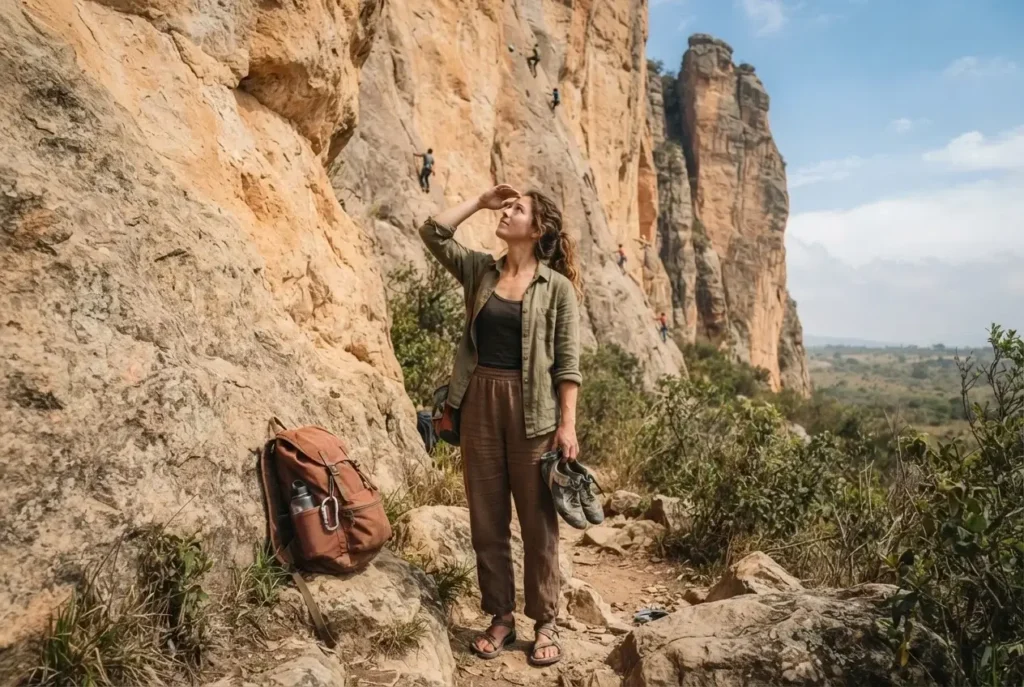
Accommodation in the village ranges from camping and glamping to budget guesthouses, and you can rent gear locally. For the solo traveler worried about arriving without a partner, weekends are especially busy, and finding someone to share a route with is rarely difficult if you show up with a friendly attitude and your own shoes.
Skill level: Beginner to intermediate. Best season: Year-round, though weekdays are quieter. Nearest city: Bogotá.
What to eat: Grab a bandeja paisa in the village before or after climbing. It’s the kind of meal that fills you up properly for a physical day, rice, beans, ground beef, a fried egg, and plantain all on one plate. Street empanadas from the bus stop are also deeply underrated.
Peru: Huaraz and the Rock Forest at Hatun Machay
Peru is better known for trekking, and that reputation is completely deserved. But the Cordillera Blanca region outside Huaraz is quietly one of the most interesting climbing zones in South America, and it rewards people who take the time to acclimatize properly before looking at the walls.
Huaraz sits at about 3,090 meters above sea level. That alone is worth paying attention to. If you fly into Lima and take a direct overnight bus to Huaraz without a rest day, your first day on the rock will feel significantly harder than your fitness suggests it should. Give yourself two to three days to acclimatize before attempting any serious climbing, drink plenty of water, eat lightly, and be patient. Your body will catch up.
Quechuandes, a Huaraz-based guiding organization with certified mountain guides, offers a rock climbing and bouldering guide covering 23 sites and over 1,000 routes across the region. They also run guided climbing days starting around $43 to $49 USD per person, which is an excellent option if you want local beta, a partner, and safety instruction without renting a car and navigating an unfamiliar road system alone.
The standout location within the Huaraz climbing scene is Hatun Machay, the so-called Rock Forest, about three hours from town.
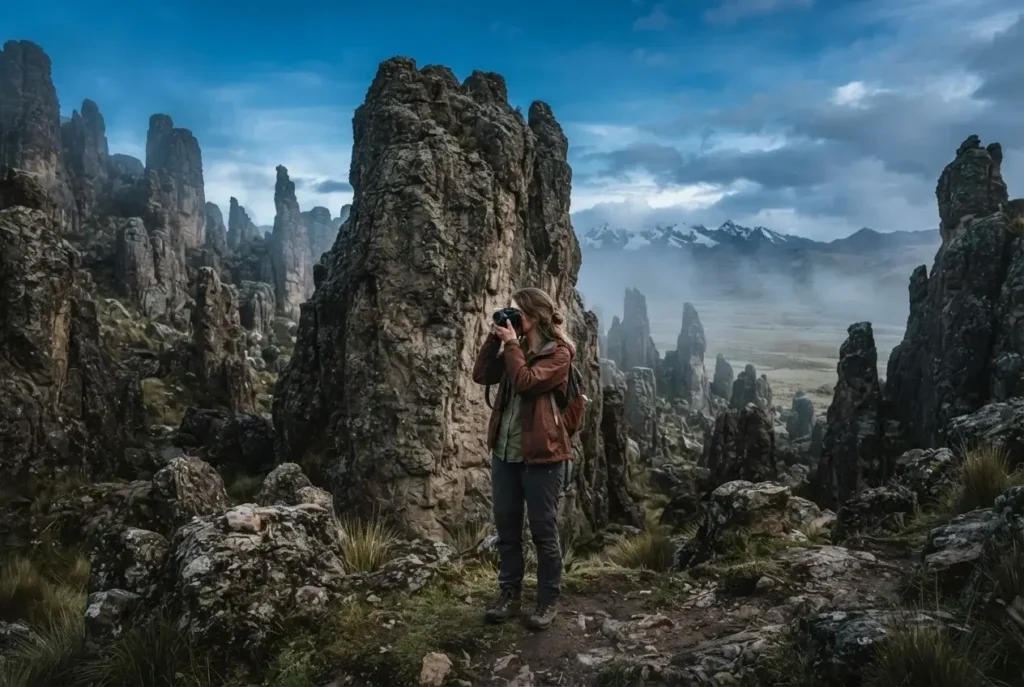
The landscape there is genuinely unlike anything else in South America: volcanic rock formations rising out of a high-altitude plain at around 4,200 meters, with over 300 bolted sport routes ranging from absolute beginner level all the way to challenging overhangs. Climbers who have visited describe it as one of the most visually surreal crags on the continent. Getting there typically requires hiring a private car or joining a guided day trip from Huaraz, and while access and management of the site has gone through some changes in recent years, it remains a highly sought-after destination.
Closer to town, the Recuay sector and the walls near the village of Pitec offer single-pitch sport routes that are reachable without a full-day commitment, which makes them ideal for acclimatization days when you want to climb something real without overexerting yourself.
Skill level: Beginner to advanced. Best season: April through October (dry season). Nearest city: Huaraz (overnight bus from Lima, roughly $15 to $30 USD).
What to eat: Try caldo de gallina, a restorative chicken broth soup that the locals swear by for altitude fatigue. In Huaraz, the central market is where you’ll find it cheapest and most authentic. Fresh trout from the Andean rivers is another staple worth seeking out.
Argentina: Refugio Frey in Bariloche, Patagonian Granite at Its Best
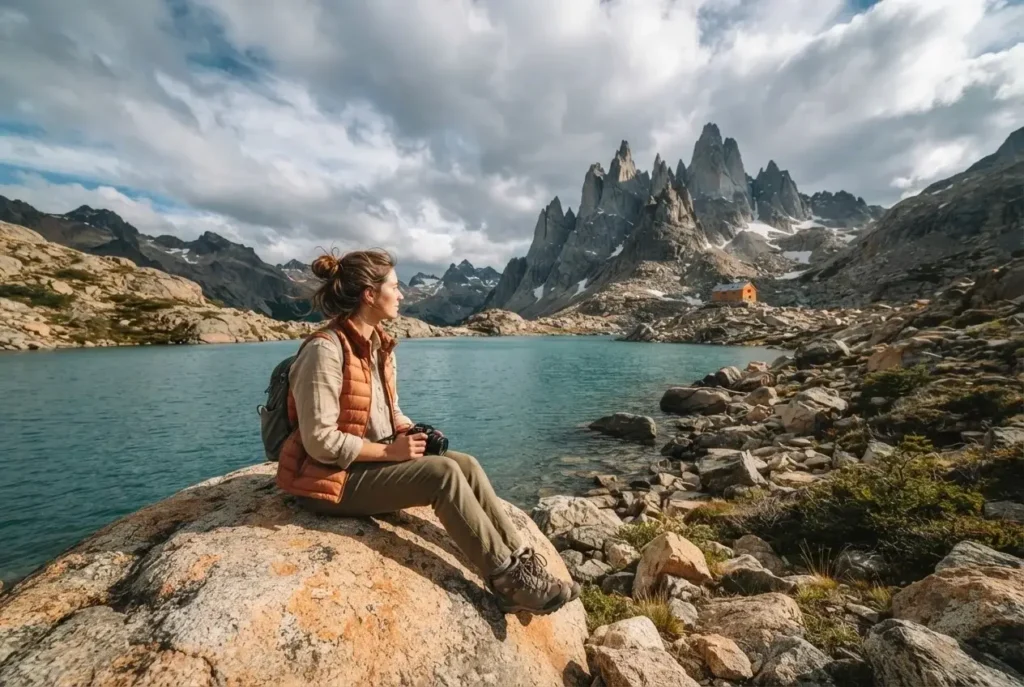
If Suesca is the entry point and Huaraz is the cultural deep-dive, Refugio Frey is the place that makes serious climbers come back to South America year after year. Located inside Nahuel Huapi National Park, a three-to-five-hour hike from the Cerro Catedral trailhead just outside Bariloche, Frey offers over 500 routes on some of the best orange granite you will find anywhere in the world.
The range of climbing here is genuinely remarkable. Beginners can find bolted single-pitch routes that feel manageable and safe. Intermediate climbers can work through multi-pitch classics at the 5.9 to 5.10 level. Advanced climbers who are comfortable on trad gear can spend weeks working the granite spires around Laguna Toncek without running out of objectives. What you need to know before you go is that Frey has a reputation for being slightly sandbagged, meaning routes tend to climb at the harder end of their stated grade, and many sport routes have longer runouts than North American or European climbers might expect.
If you are planning a trip to Frey, this is essential reading before you go.
The climbing season runs from November through April, with December through March offering the warmest conditions and longest days. Patagonian weather is famously unpredictable even in peak summer, so flexibility matters more here than anywhere else on this list. Having one bad weather day out of five is not unusual. Having two or three excellent days in a row after a rough start is also normal. Build that buffer into your itinerary.
Getting to the trailhead is easy: take city bus number 55 marked “Cerro Catedral” from downtown Bariloche to the last stop. The trail to Refugio Frey is well-marked from there. Camping at the refuge is free, but a reservation is required and can only be booked up to seven days in advance due to capacity limits. Beds in the hut cost more but include access to the kitchen and the famously good homemade pizza the hut keepers make each evening.
For gear, the new Rolando Garibotti guidebook published in late 2024 covers over 600 routes with photo topos and is available from outdoor shops in downtown Bariloche. Most visiting climbers bring their own gear, as rental options near the crag are limited. A standard trad rack from 0.3 to 3 with doubles on the mid-sizes covers the majority of classics.
Skill level: Intermediate to advanced (beginners can find single-pitch options but the area rewards climbers with multi-pitch experience). Best season: December to March. Nearest city: Bariloche.
What to eat: The lamb stew served at the Refugio on cold evenings is exactly what your body needs after a long day on the wall. In Bariloche before or after your hike, the craft beer scene is genuinely excellent and the chocolate shops are everywhere because the region has a strong Swiss-German heritage.
Chile: Two Very Different Experiences
Chile gives you two completely distinct climbing experiences depending on how much time you have and how deep you want to go.
Cajón del Maipo (near Santiago)
Cajón del Maipo is the climbing area that makes Santiago residents very smug. A 30 to 40 minute drive from the city center, this canyon carved by volcanic activity offers over 300 routes on compact, high-friction volcanic rock with a diversity of features that includes slabs, overhangs, crack systems, and tunnels. It’s legitimately accessible on a day trip from Santiago, making it one of the few major climbing areas on this entire list that you can reach, climb at, and return from within a single day.
Andes to Pacific, a locally certified guiding company based in Santiago, offers a detailed overview of the Cajón del Maipo climbing area along with guided days, trad courses, and multi-pitch instruction for all experience levels. If you want a taste of Chilean granite without the full expedition feel of Cochamó, this is your entry point.
Cochamó Valley (Patagonia)
Cochamó is for the climbers who are willing to earn it. The approach into the valley requires a three-to-four-hour hike with a full pack, and once you’re there, the walls are enormous, the weather is as unpredictable as anywhere in Patagonia, and the multi-pitch routes on granite towers reward patience and technical trad skills. From what climbers consistently report after visiting, Cochamó feels like Yosemite before the crowds arrived, big granite domes, virgin walls, and the kind of silence that reminds you why you travel this far in the first place.
The minimum practical stay is one week, and experienced climbers often budget two or three weeks to account for weather windows and fully explore the valley’s potential. Gear rental in the valley is not a realistic option, so bring everything you need from home or from gear shops in Puerto Montt before heading in.
Skill level: Cajón del Maipo is beginner to intermediate. Cochamó is intermediate to advanced. Best season for both: November to March. Nearest cities: Santiago (Cajón del Maipo), Puerto Montt (Cochamó).
What to eat: In Santiago before heading out, eat a completo, Chile’s legendary hot dog loaded with avocado, tomatoes, and mayonnaise. It sounds chaotic and it is and it’s wonderful. In the south, freshly caught salmon prepared simply with garlic and lemon is the standard for a reason.
Mexico and Central America: El Potrero Chico and Beyond
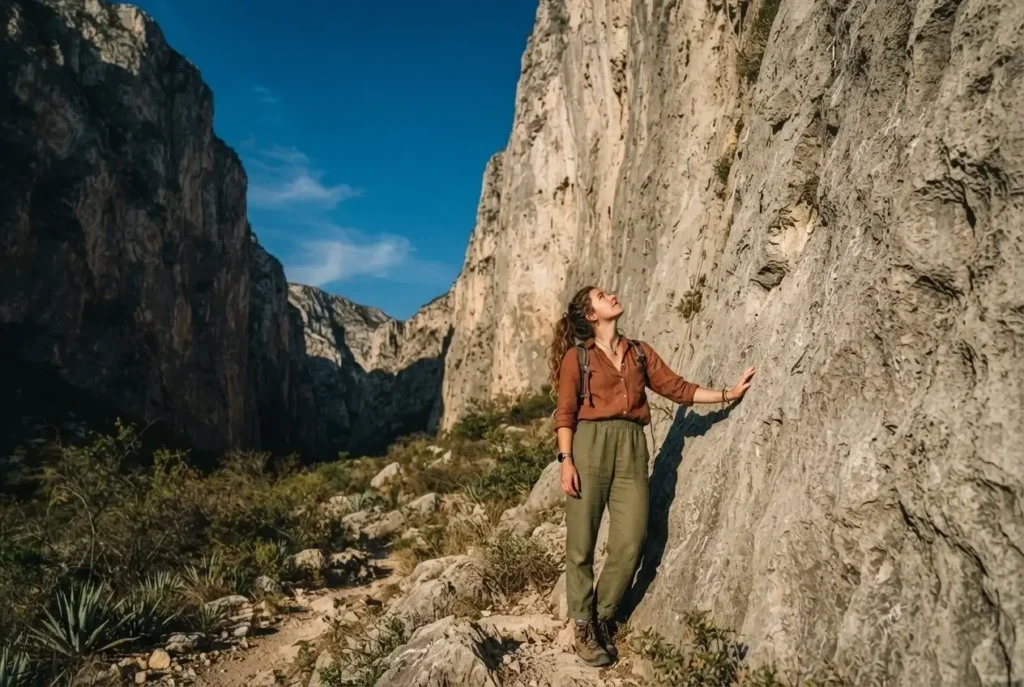
Most people separate Mexico from the rest of Latin America in their mental geography, but for climbers, El Potrero Chico in the state of Nuevo León belongs on any serious list of the region’s best destinations. Located near the town of Hidalgo, about 45 minutes from Monterrey, El Potrero Chico is frequently described as the world’s largest big wall sport climbing destination, with over 600 routes on towering limestone walls that reach hundreds of meters.
The Rakkup digital guidebook platform lists El Potrero Chico’s full route database with detailed topos and grade breakdowns for everything from single-pitch sport routes to 800-meter multi-pitch objectives. The best climbing season runs from mid-December through mid-March, when temperatures in the canyon are comfortable for full climbing days. The local accommodation scene around El Potrero Chico has developed significantly, with several climbing-specific hostels and camps operating within walking distance of the main walls.
Solo travelers do particularly well here because the community of visiting climbers is active and sociable. Partner finding is straightforward, especially during peak season.
Spanish-language skills are helpful but not essential in the immediate area.
Moving further south into Central America, the options thin out but are still worth knowing about. TheCrag’s Central America database currently lists 1,776 documented routes across the region, with Costa Rica and Guatemala representing the most developed climbing scenes. Costa Rica’s climbing community is small but growing, with areas near San José offering accessible sport climbing in the lower grades. Guatemala’s volcanic landscape around Antigua and Lake Atitlán has some bouldering and sport climbing potential, though the infrastructure for visiting climbers remains limited compared to South America.
Skill level: El Potrero Chico covers all levels. Central America options are mostly beginner to intermediate. Best season for El Potrero Chico: December to March. Nearest city: Monterrey, Mexico (El Potrero Chico).
What to eat: Near El Potrero Chico, the local tacos de barbacoa available from early morning are essential. A full climbing breakfast for under $5 USD is a realistic expectation, and it sets the tone for the kind of value the area offers across the board.
What to Know Before You Go: The Practical Stuff
Finding partners as a solo traveler
This is the question I hear most often from readers planning a first climbing trip to South America, and the honest answer is that it’s easier than you think. Mountain Project forums and theCrag’s partner-finding features are active, particularly for popular destinations like Frey and Suesca.
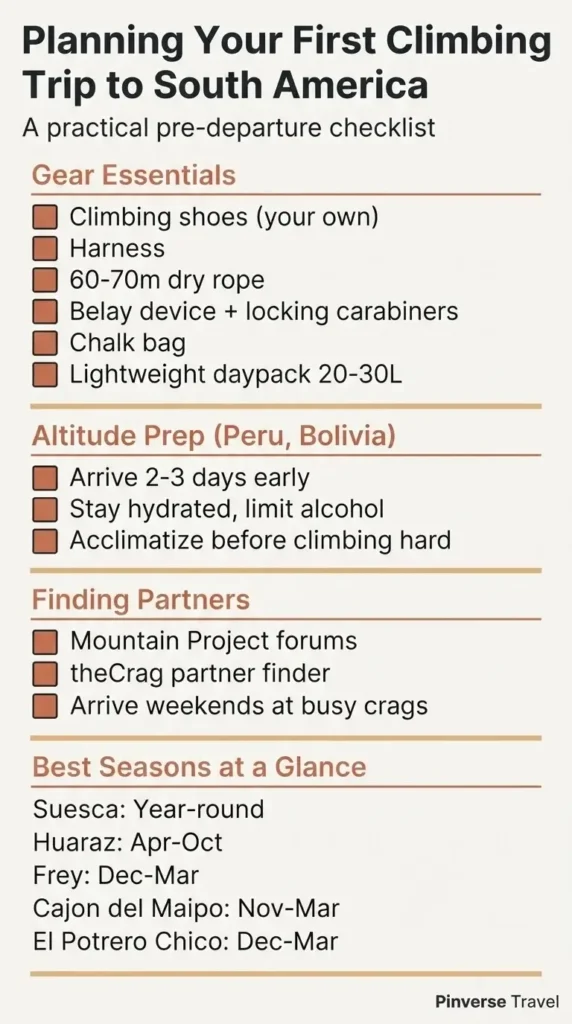
Climbing-specific hostels near major crags often have notice boards or WhatsApp groups for connecting visiting climbers. Showing up on a weekend at a busy crag like Suesca or El Potrero Chico and asking around will, in most cases, connect you with someone within a few hours.
For people who aren’t comfortable leading yet or who want structured instruction, hiring a certified local guide for the first two to three days is one of the smartest investments you can make. You learn the local style, get safely introduced to the grades, and almost always walk away with contacts who can climb with you for the rest of your trip.
Gear: bring it or rent it?
For sport climbing, rental options exist near most major crags on this list, particularly in Suesca, Huaraz, and near El Potrero Chico. Quality varies. For anything involving trad climbing or longer multi-pitch objectives, bring your own gear or source it from a reputable guiding company. Trying to assemble a trad rack from rental gear at the base of a Cochamó approach is not a plan that ends well.
A 60 to 70 meter single dry rope covers the majority of sport and multi-pitch objectives on this list. If you’re heading to Frey specifically, a 70 meter rope is worth the extra weight. Bring your own harness and shoes regardless of destination as rental harnesses at remote crags are often old and poorly maintained.
Altitude
For Peru, Bolivia, and Ecuador, altitude acclimatization is not optional. Huaraz sits above 3,000 meters and Hatun Machay is closer to 4,200 meters. Spend at least two to three nights in a high-altitude town before attempting anything physically demanding. Stay hydrated, avoid alcohol for the first 48 hours, and listen to your body. The climbing will be there when you’re ready for it.
Language
Spanish is useful across all of Latin America and genuinely transforms the travel experience. You don’t need fluency. A functional grasp of basic phrases, numbers, directions, and the ability to ask questions and understand rough answers will get you a long way. For climbing specifically, the vocabulary is relatively small: many route names, grade systems, and equipment terms are shared or easily guessed. That said, in smaller mountain towns like Huaraz and Suesca, English is less common than in major cities, and even basic Spanish makes logistics significantly smoother.
Choosing the Right Destination for You
Here’s the honest summary: if you want a beginner-friendly first experience with great infrastructure and no remote logistics, start with Suesca in Colombia.
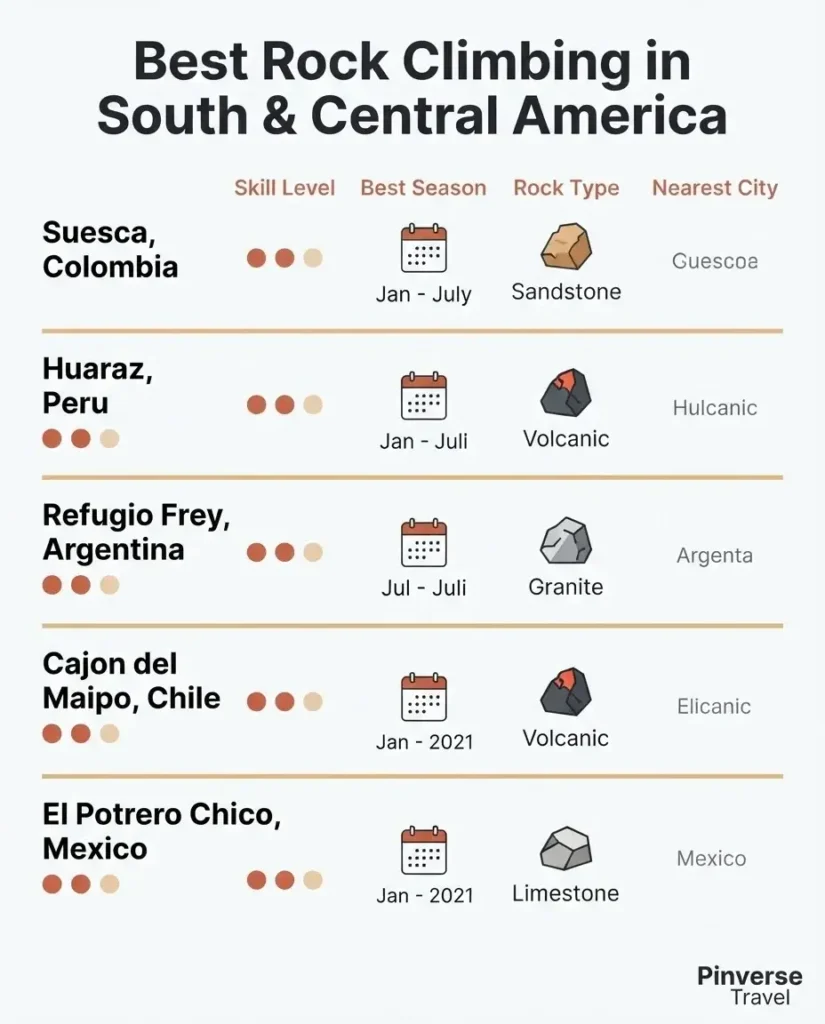
If you want a genuine high-altitude adventure with diverse options and strong local guiding resources, aim for Huaraz in Peru. If granite trad climbing and multi-pitch objectives are your goal, Refugio Frey in Argentina is world-class. If you’re based in or passing through Santiago, Cajón del Maipo delivers real climbing on a day-trip timeline. And if big-wall sport climbing on limestone in a social, community-driven environment appeals to you, El Potrero Chico in Mexico is one of the great crags on the planet.
None of these destinations require you to be an expert before you go. All of them will make you a stronger, more confident climber by the time you leave. That’s the thing about places that challenge you. They give something back.
Start with the destination that scares you least. Then go back for the ones that scare you more.