I used to think I understood North American history. Growing up in New York, working as a certified sightseeing guide, I spent years pointing tourists toward the same landmarks: the Brooklyn Bridge, Ellis Island, the Statue of Liberty. These are genuinely significant places. But after years of guiding and then years of traveling on my own terms, I started asking a different question: what’s the history that doesn’t already have a gift shop and a two-hour line?
The answer turned out to be extraordinary. North America has historical sites that rival anything you’d find in Europe or Asia in terms of scale, age, and cultural significance, and most travelers completely walk past them on the way to something more famous. That’s not a criticism of anyone. It’s just how tourism works. A few big names capture the attention, and everything else stays quiet.
This article is about the sites that stayed quiet, and why they deserve a detour, sometimes even a whole trip built around them.
Why These Sites Get Overlooked
It’s not a mystery. Archaeology and pre-colonial history don’t tend to get the same marketing budget as Independence Hall. Many of these sites require a drive on a dirt road, or a flight to a remote part of the country, or simply a willingness to sit with a place that doesn’t explain itself in a three-minute audio tour. Some are managed by Indigenous communities and require more preparation and cultural awareness than a typical tourist stop.
But here’s what solo travelers consistently report after visiting places like these: they leave changed in a way that the Eiffel Tower or the Grand Canyon simply didn’t produce. There’s something about standing somewhere genuinely ancient, somewhere most visitors skip, that makes the experience feel personal and earned.
If you’re anything like me when I started planning trips around history rather than Instagram feeds, you’ll find this list a little overwhelming in the best possible way. Start with one. The rest will follow.
Cahokia Mounds, Illinois: The City That Shouldn’t Be Forgotten
Just across the Mississippi River from St. Louis, in a quiet corner of southern Illinois, sits what was once the largest city in pre-Columbian North America. At its peak around 1100 CE, Cahokia had a population estimated between 10,000 and 20,000 people, making it larger than London at the time. Today, most people drive right past it on the interstate, heading into downtown St. Louis.
Monks Mound, the central earthwork at Cahokia, covers more ground at its base than the Great Pyramid of Giza. It rises about 100 feet high. It was built entirely by hand, without metal tools, wheels, or draft animals. The people who built it left no written language, which means archaeologists are still piecing together who they were, why they built it, and where they went after the city was abandoned around 1350 CE. That mystery is part of what makes the site so compelling.
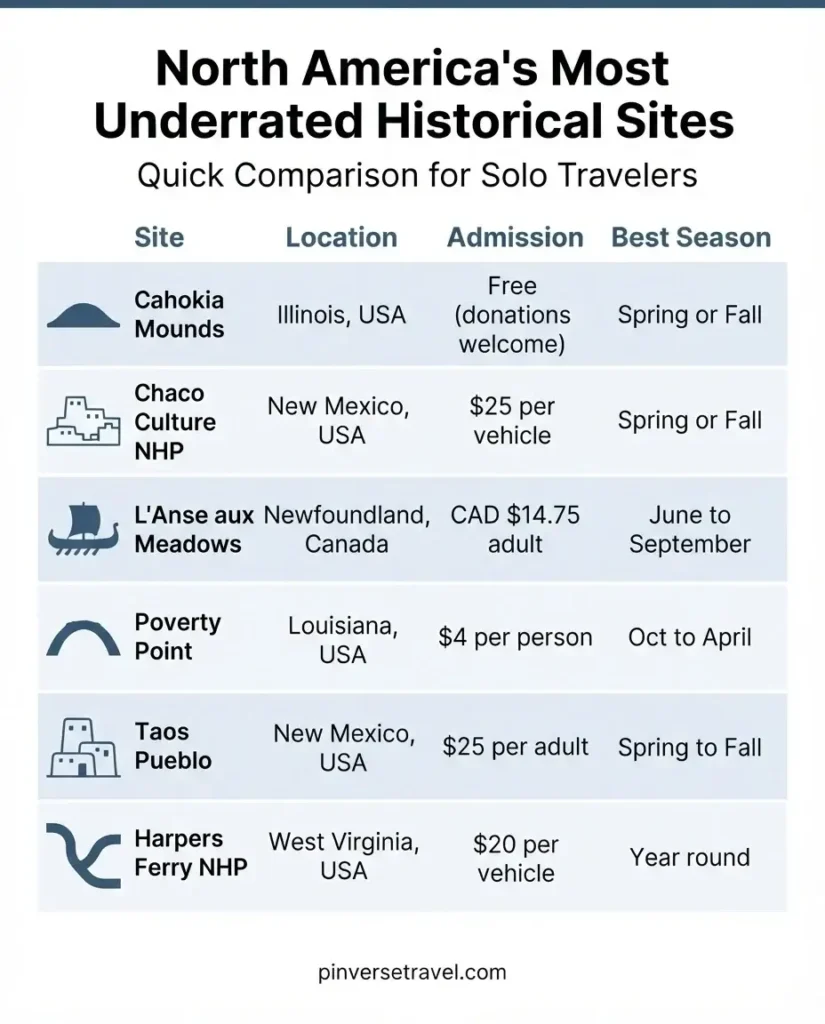
From what solo travelers and archaeologists consistently describe, visiting Cahokia feels nothing like a typical history museum. The scale of the landscape is the exhibit. You’re walking across a city. The interpretive center lobby is currently open Wednesday through Sunday, 9am to 3pm, while full exhibit renovations are underway, but the grounds themselves are open daily from sunrise to sunset. You can plan your trip and check current visitor details directly on the Cahokia Mounds official visit page, which also confirms there’s no admission fee, only a suggested donation of $7 for adults.
Cahokia holds UNESCO World Heritage status, placing it in the same category of global significance as Machu Picchu and Stonehenge. The UNESCO World Heritage listing for Cahokia Mounds describes it as the largest and most complex pre-Columbian archaeological site north of Mexico. That designation alone should make it a major draw. Instead, it gets perhaps a fraction of the visitors those other UNESCO sites receive annually.
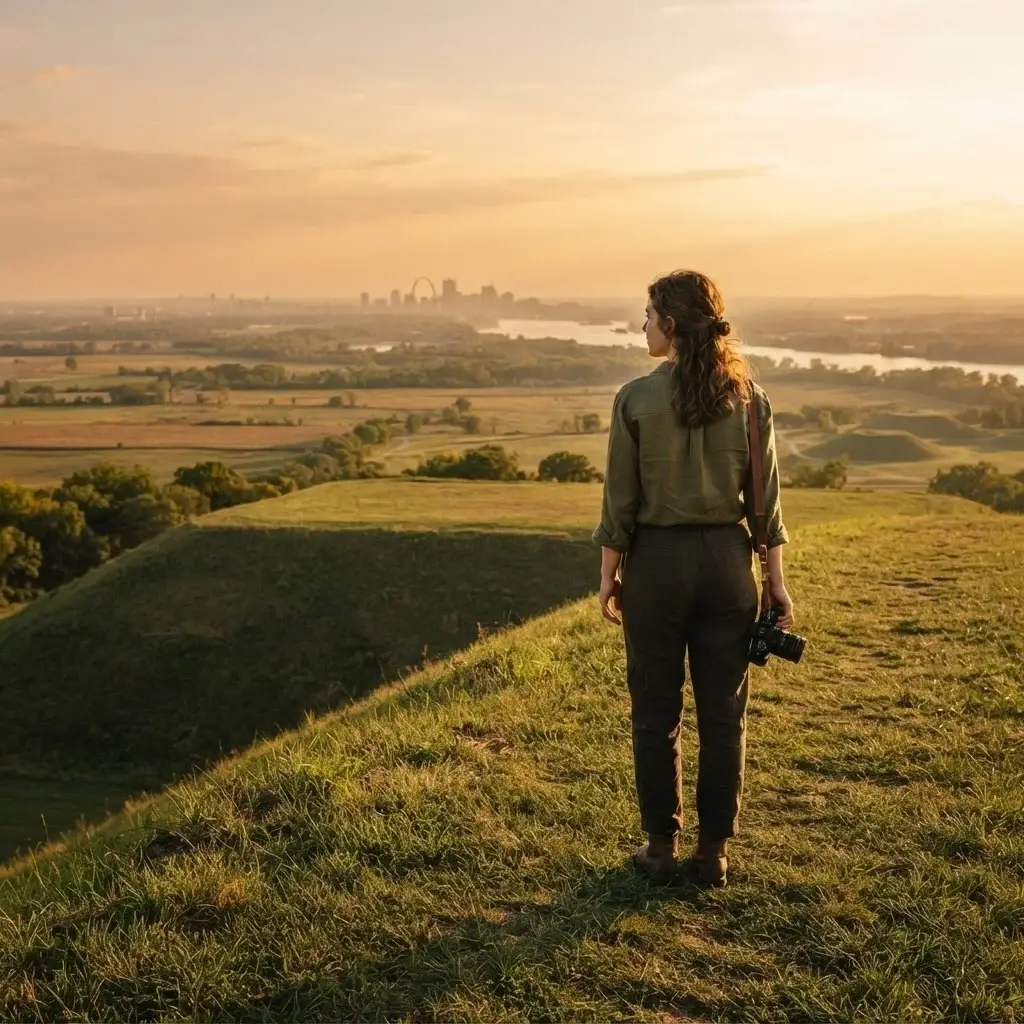
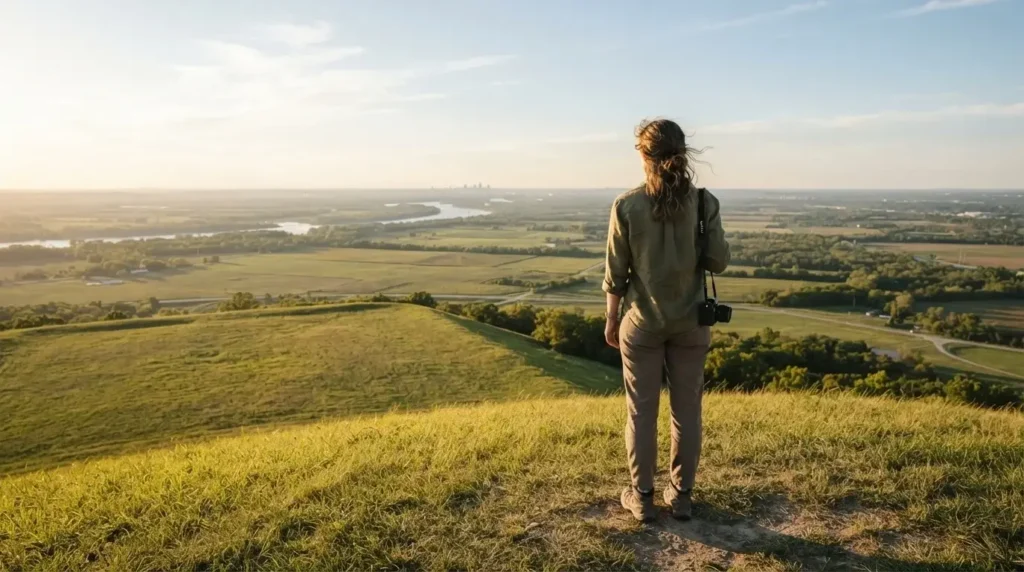
If you’re based near St. Louis or driving through the Midwest, this is a half-day trip that will genuinely stay with you. Pack lunch, wear comfortable shoes, and give yourself time to walk the full grounds rather than just the central mound. The view from the top of Monks Mound on a clear day, looking back across the floodplain toward the city skyline, is the kind of image that doesn’t make it onto travel posters but probably should.
What to eat nearby: Collinsville itself is a small town, but St. Louis is just 15 minutes away and has an excellent food scene. If you want something close and regional, look for toasted ravioli (a St. Louis specialty you won’t find anywhere else quite the same way) and local custard at any of the classic spots along the Illinois side of the river.
Chaco Culture National Historical Park, New Mexico: The Roads Less Taken Led Here
Chaco is one of those sites that experienced travelers recommend in near-reverent tones. It’s also one that sees a fraction of the visitors of its more famous neighbor, Mesa Verde in Colorado. The difference between the two is part of what makes Chaco so special.
Mesa Verde has paved roads, shuttle buses, visitor amenities, and crowds. Chaco requires you to drive 13 to 21 miles on an unpaved washboard road just to reach the park entrance. There’s no gas, no food service, no cell signal, and limited shade. The National Park Service is clear about this: come prepared or don’t come. And yet, every traveler who makes the effort describes arriving and feeling something click into place.
Chaco was the cultural and ceremonial center of the Ancestral Puebloan people between roughly 850 and 1150 CE. The great houses here, multi-story stone structures built with extraordinary precision, are aligned with solar and lunar cycles in ways that scientists are still studying. Pueblo Bonito alone contains around 600 rooms and was the largest building in North America for 600 years after its construction. The astronomical intentionality built into the architecture is something you feel more than you read about.
The vehicle entrance fee is $25 for 7 days, and the park is cashless, so have your card ready. Camping at Gallo Campground runs $20 per night per site, and if you can manage even one night, I’d strongly encourage it. Solo travelers who camp at Chaco consistently describe the night sky as among the best they’ve ever seen, no light pollution, no noise, genuinely one of the darkest sky locations in the Southwest. You can get full planning details and current road conditions from the Chaco Culture National Historical Park official NPS page.
The 4-mile Pueblo Alto trail is the one I’d point any solo traveler toward first. It connects several outlying great houses and gives you a view of Pueblo Bonito from above, which completely reframes the scale of what you’re looking at from ground level.
What to eat nearby: Nageezi, the closest town, has very limited services. Stock up in Farmington, New Mexico (about an hour away) before heading in. Green chile, a New Mexico staple, is worth seeking out at any diner in Farmington before or after your visit.
L’Anse aux Meadows, Newfoundland: Where Europe First Landed in the Americas
Before Columbus. Before the Mayflower. Before any of the stories most of us learned in school, Norse explorers from Greenland built a settlement on the tip of Newfoundland’s Northern Peninsula around 1000 CE. L’Anse aux Meadows is the only confirmed Norse site in all of North America, and it is one of the most quietly extraordinary places on the continent.
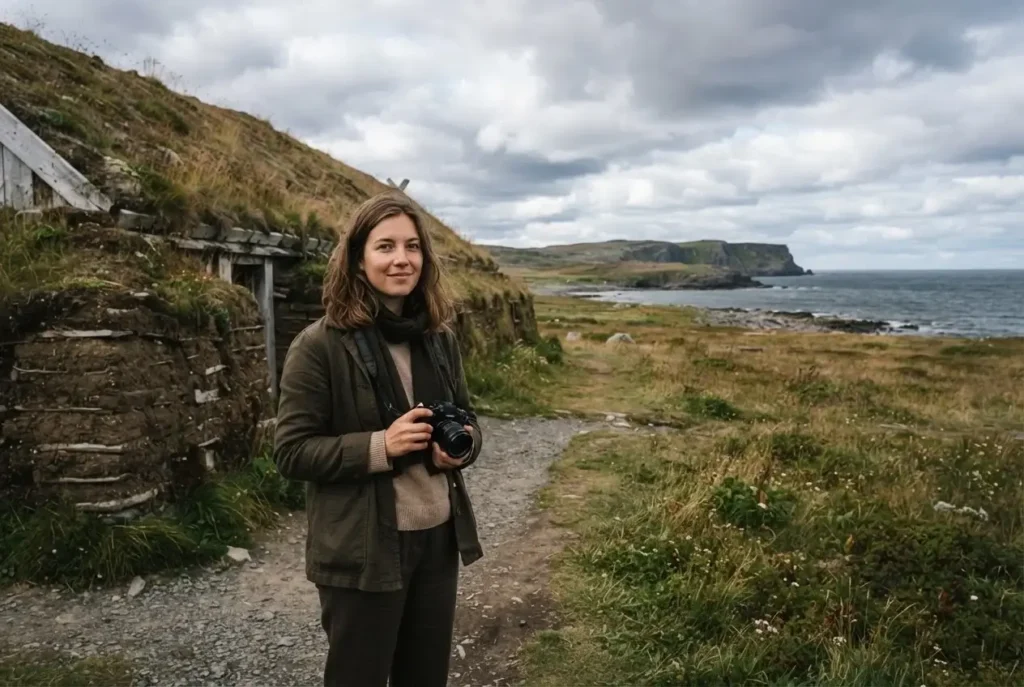
The site was discovered in 1960 by Norwegian explorer Helge Ingstad and archaeologist Anne Stine Ingstad, who were looking for the Vinland described in the Norse sagas. What they found changed the historical record permanently. The remains of eight sod buildings, Norse iron boat rivets, a bronze cloak pin, and a spindle whorl all confirmed that people from Scandinavia had been here five centuries before European contact was previously documented. The site became a UNESCO World Heritage Site in 1978, one of the first ever designated.
Visiting L’Anse aux Meadows means driving the Viking Trail along Newfoundland’s Northern Peninsula, one of the most dramatically beautiful coastal drives in all of Canada. The park is open from June 1 through early October, with daily hours from 9am to 5pm. The adult admission fee is CAD $14.75 per day, and youth visit free. Parks Canada also offers a Discovery Pass for frequent visitors. All current fees and seasonal information can be found on the L’Anse aux Meadows National Historic Site Parks Canada page.
From what solo travelers consistently describe, the guided tour (about an hour, included with admission) is genuinely worth taking. The Parks Canada interpreters bring the Norse settlement to life in ways that context from a sign simply can’t. There are also reconstructed sod buildings where costumed interpreters demonstrate Viking-era crafts, which sounds gimmicky but actually works beautifully in this setting.
The remoteness of the Northern Peninsula is both the challenge and the reward. You’ll share this place with very few people. The light there in summer, low and golden across the tundra, is the kind of thing that stays with you.
What to eat nearby: The nearby town of St. Anthony has a few good local options. Fresh local crab and cod are the things to order, and Newfoundland hospitality is genuinely warm. Ask locally for recommendations rather than relying on chain restaurants.
Poverty Point, Louisiana: The Ancient City Nobody Taught You About
Here is a site that is, by any objective measure, one of the most significant archaeological discoveries in North American history. Poverty Point is a complex of earthen mounds and ridges in northeastern Louisiana, built by hand more than 3,400 years ago, roughly 1700 BCE. That makes it older than most of the famous sites in the Mediterranean world. It received UNESCO World Heritage designation in 2014. And almost no one visits.
The site consists of six concentric C-shaped ridges, six earthen mounds, and what appears to be a sophisticated trading network that connected peoples from across eastern North America. The scale of the construction, all done without metal tools, domesticated animals, or formal agriculture, challenges the assumptions many people carry about early Indigenous societies in this region. Poverty Point was not a small camp. It was a hub.
Admission is $4 per person, free for seniors 62 and older and for children. The site is open 9am to 5pm daily, closed on Thanksgiving, Christmas, and New Year’s Day. The Poverty Point World Heritage Site official page has full visitor information and details on guided tours and special programs.
One of the most striking aspects of visiting Poverty Point is the tram tour that takes you around the full ridge complex. From ground level, the ridges are hard to read. From the raised perspective of the tram (or from the earthworks themselves when you walk up), the intentional geometric pattern of the construction becomes visible and genuinely astonishing. This is a site that reveals itself slowly, which is part of what makes it feel so rewarding.
Northeast Louisiana doesn’t get a lot of visitor traffic in general, which means the few restaurants and diners in Epps and Delhi nearby are refreshingly unpretentious. Order the red beans and rice, the catfish, or anything with Cajun seasoning. You’re in Louisiana. Let the food be part of the experience.
Taos Pueblo, New Mexico: Living History That Demands Respect
Most historical sites in North America present the past in the past tense. Taos Pueblo is different. People have lived continuously in this multi-story adobe community for over 1,000 years, making it one of the oldest continuously inhabited settlements in North America. It is still a living community today, home to around 150 full-time residents, and it welcomes visitors on its own terms.
That distinction matters, and it’s something worth sitting with before you go.
Taos Pueblo is not a museum. It is someone’s home and community. Visiting requires following specific rules: certain areas are restricted, photography is strictly for personal use only, and commercial photography requires advance written approval. The community closes to visitors for several weeks each year for religious ceremonies. Before planning your trip, read the full visitor guidelines on the Taos Pueblo official visiting page.
Adult admission is $25, and the pueblo is generally open Thursday through Sunday, 9am to 4pm, though unexpected closures do occur for religious activities. Those closures are not inconveniences; they’re a reminder that you’re a guest in a place that has its own priorities and its own calendar.
The north house, known as Hlauuma, and the south house, Hlaukwima, are the two main residential structures.
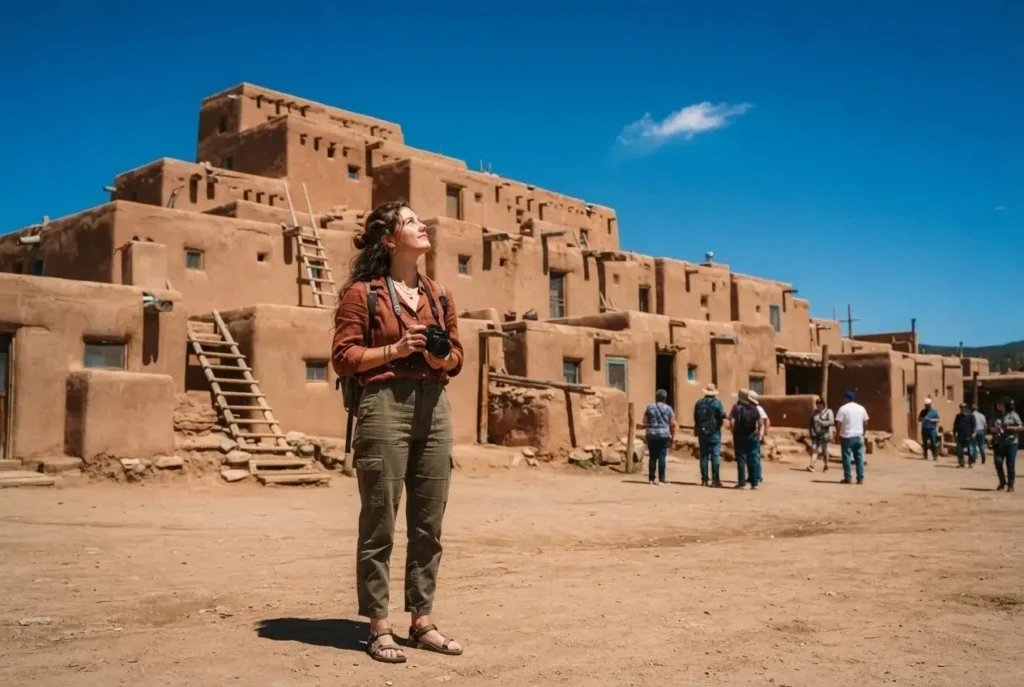
Both rise five stories high and are among the most photographed adobe structures in North America, though somehow they still don’t get the mainstream recognition they deserve. Guided tours, led by Pueblo community members, are the best way to understand what you’re looking at and why it matters.
What to eat: The town of Taos, about three miles from the pueblo, has an excellent food scene. Seek out green and red chile in equal measure (many menus offer “Christmas style,” which means both). The local tradition of combining Native, Spanish colonial, and Southwest ranch cuisines in one meal is something you really can’t replicate anywhere else.
Harpers Ferry, West Virginia: Where American History Gets Complicated
If you want to understand the American story in all its contradiction and complexity, Harpers Ferry is one of the most layered places to do it. Situated at the confluence of the Shenandoah and Potomac Rivers, this small town was the site of John Brown’s 1859 raid on a federal armory, one of the events that accelerated the country toward Civil War. It changed hands between Union and Confederate forces more than eight times during the war itself. Before all of that, it was a key industrial and transportation hub, with iron works, weapons manufacturing, and one of the early armories of the young United States.
What makes Harpers Ferry underrated isn’t that it’s unknown. It’s that it’s dramatically undervisited relative to how much it has to offer. The national historical park includes a restored historic district, 20 miles of hiking trails, multiple museums, and living history demonstrations. For solo travelers, the town is navigable on foot, the trails connect to the Appalachian Trail, and the views from the heights above the river confluence are genuinely stunning.
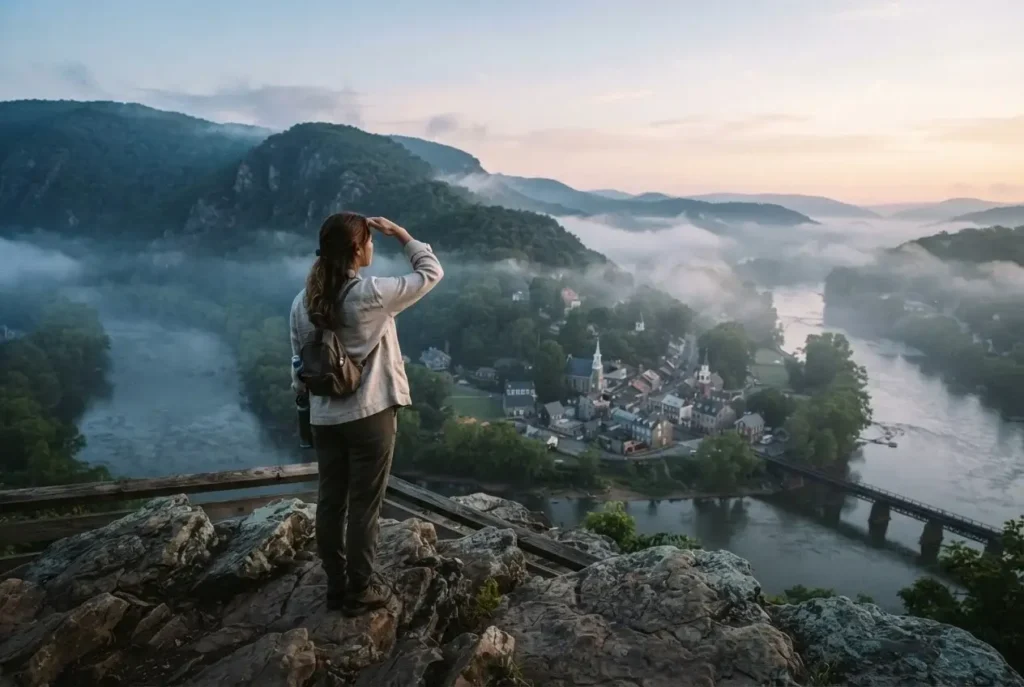
Vehicle admission is $20 and covers three consecutive days. The America the Beautiful Pass is accepted. Full details on fees and what’s included are on the Harpers Ferry National Historical Park NPS page. The town itself is small and walkable, and unlike many national park gateway towns, it hasn’t been entirely taken over by tourist shops. There’s still a real character to the place.
The history here is uncomfortable in the best way. John Brown was executed for what he did at Harpers Ferry. He was also, arguably, one of the most consequential figures in the American abolitionist movement. Standing in the stone fort where he made his last stand, reading the words he spoke at his trial, is the kind of experience that stays with you longer than any battlefield monument.
What to eat: The town has a handful of good local restaurants. A meal at one of the small cafes in the lower town, with a view of the rivers, is a simple pleasure that rounds out a full day of walking history.
A Few Things Worth Knowing Before You Go
Several of these sites, especially Chaco, Poverty Point, and Cahokia, are in areas with limited cell service and minimal nearby services. That’s not a warning to avoid them. It’s a reminder to prepare the way you would for any serious travel: download offline maps, bring water and snacks, and tell someone where you’re going if you’re heading out solo.
For Taos Pueblo specifically, I’d encourage you to approach the visit with the same cultural awareness and humility you’d bring to any community that’s generously opened its doors to outsiders. The rules around photography and restricted areas exist for good reasons. Following them isn’t a burden; it’s basic respect, and it makes for a better visit.
If you’re planning a multi-stop history road trip through the Southwest, Chaco and Taos Pueblo pair naturally with stops in Santa Fe, one of the oldest continuously occupied European settlements in the US, for a genuinely rich few days. For the Midwest, Cahokia and the St. Louis area offer enough to fill a long weekend without feeling rushed.
The Point Isn’t Just the History
I’ve spent a lot of time in this travel life chasing the well-known things. The famous cathedrals of Europe during my solo backpacking trip. The great wall sections in China during my hike. The temples and coastlines of Thailand during my teaching years. And I love those experiences. I’m not here to tell you the famous things aren’t worth seeing.
But there is something different about finding your way to a place that hasn’t been pre-packaged for you. Standing on top of Monks Mound and realizing you’re on the largest earthwork in North America. Reading about a Norse spindle whorl found in Newfoundland that rewrote the history books. These moments have a different quality. They feel earned. They ask something of you, and they give something back.
The historical sites in North America that nobody talks about aren’t waiting for you to discover them. They’ve been there for centuries. But if you’re curious enough to go, they will absolutely reward the trip.