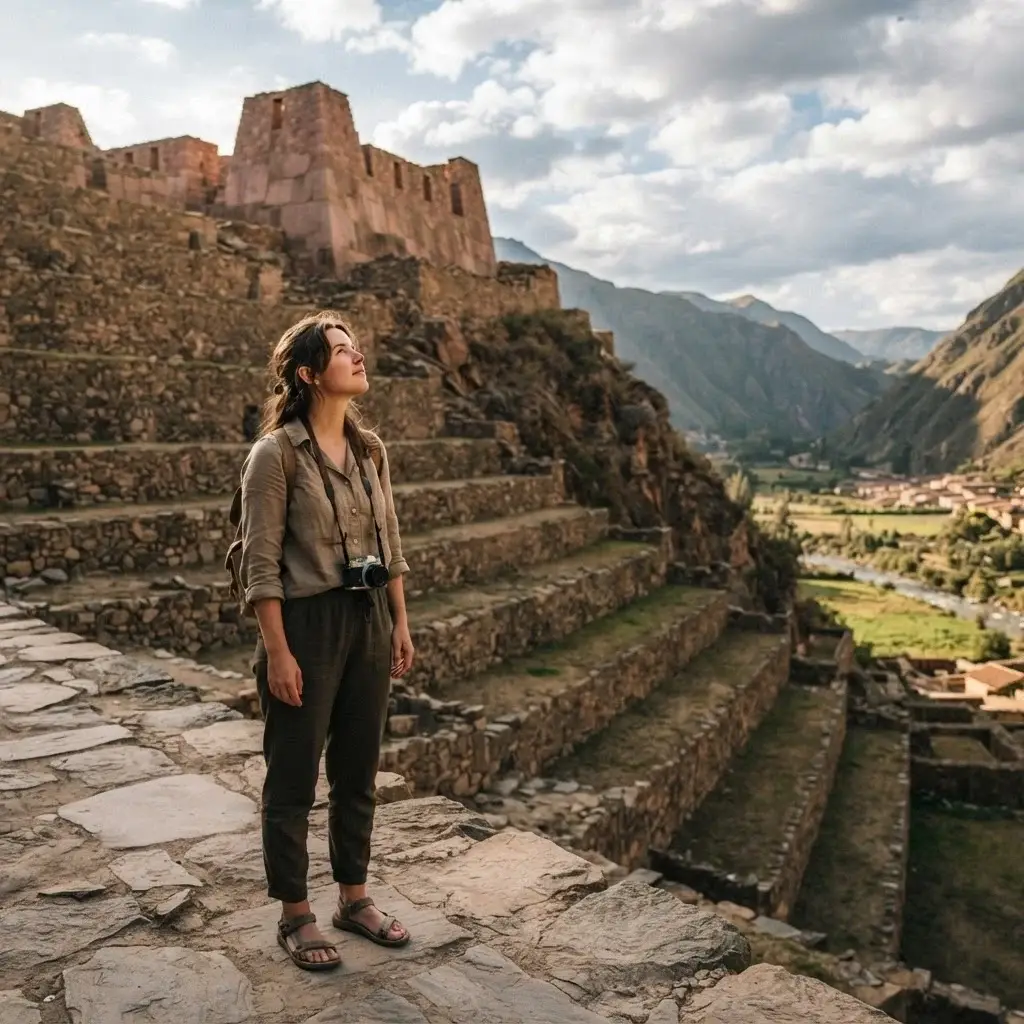
There is a moment that happens to almost every traveler who starts digging into Peru. You are reading about Machu Picchu, marveling at the photos, maybe even pricing out train tickets, and then a small but persistent thought appears: is this really all there is?
It is not. Not even close.
Peru has one of the densest concentrations of Inca and pre-Inca archaeological sites on the planet. Machu Picchu is extraordinary, and I am not here to talk you out of going. But if you are the kind of traveler who wants to stand somewhere ancient and actually feel it, rather than shuffle through it in a guided crowd of 500 people, the sites below deserve your serious attention. Some of them are just hours from Cusco. One requires a grueling multi-day trek. And at least one sits so far off the typical tourist circuit that most people who visit Peru never even hear its name.
Here is what solo travelers consistently report: the ruins beyond Machu Picchu are often the memories they carry longest.
Not because they were easier, but because they had to work for them.
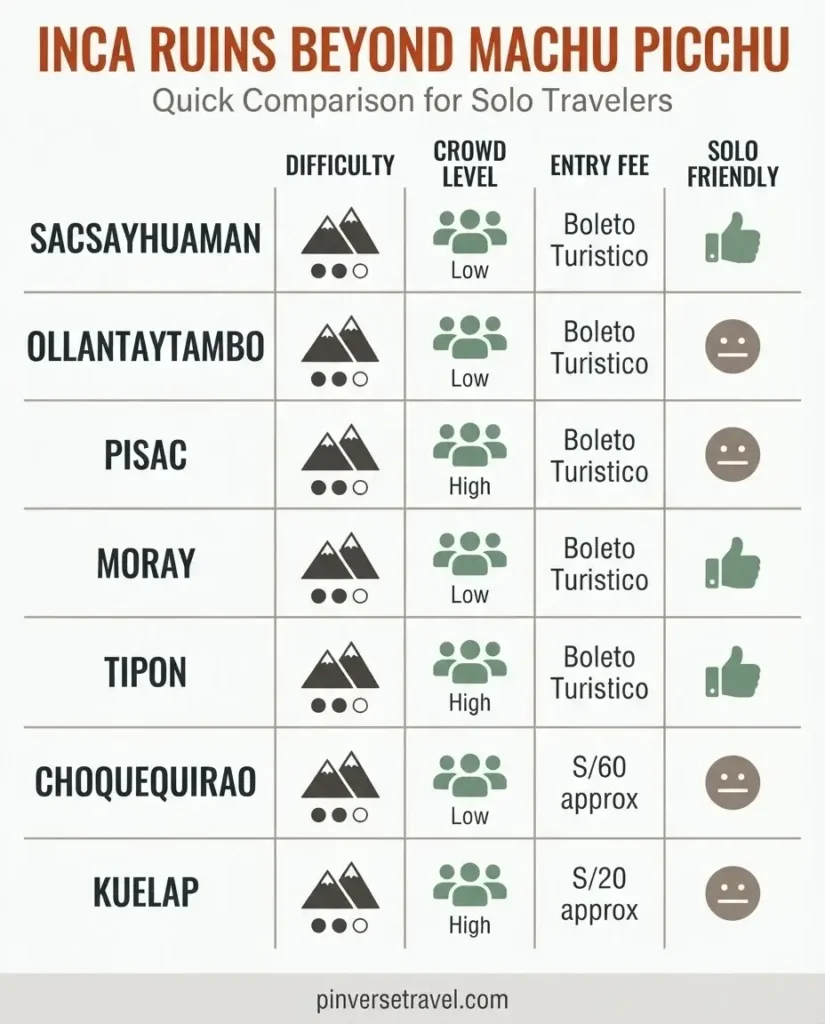
I have organized these by a combination of wow factor, solo traveler accessibility, and honest practicality. Before diving in, one key piece of planning info: many of the Cusco-region sites on this list are covered by the Boleto Turistico del Cusco, the official Cusco tourist ticket that costs S/130 (around $45 USD) for the full version and grants entry to 16 sites over 10 days. If you are visiting multiple sites, buying this upfront will save you real money. Partial one- or two-day circuits run S/70 each.
Sacsayhuaman: The Fortress Above Cusco That Still Defies Explanation
If you are starting your Peru adventure in Cusco, which is almost certainly where you will land before heading anywhere else, Sacsayhuaman is your first big moment. It sits on a hill directly above the city, about a twenty-minute walk uphill from the Plaza de Armas, and what you find there will rearrange your sense of what ancient builders were capable of.
The walls of Sacsayhuaman are made from massive limestone blocks, some weighing over 100 tonnes, fitted together with such precision that a piece of paper cannot slide between them. No mortar. No cranes. Just a civilization that understood engineering at a level archaeologists are still trying to fully explain. The site served as a military fortress, a religious complex, and possibly a ceremonial center for the Inca empire, and it was partially dismantled by the Spanish colonizers, who used its stones to build cathedrals down in the city. What remained, even the ruins they left behind, is jaw-dropping.
Arrive early, before 8am if you can manage it. The light is better, the tour groups have not arrived yet, and you will have the terraces largely to yourself. Wear layers because at 3,700 meters above sea level, mornings in Cusco bite.
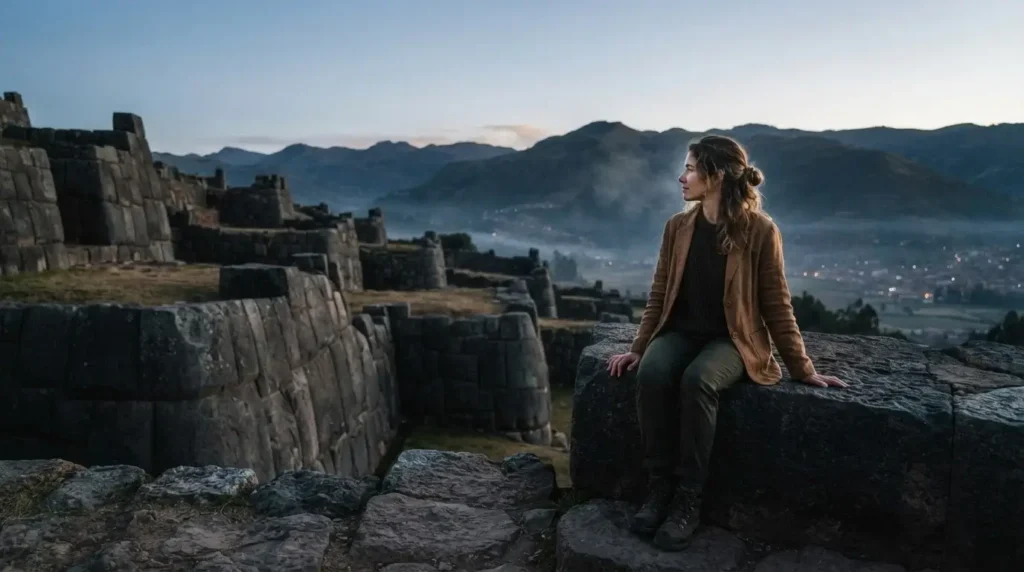
Entry is covered by the Boleto Turistico Circuit I pass, and opening hours run from 7am to 6pm daily.
One practical note: if you have just arrived in Cusco, your body is still adjusting to the altitude. Cusco sits at around 3,400 meters, and Sacsayhuaman is a bit higher. Go slowly, drink water, and do not push yourself on the first day. Altitude sickness is real, and it does not care how fit you are.
Ollantaytambo: The Living Inca Town in the Sacred Valley
About 72 kilometers northwest of Cusco, in the lush Sacred Valley of the Incas, lies Ollantaytambo, and it earns its reputation as the best-preserved Inca town in Peru. Unlike Cusco, which was heavily rebuilt by the Spanish, Ollantaytambo still has Inca streets, Inca irrigation channels running through the town center, and local residents living in buildings with original Inca stone foundations. Walking through the narrow alleyways here feels genuinely different from anywhere else in Peru.
The ruins above the town are equally impressive: a series of massive ceremonial terraces climbing steeply up the hillside, topped by an unfinished temple of the sun whose six enormous pink granite monoliths were hauled from a quarry on the other side of the valley. The quarrying and transport of those stones, across a river and up a mountain, is one of the more head-scratching achievements in Inca history. Archaeologists believe the construction was never completed because of the Spanish conquest, and the abandoned blocks scattered on the hillside below are still there, frozen mid-delivery.
From a solo traveler’s perspective, Ollantaytambo is ideal. The town is walkable, there are good hostels and guesthouses for every budget, and it is the last stop before the train to Aguas Calientes (the gateway town to Machu Picchu), so many travelers pass through without actually pausing to give it the time it deserves. Plan at least a full day here, including an evening walk through the town after the day-trippers leave. The ruins are open daily from 7am to 6pm and are covered by the Boleto Turistico.
For food, the restaurants lining the main plaza do solid set lunches for around S/20-25. Look for quinoa soup, which is warming and hearty at altitude, and local corn varieties you will not find anywhere at home.
Pisac: Ruins Above, Market Below
Pisac sits at the upper end of the Sacred Valley, about 33 kilometers from Cusco, and it gives you two very different experiences depending on which part of the town you focus on. Down in the valley, the Pisac market is one of the most vibrant in the region, best visited on Tuesdays, Thursdays, and Sundays when it is most active. You will find textiles, ceramics, fresh produce, and local vendors who have been doing this for generations.
But the ruins on the ridge above town are the real reason to come. The Pisac archaeological complex spans several ridges and includes residential areas, a ceremonial center, agricultural terraces, a solar observatory, and one of the largest Inca cemeteries ever discovered, carved directly into the cliff face. Most visitors who do the market skip the ruins entirely, or they take a taxi to the top entrance and see only a fraction of the complex.
Solo travelers with reasonable fitness can hike up from the town floor, a climb of around 400 meters that takes 1.5 to 2 hours. It is steep but manageable, and the views of the valley improve with every step. You can then exit through the top gate and take a colectivo or taxi back to town. The ruins are covered by the Boleto Turistico, and entry is checked at a checkpoint partway up the trail.
Moray: The Site That Looks Like It Was Made by Someone Else
About 50 kilometers northwest of Cusco, on a high plateau at roughly 3,500 meters, sits a site that genuinely looks like it could not have been made by human hands. Moray is a series of concentric circular terraces descending into natural depressions in the earth, almost like enormous amphitheaters carved into the landscape. Each ring sits at a different altitude, creating significant temperature variation between the top and bottom terraces, sometimes as much as 15 degrees Celsius.
The leading theory is that Moray functioned as an Inca agricultural research station, a place where Inca scientists, and they were scientists, could experiment with growing different crops at simulated altitudes. By controlling temperature through the terrace system, they could effectively test what would grow where across the Andean range. For a civilization that fed millions of people across a vertical empire spanning coastal deserts, high grasslands, and tropical forests, this kind of experimental agriculture was not optional.
What makes Moray special for visitors is how quiet it usually is compared to the larger sites, and how genuinely strange and beautiful it looks. You can combine it with a visit to the nearby Maras salt mines, a system of thousands of small salt pans fed by a natural saline spring and still harvested by local families using the same methods their ancestors used. Together, Moray and Maras make a full half-day from Cusco, reachable by taxi or on a day tour. Entry to Moray is included with the Boleto Turistico.
Tipon: Where the Inca Mastered Water
Tipon is one of the most underrated sites in the Cusco region, sitting about 40 minutes south of the city on the road toward Puno. Most travelers speed past it without stopping, which is genuinely a shame, because Tipon is the place that shows you what the Incas could do with water.
The site is built around a natural spring, and the Inca engineers who designed it created a network of aqueducts, fountains, channels, and terraces that still function today. Water flows through Tipon with the same precision it has for five centuries. No pumps, no modern intervention. Just gravity, stone, and extraordinary planning. Walking through the complex while water murmurs along original channels beside you is one of the more quietly moving experiences the region offers.
Tipon is covered by the Boleto Turistico Circuit II pass. Beyond the ruins, the town of Tipon has a small but passionate local food culture built around cuy, guinea pig, which is a genuine Andean staple and not a novelty item. If you are open to trying it, the restaurants near the ruins have been perfecting the preparation for decades. It is typically roasted over open coals and served with potatoes and a local pepper sauce. Flavour-wise, think somewhere between rabbit and dark-meat chicken.
Choquequirao: The Trek That Earns Everything
If there is one site on this list that solo travelers who have made the effort never stop talking about, it is Choquequirao. Often called the sister city of Machu Picchu, Choquequirao sits at around 3,050 meters in the Vilcabamba mountain range, above the roaring Apurimac Canyon, and reaching it requires a round-trip trek of roughly 58 kilometers over 4 to 5 days. There are no roads. No cable car. No train. The only way in is on foot.
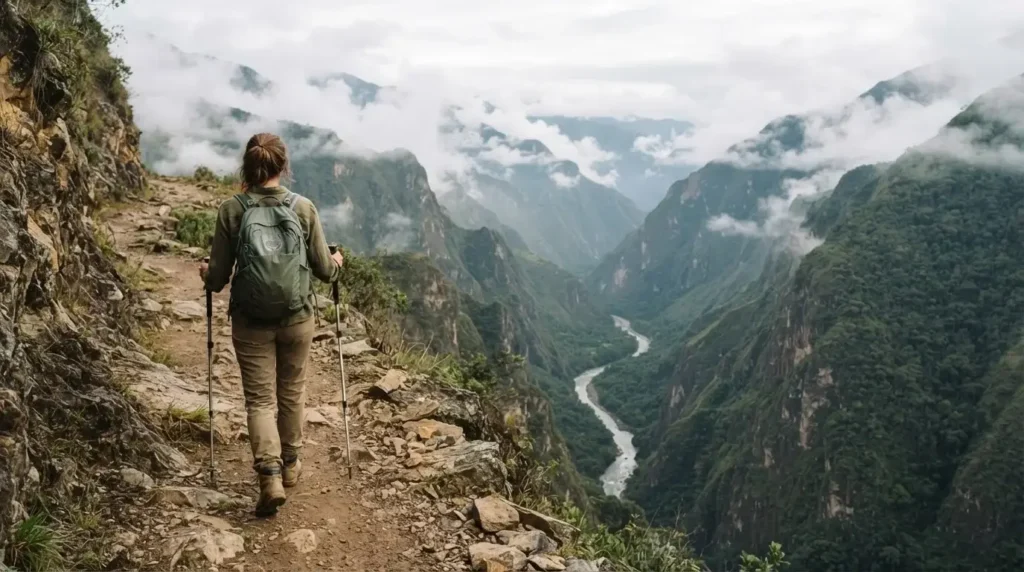
That inaccessibility is exactly what makes it special. Choquequirao is actually larger in area than Machu Picchu, and archaeologists estimate that only about 30-40% of the site has been fully excavated. The rest is still buried under jungle. What you can see is extraordinary: enormous agricultural terraces, ceremonial plazas, residential complexes, and a set of terraces adorned with white stone llama figures embedded into the walls, called the Llamayoq, which have no equivalent anywhere else in the Inca world. You may have the entire place to yourself, or share it with a handful of other trekkers. The contrast with Machu Picchu’s daily cap of several thousand visitors is difficult to overstate.
For detailed logistics on the Choquequirao trek, including route options, what to pack, and transport from Cusco to the trailhead, Peru For Less has one of the most thorough guides available. The key facts: no advance permit is required (unlike the Classic Inca Trail), entry at the site costs approximately S/60 ($15 USD), and guided 4-5 day treks run from around $560-$1,200 depending on group size and inclusions. The dry season from May to October is the most reliable time to go, with May and October being ideal if you want better trail conditions and slightly fewer fellow trekkers.
Solo trekkers with good fitness can do this independently, hiring a muleteer in Cachora to carry supplies at around $20-$30 per day. But for a first visit, a small-group guided trek gives you significantly more context about what you are walking through. Acclimatize in Cusco for at least two full days before the trek. The first day involves a steep 1,500-meter descent to the Apurimac River and a brutal climb back out. Your legs will know about it.
From a solo travel perspective, this is one of those trips that changes something in you. When I was teaching English in Thailand, several of my fellow traveler friends at the hostel who had done the Choquequirao trek described it the same way regardless of where they were from: it was harder than expected, more remote than expected, and more rewarding than anything they had planned that year. That pattern holds up in everything I have read and heard from travelers since.
Winay Wayna: The Ruin on the Inca Trail Most People Walk Past
Winay Wayna, which translates from Quechua as “forever young,” sits along the Classic Inca Trail about 4 kilometers before Machu Picchu and is typically visited on day three of the four-day trek. Most people are tired, close to the finish line, and mentally already at the Sun Gate. They walk past Winay Wayna without fully taking it in.
That is a missed opportunity. Winay Wayna is a beautifully preserved complex of agricultural terraces, ceremonial baths, and residential towers perched on a steep mountain slope above the Urubamba River, surrounded by cloud forest and the pink orchids that gave the site its name. Archaeologists believe it functioned as a rest stop and ritual cleansing point for pilgrims completing the journey to Machu Picchu, and the ceremonial water fountains are some of the finest examples of Inca stonework on the entire trail.
You can only reach Winay Wayna as part of the Classic Inca Trail, which requires an advance permit and must be booked months ahead (permits for peak season sell out fast). If you are planning the Inca Trail, build in time to stop and explore Winay Wayna properly instead of using it as a rest point.
Kuelap: Peru’s Northern Wonder That Most Travelers Never Reach
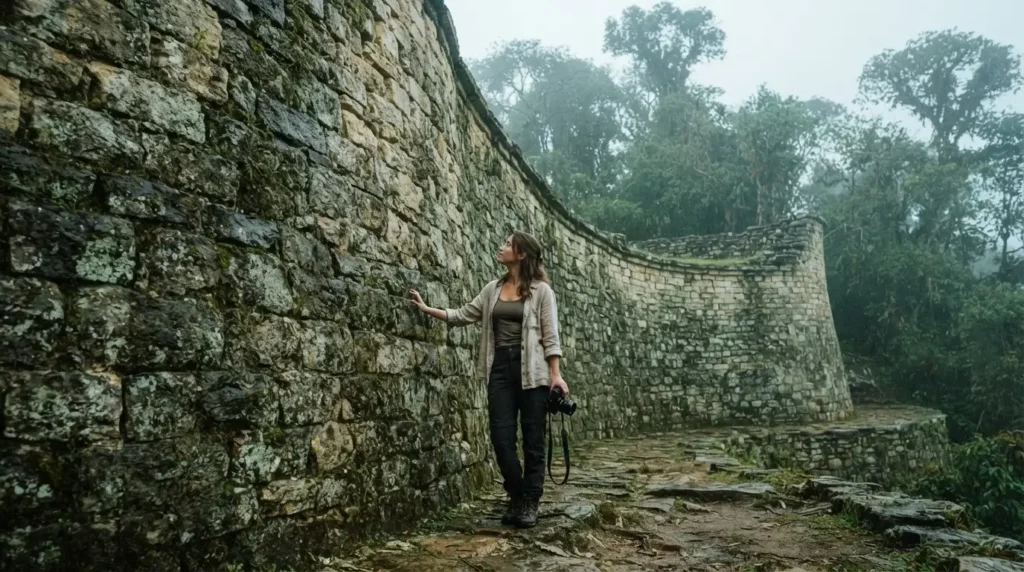
Kuelap is the wildcard on this list, and in some ways the most compelling argument for extending your Peru itinerary beyond the Cusco-Machu Picchu circuit. It sits in the cloud forests of the northern Andes, near the city of Chachapoyas in the Amazonas region, and it was not built by the Incas at all. It was built by the Chachapoya people, a pre-Inca civilization the Incas themselves conquered only in the 15th century.
The fortress of Kuelap is an enormous walled citadel containing over 400 circular stone structures, sitting at around 3,000 meters and surrounded by cloud forest. The outer walls in some sections rise over 20 meters. The scale of the place is hard to communicate: it covers roughly six times the area of the Great Pyramid of Giza. And it receives only a fraction of the visitors that Machu Picchu does each day.
PeruNorth’s guide to Kuelap is the most comprehensive resource I have found for planning a visit, including how to reach Chachapoyas from Lima or Chiclayo and the logistics of the cable car ascent to the fortress. The cable car (telecabinas) dramatically cut the access time from a long hike to a 20-minute ride, though the cable car has periodic maintenance closures, typically in May, so check the current schedule before you go. Entry to Kuelap was set at S/20 (approximately $5-6 USD) under a 2025 Ministry of Culture promotional rate.
Getting to Kuelap takes real commitment. Chachapoyas is roughly 12-13 hours by bus from Lima, or accessible by a short flight to Jaén or Tarapoto followed by a road journey. It is genuinely off the standard circuit, which means you will spend more time getting there. But solo travelers who prioritize depth over density consistently rate Kuelap among the most powerful experiences in Peru. The cloud forest setting, the circular stone structures dripping with moss, the almost total absence of crowds, and the story of a civilization that resisted the Incas for generations before being absorbed, it adds up to something that feels irreplaceable.
Practical Planning: Making the Most of These Sites as a Solo Traveler
A few things worth knowing before you book anything.
Altitude is the single most underestimated variable in Peruvian travel. Cusco sits at 3,400 meters, and most of the sites on this list are between 3,000 and 3,700 meters. Fly into Cusco, plan two to three slow days before any strenuous activity, drink plenty of water, avoid alcohol in the first 48 hours, and eat light. Coca leaf tea, available everywhere in Cusco, genuinely helps most people with mild altitude adjustment. If you have any cardiac or respiratory conditions, speak to your doctor before planning high-altitude trekking.
For the Boleto Turistico, the full 10-day pass at S/130 is the practical choice if you are visiting Sacsayhuaman, Pisac, Ollantaytambo, Moray, and Tipon in the same trip.
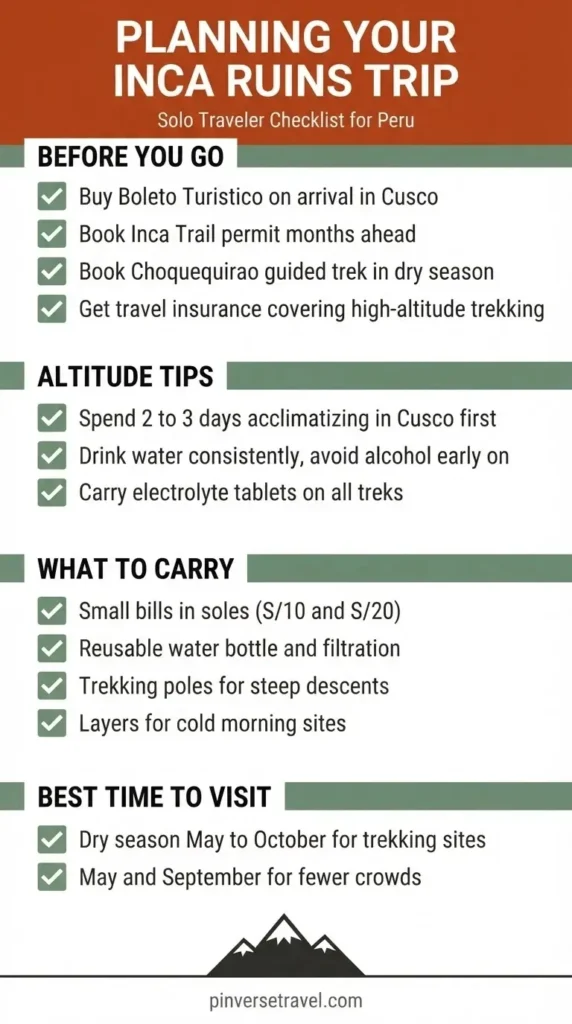
You can review exactly what each circuit covers and buy it directly on arrival at the official COSITUC office on Av. El Sol 103 in Cusco, or at the entrance to most included sites. It cannot currently be purchased online, so grab it on your first or second day in the city.
For Choquequirao, plan your trip for the dry season window from May to October. May and September hit a sweet spot of good trail conditions and manageable trail traffic. April and October are shoulder months that work well with slightly lower tour prices.
For Kuelap, aim for the dry season months of May through September for the clearest views. Always check the cable car closure dates on the official schedule before traveling north.
Finally, carry cash. ATMs exist in Cusco and Chachapoyas but are nonexistent on the trails and sparse in smaller towns. Small notes (S/10 and S/20) are useful for colectivos, local meals, and market purchases.
Peru rewards the traveler who does a little more reading, a little more planning, and a little more walking than most. These sites are not harder to visit because they are less impressive. They are less crowded because most people do not look past the headline. You clearly do.