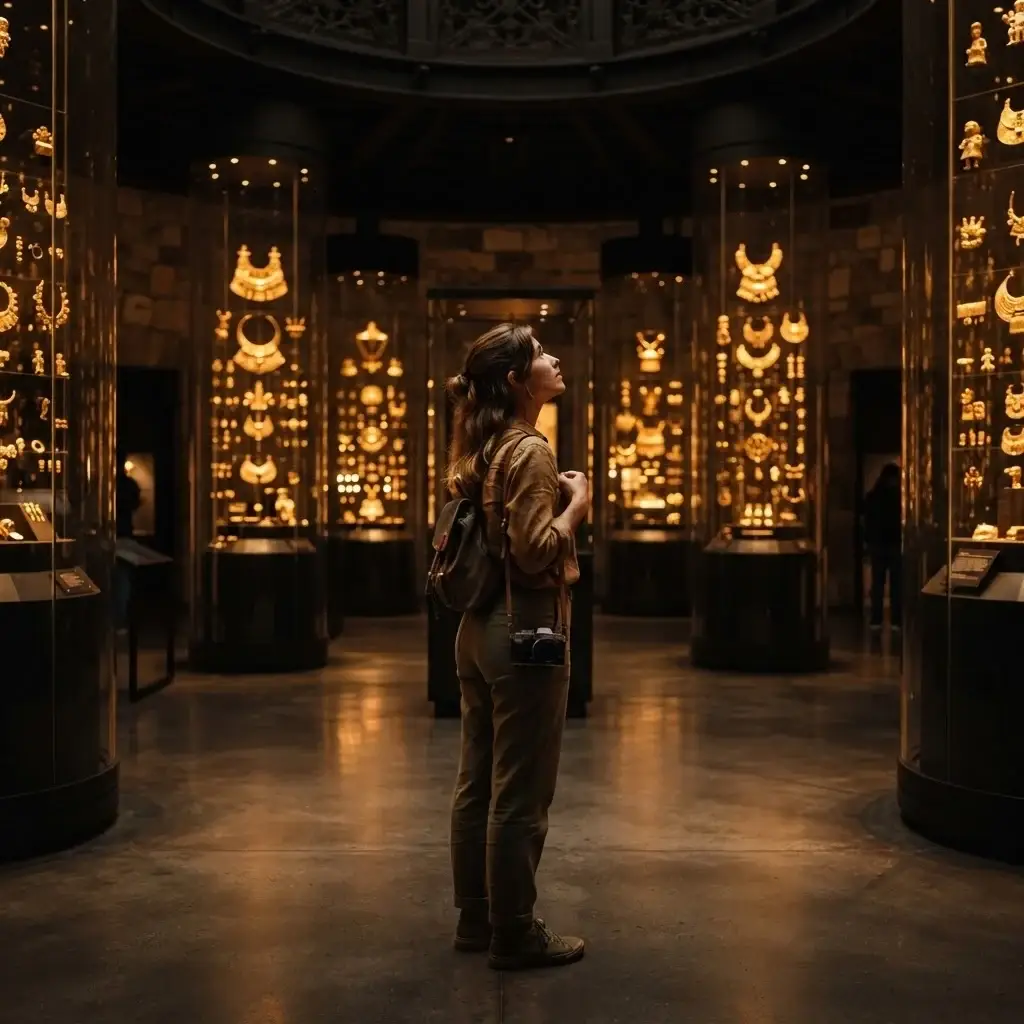
There is a specific kind of quiet that comes over you inside a great history museum. Not boredom, not reverence exactly, but something closer to recognition. You are looking at an object, a coin, a textile, a carved stone face, that someone made with their hands hundreds or even thousands of years before you were born, and for a moment the distance between you and them collapses completely.
That feeling is one of the biggest reasons I travel. And the Americas, stretching from the icy edges of Canada down through the layered civilizations of South America, offer some of the most extraordinary history museums on the planet. Not just because of what they hold inside, but because of what they say about who we are and how far back that story actually goes.
This guide covers the museums I genuinely think are worth building a trip around. Not every famous institution makes the list. A few lesser-celebrated rooms do. I have included practical planning details for each one, including hours, costs, what to skip, and what not to miss, so you can visit with confidence rather than just wandering and hoping for the best.
Washington D.C.: The Museum That Starts with a Star-Spangled Banner
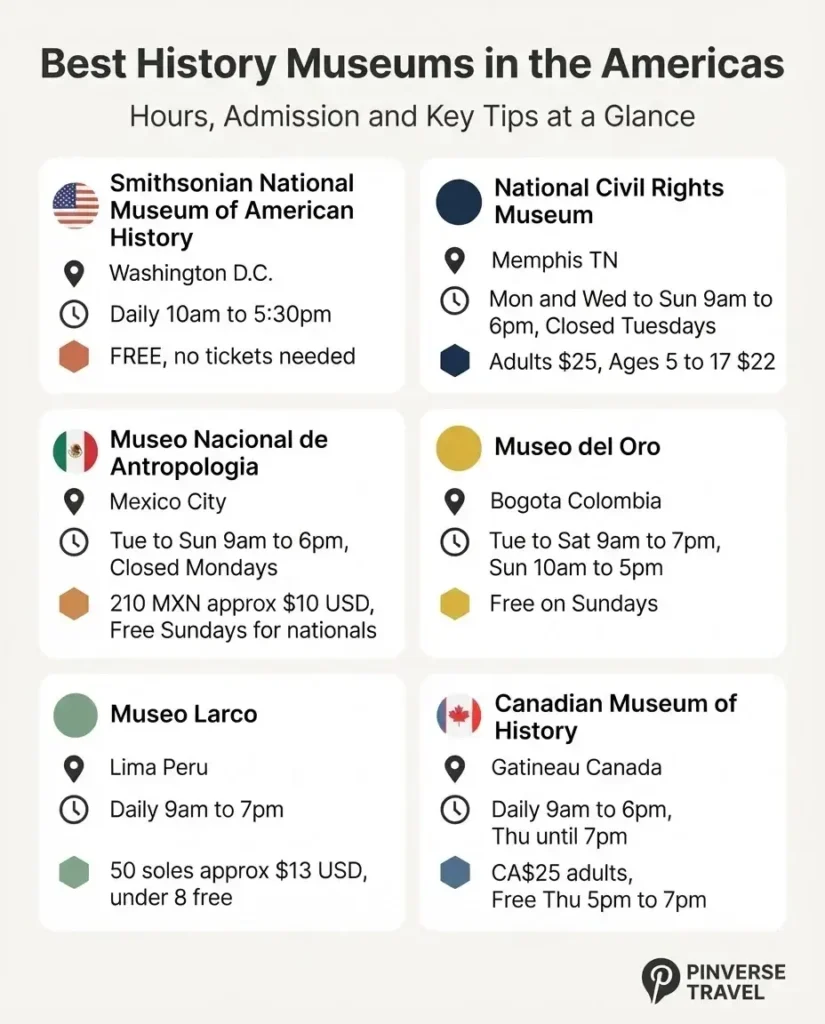
If you are anywhere near Washington D.C. and you care about American history, the Smithsonian National Museum of American History is a non-negotiable stop. It is free. It does not require tickets. It is open daily except December 25 from 10 a.m. to 5:30 p.m. And it contains one of the most quietly powerful objects in the country: the original Star-Spangled Banner, the 30-by-34-foot flag that flew over Fort McHenry during the War of 1812 and inspired the national anthem.
I grew up in New York, and as a sightseeing guide I spent years helping visitors understand what they were looking at in the context of American stories.
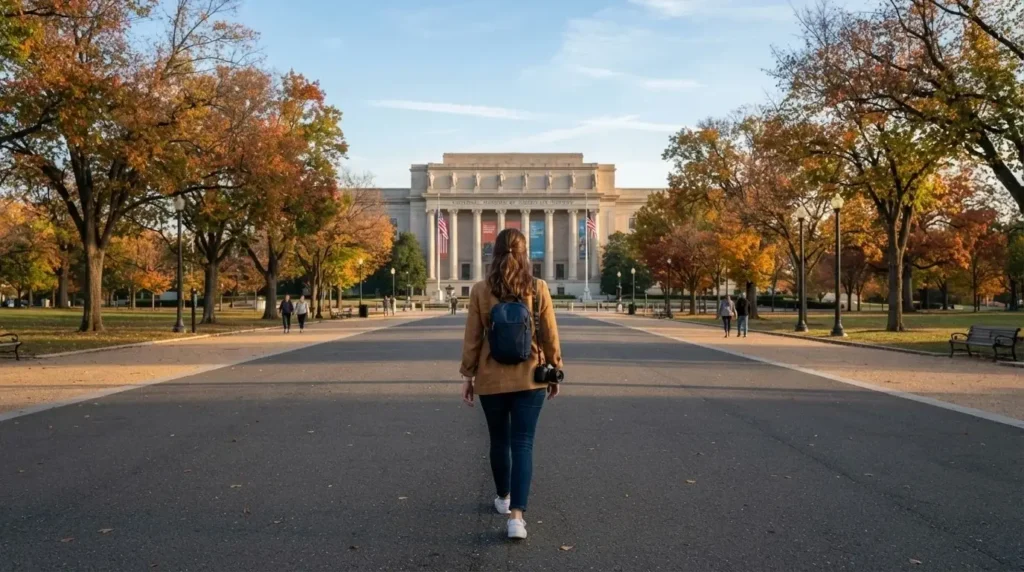
Washington D.C. museums occupy a different register entirely. The Smithsonian National Museum of American History does not just show you artifacts. It asks you to sit with the contradictions of a country built simultaneously on ideals of freedom and the machinery of slavery, on innovation and on immense human cost.
The museum spans three floors and covers everything from the colonial era to the twentieth century. Do not try to do all of it in one visit unless you have a full day. My honest recommendation is to go in knowing two or three themes that matter most to you. The American democracy and presidency exhibits are rich and current. The science and innovation wing is underrated. The Julia Child kitchen, a complete reconstruction of the kitchen from her Cambridge home, is one of the most charming surprises in the building.
Give yourself at least three hours. Arrive close to opening to avoid the school group rush that tends to peak mid-morning.
There is a good cafeteria on the lower level, which is useful because the National Mall gets crowded fast and grabbing lunch inside buys you time.
Memphis, Tennessee: The Museum That Does Not Let You Look Away
The National Civil Rights Museum is built around the Lorraine Motel, the exact spot where Dr. Martin Luther King Jr. was assassinated on April 4, 1968. That context alone should tell you that this is not a comfortable museum. It is not supposed to be.
It is open Monday and Wednesday through Sunday from 9 a.m. to 6 p.m., closed on Tuesdays. Adult admission is $25, children 5 to 17 pay $22, and seniors 65 and older pay $23. Tennessee residents can visit free on Monday afternoons from 3 p.m. until closing. Timed tickets are available online, which I strongly recommend booking in advance, especially if you are visiting on a weekend.
What makes this museum extraordinary is its specificity. You do not get a general overview of the Civil Rights Movement. You walk through it in sequence, starting with slavery and Reconstruction and moving through Montgomery, Birmingham, Selma, the March on Washington, and eventually to the balcony of Room 306. The preserved motel rooms where Dr. King spent his last hours remain exactly as they were. The bus from Montgomery, the actual vehicle, is there. The lunch counter from Greensboro is there.
From what solo travelers consistently report, this is one of the most emotionally intense museum experiences in the country. Plan your visit knowing that you will need time afterward to process what you have seen. There is a small but thoughtful museum shop, and the South Main Arts District where the museum sits has good coffee and quiet spots to decompress. If you can visit on a weekday morning, you will find it less crowded, and the experience of moving through those rooms without the noise of a packed crowd is considerably more affecting.
Mexico City: Two Thousand Years of Civilization in One Afternoon
Mexico City holds two history museums that are each significant enough to justify the flight on their own. The first, and the one most history lovers will prioritize, is the Museo Nacional de Antropologia, which you can explore through the official INAH website. It is the largest and most visited museum in Mexico, and with good reason.
The museum is open Tuesday through Sunday from 9 a.m. to 6 p.m. and is closed every Monday.
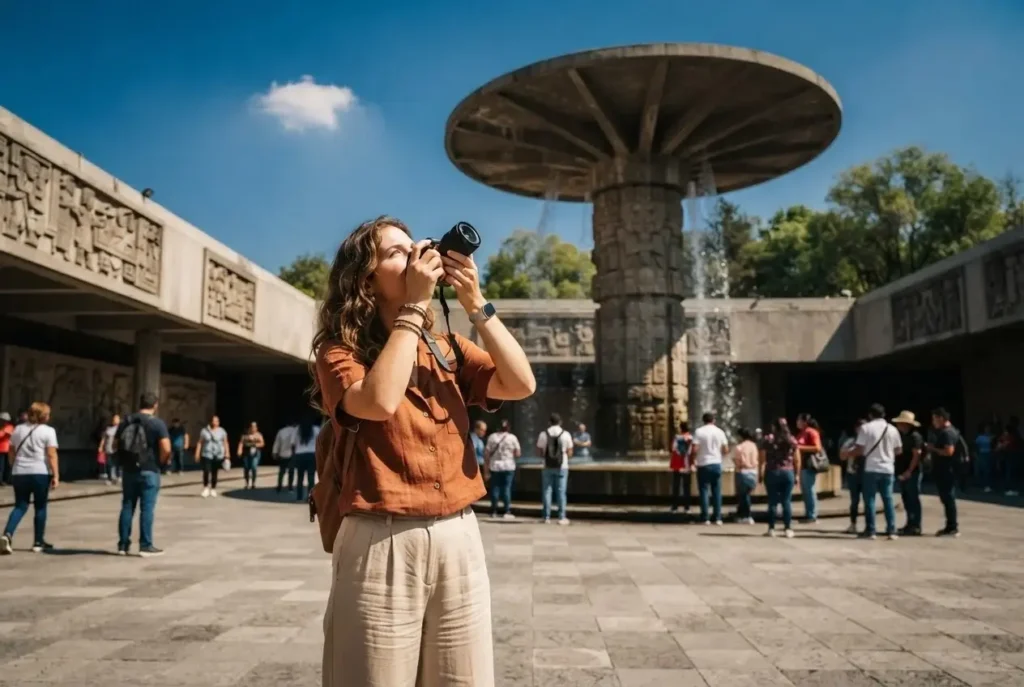
General admission is 210 Mexican pesos (roughly $10 to $11 USD at current exchange rates). Entrance is free on Sundays for Mexican nationals and foreigners with Mexican residency. The museum sits inside Chapultepec Park, which itself is one of the most pleasant urban parks in Latin America, so arriving by metro to the Auditorio or Chapultepec stations and walking through the park is a genuinely lovely start to the visit.
Here’s what to expect inside: the museum covers more than 20 pre-Hispanic civilizations across two floors organized by culture and region. The Aztec room, containing the famous Sun Stone (often incorrectly called the Aztec Calendar), is the centerpiece that everyone photographs, and it deserves the attention. But the Mayan Hall is arguably more complex and rewards more time. The Oaxacan and Teotihuacan rooms are frequently rushed through by visitors who have already exhausted themselves elsewhere, and they are genuinely worth slowing down for.
Bring water. The museum is large and the layout is sprawling around a central courtyard. The audio guide (available in English) is absolutely worth renting because the labels in the halls are in Spanish only. Expect to spend four to five hours here if you want to do it properly. The on-site cafe serves decent tacos and agua fresca at reasonable prices, which makes it easy to refuel without leaving the grounds.
The second museum worth knowing about is the Museo Nacional de Historia inside Chapultepec Castle, just a short walk through the park from the Anthropology Museum. The Castle itself is an extraordinary building, a 19th-century imperial palace perched on a hill above the city, and the history inside covers Mexico from the colonial period through the revolution. The views from the upper terraces over Mexico City are alone worth the climb.
Bogota, Colombia: Fifty-Five Thousand Years of Gold
The Museo del Oro in Bogota, known in English as the Gold Museum, holds the largest collection of pre-Hispanic gold artifacts in the world. We are talking about more than 55,000 pieces of gold and other metals from ancient indigenous cultures across Colombia, displayed across five floors in a purpose-built museum in the heart of the city. According to Colombia’s official tourism board, the museum covers indigenous cultures region by region, making it as much an anthropological journey as an art exhibition.
The museum is open Tuesday through Saturday from 9 a.m. to 7 p.m. (last entry at 6 p.m.) and Sunday from 10 a.m. to 5 p.m. It is closed on Mondays. Admission on Sundays is free for all visitors. Regular admission fees apply Tuesday through Saturday, and they are very affordable by international standards.
The Gold Museum tends to be underestimated before the visit and then completely surprising once you are inside. The room that stays with visitors longest is the Muisca Offering Hall, a circular darkened chamber where hundreds of gold pieces are lit from within cases and a narration describes the spiritual significance of gold to indigenous Colombian cultures. It is not flashy. It is genuinely moving.
Bogota’s historic La Candelaria neighborhood, where the museum is located, has excellent food nearby. Ajiaco, the thick Andean potato and chicken soup that Bogotenos consider their culinary inheritance, is available at several traditional restaurants within walking distance of the museum and is exactly the kind of meal you want on a cool Bogota afternoon. The city sits at 2,600 meters above sea level, so take your first day slowly if you are coming from sea level, and drink plenty of water.
Lima, Peru: Five Thousand Years of Ancient Peru in One Mansion
The Museo Larco in Lima is the kind of museum that redefines what you thought you knew about pre-Columbian civilizations in the Americas. It is housed in an 18th-century viceroyalty mansion built over a seventh-century pre-Columbian pyramid in the Pueblo Libre district. It is privately owned, meticulously curated, and covers more than 5,000 years of ancient Peruvian history through ceramics, textiles, metalwork, and sculpture.
The museum is open daily from 9 a.m. to 7 p.m. General admission is 50 Peruvian soles (approximately $13 to $14 USD), with discounted rates for seniors (35 soles) and students (25 soles). Children under 8 enter free. Exhibits are available in seven languages including English, which makes it unusually accessible compared to many regional museums in South America.
What makes Museo Larco stand out, beyond the collection itself, is the Visible Storage Gallery: a room where you can walk through floor-to-ceiling shelves holding thousands of artifacts not on permanent display. It is the behind-the-scenes experience most museums never offer, and for anyone who loves the texture and sheer volume of history, it is extraordinary.
Solo travelers consistently find Lima to be one of the most rewarding cities in South America for a slow visit.
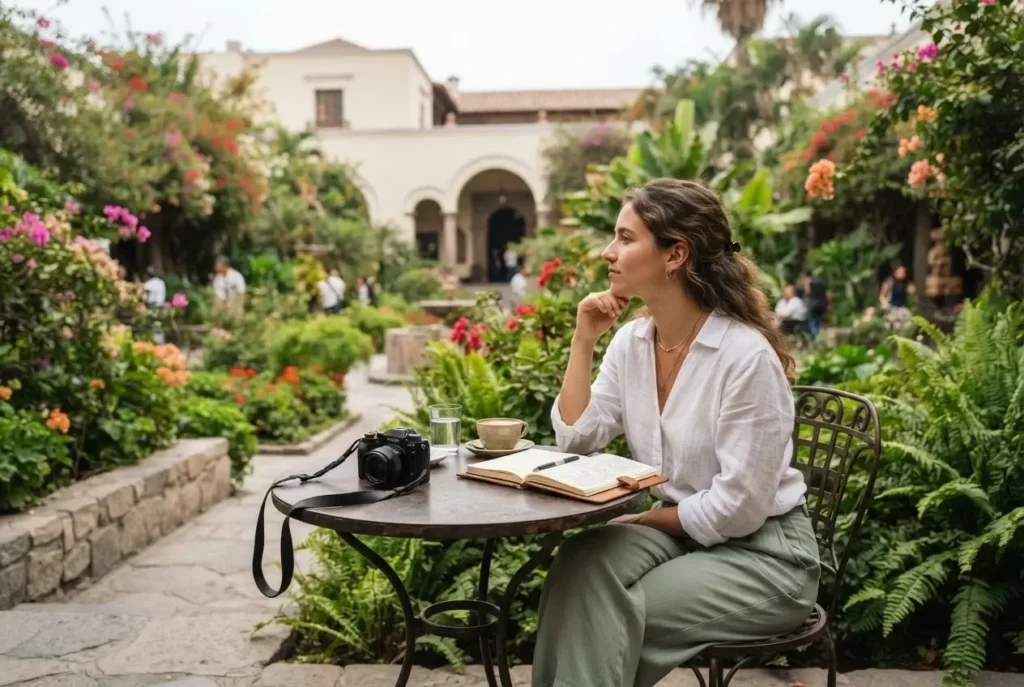
The Pueblo Libre neighborhood where the museum sits is quiet and residential compared to the busier Miraflores district, and the museum’s own restaurant on the garden terrace serves excellent Peruvian food. Ceviche is the obvious choice, but the lomo saltado, a Peruvian-Chinese stir-fry served with rice and fries, is just as good and more filling after a long museum morning.
From Miraflores, a taxi or rideshare to the museum takes about 20 to 30 minutes and is straightforward to arrange. If you are spending several days in Lima, I would suggest pairing Museo Larco with a visit to Huaca Pucllana, a living archaeological site just 15 minutes away in Miraflores, to build a full picture of ancient Lima across a single day.
Gatineau, Canada: The Grand Hall and the Long Story of a Country
The Canadian Museum of History in Gatineau, Quebec sits directly across the Ottawa River from Parliament Hill, and its architecture alone is worth the journey. The building, designed by Indigenous architect Douglas Cardinal, curves like a living landscape, its forms inspired by the land as shaped by wind and water over millennia. Standing on the museum terrace looking back at Ottawa and the Parliament buildings is one of those travel moments that stays with you.
The museum is open daily from 9 a.m. to 6 p.m. (Thursdays until 7 p.m.). Adult admission is CA$25, with senior tickets at CA$23. On Thursday evenings from 5 to 7 p.m., admission is free for all visitors, which is a genuinely useful window if you are in the area.
Inside, the Grand Hall is the centerpiece: the largest display of totem poles in the world, arranged in a dramatic hall with floor-to-ceiling windows overlooking the river. The Canada Hall, a walk-through recreation of Canadian history from Viking arrival to twentieth-century immigration, is one of the most ambitious historical exhibitions I have seen described anywhere in North America. Travelers who visit with even a basic interest in Indigenous history will find the museum’s treatment of First Nations, Metis, and Inuit cultures both extensive and thoughtfully handled.
If you are staying in Ottawa, getting to the museum involves a short drive or a pleasant walk across the Alexandra Bridge from Parliament Hill, which takes about 25 minutes on foot and is a lovely walk on a clear morning. Ottawa itself is deeply underrated as a city for history-minded travelers, with the Canadian War Museum, the National Gallery of Canada, and Byward Market all within easy reach.
How to Visit History Museums Well as a Solo Traveler
The thing about visiting history museums solo is that it removes every social compromise.
You can stand in front of an artifact for ten minutes without anyone sighing. You can skip the rooms that don’t interest you. You can go back to the room that wrecked you emotionally and give it more time. This is one of the most genuine pleasures of solo travel, and history museums amplify it.
A few things I have learned, through my own travel and from what solo travelers consistently report across these destinations:
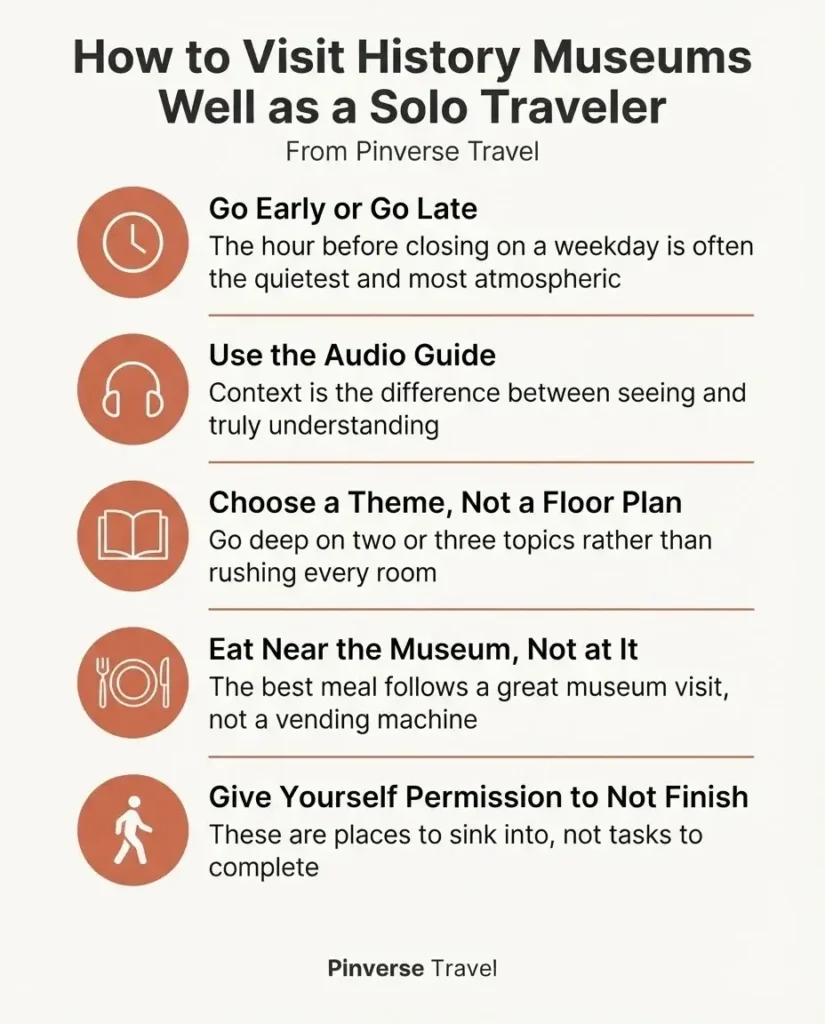
Go early, or go late. The hour before closing on a weekday is often the quietest time in any major museum, and the light in the galleries is different. The artifacts do not change, but your relationship to them does when you are not shoulder-to-shoulder with tour groups.
Use the audio guide when it is available. At the Museo Nacional de Antropologia in Mexico City and the Canadian Museum of History in particular, the audio guides translate not just the labels but the cultural significance of what you are looking at. That context is the difference between seeing and understanding.
Give yourself permission to not finish. No one needs to see every room in the Smithsonian National Museum of American History in one visit. The museums on this list are not tasks to complete. They are places to sink into. Pick a theme, pick a floor, and go deep rather than wide.
And one more thing: eat near the museum, not at it. Every city on this list has excellent food within walking distance of these institutions. The meal after a great museum visit, sitting with what you just absorbed, is one of the small rituals of solo travel that you do not want to rush through.
A Final Note
My travel philosophy has always been that the best experiences are not the ones on the famous top-ten list. They are the ones where something genuinely changes in how you understand the world. Every museum on this list has that capacity. The Gold Museum in Bogota will make you rethink what civilization looked like before European contact. The National Civil Rights Museum will make you sit with American history in a way no textbook does. The Museo Larco will make you realize how much of the ancient world we simply have not heard about yet.
That is what history museums do at their best. They make the past feel urgent. And in the Americas, that past is vast, layered, and endlessly worth exploring.