
There is a moment in trip planning where the excitement starts to feel like pressure. You have a rough idea: somewhere in the Americas, something adventurous, somewhere you can actually afford. But then you open a browser tab, then twelve more, and suddenly you are drowning in conflicting information, outdated prices, and lists of “best places” that all look the same.
I know that feeling well. Before I left my 9-to-5 and started building a life around travel, I spent years paralyzed by exactly that kind of overwhelm. I wanted to go somewhere meaningful, not just somewhere cheap. I wanted to stretch my money without the trip feeling like a sacrifice. I just had no idea how to connect the dots.
The Americas, as a travel region, is genuinely extraordinary for budget travelers. But it is also vast and varied enough that planning it without a clear framework can feel impossible. This guide is that framework. We are going to work through it in order: which destinations give you the most for your money, how to structure your budget from scratch, how to get there and move around affordably, where to sleep and eat well without overspending, and how to build the kind of trip that actually feels worth it.
Let’s start.
Why the Americas Is One of the Best Regions for Budget Travel
When most people think budget travel, they immediately picture Southeast Asia. And yes, Southeast Asia is famously affordable. But the Americas, particularly Central and South America, offer something that rarely gets the same attention: incredible cultural depth, jaw-dropping landscapes, and daily costs that can genuinely compete with anywhere in the world, especially if you approach it with a little strategy.
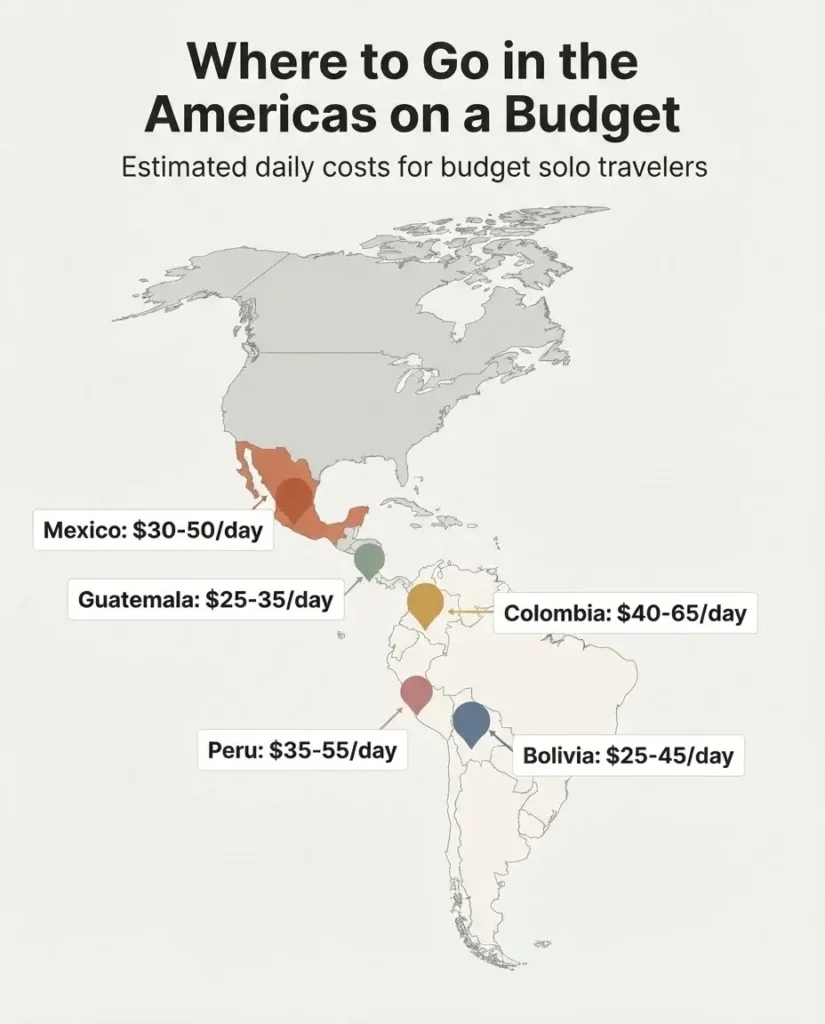
Countries like Bolivia, Guatemala, Colombia, and Peru let solo travelers move comfortably on $30 to $60 per day, covering a bed, three meals, local transport, and entry to incredible sites. Compare that to traveling in Western Europe, where $60 barely covers a hostel bed and two meals in most cities, and the value becomes obvious. The bonus is that the “off the beaten path” experience in Latin America is not hard to find. You do not have to work against crowds to have an authentic, immersive trip. The infrastructure for budget travel is well developed, the food is remarkable, and the cultural warmth travelers consistently report across the region is real.
What holds people back is usually not money. It is uncertainty. So let’s fix that.
Step One: Choose Your Region Based on Budget, Time, and Travel Style
The Americas spans four continents’ worth of terrain and culture, so the most important first decision is narrowing your focus. Trying to do “all of the Americas” in one trip is almost always a mistake, both financially and experientially. Slow travel is nearly always cheaper. The more you move, the more you spend on transport.
Here is a practical way to think about it:
If you have two to three weeks and a tighter budget, Central America is your best bet. Guatemala, Honduras, and Nicaragua offer some of the lowest daily costs in the Western Hemisphere. Guatemala in particular is a standout. Antigua, the colonial city surrounded by volcanoes, and Lake Atitlan, one of the most visually dramatic places in the world, are both reachable by affordable chicken buses and tourist shuttles. Budget travelers routinely manage $25 to $35 per day there, and the cultural richness of Mayan highland communities adds a depth that goes far beyond the typical tourist experience.
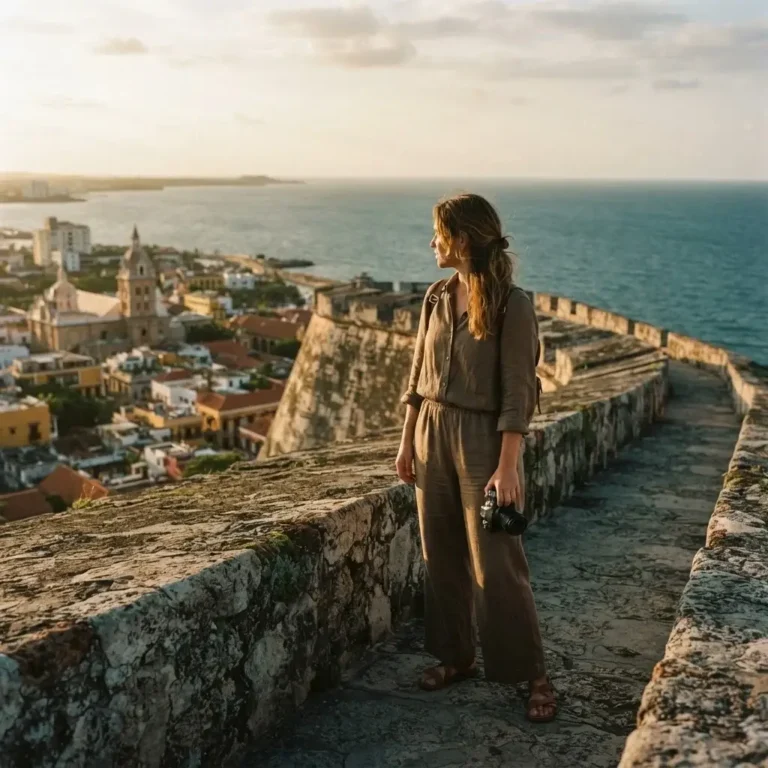
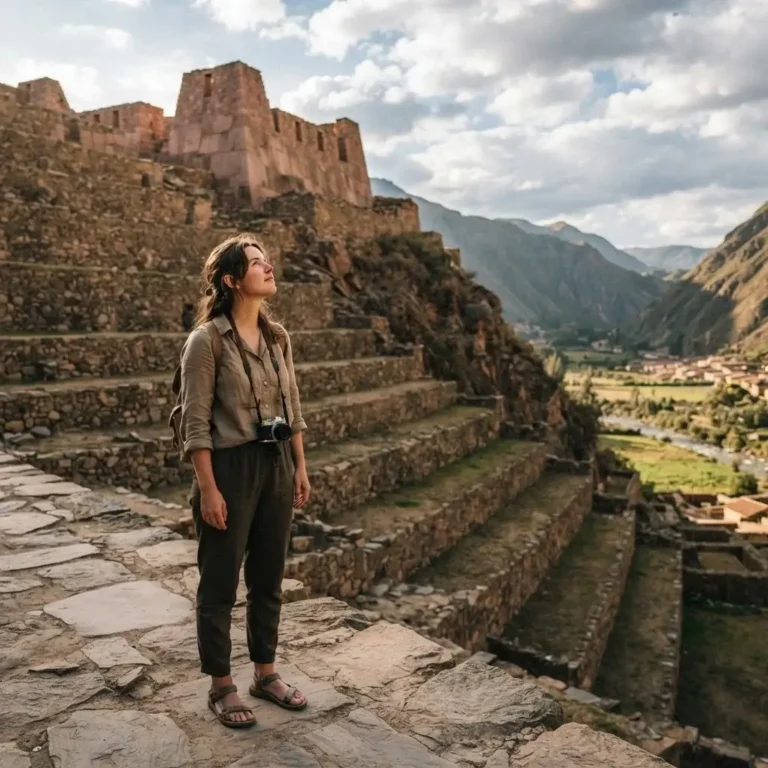
If you have three weeks to two months and want a mix of cities, nature, and history, Colombia and Peru are the gold standard for budget-conscious solo travelers. Colombia has transformed dramatically over the past decade and is now one of the most visitor-friendly countries in South America. From the Caribbean-coast energy of Cartagena to the coffee-region valleys of Salento to the modern food scene in Medellin, the variety is hard to beat. Peru anchors any South American itinerary for obvious reasons: Cusco, Machu Picchu, the Sacred Valley, and the northern city of Trujillo are all within reach on a budget that does not require sacrificing quality.
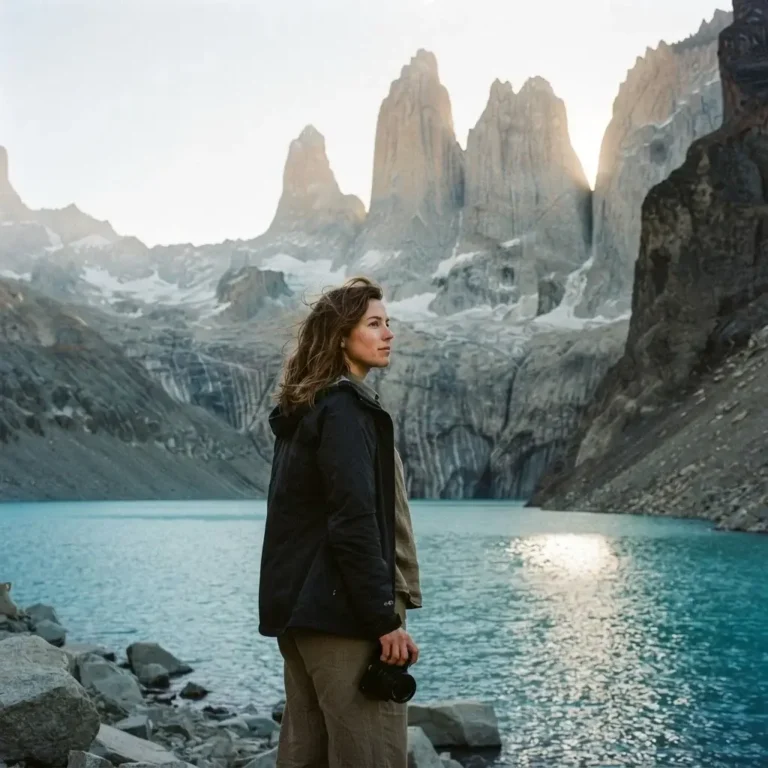
If you want truly extreme affordability with spectacular natural scenery, Bolivia belongs on the list. Salt flats, surreal high-altitude deserts, and colonial cities like Sucre are all accessible on one of the lowest daily budgets in South America. Budget travelers typically spend between $25 and $45 per day covering accommodation, food, and local transport, according to the Bolivia travel cost breakdown on All Things Bolivia.
Step Two: Build Your Budget Before You Book Anything
The most common planning mistake is booking flights first and then trying to figure out the rest. Start with your total budget, work backward, and the flight decision becomes much clearer.
A simple framework:
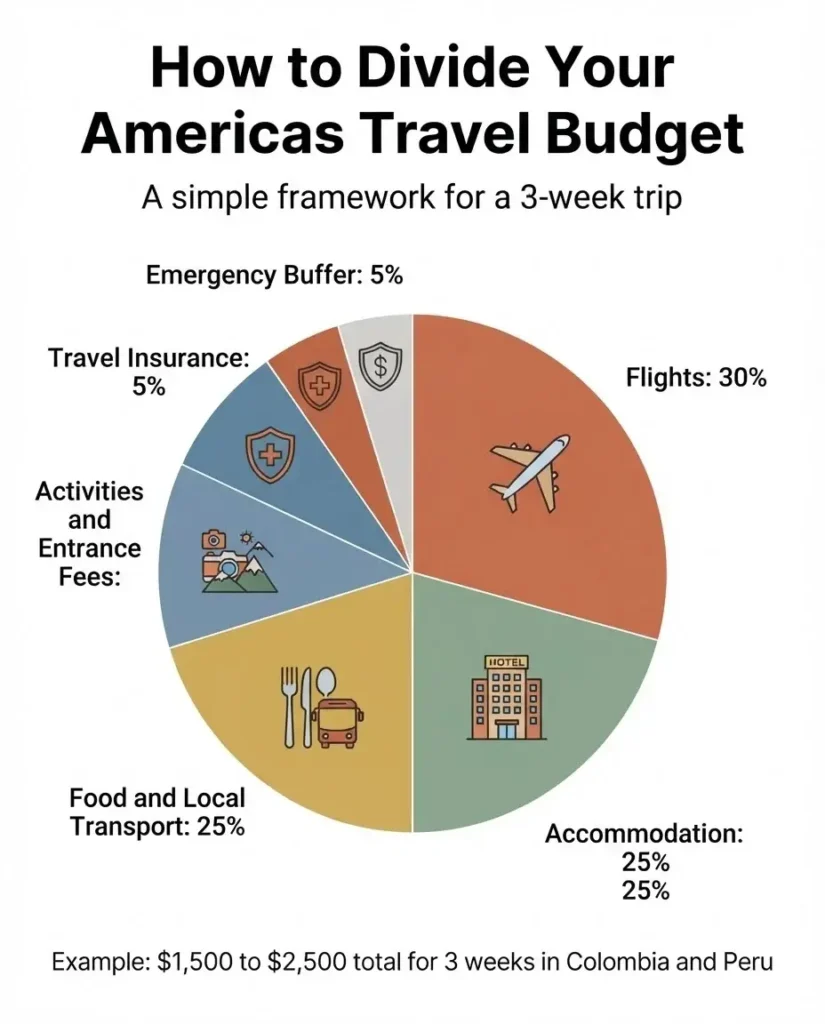
Take your total available budget and divide it roughly like this. About 30 percent goes to international flights. About 25 percent goes to accommodation. About 25 percent goes to food and local transport. The remaining 20 percent covers activities, entrance fees, travel insurance, and a buffer for surprises. Surprises are not optional. They happen on every trip, and having a cushion is what separates stressful travel from good travel.
For a rough three-week trip to Colombia and Peru, a realistic budget looks something like this. A round-trip flight from the US East Coast to Bogota typically runs $300 to $500 if you book with some flexibility. Internal transport (a flight from Bogota to Lima via a budget carrier, or a combination of buses and one regional flight) adds another $80 to $200. Accommodation in comfortable hostels or budget guesthouses across both countries costs roughly $15 to $30 per night. Food is very affordable if you eat the way locals eat. Three solid meals in Colombia or Peru, using set-lunch menus and local markets, can cost $8 to $15 per day. Activities and entrance fees vary widely, but $15 to $30 per day is a reasonable average. Altogether, a three-week trip to Colombia and Peru on a budget is very achievable for $1,500 to $2,500 all-in, depending on your choices.
Step Three: Get There Affordably
International flights to the Americas are often the biggest single expense, so a little strategy here pays off more than frugality anywhere else.
The most affordable entry points from North America and Europe into Latin America are Bogota (Colombia), Lima (Peru), Mexico City, and San Jose (Costa Rica). Bogota in particular is often the cheapest gateway because it is a major hub with high competition among airlines. Flying into one city and out of another (an “open jaw” ticket) frequently saves money and eliminates the cost of backtracking.
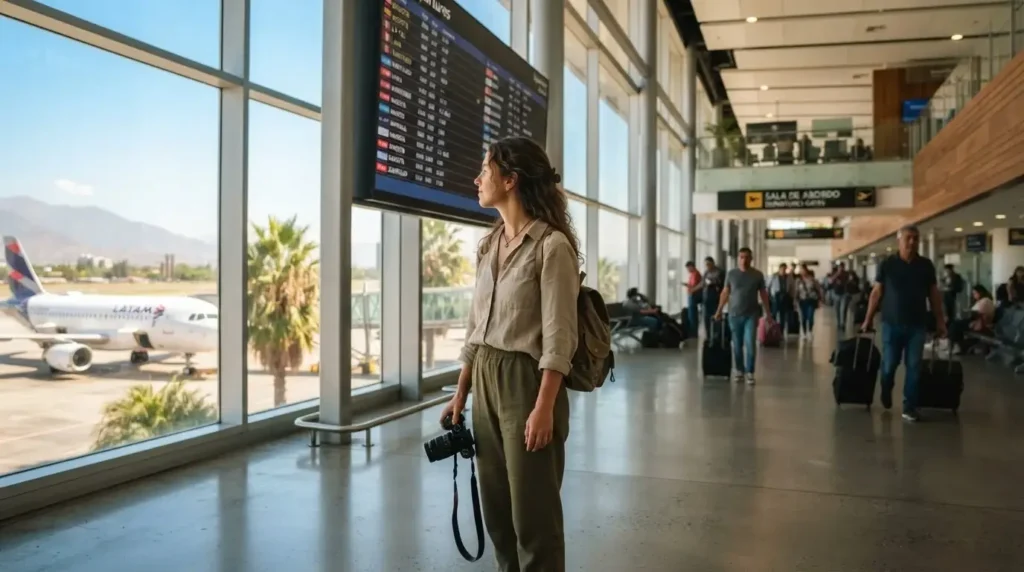
Once you are in the region, low-cost airlines make internal flights surprisingly affordable. Going.com’s guide to budget airlines in South America breaks down the main carriers: Wingo (Colombia), Sky Airline and JetSmart (Chile), and GOL (Brazil) are the heavy-hitters. Wingo flights between Bogota and Cartagena, for example, start around $17 one way when booked well in advance. The catch with all budget airlines in South America, just as in Europe, is that add-ons like checked bags and seat selection can double the base fare. Pack light, carry on only, and you stay in control of the cost.
For medium-distance routes, overnight buses are one of the smartest budget moves available. A comfortable overnight bus from Medellin to Cartagena, or from Cusco to Puno in Peru, saves you one night’s accommodation while covering the distance. The buses in Colombia, Ecuador, and Peru are generally reliable, equipped with reclining seats, and far more comfortable than their reputation sometimes suggests.
Step Four: Understand Entry and Visa Requirements
Visa confusion stops more people from booking than almost anything else. The good news for US, Canadian, and most Western European citizens is that Latin America is largely visa-free for tourist stays.
For Colombia, US citizens do not need a visa for tourism stays of up to 90 days, and the same 90-day allowance applies cumulatively for up to 180 days per calendar year, according to the official US State Department travel advisory for Colombia. You will need a valid passport and proof of onward travel. The official Colombia tourism board’s visa information page also details requirements for other nationalities and outlines options like the digital nomad visa for longer stays.
Peru, Bolivia, Guatemala, Ecuador, and Mexico are similarly visa-free for US, UK, and Canadian passport holders for standard tourist stays, usually ranging from 90 to 180 days. Always verify the specific rules for your passport before traveling, since requirements do change and regional exceptions apply.
The one thing that catches travelers off guard is the “onward travel” requirement. Many countries in Latin America will ask to see proof that you are leaving, either a return ticket or an onward ticket to another destination. If you are planning a multi-country overland trip without fixed dates, a cheap placeholder bus ticket or a flexible refundable flight serves this purpose.
Step Five: Sleep Well Without Overspending
Budget accommodation in Latin America has genuinely improved over the last decade. The hostel culture in cities like Medellin, Cartagena, Cusco, and Guatemala City is vibrant, social, and well-organized. Dorm beds in well-rated hostels typically run $8 to $18 per night. Private rooms in the same hostels or in family-run guesthouses (called hospedajes or posadas depending on the country) usually cost $20 to $40 per night and often include a simple breakfast.
A few practical tips from what solo travelers consistently report. First, read the reviews carefully for two specific things: security (lockers in dorms, safe neighborhood) and noise. Second, in tourist-heavy cities, staying one neighborhood away from the main backpacker strip almost always means lower prices and more authentic surroundings without sacrificing accessibility. Third, if you are staying somewhere for more than four or five nights, always ask about a weekly rate. Guesthouse owners will almost always negotiate one.
Step Six: Eat Like a Local (Your Budget Will Thank You)
Food is where budget travel in Latin America delivers its greatest rewards, because eating well and eating affordably are not mutually exclusive here.
The concept to learn before you arrive anywhere in Central or South America is the “menu del dia” or “almuerzo.” This is the set lunch of the day, offered by almost every local restaurant from about noon to 3 PM. For $2 to $5, you typically get soup, a main plate of rice, beans, protein, a salad, and sometimes a juice or small dessert. It is the best value meal in the Americas, and in countries like Colombia and Peru, it is often genuinely delicious.
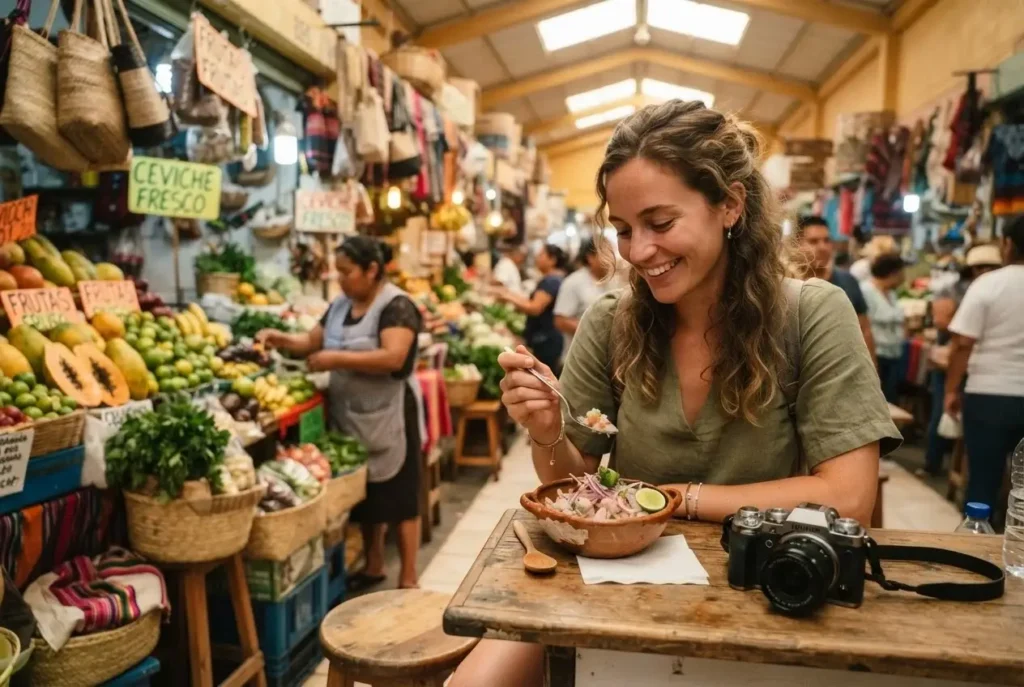
Markets are equally important. In most Latin American cities, the central market has a food hall where local vendors sell fresh food at a fraction of restaurant prices. The mercados in Cusco, Oaxaca, and Antigua are not just cheap eating, they are cultural experiences on their own terms. Sitting at a market stall eating ceviche in Lima or a plate of chiles rellenos in Oaxaca, surrounded by the noise and color of daily local life, is one of those travel memories that quietly becomes the one you talk about most.
Street food is excellent in Mexico and Colombia especially. In Mexico City, tacos from a taqueria on a busy side street cost well under $1 each. In Cartagena, fresh fruit cups topped with lime and salt, arepas stuffed with egg, and fresh juices from market vendors cost almost nothing and taste like everything.
Step Seven: Keep Transport Costs Low on the Ground
Local transport within cities in Latin America is remarkably cheap if you use what locals use. In Bogota, the TransMilenio bus rapid transit system connects most of the city for under $1. In most smaller cities and towns, shared minibuses called colectivos cover routes between neighborhoods and nearby towns for a few hundred pesos or soles. Taxis are affordable by Western standards but should always be arranged through an app (Uber, InDriver, or Cabify operate widely across Latin America) or negotiated in advance to avoid tourist pricing.
For intercity routes, the local bus terminals in every major city offer multiple options at multiple price points. The cheapest option is usually the local bus without air conditioning. The mid-range option is a direct tourist shuttle, which costs a bit more but is often door-to-door between the hostels. For longer overnight routes, a semi-cama (reclining seat) bus is worth the small upgrade.
Step Eight: Build in Cultural Depth (the Free and Near-Free Kind)
One of the most important things I learned from my time backpacking solo across Europe and later living with a host family in Ghana is that the experiences that cost the least often teach the most. That truth holds in the Americas.
The Americas holds an extraordinary concentration of UNESCO World Heritage Sites, from Machu Picchu in Peru to the colonial city of Cartagena in Colombia to the Maya ruins of Tikal in Guatemala. The UNESCO World Heritage Centre’s Latin America and Caribbean page lists the full regional collection, and working a few of these into your itinerary gives your trip an anchor of meaning beyond just moving through beautiful scenery.
Many of them, like the historic centers of cities such as Oaxaca, Cartagena, and Cusco, are entirely free to walk through and experience.
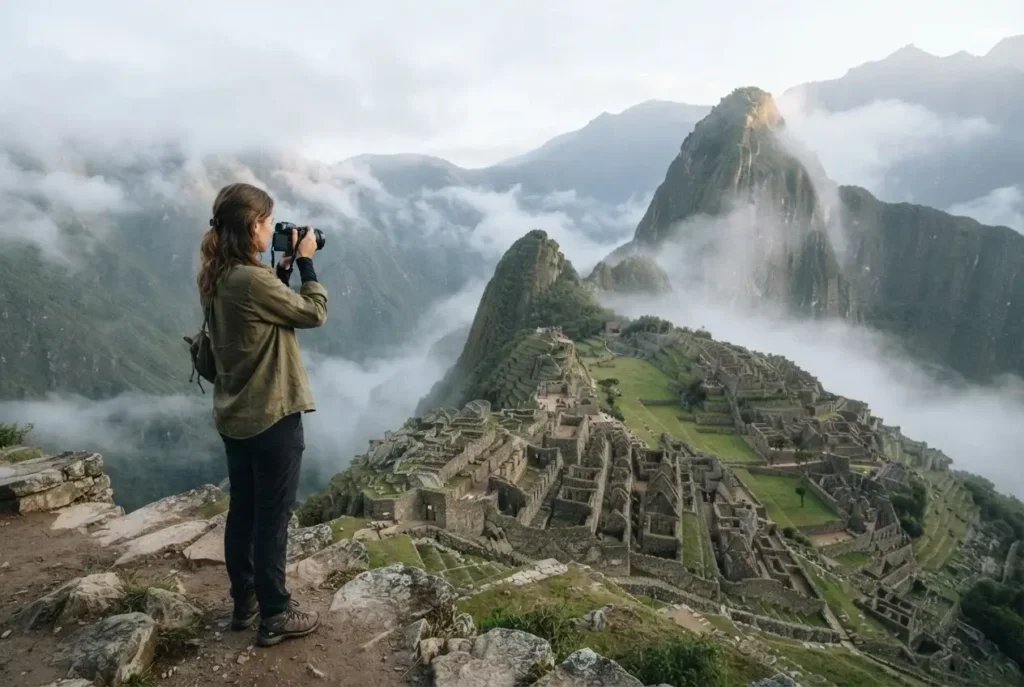
For sites that do have entrance fees, Machu Picchu is the big one. Entry for foreign adult visitors currently costs approximately S/152, which is roughly $45 USD, and tickets must be purchased in advance through Peru’s official Ministry of Culture ticketing platform at tuboleto.cultura.pe. The ticket system is time-slotted, so advance planning is genuinely required, not just recommended.
Beyond the famous sites, some of the richest cultural experiences available in Latin America are free: wandering the painted streets of Cartagena’s Getsemani neighborhood, hiking up to the Cristo Blanco lookout above Cusco, sitting in Antigua’s central park watching life move past colonial facades and volcano silhouettes, attending a free Sunday concert in Bogota’s Parque del Poblado. These moments do not cost entry fees. They cost only the presence of mind to slow down and pay attention.
Step Nine: Manage Your Money Smartly
ATMs are widely available in cities across Latin America, but you will pay foreign transaction fees and withdrawal fees unless you plan ahead. Opening a travel-friendly bank account before you go, specifically one with no foreign transaction fees and ATM fee reimbursement, can save you a surprising amount across a long trip. Charles Schwab’s investor checking account and Wise’s debit card are two options that solo travelers widely recommend for this reason.
Carry a mix of local currency cash and card access. In rural areas and smaller towns throughout Bolivia, Peru, and Guatemala, cash is king. Relying entirely on card payment is a mistake. Withdraw a larger amount at a city ATM before heading somewhere remote, and keep a small emergency stash of USD somewhere separate from your main wallet.
For smart general money management during your planning and budgeting phase, NerdWallet’s guide to saving money on travel covers the practical financial foundations well, including credit card strategies and how to avoid the fees that quietly eat into travel budgets.
Step Ten: Do Not Skip Travel Insurance
This section exists because every budget traveler is tempted to skip it, and the ones who do are the ones who later talk about the expensive lesson they learned. Travel insurance for the Americas does not have to be expensive, and a basic policy covering medical emergencies and evacuation is non-negotiable if you are heading anywhere remote.
Medical care in cities like Bogota, Lima, and Mexico City is competent and accessible, but it is not free for foreigners, and a medical evacuation from somewhere remote in Bolivia or the Peruvian highlands can cost tens of thousands of dollars without coverage. A month of solid travel insurance from reputable providers typically runs $40 to $80, which is genuinely one of the best returns on any dollar you will spend on this trip.
Putting It Together: The Slow Travel Advantage
The single biggest budget hack in the Americas, the one that beats every other tip on this list, is this: slow down.
When I left my desk job and started building a life around travel, I quickly figured out that the less I moved, the less I spent and the more I actually experienced. Spending a full week in Medellin instead of three days means your accommodation cost per night drops (weekly rates), your food strategy improves (you find the good cheap spots), you stop paying for rushed tourist shuttles, and you start to feel the rhythm of a place rather than just photographing it.
Two weeks in one country will almost always give you a richer trip than two weeks across four countries. And it will cost significantly less. That is not a compromise. It is actually how travel is best experienced.
One More Thing Before You Book
If you are standing at the beginning of this decision, wondering whether you are ready, whether you have enough money, or whether the “right moment” will ever arrive, I want to tell you the same thing I wish someone had told me earlier: the moment rarely arrives on its own. You create it.
The Americas is one of the most rewarding regions on earth for a first big solo trip precisely because it is both accessible and genuinely transformative.

The budget is manageable. The logistics are learnable. The experiences are real.
You already have what you need to start planning. Now go book something.