Most people planning a first trip to Argentina build the same itinerary. Buenos Aires for a week. Maybe a quick stop in Mendoza for wine. Iguazú Falls for two days. Patagonia if the budget stretches.
There is nothing wrong with any of those places. They are iconic for real reasons. But Argentina is the eighth-largest country on Earth, and what most itineraries leave out is honestly where things start getting interesting.
I have spent a lot of time studying how solo travelers move through South America, and the destinations below comfeels to float through these lagoons at dawn with a caiman three feet from the boate up again and again in conversations about places that genuinely changed how someone saw the country. Not postcards. Not performance. Real, slow, meaningful travel. The kind that stays with you.
Before we get into the list, here is one practical note worth reading first: US, UK, Canadian, and EU passport holders do not need a visa to enter Argentina for stays of up to 90 days, and the US State Department currently rates Argentina at Level 1: Exercise Normal Precautions, which is the lowest possible advisory level. For most of these destinations, the biggest logistics challenge is not safety; it is simply reaching places that are not designed for mass tourism. That is exactly what makes them worth the effort.
The Iberá Wetlands, Corrientes Province
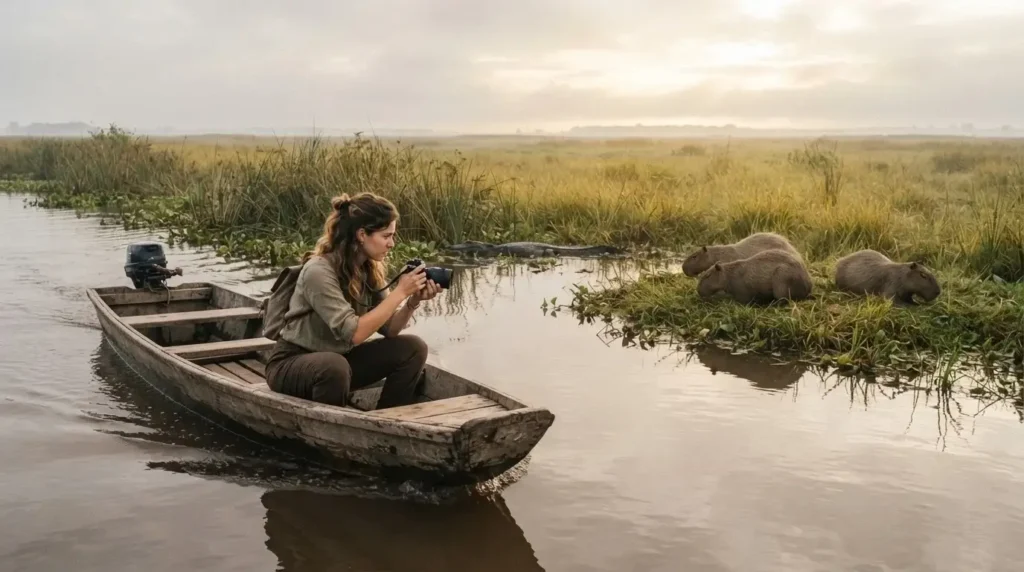
If you asked me to name one place in Argentina that genuinely surprises people, it would be the Esteros del Iberá. This enormous, slow-moving wetland system in the northeast province of Corrientes is the second-largest wetland in the world after the Pantanal, and the vast majority of international travelers walk right past it on their way to Iguazú.
That is a mistake worth correcting.
The Iberá wetlands cover over 1.3 million hectares, and the national park at its core, Parque Nacional Iberá, protects more than 195,000 hectares of lagoons, floating islands, and grasslands. Admission to the national park is free. Wildlife is extraordinary and accessible in a way that surprises people who associate this kind of safari experience only with Africa. You are talking about capybaras, marsh deer, giant otters, hundreds of bird species including the jabiru stork, caimans, and anacondas, all visible on guided boat trips and walking safaris.
But here is the part that elevates Iberá from “cool wetland” to something genuinely important: the jaguar. Rewilding Argentina, the conservation organization behind the largest rewilding project in the Americas, has been working for years to reintroduce locally extinct species to Iberá. By the end of 2024, they had documented 33 free-living jaguars in the park. These are the first wild jaguars in Argentina in over 70 years. If you visit on a guided night excursion or a safari boat ride, there is a real, non-zero chance of seeing one. That is a story you will be telling for a long time.
Getting here takes some planning. The most practical gateway is flying into Posadas or Corrientes city, then taking a bus to the town of Mercedes, and from there connecting to Colonia Carlos Pellegrini, the main village inside the wetlands. The 120-kilometer road from Mercedes to Carlos Pellegrini is unpaved, which means the transfer takes around three hours. Some lodges inside the wetland offer pickup from Mercedes. Budget a minimum of two nights, but honestly, three days in the wetlands is where you start to feel the pace shift and the wildlife encounters multiply.
For food, eat locally in Carlos Pellegrini. The town is tiny, maybe ten blocks in each direction, and most accommodation includes meals. Surubí, a firm Parana river fish, is the regional specialty. Drink tereré, the cold yerba mate version that is the everyday beverage of Corrientes province, whenever someone offers it to you. It is the local version of sharing a cup of tea and one of the warmest cultural gestures the northeast offers.
The best seasons to visit are autumn (April to May) and spring (August to October). Summer in Corrientes is brutally hot and humid.
Quebrada de Humahuaca, Jujuy Province
Northwest Argentina operates at a different frequency from the rest of the country. The light is golden and intense. The landscapes shift between rust-red canyon walls, Andean cacti, and villages of whitewashed adobe where the pace of life feels genuinely old. If you have spent time in the markets and mountain towns of northern Ghana or rural parts of Asia, you will recognize that specific feeling of arriving somewhere that has not been reconfigured for outsiders.
The Quebrada de Humahuaca is a 155-kilometer valley running north through Jujuy province along the route of the ancient Camino Inca.
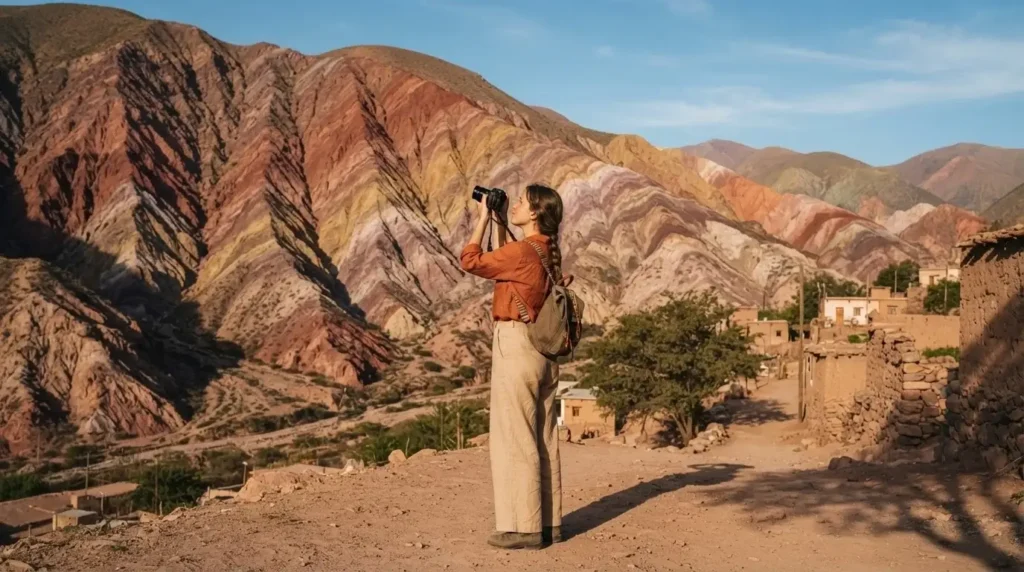
In 2003, UNESCO inscribed it as a World Heritage Site for its extraordinary layering of 10,000 years of human history, from pre-Incan agricultural terraces still in use today, to Incan installations, Spanish colonial churches, and the living Andean communities that have never left.
Most travelers who come to this region arrive in Salta, take the day-trip tour to Purmamarca (famous for the Cerro de los Siete Colores, or Hill of Seven Colors), and call it done. That is like visiting New York City for two hours and deciding you’ve seen it.
Spending actual time here means staying in Tilcara, a small town with a good selection of hostels and family-run guesthouses starting around $15 to $25 USD per night for a dorm or basic private room. Tilcara is a base for visiting the nearby Pucará de Tilcara, a pre-Incan fortified settlement with sweeping views over the canyon, and for taking day trips north to Humahuaca and Iruya, a remote village accessible only via a dramatic switchback mountain road that takes you from the main valley up into the Andean highlands.
What to eat in the Quebrada: locro, a thick stew of corn, beans, and meat that has been warming Andean communities through cold mountain nights for centuries. Humita en chala, steamed corn dumplings wrapped in corn husks, found at almost every market and street stall. Quinoa soup. Tamales. And empanadas, which in this region tend to be smaller, spicier, and baked in clay ovens rather than fried.
The best time to visit is April through June and September through November. July brings the Pachamama festival (August 1st is the main offering to Mother Earth across the northwest) and the Carnival season in February brings extraordinary processions and music, though accommodation fills fast.
Solo travelers do very well in this region. The small towns are easy to navigate on foot, locals are accustomed to independent travelers, and the bus network between Jujuy city and the valley towns is reliable and inexpensive.
Valle de la Luna, Ischigualasto Provincial Park, San Juan Province
There are landscapes in Argentina that make you feel like you have left the planet entirely. Ischigualasto, known informally as Valle de la Luna (Valley of the Moon), is one of them.
Located in the northeastern part of San Juan province, this provincial park covers 62,000 hectares of eroded desert badlands where the wind and water have spent millions of years sculpting clay and volcanic ash into shapes that look genuinely alien. Grey spheres the size of bowling balls scattered across the desert floor. Canyon corridors striped in red and white. Formations with names like El Submarino and El Hongo that you will understand the moment you see them.
Beyond the scenery, Ischigualasto sits on one of the world’s most important paleontological sites. The Triassic-period rock formations here have yielded some of the earliest known dinosaur fossils on Earth, including the Eoraptor, one of the oldest dinosaurs ever discovered. The park’s interpretation center at the entrance contains dinosaur replicas and explains how this particular corner of the Argentine desert became a window into the Mesozoic era.
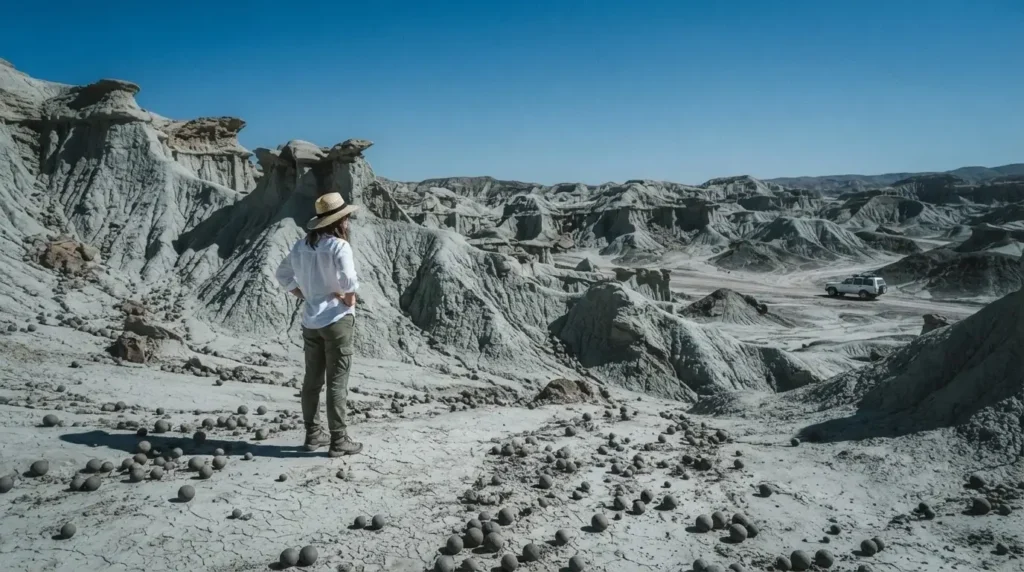
Ischigualasto and the adjacent Talampaya National Park together form a joint UNESCO World Heritage Site recognized for their exceptional paleontological and geological value.
According to Argentina’s official tourism board, all visits inside the park are conducted on guided tours in authorized vehicles, which actually works in your favor as a solo traveler since you are always in a small group with a knowledgeable guide and a vehicle handling the rough terrain. Tours run throughout the day. One of the most spectacular options is the full moon tour, offered on the nights around the full moon each month when the grey lunar landscape takes on an eerie silver glow that photographs cannot capture.
Getting here: the park is about 99 kilometers from San Agustín del Valle Fértil (a lovely base town with guesthouses and a slower pace than San Juan city), accessed via Provincial Route 510 and then National Route 76. San Juan city is reachable by overnight bus from Buenos Aires in around 14 hours. Many visitors combine Ischigualasto with Talampaya National Park on a multi-day loop through La Rioja and San Juan provinces, which makes the long overland journey worthwhile.
Best months to visit are March through June and September through November. Avoid summer (December through February) when temperatures inside the park can reach 50 degrees Celsius and the experience becomes genuinely dangerous.
Cafayate, Salta Province
Mendoza gets all the wine headlines. But for solo travelers who want to combine breathtaking scenery with an excellent glass of local wine and almost no crowds, Cafayate in the Calchaquí Valley of Salta province is a more interesting destination.
The vineyards here sit at roughly 1,600 to 1,700 meters above sea level, making them among the highest commercially producing wine regions in the world. The altitude combined with intense sun and cool nights produces Torrontés, a white wine that is uniquely Argentine and genuinely unlike anything you will taste from other wine regions. Floral, aromatic, bright with acidity. It is the kind of wine that makes you rethink what white wine can be.
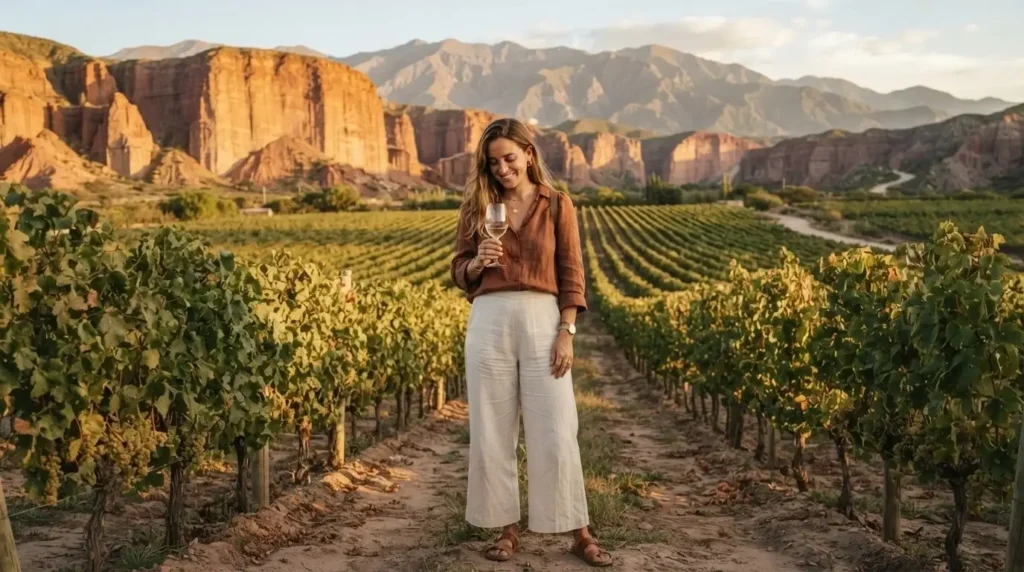
The town of Cafayate itself is small, relaxed, and surprisingly sophisticated for its size. The central plaza has several bodegas within walking distance, and you can easily spend two or three days visiting wineries, eating well, and cycling out to the canyon formations in the surrounding Quebrada de las Conchas. That canyon road, which connects Cafayate to Salta city about 185 kilometers north, is considered one of the most beautiful drives in South America. The rock formations along the way have names: Garganta del Diablo (Devil’s Throat), the Amphitheater, the Toad. Even if you are not driving, the bus journey through it is worth taking with a window seat.
From Cafayate, Salta city is a logical base and an excellent destination in its own right, a well-preserved colonial city with one of the best central plazas in Argentina, beautiful 18th-century architecture, and a food scene rooted in Andean and Criollo traditions.
El Bolsón, Río Negro Province
Here is what I think happens with Patagonia on most itineraries: travelers book Bariloche, love Bariloche, and leave without ever realizing that 130 kilometers south, there is a town that local Argentines arguably find more interesting.
El Bolsón sits in a fertile valley ringed by dramatic peaks in Río Negro province. It has a long history as a bohemian counterculture hub, originally attracting artists, craftspeople, and back-to-the-landers in the 1960s and 70s who were drawn by the fertile microclimate and the distance from Buenos Aires. That spirit is still very much present. The Tuesday, Thursday, Saturday, and Sunday artisan market on the central plaza is one of the best craft markets in all of Patagonia, selling handmade jewelry, leather goods, jams, local cheeses, and ceramics made by people who live in the surrounding valley.
El Bolsón is also Argentina’s craft beer capital, sharing that crown with Bariloche but perhaps wearing it more naturally. The hop-growing tradition in the valley feeds a cluster of microbreweries that have been perfecting their techniques for decades. In February, the town hosts the National Hop Festival, a celebration of the harvest that takes over the main plaza with live music, folk dancing, and obviously, a great deal of beer.
Hiking here is accessible without a guide, unlike some parts of Patagonia. The trails into the surrounding mountains are well-marked, and the landscape, waterfalls, granite peaks, and berry-covered hillsides, feels gentler and more intimate than the extreme windswept terrain of the far south. For solo travelers who want Patagonian scenery without the logistical complexity (and price tag) of El Calafate or Torres del Paine, El Bolsón is genuinely one of the best decisions you can make.
What These Destinations Have in Common
None of these places are difficult to reach by ordinary traveler standards. They all have accommodation ranging from budget hostels to comfortable guesthouses. They are all served by Argentina’s extensive long-distance bus network, which is generally punctual, affordable, and comfortable, particularly in the semi-cama and cama executive classes. And none of them require specialized gear, a guide for the entire trip, or any kind of expedition mindset.
What they do require is a willingness to slow down, to stay an extra day when something feels right, and to accept that the journey to some of these places is itself part of the experience. That is a different kind of traveling than sprinting between airport connections, but it is also, in my experience, the kind of traveling that produces the stories you still tell years later.
Argentina is extraordinarily large and extraordinarily varied. The places above represent five very different geographical and cultural faces of that variety: subtropical wetlands, ancient Andean valleys, prehistoric desert, high-altitude wine country, and Patagonian bohemia. You could build an entire three-to-four-week itinerary that never once goes where everyone else goes, and you would come home having seen a version of Argentina that most visitors never reach.
That, to me, is always worth the extra planning.
A Few Practical Notes Before You Go
Citizens of the US, UK, Canada, Australia, and most of Europe do not need a visa for Argentina for stays of up to 90 days.
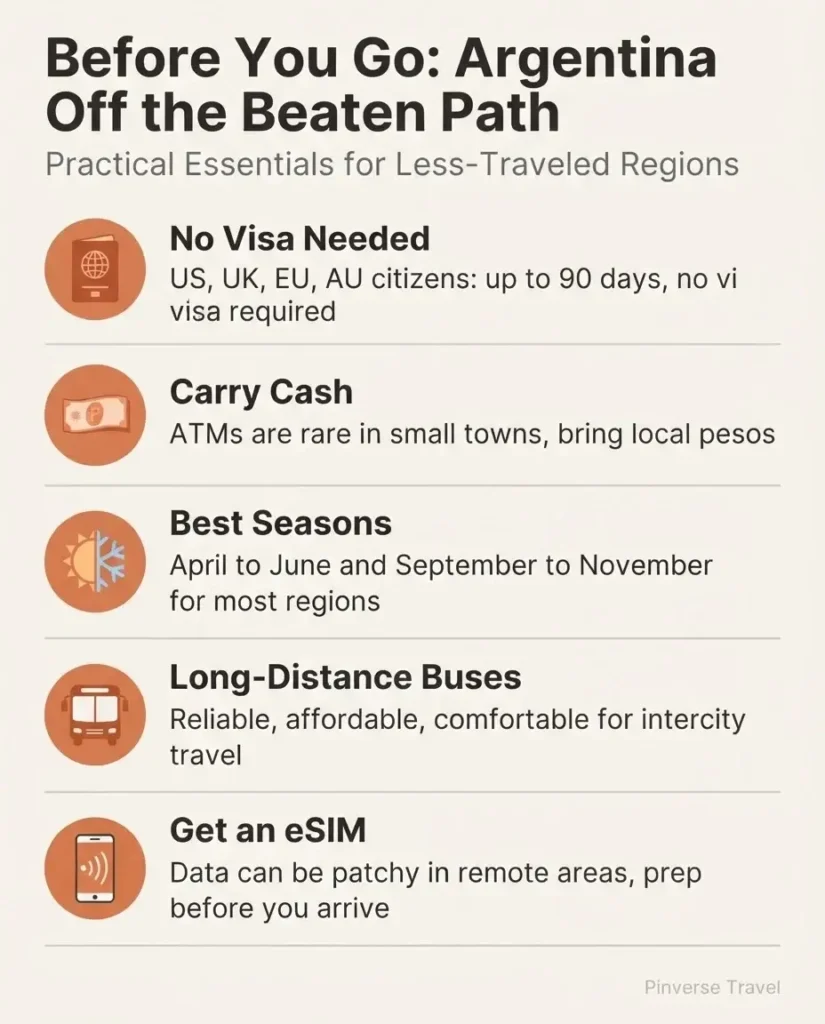
Carry your passport rather than a photocopy when you are traveling between provinces. For most remote destinations, carry local Argentine pesos in cash since ATM access in small towns can be limited and connectivity for card payments is unreliable. Spanish is helpful but not critical; outside Buenos Aires and major cities, basic travel Spanish will take you a long way, and locals in smaller towns are remarkably patient with travelers attempting the language.
Give yourself permission to not see everything. The travelers who end up loving Argentina most are almost always the ones who chose depth over distance.