There is a particular kind of silence right before a paraglider lifts off. The world is still moving below you, but for a few seconds you are suspended between two things: the life you were living on the ground and something completely new. If you have ever wanted to know what that feels like, the Americas are one of the best places on earth to find out.
I have stood at enough cliff edges during my travels, figuratively and literally, to know that the things that scare you a little before you do them are almost always the ones worth doing. Paragliding sits in that category for a lot of travelers. It looks terrifying from the outside and feels, according to everyone who has actually done it, like the most peaceful thing you have ever experienced. That contrast is exactly what draws people to it.
This guide covers five exceptional paragliding destinations across the Americas, from California to Chile. Some are accessible for total beginners on a tandem flight. Some are world-class sites that serious pilots travel thousands of miles to reach. All of them are worth knowing about.
What a Tandem Paragliding Flight Actually Is:
Before we talk locations, I want to clear something up because I know this question sits quietly at the back of a lot of people’s minds. You do not need experience to go paragliding. A tandem flight means you fly strapped in with a certified professional pilot. They handle everything: the launch, the navigation, the landing. Your only job is to take a few running steps at takeoff and enjoy the ride. Flights typically last 10 to 30 minutes depending on the site, the wind, and the operator. You will be harnessed in securely, seated in a comfortable sling-style position, and in the hands of someone who has done this hundreds or thousands of times before.
The one thing you should always verify before booking is that your pilot is certified. In the US, look for USHPA-certified instructors and operators, which is the governing body for hang gliding and paragliding in America. In Latin America, reputable operators will have certifications from their national aviation or sport authorities and will volunteer this information clearly. If an operator is vague when you ask about credentials, that is your cue to find someone else.
Now, to the destinations.
Torrey Pines Gliderport, La Jolla, California:
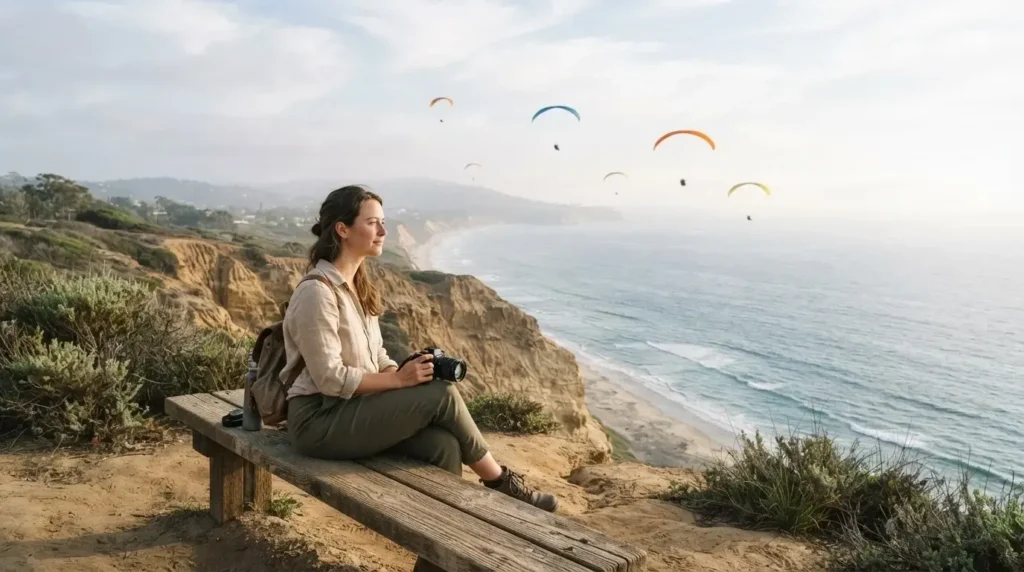
If you are based in the US and want to experience paragliding for the first time, Torrey Pines Gliderport in La Jolla is one of the most iconic places to do it. The site sits on a bluff above the Pacific Ocean on the edge of San Diego, and it has been an active free-flight site for decades. On a good day you launch and drift out over the water, watching the coastline stretch north and south while the Pacific breeze keeps you aloft.
What makes Torrey Pines especially good for first-timers is that the flying here is relatively gentle. The site relies on consistent ocean ridge lift rather than the aggressive thermal conditions you get at inland or high-altitude sites, which means smoother flights. Tandem paragliding flights at Torrey Pines Gliderport start at $200, with cash discount pricing at $190. They do not take reservations because flights are entirely weather-dependent, so the system works on a walk-up, first-come basis. Call ahead the morning you want to fly to check wind conditions.
The surrounding area makes the trip even better. La Jolla is a genuinely beautiful neighborhood, and after your flight you have the Torrey Pines State Natural Reserve and several excellent spots for fish tacos within easy reach. If you are driving up from somewhere else in Southern California, build this into a longer San Diego day trip. The views from the bluff alone are worth the drive even if the winds do not cooperate.
Medellin (San Felix), Colombia:
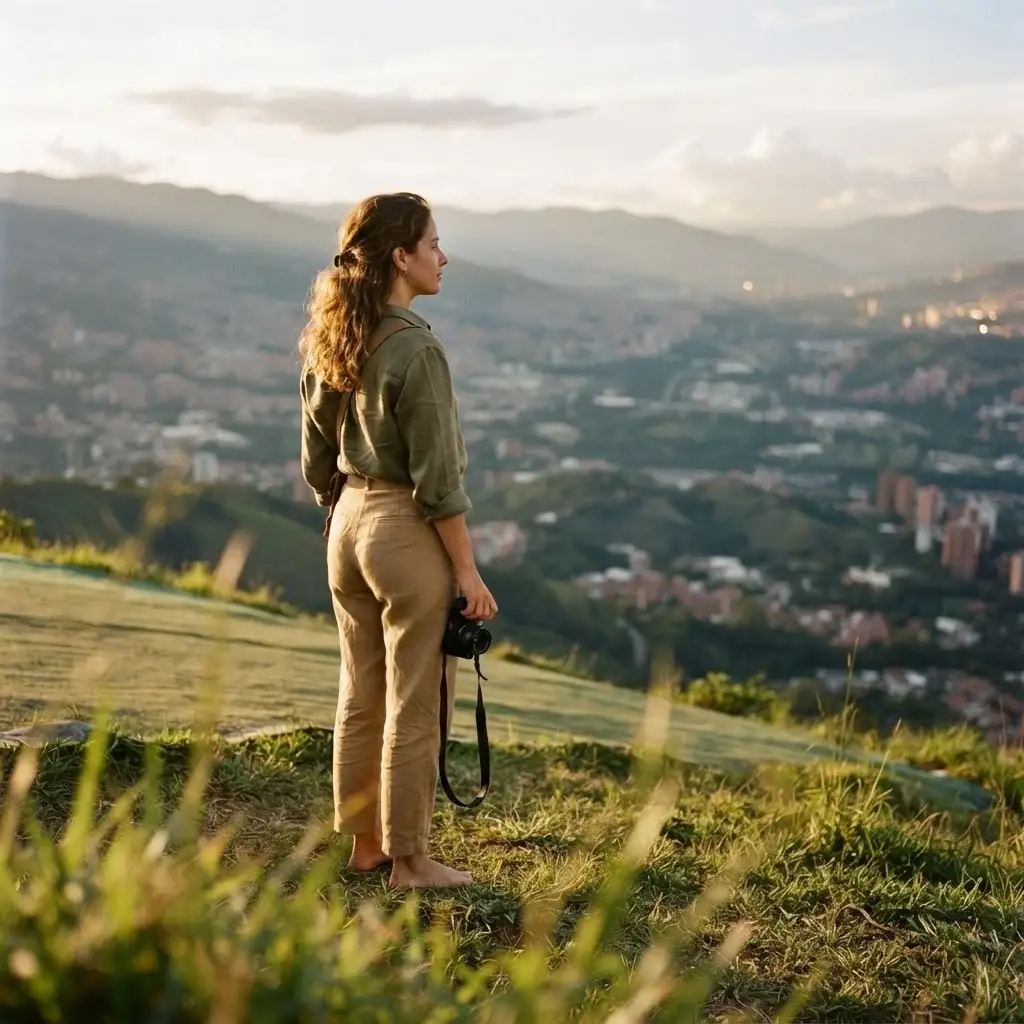
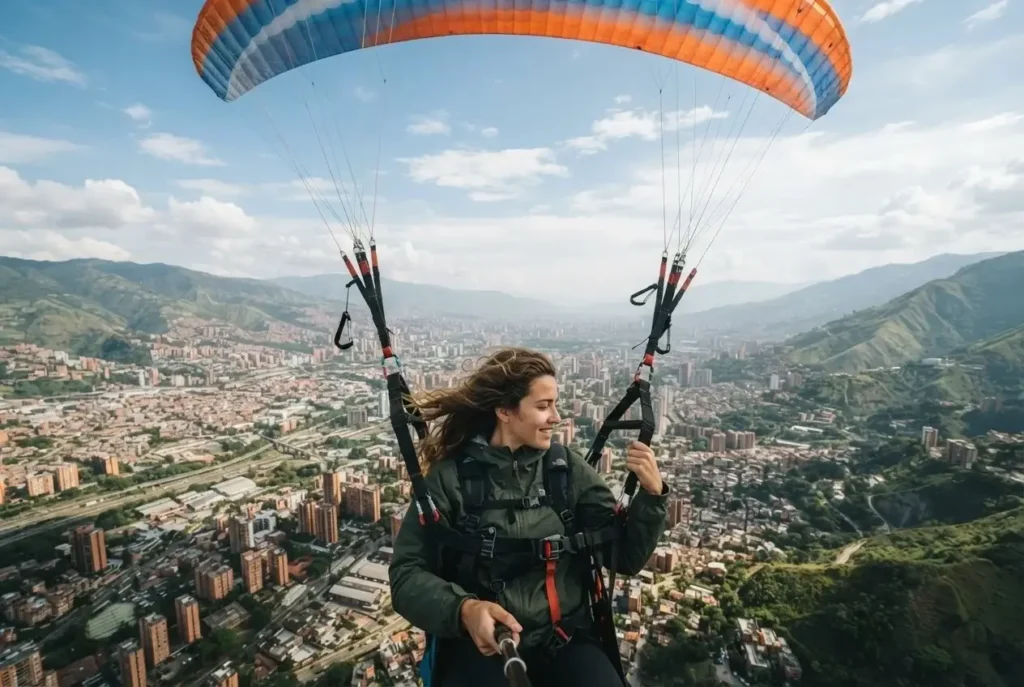
Of all the paragliding destinations in Latin America, Medellin might be the most perfect combination of accessible, affordable, and visually stunning. The launch site is a small community called San Felix, about 20 minutes north of Medellin by taxi or metro plus cable car. You take off from a hillside and glide over the Valle de Aburra, the dramatic bowl-shaped valley that Medellin sits in, with the city sprawled below and mountains surrounding you on all sides.
The setup here is highly welcoming to first-timers and solo travelers. Multiple certified operators work the site, and booking is usually easy, either on the morning you arrive or a day ahead. The official Paragliding Medellin operator lists current pricing on their site, with a 15-minute tandem running around 220,000 COP (roughly $55 USD at current exchange rates), a 20-minute flight around 290,000 COP, and a 30-minute experience around 450,000 COP. These prices make Medellin one of the most budget-friendly paragliding destinations in the hemisphere.
From everything solo travelers consistently report, the experience in San Felix is warm and unhurried. Operators are used to working with nervous first-timers and foreign visitors. The best time to go is morning, before afternoon clouds and rain start rolling in, which is typical of Medellin’s mild Andean climate. The city is dry and flyable primarily between December and February and again between June and August, though the site operates much of the year. US citizens do not need a visa for Colombia for stays of up to 90 days, which removes one more barrier to planning this trip. If you want to see the full range of sites across Colombia, the paragliding site database for Colombia gives a solid overview of the country’s launch points, from Bucaramanga’s dramatic Chicamocha Canyon flights to Roldanillo in the Valle del Cauca.
If you travel anything like I did during my backpacking years in Europe, where the goal was to stretch the budget as far as possible while doing things that genuinely mattered, Medellin is built for that kind of travel. A tandem flight, a city cable car tour, and a bowl of bandeja paisa will run you less than a single dinner in New York.
Valle de Bravo, Mexico:
Two hours west of Mexico City, tucked into the mountains of the State of Mexico, sits one of the most celebrated paragliding destinations in the entire world. Valle de Bravo is a cobblestoned, lake-ringed colonial town with a warm, slightly chaotic energy, and it happens to sit at the base of some of the most consistent flying conditions on the planet. The FAI Paragliding World Champion has called it “arguably the best place in the world to fly,” which is not a claim people make lightly.
Cross Country Magazine’s guide to Valle de Bravo describes what makes the flying here so special: the site delivers a rare combination of mountain thermals, plateau convergence flying, and flatland crossings all in a single day’s flight. The main launch, El Penon, sits at 2,340 meters above sea level, with cloudbase regularly reaching 3,500 meters. The primary flying season for paragliders runs November through February, when the weather is almost absurdly reliable. If it is not raining, it is flyable.
For travelers who are not yet licensed pilots, Valle de Bravo has a thriving tandem flight scene. Local operators offer introductory flights for visitors, and the town itself is genuinely enjoyable to spend a few days in. Think good coffee, fresh churros by the lake, kayaking, craft markets, and the kind of slow pace that makes you want to stay an extra week. Pilots and tourists mix easily here because the town has been welcoming both for decades.
Getting there is straightforward: buses run daily from Mexico City’s central bus terminal to Valle de Bravo, or you can take a taxi from Toluca airport, which is the nearest airport. Several operators in town will arrange airport transfers if you are traveling with a group.
Rio de Janeiro (Pedra Bonita), Brazil:
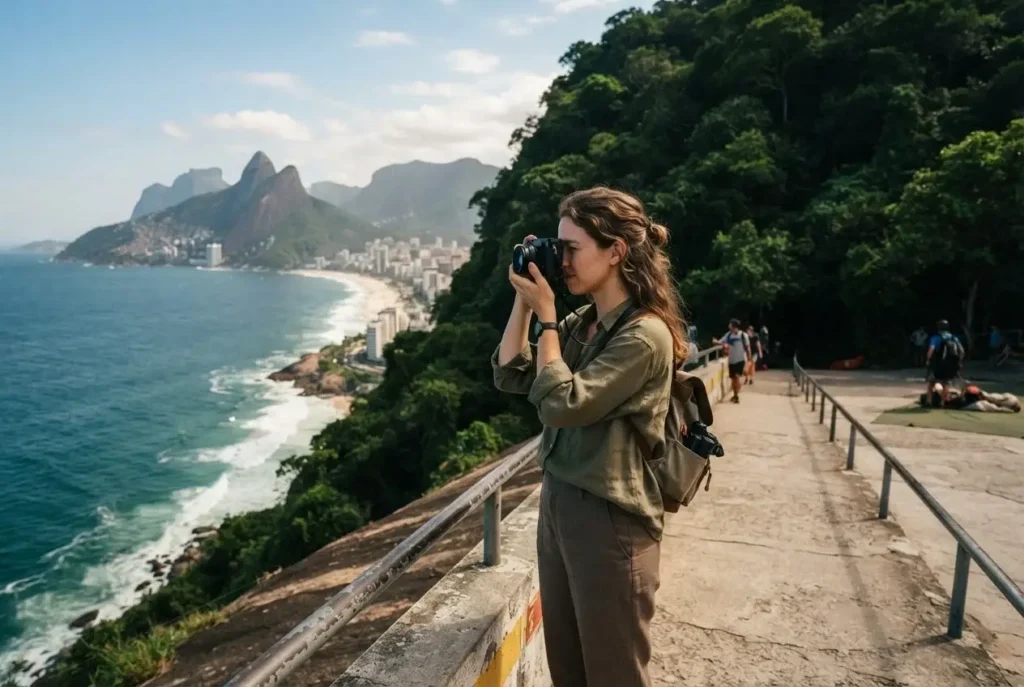
Some paragliding experiences give you views. The one in Rio de Janeiro gives you one of the most famous panoramas in the world seen from a perspective most people will never experience. The launch is from Pedra Bonita, a granite ramp at 520 meters above sea level inside Tijuca National Park. You soar over the Atlantic Rainforest, pass above two Brothers Hill, look down at São Conrado Beach below you, and land on Pepino Beach with the ocean right there waiting for you.
What makes this flight extraordinary is the setting. This is not a quiet mountain valley or an empty desert coast. You are flying over one of the most dynamic, densely layered cities in the world, with forest on one side and ocean on the other and mountains and skyscrapers visible in every direction. It is genuinely unlike anywhere else.
The practical details are manageable for solo travelers. RioXtreme’s paragliding operation works exclusively with pilots who have more than 20 years of experience and are certified by the Brazilian Paragliding Association. Flights run from 8am to 2pm depending on weather and wind forecast, last between 10 and 20 minutes, and land on Pepino Beach in São Conrado where transfers back to the city are easy. Current pricing is around R$990 per person (approximately $175 USD at current exchange rates). The minimum age is 16 and the maximum weight is 105kg. Bring comfortable shoes (not flip-flops), sunscreen, mosquito repellent since you start inside rainforest, and something to secure your glasses if you wear them.
From what I know of Rio, the city rewards travelers who look for its layers beyond the famous beaches and carnival imagery. Adding a paragliding flight over Tijuca National Park connects you to the city’s extraordinary natural geography in a way that no viewpoint or bus tour can replicate.
Iquique, Chile:
If any destination in the Americas deserves to be called a paragliding pilgrim site, it is Iquique. The city sits on the northern coast of Chile, at the edge of the Atacama Desert, which is the driest desert on earth. The combination of consistent Pacific coastal winds, enormous sand dunes rolling directly to the ocean, and thermal conditions generated by the desert creates flying conditions that are almost incomprehensibly reliable. Iquique is flyable approximately 340 days per year.
The landscape here is unlike anything else on the continent. Pilots report flying through dry river canyons, over perfectly shaped sand slopes, and along rocky coastal headlands that drop straight into the sea. Cross-country flights can cover enormous distances. Antofaya Paragliding is one of the established operators running adventure tours out of Iquique, and several US-based paragliding schools run guided multi-day tours to the site each season. The best season for long cross-country flights is austral spring, roughly October through December, though skilled pilots fly there year-round.
It is worth being honest that Iquique skews toward experienced pilots and those looking to develop their skills over multiple days rather than a single tandem flight. If your goal is a one-time experience, Medellin or Rio might fit better. If you are someone who has already done a tandem or two and is curious about learning to fly independently, Iquique is one of the best places in the world to develop that skill in a genuinely dramatic environment.
Getting to Iquique is straightforward from Santiago, with multiple daily flights taking roughly two and a half hours on carriers like LATAM or Sky Airline. The city itself has a pleasant, slightly surreal quality, sitting between the ocean and a massive desert escarpment with a well-preserved Victorian-era wooden downtown.
What to Wear and Bring for Your First Paragliding Flight:
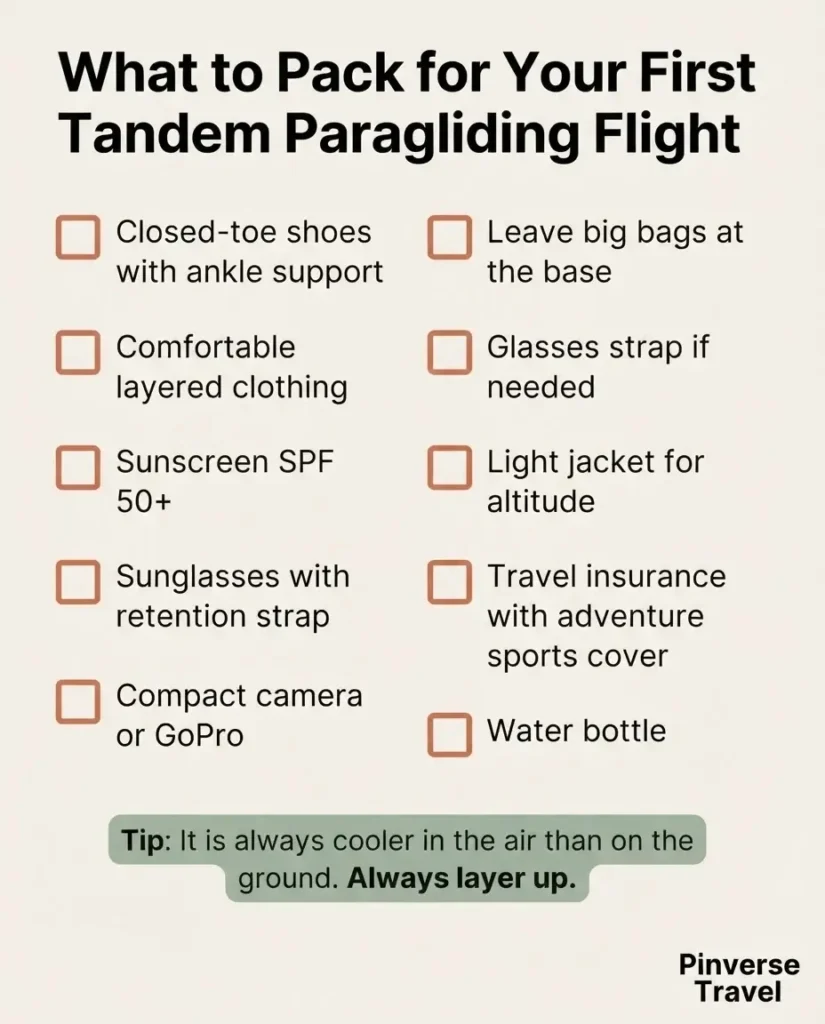
This is one of those practical things most destination guides skip over, and it genuinely matters. Wear closed-toe shoes with ankle support, not sandals or flip-flops. Dress in comfortable layers since it is always several degrees cooler in the air than on the ground. Bring sunglasses, ideally ones that strap around your head so they cannot fly off. Use sunscreen before you go up because the UV exposure at altitude is higher than you expect. Leave your big bag on the ground and keep your hands free.
If you wear glasses, ask your operator for a strap or bring your own. Bring your camera if it is compact and light, but know that most operators offer to record your flight from the air, and the footage is usually worth buying.
One thing worth taking seriously for any adventure activity far from home is travel insurance that covers paragliding. Standard travel insurance policies do not automatically cover it. Some providers like World Nomads and Battleface offer adventure sports coverage that includes tandem flights. Verify before you go, not after.
How to Pick a Good Operator:
Across all five of these destinations, the quality of your experience comes down largely to the person flying with you. A few things to look for: ask directly whether your pilot is certified by the relevant national authority. Look for operators with genuine online reviews from the past year. Avoid anyone who gives you vague answers about safety briefings or skips the pre-flight instructions. In the US, the USHPA website lets you search for certified instructors and schools directly. For international destinations, national sport aviation bodies in each country maintain similar registries.
A good operator will never rush you. They will give you a clear briefing before you launch, answer your questions, and make sure you understand what is about to happen. If you show up and feel like you are being processed rather than prepared, it is okay to walk away and find someone else. Your comfort and safety are not negotiable, and any legitimate operator knows that.
One More Thing, From Someone Who Has Stood at the Edge:
When I was guiding tours in New York City, I used to watch people look up at the skyline and say they always wanted to do something different with their life. Not someday. Just always wanted. Paragliding sits in that same mental space for a lot of travelers. You keep it in the abstract because it feels easier than doing the research, booking the flight, and actually showing up at the launch.
The destinations in this article are accessible. The costs are reasonable. The experience is not out of reach for someone who has never done it before. The part that requires action is just deciding that this is actually something you are going to do, and then doing the research, which you have clearly already started.
The silence before you lift off is brief. What comes after it tends to stay with you for a long time.