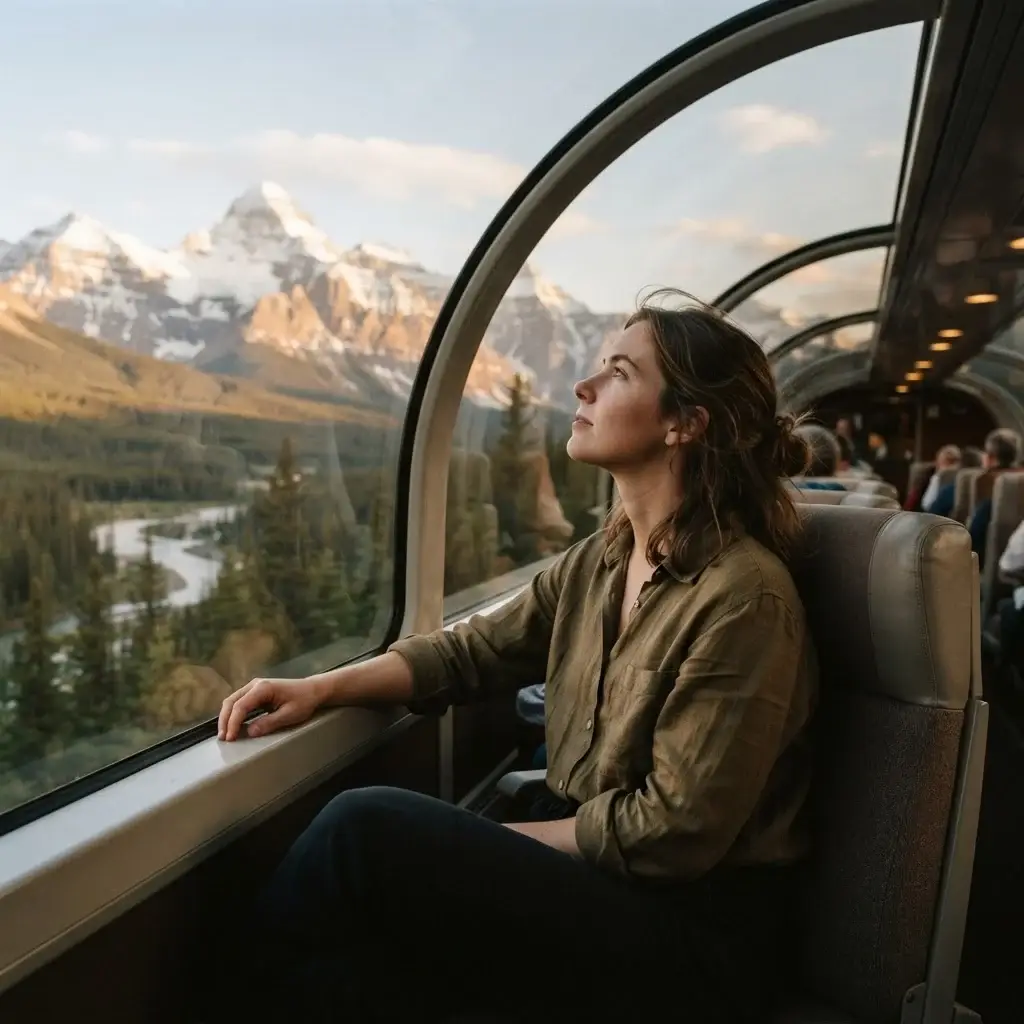
There is a specific kind of peace that only a long train ride can give you. The window fills with something new every hour. Mountains flatten into plains, plains break open into canyons, cities fade into wilderness, and somewhere in the middle of all that, you stop checking your phone and just watch. I have felt that stillness in different ways on different kinds of journeys, from the quiet intensity of long hikes in China to the rhythm of slow travel through communities where no one is in a hurry. Rail travel gives you that same quality of attention, and the Americas, from Alaska down to the Andes, have some of the most jaw-dropping train routes on earth.
This is not a list of “most luxurious” options or the trains you need a trust fund to ride.
This is a practical guide to the scenic rail journeys across North, Central, and South America that genuinely reward solo travelers: what each route is like, how to book it, roughly what it costs, which seat class makes sense, and what to do when you arrive. Whether you have been thinking about this for years or you just decided last week that you want to try train travel, consider this your starting point.
Why Train Travel Works Especially Well for Solo Travelers
Before we get into the routes, it is worth saying this plainly: train travel is one of the best formats for solo travel that exists. You are in a shared space with other people, which means organic conversation happens naturally in lounge cars and at dining tables. You are never alone in a way that feels isolating, but you are also never obligated to talk to anyone. You can spend three hours reading, look up at the Rockies, and then strike up a conversation with a retired couple from Colorado who have taken the same route fifteen times and know every canyon by name.
Unlike flying, the journey itself is the experience. The landscape becomes your entertainment, your meditation, and honestly your first cultural immersion before you even reach your destination. The stops along the way are opportunities, not inconveniences. That shift in mindset from “enduring the trip” to “enjoying the trip” is one of the most quietly powerful things that slow travel can teach you. I believe in that deeply, whether I am on a long-haul bus through Europe or a train curving through mountain passes.
The California Zephyr (USA): Chicago to San Francisco
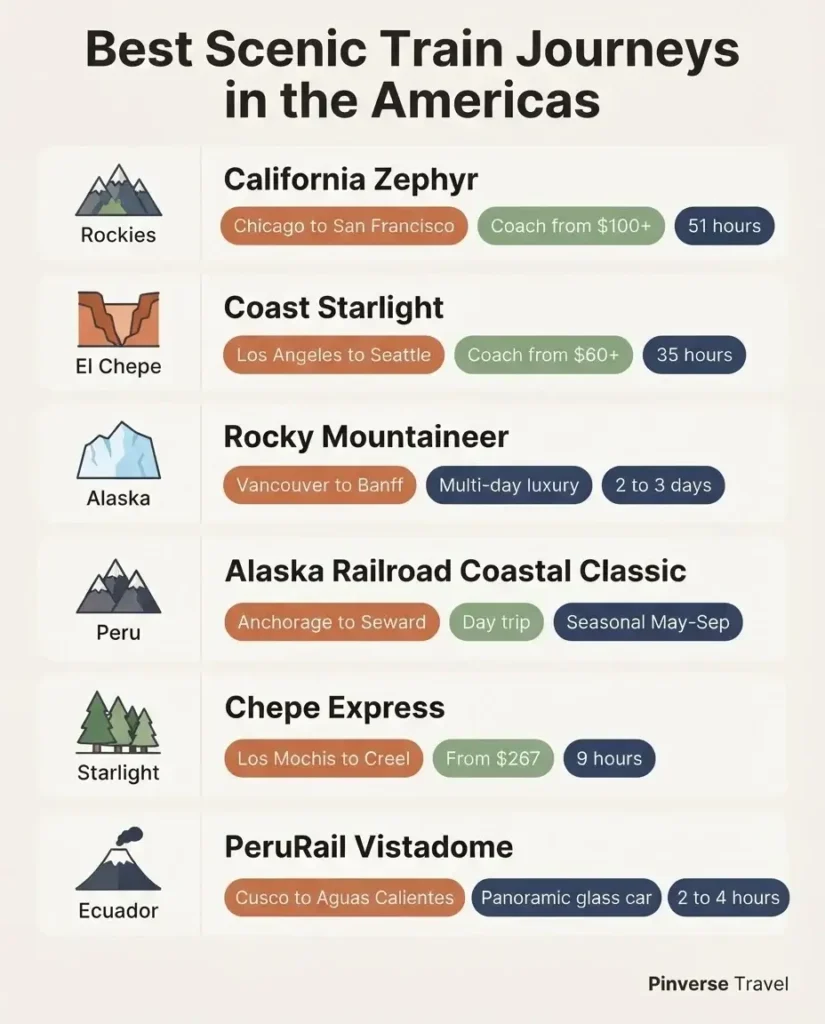
If there is one train ride in North America that solo travelers consistently describe as life-changing, it is the California Zephyr. The route covers 2,438 miles across two nights and roughly 51 hours, threading through the Great Plains of Nebraska, climbing into the Colorado Rockies, passing through the Moffat Tunnel at over 9,000 feet, carving through Glenwood Canyon alongside the Colorado River, and eventually descending through the Sierra Nevada into California. The scenery changes so dramatically that people who have done it multiple times say it feels different every season.
The Sightseer Lounge car is free for all passengers and is genuinely the social heart of the train. Solo travelers tend to naturally congregate there, and it is the kind of place where you end up talking for hours with people you would never have met any other way. If you are on the fence about solo train travel, the lounge car alone is worth the price of a ticket.
On pricing: coach seats start around $100 for shorter segments, while a full Chicago-to-San Francisco coach ticket typically runs $150 to $250 if booked early. A roomette, which includes a fold-down bed and all meals, usually starts around $300 to $600 one-way with advance booking, climbing steeply for summer travel and last-minute purchases. Coach is entirely doable for this route, especially if you are a light sleeper or you enjoy the social energy of the coach cars. You can find the full schedule, route map, and booking options directly on Amtrak’s California Zephyr page.
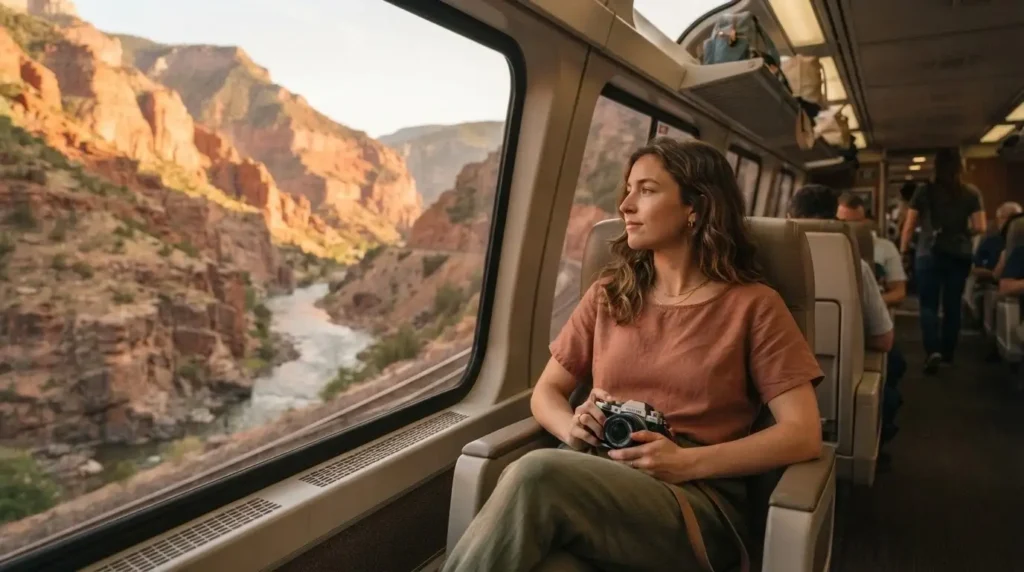
My honest tip for the Zephyr: board in Denver if you want the most scenically concentrated portion of the journey. The stretch from Denver through the Rockies and into Utah is where the real drama happens. Bring snacks, a good book as backup, a portable charger, and a neck pillow you actually trust. The dining car serves real meals, but the prices add up if you are on a tight budget.
The Coast Starlight (USA): Los Angeles to Seattle
The Coast Starlight runs 1,377 miles along the Pacific Coast from Los Angeles to Seattle, passing through Santa Barbara, San Luis Obispo, San Francisco (Oakland), Sacramento, and Portland. The coastal stretch through central California, with the Pacific on one side and the Santa Lucia Range on the other, is stunning in the late afternoon light. The train takes about 35 hours end to end, making it a one-night journey.
Solo travelers love this route for its approachability. It is long enough to feel like a real adventure but not so long that you question your life choices at hour 40. The Pacific Parlour Car, when available in certain seasons on this route, is an upper-level lounge with a bar and reserved seating. The Cascades mountain stretch through Oregon and Washington is another highlight, particularly if you are heading northbound in the morning.
Coach on this route typically starts around $60 to $150 depending on how far in advance you book. A roomette generally runs $200 to $500. Booking 2 to 3 months ahead locks in the best prices, especially for summer.
The Rocky Mountaineer (Canada): Through the Canadian Rockies
The Rocky Mountaineer is a different kind of experience from Amtrak routes. This is a daytime-only train, which means every mile of the Canadian Rockies is visible, and the glass-dome windows are designed to make sure you miss nothing. The train stops overnight in Kamloops, British Columbia, where passengers stay at a hotel before continuing the next day, so it is a 2 to 3 day journey rather than a single overnight.
The flagship route, First Passage to the West, runs between Vancouver and Banff or Lake Louise, passing through Kamloops, the Fraser Canyon, and the peaks of the Canadian Rockies. Breakfast and lunch are served onboard, and the hosts narrate the landscapes as you travel. The Journey through the Clouds route connects Vancouver to Jasper and is equally dramatic.
This is not a budget option. Rocky Mountaineer prices start in the hundreds of dollars per person and rise from there depending on the service level (SilverLeaf or GoldLeaf) and the season. May to October is the operating window. If this is on your radar, the Rocky Mountaineer routes page lays out all four Canadian routes with itinerary options and pricing tiers. The investment is significant, but solo travelers who have done it consistently say it ranks among their top travel experiences, full stop.
The Alaska Railroad Coastal Classic (USA/Alaska): Anchorage to Seward
Alaska is, by almost any measure, the most dramatic landscape you can experience from a train window on this continent. The Alaska Railroad’s Coastal Classic runs from Anchorage south along Turnagain Arm, where the Chugach Range drops almost vertically into the sea, through backcountry wilderness to Seward on the shores of Resurrection Bay. National Geographic Traveler rated this among the top ten train rides in North America, and that ranking is well earned.
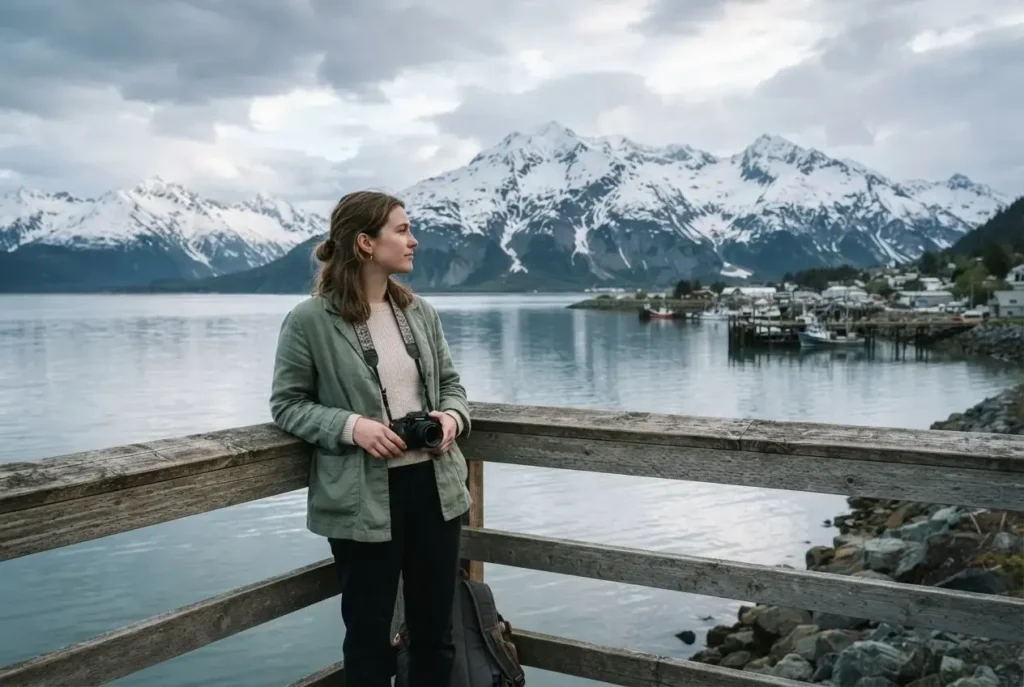
This is a day trip route: the train departs Anchorage in the morning, arrives in Seward late morning, and returns to Anchorage in the evening. In Seward, you can book a wildlife cruise into Kenai Fjords National Park, visit the Alaska SeaLife Center, or simply walk the harbor and watch sea otters and harbor seals do their thing. It pairs perfectly with a few days in Anchorage at either end. You can review the full route detail and book tickets on the Alaska Railroad’s Coastal Classic page.
For multi-day Alaska rail travel, the Denali Star runs from Anchorage north through Talkeetna, past Denali (North America’s tallest peak), and on to Fairbanks. The GoldStar Dome service includes meals, a glass-dome observation deck, and lower-level seating, while Adventure Class is the more affordable option. Current fares for both service classes on all routes are listed on the Alaska Railroad fares page.
The best window for Alaska rail travel is late May through mid-September, when days are longest and wildlife activity is highest.
El Chepe (Mexico): The Copper Canyon, Los Mochis to Creel
This is the one that tends to surprise people. The Chepe Express in northern Mexico runs through the Copper Canyon (Barrancas del Cobre), a canyon system that is actually four times larger than the Grand Canyon by some measurements, cutting through the Sierra Madre Occidental mountains of Chihuahua and Sinaloa. The train covers over 350 km from Los Mochis to Creel in roughly 9 hours, passing through tunnels, over bridges, and alongside cliffs that make the landscape feel genuinely unreal.
From what solo travelers who have ridden this route consistently report, the key is to get off the train and stay at one of the canyon-side villages rather than riding end to end in a single day. Divisadero and Creel are the most popular stops.
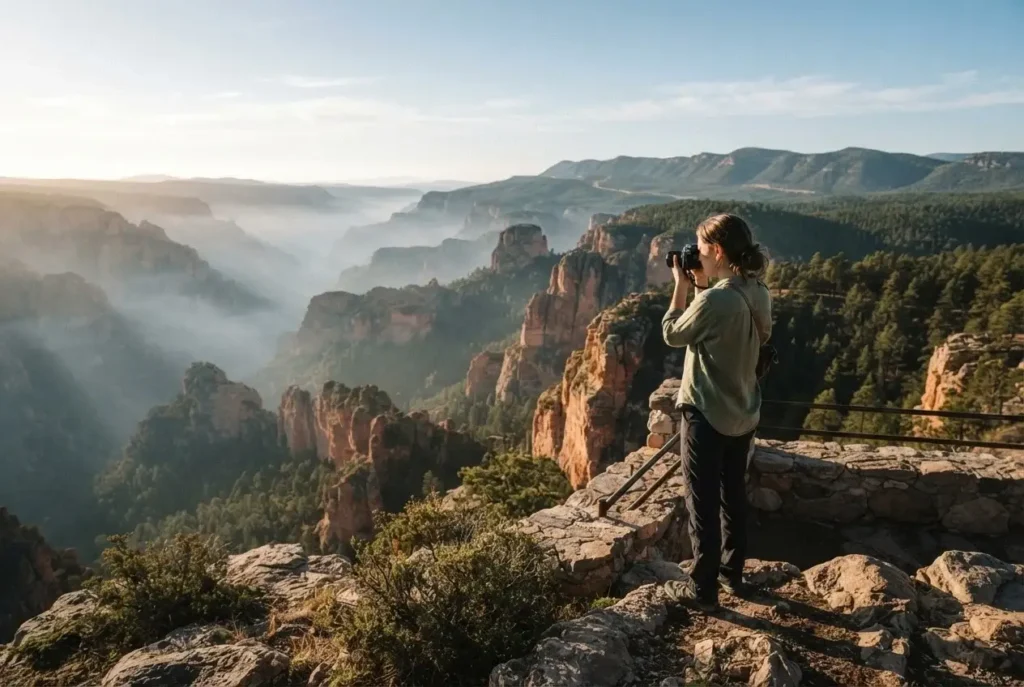
In Divisadero, you can walk to canyon viewpoints that are immediately available from the station. In Creel, you can hire local guides for hikes into the canyon itself, visit Tarahumara indigenous communities, and eat at small local comedores where the food is hearty, cheap, and cooked on wood-burning stoves.
On food near this route: pozole, machaca con huevo, and fresh gorditas stuffed with beans and cheese are staples in the towns along the line. In Creel especially, the local markets sell tamales and fresh fruit in the mornings. Basic but deeply satisfying.
The Chepe Express runs from Los Mochis toward Creel, with the most dramatic scenery in the canyon stretch. All fares, schedule times, and booking are available through the official Chepe Express website. Fares start around $267 from El Fuerte and increase by stop. For solo travelers thinking about logistics, the Chepe Express FAQ page answers the most common questions about tickets, ID requirements, and what is included.
Solo safety note: the canyon towns are generally safe for travelers. The train itself is an organized tourist service. That said, standard solo travel common sense applies: keep valuables secure, tell someone your itinerary, and connect with other travelers at your guesthouse who can share current local conditions.
The PeruRail Vistadome (Peru): Cusco to Aguas Calientes
No discussion of scenic train travel in the Americas is complete without the train to Machu Picchu. From Cusco (or the closer departure point of Ollantaytambo), the PeruRail Vistadome train runs through the Sacred Valley and into the cloud forest, arriving at Aguas Calientes, the town at the base of Machu Picchu. The Vistadome carriages have large panoramic windows and a glass ceiling, so the Andean peaks and the rushing Urubamba River below stay in view throughout the 2 to 4-hour journey.
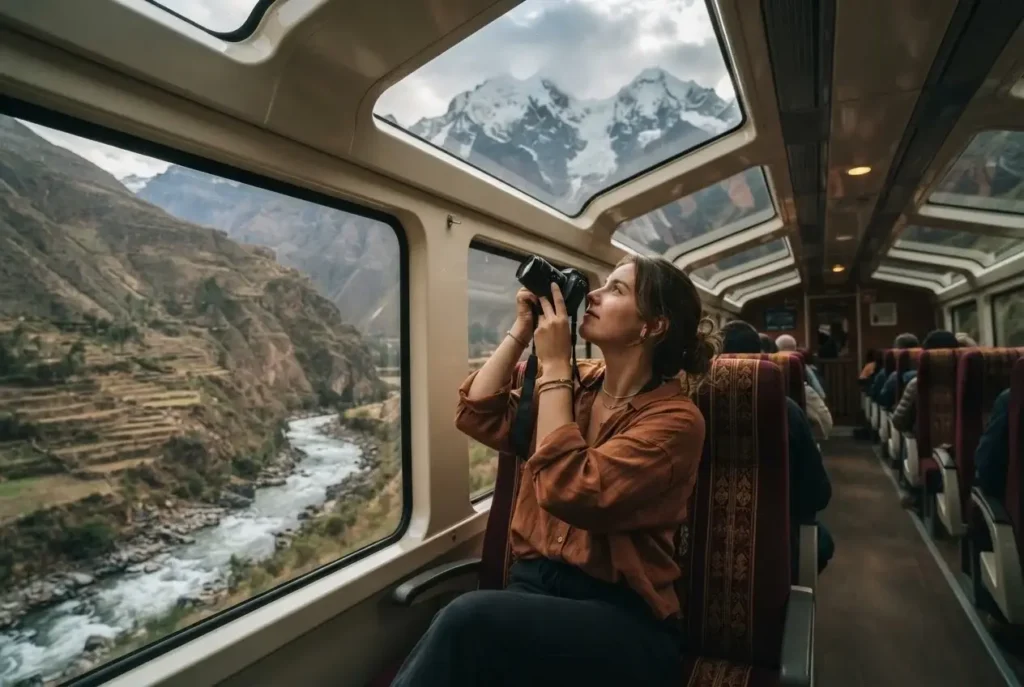
This is not a budget option, but it is not the ultra-luxury Hiram Bingham train either (which costs upwards of $1,000 round trip). The Vistadome sits comfortably in the middle, with a more affordable option being the PeruRail Expedition train on the same route. If you want the panoramic windows and the onboard cultural experience (there is a traditional dance performance on the return journey), the Vistadome is worth the upgrade. Pricing varies significantly by season and departure point; the PeruRail Vistadome page has current fares and booking.
One practical note that solo travelers consistently mention: book this train well in advance during peak season (June through August and around Inca Trail season). Trains fill up, and you do not want to arrive in Cusco without a confirmed seat. Also, Aguas Calientes itself is a pleasant place to spend the night before the early morning entry to Machu Picchu, with good local restaurants serving trout from the Urubamba River, lomo saltado, and ceviche.
The Tren Crucero (Ecuador): Quito to Guayaquil
The Tren Crucero is arguably the most ambitious scenic rail journey in South America in terms of geographic and cultural range. The 4-day, 3-night journey runs from Quito in the highlands down through the Andes to Guayaquil on the Pacific coast, covering volcanos, indigenous markets, sugar cane plantations, banana fields, and the famous Devil’s Nose descent, a dramatic switchback section of track that descends 500 meters in just a few kilometers.
From what travelers who have completed this route consistently describe, it is the combination of train, stops, cultural visits, and meals that makes it distinctive. This is not a train where you sit and watch scenery scroll by for four days. You get off regularly to visit communities, tour working haciendas, and experience local food and craft traditions. It feels closer to an organized cultural expedition than a simple train journey, which is part of the appeal.
Pricing starts from around USD $1,735 per person for the 4-day journey, which includes accommodations, most meals, and guided excursions at each stop. This makes it a significant investment, but travelers who have done it tend to rate it as deeply worthwhile. The train departs on Tuesdays from Quito.
A Few Practical Notes That Apply Across All of These Routes
Regardless of which route calls to you first, a few things consistently make the difference between a great rail journey and a frustrating one.
Book as early as possible for any train with limited capacity, particularly the Rocky Mountaineer, the Tren Crucero, and anything in Peru. These are not routes where you can show up and grab a seat. Amtrak routes, by contrast, can often be booked a few weeks out for coach, though roomettes book up faster in summer.
Bring more entertainment and snacks than you think you need, and less luggage than you usually pack. Most long-distance trains have luggage limits or restrictions on oversized bags, and navigating a cramped corridor with a rolling suitcase is nobody’s favorite activity.
Sit on the correct side of the train. For the California Zephyr westbound, the canyon views through Colorado are primarily on the left side (south side). For the Coast Starlight southbound, the ocean views appear on the right. Local Facebook groups and railway forums are genuinely useful for this kind of detail.
Finally, embrace delays. Long-distance trains, particularly Amtrak, run on freight-owned tracks and delays are common.
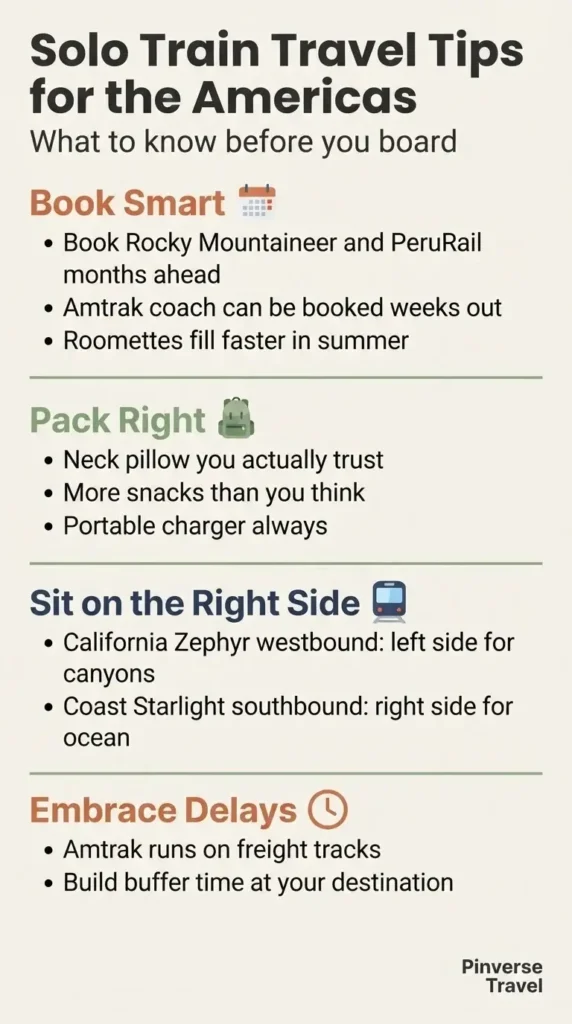
If your itinerary has no room for a 3-hour delay, build in buffer time at your destination. The travelers who love train travel are the ones who have made peace with this. The ones who hate it are the ones who booked a tight connection.
Which Route Should You Book First?
If you are North America-based and doing this for the first time, the California Zephyr is the most logical starting point. The infrastructure is familiar, the English-speaking lounge car culture is social and welcoming, and the scenery through Colorado alone justifies the entire trip. It is also one of the most affordable ways to experience a genuinely world-class train journey.
If you are adventurous and ready for something more international, El Chepe through the Copper Canyon in Mexico offers a raw, culturally rich experience that few travelers outside Mexico have even heard of. The relative lack of mainstream tourism compared to Peru or Canada makes it feel genuinely off the beaten path.
And if you are planning a bigger South America trip, building the PeruRail Vistadome into your Peru itinerary is simply non-negotiable. The journey to Machu Picchu by train is not just about getting there. It is one of those experiences where the approach makes the destination land differently.
Train travel across the Americas rewards patience, curiosity, and a willingness to let the journey be the point. That sounds simple, but for a lot of us raised on 45-minute flights and rigid itineraries, it is actually a practice. A worthy one. Start where you are, book what you can reach, and let the window do the rest.