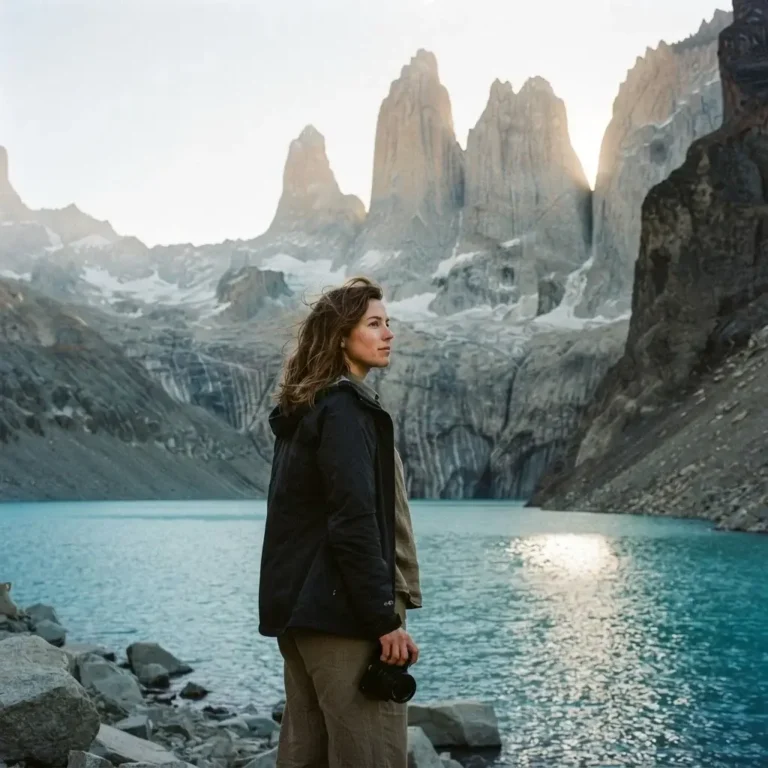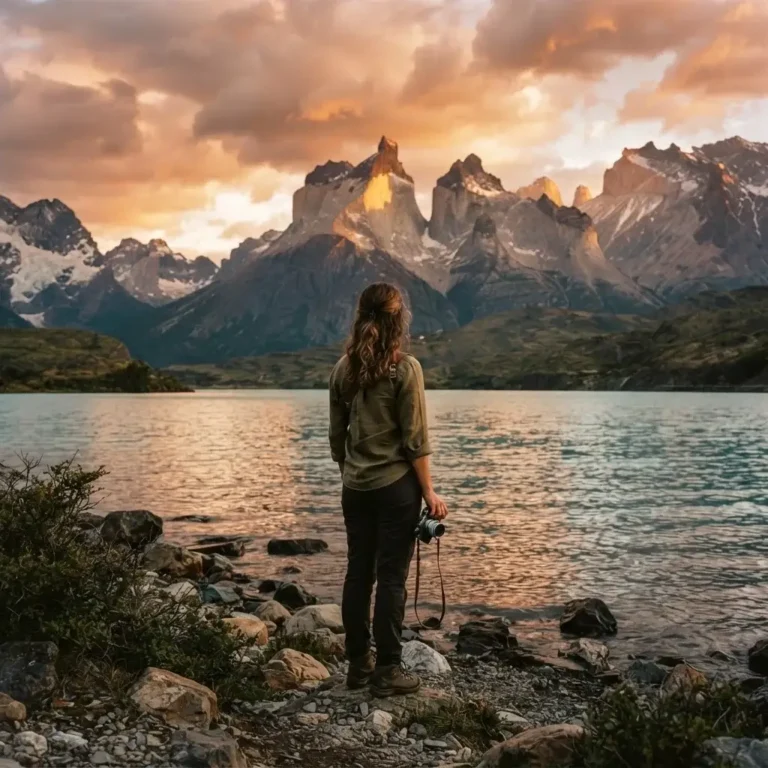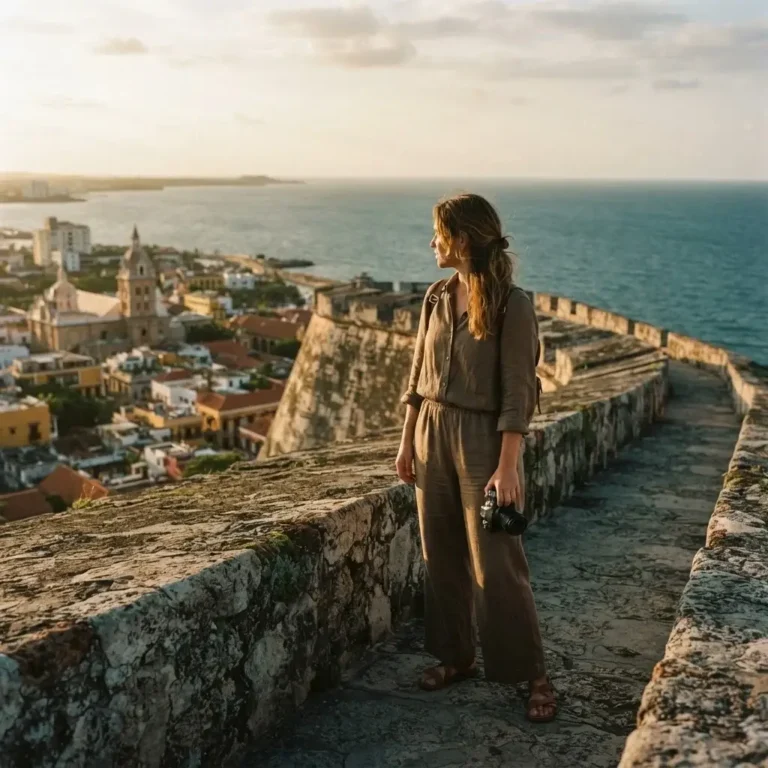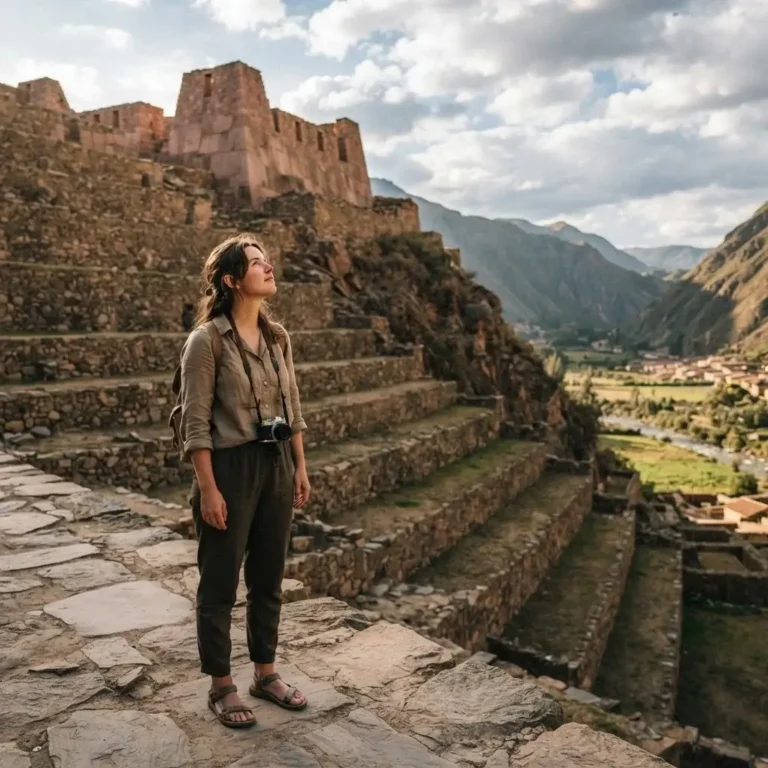

There is a version of this trip living rent-free in your head. You’ve probably pictured it a dozen times. Salt flats stretching to the horizon in Bolivia. Morning mist hanging over Machu Picchu. The colors of Cartagena’s old city at golden hour. The wild coastline somewhere between Costa Rica and Panama that doesn’t have a name yet because you haven’t found it.
And then the voice kicks in. The one that says: “That’s too expensive.” “I don’t have enough saved.” “Maybe next year.”
I know that voice well. Before I left my desk job and started building a life around travel, I used the cost of things as a reason to stay put. It felt responsible. What I didn’t realize was that I was overestimating the price of going and underestimating the price of not going.
The Americas, taken together, form the longest continuous landmass on Earth. They run from the Arctic tundra of northern Canada all the way to the glaciers of Patagonia. That sounds expensive, and it can be. But it doesn’t have to be. I’ve dug into the real costs, the real transport options, and the habits that separate travelers who blow through money in six weeks from those who stretch six months out of the same budget. This is what actually works.
What “Affordable” Actually Means in the Americas
Let’s reset expectations before we get into strategy, because “budget travel” means something different depending on which part of the Americas you’re in.
In the United States and Canada, budget travel is hard work. You’re fighting against high hostel prices, expensive food, and distances that almost demand either a car or pricey domestic flights. A comfortable budget day in New York or Los Angeles can run $80-$120 even with hostels and eating cheap. That’s not a reason to skip North America entirely, but it does mean you should treat it as a different kind of trip than the south.
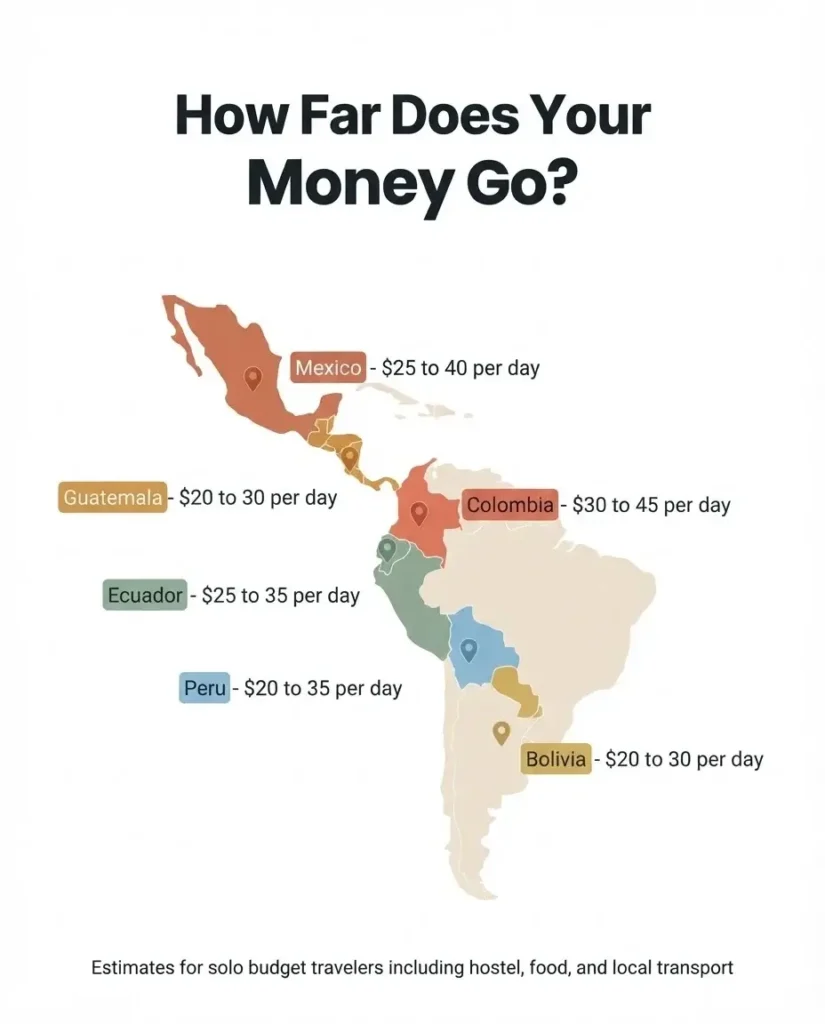
Mexico changes the math fast. Budget travelers consistently report spending $25-$40 per day in Mexico, and that’s eating well, sleeping comfortably in a hostel, and getting around on local transport. Mexico City in particular is one of the great underrated budget capitals in the world, where a bowl of incredible pozole from a market stall costs about $2 and a metro ride costs a few cents.
Central America is even cheaper. Countries like Guatemala and Nicaragua are the sweet spots for travelers who want a lot of experience for very little money.
South America is where the full range opens up. Bolivia sits at the cheapest end, where travelers have reported getting by on $25-$30 per day with hostel dorms from around $6 per night. Peru, Ecuador, and Colombia all hover in the $18-$30 per day range depending on how you travel. Argentina and Chile are more expensive, particularly Argentina, whose cost picture changes frequently with inflation fluctuations.
The key insight is this: the Americas reward you for going south. The further south of the US border you get, the more your dollar, euro, or pound tends to stretch. Plan accordingly.
Start in Colombia: The Gateway That Makes Sense
If you are building a south-to-north or north-to-south trip and you want to start affordably, Colombia is the strongest entry point for most people. Flights from North America and Europe into Bogota or Medellin are regularly competitive, and once you land, Colombia’s incredible diversity of landscapes, cultures, and cities will keep you occupied for weeks without draining your account.
US, Canadian, and most EU passport holders enter Colombia visa-free for up to 90 days, with a possible 90-day extension at migration offices, giving you up to 180 days in the country. That alone is a budget traveler’s dream. You aren’t racing against a visa clock.
In Medellin, a hostel dorm bed runs $10-$14. A fresh juice from a market vendor costs under a dollar. The famous “menu del dia,” a set lunch with soup, a main, juice, and often dessert, runs $3-$5 at local restaurants.
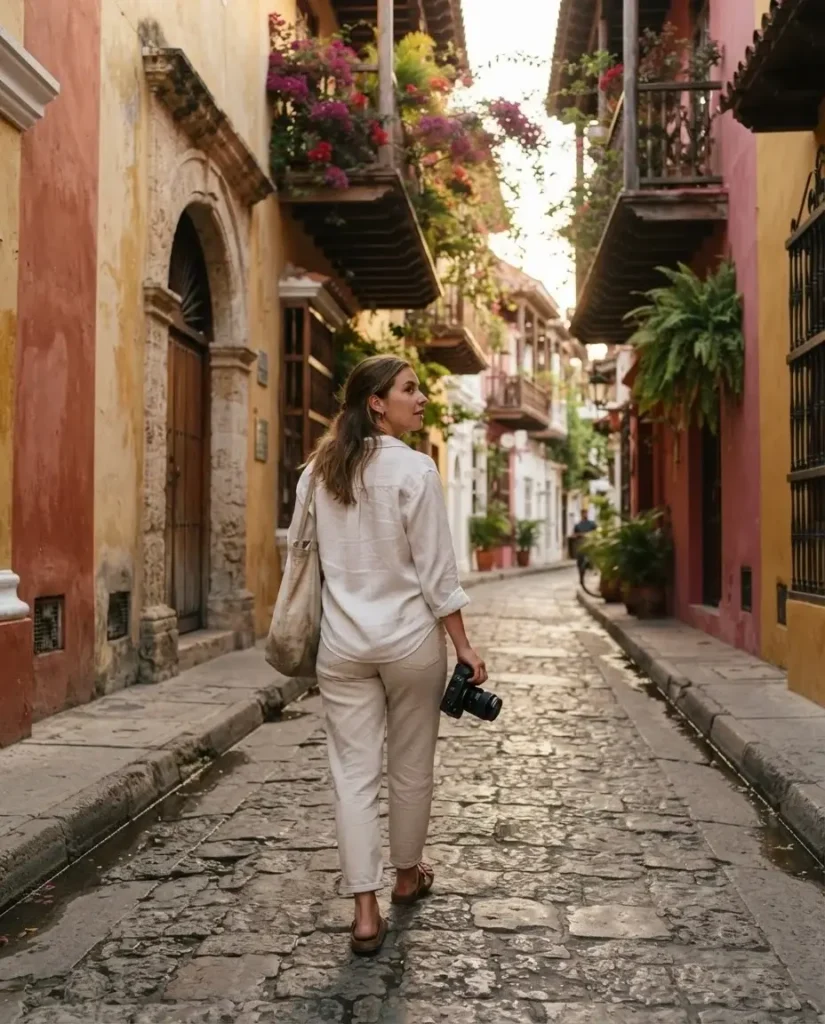
Medellin’s metro and cable cars are efficient, clean, and cheap, and the system connects the city in a way that makes getting around genuinely easy.
From Colombia you can head to Ecuador (also visa-free for most Western passports, a relatively cheap country with direct buses between major cities), then Peru, then Bolivia, then Argentina or Chile. Or reverse the whole thing. The overland backbone of South America is well-traveled and the infrastructure for budget travelers is solid.
The one practical note: if you plan to include Brazil in your South American route, you now need an e-visa before you arrive. As of April 10, 2025, US, Canadian, and Australian passport holders must apply through the official Brazil e-visa portal before departure. It’s a simple online process but you need to do it before you fly in, not upon arrival. Set a reminder and handle it early.
Getting Around: Buses, Budget Flights, and the Art of the Overnight Ride
Transport is where most people’s Americas budget either holds together or falls apart. The good news is that the bus network across Latin America is extensive, and for most routes, it is dramatically cheaper than flying.
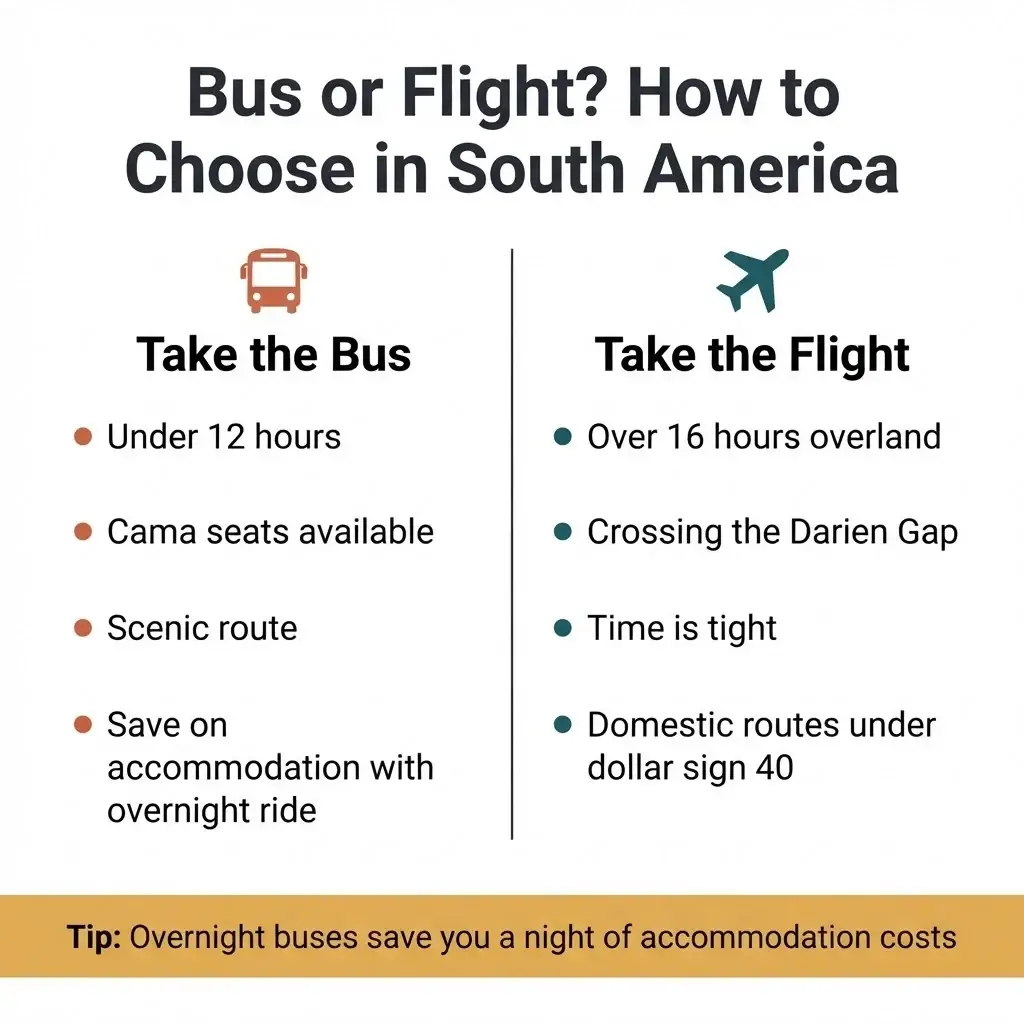
The long-distance bus culture in South America is a genuine part of the experience, not a compromise. Many routes offer “cama” or “semi-cama” seats that recline almost flat, come with a blanket and a meal, and let you cover 10-14 hours of ground while you sleep. You save a night’s accommodation costs and wake up in a new city. That is the budget traveler’s version of business class.
For researching and booking buses across South America, Busbud’s South America travel guide is one of the most useful resources for understanding which operators run which routes. You can compare prices and often book directly. That said, for many routes in Peru and Bolivia, buying at the bus terminal in person gives you access to smaller local operators not listed on any app, sometimes for half the online price.
When you do need to fly, South America has a solid low-cost airline scene. LATAM connects the major hubs. Wingo operates cheap routes within Colombia and into neighboring countries. Sky Airline covers Chile and Peru affordably. The trick with these carriers is the same as anywhere: book as early as possible, travel light (personal item only avoids checked bag fees), and be flexible with dates by even a day or two to catch fare drops. Searching through Google Flights with the “flexible dates” view will show you the cheapest windows quickly.
One transport decision that trips people up is the Darien Gap, the roadless jungle stretch between Panama and Colombia. You cannot drive or bus through it. The practical options are: fly between Bogota and Panama City (often cheap on Wingo or Copa), or take a multi-day sailing trip through the San Blas Islands. The sailing route runs $500-$700 USD and includes food, accommodation on the boat, and island stops. It is expensive by budget standards but most people who do it call it a highlight of the entire trip. Budget for it as an experience, not just transport.
Where to Sleep Without Burning Through Your Budget
Accommodation is usually the single largest line item for budget travelers, and cutting it smartly makes the biggest difference to your daily average.
Hostel dorm beds across South America typically run $8-$15 per night in the most popular backpacker destinations. Private rooms in budget guesthouses run $15-$30. For finding and comparing options with real reviews, Hostelworld’s South America listings are the most reliable starting point. Filter by review score, not just price. A $7 dorm in a noisy, unsafe hostel is not a deal. A $12 dorm in a well-reviewed social hostel with a kitchen and good vibes is one of the best things about budget travel.
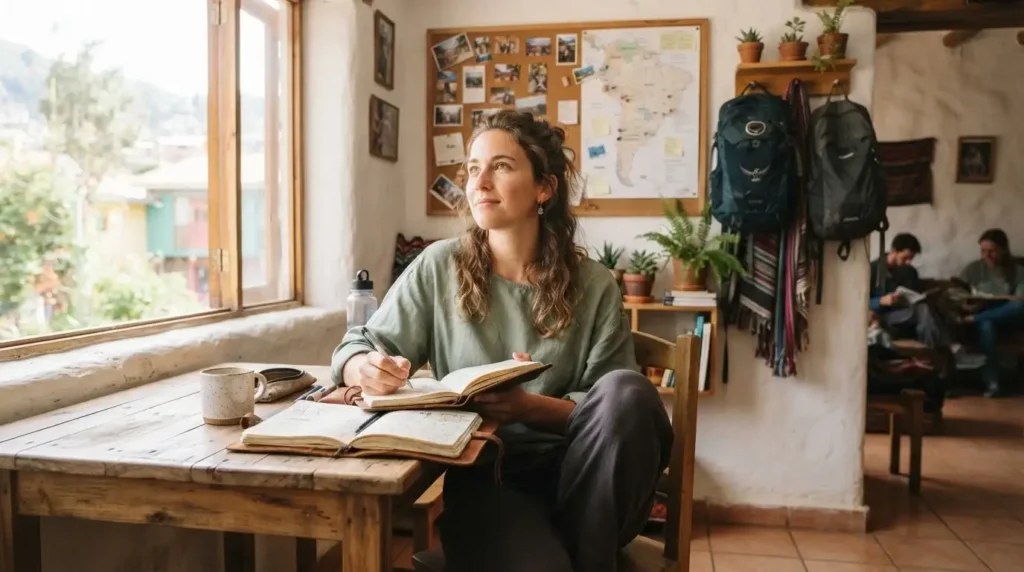
The other option, especially if you’re planning to slow down and stay somewhere for two weeks or more, is Workaway. The Workaway platform’s South America hosts lists over 2,200 opportunities where you work 4-5 hours per day in exchange for free accommodation and meals. Farms, hostels, language schools, eco-projects, surf camps. The quality varies, but the good placements genuinely slash your costs and drop you into a local rhythm you can’t get from a dorm bed. When I worked jobs between travels to fund my next trip, I was essentially doing my own version of this, trading time and skill for opportunity. Workaway formalizes that exchange, and it works.
One more option worth naming: budget guesthouses run by local families, known as hospedajes or posadas depending on the country. In Bolivia and Ecuador especially, these are often cheaper than hostels and far more personal. You eat breakfast with the family, hear the neighborhood at its real pace, and leave with a much more honest picture of how people actually live. That has always mattered more to me than any postcard sight.
Eating Well for Almost Nothing
Food is where the Americas, especially Latin America, are overwhelmingly kind to budget travelers. This part of the world has one of the richest street food cultures on the planet, and eating from markets and street vendors is not a sacrifice. It is the best food you will eat.
The “menu del dia” or “almuerzo” is the budget traveler’s best friend. At local restaurants across Peru, Colombia, Ecuador, and Bolivia, you will find a fixed-price lunch for $2-$5 that includes multiple courses and a drink. These meals are designed for working locals, not tourists, which means they are filling, fresh, and made from whatever is good at the market that day.
In Mexico, tacos from street stalls are $0.50-$1.50 each. In Colombia, an arepa con queso from a corner vendor is under a dollar and will keep you going for hours. In Peru, a generous plate of ceviche at a local cevicheria runs $4-$7. In Bolivia, you can eat a full meal for $2-$3 without trying hard. The pattern holds: eat where locals eat, at market stalls and neighborhood restaurants, and your food budget almost takes care of itself.
The places that drain food budgets are tourist restaurants near major sights, airport terminals, and “international food” spots catering to travelers craving familiar food. Skip them unless it’s genuinely a treat you have budgeted for. Cook occasionally in hostel kitchens to stretch your money further, particularly in more expensive cities.
The Big Sights: Worth the Cost, If You Plan
Affordable travel doesn’t mean skipping the iconic experiences. It means planning for them so they don’t surprise you.
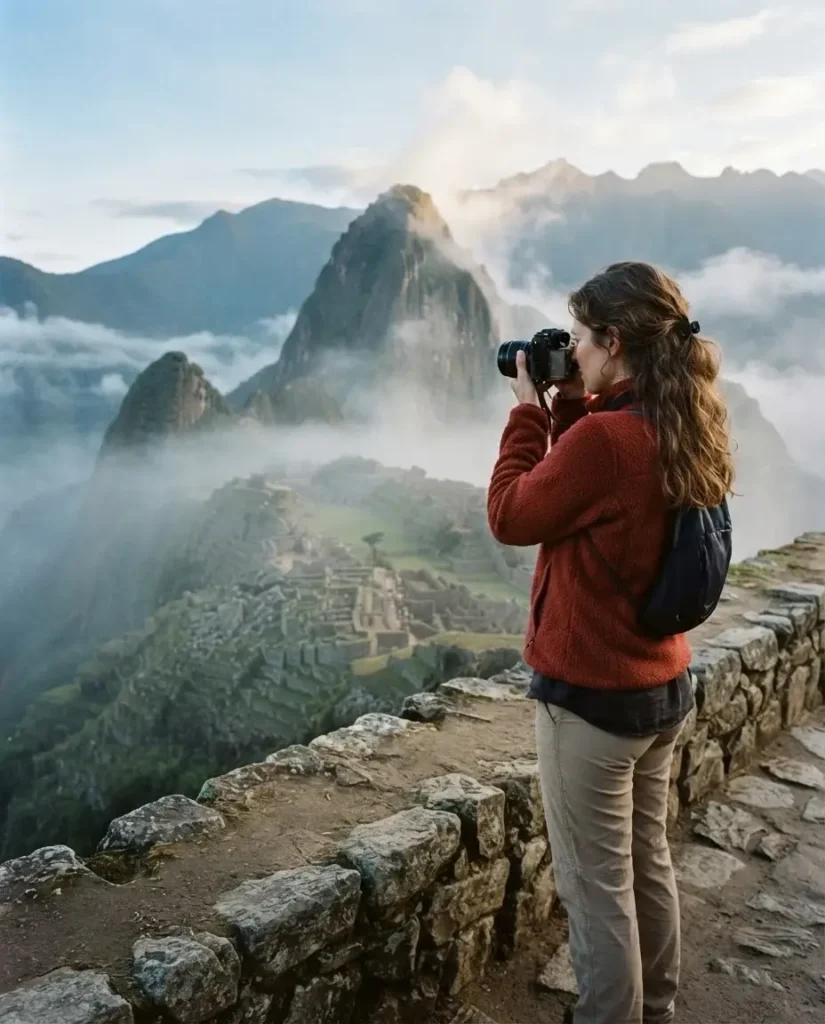
Machu Picchu is the most obvious example. Entry tickets start at around $40 USD for foreign visitors, and they sell out weeks or even months in advance for popular time slots and circuits. Tickets must be purchased through the official Peruvian Ministry of Culture ticketing platform. Do not leave this until you arrive in Cusco hoping to sort it out there. Buy your ticket well before your visit, choose your circuit, and book the train or bus from Aguas Calientes in advance as well. The surrounding area in Cusco and the Sacred Valley is genuinely affordable, and a few days acclimatizing at altitude before the visit is both medically sensible and practically enjoyable.
Bolivia’s Salar de Uyuni, the largest salt flat on Earth, is a different story cost-wise. Three-day tours from the town of Uyuni run $70-$100 USD, which for what you get, enormous white emptiness stretching to the horizon, surreal lagoons, flamingos, geysers at sunrise, represents extraordinary value. Transport to Uyuni itself from La Paz or Sucre can be done by overnight bus for under $15.
The lesson with both of these is the same. The iconic sights of South America are mostly accessible, affordable with planning, and more rewarding for the effort it takes to reach them.
Safety, Insurance, and Keeping Your Head
Let’s be honest about safety, because pretending it isn’t a consideration in some parts of the Americas is not helpful.
The US State Department publishes travel advisories for every country, rated on a Level 1-4 scale. Most of South America sits at Level 2 (“Exercise Increased Caution”), which is the same level as France and much of Europe. A handful of areas carry Level 3 or 4 advisories, and these are worth taking seriously at the specific regional level, not as a blanket “the whole country is dangerous” reading. Colombia, for example, is predominantly Level 2 for most tourist areas, but carries Level 3 and 4 advisories for specific border regions near Venezuela and the Pacific coast. Read the advisories at the country and region level, not just the headline.
Practical safety habits that make a genuine difference: keep a second bank card and some emergency cash separate from your main wallet, use ATMs inside banks or shopping centers rather than street-facing machines, carry a cheap day bag rather than anything that looks expensive, and trust your instincts. If somewhere feels off, it usually is.
Travel insurance is not optional. I know people treat it like an optional add-on they’ll probably never need. Those are exactly the people who end up needing it in an expensive situation. Medical evacuation from a remote area in the Andes or the Amazon can run tens of thousands of dollars without coverage. Get a policy that covers adventure activities and medical evacuation. Compare a few options before you go and read the fine print on what’s excluded.
How to Fund It: Slow Down, Stretch Further
The single most effective budget strategy that almost no quick-tip list ever mentions is this: slow down.
Travelers who rush through six countries in four weeks spend vastly more per day than travelers who stay in one place for three weeks and move twice in the same period. Slow travel cuts your transport costs, allows you to negotiate weekly or monthly accommodation rates, lets you cook more and eat out less strategically, and generally removes the expensive, exhausting scramble of constant movement.
When I left my office job and worked flexible jobs to fund my travels, I learned this quickly. The cheapest weeks of any trip are the ones where you are somewhere you know. You’ve found the cheap breakfast spot. You know which market to go to. You know which neighborhoods to walk at what time of day. That knowledge has a dollar value, and it only comes from staying put long enough to learn it.
Extended stays also make Workaway placements viable. A two-week Workaway at a hostel in the Peruvian Sacred Valley or at a coffee farm in Colombia’s Eje Cafetero is free accommodation, free meals, and a richer cultural experience than anything you could book on a tour. That’s a trade worth making.
A Rough Budget Reality Check
Here is what a solo budget traveler can realistically expect across key parts of the Americas, based on consistent reports from travelers and current pricing:
Mexico sits around $25-$40 per day for a genuine backpacker experience, eating local food, using buses and the metro, sleeping in hostels. Guatemala and Nicaragua run even lower, $20-$30 per day in many areas. Colombia lands comfortably in the $30-$45 range in major cities; smaller towns are cheaper. Ecuador comes in around $25-$35 per day. Peru ranges from $20-$35 outside of Cusco, where costs nudge up due to tourist concentration. Bolivia is the standout, with $20-$30 per day entirely achievable including a hostel bed and full meals. Argentina and Chile are meaningfully more expensive, often $50-$80+ per day depending on where you are.
Flights into and out of the continent are your biggest single cost. Positioning flights from North America to Colombia or Peru, or from Europe to similar entry points, typically run $400-$800 return depending on season and booking window. Build this into your total trip budget, not your daily average.
A six-month solo trip through Central and South America, spending wisely, is achievable for most travelers in the $8,000-$12,000 range including flights, entry costs to major sights, and one or two splurge experiences.
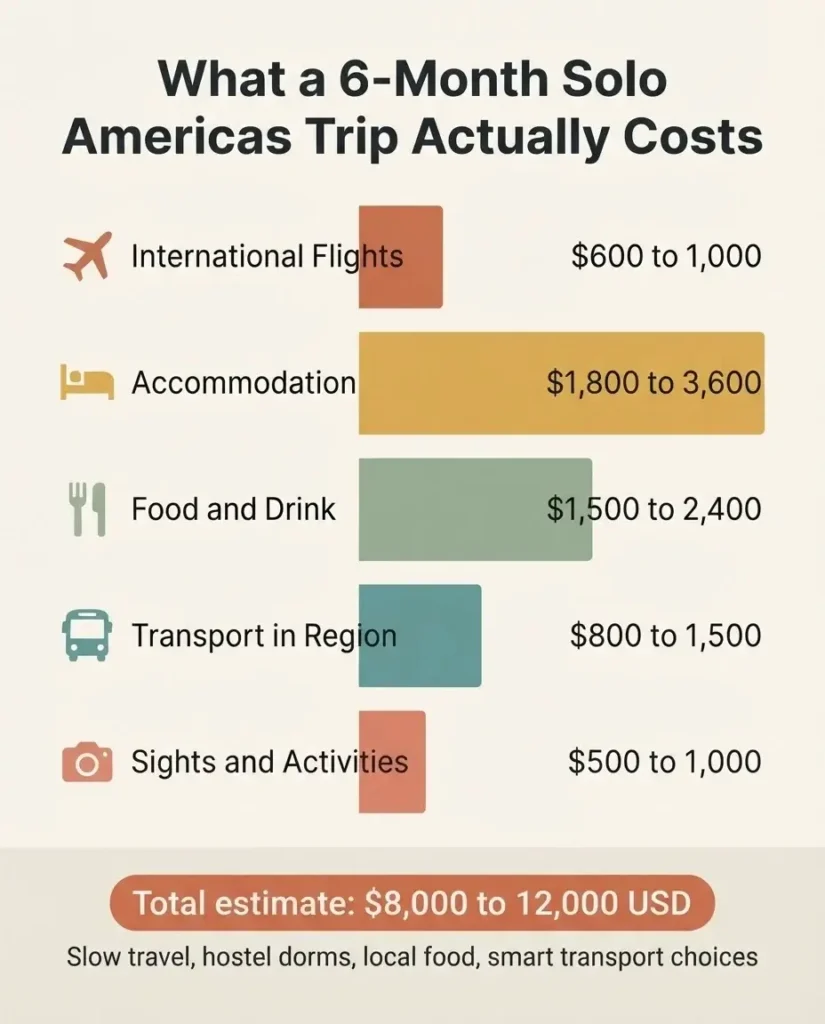
It is real money and worth saving deliberately. But it is not the unattainable figure that anxiety tends to inflate it into.
Where to Actually Start
The planning paralysis that surrounds a trip like this is real. The continent is big. The variables are many. But the travelers who actually go do something specific: they pick one entry point, book one flight, and figure out the rest from the ground.
If I were advising someone planning this trip for the first time, I would tell them to fly into Bogota or Medellin, spend at least three weeks in Colombia getting their travel legs under them in a country that is welcoming, affordable, and logistically forgiving, and then decide what comes next. The trip shapes itself once you are moving. The only way to get the trip wrong is to stay home waiting for it to be perfect.
Stop building the spreadsheet. Start building the plan.
The Americas are waiting, and they are more affordable than you have convinced yourself they are.