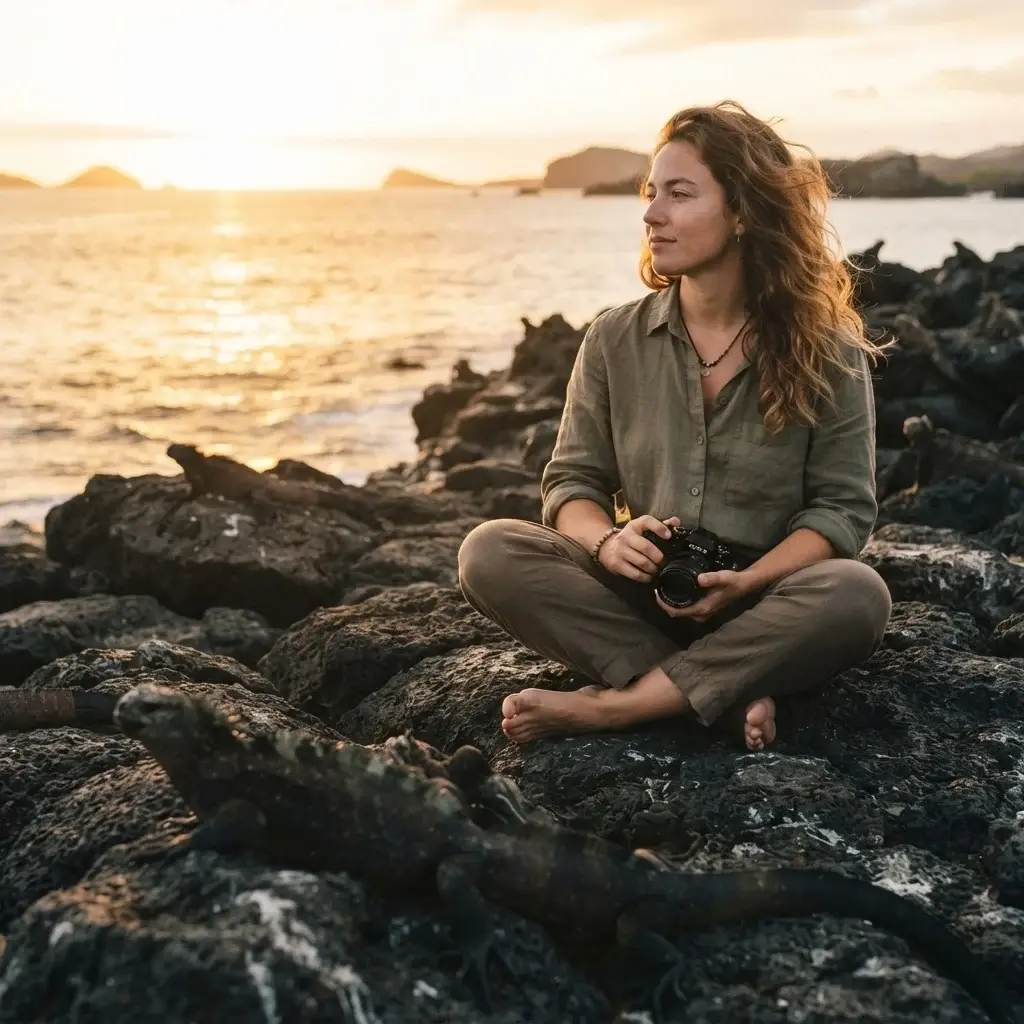
For most of my life, I associated the word “safari” with one image: a dusty Land Rover crossing the Serengeti at golden hour. Africa. Always Africa. And honestly, that image is not wrong. But it is incomplete.
The Americas are home to some of the most extraordinary wildlife concentrations on the planet, places where you can watch a jaguar swim across a river at sunrise, stand three feet from a marine iguana that has never learned to fear humans, or sit in total silence while a grizzly bear grazes a meadow a hundred yards away. These are not zoo experiences or guided park drives where someone tells you to look left on cue. These are raw, unpredictable, genuinely wild encounters that change how you see the natural world.
I have spent a lot of time thinking about what makes a wildlife experience feel real, not just scheduled. Part of that came from guiding sightseers around New York City, where I watched people gaze up at buildings the same way others stare at animals: with wonder, yes, but also a kind of passive distance. Real connection requires slowing down. It requires patience. And it turns out, you do not need to fly to Nairobi to find it.
Here are the wildlife destinations across the Americas that solo travelers, nature lovers, and first-time adventure planners consistently point to as the ones that genuinely deliver.
Why the Americas Deserve More Credit for Wildlife
The word “safari” literally means “journey” in Swahili. Its association with Africa is cultural and historical, not definitional. A wildlife safari is simply a trip focused on observing animals in their natural habitat, which you can absolutely do in North, Central, and South America.
What makes the Americas particularly compelling is the sheer variety of ecosystems packed into one hemisphere: tropical wetlands, cloud forests, volcanic archipelagos, Patagonian steppe, temperate grasslands, old-growth rainforests. Each one supports a completely different cast of wildlife. You could spend a month moving through these destinations and feel like you had visited five different planets.
The other advantage nobody talks about enough? Some of these destinations are significantly easier to reach and more affordable than a comparable African safari. You do not always need a week of flights or a $5,000 tour package to get there.
Yellowstone National Park, USA: The Closest Thing to the Serengeti in North America
If you have never seen the Lamar Valley in early morning light, with bison moving across the frost-covered grassland and wolves silhouetted on a distant ridge, then you have not fully understood what Yellowstone can be. Locals call the Lamar Valley “America’s Serengeti,” and it earns that name.
Yellowstone is home to 67 mammal species, nearly 300 bird species, and some of the most reliable large predator sightings on the continent. In a single day, you might spot a grizzly bear, a black bear, a wolf pack, a herd of bison, pronghorn, elk, and bald eagles.
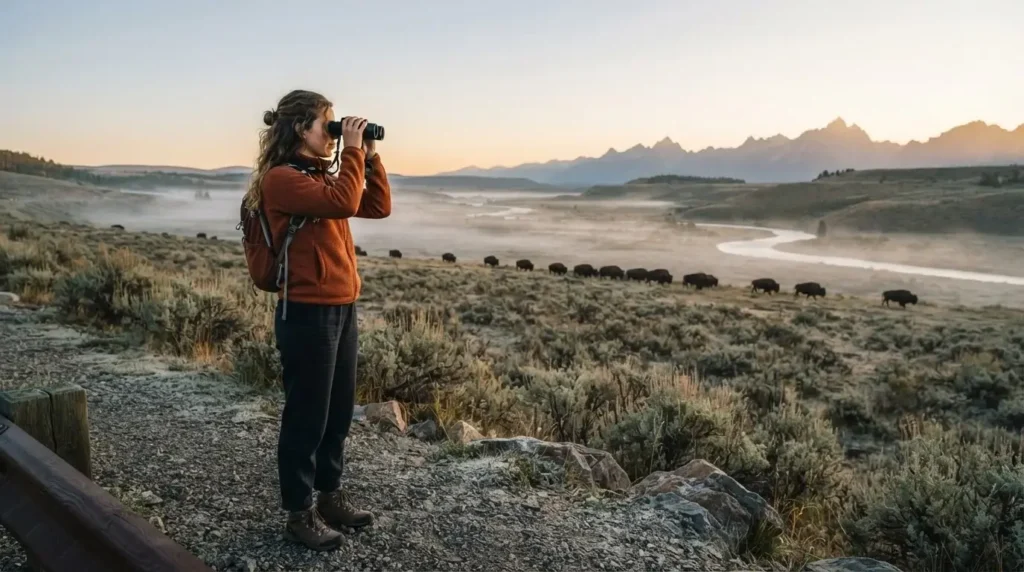
The wildlife diversity at Yellowstone National Park is genuinely unlike anywhere else in the lower 48 states, and the National Park Service does an excellent job of maintaining the ecosystem’s integrity.
Best time to go: April through May for wolf pups and newborn bison calves, and September through October for the elk rut, when bulls bugle across the valley in one of nature’s most dramatic sound experiences. Winter (December through March) is surprisingly excellent for wildlife viewing because snow concentrates animals near roads and thermal areas, though you will need proper gear.
Entry fee: A 7-day vehicle pass costs $35, which is genuinely one of the best value-per-acre deals in wildlife travel anywhere.
Solo traveler tip: You absolutely do not need a guided tour to see wildlife at Yellowstone, but a half-day guided safari with a naturalist significantly increases your chances of finding wolves and understanding what you are looking at. If you go self-guided, get to Lamar Valley by 6am. Wildlife is most active in the first two hours after sunrise. Bring a spotting scope or at least 10x binoculars. The animals you most want to see are often specks on a hillside without them.
Safety rule that matters: The NPS is firm on this. You must stay at least 100 yards (91 meters) from bears and wolves, and 25 yards from all other wildlife. Every year, visitors are injured by getting too close. The rule is not a suggestion.
What to eat nearby: In Gardiner, Montana (the north entrance town), grab breakfast at the Tumbleweed Bookstore and Cafe before your early morning drive. In the park itself, the Roosevelt Lodge Dining Room near the northeast entrance is worth stopping at for bison-based dishes that feel genuinely local.
The Pantanal, Brazil: The Jaguar Capital of the World
Most people who have not been to South America have never heard of the Pantanal. They have heard of the Amazon, which makes sense because the Amazon has better marketing. But among wildlife photographers and serious naturalists, the Pantanal is the real prize.
Here is why. The Amazon’s dense forest canopy makes spotting large mammals nearly impossible. The Pantanal, by contrast, is the world’s largest tropical wetland, an open floodplain ecosystem where vegetation is low, water channels are navigable by boat, and animals have nowhere to hide. During the dry season, from July through October, receding floodwaters concentrate wildlife around the remaining rivers and lagoons in extraordinary numbers. This is when jaguar sightings along the river banks peak, with September being statistically the most productive month.
The Pantanal Conservation Area is a UNESCO World Heritage Site covering 187,818 hectares, and the wider Pantanal region encompasses roughly 42 million acres of some of the most biodiverse terrain on the planet. The protected area alone contains around 80 mammal species, 650 bird species, 50 reptile species, and 300 fish species. The jaguar population within the national park zone is considered one of the healthiest and most observable on Earth.
What solo travelers consistently report is that the Pantanal delivers the kind of wildlife density you genuinely do not expect outside Africa. You might spend a morning watching a jaguar hunt caimans from a slow boat, then spend the afternoon photographing giant anteaters and capybaras from the back of a truck.
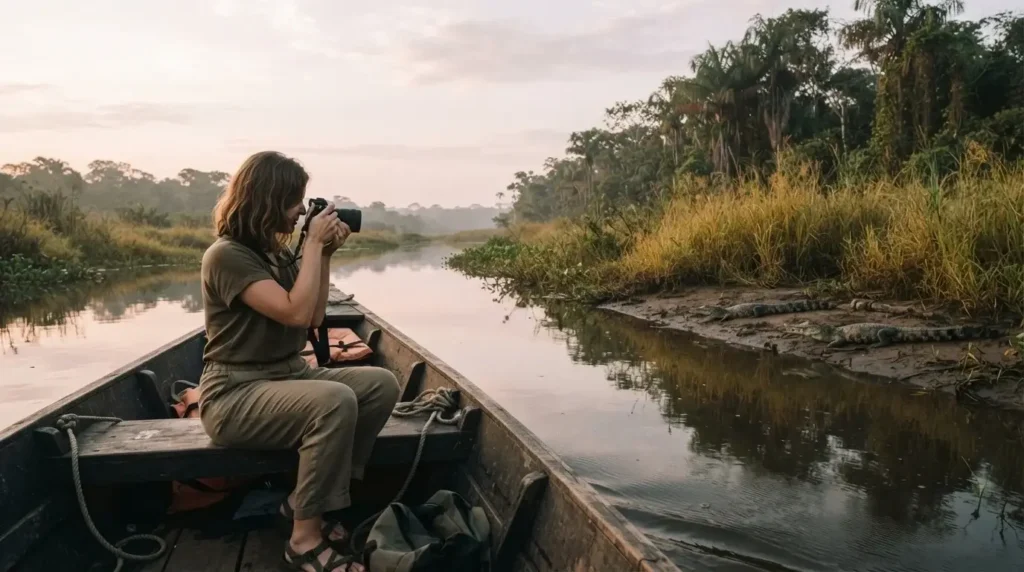
Hyacinth macaws, the largest parrot species in the world, will fly overhead in pairs. Caimans line every riverbank in numbers that initially feel unreal.
Best time to go: July through October. September is the peak jaguar month. The rainy season (November through April) floods much of the region and makes wildlife viewing significantly harder, though the scenery is stunning.
How to get there: Fly into Cuiaba, Brazil, the main gateway city. From there, most lodges arrange transfers to the Pantanal, often a combination of paved and dirt road travel taking 2 to 4 hours depending on your destination within the wetland.
Solo traveler tip: The Pantanal is not well set up for completely independent travel, particularly for first-timers. I recommend staying at a pousada (local guesthouse or eco-lodge) that includes guided boat and jeep safaris in their rates. Rates at basic eco-lodges start at around $100-$150 USD per night including meals and activities. This is genuinely accessible compared to what an equivalent safari in East Africa would cost.
What to eat: Local Pantanal cuisine leans heavily on freshwater fish, particularly pintado (spotted catfish) and pacu. Order the pintado na telha, a regional dish where the fish is slow-cooked on a roof tile over open flame. It is simple, smoky, and completely unforgettable.
The Galapagos Islands, Ecuador: Where Wildlife Has No Fear of Humans
The Galapagos is one of those destinations that genuinely lives up to what you have imagined, which is not something I say lightly. What makes it unlike anywhere else on earth is not just the species you encounter, it is the behavior of those species. Animals here evolved in the complete absence of natural predators, including humans, and as a result they simply do not register you as a threat. You can sit on a beach while a sea lion pup investigates your shoe. A blue-footed booby will waddle past your feet mid-courtship dance without pausing.
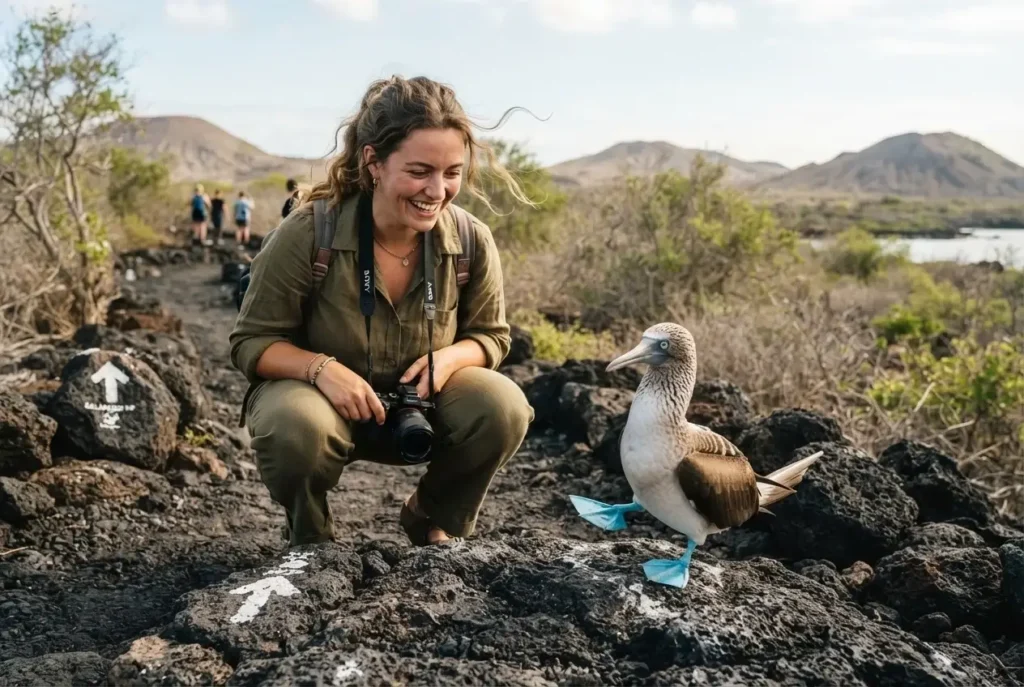
A marine iguana will bask on a lava rock while you crouch two feet away.
That level of proximity to wild animals, animals that are genuinely free and unmanaged, is extraordinary.
Planning your Galapagos trip requires understanding a few key practical points. The Galapagos Conservancy’s official trip planning guide is the most reliable resource for understanding entry rules, logistics, and what to expect. The key things to know: the Galapagos National Park entrance fee is $200 USD for international adults (12+) and $100 for children, paid in cash at the airport on arrival. A mandatory $20 tourist transit card is required, and a $20 biosecurity baggage inspection fee is charged at mainland Ecuador airports before you board your flight to the islands. Flights from Quito or Guayaquil run approximately $380-$500 round trip.
Critically, 95% of the Galapagos land area is designated national park, and visitors may only enter protected visitor sites accompanied by a Park-certified naturalist guide. You cannot simply wander independently through the islands’ protected areas, and this rule genuinely serves conservation, not just bureaucracy.
Live-aboard cruise vs. land-based: A live-aboard cruise (4 to 12 nights) lets you access far-flung islands and see the widest range of species. Prices start at roughly $2,500 for a budget-category boat on a 4-night cruise. Staying on a populated island like Santa Cruz or San Cristobal and booking day trips is more affordable and gives you more flexibility as a solo traveler, though you will see fewer remote sites.
The official park rules require visitors to maintain at least 6 feet (2 meters) from all wildlife, even when the animals approach you. Never feed wildlife. Stay on marked trails. These rules matter because the Galapagos ecosystem is fragile and irreplaceable.
Best time to go: The Galapagos rewards visitors year-round, but peak seasons are mid-June through early September and mid-December through mid-January. If you want calmer seas, go December through May. If you want marine life, penguins, and active diving, go June through November.
What to eat on Santa Cruz: The fish market in Puerto Ayora is the soul of local food culture. Grab a bowl of seco de pollo (stewed chicken) or fresh ceviche at one of the open-air stalls for under $5. Eating here feels like a legitimate local experience, nothing performative about it.
Costa Rica: Rainforest Wildlife Without a Safari Label
Costa Rica does not market itself as a “safari” destination, but functionally it delivers one of the richest wildlife experiences in the Western Hemisphere. In a country smaller than West Virginia, you will find jaguars, tapirs, four species of monkeys, five species of sea turtles, over 900 bird species, two-toed and three-toed sloths, poison dart frogs, and scarlet macaws.
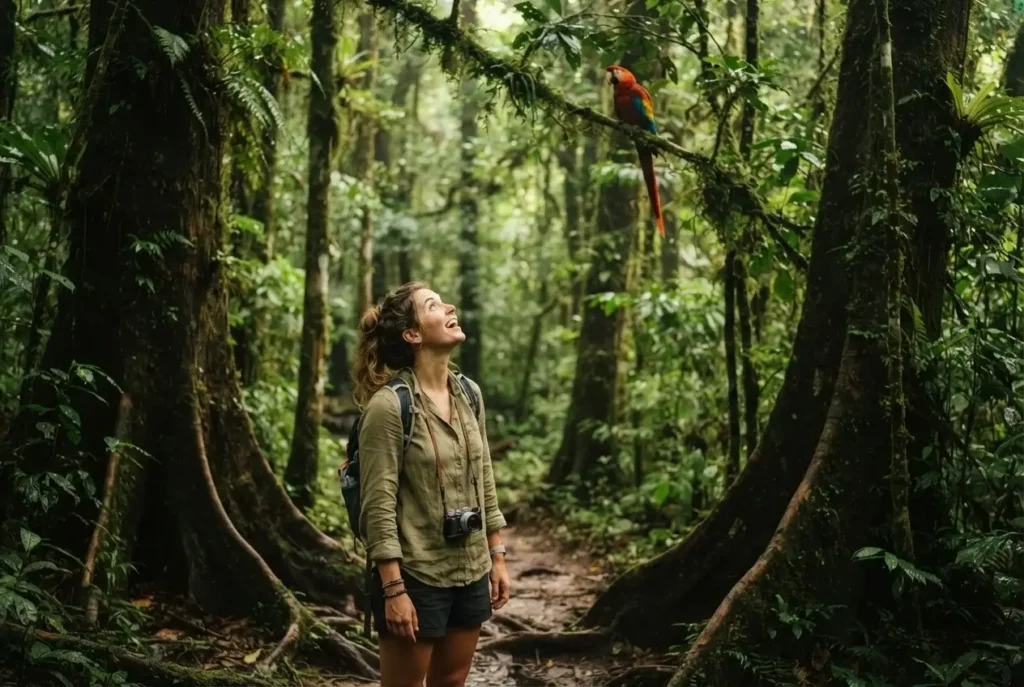
The reason for this density comes down to national policy. Roughly 26% of Costa Rica’s total land area is protected as national parks, wildlife refuges, or biological reserves. The country’s official national park system, managed by SINAC, covers 20 distinct parks, each focused on a different ecosystem type.
For wildlife-first travelers, three parks stand above the rest.
Tortuguero National Park is accessible only by boat or small plane, and it is one of the most important sea turtle nesting sites in the Atlantic world. Between July and October, green sea turtles haul themselves onto the beach at night in staggering numbers. Tortuguero also gives you excellent boat-based wildlife viewing of caimans, river otters, three monkey species, and hundreds of bird species along its canal system.
Corcovado National Park, located on the Osa Peninsula, is what National Geographic once called “the most biologically intense place on Earth.” It is remote, humid, and genuinely wild. Day-trip entry requires an advance reservation through SINAC and runs $18 per adult for international visitors. A certified guide is mandatory. If you are serious about wildlife, this is the park that will stay with you longest.
Manuel Antonio National Park is the most accessible and tourist-friendly option. It reliably delivers sloth sightings, white-faced capuchin monkeys, and coatis right on the walking trails. Entry is $18 per adult per day for international visitors.
Solo traveler tip: Book your park reservations through SINAC’s official online system well in advance, especially for Corcovado and Tortuguero. These parks sell out weeks ahead during peak season (December through April, and July through August).
What to eat in Costa Rica: Eat casados everywhere, a local lunch plate of rice, black beans, salad, plantain, and your choice of protein. Near Tortuguero, fresh Caribbean-style rice and beans cooked in coconut milk is the regional specialty and completely worth seeking out.
Patagonia, Chile and Argentina: Pumas, Penguins, and Condors at the End of the World
Patagonia is where the concept of “wildlife safari” starts to feel almost inadequate as a description. This is a landscape so vast and elemental that the wildlife feels like it belongs to another era. Andean condors ride thermals overhead with 10-foot wingspans.
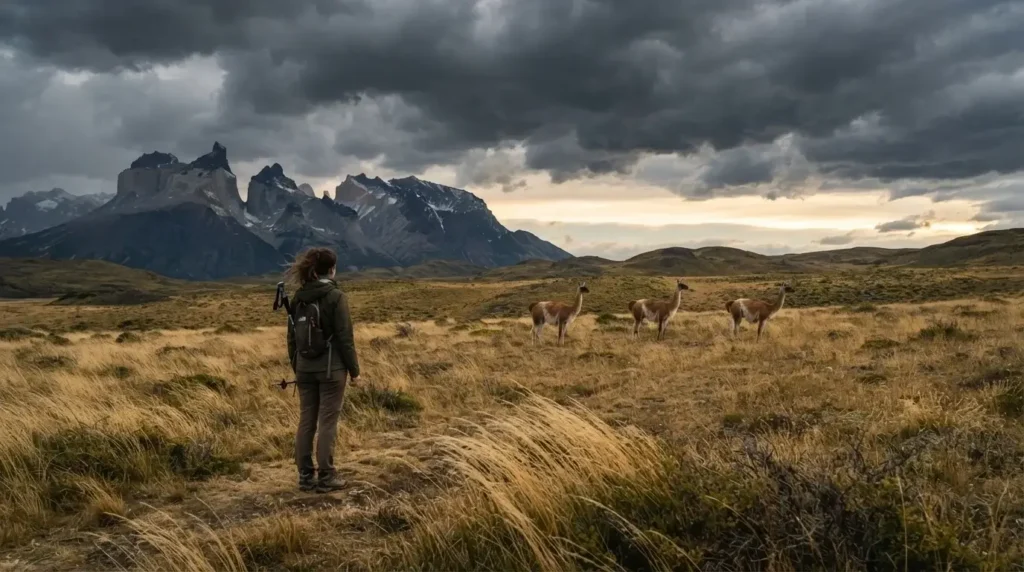
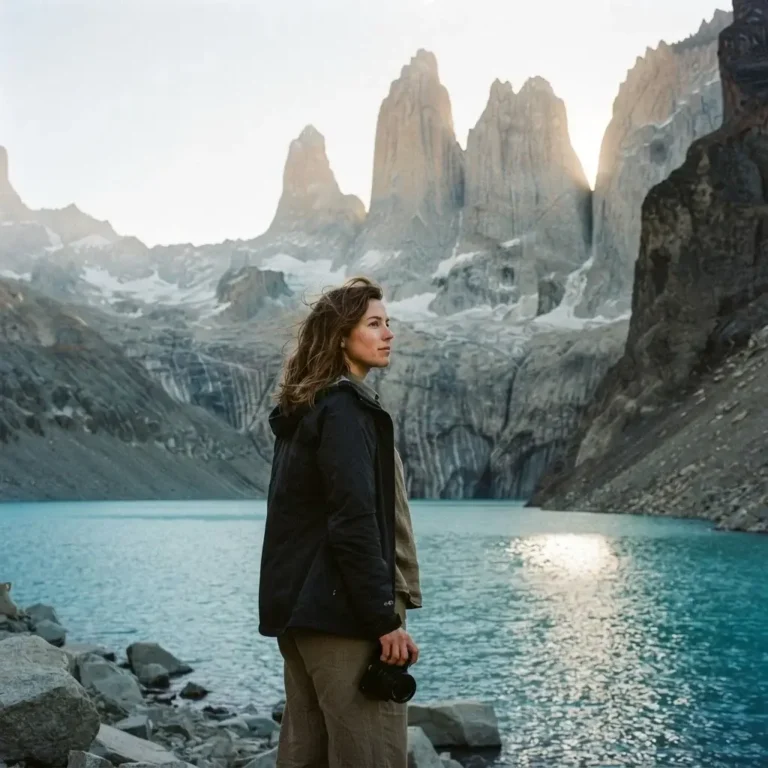
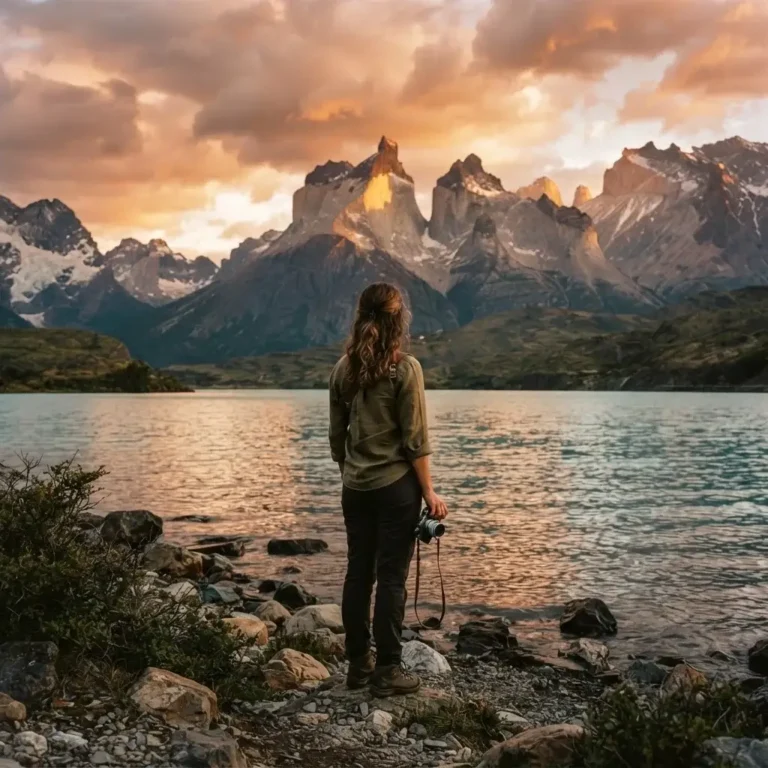
Guanacos pick their way across windswept steppe in herds of dozens. And in Torres del Paine National Park in Chile, one of the most visually striking parks on the planet, wild pumas have become increasingly habituated to quiet human presence.
For travelers who want puma sightings specifically, the best time is August through November when the pumas are most active around dawn and dusk in the open grasslands near the Laguna Azul and Laguna Amarga areas. Swoop Patagonia’s wildlife guide gives honest, destination-specific detail on the best seasons for pumas, condors, guanacos, whales, and penguins across both Chilean and Argentine Patagonia.
Penguin colonies: Peninsula Valdes in Argentine Patagonia hosts one of the largest Magellanic penguin colonies in the world, active from October through March. It is a UNESCO-listed area and one of the most accessible penguin experiences in South America. The town of Puerto Madryn is your base.
Solo traveler logistics: Patagonia is genuinely possible to explore independently. Buses run between major hubs like Puerto Natales, Punta Arenas, and Bariloche. Inside Torres del Paine, a free (though timed) shuttle system connects key trailheads. Park entrance fees for international visitors run approximately $21 USD.
What to eat: In Puerto Natales (gateway to Torres del Paine), order the cordero al palo, a whole Patagonian lamb slow-roasted on a vertical iron cross over an open fire. This is not a dish you will find replicated anywhere else with the same quality or meaning. It is communal, generous, and deeply local.
Choosing Your Safari: Which Americas Destination Is Right for You?
Not every destination suits every traveler, and part of planning a meaningful wildlife trip is being honest with yourself about what you actually want from the experience.
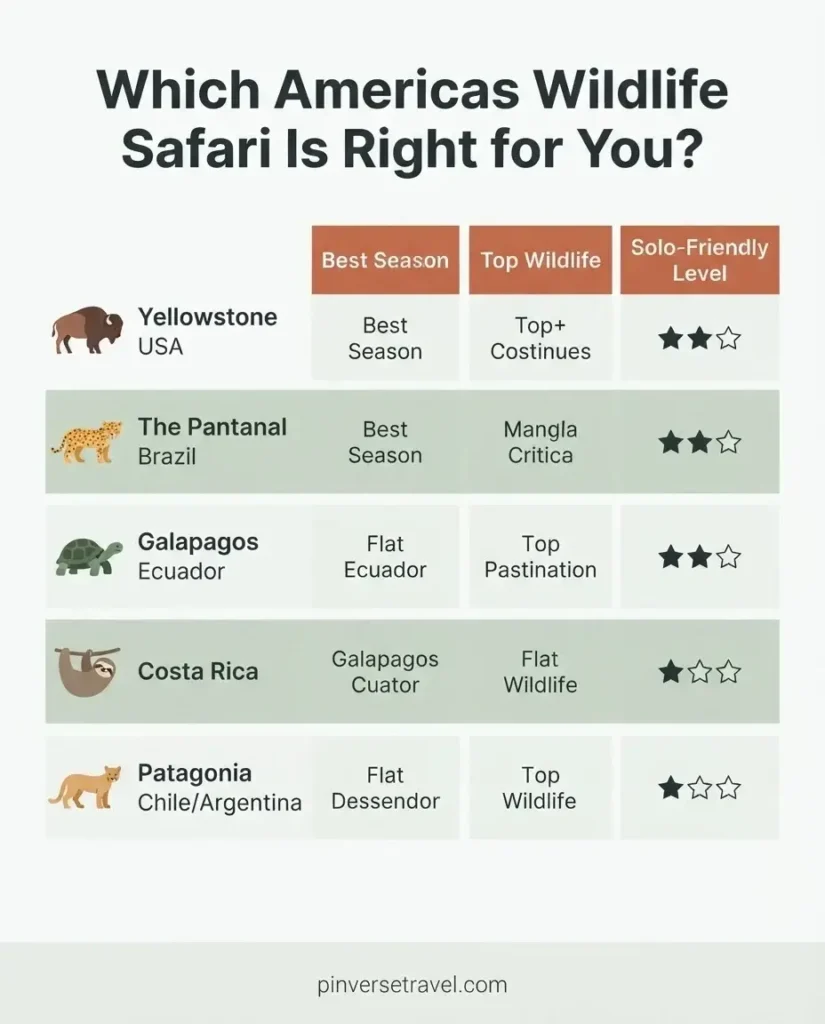
If you want guaranteed large-mammal encounters with minimum planning complexity, Yellowstone in September or October is your most accessible starting point, especially if you are US-based.
If you want the highest possible density of iconic animals in a genuinely wild setting, the Pantanal in September is the best answer the Americas have. Jaguars, caimans, giant anteaters, and 650 bird species in an open wetland you navigate by boat. Nothing else in this hemisphere compares for sheer encounter rate.
If you want a completely unique experience of fearless wildlife in a UNESCO-protected island ecosystem, the Galapagos is incomparable and genuinely worth the higher entry cost for the experience it delivers.
If you want biodiversity at a slower, more immersive pace, Costa Rica is the answer, particularly Tortuguero and Corcovado. It is also one of the most solo-travel-friendly and tourist-infrastructure-rich destinations in Central America.
And if you want raw landscapes, iconic predators, and penguins, Patagonia is the one you will talk about for the rest of your life.
One belief I hold from years of travel research and connecting with solo travelers: the biggest mistake is waiting until everything is perfect before you go. There is no perfect season, no perfect budget, no perfect skill level for wildlife travel. You learn by going. You get more comfortable with uncertainty by practicing it. Every single one of these destinations is more accessible than you think, and every single one will teach you something that no amount of reading can.
Book the trip. The wildlife will not wait forever, and neither should you.