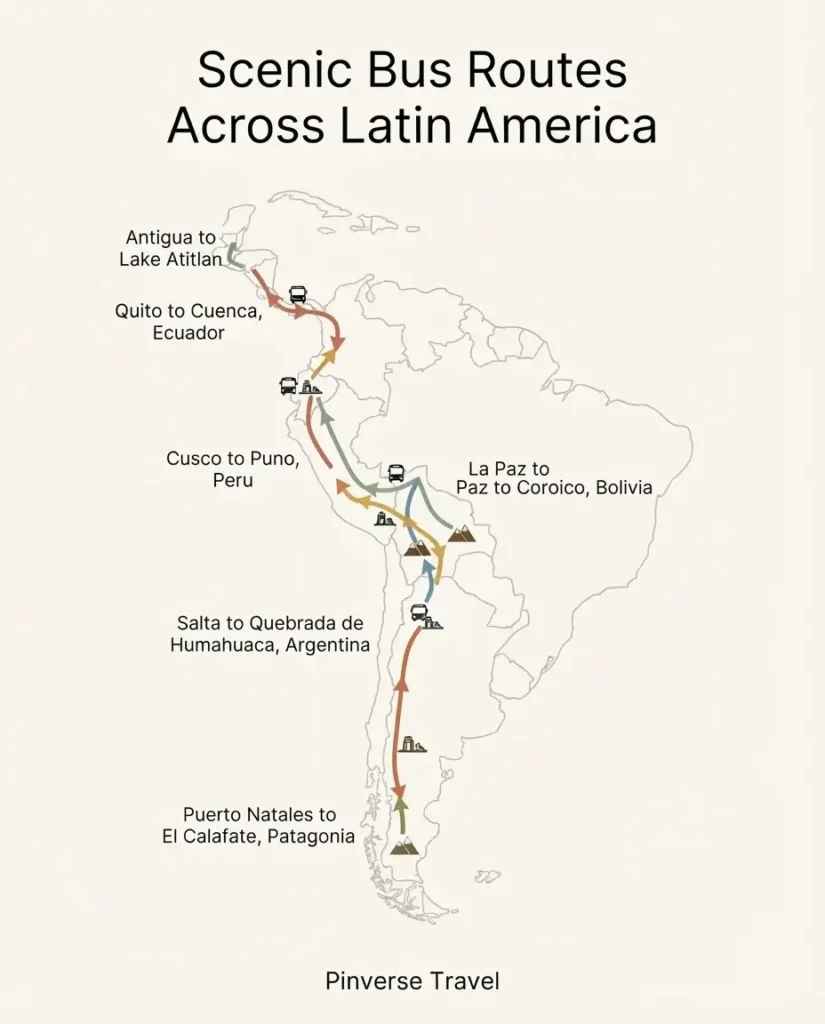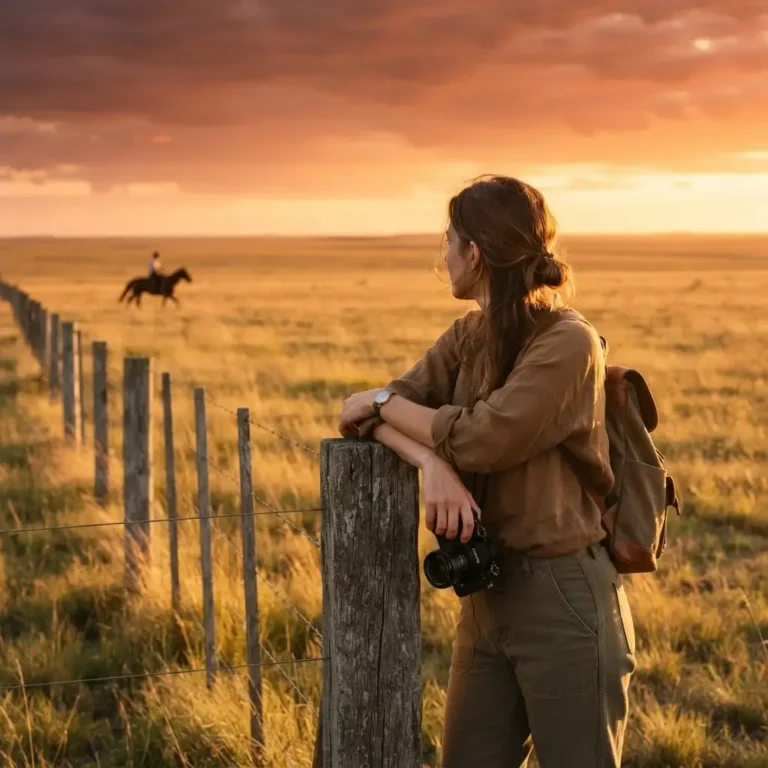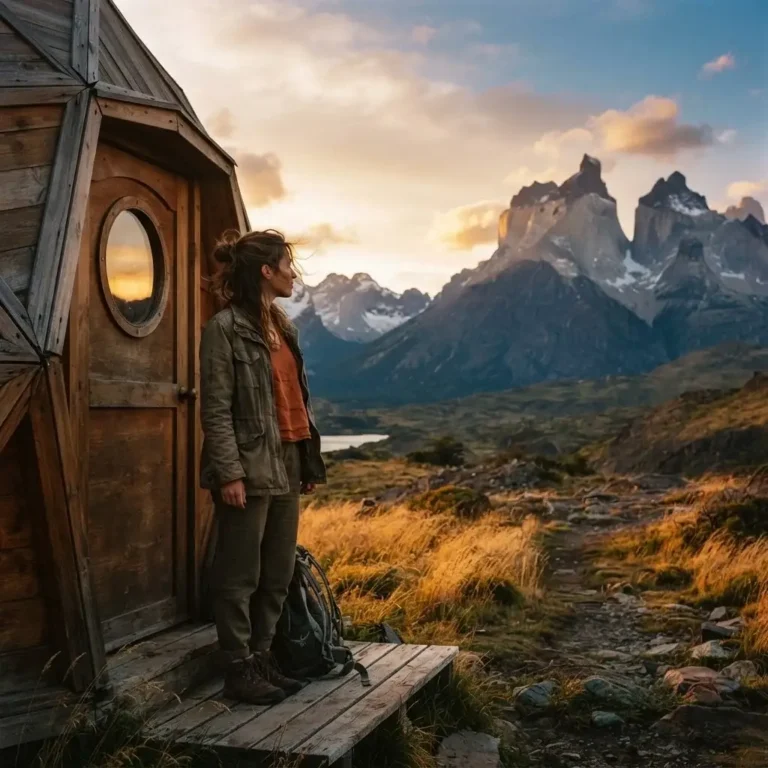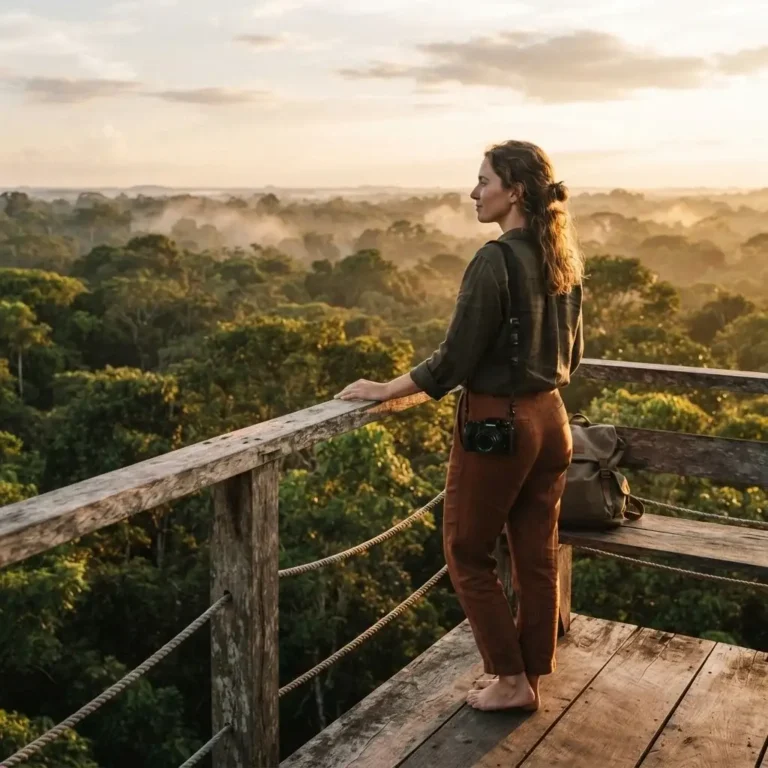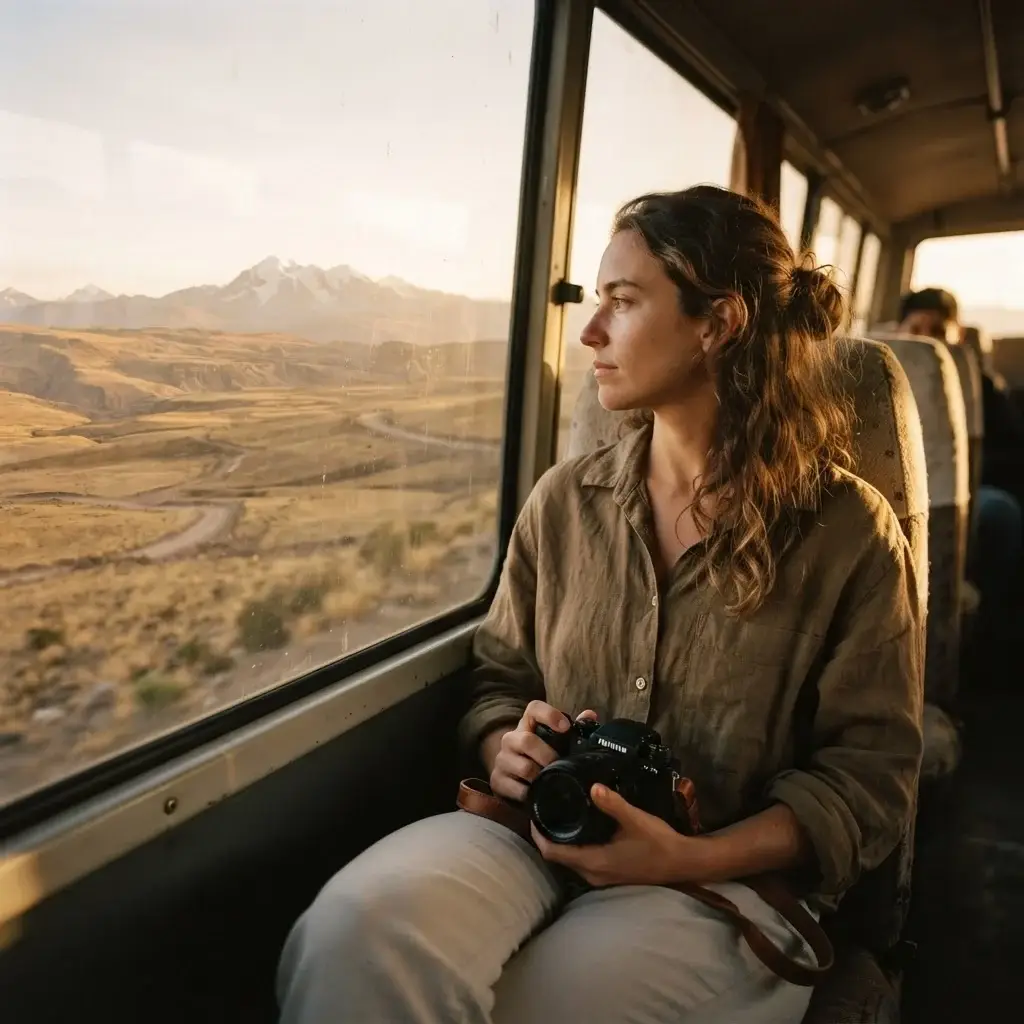
There is a version of travel where you fly over everything. You land, you tick off a famous site, you fly out. And there is another version, the one I fell in love with, where you sit in a moving window seat and watch the world actually change around you. The mountains get taller. The air gets thinner. The colors of the earth shift from red to gold to green. You stop for lunch in a village you never would have found on your own.
Latin America is built for the second kind of travel. And the bus is how you do it.
I have sat on enough overnight coaches in my life, from the overnight routes I dragged myself through during my solo backpacking trip across Europe to the rattling rides up into hill towns in Ghana, to know that not all bus journeys are created equal. But what solo travelers consistently report from Latin America is something different: these are some of the most visually spectacular overland routes on the planet, often costing less than a tank of gas.
This guide covers the routes worth your time, how to actually book them, what to eat along the way, and everything a first-timer needs to stop overthinking and start going.
Why Take the Bus in Latin America
Flying between cities is faster. That is true. But fast is not always the point.
When you fly, you skip the Andean altiplano, the green valleys dropping into cloud forest, the tiny roadside towns where someone is grilling corn over charcoal and the whole scene is so beautiful it almost does not feel real. The bus lets you experience the geography as a continuous story, not a series of disconnected airports.
Bus travel in Latin America is also, in most cases, dramatically cheaper than flying. A flight from Cusco to Lima might run $80 to $150 USD. A comfortable tourist bus covers the same region overland for $15 to $50 USD and shows you everything in between. For travelers with flexible time, that trade is almost always worth making.
And for solo travelers specifically, buses are social in a way airports never are. You sit next to locals. You share snacks. You watch the same dramatic scenery out the same window and it becomes something shared, even if briefly.
A Note on Bus Types Before You Go
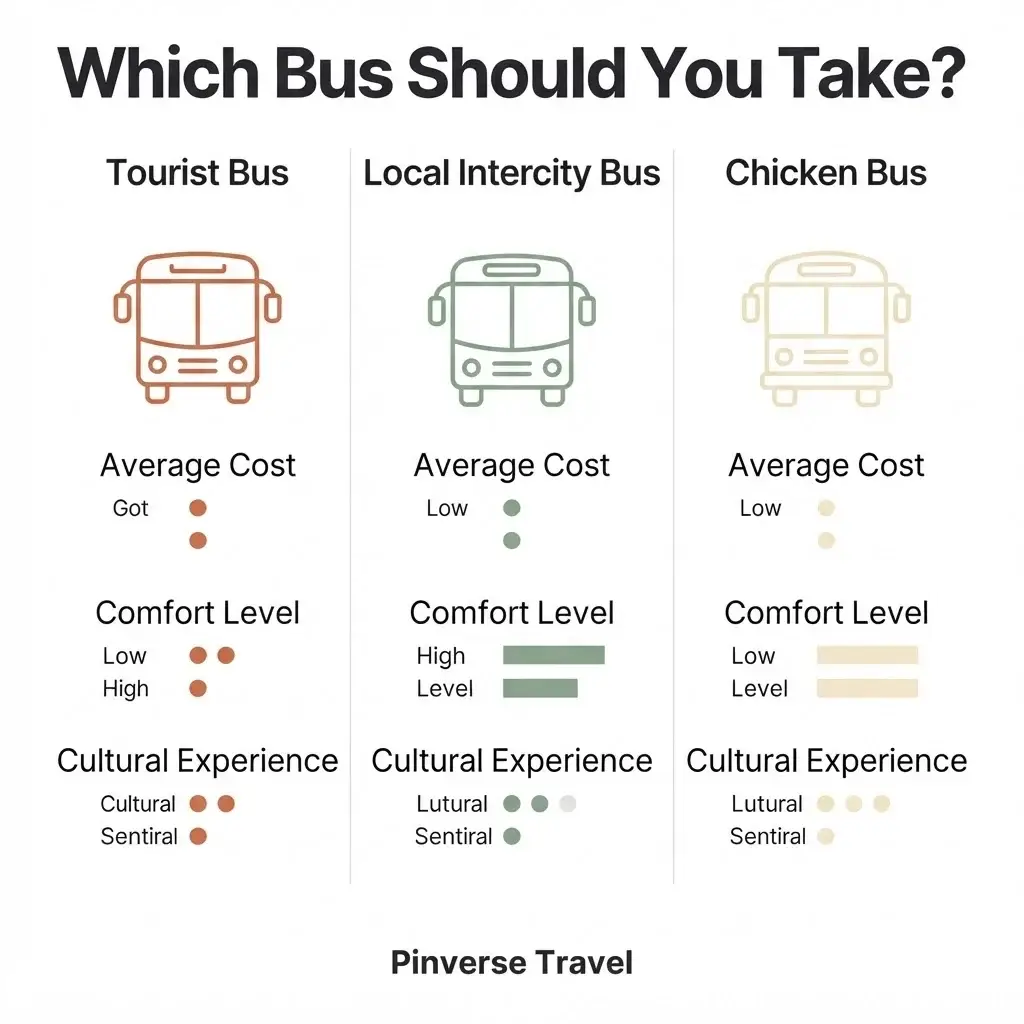
Across Latin America you will encounter a few different bus categories, and knowing the difference saves you from an unpleasant surprise.
Tourist or “turístico” buses are purpose-built for travelers. They have assigned seats, luggage storage, English-speaking staff, and often a guide or at minimum a set route with planned stops. They cost more but offer comfort and predictability. Inka Express in Peru is a perfect example.
Local intercity buses are the everyday transport that residents use. They are cheaper, often crowded, less predictable on timing, but give you a more authentic cross-section of daily life. The quality varies enormously by country and route. In Argentina’s major cities you will find air-conditioned double-deckers with cama (fully flat bed) seats. In Bolivia’s rural routes, you may be sharing the aisle with livestock.
Chicken buses, particularly in Guatemala and parts of Central America, are a category unto themselves. More on those below.
The choice is not “which is better” but “what kind of experience do I want today.”
The Routes Worth Taking
Peru: Cusco to Puno Along the Route of the Sun
If someone forced me to name one bus journey in all of Latin America that a first-time visitor should not skip, this is the one I would name.
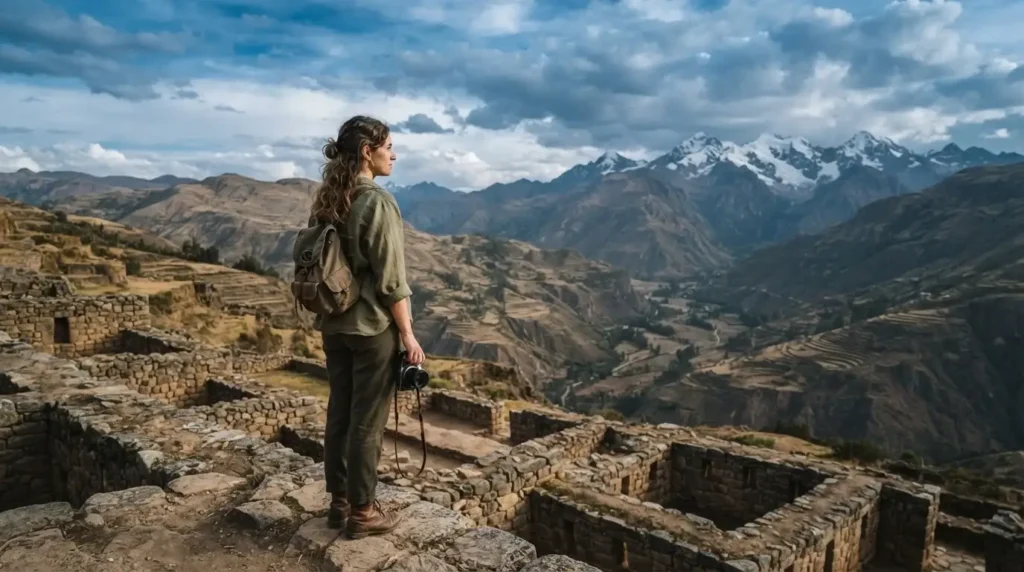
The Route of the Sun (Ruta del Sol) runs from Cusco to Puno, covering 380 kilometers through the Andean highlands at altitudes that make your chest feel tight in the best possible way. Along the way you pass Inca ruins, colonial churches that look impossibly ornate for their remote locations, and eventually arrive at the shores of Lake Titicaca, the highest navigable lake in the world.
The gold standard for doing this route as a traveler is Inka Express, which runs a daily tourist bus with an onboard guide, a buffet lunch stop in the Andes, and four guided stops including the Church of Andahuaylillas (often called the “Sistine Chapel of the Americas”) and the Raqchi archaeological site with the ruins of the Temple of Wiracocha. The full-day journey departs at 5:40am from Cusco and arrives in Puno by evening. Prices start from $50 USD per person. Since July 2025, all their buses include Starlink satellite Wi-Fi. Note that entrance fees to the stop sites total an additional 53 soles paid at each site.
If you want more flexibility across multiple days and routes, Peru Hop offers hop-on-hop-off passes that let you set your own pace from Lima all the way to Cusco, with the option to add on Bolivia. This is ideal for travelers who want to stop in places like Paracas, Huacachina, and Arequipa along the way.
What to eat along this route: at the lunch stop in the Andes, try the sopa de quinoa if it is on the menu.
It is warming, filling, and completely suited to the altitude. In Puno itself, seek out trucha (freshwater trout) from Lake Titicaca, often grilled and served with rice and cancha (toasted corn).
Bolivia: La Paz to Coroico via the Yungas Road
This one is not for the faint-hearted. But it is unforgettable.
The Yungas Road, popularly known as the Death Road, is a 64-kilometer route connecting La Paz (at 3,600 meters) to Coroico (at 1,200 meters), dropping you through cloud forest with views that shift from barren Andean peaks to lush tropical green in the span of a few hours. Most tourists experience this route via mountain bike tour, but the public bus still uses sections of the road and you can also take a private shuttle or minibus from La Paz’s Villa Fatima bus area.
The drama is real, both visually and logistically. Take this route by day if possible. The UNESCO World Heritage Site of Tiwanaku sits about 70 kilometers west of La Paz and makes an excellent add-on if you’re exploring the region, accessible by minibus from La Paz’s Cemetery District for just a few dollars. The pre-Inca ruins there, including the Gate of the Sun and the massive Akapana Pyramid, are among the most important archaeological sites in South America.
What to eat in this region: in La Paz, find the Mercado Rodriguez or any of the salteñas stands that appear late morning and grab a few of those flaky pastry pockets filled with beef or chicken stew. They are the perfect pre-departure fuel.
Ecuador: Quito to Cuenca Through the Avenue of Volcanoes
This route is one of those journeys that keeps delivering long after it is over. The 8-hour bus from Quito to Cuenca passes through Ecuador’s central valley, flanked by a string of volcanoes including Cotopaxi and Chimborazo. On a clear morning, looking out the bus window at snow-capped peaks rising above cloud cover is the kind of thing that resets your sense of scale.
Cuenca is the destination here, and it earns the journey. The historic centre of Santa Ana de los Rios de Cuenca holds UNESCO World Heritage status for its beautifully preserved Spanish colonial architecture, its fusion of Inca, indigenous, and European influences, and its paved plazas that feel genuinely alive with daily local life. It is the kind of city you walk into and immediately want to slow down.
Several Ecuadorian bus companies serve this route, including Supermaxi and CIFA. Tickets run roughly $8 to $15 USD for standard service, purchased easily at the Quitumbe bus terminal in Quito. Book a daytime departure for the views.
What to eat: along the route, if the bus stops in Riobamba, look for hornado, a slow-roasted pork dish served with llapingachos (potato cakes) and salsa de mani (peanut sauce). In Cuenca itself, do not leave without trying cuy if you’re feeling adventurous, guinea pig is a traditional delicacy here, but the mote pillo (hominy scrambled with egg) is a gentler and equally local breakfast option.
Argentina: Salta to the Quebrada de Humahuaca
Northwestern Argentina is one of the most visually striking corners of the continent and almost no one from outside South America has it on their radar. That is exactly why it is worth going.
The bus journey from Salta north toward Jujuy and into the Quebrada de Humahuaca is a ride through an extraordinary landscape of layered rock formations in every shade of ochre, terracotta, and purple. The Quebrada itself is a UNESCO World Heritage Cultural Landscape, and the small towns strung along the route, Purmamarca, Tilcara, Humahuaca, feel genuinely rooted in Andean culture rather than polished for tourists.
Local buses depart from Salta’s central bus terminal. The journey to Jujuy takes about two hours; continuing into the Quebrada depends on your chosen stops. Budget travelers can piece together local buses between towns for just a few Argentine pesos. The best value is to base yourself in Tilcara for a night and catch buses between villages independently.
What to eat: humitas (corn dumplings steamed in their husks) and empanadas salteñas are region-specific and worth seeking out from the market stalls in any of these towns. The locro (a thick Andean stew of corn, beans, and meat) is one of the most warming dishes I have read about solo travelers consistently recommending for high-altitude afternoons.
Patagonia: Puerto Natales to El Calafate
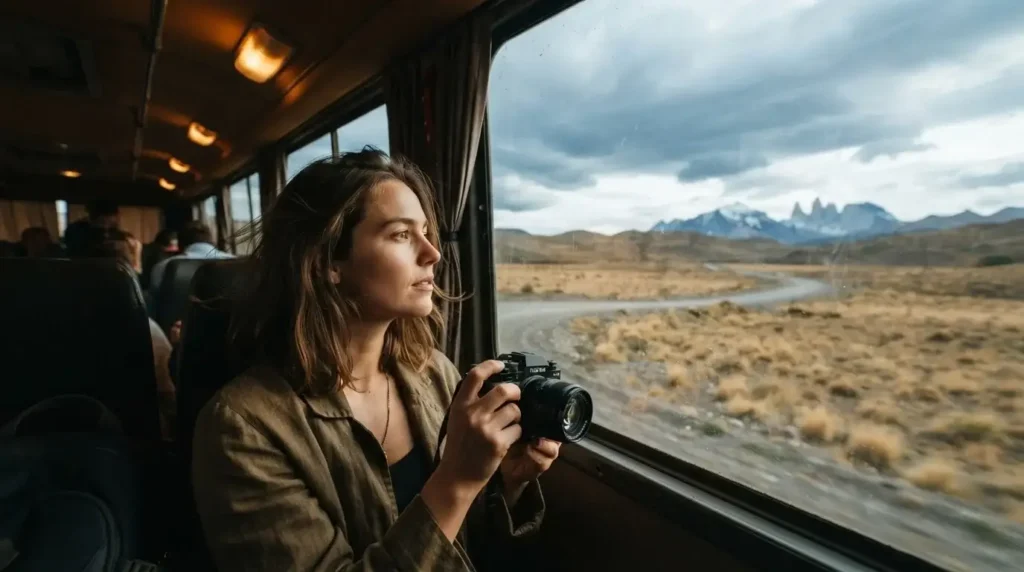
This cross-border bus between Chile and Argentina is the kind of journey where you spend most of it pressed against the glass with your camera raised and then put your camera down because no photo is going to do this justice.
The route covers roughly 160 kilometers across Patagonian steppe, with Torres del Paine’s jagged granite towers visible on the Chilean side and the Southern Patagonian Ice Field looming in the distance. Bus Sur is the primary operator, with the journey taking approximately 5 to 6 hours including the Chile-Argentina border crossing. Bring your passport, the border crossing is an international one with customs checks on both sides. Tickets run from around $36 USD and can fill up, especially in peak trekking season (October through March).
For a comprehensive breakdown of timing, schedules, and what to expect at the crossing, Swoop Patagonia’s guide to bus travel in the region is one of the clearest resources I have found. Their team knows this terrain deeply.
What to eat: in Puerto Natales before you depart, grab an empanada or two for the road. The journey does not stop for lunch. In El Calafate, the lamb (cordero patagonico) is what you came for, slow-roasted and worth every peso.
Guatemala: The Chicken Bus Experience
No guide to scenic bus travel in Latin America is complete without the chicken bus, and Guatemala is where this experience reaches its peak.
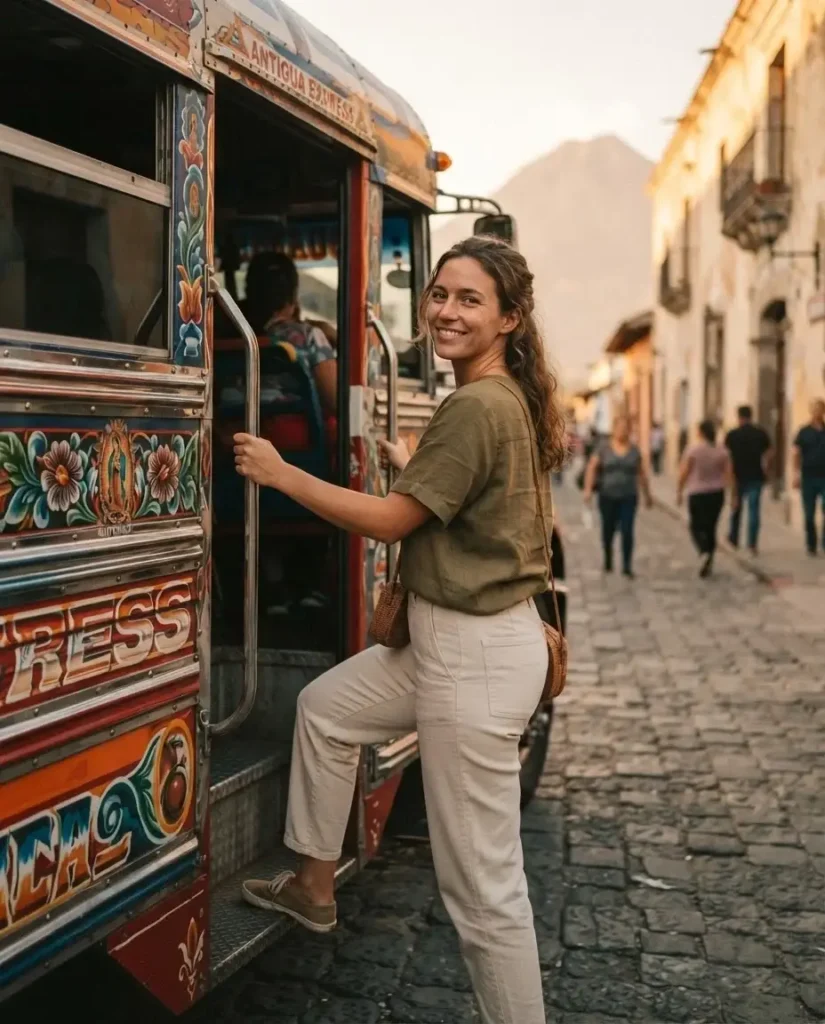
Chicken buses are retired American school buses that were auctioned off, shipped south, and transformed into extraordinarily painted rolling works of art. Each one is customized by its owner with chrome details, painted murals, religious icons, and names blazoned across the windshield. They are officially called camionetas, but the “chicken bus” nickname stuck because passengers historically shared space with market goods, including live poultry.
A Little Adrift’s deep-dive on Guatemala’s chicken buses covers 17 fascinating cultural facts about them, including the artistry behind the customization and what these buses mean to the communities that depend on them daily. It is worth reading before you go, not as a tourist curiosity but as context for understanding what you are actually participating in.
From a practical standpoint, chicken buses connect nearly every town in Guatemala for almost nothing in cost, often under a dollar for short routes. They are used heavily by locals between Antigua, Lake Atitlan, Chichicastenango, and the highlands. You buy your ticket from the ayudante (the ticket collector who hangs off the door and shouts the destination at stops). No reservation needed.
A few honest notes for solo travelers: keep your bag on your lap or between your feet rather than overhead. Routes through the highlands are genuinely beautiful and genuinely winding. If you get motion sick easily, take a seat near the front and crack a window. Early morning buses are less crowded and offer better light for watching the countryside.
What to eat: the highland markets in Chichicastenango have some of the best street food in Central America. Look for pepian, a thick seed-based stew, or jocón, a green tomatillo chicken dish. Both are traditionally Guatemalan and rarely found outside the country in their authentic form.
Mexico: Chiapas and the Colonial Highlands Route
Mexico’s bus infrastructure is excellent by regional standards, and the route through Chiapas is one of the most rewarding overland journeys in Central America. From Palenque through the jungle and up into the cool highlands of San Cristobal de las Casas, the landscape transforms completely in the space of four or five hours.
San Cristobal de las Casas itself sits at 2,200 meters and feels like a different country from the hot lowlands. Shuttle companies connect it to Palenque for $15 to $30 USD. From San Cristobal, continuing toward the border with Guatemala is a logical and beautiful overland route, passing through indigenous highland communities, misty valleys, and ruined colonial churches.
The first-class ADO buses serving Chiapas are air-conditioned and reliable. For the more local highland routes, colectivo minivans fill in the gaps.
How to Book Bus Tickets in Latin America
This is where most first-timers get stuck, and it does not need to be complicated.
For South America’s tourist bus routes (Peru, Ecuador, Argentina), Busbud lets you search, compare, and book tickets from thousands of bus companies across the continent. It covers major routes in Brazil, Argentina, Chile, Colombia, and more. It is genuinely useful for pre-planning before you arrive.
For Peru specifically, booking through Inka Express’s own website or Peru Hop’s website is the most reliable option for tourist-class services. Walk-up tickets at local terminals are available for many routes but can sell out in peak season (June through August and around major holidays).
In Central America and for chicken buses, do not bother with online booking. Show up at the market or terminal, ask which bus goes where, and pay the ayudante.
A few general rules that solo travelers consistently endorse: book daytime buses on routes through unfamiliar areas for your first few trips, since you can see what is around you. Book overnight buses only on established tourist routes (Buenos Aires to Santiago, Lima to Arequipa) where the companies are well-reviewed and you have confirmed luggage storage. Bring snacks, a neck pillow, and a light layer even in tropical regions because air conditioning on tourist buses can be aggressively cold.
What to Pack for Long Bus Days
You do not need much, but a few things make a real difference.
A good pair of noise-canceling earbuds or headphones is useful not just for music but for the long stretches when the bus PA system is playing telenovelas at full volume. A reusable water bottle that you fill before boarding saves money and keeps you hydrated at altitude.
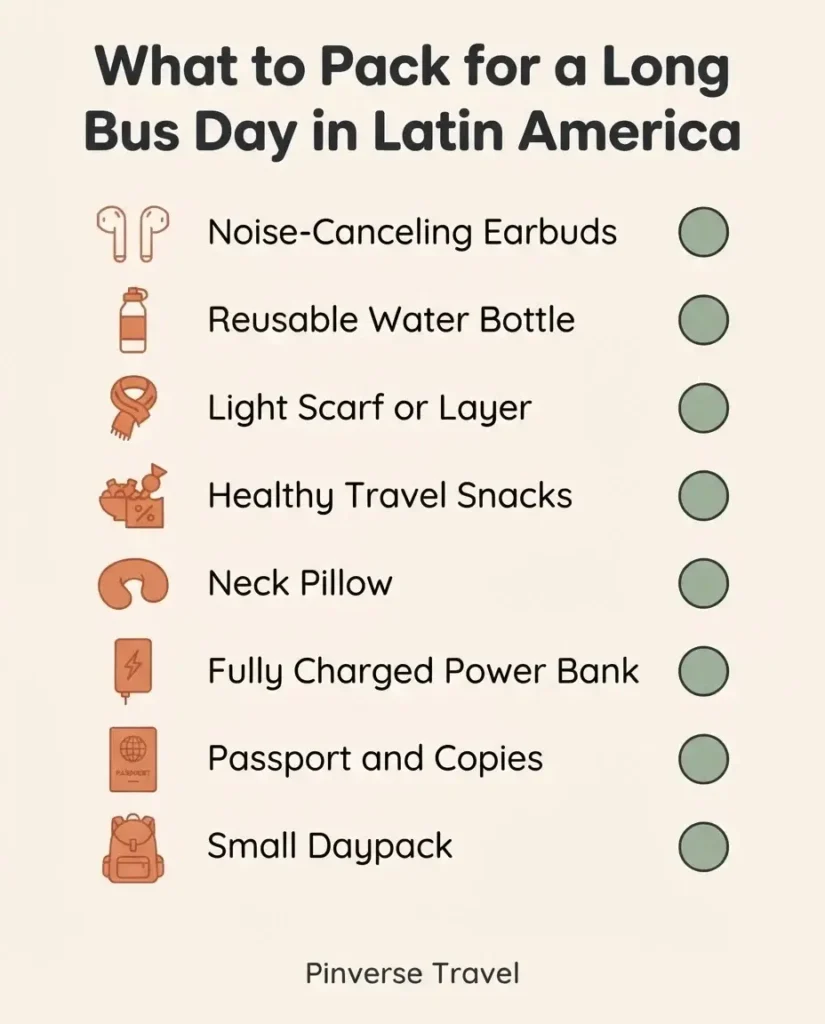
A light scarf doubles as a blanket on cold, air-conditioned overnight coaches. Snacks from local markets, mangoes, maracuya, toasted corn, are cheaper and more interesting than anything sold on the bus.
Most importantly: bring patience and a window seat preference. Not every departure runs exactly on time. Not every bus is as clean as you hoped. But every single one of these routes will show you something that flying over would have hidden from you entirely.
One Final Thought
I left a job that gave me two weeks of vacation a year, and part of what I was buying back was time. The kind of time that lets you sit on a bus for eight hours and actually be okay with that because the view outside the window is astonishing and the person beside you just offered you a handful of toasted corn and you are both watching the same volcano disappear into clouds.
That is not wasted time. That is the trip.
Start with one route from this list. Book one ticket. The bus will take care of the rest.