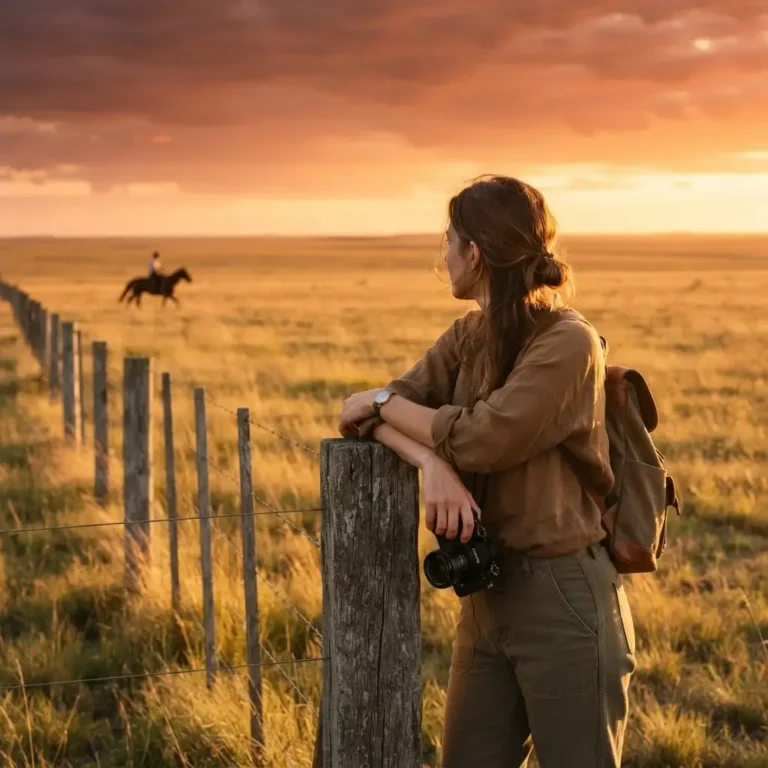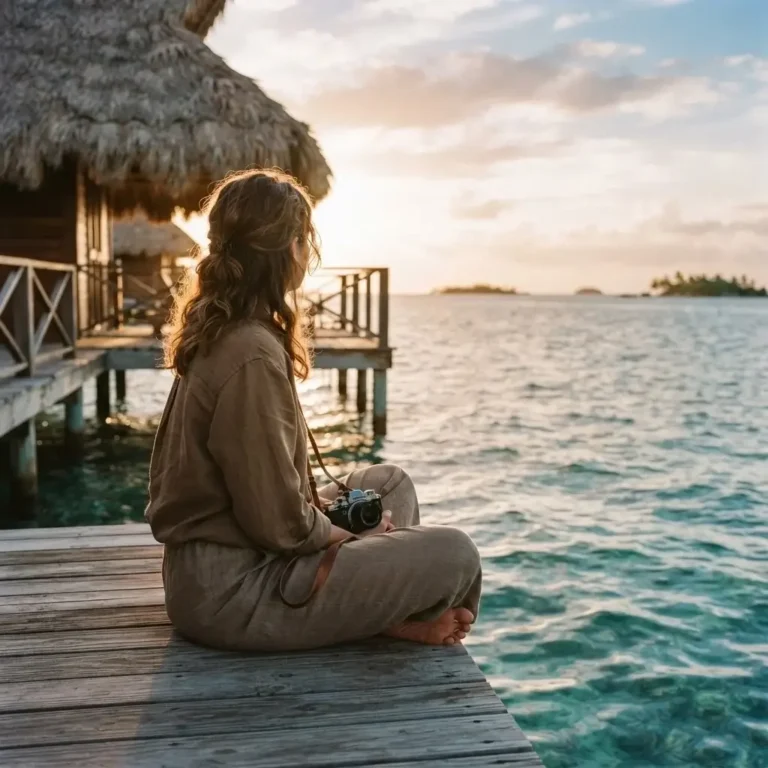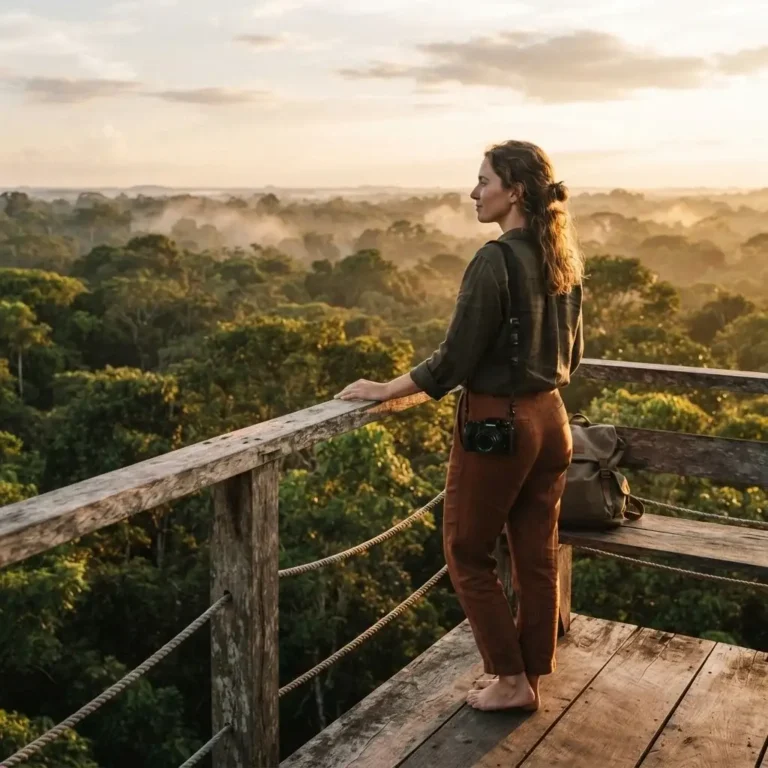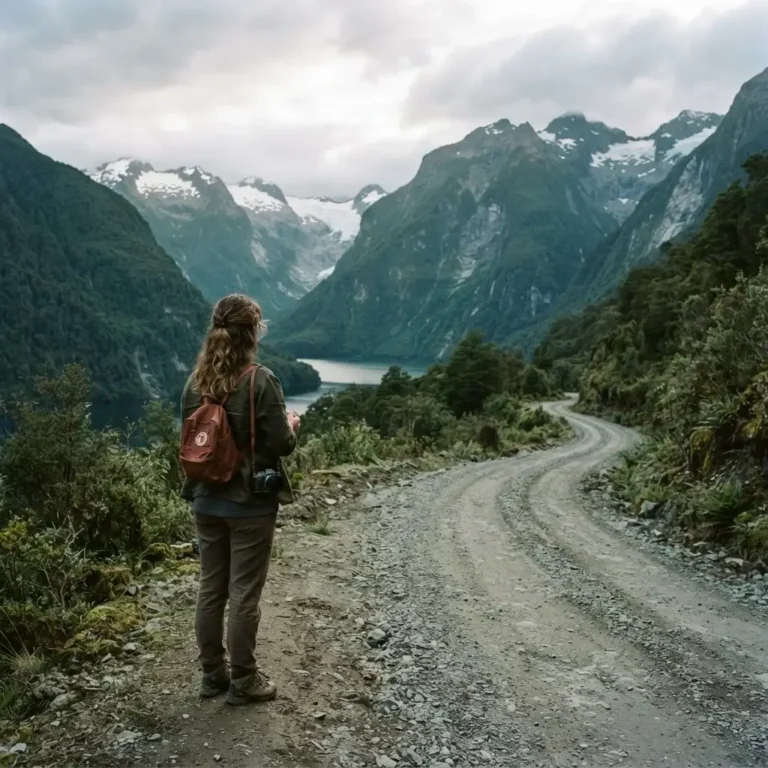
There is a particular kind of morning that stays with you long after you have returned home. The one where you open your eyes, hear nothing but birds and wind, look out a window and see nothing but wilderness, and feel, immediately and completely, that you are exactly where you are supposed to be.
That is what a great nature cabin does. Not a room in a mountain hotel where you happen to have a view. A real cabin stay, where the landscape surrounds you, the wildlife is within earshot, and the boundary between inside and outside feels almost irrelevant.
The Americas cover more ecological variety than almost anywhere else on earth. You can sleep above the Amazon River in Peru, wake up to glaciated peaks in British Columbia, listen to howler monkeys in Costa Rica, or sit on a deck in Patagonia watching condors ride the thermals. Most travel articles on this topic stick to the United States and call it done. This one doesn’t. I want to show you what is actually out there, from north to south, across one of the most extraordinary landscapes on the planet.
Here is what I have found, and here is how to plan it.
Before You Pick a Cabin: What Actually Makes One Worth It
Not every cabin that calls itself scenic delivers. I have seen enough travel content to know that photos can make a roadside shed look like a wilderness paradise. So before we get into specifics, here is what I think separates a genuinely meaningful cabin experience from a forgettable one.
First, proximity to real wilderness, not a manicured park with a 10-minute nature walk but actual functioning ecosystems where wildlife moves freely. Second, enough distance from town that you actually feel the quiet. Third, a property that earns its place in the landscape rather than simply exploiting it visually. And fourth, logistics that are manageable for a solo traveler who is not a seasoned expedition guide.
The cabins below meet all four criteria. Some require significant advance planning and real effort to reach. That is part of the point.
Treehouse Lodge, Peruvian Amazon
Nothing on this list requires more commitment to reach, and nothing on this list rewards that commitment quite as dramatically. The Treehouse Lodge sits on the banks of the Yarapa River, deep in the Peruvian Amazon near the Pacaya-Samiria National Reserve. The 12 individual treehouses are built anywhere from 25 to 75 feet above the jungle floor, each perched among actual trees, not decorative poles. You sleep in the canopy. You wake up to the Amazon.
Getting there is an adventure before you even arrive. Iquitos, the gateway city, is one of the largest cities in the world unreachable by road. You fly in from Lima or Cusco, then the lodge arranges a two-and-a-half-hour transfer by car and boat to bring you to the property. The lodge runs two daily airport pickups at 9:15 AM and 1:30 PM. Plan your flights around those times.
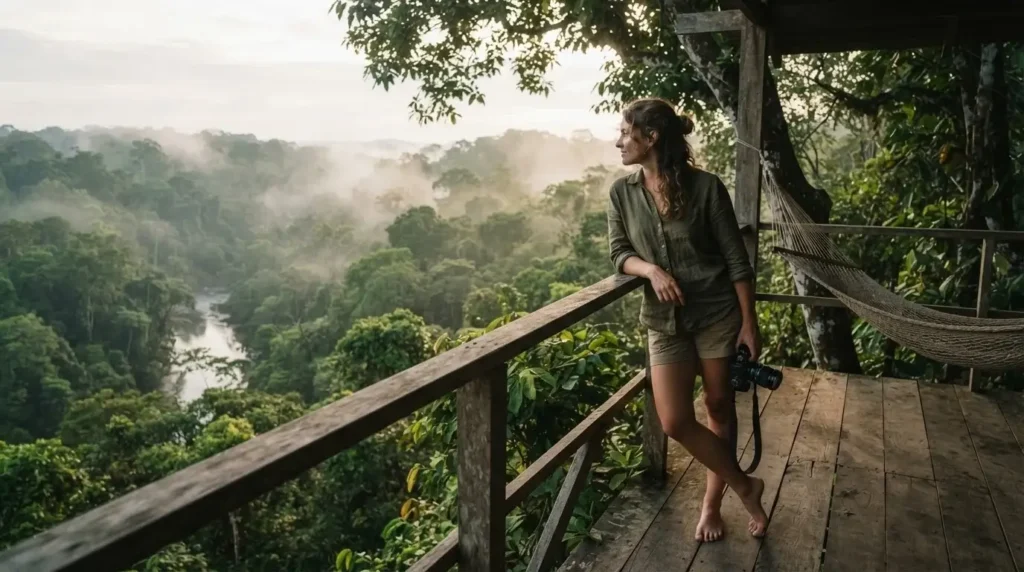
The entire package is all-inclusive, which matters more here than it does almost anywhere else on this list. All 18 excursions are included in your rate, and you plan your days with a private English and Spanish-speaking guide on arrival. The list includes sunrise birdwatching, piranha fishing, swimming in the Amazon, dugout canoe trips, nighttime caiman spotting, and sunset cruises where pink dolphins surface alongside the boat. Three Peruvian-style meals daily are included, and past guests consistently describe the food as genuinely excellent, in the same conversation as top Lima restaurants. Rates start from around $695 USD per person for a 3-day, 2-night package.
One thing to know going in: there is no WiFi and no cell service. The lodge considers this a feature. I think they are right.
The best food to eat while you are in Iquitos before or after your lodge stay: go to the central market on the first morning and try juane, a traditional Amazon dish of rice, chicken, olives, and egg steamed inside a bijao leaf. Order chicha de maiz, fermented corn drink, if you want to do it the local way. And do not leave without trying cecina, smoke-dried jungle pork.
High-water season runs December through May, when the rivers rise 20 to 25 feet and open up more paddling routes with extraordinary jungle reflections. Low-water season from June through November exposes more jungle paths for walking excursions. Both seasons offer outstanding wildlife. Solo travelers consistently report feeling safe and exceptionally well looked after by the staff.
Selva Verde Lodge, Sarapiqui, Costa Rica
If Peru feels like a major expedition for your first nature cabin experience, Costa Rica is the version that builds your confidence without dialing down the wonder. Selva Verde Lodge in Sarapiqui sits inside a 500-acre private rainforest reserve in Costa Rica’s Caribbean lowlands, about two hours from San Jose. It has been operating since 1986 and has become one of the most respected eco-lodges in Central America.
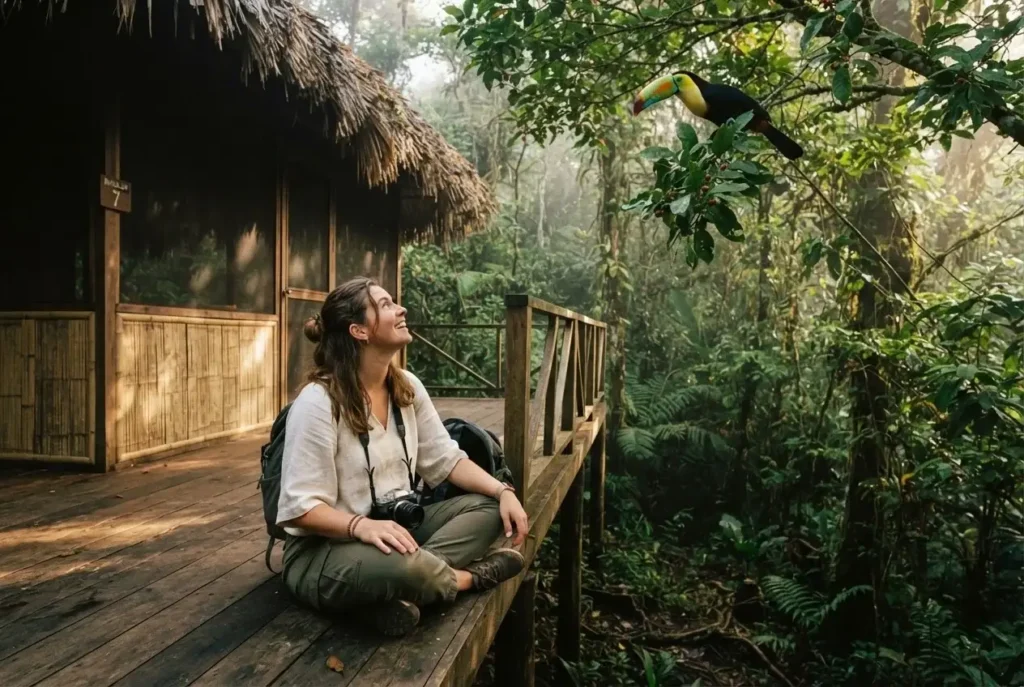
What makes Selva Verde Lodge stand out for nature lovers specifically is the sheer volume of biodiversity you can access without hiring a vehicle or booking a separate tour. The reserve borders the Sarapiqui River, and the combination of primary forest, secondary forest, and river habitat on-site means extraordinary birding every morning simply by walking the lodge’s own trail network. Keel-billed toucans, mantled howler monkeys, and more than 400 recorded bird species have been documented within the reserve.
The bungalow-style cabins are set over the river or within the forest edge, built on elevated platforms with screened walls so you hear the rainforest at night while staying dry and comfortable. The natural sounds here, the frogs after dark, the howlers just before sunrise, the constant bird chorus from about 5 AM onward, are legitimately staggering.
If you have never woken up inside a functioning tropical rainforest, it recalibrates something in you.
From a solo traveler’s standpoint, Costa Rica is one of the most accessible nature destinations in the Americas. No visa required for US citizens. The colón is easy to manage. English is widely understood in tourist areas. Public buses from San Jose to Puerto Viejo de Sarapiqui run regularly and cheaply, though a rental car gives you more flexibility.
What to eat in the area: stop at a local soda (a family-run Costa Rican lunch counter) and order gallo pinto for breakfast, which is rice and black beans fried together with onion and Lizano sauce, served with eggs and fresh plantains. It is the national breakfast and it genuinely earns that status.
Cathedral Mountain Lodge, Yoho National Park, Canada
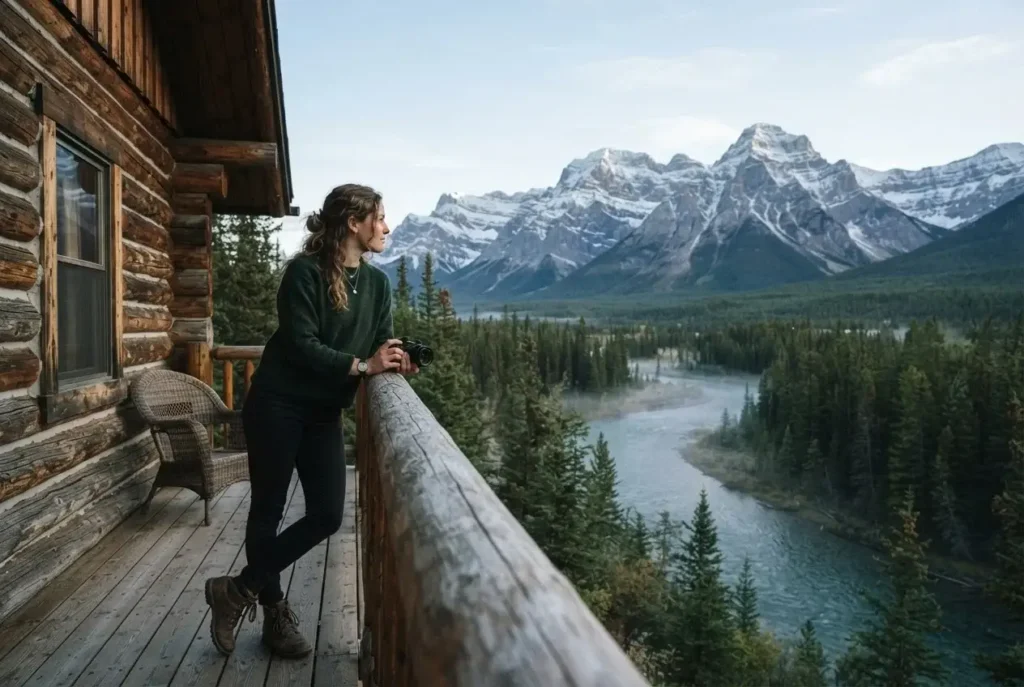
If what you picture when you think “scenic cabin” involves glaciated peaks, roaring rivers, and the specific stillness of a Canadian wilderness morning, Cathedral Mountain Lodge in Yoho National Park is the answer. The property sits on the banks of the Kicking Horse River in British Columbia, surrounded by the Canadian Rockies, and it is among the most visually arresting places to stay in North America.
The Cathedral Mountain Lodge accommodation page shows the range clearly: 29 luxury log cabins spread across the property, from spacious Premier Cabins accommodating two guests with a king bed, wood-burning fireplace, soaker tub, and private deck with mountain views, to Premier Cabins with Lofts for families or friends traveling together. Rates for the 2026 season run from approximately CAD $2,297 (late May to mid-June) to CAD $2,663 (mid-June to October 1), based on double occupancy and including a complimentary market-fresh breakfast served daily from 7 to 10:30 AM.
What you get beyond the cabin itself is access to one of the most spectacular stretches of mountain scenery in the world. Yoho National Park shares borders with Banff and Kootenay, meaning you are within reach of Emerald Lake, Takakkaw Falls (one of Canada’s highest waterfalls), and the Burgess Shale fossil beds, a UNESCO World Heritage site.
The lodge also operates a free shuttle to Moraine Lake at sister property Moraine Lake Lodge, which for summer mornings is not a small thing. Moraine Lake gets extremely busy and access has been restricted to shuttle and cycling only in peak season, so the shuttle access from the lodge is genuinely valuable.
Solo travelers should note that Yoho is significantly less crowded than nearby Banff, which makes it a better choice for people who want dramatic scenery without the parking-lot chaos. The town of Field, British Columbia, where the lodge is located, has a handful of local restaurants and a genuine small-mountain-town feel.
Glacier National Park, Montana, USA
Glacier National Park in northwestern Montana is one of those American places that still has the power to genuinely surprise people who think they have seen enough American wilderness. The park covers over one million acres of the northern Rocky Mountains, has more than 700 miles of trails, and sits along the US-Canada border where it shares an international peace park designation with Waterton Lakes in Alberta.
The lodging options inside the park range from historic grand hotels to what the National Park Service describes as rustic cabins, with the Glacier Park Collection offering park-side cabin rentals starting from $175 per night. The park also has two backcountry chalets, Sperry Chalet and Granite Park Chalet, both accessible only by hiking in, which for the right traveler is an experience with very few equivalents in the lower 48 states. Sperry Chalet requires an 11-mile hike and is set in an alpine bowl at around 6,500 feet. You earn that view.
What makes Glacier special for nature lovers beyond the scenery is the wildlife density. The park has one of the highest concentrations of grizzly bears in the US, along with black bears, mountain goats, bighorn sheep, moose, wolverines, and lynx. Early morning and dusk are prime hours. Going-to-the-Sun Road, the park’s 50-mile traverse across the Continental Divide, is one of the most scenic drives in North America,
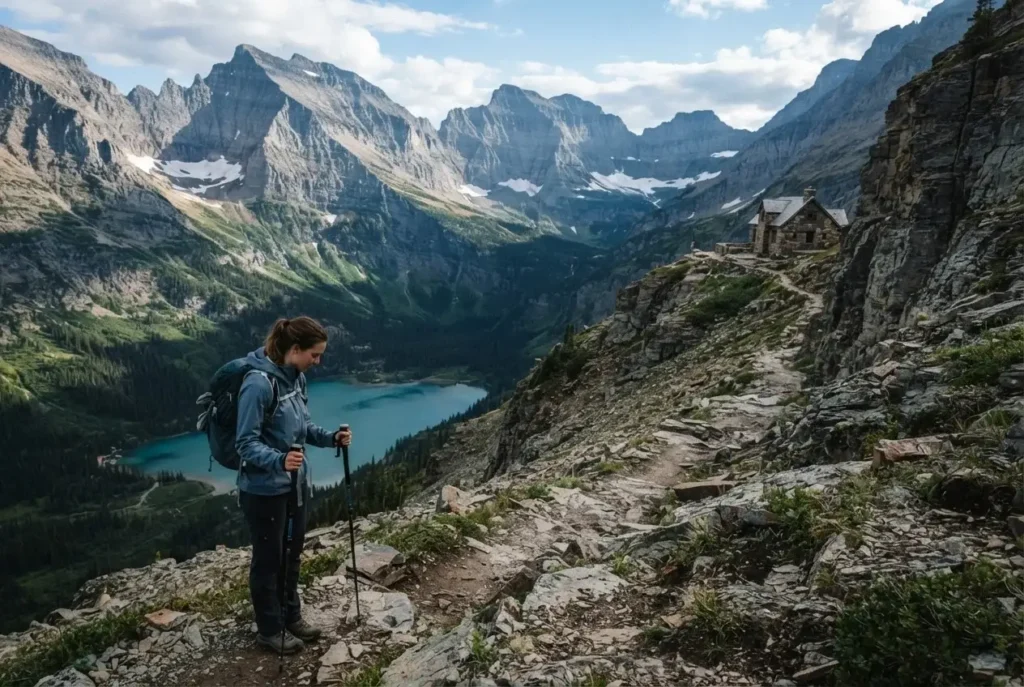
and certain sections are only open to vehicles with reservations during peak summer months so plan accordingly.
Solo travelers in Glacier will find the park extremely well-organized and the hiking trails clearly marked. The park recommends bear spray for all backcountry travel. The gateway towns of Whitefish and Kalispell are well-served by Amtrak’s Empire Builder rail line, which is itself a beautiful train journey across the northern prairies.
The Adirondacks, New York, USA
I can speak about this one with more personal weight than most entries on this list. Growing up in New York and working as a sightseeing guide in the city, the Adirondacks were always the place locals talked about when they needed to actually exhale. It is the landscape that New Yorkers escape to when Manhattan stops feeling livable.
The Adirondack Park, as the Adirondack Park Agency documents, encompasses approximately 6 million acres, making it the largest publicly protected area in the contiguous United States, larger than Yellowstone, the Grand Canyon, and the Great Smoky Mountains combined. About half of that acreage is state-owned, and the rest is a mix of private land, small towns, and working forests. It is a park unlike any other in America because people actually live inside it.
Cabin options here range from lakefront rentals to rustic lean-tos to more polished lodge-style properties, and the official Adirondack tourism site at visitadirondacks.com lists hundreds of options at a range of price points. For nature lovers, the priority should be lakefront or deep-forest access. Paddling on the chain of lakes in the central Adirondacks, particularly around Saranac Lake and Long Lake, is extraordinary in any season, and fall turns the forest into something that genuinely does not look real.
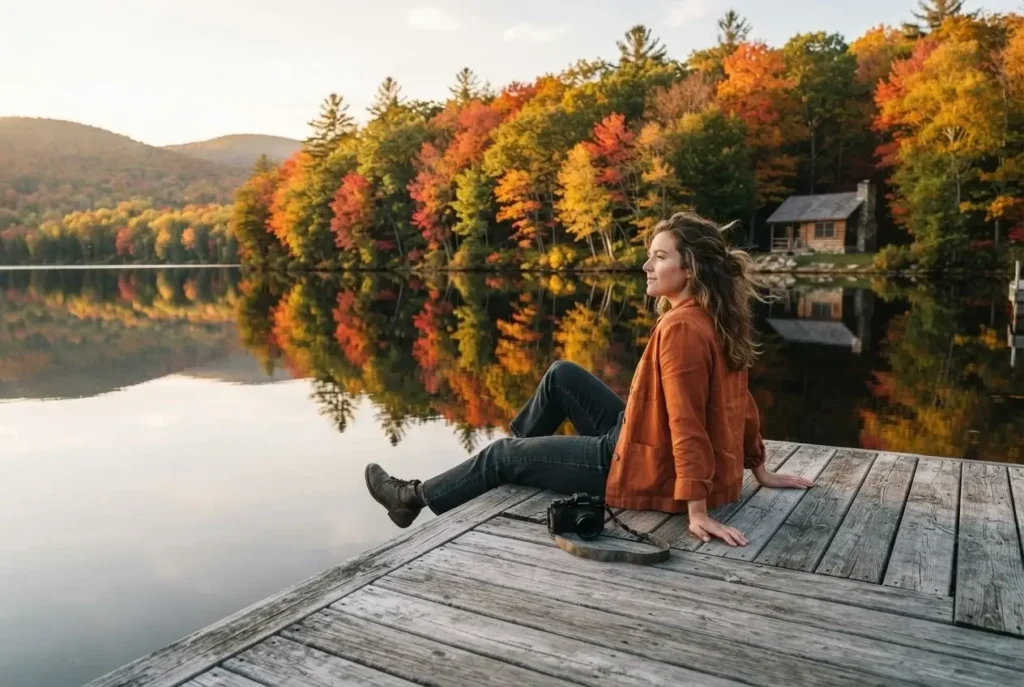
From New York City, the Adirondacks are about four hours by car or accessible via Amtrak to Albany followed by a regional bus or rental car. For solo travelers, this is one of the best introductory wilderness cabin destinations in the country. The learning curve is gentle, the infrastructure is solid, and the beauty is genuine. If you have been wanting to try a cabin trip but feel nervous about being too remote, start here.
What to eat locally: stop in Lake Placid at the Breakfast Club for local scrambled eggs and real maple syrup poured over everything. Buy a block of Adirondack cheddar from a farm stand. In October, nothing pairs with a fireside evening quite like a local cider from one of the Hudson Valley cideries that distribute up through the region.
EcoCamp Patagonia, Torres del Paine, Chile
The list would not be complete without Patagonia. It is, by many measures, one of the most dramatic landscapes on earth, and for nature lovers who want to feel the real weight of wild terrain, Torres del Paine National Park in southern Chile is transformative in a way that is genuinely hard to oversell.
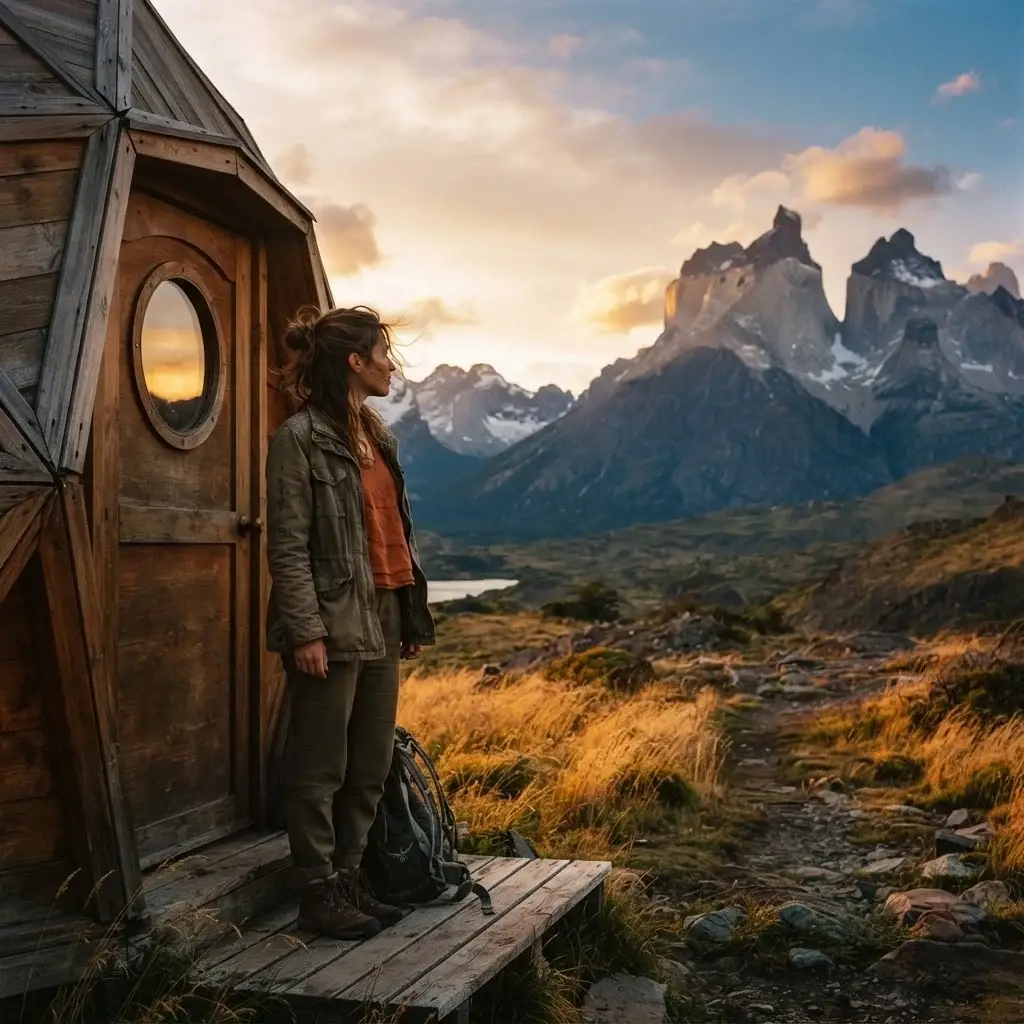
EcoCamp Patagonia is a fully sustainable geodesic dome hotel inside the park itself. The domes vary in size and style, from community domes shared among guests for meals and socializing, to private Suite Domes with panoramic views, wood-burning stoves, and en-suite bathrooms. It has a 4.4 out of 5 rating from nearly 1,000 guests and a minimum stay of 3 nights. The EcoCamp Patagonia website outlines current packages based on trekking routes, including options built around the famous W Trek and the full O Circuit.
Getting there: fly into Punta Arenas or Puerto Natales, then arrange a transfer into the park. Torres del Paine requires an advance entrance ticket purchased through Chile’s official CONAF park ticketing system. You can book your entry at pasesparques.cl before you go. Do not assume you can buy at the gate, especially in high season (October through March).
The wildlife here is unlike anything else in the Americas. Guanacos (wild relatives of the llama) roam freely across the pampa in herds. Andean condors circle the granite towers. Pumas, while rarely seen, move through the park regularly. The park’s signature peaks, the Torres themselves, three vertical granite spires that rise more than 2,800 meters, are the backdrop you wake up to.
From a solo traveler’s standpoint, Patagonia is absolutely manageable but requires more preparation than most destinations on this list. Weather is the primary variable. Even in summer, wind gusts can reach 100 kilometers per hour on exposed ridgelines, and temperatures can swing 20 degrees Celsius in a single afternoon. Layer aggressively, bring waterproof everything, and do not underestimate the wind. That said, guided trekking programs like EcoCamp’s take most of the logistical pressure off solo travelers, which is exactly why they are a good choice for a first Patagonia trip.
What to eat in Puerto Natales before entering the park: try cordero al palo, a Patagonian slow-roasted lamb cooked whole on a cross over an open fire. It is the region’s signature dish and it is extraordinary. Most restaurants in town serve it, and the smell of it cooking on the street is something that gets into your memory permanently.
A Few Things Worth Knowing Before You Book Any of These
Every destination on this list is popular, and popularity has real consequences for access and availability. Cathedral Mountain Lodge books out months in advance for summer. EcoCamp requires planning at least 3 to 6 months ahead for the W Trek season. Treehouse Lodge is small by design, with only 12 treehouses, meaning dates disappear quickly during peak periods. The Adirondacks in fall foliage season, typically the first two weeks of October, are extraordinarily busy.
Book before you feel ready. The “I’ll do it next month” approach does not work well for any of these properties.
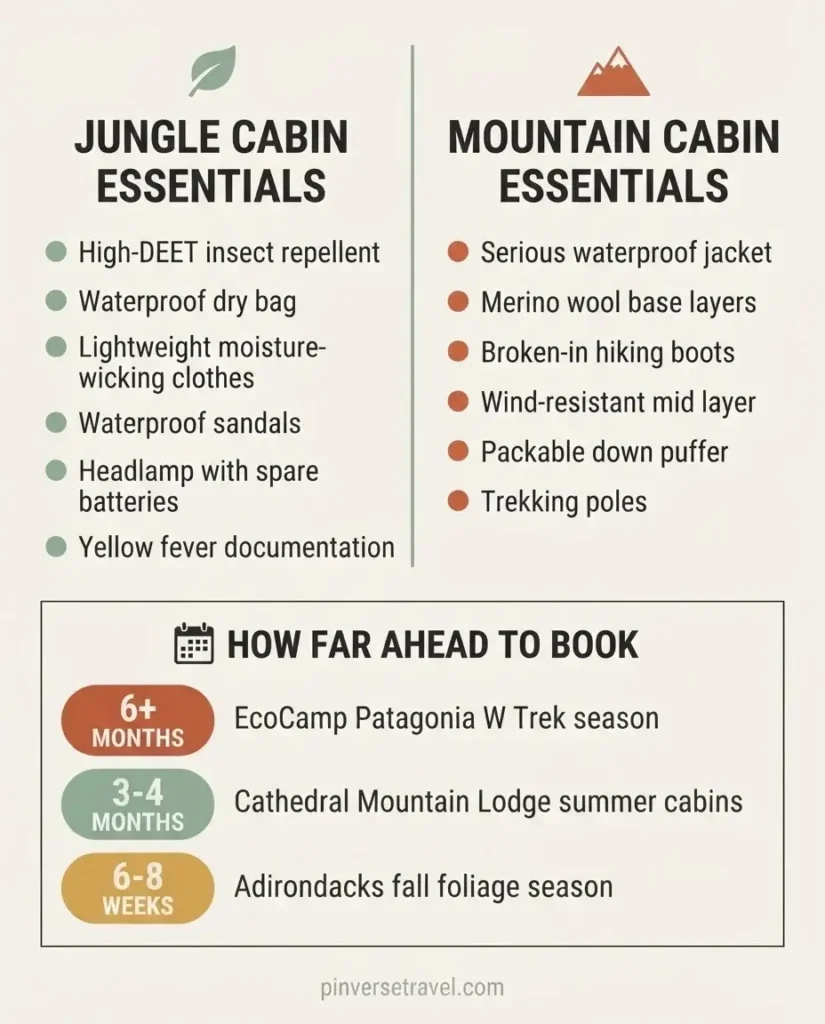
Packing diverges significantly by ecosystem. A jungle cabin in Peru or Costa Rica calls for lightweight moisture-wicking clothing, high-DEET insect repellent, waterproof sandals, a dry bag for your camera and electronics, and a headlamp for nighttime excursions. A mountain or Patagonian cabin requires a serious waterproof jacket, synthetic or merino wool layers (not cotton, ever), and broken-in hiking boots. Pack for the weather you will actually encounter, not the photos you saw.
For solo travelers specifically: all of these destinations are doable alone. Some, like Treehouse Lodge, are structured so that solo guests are naturally incorporated into small group excursions led by guides. Others, like the Adirondacks, offer complete independence. Think about which you prefer and let that inform your choice as much as the scenery does.
Final Thought
I left a predictable career because I realized that the moments that actually stayed with me, the ones that showed up in my mind years later, were the moments when I was somewhere completely different from everywhere I had ever been before. A cabin in a wilderness you have never seen tends to produce exactly that kind of moment.
None of these places require you to be an experienced adventurer. They require you to decide. Pick the one that makes something in your chest feel slightly nervous and slightly thrilled at the same time. That feeling is the right direction.