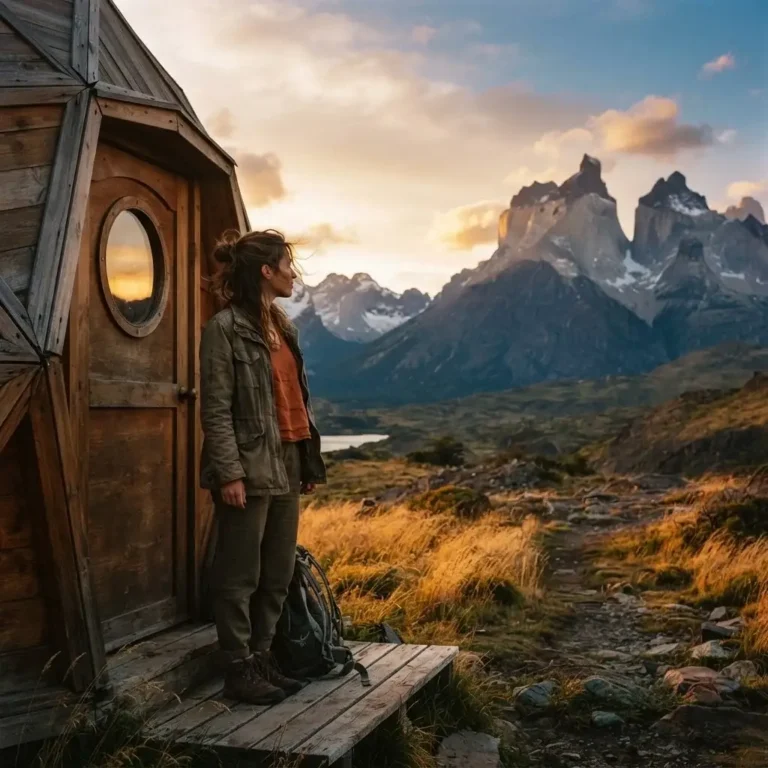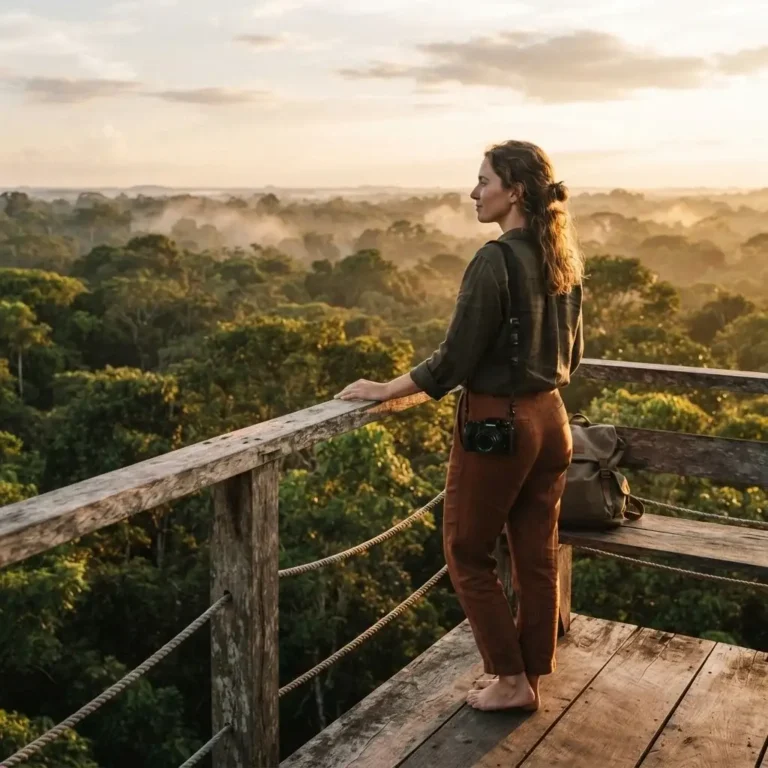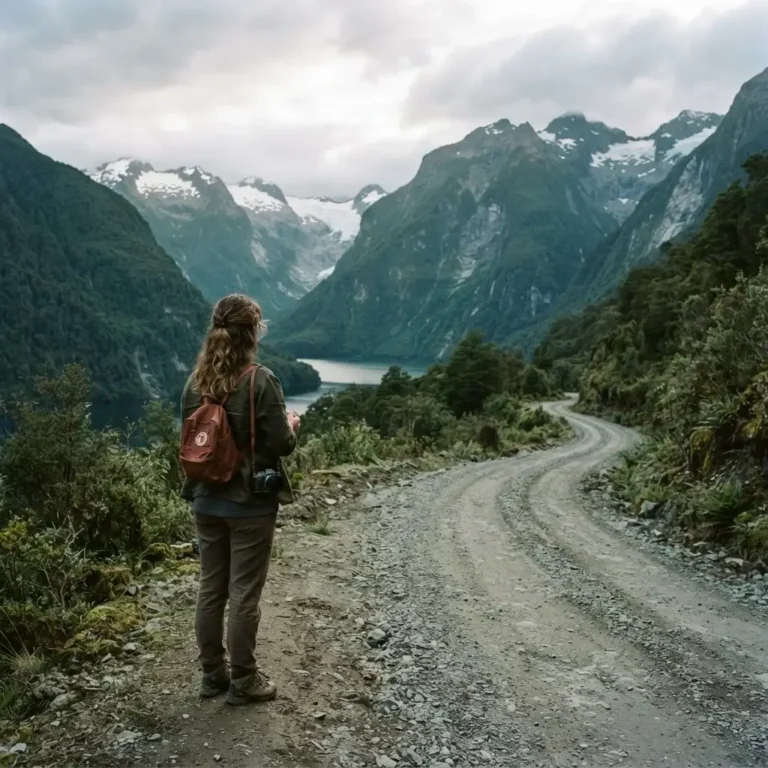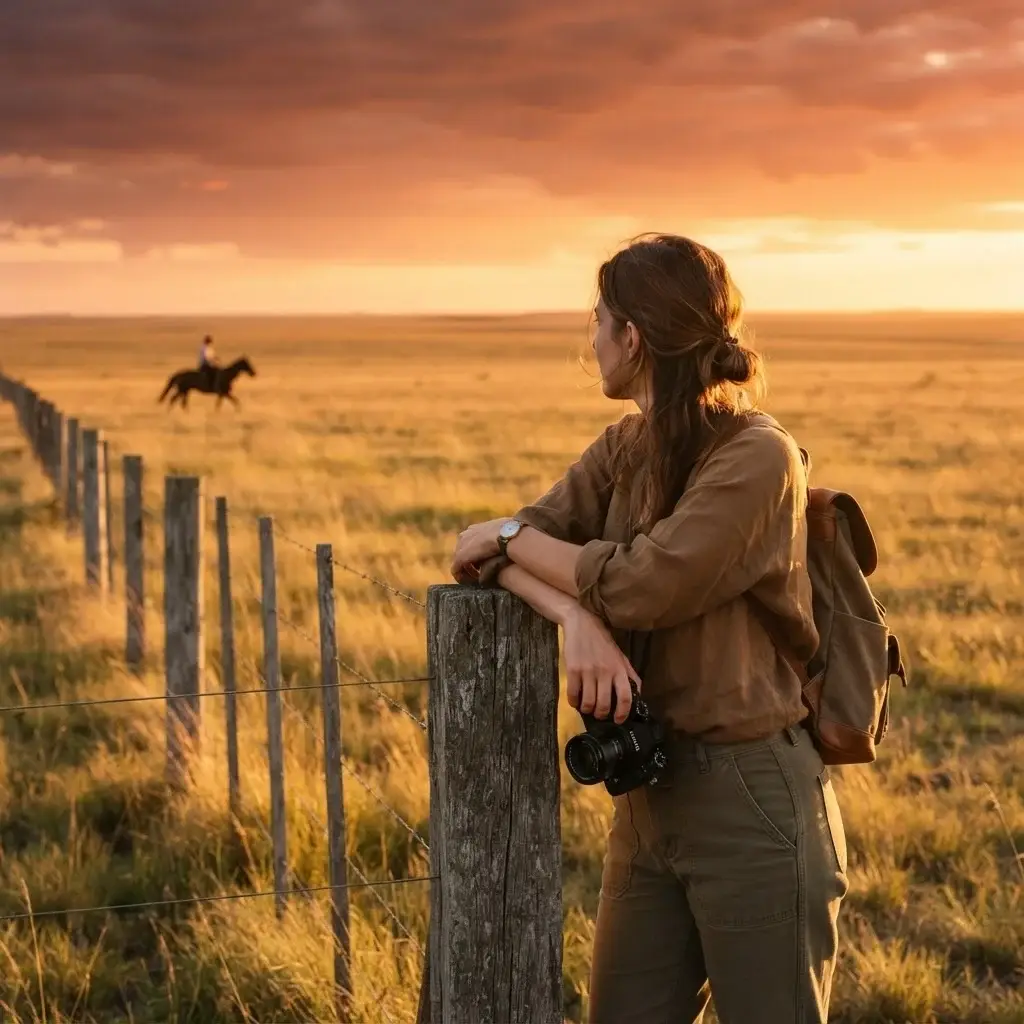
There is a specific kind of travel tiredness that has nothing to do with jet lag or long bus rides. It is the tiredness of moving too fast, ticking too many boxes, and arriving home with a hundred photos but very few actual memories. I know that feeling well, and it was part of what pushed me to start traveling differently.
Farm stays were not something I planned around at first. But the more I embraced slow travel, the more I kept hearing about travelers who had spent a week on a working ranch in Argentina, or helped harvest cacao on a Costa Rican eco-farm, and returned home changed in a way that a city break just cannot replicate. There is something about anchoring yourself to a piece of land, waking up to animals, eating food you watched being grown, and genuinely being part of the rhythm of a place that reaches you in a much deeper way than a hotel ever will.
The Americas span one of the most staggeringly diverse stretches of land on the planet.
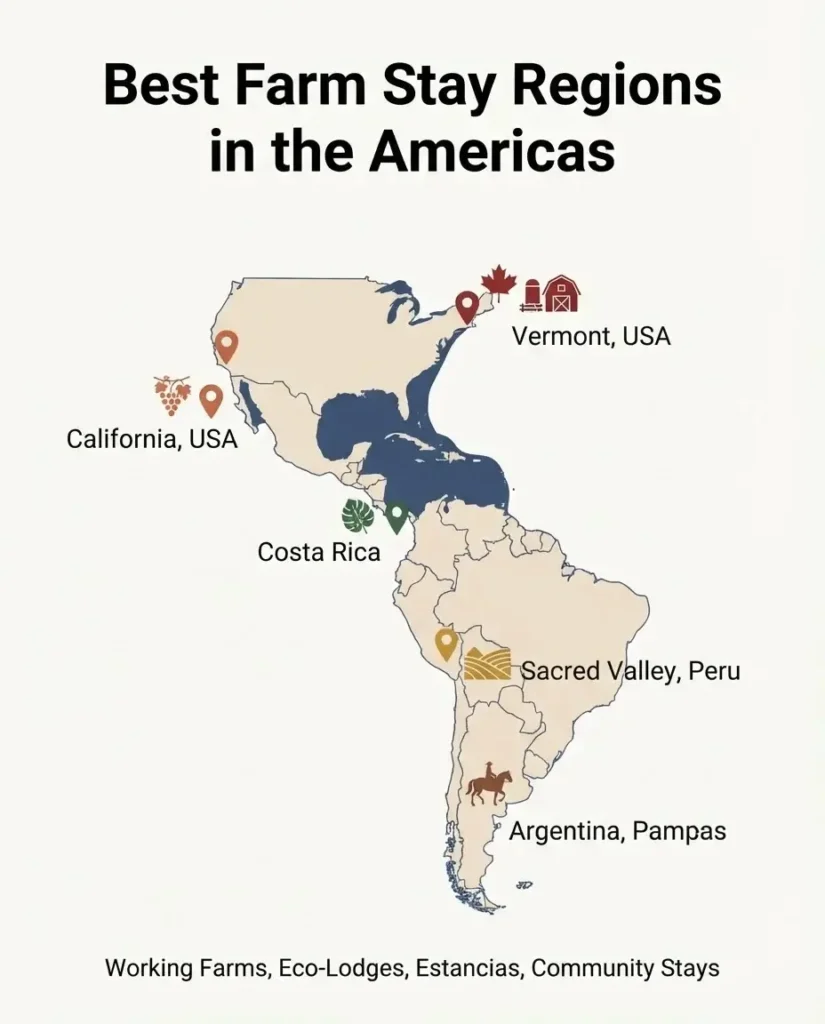
From the dairy farms and maple sugar operations of New England to the gaucho cattle ranches of the Argentine Pampas, from the regenerative eco-farms of Costa Rica to the Andean agricultural communities of Peru, farm stays across this region offer something for almost every kind of traveler, at almost every budget. This guide is designed to help you understand what farm stays actually are, which regions offer what, what to realistically expect as a solo traveler, and how to stop reading and start booking.
What a Farm Stay Actually Is (and What It Is Not)
Before anything else, it helps to be clear about the range of experiences traveling under the farm stay label, because they are not all the same.
At one end, you have a simple agritourism stay: you sleep in a comfortable room or cottage on a working farm, enjoy farm-to-table meals, maybe collect eggs in the morning or take a guided walk through orchards, and otherwise relax. The farm is the backdrop for a restful rural getaway. This is the most common version in the United States and in parts of Europe.
In the middle, you have more immersive working farm stays, where guests are invited to actively participate in daily operations: helping with harvests, learning to make cheese, riding with ranch hands, or joining guided foraging walks. The experience is hands-on without being demanding, and you still have your own private space at the end of the day.
At the other end sits the volunteer model, most famously represented by WWOOF USA, the national organization for Worldwide Opportunities on Organic Farms. WWOOFers work roughly four to six hours per day on an organic farm in exchange for free accommodation and meals. This is a completely different dynamic. You are a guest-participant, not a paying customer. It is ideal if you want to stretch a tight budget, stay somewhere long enough to genuinely learn, and build real connections with your host family. WWOOF operates in over 132 countries globally, so it is a framework you can carry with you long after you leave the Americas.
The one thing all these versions share: you are on someone’s land, eating food grown within sight of where you sleep, and the culture of that region shows up at every meal. That is the irreplaceable part.
Why Farm Stays Work Especially Well for Solo Travelers
Solo travel rewards the flexible and the curious. Farm stays, perhaps more than almost any other accommodation format, reward both. AFAR Magazine put it well when they described the farm stay as a place where solo travelers can get into the rhythm of local life, with “a strong sense of purpose and the blisters to show for it.” You can read the full piece, Why a Farmstay Is the Perfect Solo Trip, and I suspect it will resonate with anyone who has ever wished they could just stay longer in one place.
The practical reason farm stays work so well for solo travelers is that the social dynamic is already built in. You arrive alone, but you are immediately folded into the structure of the farm, the meals, the morning chores, the host family’s rhythms. There is no awkward solo dinner at a restaurant table for one. You are not standing outside a tour group hoping to make conversation. The community finds you, and it does so through shared work and shared food, which are two of the most naturally connecting things humans do.
There is also something about the unhurried pace of farm life that suits the solo traveler deeply. When I think about the times I have traveled slowly, without agenda, that is when I have learned the most about myself and about the places I was in. A farm stay enforces that slowness in the best way possible.
The Americas by Region: Where to Go and What to Expect
New England, USA: Farmhouse Roots and Maple-Scented Mornings
New England is an excellent starting point for a first farm stay, especially if you want the experience with minimal logistical complexity. Vermont leads the region for agritourism, with a farming culture so woven into the state’s identity that the official Vermont Tourism farm stays page lists properties ranging from simple country rooms to full farm immersion experiences.
Liberty Hill Farm in Rochester is one of the most consistently praised options, offering guests the chance to help with evening milking, sit down to homemade dinners with the family, and watch the farm operate through the seasons. Shelburne Farms, a National Historic Landmark on the shores of Lake Champlain near Burlington, is another standout: a 1,400-acre working farm and education center with rooms and cottages in a beautiful Victorian-era inn, open from May through October.
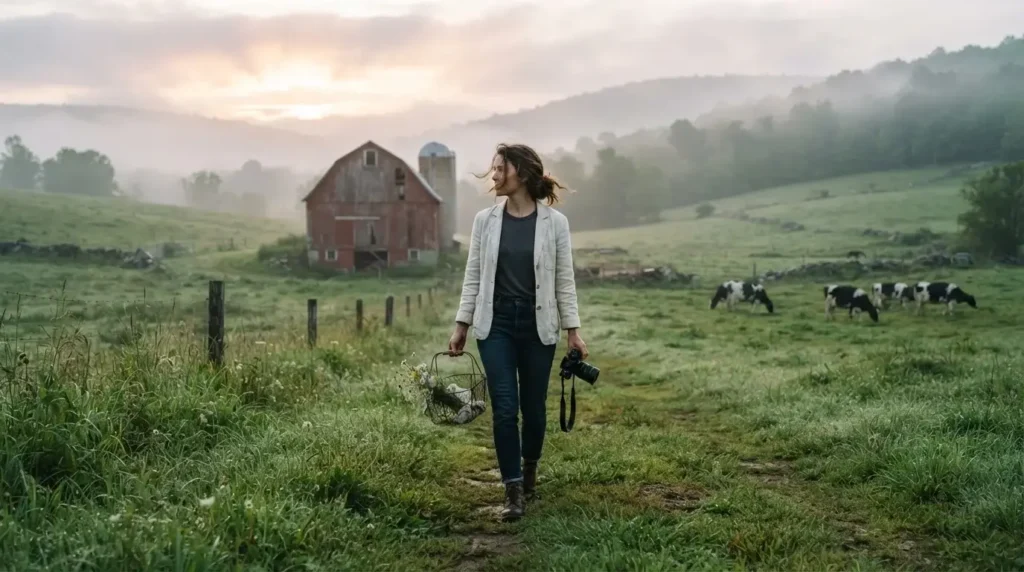
Farm-to-table dining is a core part of the experience there, and the cheese made on-site is reason enough to visit on its own.
Costs in Vermont and New England generally run from around $100 to $250 per night for a farm stay with meals included, which compares reasonably well to a decent hotel when you factor in that food, experience, and often some form of farm activity are bundled in.
Practical tip: Vermont farm stays are most in demand during foliage season (late September to mid-October) and summer. Book at least two to three months ahead if you are visiting during these windows.
The California Wine Country and Pacific Coast
California offers farm stays with a distinctly food-and-wine personality. The Farmhouse Inn in Forestville, Sonoma County, sits inside a working farm surrounded by redwood forests and vineyards, with Michelin-recognized dining and farm-sourced ingredients featured at every turn. This is on the upscale end of the spectrum, but Sonoma and Mendocino counties have smaller working operations too, often found through the FarmStayUS directory, which is one of the best U.S.-specific platforms for discovering lesser-known farm accommodation options across dozens of states.
For solo travelers who want the northern California experience without the wine country prices, the Central Valley and Sierra Nevada foothills have working fruit and vegetable farms offering more modest stays. The FarmStayUS directory is genuinely useful here because it lets you filter by region, activity type, and farm type, which saves a lot of guesswork.
Costa Rica: Where Sustainability Is the Culture
Costa Rica has built one of the most respected sustainable tourism frameworks in the world, and its agritourism scene reflects that. The country’s Instituto Costarricense de Turismo (ICT) certifies properties under its Certification for Sustainable Tourism program, which gives travelers a reliable quality benchmark when choosing a farm stay.
The standout property that consistently comes up in conversations about farm stays in Central America is Finca Luna Nueva Lodge, a 127-acre regenerative farm and rainforest eco-lodge on the Caribbean slope of the country, about 25 minutes from La Fortuna and the Arenal Volcano. This farm has been operating since 1994, beginning as an organic ginger and turmeric operation before evolving into a full regenerative agricultural model. Today it is home to a Sacred Seeds Sanctuary with over 300 species of medicinal and culturally significant tropical plants, miles of rainforest hiking trails, and a genuine farm-to-table kitchen.
What makes Finca Luna Nueva particularly right for solo travelers is the pace.
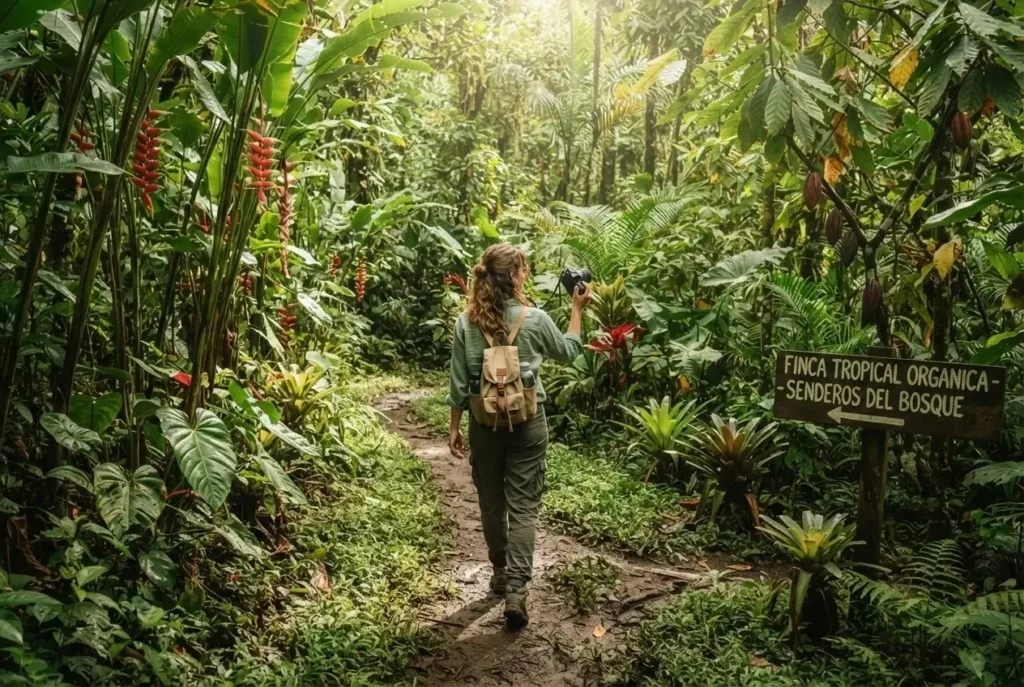
Guests are welcome to join farm tours, participate in cacao-making workshops, hike through the primary rainforest, and use the property’s hot springs and pool, all without the pressure to be anywhere at a specific time. The surrounding region gives you easy access to adventure activities out of La Fortuna if you want them, but the farm itself is calm, community-minded, and genuinely focused on education. Room rates are mid-range for Costa Rica, and the included meals use produce grown on the land.
Costa Rica as a country is one of the easiest entry points in Latin America for first-time solo travelers. No visa is required for U.S., UK, EU, Canadian, and Australian passport holders for stays under 90 days. The public bus network is inexpensive and reasonably well-connected, and English is widely spoken in tourist areas.
Argentina: Riding into Gaucho Country
Argentina’s estancias are in a category of their own. These are working cattle and horse ranches, some of them operating on land that has been in the same family for multiple generations, and staying on one is as close as you can get to understanding the heart of Argentine rural identity.
National Geographic Traveller called the estancia experience one of travel’s most unique immersions, and their detailed feature on staying at Argentine gaucho ranches does a beautiful job of capturing what makes these places different from any other farm stay on earth.
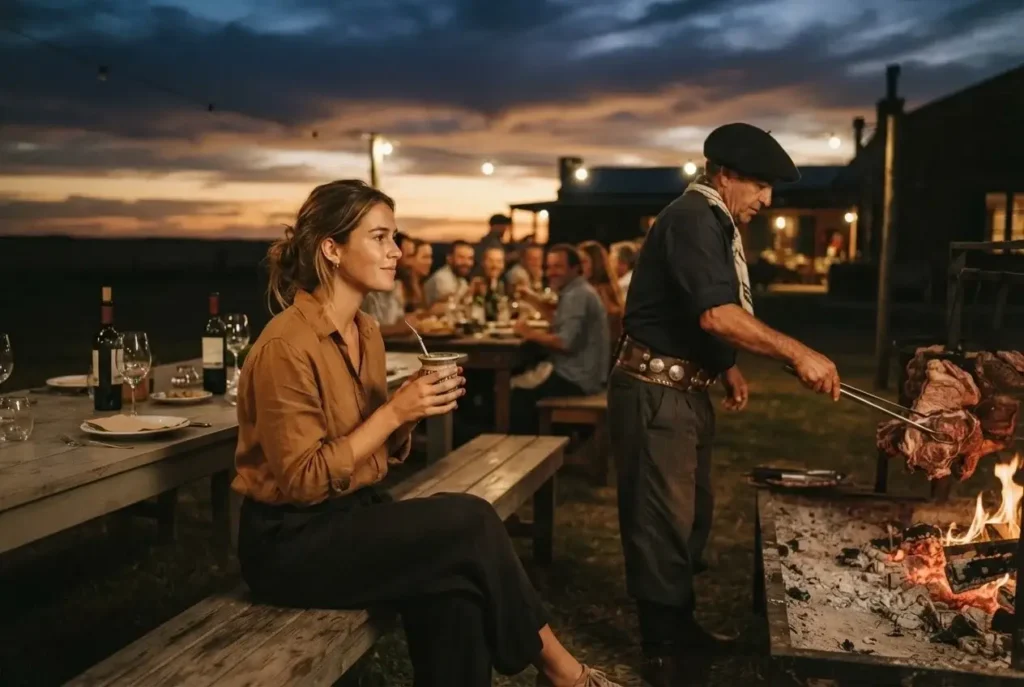
Gaucho culture is its own universe: a distinct tradition of horsemanship, cattle handling, cooking over open fire (the famous asado), mate drinking, folk music, and an unhurried relationship with land and time that feels genuinely rare in the modern world.
The range of estancias available means you can approach this at very different budget levels. Estancia Harberton in Tierra del Fuego, the oldest ranch in the region, founded in 1886 and still owned by the same family, offers atmospheric cottages and guided history tours with stays from around USD $240 per night on a B&B basis. For something more central, San Antonio de Areco, about 110 kilometers from Buenos Aires, is considered the cultural heart of gaucho tradition in Argentina. The town hosts the annual Festival Nacional de la Tradicion every November, and the estancias surrounding it offer day visits and full overnight stays where you can ride alongside gauchos, watch traditional games, and sit down to long, slow asado lunches.
For the most dramatic landscapes, Estancia Cristina in Patagonia, accessed by catamaran across a glacial lake in Parque Nacional Los Glaciares, offers full wilderness immersion from around USD $1,800 all-inclusive. That is genuinely the high end, but it includes everything in a setting that is almost impossible to describe.
Solo traveler note: Argentina is one of the most solo-traveler-friendly countries in South America. Buenos Aires is a natural starting point, with excellent flight connections and a vibrant city culture to explore before or after your estancia stay. The main practical consideration is currency, as Argentina’s exchange rate situation has been complex for several years. Always check current guidance before you travel and bring cash in USD or euros, which are widely preferred in rural areas.
Peru: Where Farming Is Still a Sacred Act
Peru is not the first country most travelers associate with farm stays, and that is exactly why it belongs on this list. The Andean highlands have some of the oldest agricultural traditions in the world, and community-based agritourism here offers something qualitatively different from anything you will find elsewhere in the Americas.
In the Sacred Valley outside Cusco, community tourism programs allow travelers to spend time with Quechua farming families, learn traditional agricultural practices on ancient terraced fields, participate in cooking using native potato varieties (Peru has over 3,000 of them), and understand the deep spiritual connection Andean communities maintain with their land, called the Pachamama.
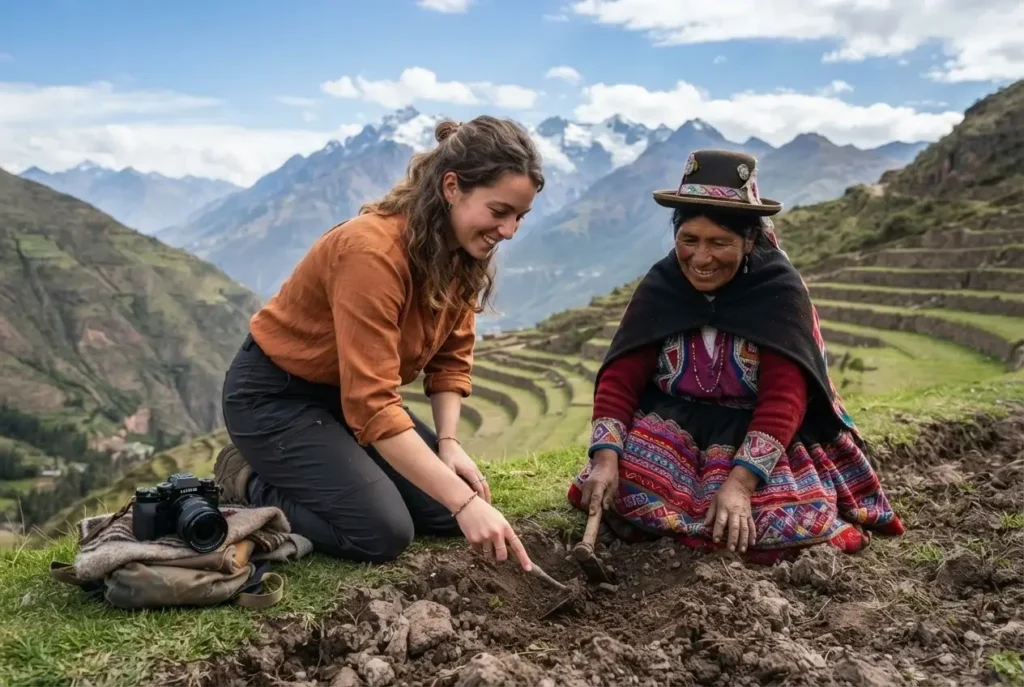
Impactful Travel Peru runs an Agriculture and Gastronomy Tour in the Highlands of the Sacred Valley for around USD $190 for six hours, available year-round with April through December as the optimal window.
The experience here is not a resort or a luxury retreat. It is participatory, humble, and quietly profound. From what solo travelers consistently report, spending even a single morning working alongside a farming family in the Sacred Valley shifts something in how you understand both Peru and your own relationship to food. These experiences place money directly into local communities rather than international hotel chains, which matters.
Practical note on getting there: the Sacred Valley is easily reachable from Cusco, roughly 30 to 90 minutes depending on your specific destination. If you are coming from sea level, factor in time for altitude acclimatization before you do anything too physical. Cusco sits at around 3,400 meters above sea level, and the highlands can be higher.
How to Find and Book a Farm Stay
Beyond booking platforms like Expedia and TripAdvisor (which list farm stays but offer limited filtering by type or experience), several platforms are specifically designed for this:
The FarmStayUS directory at farmstayus.com is the most comprehensive U.S.-focused directory, allowing you to browse by region, farm type, and activity. It is run by people who genuinely care about agritourism and the farms listed there have opted in specifically as hosts.
WWOOF is the route for budget and slow travelers. WWOOF USA and WWOOF International connect you with organic farms across the Americas and globally in exchange for work. A small membership fee (typically around $40 in the U.S.) gives you access to the host directory. It is not a vacation in the traditional sense; it is a lifestyle experiment, and a deeply rewarding one if you approach it with openness.
Worldpackers is another platform that lists farm stays in exchange for work or skills, with a broader range of property types and a more curated review system than WWOOF in some regions. South America is particularly well-represented there.
For Argentina estancias specifically, it is worth going directly to the properties’ own websites rather than booking through intermediaries. Many estancias are family-run and offer better rates, more flexibility, and more personal communication through direct booking.
What to Pack for a Farm Stay
This is one of the most searched questions about farm stays and one of the most under-answered. The packing list for a farm stay is different from both a city trip and a hiking expedition.
Bring closed-toe shoes you do not mind getting muddy, because fields, animal pens, and farm paths are not places for sandals or sneakers you care about.
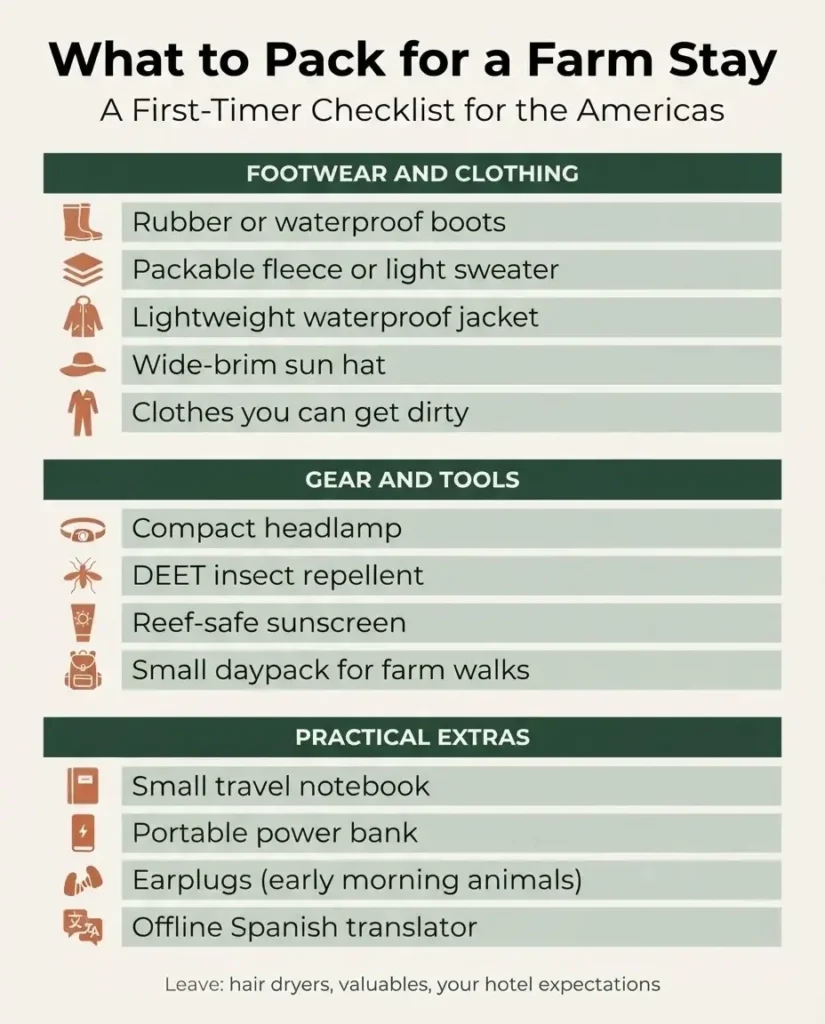
A pair of light rubber boots, if you are checking a bag, is genuinely useful. Layer your clothing, especially in Vermont, Patagonia, or the Andean highlands where temperatures shift dramatically between morning and afternoon. Bring insect repellent, sunscreen, and a lightweight waterproof jacket. A headlamp is more useful than you might expect, especially on farms where exterior lighting is minimal.
Leave your expectations for hotel-style amenities at home. Farm stays at the working end of the spectrum typically offer clean, simple rooms, hearty food, and the sound of animals at dawn. That is the entire point. If your morning alarm is a rooster rather than a phone screen, you are doing it right.
Honest Expectations: What Farm Stays Are Not
Farm stays are not luxury escapes (unless you specifically choose one designed as such). They are not anonymous, and that is actually the whole value of them. You will interact with your hosts. You will probably eat meals at a shared table. You might wake up earlier than you normally would. The pace is slow, the distractions are minimal, and there is rarely much nightlife.
For solo travelers who are used to the city and the stimulation it provides, this can feel almost uncomfortably quiet at first. Give it a day. Every solo traveler I have spoken to who has done this describes the same adjustment curve: slight restlessness on day one, a settling in by day two, and genuine reluctance to leave by day three.
The other honest thing worth saying: not every farm stay is exceptional. Some are genuinely magical. Some are pleasant but ordinary. Reading recent reviews, communicating with hosts before booking, and asking specific questions about the daily schedule and what participation looks like will serve you far better than booking on photos alone.
One Last Thing Before You Book
The reason farm stays matter, more than any checklist of what to pack or which booking platform to use, is that they put you in direct relationship with a place and its people in a way that almost no other travel format does. You are not consuming a destination. You are briefly, imperfectly, genuinely participating in it.
I have written a lot about slow travel and about stopping to actually be somewhere rather than rushing through it. Farm stays are one of the most honest expressions of that philosophy I know. The Americas offer them in every flavor imaginable, from a quiet cheese farm in Vermont to a gaucho ranch at the edge of Patagonia to an Andean family’s terraced potato fields above Cusco. You do not need to be a farmer. You do not need experience. You just need to show up willing to be surprised.
That has always been enough.