Alternative Transport in Europe: A Solo Backpacker’s Guide

The first time I backpacked across Europe on my own, I did the thing almost everyone does. I assumed the whole trip was going to be one long series of trains and cheap flights, and I budgeted for it like that. Then I actually started moving between cities, and I realized how much money, time, and honestly how many good stories I was leaving on the table by sticking to the obvious two options.
Europe is packed with ways to get around that most first-time backpackers never seriously consider. Some are cheaper than the train. Some let you sleep and travel at the same time, which saves you a whole night of accommodation. A few of them will drop you into conversations with locals you would never have met otherwise. That last part matters to me more than the savings, because the way you move through a place shapes what you see and who you talk to.
So let me walk you through the real alternatives, what each one actually costs, and how to decide which fits your trip. I’ll be honest about the trade-offs too, because “cheapest” and “best” are not always the same word.
First, Rethink What “Getting Around” Even Means
Here is the mindset shift that changed how I travel. Transport is not just the boring gap between the fun parts. On a backpacking trip, how you travel is part of the trip. A night on a sleeper train, a shared car ride through the countryside, a slow ferry across a stretch of sea, these become memories on their own.
Once you stop treating movement as a cost to minimize and start treating it as an experience to choose, your options open up fast. You also start noticing that the “default” choices, standard trains and budget flights, are often not the smartest ones for a solo traveler on a budget.
Let me break the alternatives into the ones I’d actually recommend, roughly in the order I reach for them.
Long-Distance Buses: The Backbone of Backpacker Europe
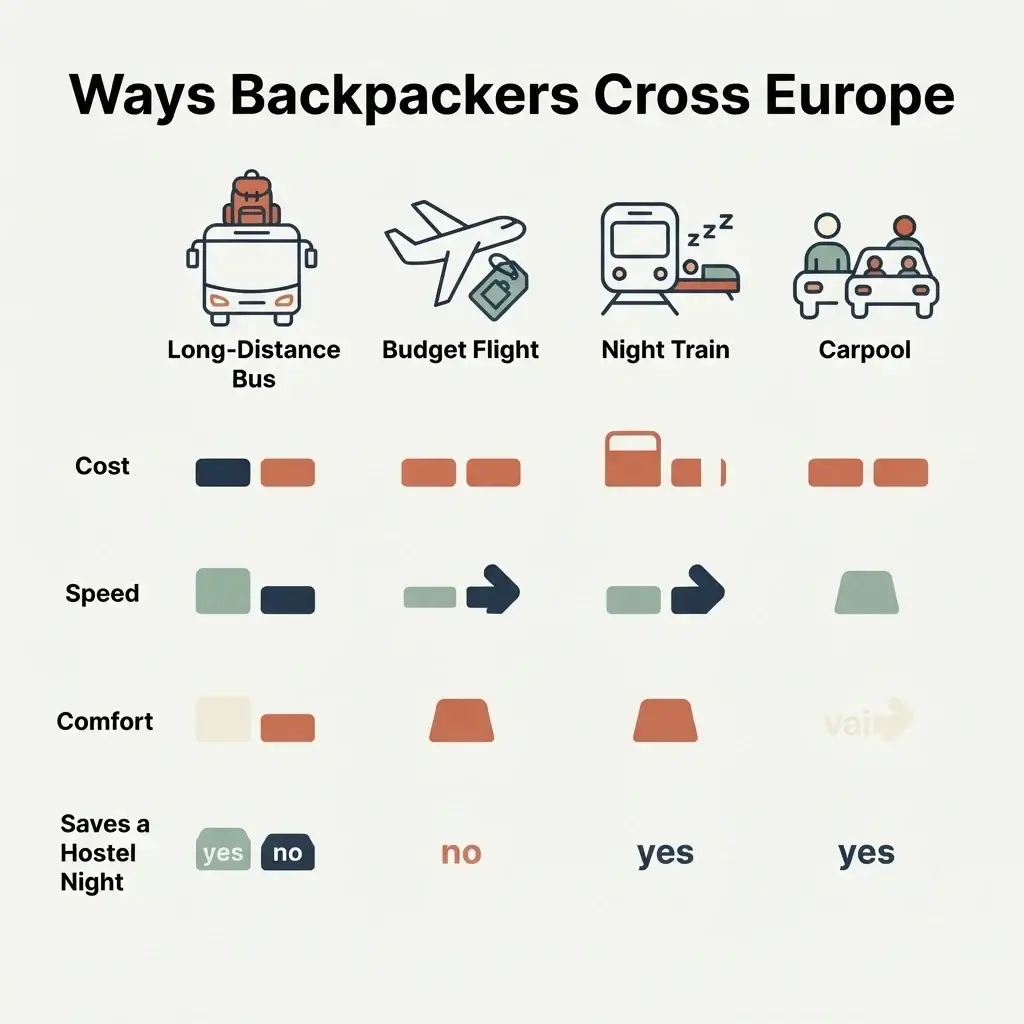
If you want the single most reliable way to cross Europe cheaply, it’s the long-distance bus. FlixBus is the big name, with fares that can start as low as around 5 euros on popular routes if you book early, and buses that usually include Wi-Fi, power outlets, and a baggage allowance in the base price. That last detail matters. Unlike some flights, the price you see is much closer to the price you pay.
But don’t stop at FlixBus. In central and eastern Europe, RegioJet often beats it on both comfort and price, sometimes even offering seat service. Eurolines still runs in parts of the continent too. The trick is to compare, because on any given route one company might be half the price of another.
The honest downside is comfort and time. A ten-hour overnight bus is not a ten-hour sleeper train. You’ll arrive stiff and a little rumpled. My personal rule is that buses are fantastic for journeys under about six or seven hours, and for overnight hops where I’m willing to trade a good sleep for saving both the fare gap and a night’s hostel bill.
Insider tip for solo travelers: pick a window seat toward the front, keep your valuables in a small bag on your lap or between your feet, not in the overhead or the hold, and screenshot your ticket in case the Wi-Fi and your data both fail. I always keep a scarf or hoodie in my daypack because European bus air conditioning has two settings, off and arctic.
Night Trains: Travel and Sleep at the Same Time
This is the option I’m most excited to tell backpackers about, because it quietly came back to life over the past few years and a lot of travelers still don’t know it.
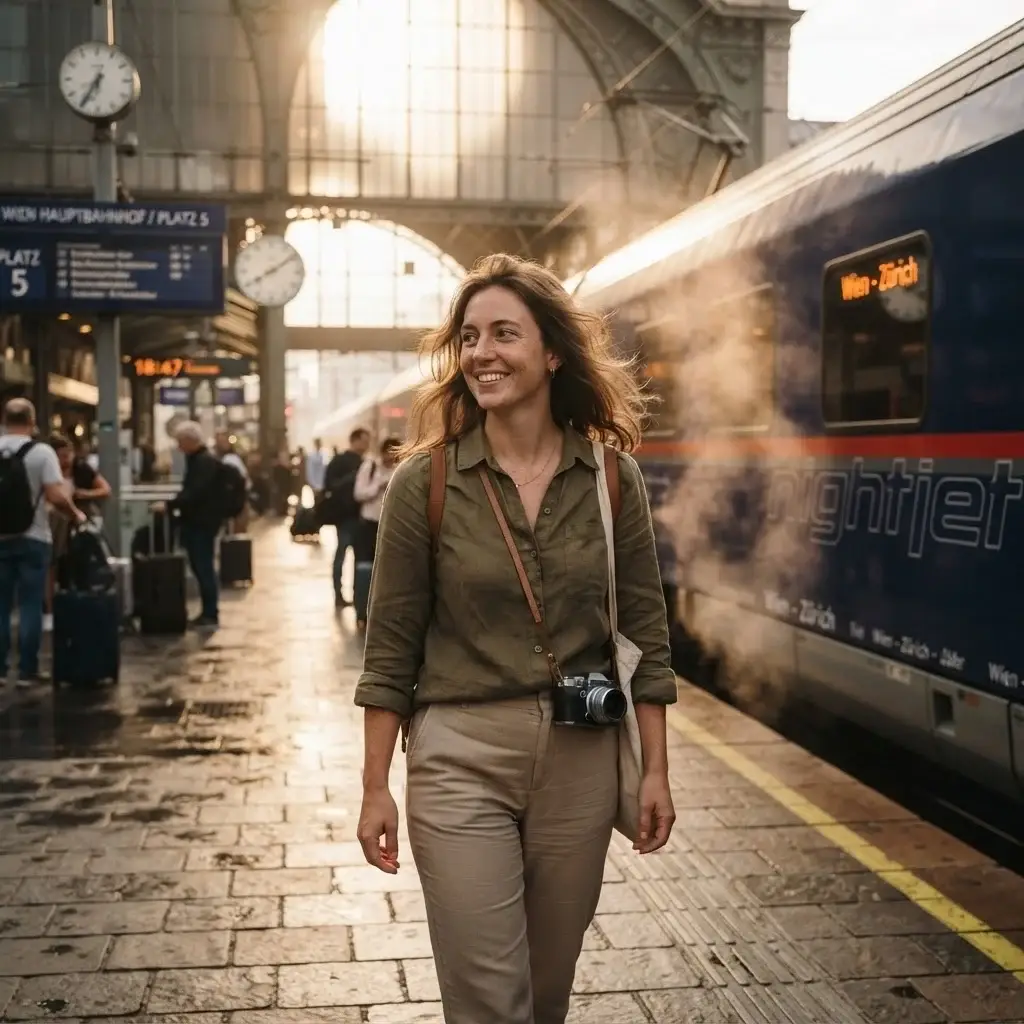
Night trains had been fading in Europe, but there’s been a genuine revival. Austria’s national railway runs a whole network of sleeper services, and you can see the current routes and cabin options straight from the ÖBB Nightjet booking site, which now connects more than 25 cities with everything from budget seats to couchettes to private sleeper cabins. There’s also a newer independent operator worth knowing about, and you can check its Brussels to Berlin to Prague and Paris to Berlin routes directly through European Sleeper, where a reclining seat can start around 80 euros and an actual bed in a shared sleeper starts around 139 euros.
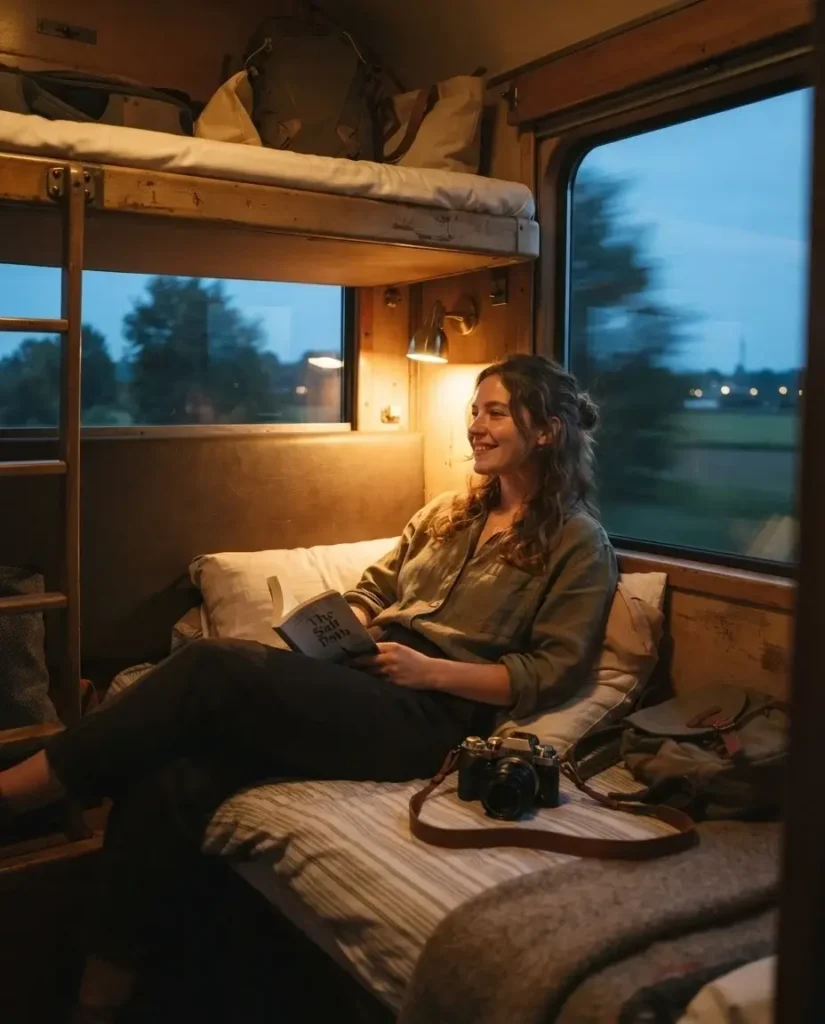
Here’s why I love night trains for solo budget travel. You board in the evening, you sleep, and you wake up in a new city. That’s a night of accommodation you didn’t pay for, folded into the transport. For a backpacker, saving a hostel night while covering serious distance is close to magic.
If you want to see just how much the network has grown and plan creative routes, the advocacy group Back-on-Track keeps a genuinely useful and regularly updated European night train map that shows lines across the whole continent, including operators most guidebooks skip. And for deep, nerdy, trustworthy detail on specific routes and how to book them, the rail reference site run by a former station manager has a thorough breakdown of the European Sleeper night train that I check before booking anything overnight.
Two honest notes. First, the cheap seats sell out, so book ahead. Second, if you’re a light sleeper, spend the extra for a couchette rather than a seat. As a solo woman, I also want to say that couchette compartments are shared, and if that matters to you, some services let you book a women-only compartment or a private cabin. It’s worth the peace of mind.
Carpooling: The Option Backpackers Overlook
Now for the one almost nobody talks about, and the one that gave me some of my favorite conversations on the road: ridesharing.
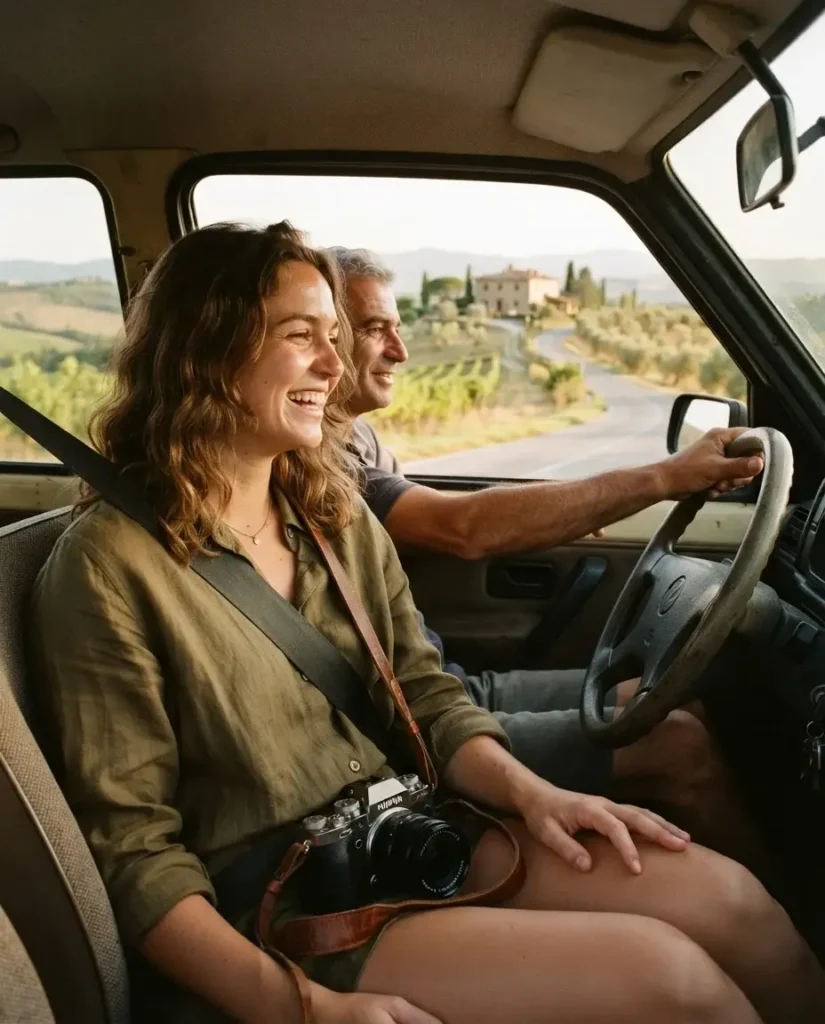
BlaBlaCar is a carpooling platform where regular drivers with empty seats going your way sell those seats to travelers. You can browse routes, prices, and driver profiles on BlaBlaCar, and it operates across around twenty countries, strongest in Western Europe. Prices are often lower than the train, and it shines exactly where public transport is weak, connecting smaller towns and awkward routes that would otherwise mean multiple changes.
What makes it work is the rating system. Every driver and passenger has reviews, a verified profile, and often a photo. Before I book, I read the driver’s reviews the same way I’d read a hostel’s, and I message them first to confirm the pickup point. You pay through the app, so there’s no awkward cash moment, and there’s a record of your ride.
The cultural bonus is real. I’ve had ride-share drivers point out where to eat, warn me off tourist traps, and explain local politics in a way no guidebook could. If you speak even a little of the local language, it opens up even more.
Solo safety, said plainly: share your ride details and the driver’s name with someone before you go, sit where you feel comfortable, trust your gut, and if anything feels off, don’t get in the car. No saving is worth ignoring your instincts.
Budget Flights: Cheap, But Read the Fine Print
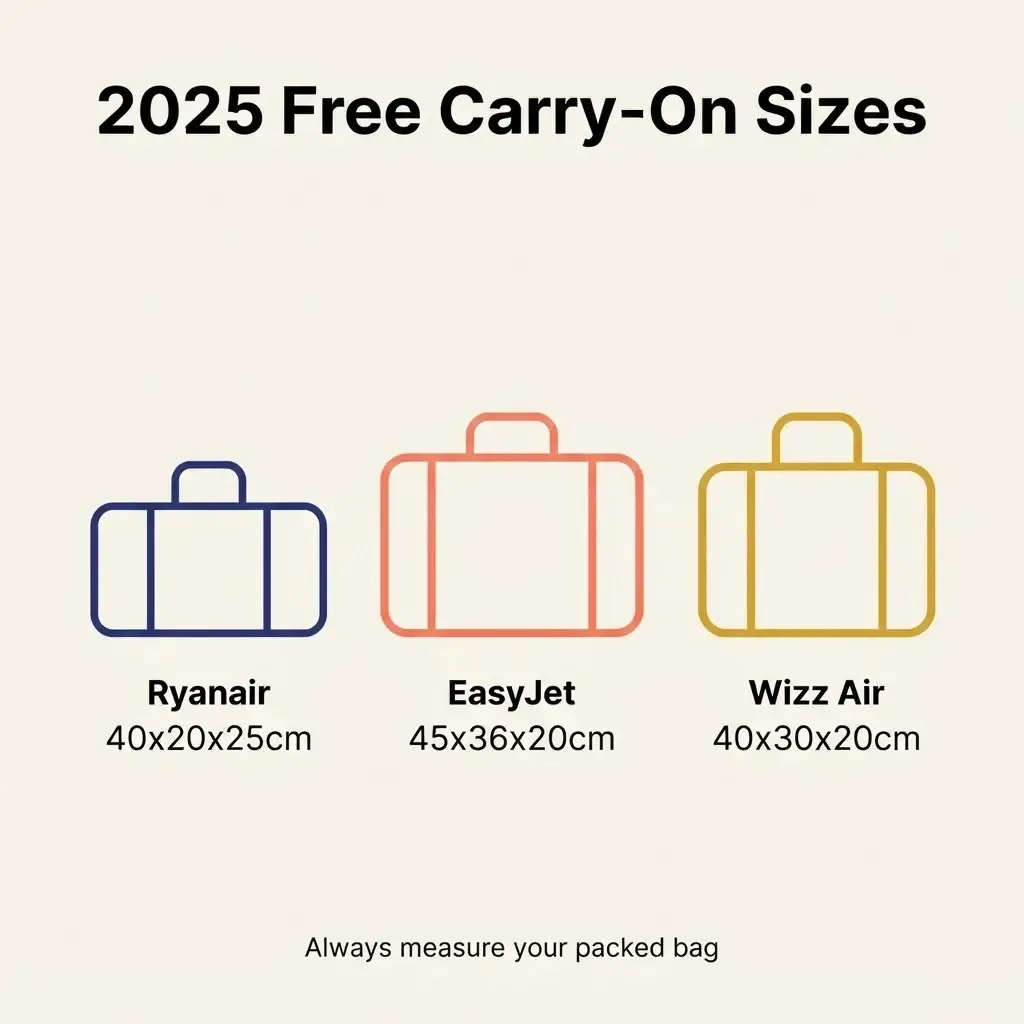
Budget airlines like Ryanair, EasyJet, and Wizz Air can still be unbeatable for long distances, say Lisbon to Krakow, where a bus or train would eat two full days. But the “cheap” fare is where backpackers get burned, and it got trickier in 2025.
The catch is baggage. As the BBC reported in its coverage of the airline carry-on confusion, the free bag rules vary maddeningly between airlines. Ryanair’s free small bag is 40x20x25cm, EasyJet’s more generous free underseat bag is 45x36x20cm including wheels and handles, and Wizz Air sits in between, while a larger cabin bag usually costs extra. EU transport ministers even proposed a standardized free underseat size in mid-2025, but until that becomes law, the rules differ by carrier and are enforced strictly at the gate.
My approach is to add up the true cost before I book: fare, plus any bag you actually need, plus the cost and time of getting to airports that are often an hour outside the city. Do that math and a 15 euro flight sometimes becomes a 70 euro half-day. Sometimes it’s still worth it. Sometimes the night train wins. The point is to compare honestly.
If you do fly budget, travel with a single backpack that fits the strictest free dimension, weigh it at home, and check in online. I learned to pack for the smallest allowance, not the biggest, so I never have to gamble at the gate.
Ferries and Slow Boats: The Underrated Adventure
For certain routes, ferries are both practical transport and a small adventure. Getting from Italy to Greece, hopping between Croatian islands, or crossing the Baltic can be done by boat, sometimes overnight, which again folds a night’s sleep into the journey. Deck tickets are usually the budget option, and on longer crossings you can often bring your own food to save money.
I love a ferry for the same reason I love a night train. You’re not stuck in a metal tube pretending time isn’t passing. You’re on the water, watching a coastline appear. It’s slower, and slow is not the enemy.
Some of the best thinking I’ve done on the road happened staring at a wake behind a boat.

Regional Trains Without the Pass Trap
You’ll notice I haven’t pushed rail passes hard, and that’s deliberate. A lot of blogs treat the Interrail or Eurail Global Pass as an automatic yes. It isn’t.
You can see current pricing on the official Interrail Global Pass page, where a pass covering 7 travel days within a month starts around 286 euros, 10 days around 335 euros, and a continuous month around 440 euros. Here’s the honest math. A pass only wins if you’re taking frequent, long, expensive trains. If you’re moving slowly, staying several days per city, and mixing in buses and carpools, booking individual regional tickets in advance is usually cheaper. Also watch for seat reservation fees on high-speed and night trains, which a pass often doesn’t fully cover.
My rule of thumb: if you’ll be on a train most days for two or three weeks straight, price a pass. If you’re a slow traveler, book point to point and put the savings toward experiences.
What About Hitchhiking?
I’ll mention it because backpackers always ask. Hitchhiking is still practiced in parts of Europe and is free, and in some countries it carries little stigma. But I’m not going to pretend it carries no risk, especially solo. If you’re set on it, do it in pairs when you can, stick to daylight and well-placed spots outside cities, keep your bag with you, and never ignore a bad feeling about a driver. Honestly, for most solo travelers, BlaBlaCar gives you most of the local-connection magic of hitchhiking with a rating system, a profile, and a paper trail. That’s the version I recommend.
How I Actually Decide, Trip by Trip
When I’m planning a leg of a trip, I run through four quick questions. How far is it, really, and how many hours does each option take door to door. What’s the true total cost once bags and transfers are included. Does traveling overnight save me a night of accommodation. And which option gives me the better story or the better sleep, because on a long trip both of those are currency.
Most of my routes end up as a mix. A night train here to save a hostel night, a cheap bus there, a carpool to reach a town off the rail line, a single budget flight to cover one big jump. There’s no single best mode. The skill is matching the mode to the moment.
You Can Absolutely Do This
If you’re reading this from your desk, daydreaming and half-convinced that figuring all this out is too complicated, let me reassure you the way I wish someone had reassured me. You do not need to master every option before you go. You need to book the first leg, arrive, and learn the rest as you move. I promise the systems are more traveler-friendly than they look from home, and every backpacker at your hostel will happily swap tips.
Europe rewards the curious and the flexible. The travelers who get the most out of it aren’t the ones with the fanciest plans, they’re the ones willing to take the bus, share the car, sleep on the train, and stay open to where all of it leads. Pick your first route, and go find out what kind of traveler you become along the way.