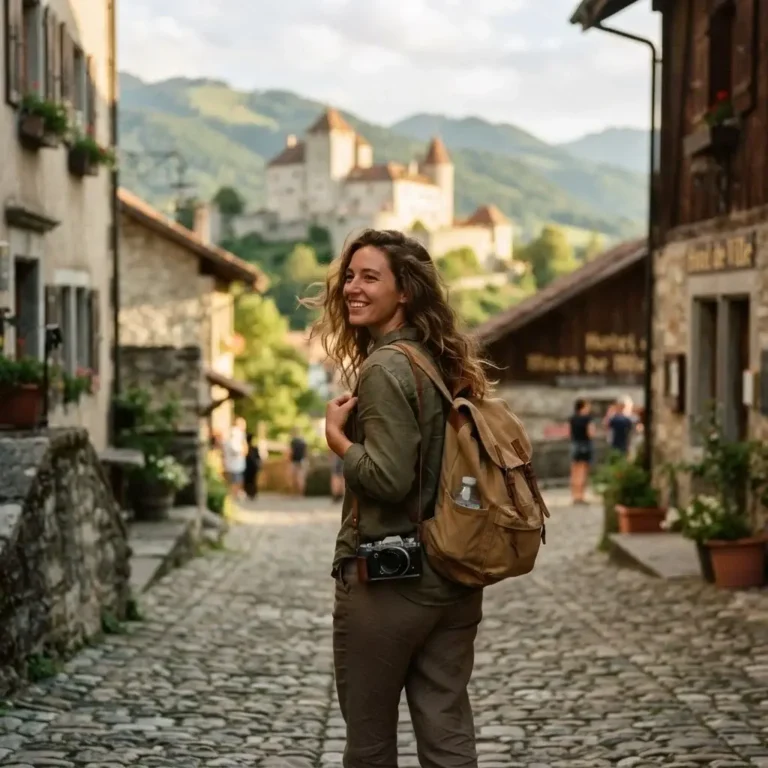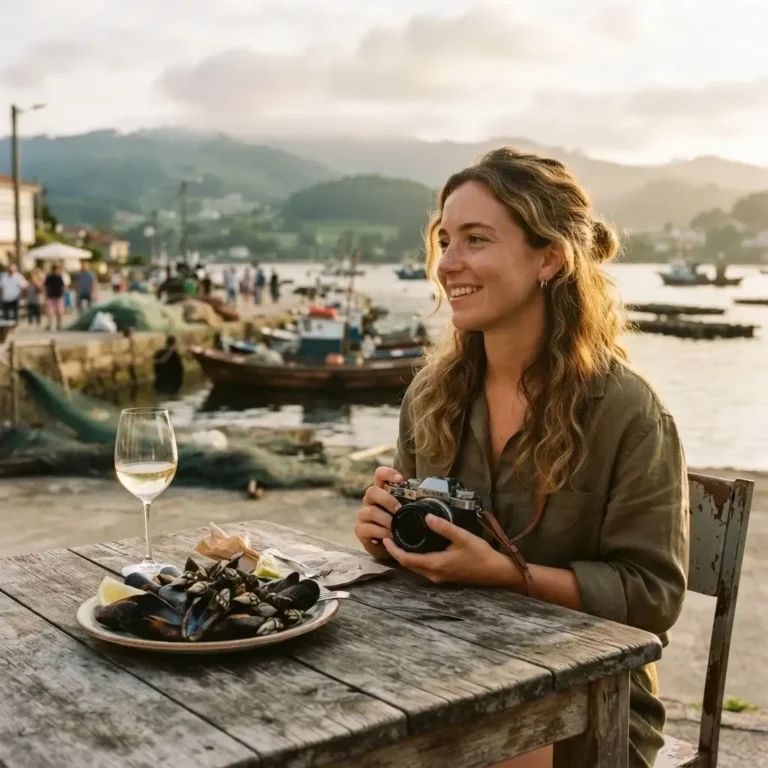
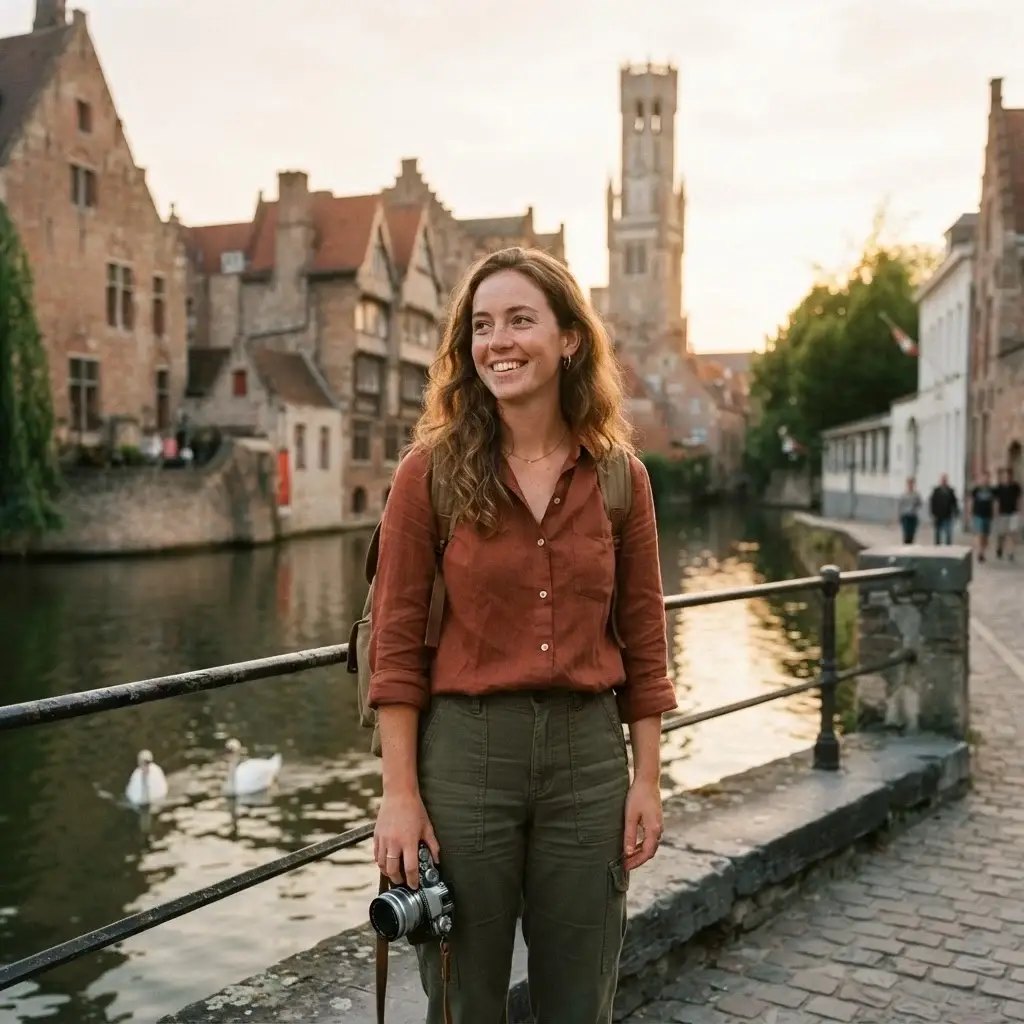
The first time I fell for a canal town, I wasn’t chasing a bucket list. I was a young woman with a corporate desk in New York, scrolling through photos on a lunch break, wondering how people actually got to those little pastel houses leaning over quiet green water. It looked like another planet. It looked like a life I wasn’t allowed to have yet.
Years later, after I left that desk and started building my days around slow travel instead of vacation days, I learned something simple. Canal towns are not hard to visit. They are some of the friendliest places in Europe for a first solo trip, because they are walkable, compact, and made for wandering with no fixed plan. The trick is knowing which ones fit the kind of traveler you are, and knowing a few practical things before you go so the magic isn’t buried under crowds and confusion.
So this is not a list of pretty pictures. This is the guide I wish I’d had on that lunch break. I’ll walk you through the best canal towns to visit in Europe, who each one suits, what to eat, what a boat ride really costs, and how to get there without a rental car. Let’s make those what ifs a real trip.
What Makes a Canal Town Worth the Trip
A great canal town is more than water and cute bridges. What you’re really after is a place where the water shapes daily life, where the streets slow you down and you end up talking to a baker or a boat driver instead of racing between sights.
You’ll see two nicknames everywhere. “Venice of the North” gets stuck on Amsterdam, Bruges, Ghent, and even St. Petersburg. “Venice of the Alps” belongs to Annecy in France. Take these with a grain of salt. No town is a copy of Venice, and honestly, the ones that stop trying to be Venice are the ones that surprise you most.
Here’s my honest filter. The best canal towns give you three things: water you can actually get out on, an old center small enough to explore on foot, and food or culture tied to the place itself. Every town below passes that test, and I’ve sorted them by the kind of traveler each one fits best.
Amsterdam: The Confident First Choice for New Solo Travelers
If this is your first solo trip and canals are the dream, start here. I say that often because Amsterdam does the hard work for you. English is spoken almost everywhere, the trains are simple, and the whole center is built for people who like to wander.
The heart of it is the canal ring, a set of grand curving waterways dug in the 1600s. It’s not just scenery. The whole ring earned a place on the world heritage list back in 2010, and reading about why it was built helped me see it differently. It was a planned “port city,” a piece of engineering as much as beauty, and you can learn the backstory straight from the official UNESCO listing for the Amsterdam canal ring before you go. Knowing that turns a nice walk into something that feels like time travel.
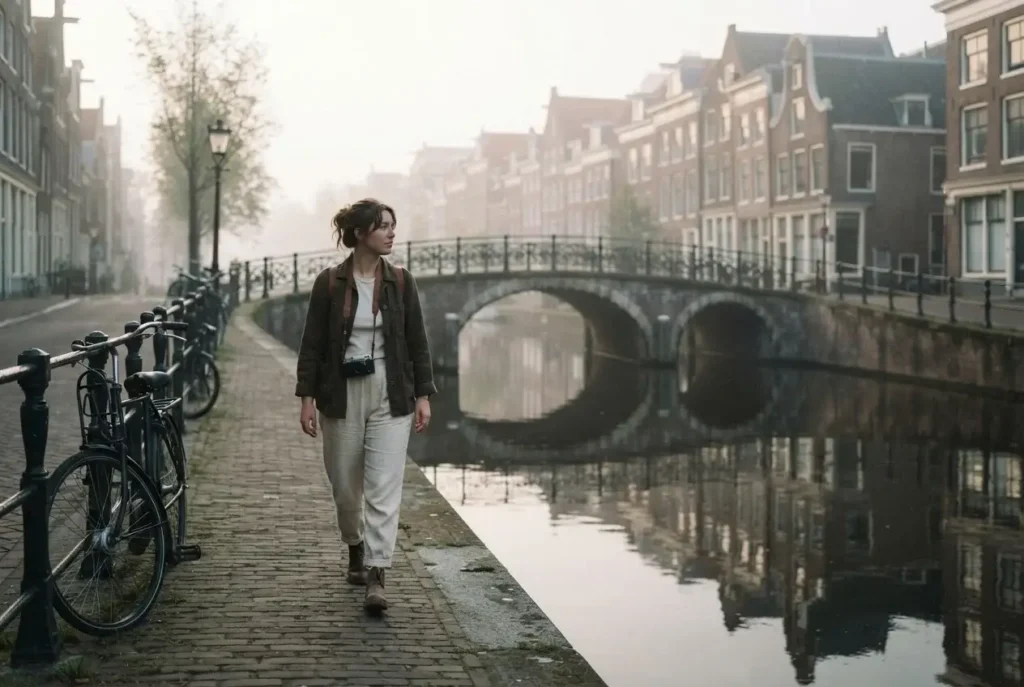
Skip the crowded party streets and walk the smaller canals like the Brouwersgracht or the streets of the Jordaan in the early morning. That’s when the light is soft and you’ll have the bridges nearly to yourself.
What to eat: A fresh stroopwafel from a market stall, still warm so the syrup goes soft. For a real meal, look for a brown cafe, the cozy old-style pubs, and try a bowl of erwtensoep in cold months.
How to get around: Walk. The center is tiny. A canal cruise is worth doing once, especially at dusk. Trams fill any gaps, and you never need a car.
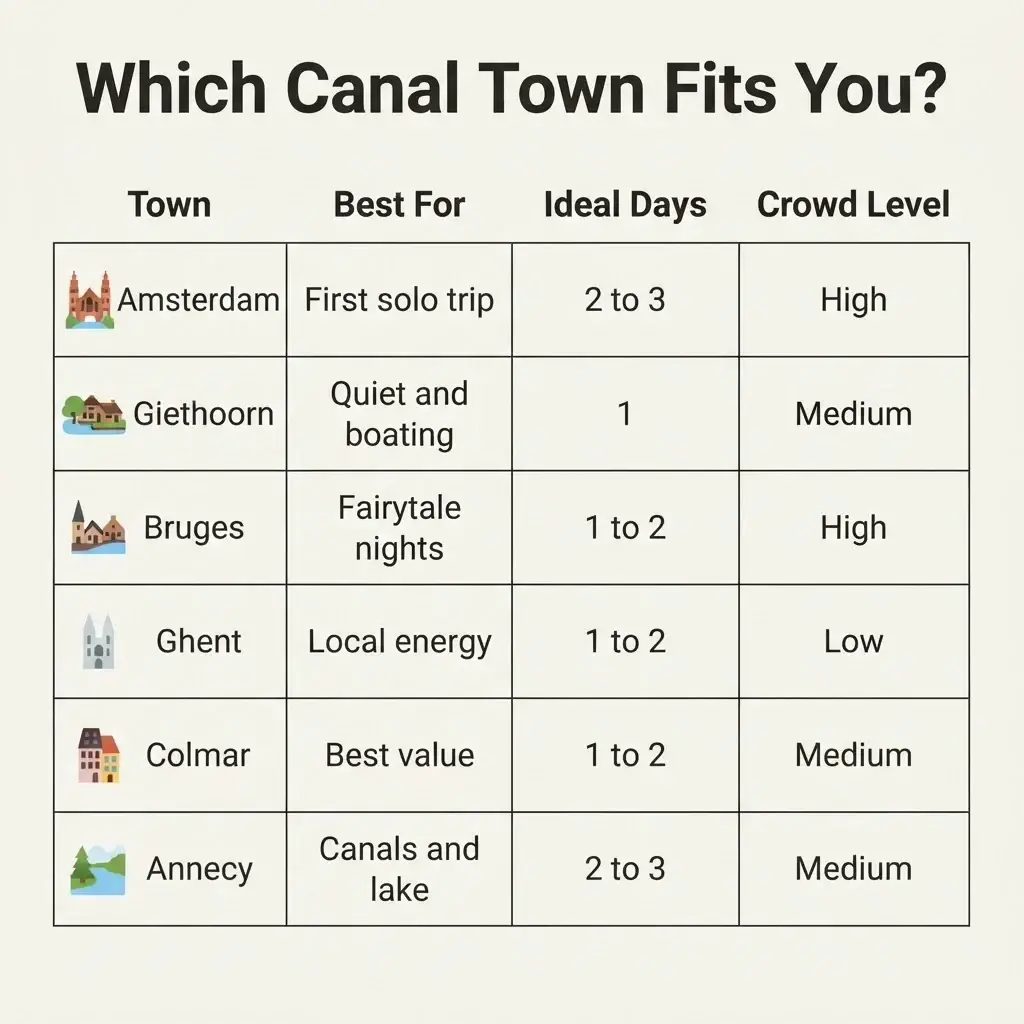
How long to stay: Two to three days, more if you’ll use it as a base for day trips.
Giethoorn: The Village With No Roads
About two hours from Amsterdam sits a place that feels made up. Giethoorn has canals instead of streets in its old core, little arched footbridges, and thatched cottages on tiny islands. Locals move around by quiet boat. Cars stay outside the old village entirely.
I want to be honest, because most articles aren’t. Giethoorn is stunning and it is also very popular, so the middle of the day in summer can get busy with tour groups. The fix is the same one I use everywhere: arrive early or stay late. If you can visit on a weekday morning, you’ll get the dreamy, silent version that made the place famous. National Geographic’s feature on visiting Giethoorn captures why the no-cars idea is worth the effort to reach it.
Rent a small electric “whisper boat” and putter through the canals yourself. No license needed, and it’s genuinely calming. This is one of the easiest solo experiences in Europe because you’re in control and the water is slow and shallow.
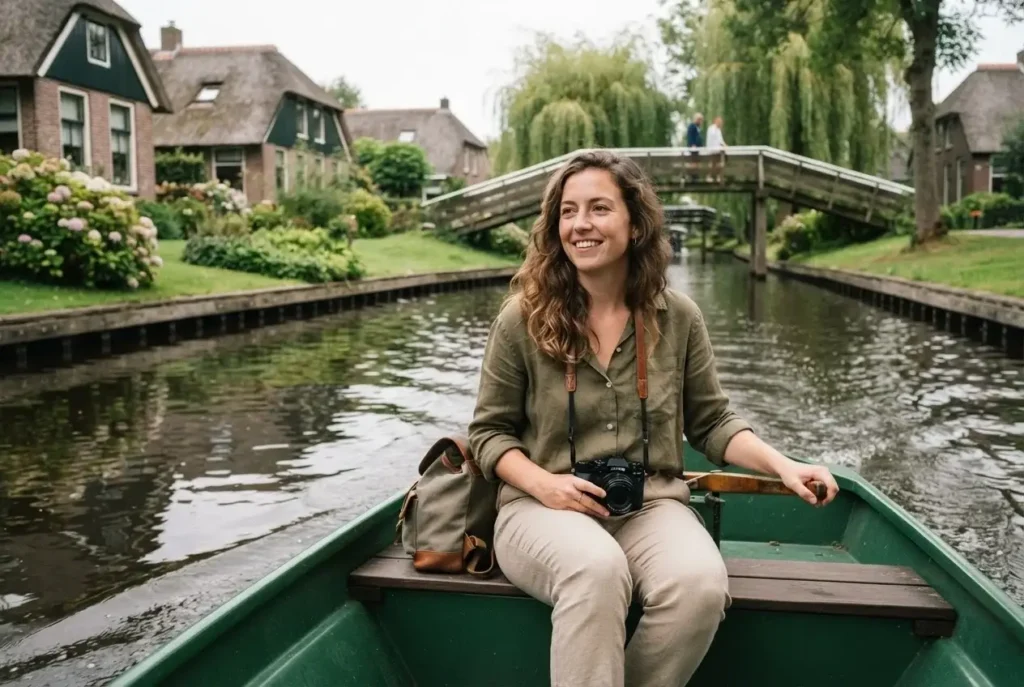
How to get there without a car: Take a train from Amsterdam toward Steenwijk, then a local bus to the village. Give yourself the day. It’s a trip, not a quick stop.
How long to stay: A half day of boating is plenty, though staying overnight lets you have it nearly to yourself.
Bruges: The Fairytale That Rewards Slow Travelers
Bruges in Belgium is the town people picture when they say fairytale. Cobbled lanes, a medieval belfry, swans on the water, and canals that glow in the late sun. Its whole historic center is protected as a world heritage site, and it earns it.
Here’s my one piece of real advice for Bruges. Day-trippers pour in from Brussels and cruise ships, peak at midday, and leave by evening. If you stay one night, you get a second Bruges, the quiet one after the crowds go, when the streets are yours and the lamplight hits the water. That single overnight changed the town for me from “nice” to unforgettable in the way Bruges deserves.
The canal boat ride is short but genuinely lovely, and it’s cheaper than the private tours will tell you. The public boats run roughly €15 for adults and €9 for kids, generally from spring to mid-November, and you can check current details on the official Visit Bruges boat page rather than paying a markup elsewhere.
What to eat: Real Belgian frites from a friture, moules-frites when mussels are in season, and chocolate from a small independent shop, not the flashy tourist ones on the main square.
How to get there: Easy trains from Brussels in about an hour, and Bruges station is a short walk or bus ride from the center.
How long to stay: One night, minimum. Two if you want to breathe.
Ghent: Bruges’ Livelier, Less Crowded Cousin
If Bruges is the postcard, Ghent is the town where students actually live, and I love it for that. It has the same gorgeous canals and medieval towers but a younger, buzzier energy and far fewer tour buses. For a solo traveler who wants beauty without feeling like they’re inside a museum, Ghent hits a sweet spot.
Walk the Graslei and Korenlei, the two old harbor quays facing each other across the water. At night they light up and locals sit on the stone steps with a drink. This is where I’d tell a nervous first-timer to just sit, watch, and let the town come to you.
What to eat: Try a cuberdon, the local cone-shaped raspberry sweet, and look for hearty stews like waterzooi.
How to get there: Direct trains from Brussels or Bruges, both under an hour.
How long to stay: One to two days, and it pairs perfectly with Bruges on one trip.
Colmar: Storybook Canals in the Heart of Alsace
Colmar in eastern France looks like someone drew it. Its little canal quarter is called Petite Venise, or Little Venice, with crooked timber houses in candy colors reflected in a narrow green waterway. It’s small, and that’s the charm.
The flat-bottom boat rides through Petite Venise last about 25 to 30 minutes and cost only a few euros, usually around €6 to €10 per person, which makes it one of the best-value canal experiences on this whole list. The Colmar tourism office’s boat tour page has the current times and departure point, and I’d book or arrive early because the little boats fill up fast in summer.
Colmar sits in the Alsace wine region, so the food leans German-French in the best way.
What to eat: Tarte flambée, the thin crispy Alsatian flatbread with cream, onion, and bacon, plus a glass of local Riesling or Gewürztraminer.
How to get there: Trains connect Colmar to Strasbourg in about 30 minutes, and Strasbourg links easily to Paris and Germany.
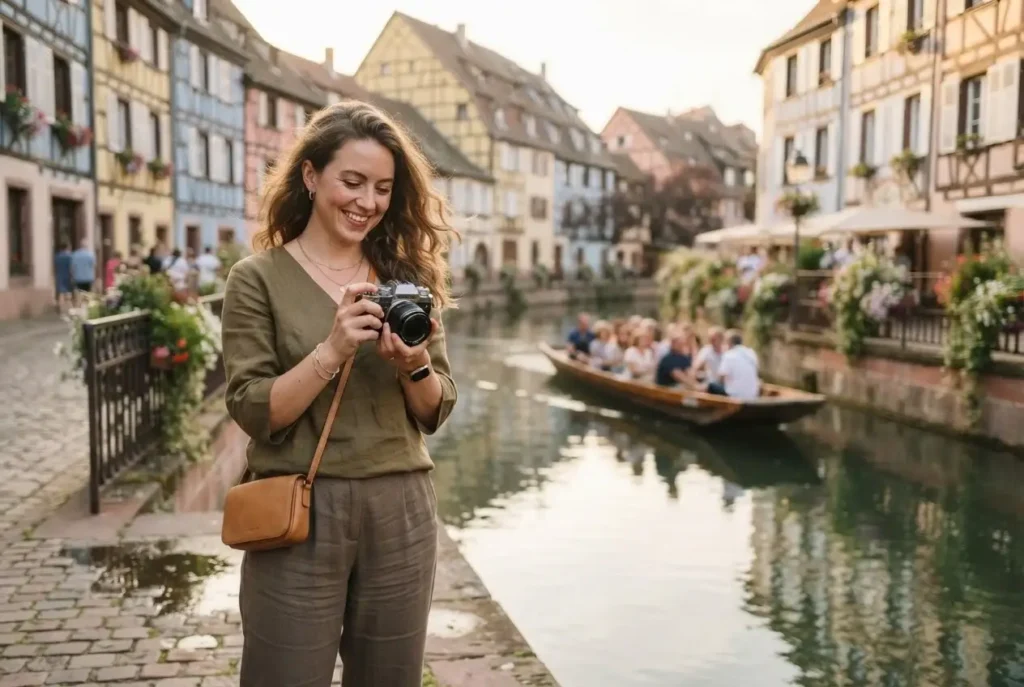
How long to stay: One to two days, ideally as part of an Alsace loop with Strasbourg.
Annecy: The Venice of the Alps
Annecy is where canals meet mountains. This French town sits at the tip of a stunningly clear turquoise lake, with pastel old-town buildings lining canals that feed into it and the Alps rising behind. It’s the “Venice of the Alps” nickname come to life, and from everything I’ve researched and heard from travelers, it delivers on both the water and the drama.
What makes Annecy special is the combination. You can wander flower-lined canals in the morning, then swim or paddle in one of the cleanest lakes in Europe by afternoon. Travel writers consistently rank Annecy among France’s most beautiful small towns for exactly this mix of storybook streets and outdoor freedom.
What to eat: This is Savoie country, so lean into the mountain food. Tartiflette, that gloriously rich potato, bacon, and Reblochon cheese bake, is the local hero.
How to get there: Trains reach Annecy from Lyon or Geneva, and Geneva’s airport is close, which makes it easier than you’d expect for such an alpine spot.
How long to stay: Two to three days, especially if you want lake time.
Utrecht and Aveiro: Two Underrated Picks for Repeat Travelers
If you’ve already done Amsterdam and want something with fewer crowds, Utrecht is a joy. It’s a short train ride from Amsterdam, and its canals are unusual because they sit below street level, with old cellar-wharves right at the waterline that are now cafes and terraces. You end up eating lunch level with the ducks. It feels lived-in and local because it is.
Down in Portugal, Aveiro gets called the “Venice of Portugal.” Its canals are cruised by moliceiros, brightly painted boats that once hauled seaweed. It’s sunnier and cheaper than the northern towns, and the nearby striped beach houses of Costa Nova make a lovely add-on. For a budget-minded traveler wanting canals with a coastal, laid-back feel, Aveiro is a smart pick.
What to eat: In Utrecht, grab bitterballen with a drink on a wharf terrace. In Aveiro, try ovos moles, the sweet egg-yolk treats shaped like little shells.
Venice: Worth It, If You Play It Right
I can’t write about canal towns and skip the original. Venice is genuinely one of the most extraordinary places on earth, and it’s also the most misunderstood on this list. The complaint you hear is “too crowded,” and the day-trip crush is real. But the people saying that almost always did it wrong.
Here’s the honest playbook. Stay overnight so you’re in the city in the early morning and late evening when the day-trippers are gone and the back canals fall silent. Get lost on purpose in quieter neighborhoods like Cannaregio and Dorsoduro. That’s the real Venice, and it’s still magic.
One practical thing to know. Venice now charges a day-tripper access fee on many peak days in 2026, roughly 60 dates, applied between 8:30am and 4:00pm. It runs about €5 if you register at least four days ahead and €10 for last-minute, and overnight guests plus several categories are exempt. Always check the current dates and rules on the official Venice access fee portal before you travel, because the dates shift each year. If you’re staying the night, this mostly won’t apply to you, which is one more reason to sleep in the city.
What to eat: Cicchetti, the little Venetian bar snacks, hopping between bacari with a small glass of wine. Skip the big menus in the main squares.
How long to stay: Two nights so you get those quiet mornings.
How to Choose and How Long You Need
Don’t try to do all of these in one trip. The most common mistake I see is stuffing five countries into ten days and spending the whole time on trains, exhausted, seeing nothing properly. Slow travel wins every time.
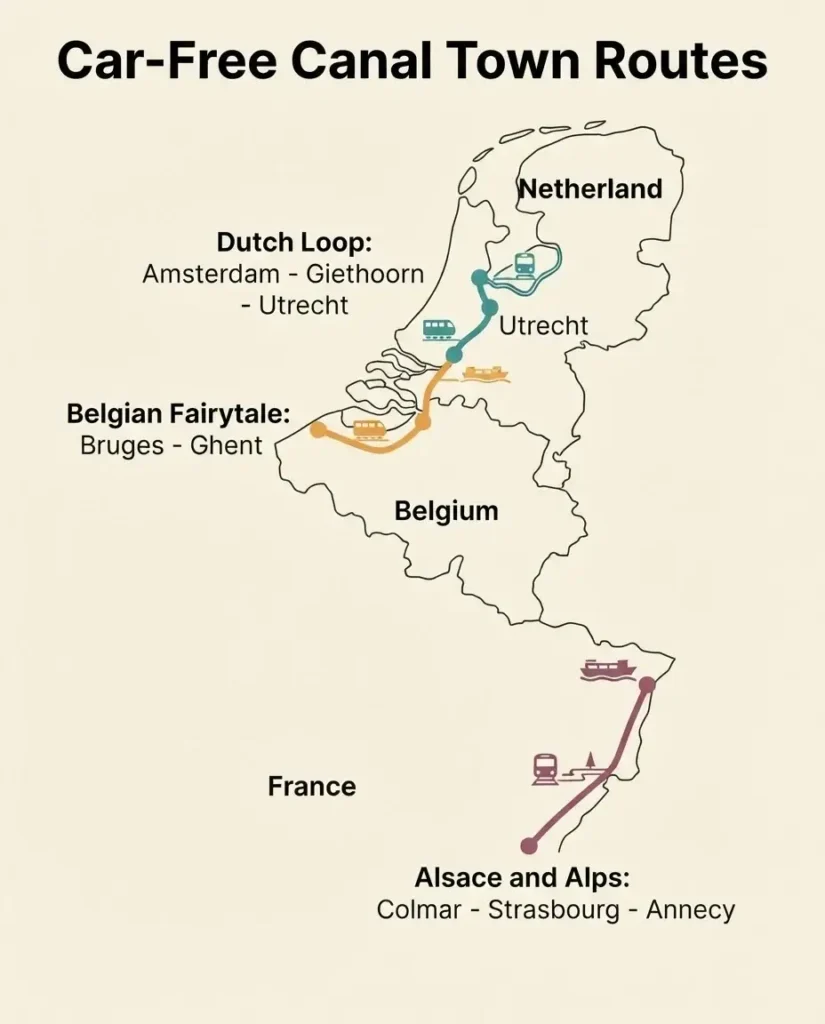
Pick a region and go deep. For a first canal trip, I’d pair Amsterdam, Giethoorn, and Utrecht into one relaxed Dutch loop. For a fairytale run, do Bruges and Ghent together in Belgium. For France, combine Colmar, Strasbourg, and Annecy. Each of these routes uses simple, frequent trains and needs no car at all, which takes a huge weight off if you’re traveling solo.
As a rough guide, give a big city like Amsterdam or Venice two to three nights, and the smaller towns one to two.
Build in slow mornings. The whole point of a canal town is the wandering, not the checklist.
A Few Honest Words on Solo Travel and Canal Towns
If you’re nervous about doing this alone, canal towns are one of the gentlest places to start. They’re compact, so you’re never far from your hotel. They’re walkable, so you don’t need to master a subway system. And they naturally slow you down, which is exactly what solo travel is for.
I promise you this from my own path out of that office job: the confidence you’re waiting to feel before you go is actually built by going. You learn you can read a train board, find your guesthouse, and order dinner alone at a canal-side table with a book. Those small wins stack up fast.
The perfect moment isn’t coming. A quiet morning on a canal, with the whole day ahead of you and no one to answer to, is worth reaching for now.
Pick one town from this list. Just one. Then start planning the boring, wonderful details, and let the rest follow. Your next adventure really is just a train ride away.