UNESCO World Heritage Sites Most Travelers Never Think to Visit

There are currently 1,273 properties on the UNESCO World Heritage List. They span 173 countries, cover everything from prehistoric cave art to modernist city blocks, and collectively represent the most extraordinary record of human and natural history on the planet. Yet somehow, most travel conversation about UNESCO sites circles the same small handful: Machu Picchu, the Colosseum, Angkor Wat, the Great Wall. The same queues, the same photo angles, the same review that starts with “it was beautiful but so crowded.”
I understand the draw of those famous sites. I really do. But here is what I keep thinking about: if 1,273 places have been judged extraordinary enough to carry the most prestigious heritage designation on earth, and most people only discuss 20 of them, that means there are roughly 1,250 places sitting on that list that are either underfunded in terms of marketing, off the mainstream route, or simply not famous for reasons that have nothing to do with how incredible they are.
This is one of my favorite gaps in modern travel. The sites that get overlooked are often the ones where you can still actually feel something. No timed entry ticket booked six months in advance. No selfie sticks competing for the same angle. Just you, history so deep it almost hums, and the particular quiet of a place that hasn’t been loved to death yet.
Below are six UNESCO World Heritage Sites that I think deserve a serious spot in your planning. Each one is different in what it offers, different in how you get there, and different in what it asks of you as a traveler. What they share is that almost nobody in your social circle has been to them, and almost nobody who does go regrets it.
Why Do So Many UNESCO Sites Go Unnoticed?
Before we get into specifics, it’s worth understanding why the list is so uneven in terms of visitor attention. A few things drive it. First, there is money. Sites with national tourism boards that pour resources into international promotion, like Italy or France, get visited. Sites in countries with smaller tourism budgets get skipped, regardless of how extraordinary they are. Second, there is routing. Most international travelers build trips around major cities, and sites that sit outside easy rail or flight connections get left off itineraries by default. Third, there is familiarity. Travelers are more likely to visit a place they have seen referenced in a movie, a magazine, or a friend’s Instagram. That creates a feedback loop where the famous get more famous and the overlooked stay overlooked.
None of those factors have anything to do with the site’s actual value. That distinction matters, because when you learn to look past it, the list starts to look very different.
Gobustan Rock Art Cultural Landscape, Azerbaijan
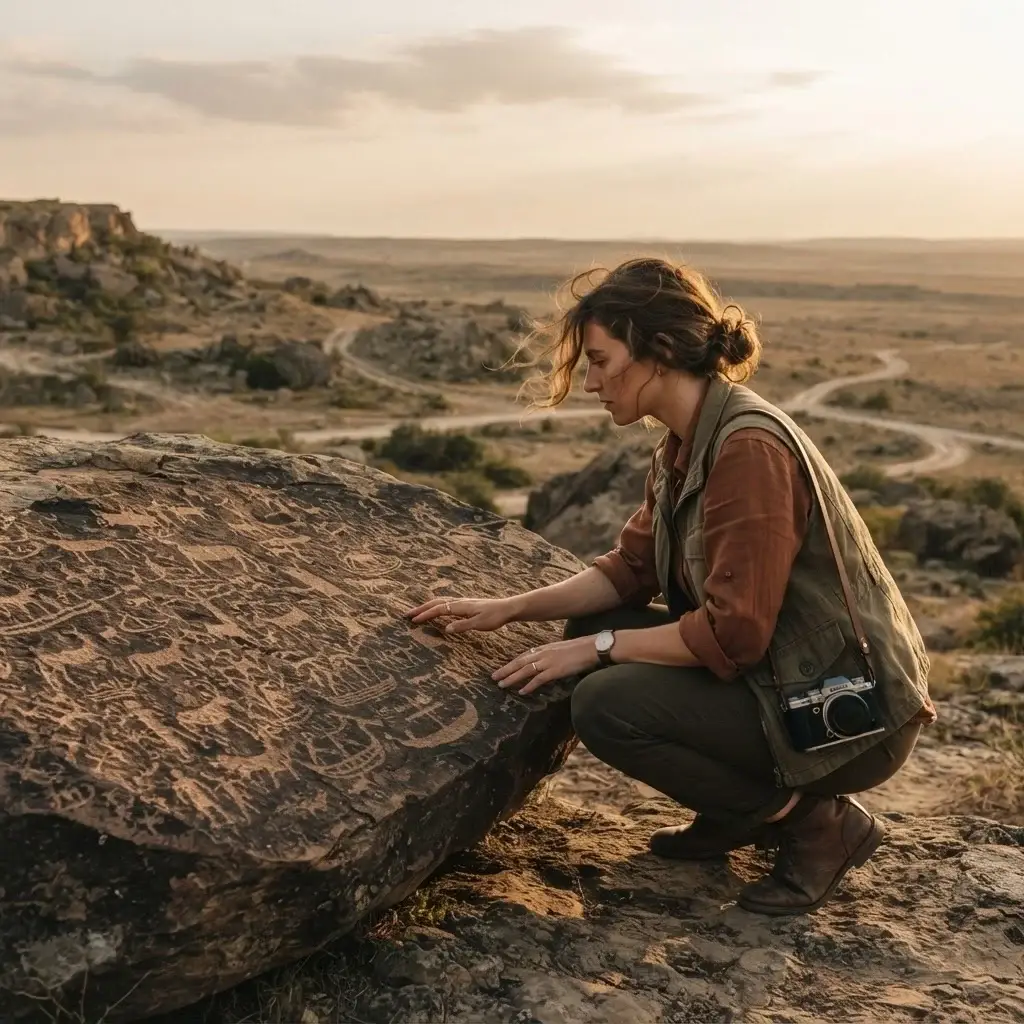
What it is: Roughly 70 kilometers southwest of Baku, the Gobustan plateau rises out of semi-desert terrain and holds over 6,000 rock engravings spread across three protected areas. These petroglyphs span an extraordinary 40,000 years of human presence, documenting people who hunted, danced, fished, and navigated boats in what was once a much wetter, more forested region. There are also remains of inhabited caves, settlements, and burial sites. UNESCO inscribed it in 2007, and the official listing for Gobustan describes it as outstanding testimony to a way of life that has since completely disappeared from the region.
Why it’s overlooked: Azerbaijan itself is underrepresented on the global travel radar. Most people think of Baku, if they think of Azerbaijan at all, and Baku is increasingly known for its wild architecture and Formula 1 race. Gobustan is just an hour outside the capital by road, but it rarely makes the “things to do in Baku” shortlist that gets shared.
What to expect on the ground: The Boyukdash area is the most visited section and the most accessible, with a modern on-site museum that provides excellent context before you head out into the rock landscape. Solo travelers report that the site has a raw, open quality to it. You are walking across a plateau with these ancient carvings underfoot and around you, with very few other people. The museum itself is genuinely well done and worth an hour before you explore. After that, the landscape takes over.
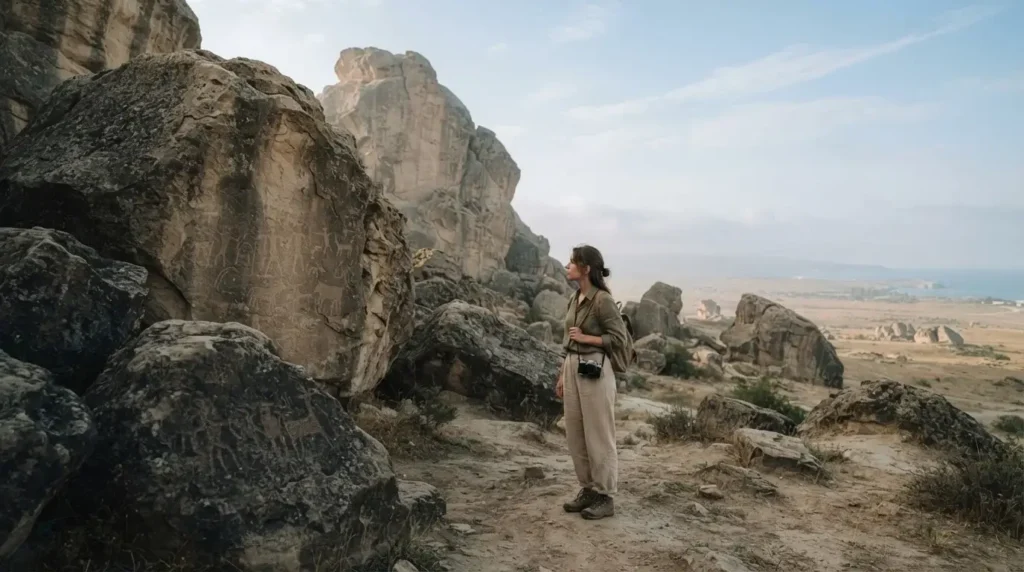
The entrance fee for foreign visitors is around 10 Azerbaijani manat, roughly $6 USD. The site is open from 10:00 to 18:00. A day trip from Baku is practical and easy; most visitors arrange a taxi or join a small group tour that also covers the nearby mud volcanoes, which are a strange and memorable addition to the day. Wear closed, sturdy shoes. The plateau is uneven and some of the best carvings require a short uphill walk.
What to eat nearby: Back in Baku, try piti, a slow-cooked lamb and chickpea soup served in individual clay pots. It is filling, inexpensive, and very much the kind of meal you want after a morning of walking rocky plateaus.
Harar Jugol, Ethiopia
What it is: Harar is one of the most extraordinary cities in Africa and one of the most important cities in Islamic history, considered by many Muslims to be the fourth holiest city of Islam. Its walled old town, Harar Jugol, was built between the 13th and 16th centuries and contains 82 mosques (three of which date from the 10th century), 102 shrines, and a labyrinth of narrow alleyways with a completely distinct architectural tradition that blends Islamic, African, and later Indian influences. The UNESCO World Heritage listing for Harar Jugol calls it an outstanding example of a traditional human settlement that has maintained its social structure, language, and physical fabric through centuries of change. It was inscribed in 2006.
Why it’s overlooked: Ethiopia takes some intentional planning to visit, and Harar sits in the eastern part of the country, about 525 kilometers from Addis Ababa. Most visitors to Ethiopia focus on the north, on Lalibela and Axum and the Simien Mountains. Harar requires a domestic flight or a long overland journey, which puts it beyond the itinerary of many short-trip travelers. There is also a broader perception about Ethiopia that keeps some travelers from planning trips there at all.
A note on safety: If you are seriously researching Harar, check the current US State Department Ethiopia Travel Advisory before booking anything. The advisory covers Ethiopia broadly, and the security situation varies significantly by region. Harar and the eastern region have a different profile than areas affected by the conflicts in other parts of the country. That said, the situation can change, and verifying current conditions before you travel is not optional here. Travel to Ethiopia rewards preparation.
What to expect on the ground: Solo travelers who have been to Harar consistently describe it as one of the most arresting, disorienting, alive cities they have ever walked through. The old city is a living community, not a museum. The alleyways are tight, the architecture is extraordinary, and the social rituals of daily life play out openly around you.

The famous hyena feeding, where local men called hyena men hand-feed wild hyenas outside the city walls at dusk, is one of those travel experiences that sounds strange until you are watching it happen. It is genuinely surreal and something that has taken place for centuries as a way of keeping hyenas away from livestock.
What to eat: Harar has its own cuisine. Try bUN, the local coffee ceremony, which in Harar is a deeply social act. The city has been a coffee trade hub for centuries. Also look for muqmad, a preserved dried meat dish, and the local flatbreads sold by women outside the city gates in the early morning.
Modernist Kaunas, Lithuania
What it is: When Lithuania declared independence in 1918, its traditional capital Vilnius was occupied by Poland. Kaunas became the provisional capital, and what followed over the next two decades was one of the most concentrated bursts of architectural creativity in 20th century Europe. Architects poured into the city with a mandate to build a modern European nation from scratch. The result is a remarkable urban collection of interwar modernist buildings, from the Central Post Office to the Romuva Cinema to the Vytautas Magnus War Museum, that blends international modernism with distinctly Lithuanian cultural identity. The official Lithuania Tourism page for Kaunas Modernism notes that the collection was inscribed on the UNESCO World Heritage List in 2023.
Why it’s overlooked: The Baltics in general are undervisited relative to Western Europe, and within the Baltics, Vilnius tends to absorb most of the attention. Kaunas is Lithuania’s second city and sits close enough to Vilnius (about 100 kilometers, roughly an hour by bus or train) that travelers sometimes treat it as a day trip rather than a destination. That is a mistake, because the architectural story here is genuinely unique in Europe, and the city has a young, creative energy that rewards slow exploration.
What to expect on the ground: Kaunas offers self-guided walking tour maps through its Naujamiestis (New Town) district, which is where the densest concentration of modernist buildings sits. Spend a morning walking it at your own pace. The buildings are not cordoned off or roped away; they are simply the city. Many of them are still in use as banks, post offices, cultural centers, and cinemas. That lived-in quality is part of what makes Kaunas feel different from traditional heritage sites. You are not looking at ruins or restorations. You are walking through a city that was designed with extraordinary ambition and still functions.

Kaunas is very walkable. Accommodation is affordable by Western European standards. Flights into Vilnius connect to Kaunas easily by bus, and both the bus and train run regularly throughout the day.
What to eat: Try cepelinai, Lithuania’s national dish, which are large potato dumplings stuffed with meat or curd cheese and served with a soured cream and bacon sauce. Find them at any traditional restaurant in the old town. They are heavy and satisfying and exactly what you want after a few hours of walking.
Iwami Ginzan Silver Mine, Japan
What it is: Between 1527 and 1923, Iwami Ginzan in what is now Shimane Prefecture was one of the world’s great silver mines. At its peak in the 16th century, it is estimated that this single mine supplied roughly one-third of the world’s silver. It fueled trade networks that stretched across Asia and into Europe, and the silver that left these mountains shaped the economies of China and the global spice trade in ways that are still being studied by historians. Japan’s official tourism guide to Iwami Ginzan describes it as a site where the mine, the mountain landscape, the surrounding forest, and the historic town of Omori have all been preserved together as a single cultural landscape. UNESCO inscribed it in 2007.
Why it’s overlooked: Shimane Prefecture is one of the least-visited prefectures in Japan, which is a remarkable thing to say about a country where tourism is heavily concentrated in the Tokyo-Kyoto-Osaka corridor. Iwami Ginzan requires a deliberate detour. It is not on the Shinkansen line. Getting there from Hiroshima by direct bus takes roughly two hours and 45 minutes. From the Kansai region, the practical move is a bullet train to Hiroshima followed by a local connection. This is not complicated, but it does require planning, and most Japan travelers who are working through their first or second trip tend to stick to the main routes. That is exactly why this site stays quiet.
What to expect on the ground: The site spreads across a forested mountain landscape. The main draw for most visitors is walking into the Ryugenji Mabu mine shaft, which was in operation in 1715 and is open to visitors. The tunnel is low and narrow, and walking through it gives you a very physical sense of the conditions miners worked in.
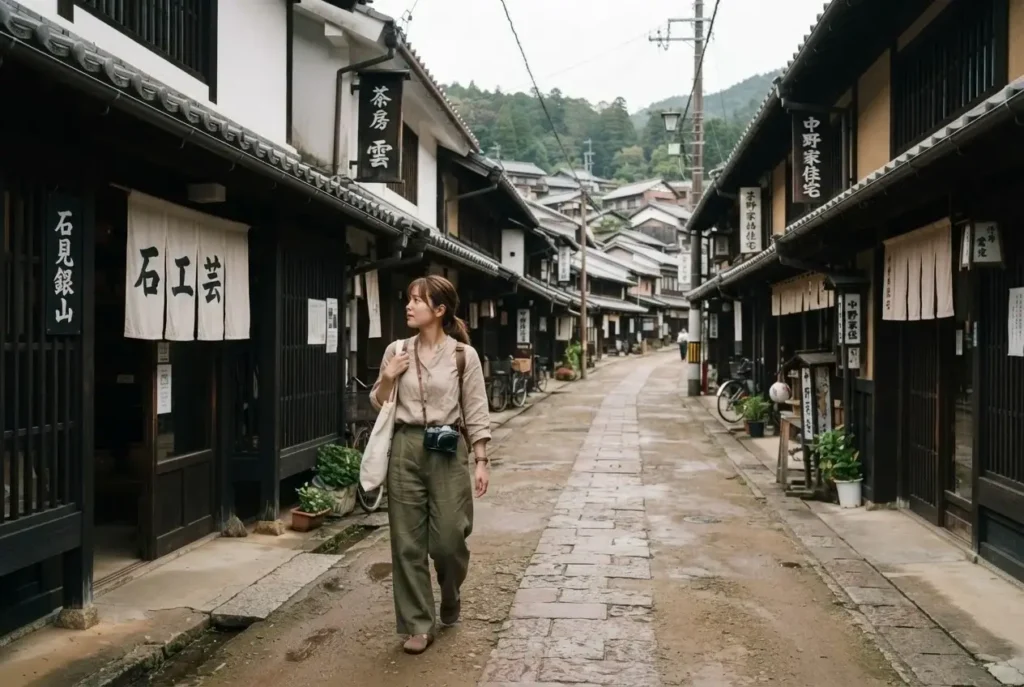
Two kilometers from the mine shaft is the preserved town of Omori, where miners and merchants once lived. Old samurai residences, shrines, and merchant homes line the street, many of them now functioning as small cafes and craft shops. A longer 12-kilometer trail connects the mine to the historic port of Okidomari and passes by Rakanji Temple, where 500 stone jizo statues are carved into the sides of mountain caves. It is a strange and beautiful walk.
For accommodation, plan to stay in nearby Yunotsu, a traditional hot spring town that is also part of the UNESCO site area, or in Oda City. Note that options are limited and small, so book ahead.
What to eat: Shimane Prefecture is known for its freshwater fish and seafood from the Sea of Japan. Shijimi clam miso soup is a local specialty from Lake Shinji nearby, and soba noodles in this region are made from locally grown buckwheat with a rougher, more earthy texture than what you find in Tokyo.
Taos Pueblo, New Mexico, USA
What it is: Taos Pueblo is one of the most remarkable facts in American history. People have lived continuously in these multi-story adobe buildings for more than a thousand years, making it one of the oldest continuously inhabited communities in the United States. Around 150 people still live within the ancient compound year-round, and approximately 1,900 Taos Pueblo tribal members live in the broader area. The structures, which rise several stories high and are built from adobe mud and straw, sit against the backdrop of the Sangre de Cristo Mountains. UNESCO inscribed Taos Pueblo in 1992. The pueblo is still a functioning community with deep ceremonial traditions, not a reconstruction or a museum.
Why it’s overlooked: Most travelers who think “New Mexico” think Santa Fe, and most travelers who think “UNESCO site in the Americas” think Mexico or Peru. Taos Pueblo sits in the northern part of New Mexico about 90 minutes north of Santa Fe, and while it’s not hard to reach, it tends to disappear into the broader Santa Fe and Taos art scene rather than being recognized as a UNESCO site of global significance in its own right.
What to expect on the ground: When you visit, you enter on a guided tour led by a member of the Taos Pueblo community. This is not optional, and it is not a formality. It is how the community manages respectful access to a living, sacred place. Your guide will explain the architecture, the history, the community’s relationship to the land, and the significance of the Rio Pueblo de Taos river that runs through the compound. You will see the adobe homes, the small shops run by tribal members selling traditional art and jewelry, and the ruins of San Geronimo Church, which was destroyed by U.S. Army forces in 1847. The official Taos Pueblo visitor site lists admission at $25 for adults, $22 for seniors, students, and military. Children under 10 are free. Hours are Sunday through Saturday, 9:00 AM to 4:00 PM. Note that the pueblo closes periodically for ceremonial purposes, so checking the calendar before you visit is important.
Go with real respect and real curiosity. Listen more than you photograph. Ask your guide before you point a camera. This is someone’s home and spiritual center, and how you behave matters enormously. It is also one of those places where the experience of being guided by someone whose family has lived on this land for 1,000 years gives the visit a weight that no amount of independent exploration could replicate.
What to eat in Taos: The town of Taos has excellent New Mexican food. Try blue corn enchiladas with red or green chile sauce. The green chile here, grown in New Mexico’s Hatch Valley, is genuinely different from anything you’ll find outside the state. Order it Christmas-style, which means both red and green chile on the same plate, and let someone who grew up eating it explain why the debate between red and green is a matter of serious local pride.
Sarnath, India (Newly Inscribed 2025)
What it is: Sarnath is where the Buddha is believed to have delivered his first sermon, called the Dhammacakkappavattana Sutta, or the “turning of the wheel of dharma,” around the 6th century BCE. It is one of the four most sacred sites in Buddhism, alongside Bodh Gaya, Lumbini, and Kushinagar. The site contains the Dhamek Stupa, a massive cylindrical tower that dates to at least the 5th century CE and possibly earlier, the ruins of ancient monasteries, and a remarkable collection of archaeological finds now housed in the on-site Sarnath Museum, including the famous Lion Capital of Ashoka that became the national emblem of India. As the UNESCO article on Sarnath’s inscription notes, the site was formally added to the World Heritage List on July 25, 2025, during the 48th session of the World Heritage Committee, making it India’s 45th World Heritage Site.
Why it’s overlooked: Sarnath sits just 13 kilometers from Varanasi, one of the most visited cities in India. Travelers who arrive in Varanasi often come specifically for the ghats, the cremation ceremonies, and the Ganges. Sarnath frequently becomes a half-day addition rather than a destination in its own right, which means visitors rush through it and leave before they’ve absorbed the place. With the UNESCO inscription now official, that may shift. But for now, you can still visit Sarnath on a weekday and have the Dhamek Stupa nearly to yourself in the early morning.
What to expect on the ground: The Archaeological Survey of India maintains the site. The Deer Park, where the Buddha’s first sermon took place, is peaceful and green.

The museum is small but extraordinary; the Lion Capital alone, carved from a single piece of polished sandstone around 250 BCE, is worth the trip from Varanasi on its own. Plan at least half a day. Go in the morning before the tour groups from Varanasi arrive. The access road from Varanasi is about 30 minutes by auto-rickshaw and costs very little.
What to eat: In Varanasi before or after your visit, eat at a small restaurant near Assi Ghat rather than near the main tourist strip. Try a proper thali, a full meal served on a large plate with rice, dal, two or three vegetable preparations, roti, and a small sweet. In the evening, a cup of masala chai from a street stall near the ghat while watching the Ganga aarti ceremony is one of those simple, memorable things.
A Few Honest Things to Know Before You Go
Choosing any of these sites over the famous circuit is a real act of travel confidence. A few things I want to say plainly:
These sites require more independent planning than a well-worn tourist trail. That is part of the point. The reward for doing the research, booking the right base, and figuring out the local transit is that you arrive somewhere that hasn’t been flattened by mass tourism. The sense of discovery that most travelers say they are chasing at famous sites, you will actually find here.
Getting to some of these places is not always straightforward. Iwami Ginzan requires understanding Japan’s regional bus schedule. Harar requires reading current travel advisories carefully and taking them seriously. Gobustan is easy if you plan from Baku. Kaunas is honestly one of the most accessible cities on this list. The difficulty level varies considerably, which means there is something here for a wide range of travelers.
At living heritage sites like Taos Pueblo, the responsibility that comes with access is real. The UNESCO designation exists to protect these places, not to commodify them for tourism. Visiting with that awareness makes you a better traveler, and honestly, it makes the experience better too. The most meaningful moments in travel tend to happen when you show up genuinely curious rather than just camera-ready.
The world is enormous and the list is long. If any of these six spark something for you, go to the UNESCO World Heritage List and spend an hour browsing by country. You will find places you have never heard of that will reshape how you think about what is worth seeing. That is exactly the kind of travel planning I love most.