Destinations That Actually Teach You Ancient Traditions

There is a particular kind of restlessness that travel can either cure or deepen. It is the feeling that you have visited somewhere, taken the photos, ticked the boxes, and come home with very little idea of what actually happened in that place for the thousands of years before you arrived. I know it well. It was one of the reasons I eventually left a conventional path and decided to make travel my life, not my vacation.
What changed everything for me was the shift from sightseeing to learning. When I lived with a family in Ghana, I did not just visit a market. I learned what the colors of kente cloth mean. When I taught English in Thailand, I stumbled into temple ceremonies that nobody had planned for me to see, and they stayed with me far longer than any itinerary item. And when I hiked across rural China, the ancient habits of the people I met alongside the trail told me more about Chinese philosophy than any museum exhibit ever had.
That is the experience this article is for. Not the quick selfie at a ruin. The slow, deliberate kind of travel where you sit down, pay attention, and let an ancient tradition teach you something about both the world and yourself.
According to UNESCO, intangible cultural heritage covers everything from oral traditions and performing arts to traditional craftsmanship and social rituals, and these living expressions are just as much a part of a destination’s identity as any physical monument. The difference for travelers is that this kind of heritage is participatory. It is something you can enter, not just admire.
Here are the destinations that will actually teach you something, if you are willing to show up with humility and curiosity.
Kyoto, Japan: Where Every Gesture Has Meaning
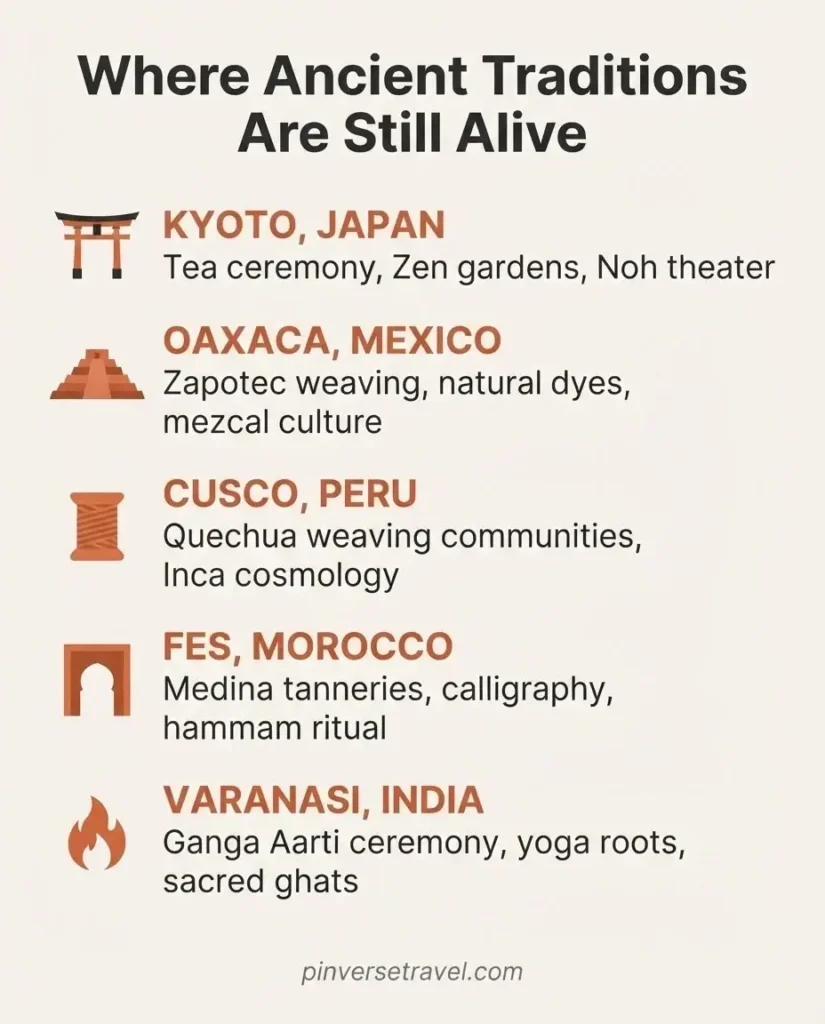
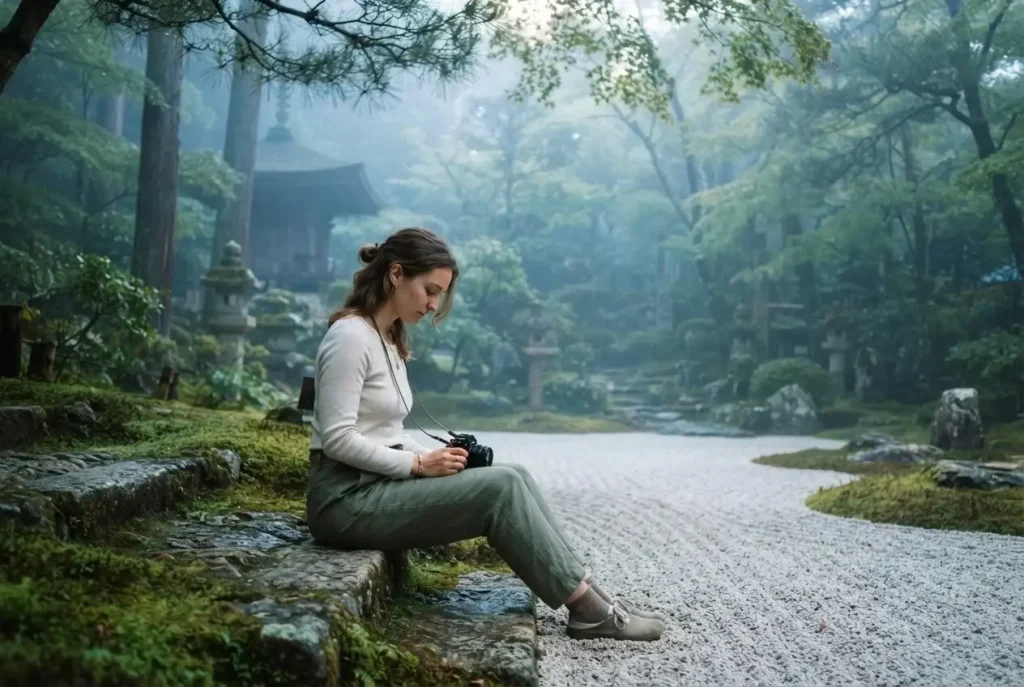
If I were to design a classroom for learning ancient traditions, it would look like Kyoto. Not because it is a museum city, but because so much of daily life there is still structured around centuries-old practice. The tea ceremony, ikebana flower arrangement, Noh theater, zazen meditation, calligraphy, and even the way food is presented in a kaiseki meal all carry a depth of intentionality that most of the modern world has largely forgotten.
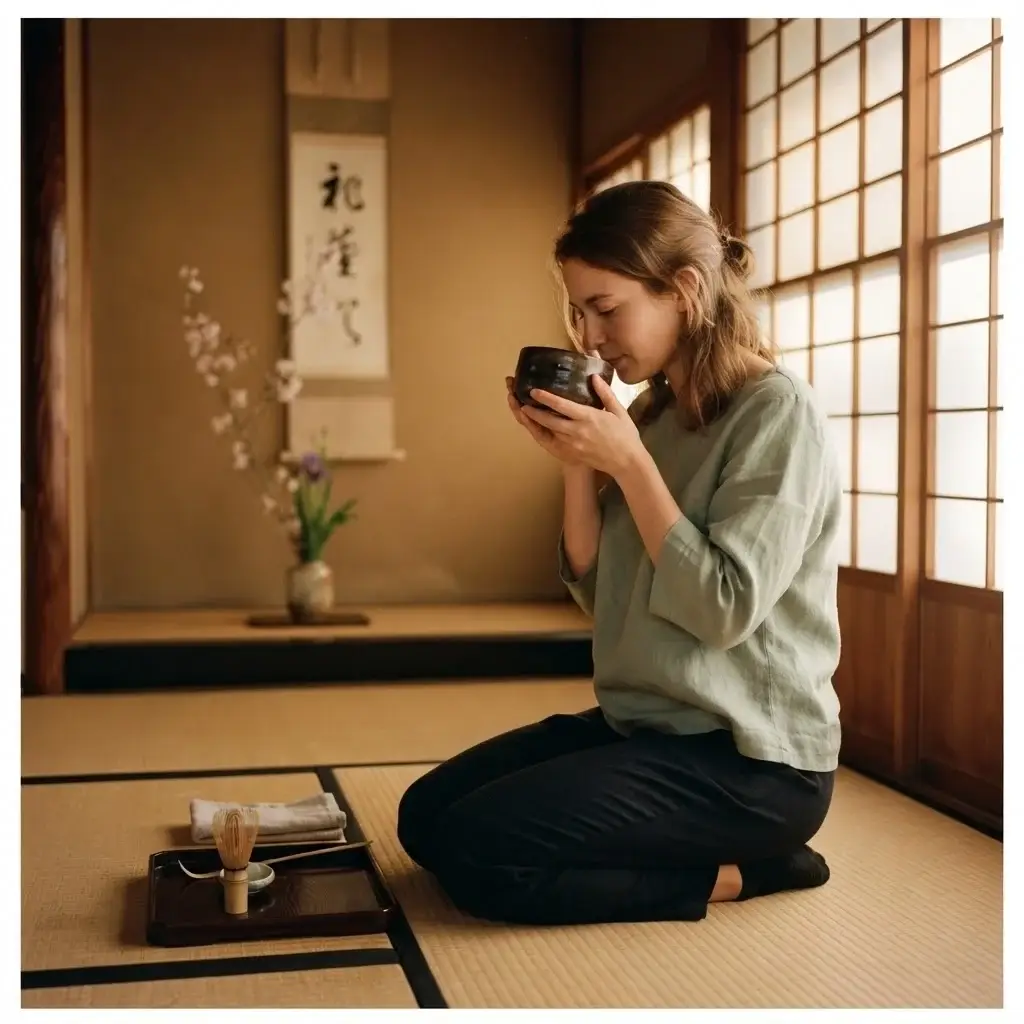
The tea ceremony, known as chado or “the way of tea,” is the most accessible entry point for visitors. Beyond the bowl of matcha, the ceremony is a lesson in presence and respect. Every hand movement, every piece of equipment, every bow has a defined meaning that has been passed from teacher to student since Sen no Rikyu codified the practice in the 16th century.
According to Japan Guide’s detailed breakdown of the tea ceremony, visitors can participate in tea ceremonies of varying formality across Kyoto, from abbreviated tourist sessions in garden teahouses to more immersive multi-hour experiences. The basic etiquette is not complicated: wear modest clothing, skip strong perfume, remove jewelry that might scratch the ceramics, and approach the whole thing slowly.
For solo travelers, Kyoto is one of the most welcoming cities on earth. English signage is widespread, public transport is excellent, and there is a culture of quiet respect for visitors who approach things sincerely. A two-hour tea ceremony typically costs between 2,000 and 5,000 yen depending on the level of formality and the setting. Book in advance during spring and autumn, when visitor numbers are at their highest.
Beyond tea, Noh theater is worth at least an evening of your time. Noh is one of the oldest theatrical forms in the world, originating in the 14th century, and Kyoto’s Kanze Noh Theater offers performances that include English program notes. The experience is meditative, strange, and deeply unlike anything in Western performance traditions. If you go in expecting entertainment in the conventional sense, you may be confused. If you go in expecting to observe something ancient and still alive, you will leave quietly stunned.
What to eat in Kyoto: Go to Nishiki Market for a walking introduction to Japanese ingredients, and seek out a kaiseki meal if budget allows. Even a simple lunch at a traditional machiya townhouse restaurant will ground you in the culture far more than any tourist lunch.
Practical note: A Japan Rail Pass covers Shinkansen travel from Tokyo to Kyoto. Stay at least four or five days in Kyoto to get below the surface. Late March to early April (cherry blossom season) and October to November are peak season; January and February are quieter and often cheaper.
Oaxaca, Mexico: The Zapotec World Is Still Here
Most first-time visitors to Mexico go to the beach. The ones who go to Oaxaca tend to come back changed. This southern state is one of the most culturally layered places in the Western Hemisphere, and what makes it exceptional is not just that ancient traditions exist here but that they are active, adaptive, and community-owned.
The Zapotec civilization predates the Aztec Empire. At Monte Alban, their ancient capital built on a flattened mountaintop above what is now Oaxaca City, you can stand in a ceremonial complex that has been occupied since around 500 BCE. From what solo travelers and cultural researchers consistently report, the site rewards those who go with a local guide rather than just wandering independently. A certified guide at the gate runs approximately USD $50 and the experience of having the astronomical alignments, ball court, and burial chambers explained in context is completely different from reading a sign.
But Monte Alban is the starting point, not the whole story. The living tradition in Oaxaca that will genuinely teach you something is textile weaving. Zapotec and other indigenous communities in the valleys around the city use natural dyes extracted from cochineal insects, indigo plants, and marigolds to produce the deep reds, blues, and yellows you see in the markets. In the village of Teotitlan del Valle, about 30 kilometers from Oaxaca City, many weavers open their homes to visitors, explain the dyeing and loom process, and sell directly.
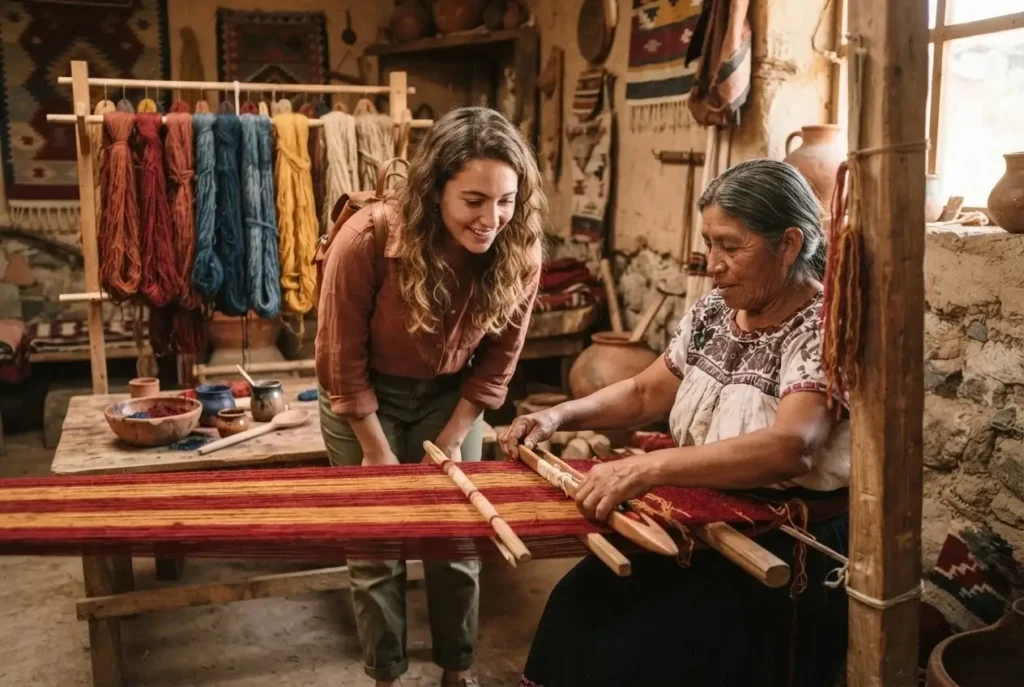
This is not a staged demonstration. These families have been weaving in this valley for generations, and the experience of sitting with them for an afternoon and watching a textile take shape is the kind of thing that sticks with you.
The official Oaxaca state tourism portal lists certified guides and cultural programs that can connect independent travelers with legitimate community experiences rather than the commercialized market stalls that primarily exist to sell.
Oaxaca is also one of the world’s great food destinations. Mole negro (a complex sauce with over 30 ingredients including dried chili peppers and chocolate) is the dish to understand here. Taking a cooking class that starts with a market tour is one of the best half-days you can spend. Mezcal is to Oaxaca what wine is to Burgundy, and visiting a small palenque (artisanal distillery) in the surrounding hills where mezcal is made with a clay pot still is a lesson in agricultural tradition that tastes excellent.
Solo-travel safety note: Oaxaca City is consistently regarded as one of the safer destinations in Mexico for solo travelers, including solo women. Apply standard urban common sense, avoid walking alone late at night in unfamiliar areas, and you will find the city overwhelmingly welcoming. If you visit during the Guelaguetza festival in July, book accommodation months in advance as the city fills quickly for this celebration of indigenous dance and tradition from across Oaxaca’s 16 ethnic groups.
Cusco, Peru: Traditions Woven Into Every Thread
The Inca Empire collapsed in the 16th century, but the cultures that built it did not disappear. In the highlands around Cusco, Quechua-speaking communities still practice agricultural, spiritual, and craft traditions that predate European contact, and several of these communities actively welcome travelers who want to learn rather than just observe.
The most honest and direct way to engage with living Inca-descended tradition in Cusco is through weaving. The Centro de Textiles Tradicionales del Cusco (CTTC), a non-profit organization established in 1996 and located at Avenida El Sol 603-A in the city, works with ten weaving communities across the Cusco region on a fair-trade basis. Their mission is to revitalize ancestral textile techniques, and visitors can watch demonstrations, learn about the symbolic meaning embedded in each pattern and color, and purchase directly from weavers. Every design tells a story about community identity, cosmology, and relationship to the land.
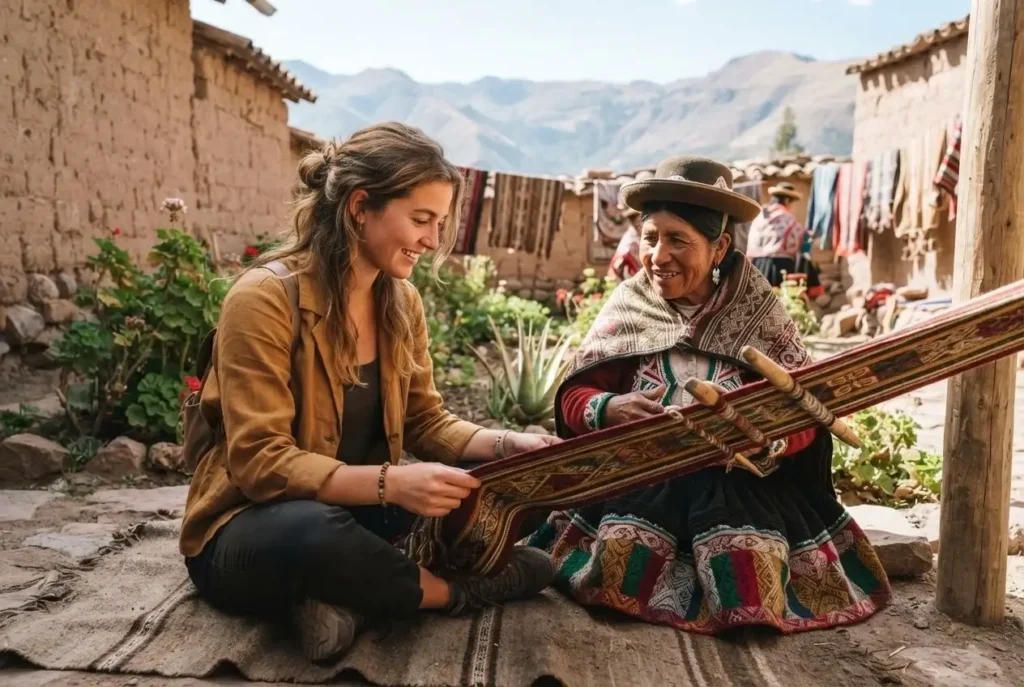
This is not a craft fair. It is a living archive.
For solo travelers, Cusco is highly navigable and there is a strong infrastructure of independent tours and cultural programs that do not require you to join a large group. The altitude is the practical challenge, not the logistics. Cusco sits at 3,400 meters above sea level, and altitude sickness is real. From what solo travelers consistently report, the first two days should be gentle, including short walks, coca leaf tea (a traditional Andean remedy that is entirely legal and genuinely effective for altitude adjustment), and early nights. Acclimatize before attempting the Inca Trail or any demanding hike.
Beyond weaving, the village of Chinchero is worth a day trip for its Inca agricultural terraces and colonial church built directly on Inca foundations, a literal layering of traditions in stone. The Sacred Valley as a whole is scattered with active communities where cultural tourism is done thoughtfully. The key question to ask when booking anything is: does the money go to the community directly, or to an intermediary?
What to eat in Cusco: Cuy (roasted guinea pig) is the traditional Andean protein and worth trying at a family-run restaurant rather than a tourist-facing menu. Quinoa soup is comforting at altitude and deeply traditional. The central market, Mercado San Pedro, is where locals shop and is one of the most sensory-rich hours you can spend in the city.
Fes, Morocco: The Medina as a Living Classroom
The medina of Fes El Bali is one of the most disorienting, extraordinary places I can imagine spending a week. From what solo travelers and researchers consistently describe, entering through the ancient city walls is less like visiting a historic site and more like walking into a functional medieval city that simply kept going. Donkeys still carry goods through lanes too narrow for cars. The world’s oldest continuously operating university, the University of al-Qarawiyyin, founded in 859 CE, sits in the heart of it.
Fes El Bali is a UNESCO World Heritage Site specifically recognized for the preservation of its urban fabric and the living traditions it contains. The craftsmanship traditions here are not reconstructions for tourists. The Chouara tanneries, where leather has been dyed using natural pigments including saffron, mint, and poppy, following methods virtually unchanged since the 11th century, are one of the most vivid traditional craft systems still operating in the world.
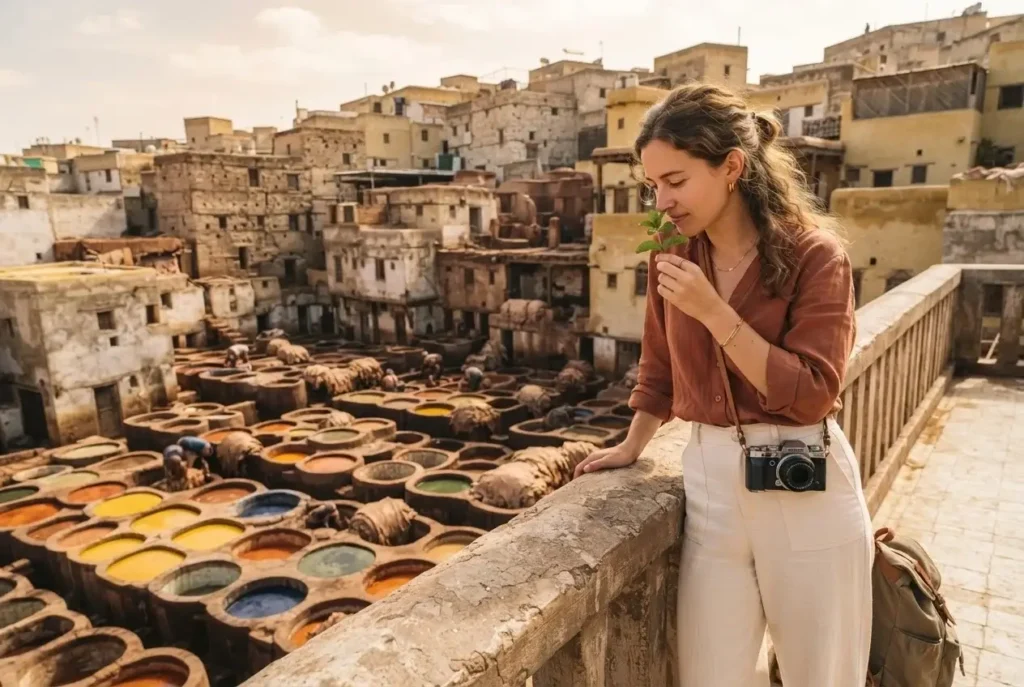
You watch from elevated terraces above the dye vats, and a sprig of fresh mint is handed to you on arrival because the smell is intense and memorable.
For travelers who want to learn rather than just observe, Fes offers options. Arabic calligraphy workshops, zellige tilework classes, and brass-hammering demonstrations are available through riads and cultural centers in the medina. A knowledgeable local guide is close to essential in Fes because the medina has over 9,000 alleyways and the difference between what is authentic and what is staged for visitors is not always obvious from the outside. The official Moroccan National Tourist Office page for Fes lists licensed guides you can hire independently.
Solo traveler note for Morocco: Both solo men and solo women travel to Fes successfully every day. Women traveling alone will encounter more persistent attention in the medina than in cities like Marrakech’s newer quarters, but firm and polite responses work well. Hiring a licensed guide for at least the first day genuinely changes the experience and takes the pressure off navigation entirely.
What to eat in Fes: Bastilla (a savory-sweet pigeon or chicken pastilla dusted with powdered sugar and cinnamon) is the classic Fassi dish and one of the most complex flavor experiences in North African cuisine. Eat it at a restaurant inside the medina, not on the tourist-facing streets near Bab Bou Jeloud. Harira soup in the evening from a stall near the tanneries is both cheap and extraordinary.
The practical reality of Fes: most European and North American passport holders can enter Morocco visa-free for up to 90 days. The Fes-Saiss Airport receives direct flights from several European cities. A riad (traditional courtyard guesthouse) inside the medina walls is both the most practical and the most atmospheric place to stay. Expect to pay between USD $40 and $90 per night for a quality mid-range riad.
Varanasi, India: The Oldest Living City on Earth
No destination on this list challenges a traveler more, and no destination on this list offers a more direct encounter with ancient, unbroken spiritual tradition than Varanasi. This city on the banks of the Ganges River has been continuously inhabited for over 3,000 years. It is one of Hinduism’s holiest sites, and the daily rituals here are not performances. They are active, sincere religious practice that visitors are permitted to witness with respect.
The Ganga Aarti ceremony is performed every single evening at Dashashwamedh Ghat, one of the main stone-stepped riverbanks where pilgrims come to bathe and pray. According to the official Kashi government portal, seven priests perform the 45-minute ritual of fire, bells, incense, and chanting in honor of the Ganges River, beginning just after sunset.
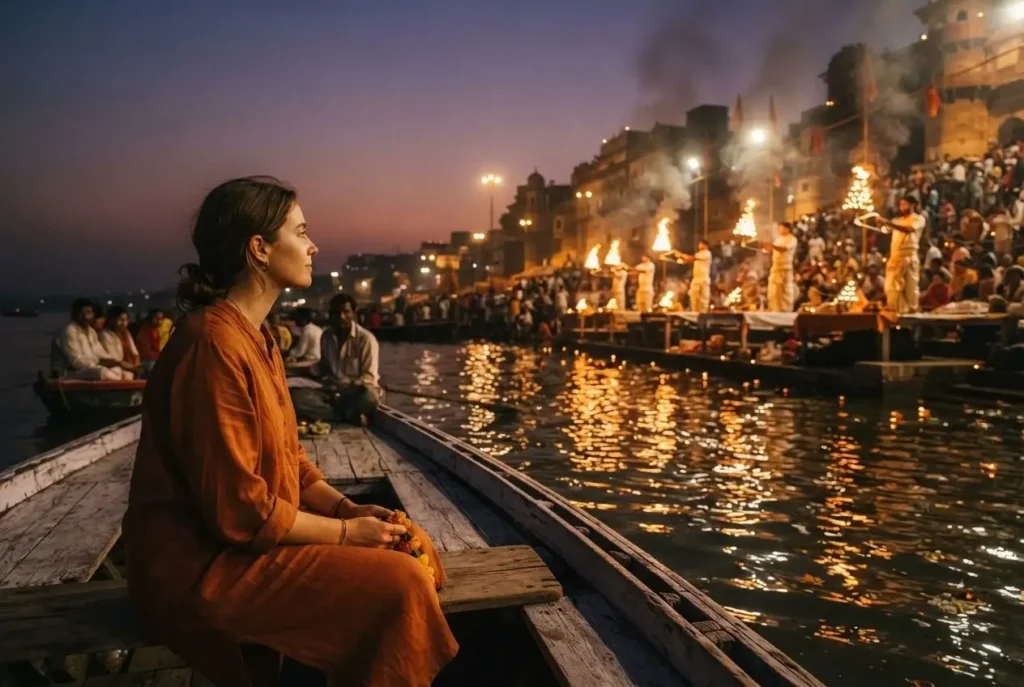
Watching from the ghat steps is free. Watching from a boat on the river is a different experience entirely, giving you a wider view of the whole illuminated scene as it reflects off the water. A shared boat typically costs 100 to 200 Indian rupees per person, around USD $1 to $2.50.
What makes Varanasi different from a heritage site is that the learning here happens through observation and presence rather than participation in the Western sense of a workshop or class. The traditions of yoga, classical Hindustani music, Sanskrit study, and Ayurvedic medicine all have their roots in this city’s intellectual and spiritual history. Several ashrams and yoga schools in Varanasi offer short immersive programs for visiting travelers, ranging from a few days to several weeks. If your interest is specifically yoga or classical music, Varanasi has practitioners of extraordinary depth who teach small groups.
The honest thing to say about Varanasi is that it can overwhelm. The city is loud, dense, and confronting in ways that some travelers find transformative and others find exhausting. From what first-time solo travelers consistently report, the key is to arrive with low expectations for comfort and high expectations for depth. Stay for at least four or five days. Walk the ghats in the early morning when the river light is extraordinary and the city is quieter. Eat at small, simple restaurants near the ghats rather than tourist cafes, and try the lassi (yogurt drink), the kachori sabzi (fried pastry with spiced vegetables), and the sweet paan at least once.
Practical note: Most nationalities require a visa for India, which can be obtained through the e-Visa system online well in advance of travel. Varanasi’s Lal Bahadur Shastri International Airport receives domestic connections from Delhi and Mumbai. The train journey from Delhi to Varanasi is approximately 12 hours on an overnight sleeper and is one of those travel experiences that is genuinely part of the education.
A Note on How You Approach All of This
Every destination in this article has a version designed for tourists and a version that will genuinely teach you something. The difference between them is not usually money. It is time, curiosity, and the willingness to sit with discomfort.
When I left my office job and started building a life around travel, the thing I discovered quickly was that the most valuable moments never came from the busiest days. They came from slowing down enough to notice what was actually happening around me. That is the real skill this kind of travel develops in you. Not the knowledge of traditions specifically, but the capacity to pay attention and to receive what a place is trying to show you.
Go with a notebook. Learn ten words in the local language before you arrive. Book the workshop, not just the tour. Ask your guesthouse host where they eat, not where they send tourists.
The ancient traditions that have survived for centuries are not fragile. They have already outlasted empires. But they are specific, and they are alive, and they deserve a traveler who shows up with both curiosity and care.
Start there. The rest will follow.