Most Underrated Places Pinterest Travelers Are Booking Right Now

There is a certain kind of travel discovery that feels different from everything else. Not the kind that comes from a hotel ad or a top-ten list that looks the same on every website. I mean the kind where you are scrolling Pinterest at 11pm, saving pins to a board you have been building for months, and suddenly a photo stops you cold. A cobblestone alley you have never seen before. A food market that looks nothing like your usual feed. A city skyline that makes you whisper, “where is that?”
That is the Pinterest effect, and it is more powerful than most people give it credit for.
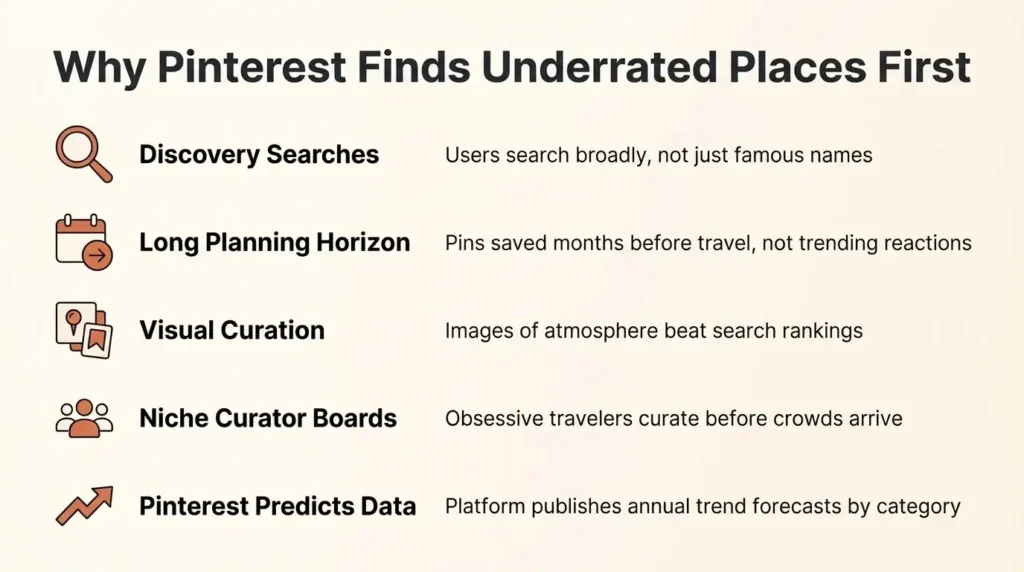
Pinterest is not just a vision board app. According to Pinterest’s own 2024 travel report, total travel searches on the platform have climbed significantly year over year, and a growing portion of those searches are broad discovery searches, people looking for inspiration rather than confirmation of a trip they have already booked. That means millions of travelers are actively using Pinterest to find places they have never considered before. The underrated destinations showing up in their feeds are showing up for a reason.
So I want to talk about the places that keep appearing in those feeds right now. Not the places with the most tourists or the most Instagram posts, but the ones that solo travelers and cultural explorers are quietly booking, the ones that reward curiosity over convenience, the ones that Pinterest seems to know about before the rest of the world catches on.
I have not been to all of these places personally, and I will be straightforward about that. What I have done is spend time researching them deeply, tracking what solo travelers consistently report, and filtering everything through the same lens I use for every destination: does it offer the kind of real, layered, culturally rich experience that makes travel worth doing in the first place?
Here is what I found.
Why Pinterest Surfaces Underrated Destinations Better Than Most Platforms
Before we get into specific places, it is worth understanding why Pinterest is actually good at this.
Most recommendation algorithms feed you what is already popular. More clicks, more saves, more engagement, equals more visibility. Pinterest works slightly differently because its users are planners. They are saving things for future trips, dreaming three months or a year ahead, not reacting to what is trending today. This longer planning horizon means the platform surfaces aspirational content, places that look beautiful and interesting but have not yet hit peak tourism saturation.
Pinterest’s own trend forecasting backs this up. Their Predicts 2026 report identified “Darecations” as a headline travel trend, which they describe as spontaneous trips to whimsical, mystical destinations with a fairytale-meets-fever-dream energy. The places feeding that trend are not Paris or New York. They are misty ruins, ancient walled cities, river valley towns, and markets that smell like spice and history. Exactly the kind of places on this list.
If you are using Pinterest to plan and you are not yet looking beyond the first three saved destinations on your board, go deeper. The real finds are in the boards of people who travel like it is their life’s work, because for some of us, it is.
Tbilisi, Georgia: The City That Keeps Surprising Everyone
Let me start here because Tbilisi keeps coming up in solo travel communities with an intensity that feels like the beginning of something big. And right now, before the crowds arrive, is exactly when you want to go.
Georgia, the country nestled between the Greater Caucasus Mountains and the Black Sea, is one of those places where you arrive with modest expectations and leave completely undone. Tbilisi is its capital, a city of sulfurous bathhouses, ancient churches perched on cliffs, and a wine culture so old it predates most of what we think of as European civilization. Georgians did not just invent one of the world’s great cuisines, they invented one of the oldest winemaking traditions on Earth, using clay vessels called qvevri that are buried underground to ferment wine the same way they did 8,000 years ago.
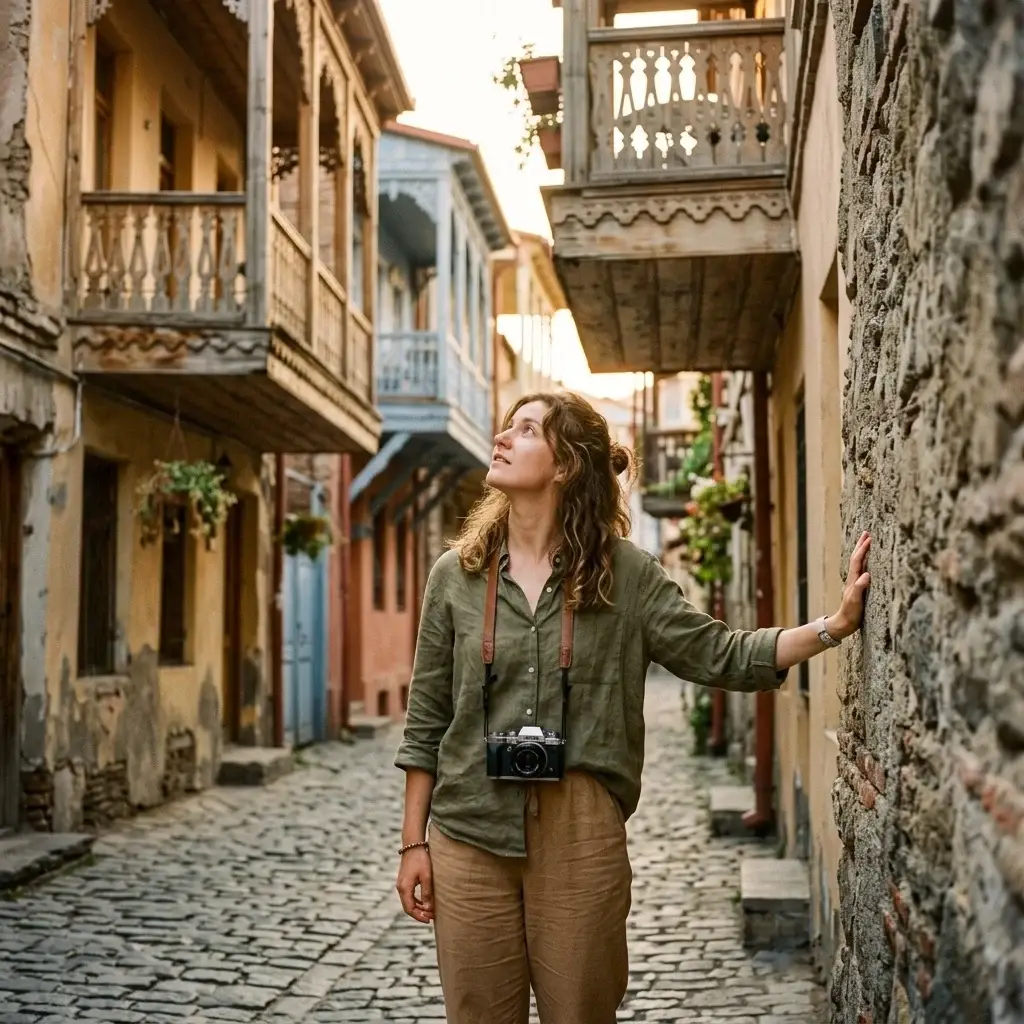
From what solo travelers consistently report, the Old Town area of Tbilisi is one of the most walkable and visually layered urban neighborhoods anywhere in Europe or Central Asia. The architecture is genuinely strange in the best way: carved wooden balconies hang over narrow streets, pastel-colored walls peel back to reveal centuries underneath, and a Zoroastrian fire temple sits steps from a synagogue, a mosque, and an Armenian church. The city has been a crossroads of civilizations for so long that tolerance is practically built into its geography.
For food, do not miss khinkali, the large soup dumplings that you eat by hand, twisting off the doughy top knot and drinking the broth first. Churchkhela, which looks like a wax candle but is actually walnuts threaded onto a string and dipped in grape juice, makes a perfect street snack. The Dezerter Bazaar near the train station is the city’s main market, chaotic and colorful and full of spices, pickled vegetables, churchkhela strings hanging from every stall, and vendors who will want to talk to you.
For getting your bearings, the Georgian National Tourism Agency’s official site has useful practical information on regions, getting around between Tbilisi, Kazbegi (a mountain town that looks like a film set), and the wine region of Kakheti.
One very important planning note: as of January 2026, all tourists entering Georgia are required to hold a valid health and accident insurance policy. U.S. citizens can stay visa-free for up to 365 days, but travel insurance is now a legal entry requirement, not just a good idea. You can check the full current entry requirements through the U.S. Department of State’s Georgia travel page. Also worth knowing: Georgia passed restrictive legislation on LGBTQ+ rights in December 2024, so LGBTQ+ travelers should research the current climate carefully before booking.
The overall vibe for solo travel in Tbilisi is welcoming and relatively affordable by Western standards. Meals at local restaurants cost just a few dollars. The metro is cheap and efficient within the city. Taxis are inexpensive but negotiate the price before you get in, or use the Bolt app.
Oaxaca, Mexico: Where Culture Is Not a Performance
I want to be honest about something. When I was teaching English in Thailand, one thing I noticed was how quickly a place changes when tourism becomes its primary identity. Locals start performing culture rather than living it. Prices shift. The food at tourist restaurants bears no resemblance to what people actually eat at home. The magic thins out.
Oaxaca has held onto something different. It is one of the most culturally intact places in the Americas, a colonial city in southern Mexico that somehow manages to be both a UNESCO World Heritage Site and a lived-in, breathing community. The city center and the nearby archaeological site of Monte Alban were inscribed together by UNESCO back in 1987, recognized for the extraordinary layering of Olmec, Zapotec, and Mixtec civilizations followed by Spanish colonial architecture, all coexisting in one compact valley.
Monte Alban itself is one of the most moving archaeological sites I have heard consistently described by travelers who visit it.
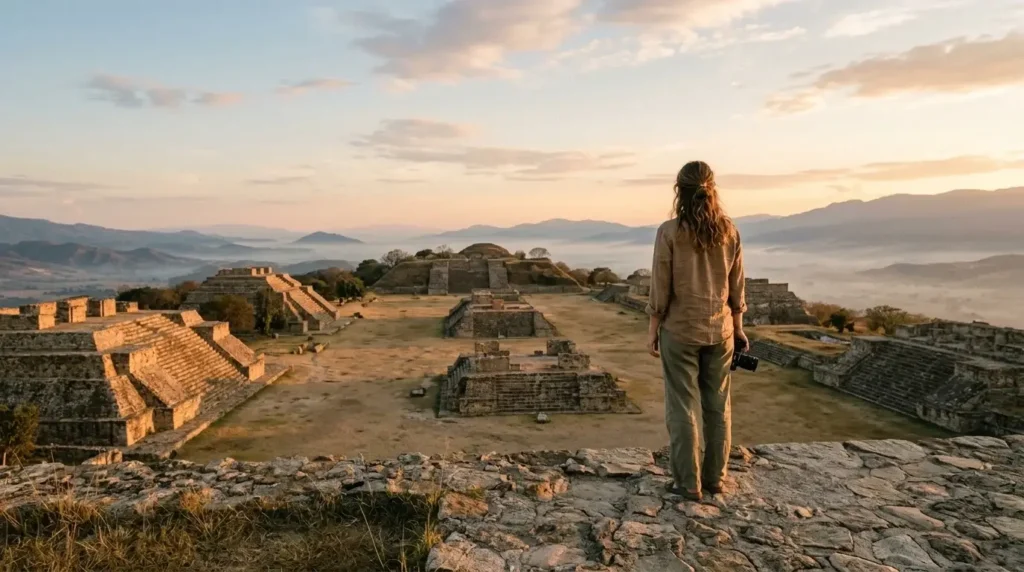
The ceremonial platform was built at the summit of a mountain that was literally flattened by hand, with terraces, pyramids, and a ball court arranged across a 300-meter esplanade. It was inhabited for 1,500 years. Standing up there at sunrise, with the valley spreading out below you in every direction, is the kind of experience that quietly restructures how you think about history and human ambition.
Back in the city, Oaxacan food culture is the real anchor of any visit. This is the home of mole negro, a sauce that can take three days to make and contains up to 30 ingredients. Tlayudas are oversized crispy tortillas loaded with beans, cheese, and meat, best eaten standing up at a market stall. The Mercado Benito Juarez in the city center is the place to eat breakfast or lunch like a local, fresh-squeezed juice, tamales, and memelas alongside vendors selling everything from carved wooden animals to dried chiles.
For solo travelers, Oaxaca City itself is very walkable and generally considered safe during the day. The city attracts a strong community of artists, writers, and longer-term travelers, which means there are good coffee shops, mezcal bars, and cultural spaces to meet people. If you are anything like me when I first planned a trip somewhere completely new, your instinct will be to pack your itinerary full of sights. Oaxaca punishes that approach. It rewards slow mornings, long lunches, and getting genuinely lost in the neighborhoods behind the Zocalo.
George Town, Penang, Malaysia: The City That Will Ruin You for Ordinary Food
If someone told me I could only eat the food of one city for the rest of my life, the answer would probably be George Town, Penang. This is not a personal memory, but it is an honest conclusion drawn from what food lovers and solo travelers have been saying about Penang for years, consistently, loudly, and with the kind of conviction that only comes from eating something genuinely extraordinary.
George Town is the capital of Penang, an island off the northwest coast of peninsular Malaysia, and it is a UNESCO World Heritage city that has never quite fallen into the tourist trap its status could have created. The George Town World Heritage Incorporated site describes the area as containing 5,013 heritage buildings, recognized for its multi-cultural living heritage, a five-century layering of Malay, Chinese, Indian, Portuguese, Dutch, and British influences, all compressed into a city you can walk across in an afternoon.
That cultural mix is most viscerally felt through the food. George Town is where you eat char kway teow, a wok-fried rice noodle dish made over charcoal flames at tiny hawker stalls, and Penang Asam Laksa, a sour tamarind-based fish noodle soup that CNN ranked among the top 10 foods in the world. The hawker centers operate from early morning until late at night, and the understood etiquette is to claim a table, then wander between stalls ordering from each one. It is efficient, social, and one of the best ways to eat on the planet.
Beyond the food, George Town has a street art scene that started as a civic project in 2012 and has since become one of the most photographed public art experiences in Southeast Asia. The murals along Armenian Street are the most famous, but the real treasure is wandering away from the main circuits and finding hand-painted steel rod installations and painted walls down alleyways that most tourists never reach.
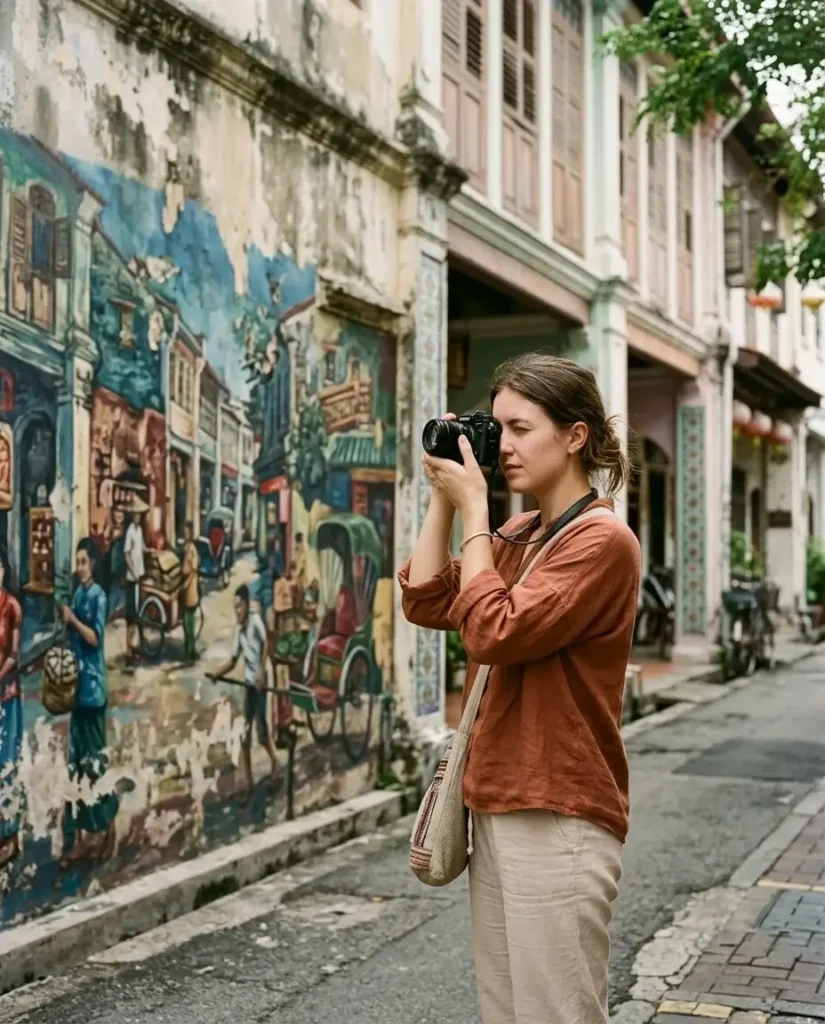
Getting to George Town is straightforward. Penang International Airport connects to Kuala Lumpur with multiple daily flights, and the ferry from Butterworth on the mainland runs frequently. Within the heritage zone, everything is walkable. July and August (the current season) sit within the southwest monsoon period for Penang, which means some rain, but it passes quickly and the city operates normally through it. Budget travelers consistently report that food and accommodation in George Town remain very affordable even by Southeast Asian standards.
Plovdiv, Bulgaria: Europe’s Oldest Continuously Inhabited City
Here is something worth knowing about Plovdiv: it is older than Rome. Not Roman-era old. Older than that. Archaeological evidence of continuous habitation in Plovdiv goes back approximately 8,000 years, making it one of the oldest continuously inhabited cities in Europe, and yet it sits quietly in the middle of Bulgaria, largely unknown to most Western travelers.
Plovdiv was named European Capital of Culture in 2019, which briefly pushed it into broader travel conversations, but it never became overtouristed the way Dubrovnik or Prague did.
What that designation left behind is a city with refreshed cultural institutions, a thriving arts scene in the Kapana creative quarter (whose name literally translates to “the trap,” a reference to the maze-like streets), and an Old Town that genuinely earns the word charming without requiring you to fight through tour groups to feel it.
The ancient Roman remains in the city center are what tend to stop people in their tracks. The Ancient Theatre of Philippopolis, a 2nd-century Roman amphitheater, sits partially embedded in the hillside of the Old Town and still hosts concerts and performances today. Walking past it casually, without a barrier between you and the stone, is a different experience from viewing antiquities through glass. There is a Roman Stadium, partially visible through a see-through floor in the city’s main pedestrian street, which is either surreal or perfectly normal depending on how comfortable you are with extraordinary things being treated as ordinary.
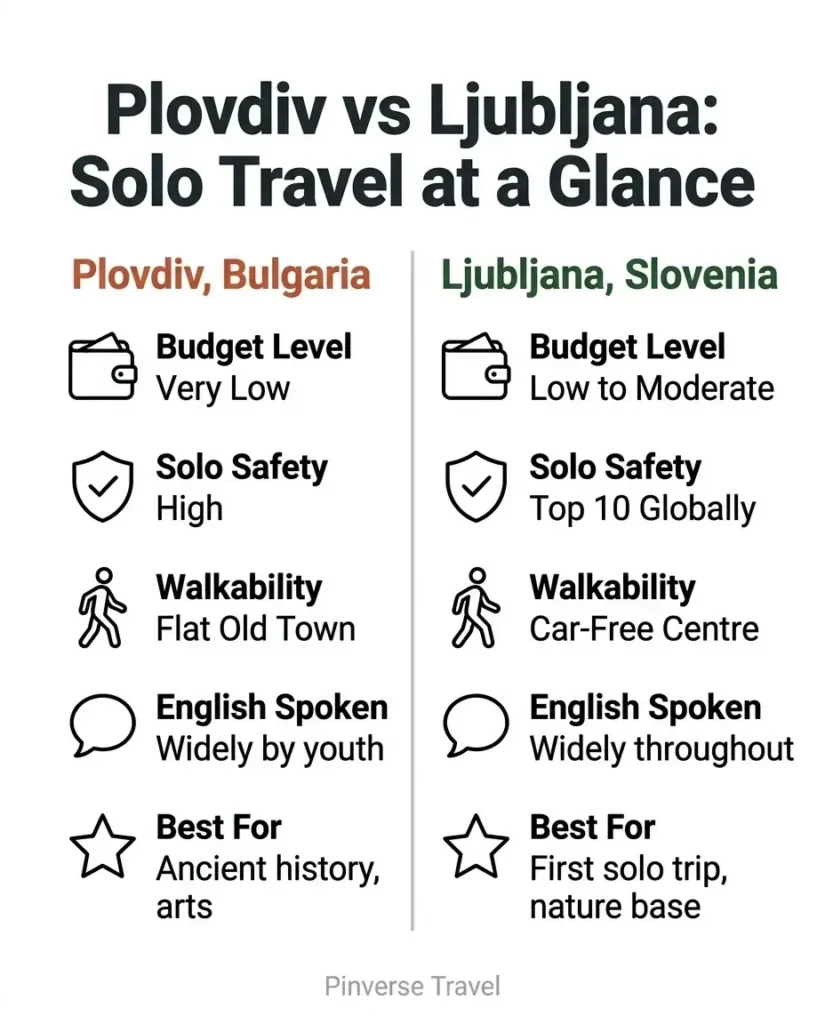
For solo travelers, Plovdiv is one of the most beginner-friendly cities in the Balkans. English is spoken widely, especially among younger residents. The city has a walkable, flat city center and a compact Old Town you can cover in a single afternoon. Budget accommodation runs well under 30 euros a night for good hostels and guesthouses, and meals in local mehanas (traditional Bulgarian restaurants) are inexpensive and deeply satisfying.
From what solo travelers consistently report, the best approach is to base yourself in Plovdiv for at least two nights rather than rushing through on a day trip from Sofia, which is only two hours away by train. The city has a pace that takes a few hours to absorb. Once it clicks, you will not want to leave.
Ljubljana, Slovenia: The Capital City That Feels Like a Village
Slovenia keeps showing up on Pinterest underrated travel boards for a very specific reason: it looks like a fairytale, it functions like a dream for solo travelers, and it has somehow avoided the mass tourism that consumed its neighbors.
Ljubljana is the capital city, and it is smaller than most people expect, around 300,000 residents, which gives it a village energy inside a cosmopolitan framework. The Ljubljanica River runs through the center, lined with outdoor cafes and flanked by the famous Triple Bridge. Ljubljana Castle sits on a hill above the old town and is accessible by a short walk or a funicular. The streets below are car-free, which changes the entire energy of exploring on foot.
Slovenia consistently ranks among the top 10 safest countries in the world according to the Global Peace Index, and the sense of safety on the ground reflects that. This is a particularly meaningful detail for solo travelers who are still building their confidence with solo trips abroad. Ljubljana is the kind of city where you will wander at night without thinking about it, eat late, talk to strangers at cafe tables, and feel genuinely at ease.
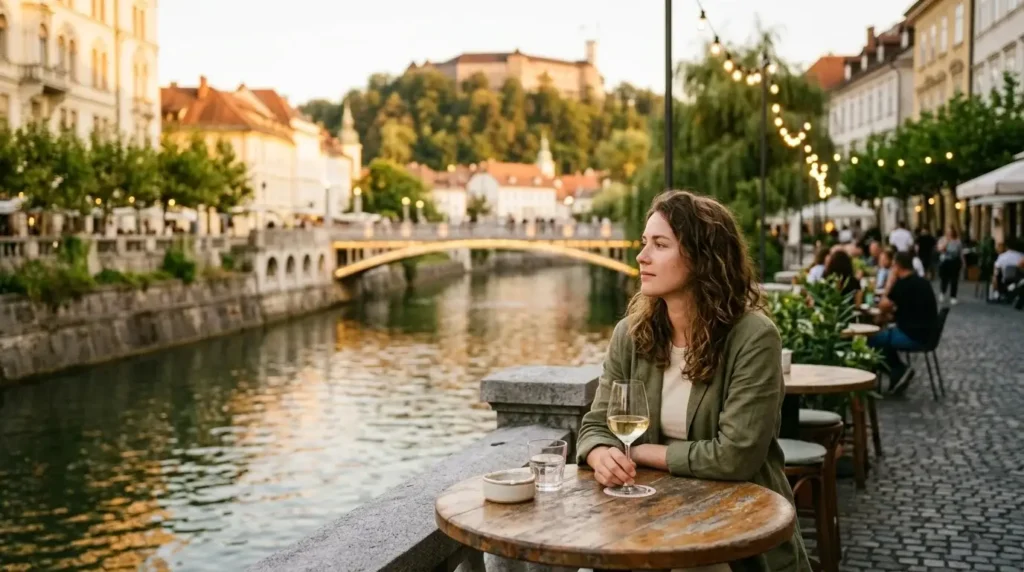
The food scene has improved dramatically in recent years. Traditional Slovenian cuisine leans on hearty flavors: buckwheat groats, potica (a walnut roll that is deceptively complex), wild mushroom dishes, and a wine culture that punches well above its international recognition. The Central Market near the Triple Bridge is the heart of local daily life, especially on Saturday mornings when it is packed with producers from the surrounding countryside.
For solo travelers looking for a first international destination that stretches their comfort zone without overwhelming it, Ljubljana might be the single best answer I know of. It is accessible, affordable, deeply pleasant, and connected by excellent bus and train links to Bled (the lake with the island church), the Postojna Cave system, and the Adriatic coast at Piran.
How to Actually Use Pinterest to Find Your Next Underrated Place
I want to leave you with something practical, because finding underrated destinations on Pinterest is a skill, not just a happy accident.
Start with searches that are broader than a specific destination.
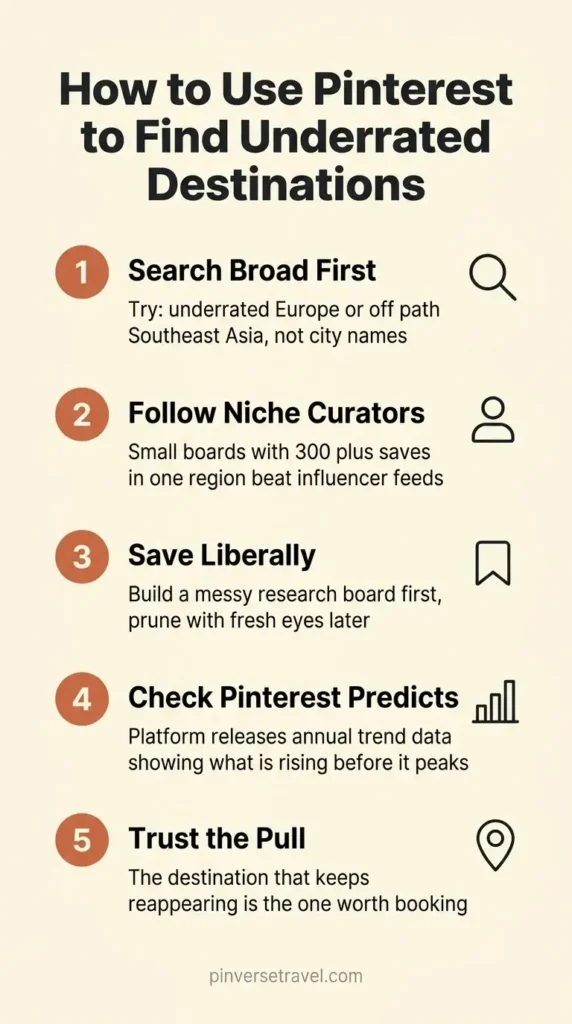
Instead of searching “Paris travel,” try searches like “underrated European cities,” “solo travel Balkans,” or “off the beaten path Southeast Asia.” The specificity of your search shapes the specificity of your results, and broad discovery searches pull up pins that algorithm-heavy platforms would never surface.
Follow the boards of travelers who clearly live for this, not influencers with hundreds of thousands of followers, but smaller, more obsessive curators whose boards are 300 pins deep into a single region. Their saves are where the real finds live.
Save liberally first. Prune later. Build a research board that is messy and generous, then go back through it a week later with fresh eyes and a sharper question: which of these places genuinely pulls at something in me?
That pull is important. Underrated does not mean arbitrary. The best trips I have taken, and the ones I most consistently hear solo travelers describe as life-changing, were the ones where the destination felt like a quiet personal discovery. Not a status symbol. Not a performance. Just a place that had something to teach, and the patience to do it.
The most underrated places on Pinterest are not secrets. They are just waiting for the right traveler to notice them. You might be exactly that person.