There is a version of digital nomad life that looks like this: a laptop on a rattan table, a green smoothie, and a paddy field view. Bali. Always Bali. And look, I get it. I have pinned those photos too.
But here is what those photos do not show you: the traffic on the main road in Canggu that makes a short commute a 40-minute ordeal, the co-working spaces at capacity by 9am, and the creeping sense that you have not actually traveled anywhere because everyone around you speaks your language and reads the same newsletters you do.
I spent years chasing the kind of travel that genuinely stretches you. Teaching English in Thailand showed me what it feels like to be a true outsider in a place, to figure things out slowly, to earn your confidence one uncomfortable moment at a time. Backpacking solo across Europe taught me that the best cities are rarely the ones on the front page of a travel magazine. That instinct has held up in my work writing for Pinverse Travel ever since.
So if you are saving nomad content to your Pinterest boards and feeling like you keep seeing the same five destinations recycled endlessly, this article is for you. These are six cities that solo nomads are genuinely moving to right now, each with honest notes on cost, internet, visa reality, and what life there actually feels like day to day.
What “Hidden Gem” Actually Means for a Nomad:
A hidden gem for remote workers is not just somewhere obscure. Obscure with bad internet is just a frustrating vacation. A real nomad gem is a city that is affordable, has reliable enough connectivity to work properly, has a cultural richness that makes non-work hours feel meaningful, and has not yet hit the overcrowding tipping point that tends to inflate prices and dilute the experience. Every city on this list meets that criteria, with full transparency about where each one falls short.
Chiang Mai, Thailand: The Classic That Still Delivers
I know what you are thinking: Chiang Mai is not a hidden gem, everybody knows about Chiang Mai. And you are right that it is well known in nomad circles. But here is what people consistently get wrong about it: they skip it because it sounds mainstream, then they land somewhere less practical and spend two weeks wrestling with a patchy connection wishing they had just gone to Chiang Mai.
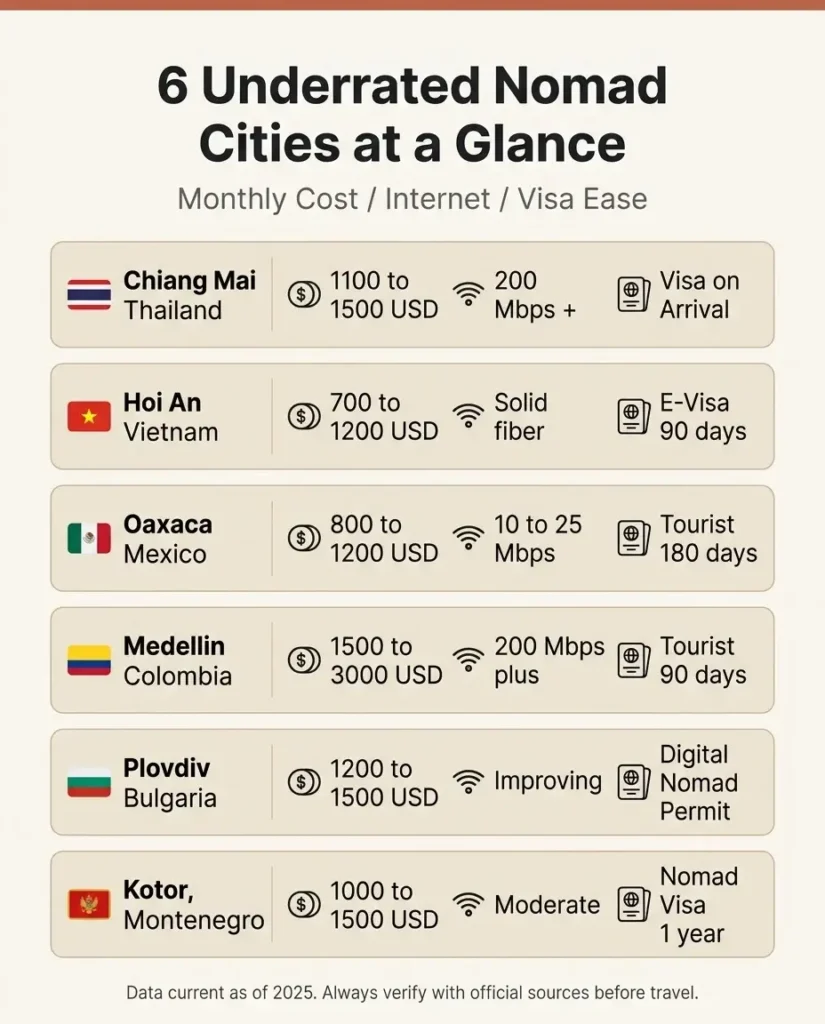
The truth is that Chiang Mai remains one of the most functional nomad cities on earth. Monthly costs for a comfortable lifestyle run roughly $1,100 to $1,500, coworking spaces with speeds regularly exceeding 200 Mbps are spread across the city, and the quality of daily life, including food, wellness, and nature access, is hard to match at that price point. The Nimman area is where most nomads gravitate for its walkability and cafe density, but if you want a quieter base with more local flavor, the area around Santitham is worth exploring.
For cultural immersion, Chiang Mai genuinely rewards slow travel. The Saturday Walking Street on Wualai Road is one of the best food and craft markets in the region, and the Old City temples are the kind of places you can visit multiple times and still find something new.
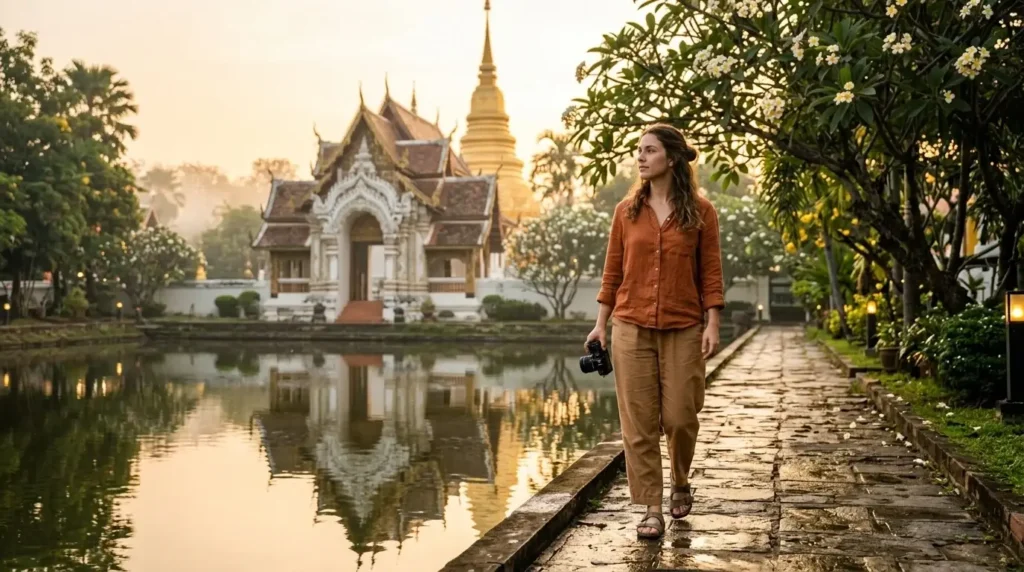
The Tourism Authority of Thailand’s Chiang Mai page is worth bookmarking for current festival dates because timing your stay around Loi Krathong or Yi Peng in November genuinely transforms the experience.
On the visa side, most nationalities receive a 30-day tourist visa on arrival, which is extendable to 60 days at an immigration office, or you can apply in advance for a 60-day tourist visa before you travel. For longer stays, Thailand’s Long-Term Resident (LTR) visa is an option for those who qualify. The digital nomad community here is large and active, which means finding co-working community, freelance referrals, or just people to have dinner with is genuinely easy. The downside: if you are someone who needs to feel like you have discovered something, Chiang Mai’s popularity might undercut that for you. If you can let that go, it rewards you generously.
What to eat: Do not leave without trying khao soi, the northern Thai coconut curry noodle soup that has no real equivalent anywhere else in the country. Find it at a local shop, not a tourist-facing cafe.
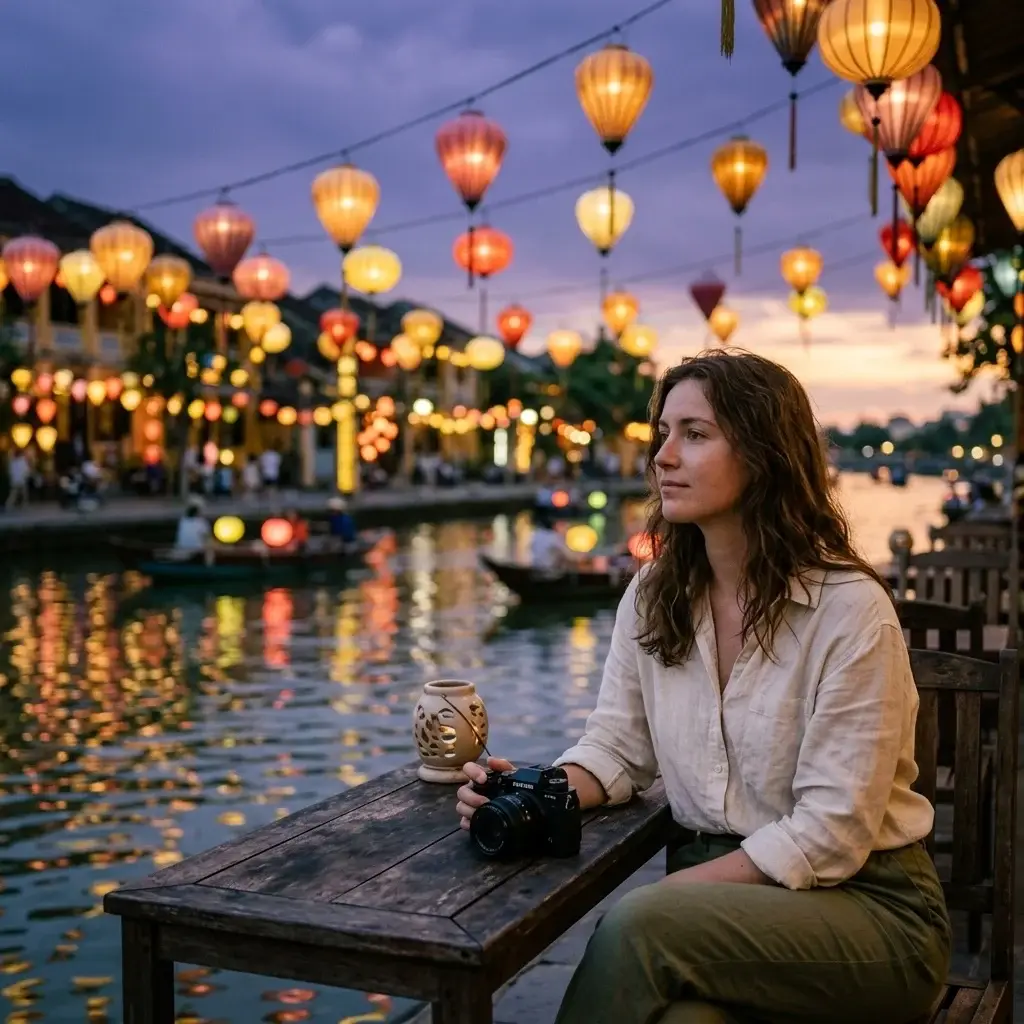
Hoi An, Vietnam: The Lantern-Lit City That Works as a Base
Hoi An is one of those places that looks like a film set and then turns out to be even more beautiful in person. From what solo nomads consistently report, it is the combination of visual charm, affordability, and genuine community that keeps people extending their stays far beyond what they originally planned.
The Hoi An Ancient Town has been a UNESCO World Heritage Site since 1999, recognized for its exceptional preservation of a Southeast Asian trading port spanning the 15th to 19th centuries. Walking through it in the early morning before the tour groups arrive, which typically means before 8am, is reportedly one of those rare travel experiences that lives up to the photographs.
For remote work, the practical picture is this: Hoi An does not have Chiang Mai’s coworking density, but a growing number of cafes and dedicated coworking spaces offer solid fiber connections. Monthly costs for nomads run roughly $700 to $1,200, which makes it one of the most affordable options on this list. The beach area of An Bang, about 4km from the Old Town, is a popular base for nomads who want space and quiet during work hours and easy access to the Old Town for evenings.
For visas, Vietnam offers an e-visa through the official Vietnam e-visa portal that is valid for up to 90 days, with a single-entry option at $25 USD or multiple-entry at $50 USD. US passport holders are eligible. The process is straightforward and takes about 3 business days. One caveat: you cannot renew or extend an e-visa while inside Vietnam, so plan your exit and re-entry if you intend to stay longer than 90 days.
The food scene in Hoi An is genuinely one of its strongest arguments. Cao lau is the dish you need to know, a Hoi An-specific noodle dish that, according to local tradition, can only be made authentically using water from a particular local well. Whether that is folklore or fact, the flavor is unique to this city. The morning market near the Old Town is also worth an early visit, less for shopping and more for experiencing the rhythm of daily local life.
Solo safety note: Hoi An is widely considered one of Vietnam’s safer cities, and solo travelers, including solo women, consistently report feeling comfortable there. The compact layout means you are rarely far from busy streets and familiar faces.
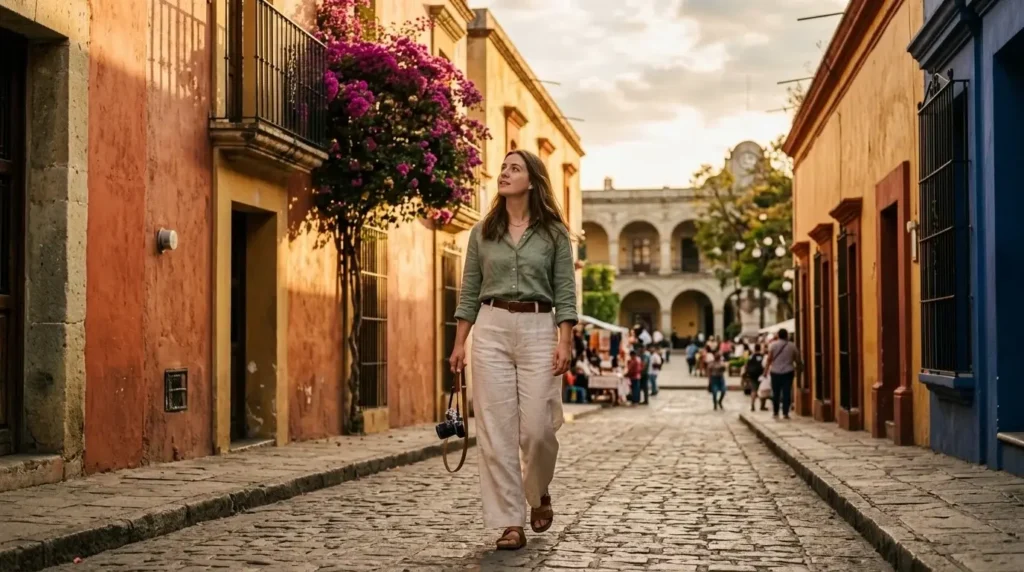
Oaxaca, Mexico: Culture, Craft, and a Creative Community
If you are a creative, a writer, a designer, or anyone who needs their environment to feel alive with inspiration, Oaxaca deserves serious consideration. The city sits at about 1,500 meters elevation in southern Mexico, which gives it a spring-like climate year-round, and its historic centre, jointly listed with Monte Albán as a UNESCO World Heritage Site since 1987, is dense with colonial architecture, indie galleries, mezcal bars, and markets that are the real deal.
Monthly costs for digital nomads in Oaxaca typically land between $800 and $1,200, which is remarkably low for the quality of life you get. Coworking spaces have expanded over the past few years, and reliable fiber internet is increasingly available in apartments and shared work spaces in the city center and the Jalatlaco neighborhood. Internet speeds in cafes average 10 to 25 Mbps, which is workable for most remote roles but may be a consideration if you routinely do large file transfers or high-bandwidth video calls. A dedicated coworking membership is a smart investment here.
US citizens and most Western passport holders do not need a visa for Mexico and can stay up to 180 days as a tourist. This makes Mexico one of the most accessible options on this list for North American nomads specifically.
What makes Oaxaca different from other affordable nomad cities is the depth of its cultural life. The mezcal culture alone is worth exploring properly, not just as a drinking activity but as a window into indigenous craft traditions and agricultural heritage. Visiting a palenque (a small-scale traditional mezcal producer) outside the city connects you to something that has nothing to do with Instagram content and everything to do with genuine cultural curiosity. The Zócalo (main square) and the Mercado 20 de Noviembre are perfect places to spend a slow afternoon doing what I believe every nomad should do more of: watching a city be itself.
What to eat: Tlayudas are Oaxaca’s unofficial civic dish: large, crispy tortillas layered with black bean paste, Oaxacan cheese, and your choice of meat or vegetables. Order one from a street vendor for under a dollar and you will understand immediately why people extend their stays here.
Medellin, Colombia: The City That Rewrote Its Story
Medellin is not a secret anymore, but it is still underused by nomads who have absorbed outdated perceptions about Colombia and never updated them. The reality in 2025 is that Medellin is one of the most genuinely livable cities in South America, with excellent infrastructure, a warm climate that earns its nickname “the City of Eternal Spring,” and a creative energy that is hard to describe without sounding like a brochure.
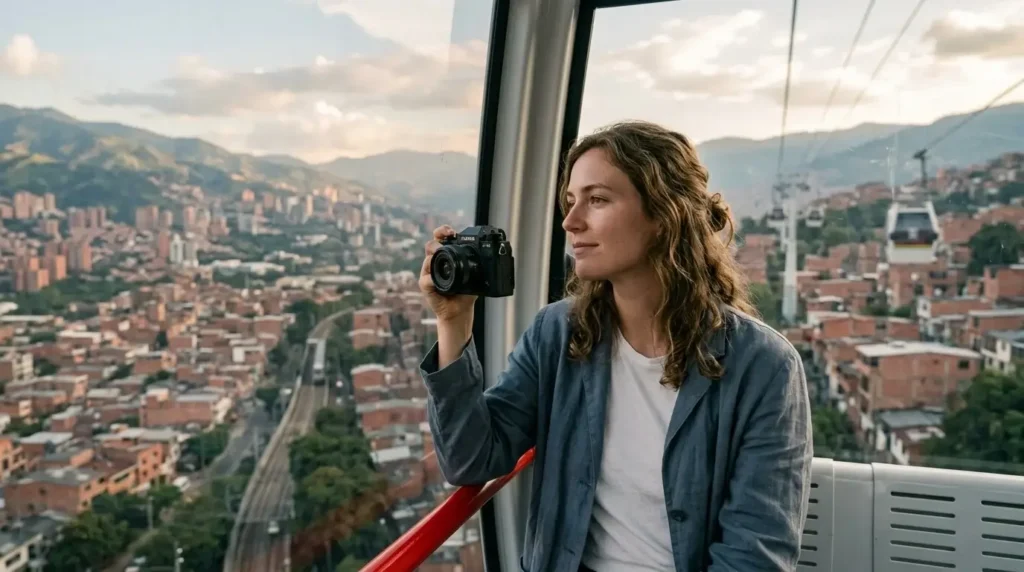
The official Colombia Tourism site’s Medellin page frames it well: it is a city where culture, nature, and innovation share space in a way that feels genuinely earned rather than manufactured for visitors. The MetroCable system, which connects hillside neighborhoods to the metro, is both a practical transit tool and one of the most striking urban views in Latin America.
Monthly costs for a comfortable digital nomad life run $1,500 to $3,000, with the higher end reflecting more central neighborhoods like El Poblado. The Laureles and Envigado neighborhoods offer a noticeably more local feel at a lower price point. Internet is excellent: major coworking spaces and apartments regularly hit 200+ Mbps on fiber. The coworking scene in Medellin is mature and well-organized, with options ranging from budget-friendly shared spaces to premium full-service offices.
US citizens do not need a visa for Colombia for stays under 90 days, which is renewable for a total of 180 days per calendar year. There is no formal digital nomad visa, but the tourist entry rules are among the most flexible in the region for North American and European passport holders.
The honest caveat: El Poblado can feel like a bubble. It is comfortable and convenient, but it can also insulate you from the actual city. If you are serious about cultural immersion, spending time in Laureles or taking a free walking tour of the real neighborhoods, including a responsible visit to the famous street art of Comuna 13, shifts the experience significantly. The Metrocable ride up to Parque Arvi is one of those afternoon excursions that reminds you why you chose this lifestyle in the first place.
What to eat: Bandeja paisa is the city’s famous heavy plate: beans, rice, chicharron, chorizo, avocado, plantain, and a fried egg all in one tray. Order it for lunch when you have an afternoon of work ahead, not a meeting.
Plovdiv, Bulgaria: Europe on a Budget That Actually Works
Bulgaria does not come up in enough nomad conversations, and that is genuinely puzzling to me given what it offers. Plovdiv, Bulgaria’s second city, is compact, walkable, and has a creative quarter in its old town that gives it a character entirely its own. And as of late 2025, it has become considerably more accessible to long-term remote workers.
Bulgaria launched a formal Digital Nomad Residence Permit in December 2025, with applications open from December 20, 2025 onward. According to immigration lawyers at New Balkans Law Office, the permit runs for one year and requires proof of income averaging at least €31,000 annually (roughly €2,583/month), valid health insurance, accommodation in Bulgaria, and a criminal record certificate. For EU citizens, of course, the process is even more straightforward.
Monthly costs for a nomad living comfortably in Plovdiv are typically around $1,200 to $1,500, which is remarkably low for a European city with genuine cultural richness. The old town’s Roman and Ottoman-era architecture sits alongside independent galleries and a small but real coworking scene. Internet infrastructure has improved considerably in recent years, particularly in city-center apartments.
What makes Plovdiv particularly interesting for nomads who care about authentic cultural experience is how unhurried it feels compared to Sofia. The Kapana district, a compact creative neighborhood, has cafes and small galleries that feel like local institutions rather than nomad infrastructure. The Roman amphitheater in the old town, one of the best-preserved in the world, is visible from cafes where you might sit and work on a laptop. That combination of deep history and ordinary daily life is the kind of thing that is hard to put a price on.
Solo note: Bulgaria is generally considered safe and English is spoken reasonably well by younger residents, particularly in Plovdiv’s Kapana area. Solo travelers report feeling comfortable there with standard city awareness.
Kotor, Montenegro: The Adriatic Surprise
Montenegro tends to get lumped into the “vague European option” category, but Kotor specifically is worth your attention if you want a stunning natural setting without the price tag of more established Adriatic destinations. The walled old city sits at the foot of dramatic limestone mountains at the edge of a bay that looks genuinely implausible, like a fjord that ended up in the Mediterranean.
For digital nomads, Montenegro’s digital nomad visa requires proof of income of approximately €1,350 to €2,010 per month (requirements updated in 2025) and is valid for one year. Monthly cost of living in Kotor typically runs €1,000 to €1,500, which feels fair for the lifestyle quality, especially considering the access to both Adriatic coastline and mountain hiking within a short drive.
The honest note on internet: it is workable in most parts of Kotor and Tivat, but it is not uniformly excellent. Coworking infrastructure is smaller than in Medellin or Chiang Mai, and you may find yourself doing some legwork to identify the cafes with truly reliable connections. A few dedicated coworking spaces have opened in Tivat in recent years, which is a short drive from Kotor and has a slightly more infrastructure-friendly setup for remote workers.
What Kotor offers that none of the other cities on this list can match is a particular kind of visual intensity: walking the city walls at sunset, kayaking the bay in the morning before your work day, and sitting with a coffee in a square that has been a meeting point since the medieval period. From what nomads consistently report, it is a city that changes your relationship to your working day because the environment around it demands that you look up.
What to eat: Fresh seafood is the obvious answer, but the local pasta dish kacamak, a polenta-based comfort food served with cheese and sour cream, is worth trying as a reflection of the inland Montenegrin food culture that is less visible in tourist areas.
How to Actually Choose Between These Cities
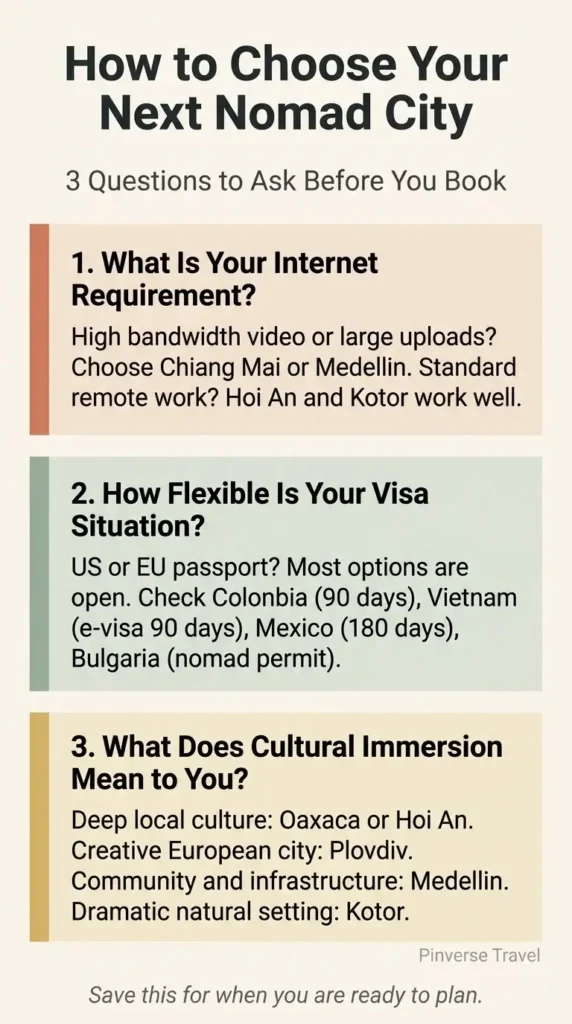
Here is a framework I find useful when helping readers think through this decision. Ask yourself three questions before booking:
First, what is your internet requirement? If your work demands constant high-bandwidth video or large uploads, Chiang Mai and Medellin are your safest bets. Hoi An and Kotor are solid but need a bit more vetting on arrival.
Second, what is your visa flexibility? If you hold a US or EU passport, almost every city on this list is accessible without complex paperwork. If you hold a passport with more restrictions, Oaxaca (Mexico tourist rules), Vietnam (e-visa system), and Thailand are among the most straightforward entry points.
Third, what does cultural immersion mean to you personally? If you want to feel genuinely embedded in local life, Oaxaca and Hoi An offer the deepest cultural texture. If you want a creative European city that feels alive, Plovdiv. If you want community and infrastructure first, Medellin. If you want extraordinary natural beauty while you work, Kotor.
You can research city-level data across all of these destinations on Nomad List, which aggregates cost of living, internet speed ratings, safety scores, and community feedback across 1,500+ cities from real nomads on the ground.
There is no perfect nomad city. What there is, for each of these destinations, is a genuine combination of possibility and real life that will stretch you in ways a packaged resort never will.
And if my time teaching English in Thailand taught me one thing, it is that the stretching is exactly the point.
The cities nobody is talking about yet have a short shelf life. Every “hidden gem” eventually becomes the next Bali. The window is open now.