I think about this a lot: the Americas are so enormous, so layered with culture, geography, and history, that narrowing down what to actually do here feels almost impossible. And yet, so much travel content about this region keeps circling the same handful of places and framing them as “must-sees” without ever stopping to explain why they are worth your actual, limited time.
I want to do something different here. This is not a rundown of famous landmarks. It is a guide to experiences that are genuinely unlike anything else on the planet, experiences that will leave you changed in some small but lasting way, not just with a good photo. Some of these are well-known. Some are less talked about. All of them deserve far more than a bullet point.
I’ll be honest with you upfront: I haven’t personally stood inside every one of these places. But after years of traveling solo, researching destinations obsessively before every trip, and talking with travelers who have done these things, I know what separates a real experience from a tourist checkbox. I’ll share what solo travelers consistently report, what the logistics actually look like, and what to expect so you go in prepared rather than surprised.
Let’s go through them.
Antelope Canyon, Arizona, USA: Walking Into a Living Sculpture
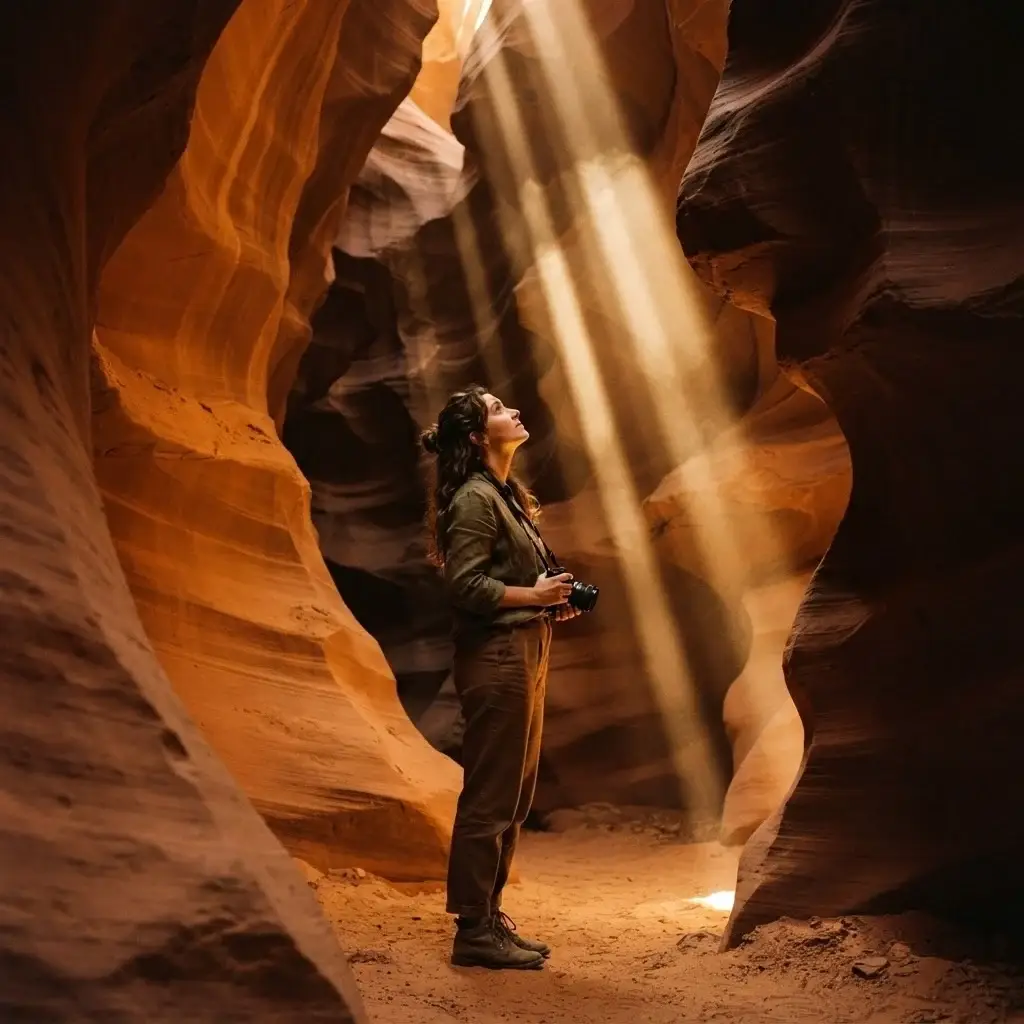
There is almost no way to prepare yourself for the first time you step into Upper Antelope Canyon. From the outside, it looks like a crack in the desert floor. And then you descend into it and realize you are standing inside a wave of sandstone that has been carved over millions of years by water and wind into something that looks like it should only exist in a painting.
The light beams that drop through the narrow openings in the rock shift and change by the minute.
Some people describe it as the most surreal thing they have ever seen in nature. I believe them.
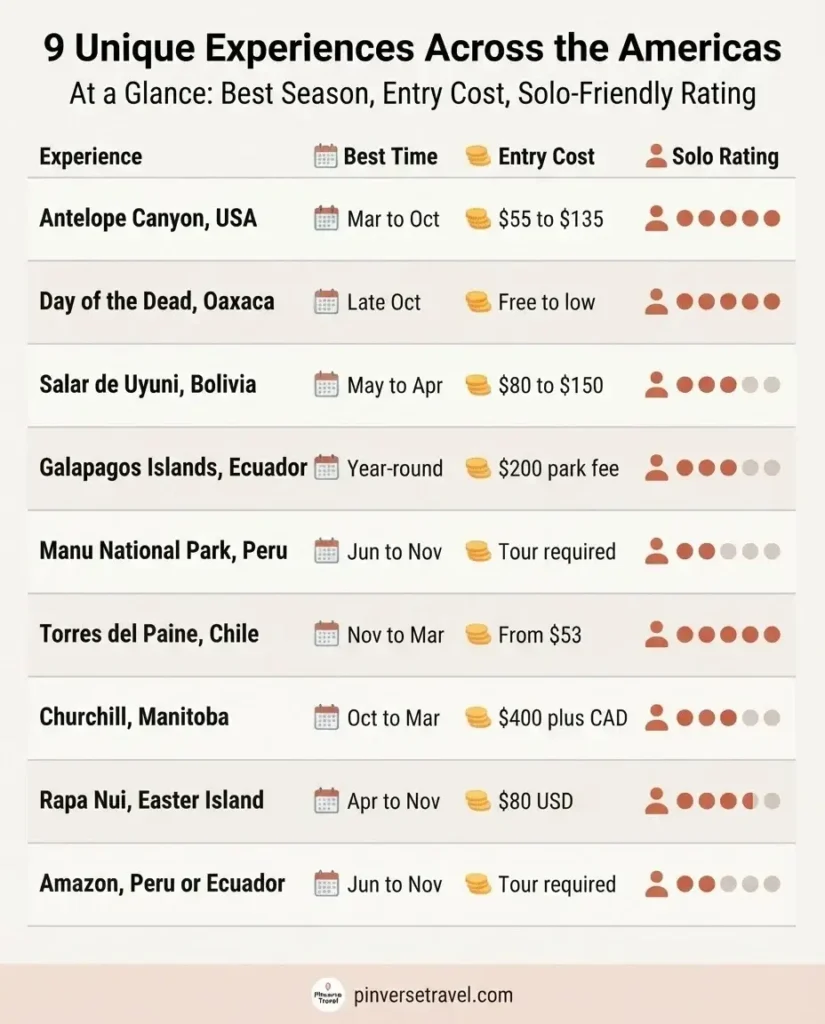
What makes this experience stand out beyond the visuals is the cultural dimension. Antelope Canyon is located within the Navajo Nation and is a sacred site. You cannot visit on your own. Every tour is led by Navajo Nation guides, which means you are not just walking through a geological wonder, you are being welcomed into land that holds deep spiritual meaning for the people who have cared for it for generations. The Navajo Nation Parks and Recreation official site lists all authorized tour operators, with a mandatory park entry fee of $15 per person per day on top of the guided tour cost. Expect to pay roughly $55 to $135 total depending on the operator and tour type.
A few practical things worth knowing: Upper Antelope Canyon is the most visited and where you’ll see the famous light beams, which appear most dramatically between late March and early October around midday. Lower Antelope Canyon is less crowded and equally stunning, with more twisting passages to navigate. Book well in advance during peak season, especially if you want a photography-specific tour with more time inside the canyon.
For solo travelers, this is completely manageable and actually ideal. Small groups make it more intimate, your guide will point out shapes and formations you’d never notice on your own, and the whole experience takes about 90 minutes to two hours.
Day of the Dead in Oaxaca, Mexico: A Festival That Reframes Everything
I want to push back on a common misconception before we go any further: Day of the Dead in Oaxaca is not a spectacle to watch. It is a living cultural practice that you are being invited to witness and, when done respectfully, participate in at its edges.
For travelers who want authentic cultural immersion more than they want a staged performance, this is one of the most meaningful things you can do in the entire Americas.
The celebration is rooted in Indigenous Zapotec tradition and runs officially from October 31 to November 2, though Oaxaca’s broader festival programming typically begins around October 25, with more than 140 community and cultural events spread across the region. The UNESCO Intangible Cultural Heritage program recognized this tradition as part of humanity’s living cultural heritage in 2003, a designation that reflects just how ancient and layered this practice is.
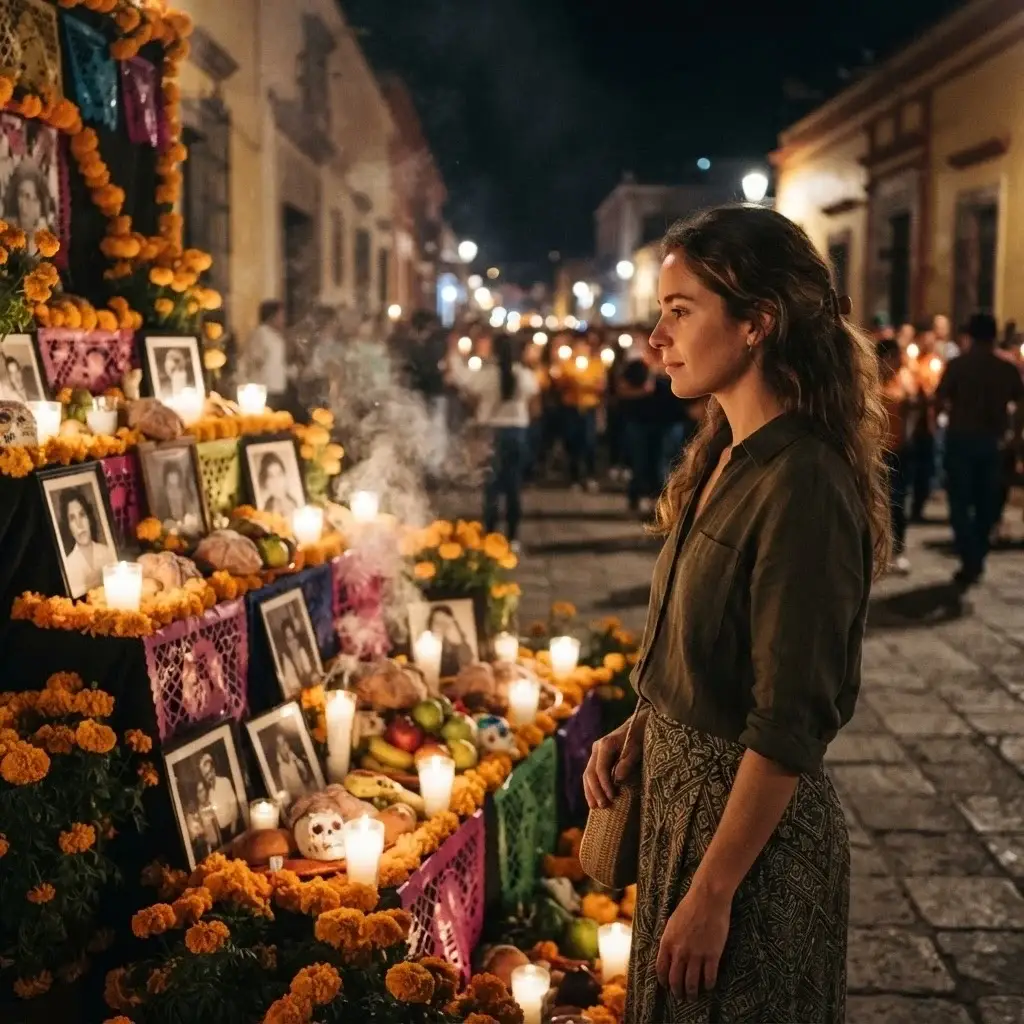
What you will see, if you go thoughtfully: marigold-covered altars called ofrendas placed outside family homes and in the cemetery to guide deceased relatives home. Families gather at graves overnight with candles, food, photos, and flowers. There is music, mezcal, and quiet conversation. The mood is tender and celebratory in equal measure. Grief and love existing in the same space without contradiction.
Oaxaca City itself during this time is extraordinary. The markets overflow with cempasúchil (marigold) garlands, pan de muerto, and sugar skulls. The streets fill with candlelight parades. The city’s famous mole negro, tlayudas, and chocolate atole are everywhere, and eating well here requires almost no effort at all.
Just follow your nose into any comedor on the side streets rather than the tourist-facing restaurants on the zócalo.
Practically: book accommodation three to six months in advance. Prices spike. The nights in the cemetery at San Pablo Villa de Mitla or Xoxocotlán are the most moving, and joining a locally led walking tour rather than a large group tour gives you access to context you cannot find in a guidebook.
Salar de Uyuni, Bolivia: The World’s Largest Mirror
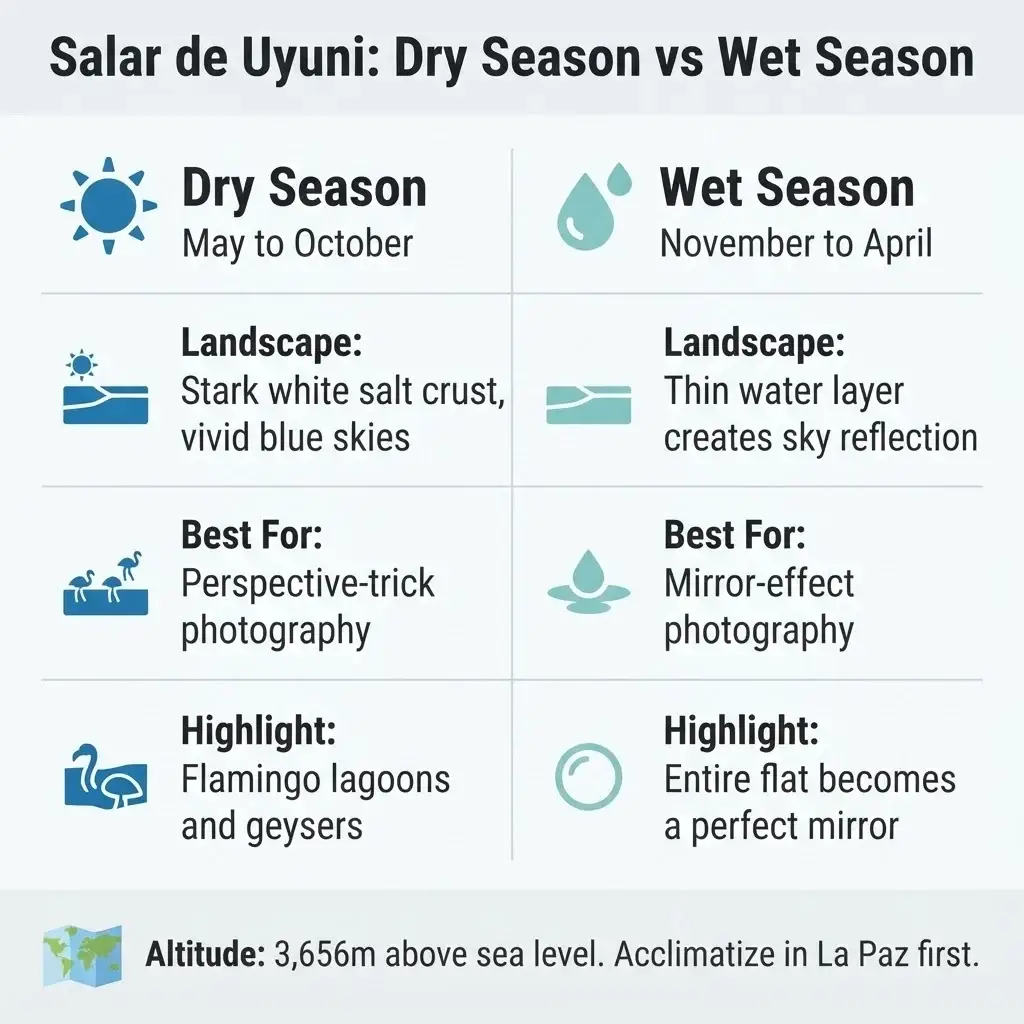
The Bolivian salt flats are in a category of their own when it comes to landscapes that genuinely defy description. Salar de Uyuni sits at over 3,600 meters above sea level in the southwest of Bolivia and covers more than 10,000 square kilometers. It is the world’s largest salt flat, and when it rains, a thin sheet of water turns the entire surface into a perfect reflection of the sky. There is nothing else like it on Earth.
What solo travelers consistently report about Uyuni is that it exceeds expectations in a way very few destinations do. The dry season (May through October) gives you that stark white expanse with dazzling blue skies and the iconic perspective-trick photos. The wet season (roughly November through April) brings the reflection effect, and many travelers argue it is even more extraordinary. You essentially have two entirely different experiences available depending on when you go.
Standard 3-day tours from the town of Uyuni currently start around $80 USD per person in a group of four, reaching $150+ for smaller or private arrangements. These tours take you not just across the flats but through the surrounding altiplano: to flamingo-filled lagoons that glow in shades of red and green from mineral deposits, to steaming geysers at 5,000 meters elevation, and to geothermal pools where you can soak at sunrise. It is one of the most logistically compact “big” experiences in South America.
Altitude is the main thing to take seriously. Spend at least two days acclimatizing in La Paz or Sucre before heading to the flats. Headaches, nausea, and fatigue are real possibilities if you skip this step. Bring layers, real layers, because temperatures drop sharply at night even if it feels warm during the day.
The Galapagos Islands, Ecuador: Wildlife That Has Forgotten to Be Afraid
The Galapagos is the only place I know of where wildlife has no learned fear of humans. You can sit down on a beach and have a sea lion push its nose against your arm. You can snorkel alongside green sea turtles in the shallows. Marine iguanas ignore you completely as they bask on lava rocks three feet away. Blue-footed boobies perform their courtship dances while you stand watching, unbothered.
This is not the result of animals being habituated to tourism. It is the result of centuries of isolation from human predators and a strict conservation framework that has kept that relationship intact. The Galapagos Conservancy’s trip planning resource is the most useful starting point for understanding how access works and how to visit in a way that supports rather than harms this extraordinary ecosystem.
Practically: the national park entrance fee is $200 USD per adult international visitor, paid in cash on arrival. You must fly into either Baltra or San Cristóbal Island from mainland Ecuador (Quito or Guayaquil), and flights typically run $150 to $400 round trip depending on the season and how far in advance you book. Independent travel to the Galapagos is possible if you organize island-hopping between the inhabited islands, but many visitors opt for a liveaboard cruise to reach more remote areas and wildlife sites that day-trip boats can’t access.
The best time to visit depends entirely on what you prioritize. June through November brings colder, drier conditions and fantastic snorkeling with whale sharks and schools of hammerhead sharks. December through May is warmer and calmer, with baby sea lions and nesting birds. There is genuinely no bad time here.
For solo travelers, liveaboard trips are one of the best ways to meet interesting people while also having a completely immersive experience. Group sizes on reputable vessels are small, usually 12 to 20 people, and the shared itinerary creates a natural community very quickly.
Manu National Park, Peru: The Most Biodiverse Place on Earth
Most people who visit Peru go to Machu Picchu. And Machu Picchu is extraordinary. But if you have the time and patience for a slightly harder journey, Manu National Park in the southeastern Amazon basin will give you something that no ruined citadel can: genuine wilderness, intact and humming with life, in a way that makes you feel like a visitor in the world as it existed before cities.
Manu is a UNESCO World Heritage Site and Biosphere Reserve, widely recognized as one of the most biodiverse protected areas on the planet. The UNESCO World Heritage listing describes it as containing one of the highest concentrations of bird, mammal, and plant species recorded anywhere on Earth. More than 1,000 bird species have been identified in the park. Giant river otters, tapirs, jaguars, and multiple species of macaws share the same river systems. It is the kind of place that reminds you that ecosystems this complex and ancient existed long before we did and should exist long after.
Access is strictly controlled through SERNANP, Peru’s national parks authority, and you must enter with a licensed tour operator. This is not a destination for spontaneous visits. Multi-day lodge-based trips departing from Cusco or Puerto Maldonado are the standard format, and the best ones take you into the cultural zone and reserved zone with Amerindian communities, oxbow lakes, and clay licks where hundreds of parrots gather at dawn. Budget at least 4 to 7 days. Operators with SERNANP authorization are the only ones permitted into the core zones.
For solo travelers, this is one of those places where you are genuinely better off booking a small-group tour rather than trying to navigate it independently. The logistics are complex, the terrain is remote, and a knowledgeable guide transforms what you see and understand exponentially.
Torres del Paine, Chilean Patagonia: Wild on a Scale That Feels Personal
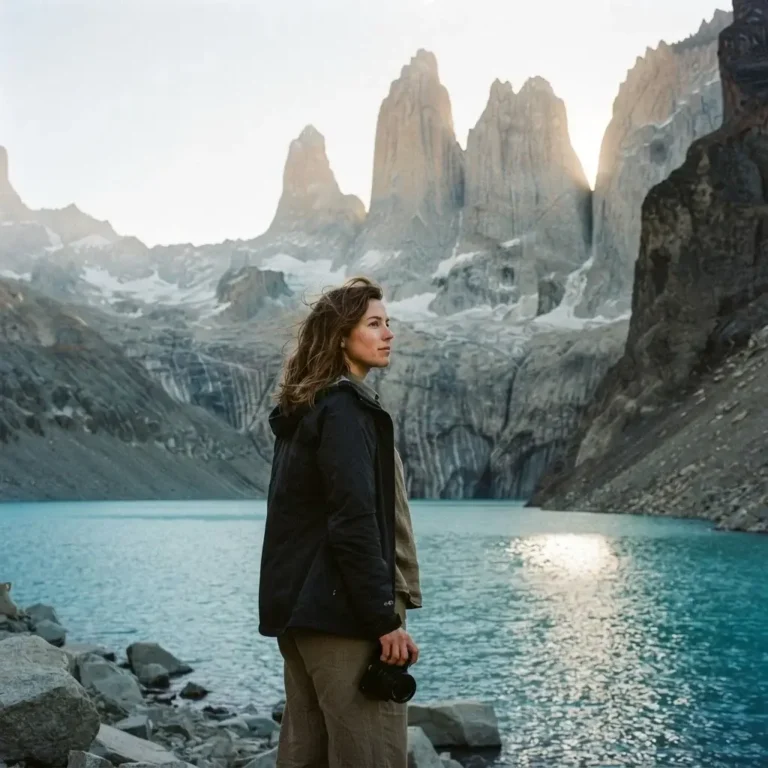
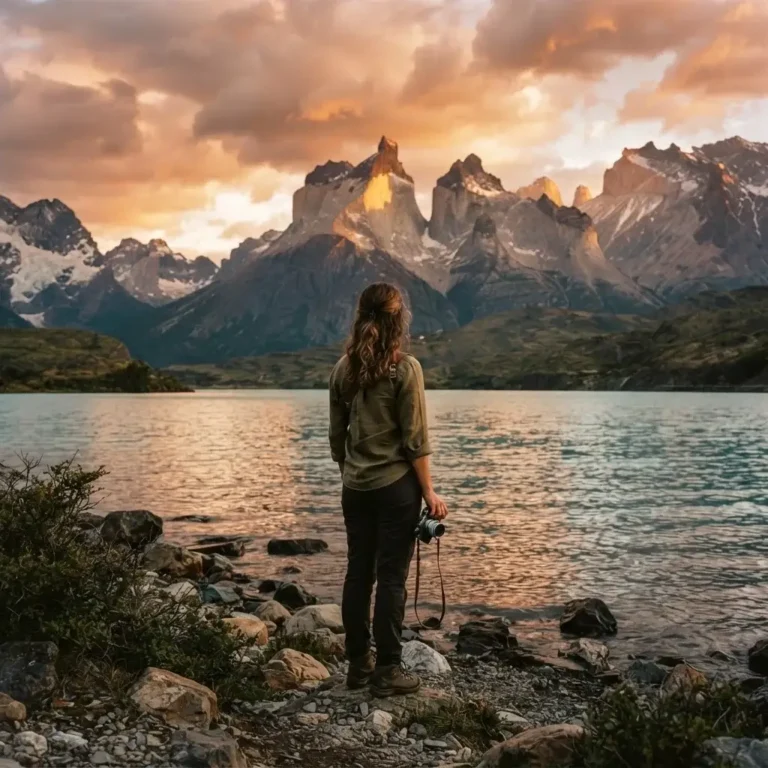
There is a specific kind of silence in Patagonia that I have not encountered anywhere else. Solo travelers who have done the W Trek or the full O Circuit in Torres del Paine describe it consistently: you are surrounded by some of the most dramatic scenery on Earth, granite towers, blue glaciers, turquoise lakes, howling wind, and yet the scale of it never makes you feel small. It makes you feel alive.
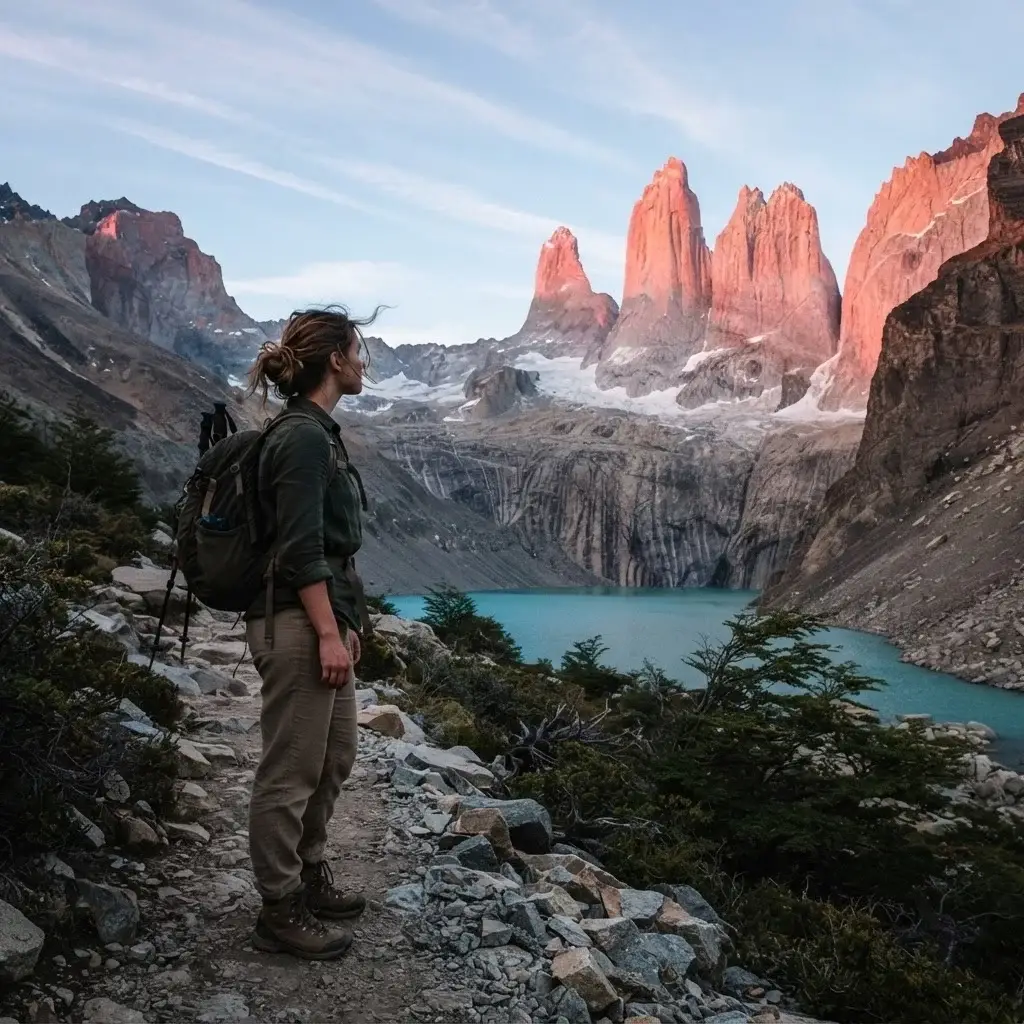
Torres del Paine National Park in southern Chile is one of the few places where a challenging multi-day trek is entirely achievable for someone with moderate fitness and no technical climbing experience. The W Trek, which covers the most iconic viewpoints across roughly 4 to 5 days, is the most accessible option. The full O Circuit takes 8 to 10 days and rewards you with sections of the park that very few people ever reach.
Entry tickets must be purchased in advance through Chile’s official parks portal (pasesparques.cl), operated by CONAF. Multi-day tickets for foreign adults currently start around $53 USD. Huts and camping on the circuit must also be pre-booked through the concessionnaire Las Torres, and the most popular trekking season (November through March) fills up months in advance.
The Base Las Torres viewpoint, which gives you the face-to-face view of the three iconic granite pillars, requires a predawn hike of about 4 to 5 hours from the trailhead. Most people start at 5 am to catch sunrise. It is physically demanding. It is also absolutely worth it.
For solo trekkers, the refugios along the route mean you are never truly isolated, and the international mix of hikers creates an easy, warm community on the trail. Patagonia rewards people who are willing to be patient with the weather and flexible with their expectations. It can be sunny, rainy, and windy all in the same afternoon.
Churchill, Manitoba, Canada: Where the Arctic Meets You
Most travelers think you have to go to Norway or Iceland to see the northern lights. Churchill, Manitoba, sitting on the western shore of Hudson Bay, is one of the best places on the planet to see them, and it offers something else entirely alongside them: wild polar bears on the tundra.
These are two completely different seasons. Polar bears gather along the coast from mid-October through mid-November, waiting for Hudson Bay to freeze so they can head out onto the ice to hunt. The town of Churchill has built an entire ethical wildlife-viewing infrastructure around this, with tundra buggies that take you out to observe the bears at close range from a safe, respectful distance. Travel Manitoba’s official Churchill page covers both the bear season and the northern lights season in detail.
The aurora season peaks in January, February, and March, when the nights are long and Churchill’s position beneath the auroral oval means lights are often visible even during moderate solar activity. Viewing lodges and purpose-built aurora domes make this genuinely accessible even in bitter cold.
Getting to Churchill is part of the adventure. There is no road. You fly into Winnipeg and then take a small regional flight, or, for the most memorable arrival possible, you board VIA Rail’s Hudson Bay train, which runs from Winnipeg through two days of boreal forest and sub-Arctic tundra before arriving at the shore of Hudson Bay. Solo travelers who have made this journey describe the train ride as one of the most unexpectedly meditative experiences of their lives.
This is not a budget destination. Guided polar bear tundra buggy tours typically run $400 to $600 CAD per day, and all-inclusive packages for multi-night stays are the most common way to visit. But it is one of those places where the cost reflects a genuinely rare encounter with the natural world.
Rapa Nui (Easter Island), Chile: Standing in Front of Something You Cannot Explain
Easter Island is the most remote inhabited island on Earth. It sits in the middle of the Pacific Ocean, 3,700 kilometers west of mainland Chile and nearly as far from the nearest Polynesian island. The closest major city is over five hours away by plane. And on this tiny volcanic island, an ancient Polynesian civilization carved and transported nearly 1,000 monumental stone figures called moai, some weighing over 80 tonnes, with no written record of how or a complete explanation of why.
Standing in front of the moai at Ahu Tongariki at sunrise, with fifteen of them lined up against an early sky, is genuinely one of the most affecting things available to a traveler in the entire Americas.
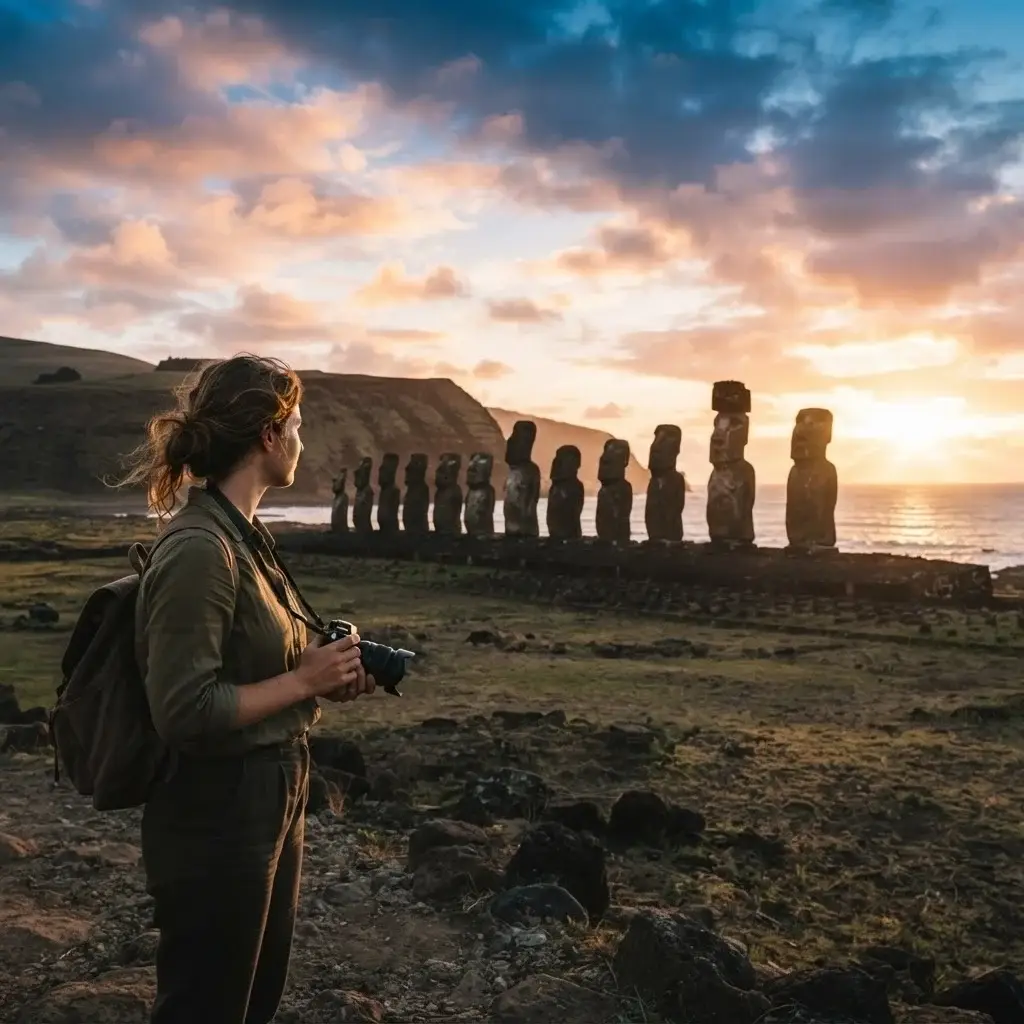
It is not just the scale. It is the mystery, the isolation, and the knowledge that you are looking at something humans created with tools and determination that we still do not fully understand.
The island is managed by the Ma’u Henua Indigenous community, and visiting the Rapa Nui National Park requires an entry ticket ($80 USD for international adults) plus a mandatory accredited guide for entry. This is not a bureaucratic inconvenience. Guides here are local Rapa Nui people who provide cultural context you cannot get from a sign or a guidebook. The island is small, the sites are scattered, and renting a car or scooter lets you move between them at your own pace.
The best time to visit is April through November, outside of the southern hemisphere summer peak in January and February when crowds and prices both spike. Flights go through Santiago, Chile, with LATAM operating the only regular route to the island.
Rapa Nui will feel like one of those places where the journey itself is part of the experience. The remoteness is not a barrier. It is the point.
The Amazon Rainforest, Peru or Ecuador: The Most Alive Place on Earth
The Amazon is not one place. It is a living system covering nine countries and billions of interconnected species, and how you experience it depends almost entirely on where you enter and who takes you in.
From what solo travelers consistently report, the Peruvian Amazon around Manu and the Pacaya-Samiria National Reserve offers some of the most wildlife-rich encounters available, with sightings of pink river dolphins, giant river otters, and hundreds of bird species on multi-day river expeditions. The Ecuadorian Amazon, particularly the Napo River corridor south of Tena, is generally quieter and a strong option for community-based tourism, where you stay with and learn from local Indigenous communities rather than in a lodge that simply happens to be near the trees.
What makes the Amazon genuinely unlike anything else in the Americas is this: no amount of nature documentary has fully captured what it feels like to be inside it. The humidity, the sound layers at different times of day, the way light filters through a canopy so dense it creates its own interior sky, the sense that the forest is monitoring you rather than the other way around. It is simultaneously overwhelming and calming in a way that makes very little rational sense.
Timing matters here. The “high water” season from December through May raises river levels and makes canoe travel deeper into flooded forest areas possible. The “low water” season from June through November exposes riverbanks and makes wildlife spotting generally easier. Neither is wrong. They are just different.
For first-time visitors, choosing an operator that works with local Indigenous guides rather than international tourism companies keeps money in the communities that actually know and protect the forest best.
A Note Before You Go
If there is one thing that years of travel and a lot of planning have taught me, it is that the experiences that seem most intimidating in the research phase are almost always the ones that end up meaning the most. The salt flats feel unreachable until you look up the bus schedule. Easter Island feels impossibly far until you check flights from Santiago and realize it is a five-hour hop. Churchill feels like somewhere other, more adventurous people go, until you realize it is a domestic flight from Winnipeg.
None of these experiences require you to be a seasoned explorer. They require you to decide that your time is worth spending on something real.
The Americas are enormous, varied, and generous with what they offer to travelers who show up with curiosity and respect. Pick one. Start there. The rest has a way of following.