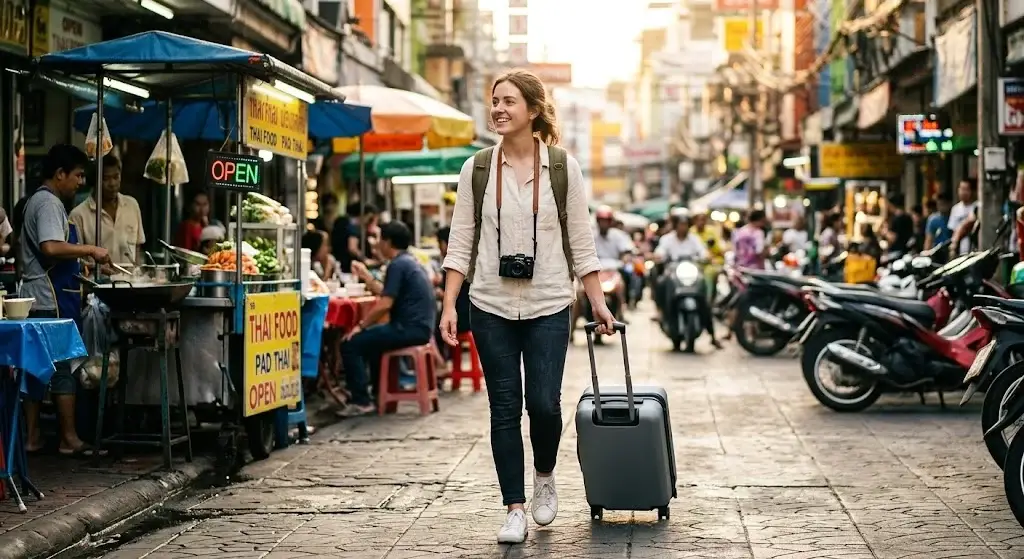
There is a specific moment that every solo traveler remembers. For me, it happened on a muggy afternoon in Bangkok. I had just stepped off a crowded public bus, my shoulders aching under the weight of a massive, overpacked suitcase that I had to drag over broken pavement and through a maze of street food stalls. As the smell of sizzling lemongrass and grilled pork wafted through the air, I wasn’t looking at the beautiful temples. I was sweating, exhausted, and completely trapped by my own stuff.
That was the day I realized a big truth: when you carry too much, your luggage owns you. You become a target for scams, you tire out quickly, and you miss the tiny, beautiful moments that make travel so special.
When I left my traditional office job in New York to travel the world full-time, I thought I needed to pack for every possible disaster. But my time working as a certified sightseeing guide in NYC taught me that the most confident travelers are always the lightest on their feet. Today, whether I am navigating the subway stairs in Manhattan or catching a budget flight across Europe, I use one piece of compact gear.
Finding the best lightweight carry-on luggage is the ultimate secret to independent travel. It saves you money on airline fees, keeps your belongings safe, and gives you the freedom to say “yes” to unexpected adventures. Let’s dive deep into how to choose the perfect bag for your journey, how to test it, and how to pack it like a pro.
Why Lightweight Bags Matter for Solo Adventurers
When you travel alone, you do not have a partner to watch your bags while you run to the bathroom or buy a train ticket. You are entirely self-reliant. If your bag is too heavy to lift over your head or roll down a gravel path, you lose your independence.
Skipping Hidden Airline Fees and Gate Disasters
Budget airlines around the world have gotten incredibly strict about baggage sizes and weights. Carriers in Europe and Asia often limit carry-on bags to just 7 kilograms (about 15 pounds). If your empty suitcase already weighs 9 or 10 pounds, you have almost no room left for your actual clothes and gear.
When you exceed these limits, airlines force you to check your bag at the gate, which can cost upwards of $50 to $100 per flight. Even worse, your bag goes into the cargo hold, increasing the risk of it getting lost or delayed. A true lightweight carry-on usually weighs between 4 and 6 pounds when empty, giving you the maximum possible weight allowance for your personal items.
Protecting Your Physical Health on the Road
Lugging a heavy suitcase up five flights of stairs in an old Parisian hotel with no elevator is a recipe for a pulled back muscle. Independent travel requires stamina. When you switch to a featherweight bag, you reduce the strain on your neck, shoulders, and lower back. You can walk for an extra mile to find your guesthouse without feeling like you just ran a marathon.
Softside vs. Hardside: The Ultimate Independent Travel Debate
One of the biggest choices you will make when searching for the best lightweight carry-on luggage is deciding between a soft fabric bag and a hard plastic shell. Both styles have distinct advantages depending on how and where you like to explore.
The Case for Softside Carry-Ons
Softside bags are usually made from high-density nylon or polyester fabrics like ballistic nylon or ripstop. They are incredibly resilient and have a natural flexibility that hardside bags lack.
- The Squeeze Factor: If you frequently ride on smaller regional planes or crowded buses, softside bags can be compressed slightly to fit into tight overhead bins or under seats.
- External Pockets: As an independent traveler, you need quick access to your travel documents, a light jacket, or your water bottle. Softside bags almost always feature deep exterior pockets that let you grab items without opening the main compartment.
- Impact Resistance: Fabric absorbs shock well. It won’t crack if a bus driver throws it onto the roof of a van or if it bumps against a concrete pillar.
The Case for Hardside Carry-Ons
Modern hardside suitcases are crafted from high-tech materials like polycarbonate or polypropylene. These are not the heavy, brittle suitcases of the past; they are engineered to bend and bounce back under pressure.
- Weather Protection: If you get caught in a sudden torrential downpour while walking to your hostel, a hardside bag keeps your clothes dry. Water slides right off the plastic surface.
- Security: Hardside bags are much harder for thieves to cut open with a pocket knife. They also usually feature built-in, integrated TSA-approved combination locks that secure the zippers directly into the shell.
- Crush Protection: If you are carrying fragile items, souvenirs, or small electronics, a hard shell prevents your belongings from being smashed when other bags are piled on top of yours.
Two Wheels vs. Four Wheels: Navigating Real-World Terrain
Many people buy a suitcase after rolling it across a perfectly smooth carpeted floor in a department store. But real travel happens on cracked sidewalks, cobblestones, dirt roads, and steep hills. The wheel configuration you choose dictates how well you can navigate these spaces.
Two-Wheel Rollers (Inline Skates)
Two-wheel bags use recessed wheels that look like the wheels on rollerblades. You must tilt the bag at an angle to pull it behind you.
[Two-Wheel Design] -> Wheels are tucked into the frame -> Better clearance for rocks and curbs
- Pros: The wheels are recessed into the bag’s frame, meaning they take up less space and are less likely to get snapped off by rough handling. They excel at rolling over historic European cobblestones, gravel, and uneven brick walkways because the larger wheel diameter glides over cracks easily.
- Cons: You carry a small amount of the bag’s weight in your hand as you pull it. In narrow spaces, like the aisle of a train, dragging a bag behind you can cause you to bump into seats or other passengers.
Four-Wheel Spinners
Spinner bags have four wheels that rotate 360 degrees, allowing you to roll the suitcase upright next to you, push it ahead of you, or pull it.
- Pros: They require almost zero effort to move on smooth surfaces like airport terminals or polished train station floors. You can easily glide two spinner bags at once using just one hand.
- Cons: The wheels protrude completely from the bottom of the bag, making them highly vulnerable to breaking if they hit a curb too hard. On hills, a spinner bag will roll away from you if you let go of the handle. They also struggle significantly on rough terrain, where the small wheels can get jammed by small stones or dirt.
Critical Features to Look For in a Lightweight Bag
When you are comparing models to find the best lightweight carry-on luggage, do not just look at the price tag or the color. You need to inspect the internal components and construction methods to ensure the bag can survive years of rugged solo travel.
Telescoping Handle Systems
The handle is the main connection point between you and your luggage. Look for aircraft-grade aluminum handles that lock securely in multiple height positions. Avoid handles that feel loose, wiggly, or rattle excessively when extended. A single-tube handle saves weight, but a double-tube handle provides a sturdier base if you want to slide a personal backpack over the top.
Zipper Strength and Security
A broken zipper in the middle of a trip is an absolute nightmare. Look for luggage that uses self-repairing YKK zippers. These zippers have thick, interlocking teeth that resist bursting open even if you pack the bag tightly. For peace of mind, ensure the zipper pulls have loops that allow you to attach a small padlock.
Internal Compression Systems
To maximize the space inside a compact carry-on, the bag needs an excellent internal organization system. Look for wide, adjustable tie-down straps that help compress your clothing flat. Mesh divider pockets are also highly useful for separating clean clothes from dirty laundry or storing flat items like books and maps.
Top Recommendations for the Best Lightweight Carry-On Luggage
Based on thousands of miles of real-world testing, here are the top lightweight carry-on luggage options that offer the perfect balance of durability, weight, and storage capacity for independent travelers.
| Luggage Model | Empty Weight | Key Material | Best Used For |
| Travelpro Maxlite 5 | 5.4 lbs | DuraGuard Coated Polyester | Budget flights and rough sidewalks |
| July Carry On Light | 3.9 lbs | Polycarbonate Shell | Ultra-minimalist and weight-restricted flights |
| Osprey Ozone 2-Wheel | 4.5 lbs | High-Tenacity Ripstop Nylon | Adventure travel and multi-modal transit |
| Samsonite Freeform | 6.5 lbs | Polypropylene | Travelers needing maximum impact protection |
Detailed Analysis of the Top Picks
1. Travelpro Maxlite 5 Rollaboard (Two-Wheel)
This is a legendary piece of gear among flight crews and frequent solo travelers. Weighing in at just 5.4 pounds, this softside bag maximizes internal space while remaining incredibly light. The DuraGuard coating resists stains and abrasions, which is essential when your bag is being shoved under seats or into bus holds.
The two high-performance inline wheels glide effortlessly over rough city streets. It also features a unique bottom tray design that increases structural stability without adding unnecessary weight, ensuring the bag does not tip over when packed full.
2. July Carry On Light (Four-Wheel Spinner)
If your primary concern is strict weight limits on international airlines, this is a game-changer. At an astonishing 3.9 pounds, it is one of the absolute lightest hardside suitcases on the market today. July achieved this by customizing the polycarbonate shell to be incredibly thin yet chemically reinforced for strength.
The wheels are whisper-quiet and designed to absorb vibrations from the ground. While it lacks external pockets, the interior features a minimalist mesh closure system that keeps your gear perfectly flat and organized.
3. Osprey Ozone Wheeled Carry-On
For the traveler who flips between urban exploring and backcountry adventures, this bag bridges the gap perfectly. Osprey utilizes a high-strength aluminum frame paired with ultralight ripstop nylon fabrics. The oversized wheels offer massive ground clearance, allowing you to roll over mud, grass, cobblestones, and dirt roads without breaking a sweat. It also includes an easily accessible top pocket for liquids and electronic items, making airport security lines completely stress-free.
Step-by-Step Guide: How to Test Your New Luggage at Home
Never take a piece of luggage on an international trip straight out of the box. You need to put it through its paces in a controlled environment to ensure it suits your body type and movement style.
1.Pack to the Maximum Weight Limit:Use real gear.
Fill the suitcase with your actual clothes, shoes, and a laptop until it weighs exactly 15 pounds (7 kg). This simulates the standard international carry-on weight limit.
2.The Staircase Challenge:Test the lift mechanics.
Pick up the packed bag by the top handle and carry it up and down a flight of stairs three times. Check if the handle cuts into your fingers or if the bag bumps awkwardly against your shins.
3.The Unfinished Floor Test:Check the wheels.
Roll the bag across the rougher surfaces of your home, such as a concrete garage floor, a textured rug, or a backyard paved walkway. Listen for loud rattling and feel if the wheels glide or get stuck.
4.The Overhead Bin Simulation:Verify physical capability.
Lift the fully packed bag safely above your head and place it onto a high closet shelf. If you struggle to lift it comfortably at home, you will struggle when boarding a crowded airplane.
Solo Travel Safety: Managing Your Luggage in Public Spaces
When you are out in the world exploring a new destination, your luggage can either be a tool for freedom or a vulnerability that alerts pickpockets to your presence. Managing your gear properly is a vital safety skill.
Keeping Your Eyes on Your Gear
Never leave your suitcase standing behind you while you look up at a flight information screen or order food at a counter. Keep your bag directly in front of you, or loop your leg through the top handle if you are sitting down. In crowded train stations, keep one hand on the telescoping handle at all times.
Navigating Local Transportation Safely
When using public transit in bustling cities, keep your lightweight carry-on between your knees while standing or sitting. If you are traveling through Southeast Asia, using local ride-hailing services can keep you and your luggage safe from taxi scams. I always recommend checking how to use the app by visiting the official guide on how Grab works for travelers to ensure you book an official, tracked ride from the airport straight to your accommodation.
Packing Secrets to Maximize Your Carry-On Space
Choosing the best lightweight carry-on luggage is only half the battle; you also need to know how to pack it efficiently. Overpacking a lightweight bag will strain the seams and ruin its weight-saving advantages.
The Rolling Method vs. Bundling
Do not fold your clothes like you put them away in a bedroom dresser. Folding creates hard creases and traps pockets of air, which wastes valuable space. Instead, use the rolling method. Roll every t-shirt, pair of pants, and undergarment into tight, compact cylinders. This minimizes wrinkles and lets you stack items like firewood inside the bag.
For delicate items like button-down shirts or dresses, use the bundling method, wrapping garments tightly around a central core object like a packing cube filled with socks.
The Magic of Compression Packing Cubes
Compression packing cubes are an essential tool for any minimalist traveler. Unlike standard packing cubes, compression cubes feature a secondary zipper system that expels excess air from the cube once it is packed.
This can reduce the physical volume of your clothing by up to 30 or 40 percent. Dedicate one cube to tops, one to bottoms, and a small one for undergarments. This structure makes unpacking at your destination incredibly fast.
[Standard Packing Cube] -> Zip closed
[Compression Packing Cube] -> Zip closed + Engage secondary compression zipper -> 40% Space Saved
Navigating International Health and Customs Safely
When packing your carry-on, always place your liquids, medications, and first-aid items at the very top of the bag. If security personnel need to inspect your bag, you won’t have to rummage through your clothes. To stay safe from local health risks and know exactly what medical supplies or vaccinations you might need for your destination, it is always wise to review the CDC Travelers’ Health guidelines before you start packing your bags.
Cultural Immersion Through Minimalist Packing
Packing light does not just benefit your physical body; it completely alters how you interact with local communities. When you carry a small, unassuming bag, you fit into the local environment much more naturally.
Blending In with the Locals
In many parts of the world, carrying massive, oversized suitcases signals that you are a wealthy tourist who is detached from the local reality. It builds an immediate wall between you and the people you meet. A lightweight carry-on allows you to hop on public buses, walk through local markets, and move through neighborhoods without disrupting the natural flow of daily life.
Staying Safe and Secure Anywhere
When you travel with less, you have fewer things to worry about losing. If you are planning a trip to a country with specific entry conditions or changing local situations, you can stay informed by checking the latest country ratings and advisories on the official US Department of State Travel page to ensure your journey is smooth and completely secure.
Embracing the Slow Travel Lifestyle
When your luggage is light, you can easily change your plans on a whim. If a fellow traveler tells you about an incredible, quiet village that wasn’t on your itinerary, you can grab your bag, jump on a local train, and go. You are no longer bound to expensive private taxis or rigid schedules. You become an active participant in your journey rather than a passive observer.
What to Wear and Eat: Maximizing Local Experiences
To pack truly light, you must rely on buying certain items locally and choosing versatile clothing that can be worn in multiple settings.
Choosing the Right Travel Wardrobe
Select lightweight, breathable fabrics that dry quickly when washed by hand in a hostel or hotel sink. Merino wool and synthetic nylon blends are perfect because they resist odors and dry within a few hours. Stick to a neutral color palette—black, grey, navy, and olive—so that every top matches every bottom in your bag. Wear your heaviest items, like your sturdiest walking shoes and your bulkiest jacket, onto the airplane to keep them out of your suitcase weight total.
Navigating Local Culinary Scenes Unburdened
One of the greatest joys of traveling light is the ability to stop for an authentic local meal the moment you arrive in a new city, without needing to visit your hotel first to drop off heavy bags. Imagine landing in Bangkok and immediately sitting down at a street-side stall for a steaming plate of Pad Thai or a spicy bowl of Tom Yum Goong.
If you are exploring the beautiful historic regions of Southeast Asia, you can learn all about local dining customs, etiquette, and regional specialties by exploring the official resources on the Tourism Authority of Thailand website before your trip. Having a compact bag parked safely right next to your plastic stool makes enjoying local street food completely effortless.
Maintaining and Caring for Your Lightweight Luggage
A high-quality carry-on is an investment in your future adventures. With proper care, a premium lightweight bag can easily last for hundreds of trips across the globe.
Cleaning After a Dusty Adventure
When you return home from a trip, never store your suitcase away while it is still dirty. Wipe down the exterior shell or fabric with a damp microfiber cloth and a mild soap solution. Never use harsh chemicals or abrasive bleach, as this can break down the water-resistant coatings on nylon or discolor polycarbonate shells.
Wheel and Handle Maintenance
Inspect the wheels regularly for caught hairs, dirt, or small threads that can wrap around the axles and cause the bearings to seize up. Spray a small amount of silicone-based lubricant into the wheel bearings and the telescoping handle joints once a year to ensure they continue to operate smoothly and quietly. Store your bag in a cool, dry place away from direct sunlight to prevent the plastic components from becoming brittle over time.
Final Thoughts: The True Freedom of Packing Light
When I first sat in that tiny cubicle back in New York, dreaming of seeing the world, I thought adventure was something you had to buy through expensive packages and massive gear checklists. But real adventure is born from simplicity. It is found when you have the confidence to step out into a new country with nothing more than a small, reliable bag rolling smoothly by your side.
Choosing the best lightweight carry-on luggage is the very first step toward building that independent travel lifestyle. It removes the physical and mental weight that holds so many people back from taking their first solo trip. The world rewards curiosity and courage—so pick a light bag, pack only what you truly need, stop waiting for the perfect moment, and go find your adventure.