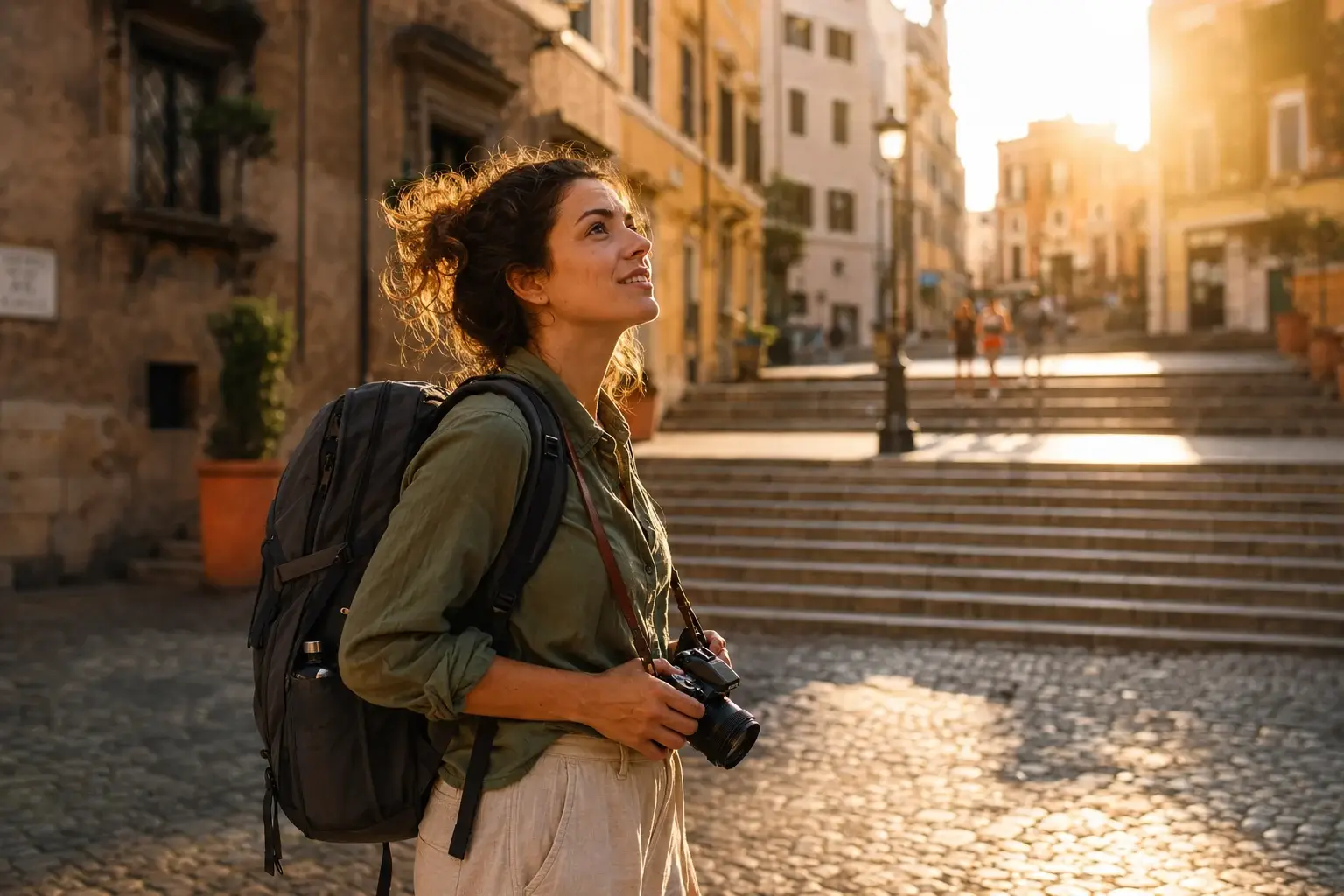
I still remember the exact moment I realized my travel style had to change. I was standing at the bottom of a massive, crowded stone staircase outside a train station in Rome. It was mid-July, the heat was bouncing off the pavement, and I was sweating through my clothes. In front of me was a giant, heavy suitcase that felt like it was filled with lead blocks. I had packed for every single possible scenario. I had outfits I knew I would never wear, extra shoes “just in case,” and bottles of shampoo that were heavy enough to be used as gym weights.
As hundreds of local commuters rushed past me, I had to haul that heavy monster up the steps, step by painful step. My back was aching, my palms were blistered, and I felt completely overwhelmed. I wasn’t experiencing the local culture. I wasn’t looking at the beautiful architecture around me. I was just managing my heavy stuff.
Before I became a full-time travel writer, I worked as a certified sightseeing guide in the busy streets of New York City. Day after day, I watched visitors ruin their trips because of their luggage. They would show up to tours exhausted from dragging giant bags over subway grates and through turnstiles. Later, when I left my traditional office job to backpack solo across Europe, live with a local host family in Ghana, and teach English in Thailand, I vowed to leave that heavy baggage lifestyle behind.
Choosing the best carry-on bags for stress-free travel is not just about gear. It is about your personal freedom. When you downsize your bag, you upsize your travel experience. You stop worrying about lost luggage, you skip the long lines at the baggage claim carousel, and you gain the confidence to jump onto a local bus or walk down a cobblestone alleyway without feeling weighed down.
Let’s look deep into how to choose the perfect carry-on bag, the specific features that actually matter on the road, and the packing strategies that will help you travel light, move fast, and focus on the magic of the journey.
Why the Right Carry-On Changes Everything for Solo Travelers
When you travel solo, you are your own support team. If you need to use a restroom in a busy transit hub, your bag goes into the stall with you. If you get lost looking for your small local guesthouse in a winding market street, you have to carry your weight until you find it. This is why traveling light is a huge boost for your personal safety and confidence.
When I was waitressing double shifts to save up money for my first big solo trips, I spent hours researching gear. I realized that a good bag is like a reliable travel buddy. It keeps your hands free, protects your belongings, and keeps you from looking like an easy target for local scams. A tourist struggling with three giant bags stands out in a crowd. A traveler with a single sleek pack on their back looks like they know exactly where they are going, even if they are secretly checking a map app.
Freedom of Movement in Tight Spaces
Think about the destinations you want to explore. If you are visiting a historic city center in Europe or a bustling neighborhood in Southeast Asia, the physical infrastructure is very different from a modern airport terminal. You will encounter narrow doorways, broken sidewalks, steep hills, and tiny staircases.
Many small, authentic boutique hotels and family-run guesthouses do not have elevators. If you choose a massive rolling suitcase, you will end up lifting that dead weight up five flights of narrow wooden stairs. With a proper carry-on backpack, you can just walk up smoothly, check into your room, and head out to explore without feeling like you just completed a heavy workout.
Total Protection Against Lost Luggage
There is nothing quite like the sinking feeling of standing at a baggage carousel as the conveyor belt slows down and stops, realizing your bag is in a completely different country. When you check a bag, you hand control of your trip over to the airline.
When you stick to a carry-on, your bag stays with you. It sits in the overhead bin right above your seat. When the plane lands, you walk straight past the crowded baggage lines, clear customs, and step out into the destination. You do not lose precious hours of your vacation waiting for lost items, and you never have to shop for emergency replacement clothes in a panic.
The Core Dimensions: Sizing and Airline Rules
Before you spend a single dollar on a new bag, you must understand airline sizing rules. Every airline has its own specific box for what counts as a carry-on. If your bag is even an inch too big, a strict gate agent can force you to check it at the last minute and charge you a hefty fee.
The Difference Between US and Budget European/Asian Airlines
Major domestic airlines in the United States are usually quite generous. They typically allow bags up to 22 x 14 x 9 inches. However, if you are planning to take regional flights with budget carriers in Europe or Southeast Asia, the rules get much tighter.
Budget airlines often reduce the allowed depth of your bag to around 7.8 inches. They also enforce strict weight limits, sometimes as low as 15.4 pounds (7 kilograms) for your entire carry-on bag. When I am preparing for an international journey, I always check the official government travel guidelines to see if there are any specific packing or luggage updates. For example, before you head out, it is smart to review the detailed advice on entry requirements and luggage rules found on the US Department of State Travel information portal to make sure you are fully prepared for the specific security and border protocols of your destination.
The Liters Measurement Explained
When you look at travel backpacks, you will see sizes listed in liters instead of inches. This measures the internal volume of the bag.
- 30L to 35L: The sweet spot for minimalist travelers and weekend trips. It fits easily on almost every budget airline.
- 40L to 45L: The maximum legal carry-on size for most major airlines. It gives you plenty of room for long-term travel if you pack smartly.
- 50L and Above: These bags are almost always too big for the overhead bin. Avoid these if you want a true stress-free carry-on experience.
Travel Backpacks vs. Rolling Suitcases: The Great Debate
There is no single correct answer here. The best choice depends entirely on your physical health, your destination, and how you like to move through the world. Let’s break down the real pros and cons of each style so you can decide which fits your journey.
| Feature | Travel Backpacks | Rolling Suitcases |
| Mobility | Excellent on stairs, gravel, and cobblestones | Best on smooth airport floors and sidewalks |
| Physical Effort | Carried on your back; requires core strength | Pulled by hand; easy on the shoulders |
| Packing Style | Often opens like a suitcase (clamshell) | Rigid structure; easy to stack items |
| Weight | Usually lighter when empty | Heavier due to wheels and handle systems |
| Crowd Navigation | Easy to weave through tight market crowds | Can trip up people behind you in tight spaces |
When to Choose a Travel Backpack
If your travel plans involve moving between multiple cities, riding trains, or exploring places with historic infrastructure, a backpack is your best bet.
When I was teaching English in Thailand, I used to take weekend trips to small villages and islands. Rolling a hard-shell suitcase onto a wooden longtail boat or dragging it through the sand on a beach is impossible. A backpack keeps your hands completely free. This means you can easily hold a local street food snack, pay for a bus ticket, or hold onto a handrail on a bouncing ferry boat without struggling with your luggage.
When to Choose a Rolling Carry-On
Rolling suitcases are wonderful if you have back or shoulder issues that make carrying weight uncomfortable. They are also ideal if your trip is focused on a single destination where you will take a taxi straight from the airport to your hotel and stay there for the whole week.
If you choose a rolling bag, look for a “spinner” model with four high-quality wheels that rotate 360 degrees. This allows you to roll the bag right next to you in tight airplane aisles rather than dragging it behind you and bumping into seats.
Key Features to Look For in a High-Quality Travel Bag
Do not just buy the cheapest bag you find online. A cheap bag with a broken zipper or a ripped strap can quickly turn a dream trip into a logistics nightmare. Look for these specific design details when shopping for the best carry-on bags for stress-free travel.
1. A Clamshell Opening
Traditional hiking backpacks open from the top like a large tube. This means if you need to find a clean pair of socks at the bottom of your bag, you have to pull out every single item you own.
Instead, look for a travel-specific bag with a clamshell opening. This means the main zipper runs all the way around three sides of the bag, allowing it to open completely flat like a traditional suitcase. This feature makes it incredibly easy to pack, unpack, and find exactly what you need in seconds without creating a giant mess on your hostel or guesthouse bed.
2. Durable Fabric and Weather Resistance
Your bag will experience rain, dust, and rough handling. Look for materials like Ballistic Nylon, Cordura, or recycled polyester with a durable water repellent coating.
The zippers should be heavy-duty, preferably made by YKK. If the zippers are lockable, that is a huge plus for your solo travel peace of mind. It allows you to lock the main compartments with a small TSA-approved padlock when you leave your bag in a shared hostel locker or a hotel luggage room.
3. A Supportive Harness System
If you choose a backpack, the straps are everything. A good travel pack needs a thick, padded hip belt.
Insider Secret: Your shoulders should not carry the weight of your backpack. A proper hip belt transfers up to 80% of the bag’s total weight down to your hips and legs, which are much stronger than your upper body.
Look for shoulder straps that are thick and covered in breathable mesh fabric to keep you cool when walking through hot, tropical climates.
Top Carry-On Bag Recommendations for Real Travelers
To help you choose, let’s look at a few specific, road-tested carry-on bags that have earned the trust of independent travelers worldwide. These are not flimsy fashion bags; they are durable tools built for real adventures.
The Premium All-Rounder: Peak Design Travel Backpack 45L
This bag is a favorite for digital nomads and minimalist travelers who want complete control over their packing setup.
- Why it works: It has an incredible sleek design with clean lines, meaning there are no loose straps to get caught in transit doors. It opens from the back panel, which is a great security feature because no one can access your main gear while you are wearing the pack.
- Best for: Tech-focused travelers, photographers, and anyone who loves smart organization pockets.
The Modern Classic: Osprey Farpoint 40 (or Fairview 40 for women)
Osprey is famous for making highly comfortable hiking gear, and they brought that exact expertise into this travel-specific pack.
- Why it works: The Fairview and Farpoint series feature a phenomenal internal frame and a heavy-duty hip belt that makes a 25-pound load feel light on your back. The entire harness system can be zipped away behind a protective panel, turning the pack into a clean duffel bag when boarding planes or local buses.
- Best for: True backpackers, slow travelers, and solo adventurers who plan to walk long distances with their gear.
The Soft-Shell Roller: Travelpro Platinum Elite Carry-On Spinner
If you prefer wheels but still want a bag that can handle the beating of frequent travel, this is a top-tier choice.
- Why it works: Travelpro was actually founded by an airline pilot, so their bags are built specifically for flight crews who live on the road. The wheels are incredibly smooth and tracks perfectly straight, and the nylon fabric resists stains and tears beautifully.
- Best for: Travelers who want a classic look, those with physical limitations, or anyone staying in modern city hotels.
The Art of Packing Light: A Practical Guide
Once you have chosen one of the best carry-on bags for stress-free travel, you need to know how to pack it correctly. The secret to successful carry-on travel is not about leaving behind things you need. It is about removing the things you think you might need but never actually use.
The Power of Packing Cubes
If you are still packing your clothes loosely into your luggage, packing cubes will change your life. These small fabric zip pouches act like portable dresser drawers inside your carry-on bag.
By rolling your clothes tightly and placing them inside specific cubes, you compress the fabric and save up to 30% more space. It also keeps your bag completely organized. When you arrive at a new guest house, you don’t have to unpack everything. You just pull out your cubes, place them on the shelf, and you are done.
The 5-4-3-2-1 Packing Rule
To keep yourself from overpacking, use this simple, time-tested clothing formula for a week-long trip:
- 5 Pairs of high-quality underwear and socks
- 4 Lightweight tops or shirts that can be layered
- 3 Bottoms (such as one pair of jeans, one pair of travel pants, and one pair of shorts)
- 2 Pairs of comfortable shoes (wear your heaviest walking shoes on the plane, pack a light pair of sandals or flats)
- 1 Light jacket or warm fleece layer (wear this on the plane to save bag space)
Choose clothes that are all in a similar color palette. This ensures that every top matches every bottom, allowing you to create over a dozen different outfit combinations from just a few basic pieces.
Managing Your Personal Item Like a Pro
Most airlines allow you to bring one carry-on bag for the overhead bin, plus one smaller “personal item” that must fit completely under the seat in front of you. This secondary bag is highly valuable real estate for stress-free travel.
What Counts as a Personal Item?
A personal item can be a small school backpack, a tote bag, or a crossbody purse. I highly recommend using a small, comfortable 15-liter daypack as your personal item.
During your flight, this bag holds your most valuable items: your passport, your phone, your tablet or laptop, your wallet, and any daily medications. Once you arrive at your destination and drop your main carry-on bag at your accommodation, this personal item becomes your daily daypack for exploring local neighborhoods and markets.
The “In-Flight Comfort” Tech Pouch
Instead of digging through your backpack mid-flight to find your headphones or an eye mask, pack a small zipper pouch inside your personal item. Fill it with your earplugs, charging cable, lip balm, and a pen for customs forms.
When you get to your airplane seat, simply pull out this single small pouch, drop your personal item under the seat, and slide the pouch into the seatback pocket in front of you. You now have everything you need for a comfortable flight right at your fingertips without causing a bottleneck in the aisle.
Real Road Advice: Navigation and Health with a Carry-On
Once you are packed and ready to roll, navigating your transit days smoothly is the next step to keeping your travel stress-free. Let’s look at how to handle airport security, local transport, and staying healthy while traveling light.
Mastering the Airport Security Line
Airport security lines can be a major source of travel anxiety. When you travel with a carry-on, you can prepare for this process before you even leave your house.
Make sure your clear bag of liquids and your laptop or electronic devices are packed at the very top of your bag or in an easily accessible exterior pocket. When it is your turn to step up to the conveyor belt, you can pull them out smoothly without digging through your clean clothes. Wear slip-on shoes for your flight day so you don’t waste time tying laces on the security mat, and make sure your pockets are completely empty before you reach the front of the line.
Protecting Your Health While Packing Light
When you travel light, you cannot carry full-size bottles of medicine or heavy medical kits. However, maintaining your health is critical for an enjoyable adventure. Before you pack any medical supplies, it is incredibly helpful to look up real-time health warnings, regional vaccine updates, and local food safety guidelines on the CDC Travelers’ Health destination pages so you know exactly what risks to prepare for.
I always pack a tiny, snack-sized zip bag filled with essential wellness items:
- A few rehydration salt packets (essential if you get a stomach bug in a warm climate)
- A small strip of pain relievers and antihistamines
- A handful of blister bandages (your feet will thank you after a long day of walking)
- A small bottle of high-quality hand sanitizer
Finding Authentic Food on Transit Days
When you only have a carry-on bag, you can easily leave the airport or train station during a long layover to explore local culinary spots rather than eating boring, expensive airport food. For example, if you have a six-hour layover in a food-rich city like Bangkok, you can simply step outside, keep your bag on your back, and find a vibrant local market.
Skip the tourist cafes right next to the transit hubs and look for the street food stalls with the longest lines of local residents. If you see a crowd of locals waiting patiently for a hot bowl of noodle soup or fresh rice dishes, that is your guarantee that the ingredients are fresh, safe, and deeply authentic. Eat where the locals eat, and you will experience the true flavors of the destination without spending a fortune.
Safety and Security Tips for Independent Travelers
A major benefit of using a high-quality carry-on bag is the massive boost it gives to your personal security. When you are not distracted by heavy gear, you can keep your head up and stay fully aware of your surroundings.
Avoiding Common Transit Scams
Pickpockets and luggage thieves look for targets who are distracted, confused, or overwhelmed by heavy stuff. If you are struggling to carry two large suitcases off a train, you cannot easily defend your personal space.
With a single sleek carry-on backpack, you can move confidently through busy train stations and crowded city squares. If someone approaches you trying to offer an unsolicited tour or a sketchy taxi ride, you can firmly say no and keep walking at a brisk pace without being slowed down by your luggage weight.
Using Local Ride-Sharing Safely
When you arrive in a new city after a long flight, navigating local transit can feel intimidating if you don’t speak the language. To make your arrival smooth and completely secure, I highly recommend downloading the primary local ride-sharing apps before you arrive. For instance, if you are traveling through Southeast Asia, it is incredibly helpful to read the step-by-step guides on safety features and booking steps available on the official Grab app website so you can easily hail a verified local driver at a fair, pre-set price right from your phone.
Using a ride-sharing app removes the stress of negotiating fares with dishonest drivers at the airport exit. Because your carry-on bag is small, it can easily slide into the back seat right next to you, meaning you never have to put your valuables in a dark trunk where you can’t see them.
Overcoming the “What If” Anxiety
The hardest part of downsizing to a carry-on bag isn’t buying the bag or rolling your shirts. It is overcoming the mental anxiety of leaving things behind. We live in a culture that tells us we need a different product for every single life scenario. We carry that consumer mindset into our travel planning, packing our bags full of “just in case” items.
But here is the beautiful reality of modern travel: people live in the destinations you are visiting. If you travel to a new country and realize you forgot an extra t-shirt, a pair of socks, or a tube of toothpaste, you can easily buy those items at a local neighborhood shop.
Buying what you need locally isn’t a failure; it is actually a fantastic way to experience everyday local life. It forces you to step into a local pharmacy, chat with a neighborhood shopkeeper, and see what brands people use in that part of the world. Some of my favorite travel memories started because I had to ask a local resident for help finding a basic item.
The Value of Doing Laundry on the Road
You do not need to pack a unique outfit for every single day of your trip. If you are traveling for two weeks, a month, or even a year, you only ever need to pack enough clothes for roughly five to seven days.
Doing laundry on the road is incredibly simple and highly affordable. In many parts of the world, you can drop your clothes off at a local wash-and-fold service for a couple of dollars, supporting a small neighborhood business in the process. Alternatively, you can spend ten minutes washing a few lightweight shirts in your bathroom sink with a small travel sink-stopper and a bit of gentle soap bar, hanging them up to dry overnight.
Investing in Your Personal Growth Through Travel
When you choose to travel light, you are making a conscious decision to value experiences over possessions. You are choosing to step out into the world with curiosity, open-mindedness, and a willingness to adapt to whatever challenges come your way.
Every time you lift your compact carry-on bag into an overhead bin, slide it under a train seat, or carry it up the steps of an ancient monument, you are reinforcing your own independence. You are proving to yourself that you don’t need a massive mountain of material items to feel safe, comfortable, and happy in a foreign place. You carry everything you truly need right on your back, leaving your mind completely open to the lessons, cultures, and beautiful human connections that are waiting for you around the corner.
Stop waiting for the perfect, flawless moment to plan your trip. Pick out a high-quality carry-on bag, lay your favorite clothes out on your bed, cut that pile exactly in half, and take that bold next step out into our beautiful, welcoming world. The adventure is waiting for you, and it is much easier to catch when you are moving light.