The Real Solo Travel Cities Every Digital Nomad Should Know

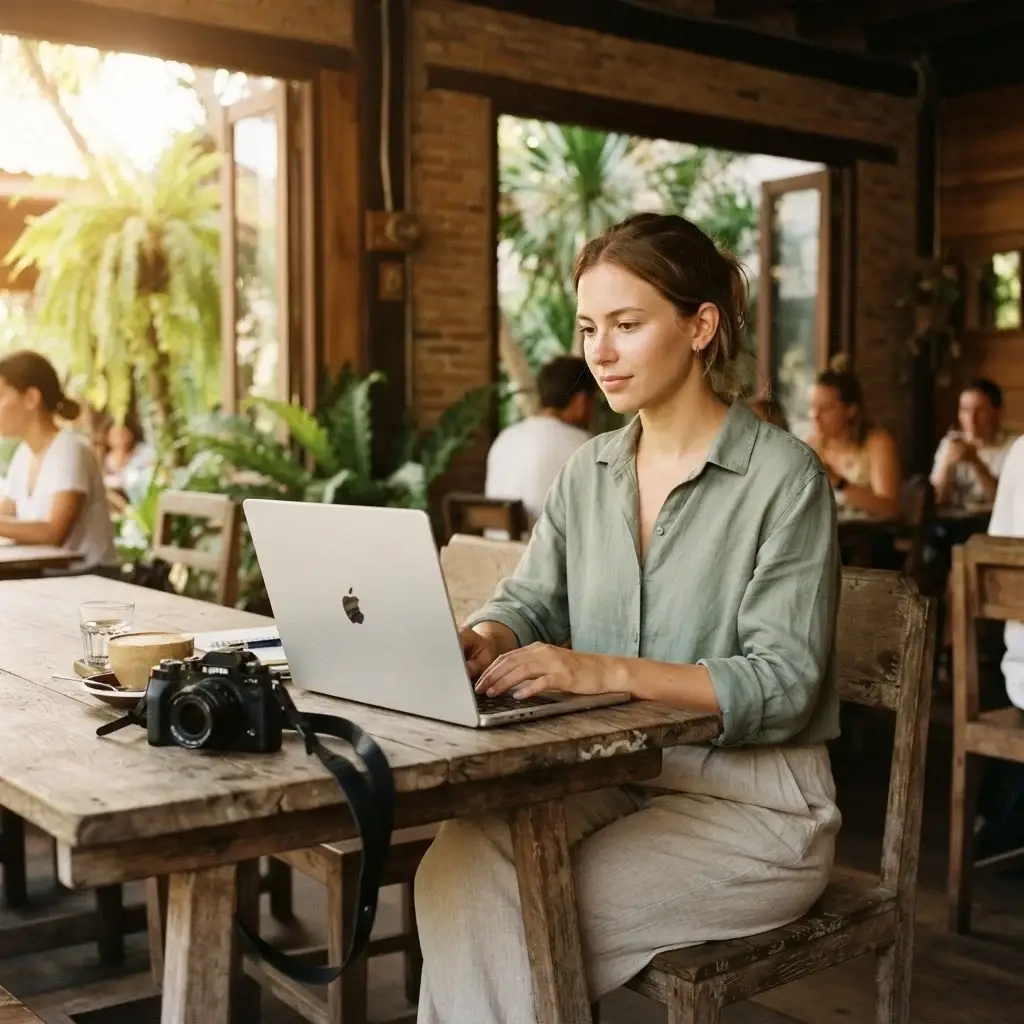
There is a version of this lifestyle that looks simple from the outside. You open your laptop, there’s fast wifi, a good coffee in front of you, and sunlight coming through a window that overlooks somewhere completely new. And that version is real. I’ve felt it. But getting there takes more than just picking a city off a list someone published two years ago.
Here’s what I’ve noticed after years of slow travel and building a life around movement: the city you choose as a digital nomad matters enormously, not just for your productivity, but for your confidence, your social life, and your overall sense that this was the right call. A bad first experience in the wrong city can convince someone to quit the whole idea. A good one can change the trajectory of their life.
I wrote this for the person who is genuinely ready but wants real information before they book. Not a glossy highlight reel. Not a list of city names with no substance behind them. What follows is what I’d tell a friend over coffee: the cities that consistently deliver for solo remote workers, why they work, what you’ll actually spend, and the things nobody else is bothering to tell you.
One quick note on the scale of this: according to live data from Nomads.com, there are now tens of millions of people living this kind of location-independent life, with roughly 67% of active nomads identifying as single. That means the solo nomad experience is the default nomad experience, and the cities that truly thrive on this list are the ones that were built, culturally and practically, to welcome solo arrivals.
How I Chose These Cities
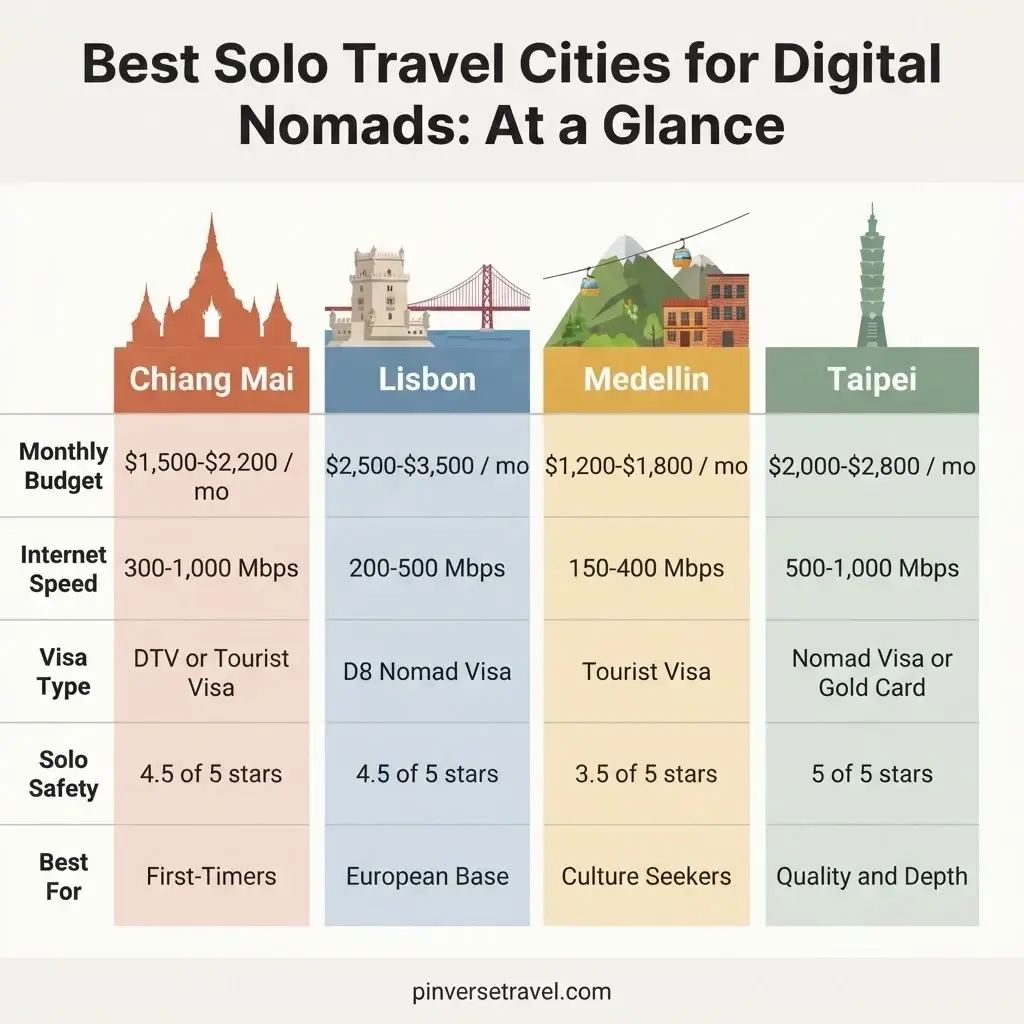
Before we get into the list, let me tell you how I narrowed it down, because this matters. I looked for cities that score well across five things that are non-negotiable for solo travelers working remotely: reliable, fast internet; a realistic cost of living that doesn’t require a six-figure salary; a genuine community of other travelers and nomads; solo-friendly safety (including a specific look at the experience of solo women); and cultural richness that gives you something to actually live inside, not just photograph. I also prioritized places where it’s relatively easy to arrive without a mountain of visa paperwork, and where you won’t spend your first two weeks completely disoriented.
These are not the only cities worth considering. But they are the ones that come up again and again, consistently, for good reason.
Chiang Mai, Thailand: The City That Started It All
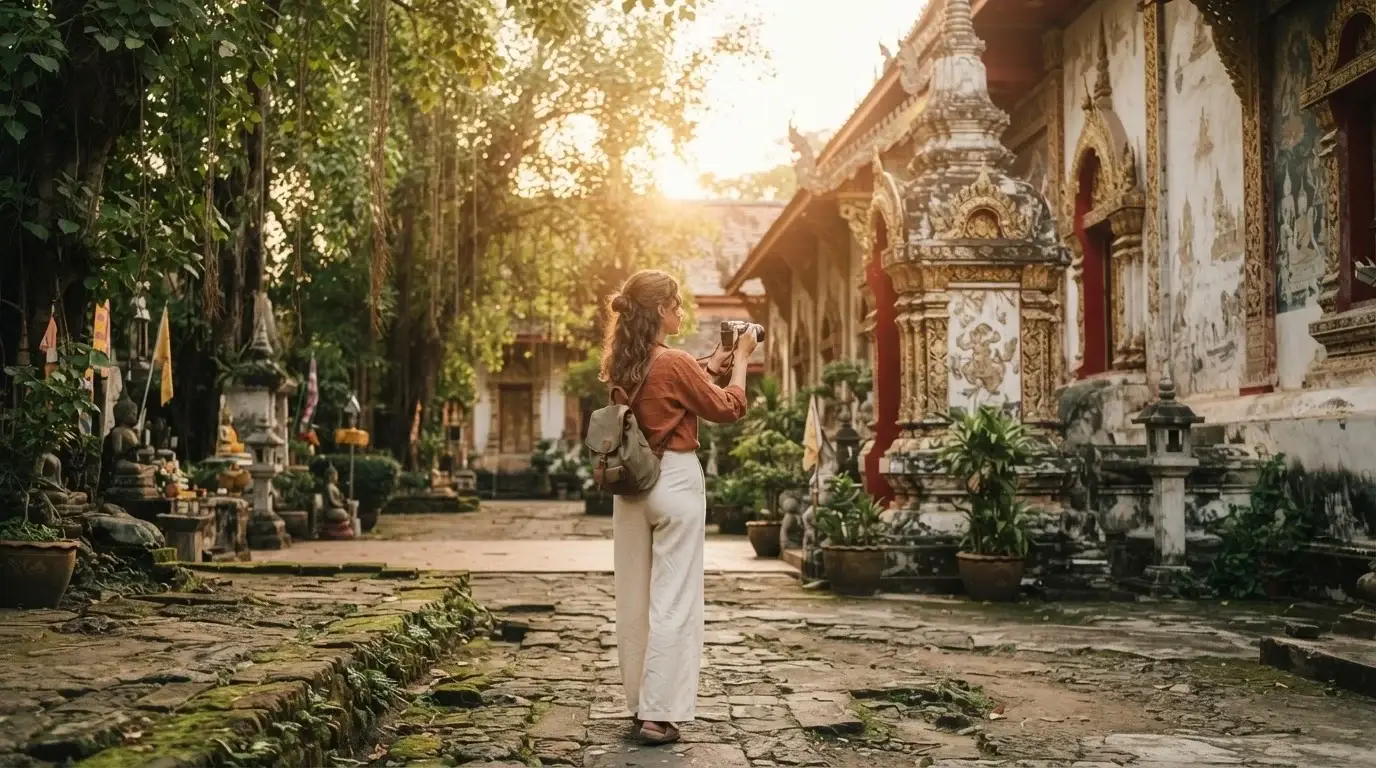
If there is one city that built the modern concept of the digital nomad hub, it’s Chiang Mai. The northern Thai city has been drawing remote workers since well before the lifestyle had a name, and it remains one of the most well-optimized places on earth for someone who wants to work, live affordably, and immerse in something genuinely different from home.
When I taught English in Thailand, I saw firsthand how the country wraps itself around you in ways that are hard to describe until you’re inside it. The pace of life is different. The food is on every corner and it’s extraordinary. People are genuinely welcoming. Northern Thailand specifically carries this creative, unhurried energy that makes it easy to settle in.
For digital nomads today, Chiang Mai delivers across the board. Internet speeds through providers like AIS regularly hit 300 to 1,000 Mbps on fiber connections, and coworking spaces are abundant, well-priced, and have been refined over years of use by a demanding nomad crowd. Punspace, which has been operating in Chiang Mai since 2013, is probably the most well-known, with two locations near the old city and both 24/7 access for members and day passes for those just passing through. Beyond Punspace, there are dozens of excellent wifi cafes where you can work all day for the price of a few coffees.
Cost of living is one of Chiang Mai’s biggest draws. Solo travelers consistently report living comfortably, including accommodation, food, transport, and a coworking membership, for around $1,500 to $2,200 per month. Street food meals run $1 to $2. A bowl of khao soi, the signature northern Thai curry noodle dish that you absolutely must try when you arrive, costs roughly 60 baht from a local shop. A furnished studio apartment in Nimman, the neighborhood most popular with nomads, runs around $400 to $600 per month.
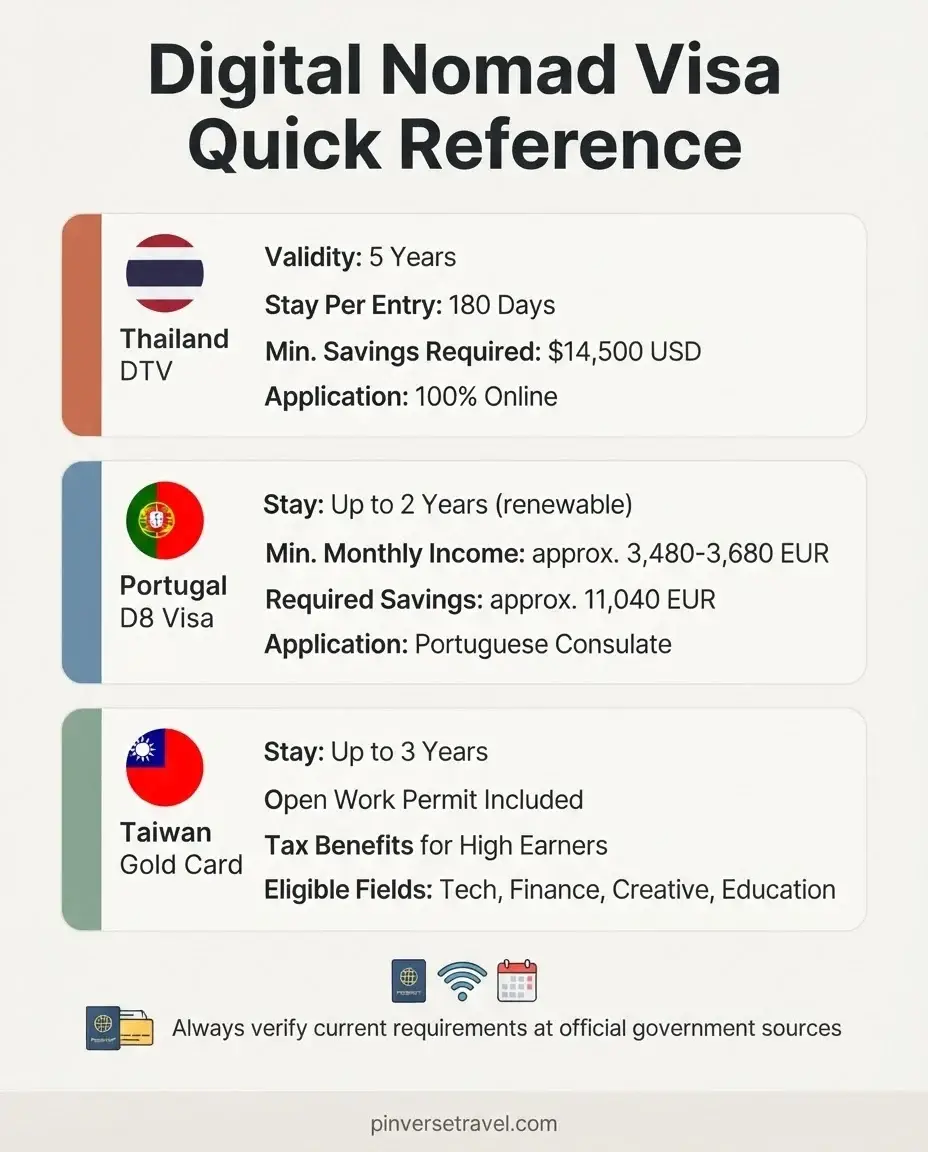
On the visa front, Thailand now offers the Destination Thailand Visa (commonly called the DTV or “digital nomad visa”), which provides 5-year validity with 180-day entries. Requirements include proof of around 500,000 THB (approximately $14,500 USD) in savings and proof of remote employment or business. The application is fully online. For first-timers, a standard tourist visa or visa exemption (30 to 60 days for most Western passports) can work while you figure out whether you want to commit longer-term.
For solo travelers specifically, Chiang Mai is approachable in a way that few cities match. The old city is compact and walkable. The Nimman neighborhood has a strong concentration of coworking spaces, international restaurants, yoga studios, and other nomads, which means making connections is genuinely easy if you just show up. The Tourism Authority of Thailand has put real energy into supporting the digital nomad community, including local discount programs for remote workers.
One honest note: Chiang Mai can sometimes feel like a bubble. You can spend weeks there interacting almost exclusively with other nomads and tourists. If that’s what you want, perfect. If you want deeper cultural immersion, it takes deliberate effort. Explore beyond Nimman. Take a cooking class with locals, not a tourist cooking school. Head to the morning markets before 7am. Get on a motorbike and find the temples the tour groups skip.
Lisbon, Portugal: Europe’s Warmest Welcome
Lisbon took off as a nomad destination several years ago and, unlike some cities that get hyped and then quietly disappoint, it keeps earning its reputation. For solo travelers from the US and UK especially, it strikes an almost perfect balance: it’s European enough to feel culturally familiar, but it’s not London or Paris, it’s warmer, slower, and considerably more affordable.
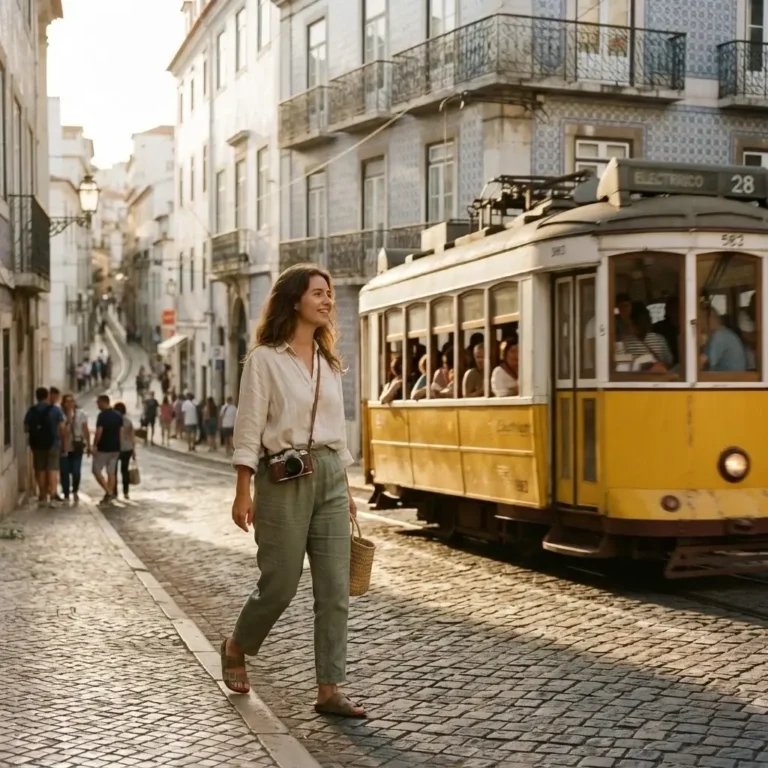
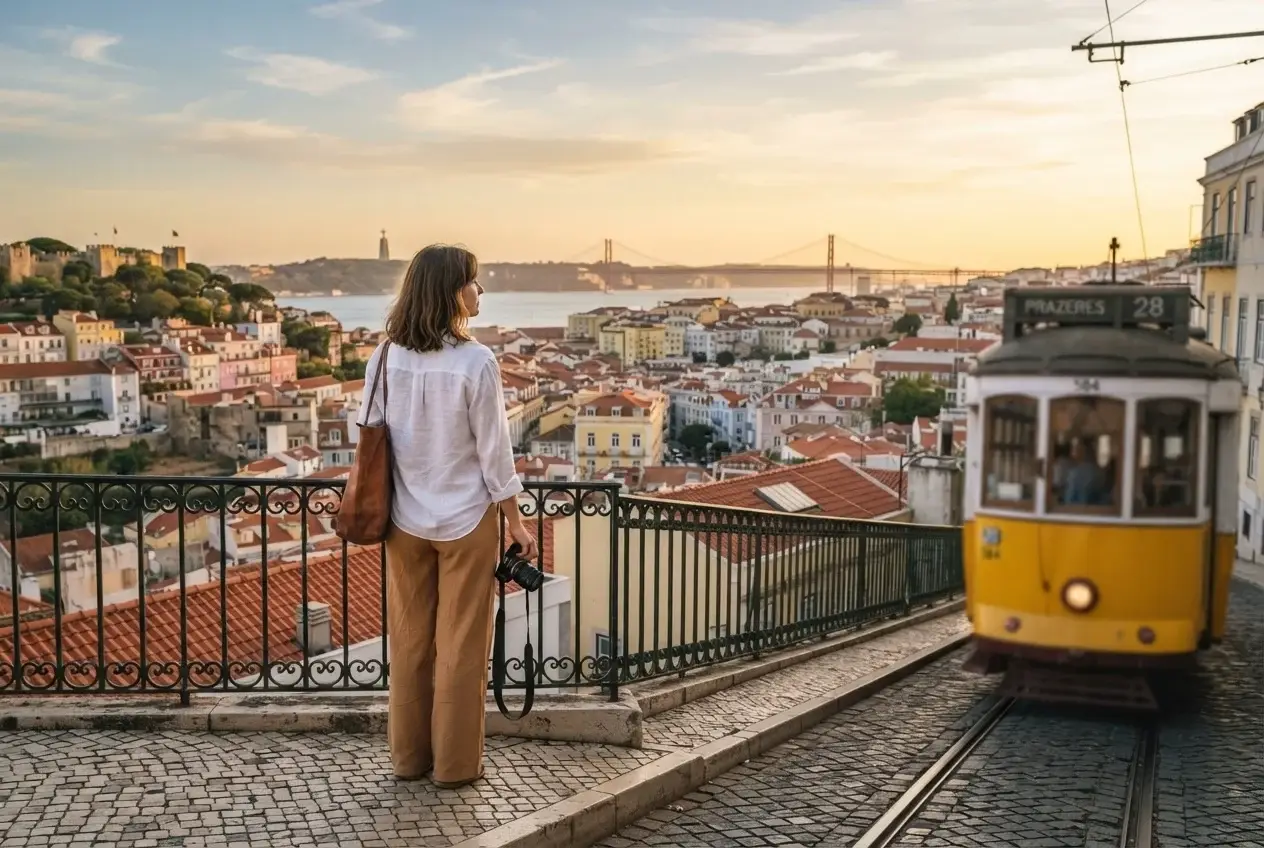
The city itself is beautiful in a way that sneaks up on you. Seven hills, pastel-colored buildings, azulejo tile work on every other facade, the Tagus River catching the afternoon light. Solo travelers consistently describe Lisbon as one of the easiest cities in Europe to arrive alone and feel comfortable within days. English is widely spoken, especially among younger people in central neighborhoods, which removes a significant anxiety point for first-timers.
Cost of living is higher than Chiang Mai or Medellu00edn but still well below most Western European capitals. Expect to spend roughly $2,500 to $3,500 per month for a comfortable solo setup, including rent in a neighborhood like Mouraria, Intendente, or Arroios (all of which have better character and better prices than the more touristy Bairro Alto area). A pastel de nata, the custard tart that you will eat three times a day with no regret, costs about 1.20 EUR. A meal at a tasca (a traditional local tavern) runs $10 to $15. Public transport is efficient and affordable, with the Lisboa Card offering unlimited metro, tram, and bus travel alongside free entry to major museums, which you can read more about at the official Visit Lisboa portal.
For the visa question, Portugal has the D8 Digital Nomad Visa for non-EU citizens who want to stay longer than 90 days. The current income requirement is approximately 3,480 to 3,680 EUR per month, verified through the Portuguese Ministry of Foreign Affairs. This is a meaningful threshold and not accessible to everyone. If you’re freelancing or earning in USD and the exchange rate works in your favor, it becomes more realistic. EU passport holders have no additional requirements. For most Western passport holders, the standard 90-day Schengen allowance works well for a first extended stay.
The food is extraordinary and underrated. Beyond pastéis de nata, eat a prego (a steak sandwich) from a neighborhood bakery, order grilled sardines in season, and find a cervejaria that does fresh seafood. Lisbon’s food scene is local and ingredient-driven in a way that rewards exploration over restaurant reservations.
The community here is strong, particularly around the NOS (not our scene) joke in nomad circles: there are so many coworking spaces, popup events, and digital nomad meetups in Lisbon that you’d have to actively avoid people to stay isolated. The downside is that Lisbon has become more expensive in recent years as its reputation has grown. Some neighborhoods have gentrified quickly. But the depth of the culture, and that specific Lisbon light in the evening, makes it worth it.
Medellu00edn, Colombia: The City That Earned Its Second Chapter
Medellu00edn’s transformation over the past three decades is one of the most remarkable urban stories in the world. The city that was once internationally associated with danger is now a legitimate cultural and creative hub, and the digital nomad community there has grown substantially. According to Medellin Guru, the city’s cafe culture has flourished particularly in neighborhoods like El Poblado, Laureles, and Envigado, and the remote work infrastructure has followed.
For solo travelers, this city rewards those who approach it thoughtfully. El Poblado is the most established nomad neighborhood, with the highest concentration of coworking spaces, specialty coffee shops, international restaurants, and other expats. It’s safe, walkable within its boundaries, and extremely easy to navigate as a first-timer. The tradeoff is that El Poblado can feel somewhat removed from the city’s authentic identity. Laureles, just across the Rio Medellin, gives you more of the real Medellin character: local markets, neighborhood bakeries, residents who have lived there for decades, and considerably lower prices.
Cost of living is one of Medellu00edn’s strongest arguments. Solo travelers regularly report comfortable monthly budgets of $1,200 to $1,800. Rent in El Poblado for a furnished apartment runs $500 to $800; in Laureles you can find good options for $350 to $550. A bandeja paisa, Colombia’s signature dish of rice, beans, ground beef, chicharron, plantain, and an egg, costs about $4 to $7 from a local restaurant. Coffee, which Colombia does brilliantly, is cheap and outstanding.
On safety, the honest answer is: it’s nuanced. El Poblado and Laureles are genuinely safe day-to-day for solo travelers who apply common sense. Use Uber or InDriver rather than hailing street taxis, avoid pulling your phone out in crowded areas, and stay aware of your surroundings after midnight. Medellu00edn doesn’t make the top 50 most dangerous cities in global rankings, and solo women do live and travel there successfully. But it’s not the place to be careless, especially as a newcomer. Give yourself a few days to learn the geography and rhythms before venturing far from your neighborhood.
The Spanish language is both a barrier and a gift. You won’t find English spoken as widely here as in Lisbon or Chiang Mai, which means arriving with even basic Spanish gives you an enormous advantage, both practically and culturally. Take a class on Duolingo before you go. Better yet, book a few Spanish lessons once you’re there.
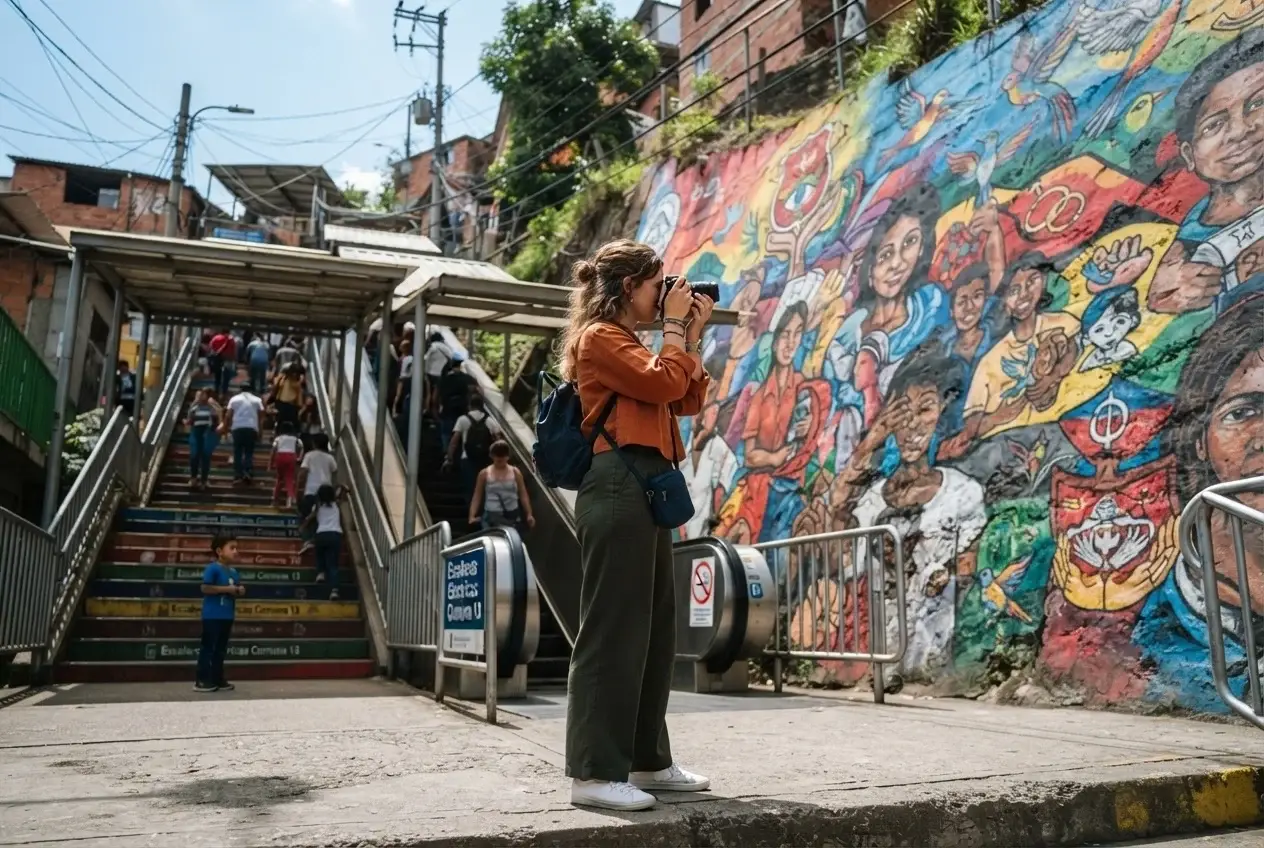
The city’s MetroCable system, which connects the hillside comunas to the city center, is worth experiencing both as transport and as a genuine window into how Medellu00edn works as a living city. The transformation of places like Comuna 13 from no-go zone to public art destination is visible and moving.
Taipei, Taiwan: The Underrated Overachiever
Ask most people to list their top digital nomad cities and Taipei usually doesn’t come up in the first five. That’s a mistake. Taipei consistently scores among the highest cities in the world for internet quality, safety, and public infrastructure, and it has a cultural depth and food scene that can genuinely compete with anywhere on earth.
Internet speeds in Taiwan are among the fastest globally, with average connections regularly exceeding 100 Mbps and fiber connections pushing much higher. The city is immaculately organized. The MRT (metro) is one of the cleanest and most reliable transit systems in Asia, and it covers the city comprehensively. The cost of living is higher than Chiang Mai or Medellu00edn but lower than most comparable cities in Japan or Western Europe. A solo nomad can live comfortably for $2,000 to $2,800 per month.
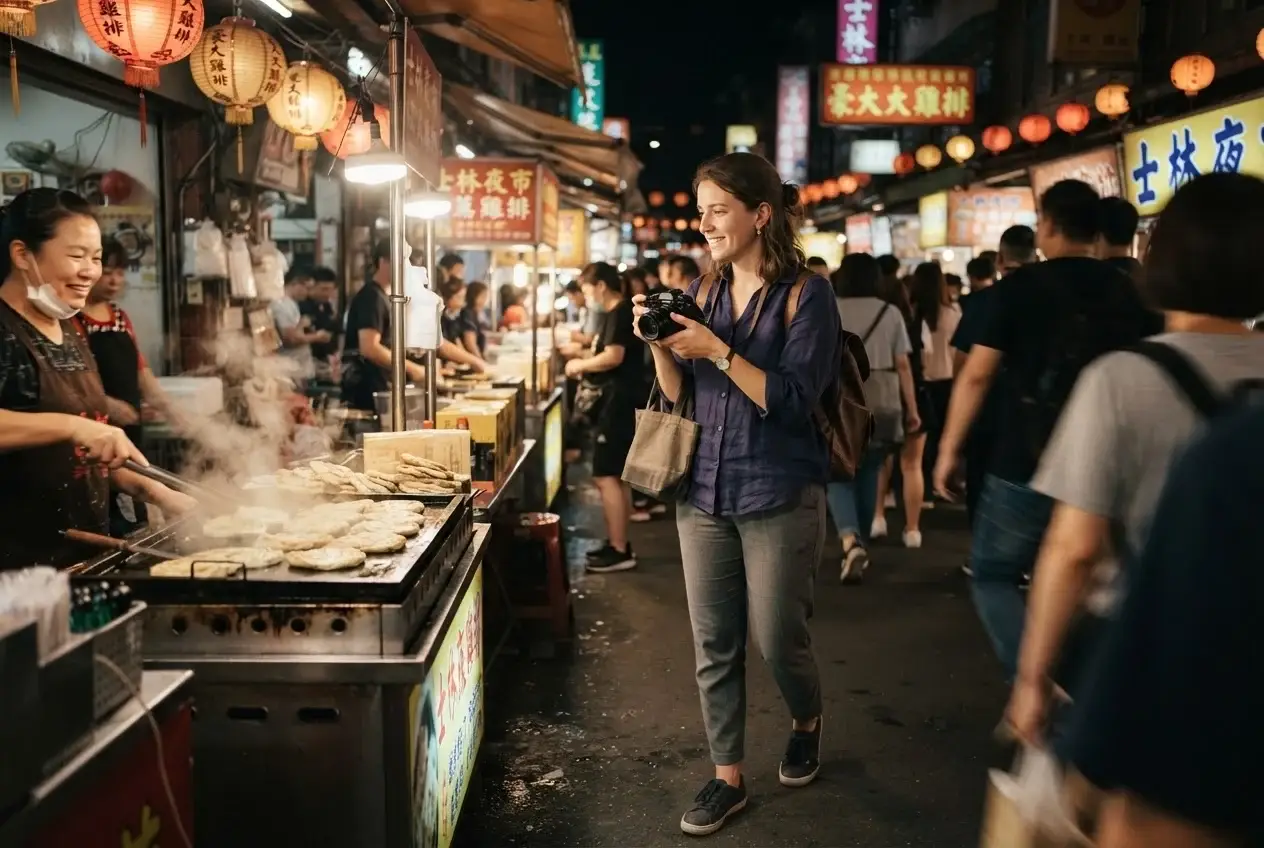
For solo travelers, Taipei feels remarkably safe. Street crime is minimal. People are consistently helpful to lost-looking foreigners. Night markets, which are the cultural and culinary heartbeat of the city, are lively and welcoming until midnight and beyond. Eat xiaolongbao (soup dumplings) at Din Tai Fung if you’re visiting for the first time, but also wander into the local night markets in Shilin or Raohe and eat your way through the stalls: oyster vermicelli, scallion pancakes, stinky tofu (yes, really, try it), bubble tea from the shops that have been doing it for decades.
On visas, Taiwan has moved significantly toward welcoming remote workers. In 2025, Taiwan launched a new 6-month Digital Nomad Visitor Visa for remote employees and international business owners. For skilled professionals in fields like tech, finance, creative industries, and education, the Taiwan Employment Gold Card offers a combined visa, work permit, and residence permit valid for up to 3 years, with tax incentives for high earners. Over 8,600 Gold Cards have been issued since the program launched in 2018, and the program continues to grow.
The primary friction for solo nomads in Taipei is language. Mandarin is the dominant language, and while English is spoken in many tourist areas, restaurants, and larger businesses, day-to-day navigation and socializing outside the expat community requires some effort. This is also exactly what makes Taipei so rewarding. The nomad community is smaller and more tight-knit than in Chiang Mai or Lisbon, which means the connections you do make tend to go deeper faster.
One City Across All Four: What They Share
Looking at these cities together, a few truths emerge. Every one of them rewards slow travel over passing through. Every one of them has a neighborhood that will suit you better than the obvious tourist zone. Every one of them has a food culture worth genuinely exploring rather than treating as background detail. And every one of them has a community of solo remote workers already there, which means the hardest part, showing up for the first time, is the only part you have to do alone.
Loneliness is real for solo nomads. Anyone who tells you otherwise is either an extrovert who has never stopped long enough to notice, or they’re selling something. The good news is that these cities all have established nomad communities through coworking spaces, local Meetup groups, Facebook groups, and spontaneous connections in coffee shops. The pattern that consistently works: pick a coworking space on your first or second day and go every day for the first two weeks. You will meet people. It is almost mathematically inevitable.
A Word on Making the Choice
The question I hear most often is: where should I go first?
If you’ve never traveled solo and want the gentlest entry point, Lisbon or Chiang Mai will hold you well. Both are solo-friendly, English-accessible, and have such developed nomad communities that you won’t feel like the only one figuring it out. If you’re comfortable with more complexity and want deeper cultural immersion, Medellu00edn rewards the extra preparation. If you want a city that will genuinely surprise you with its quality of life and you’re ready to engage with a less Western-familiar environment, Taipei is extraordinary and underestimated.
What I want to say to anyone still on the fence is this: the perfect city doesn’t exist, just like the perfect moment to start doesn’t exist. Every one of these places will have days that feel hard. You’ll have slow internet when you have a deadline. You’ll eat something that doesn’t agree with you. You’ll miss home. That’s not a sign you’ve made the wrong choice. That’s just what it feels like to actually live in the world instead of waiting for permission to try.
Start somewhere. The rest follows.