OUTPUT ORDER

1. Prime Title Recommendation and SEO Metadata Block
2. Full Deep-Dive Article
7 Photogenic Solo Travel Destinations That Also Feel Real
Let me start with the honest version of this conversation.
You’ve seen the photos. The blue-domed churches in Santorini catching the golden hour light. The mist rolling over Kyoto’s bamboo grove at dawn. The all-blue alleyways of Chefchaouen in Morocco, quiet and painterly and almost too beautiful to be a real place. You’ve saved those images, re-opened them at 11 PM on a Tuesday, and thought: I want to be there.
But then the practical questions start creeping in. Will it actually look like that? Will there be 400 other tourists in my shot? And more than that, the solo travel question underneath it all: can I even pull this off alone?
I ask myself that last question every time I plan a new trip. Even after years of solo travel, including backpacking through Europe alone, hiking across parts of China, and building a life around the road, there is still that small hesitant voice. The answer, every single time, has been yes. Just not always in the way I expected.
That is exactly what this guide is. Not a list of places that look pretty on someone else’s Instagram. A real, practical look at destinations that are genuinely photogenic and genuinely worthwhile for solo travelers, with the honesty about what you will actually find when you get there and the tools to make the most of it.
Why “Instagrammable” Is Both Real and Misleading
Places earn the “instagrammable” label for a reason. There is real beauty in Santorini’s caldera, real magic in Kyoto’s lantern-lit alleys, and a genuinely surreal quality to standing inside Chefchaouen’s medina while everything around you is painted in shades of blue. The photography potential is not a myth.
What is misleading, though, is the version that erases the crowds, the noise, the vendors, and the weather. The most photographed spots in the world are photographed constantly, which means they are also visited constantly. What solo travel teaches you quickly is that the way around this is timing, patience, and a willingness to show up earlier than everyone else.
The other thing worth saying before we get into the destinations: you do not need a travel partner to come home with beautiful photographs. A lightweight travel tripod and a phone or camera with a self-timer will do more for your solo travel photography than any companion. The freedom of traveling alone means you can linger at a spot until the light is right without dragging someone else into your obsession. That is actually an advantage.
Now, let’s get into the places.
Kyoto, Japan: Where Patience Is the Real Skill
If you ask solo travelers which destination consistently delivers on its visual promise, Kyoto comes up again and again. It earns this reputation not because it is always perfectly serene, but because it has so many layers that even on a crowded day, you can almost always find a quiet corner that takes your breath away.
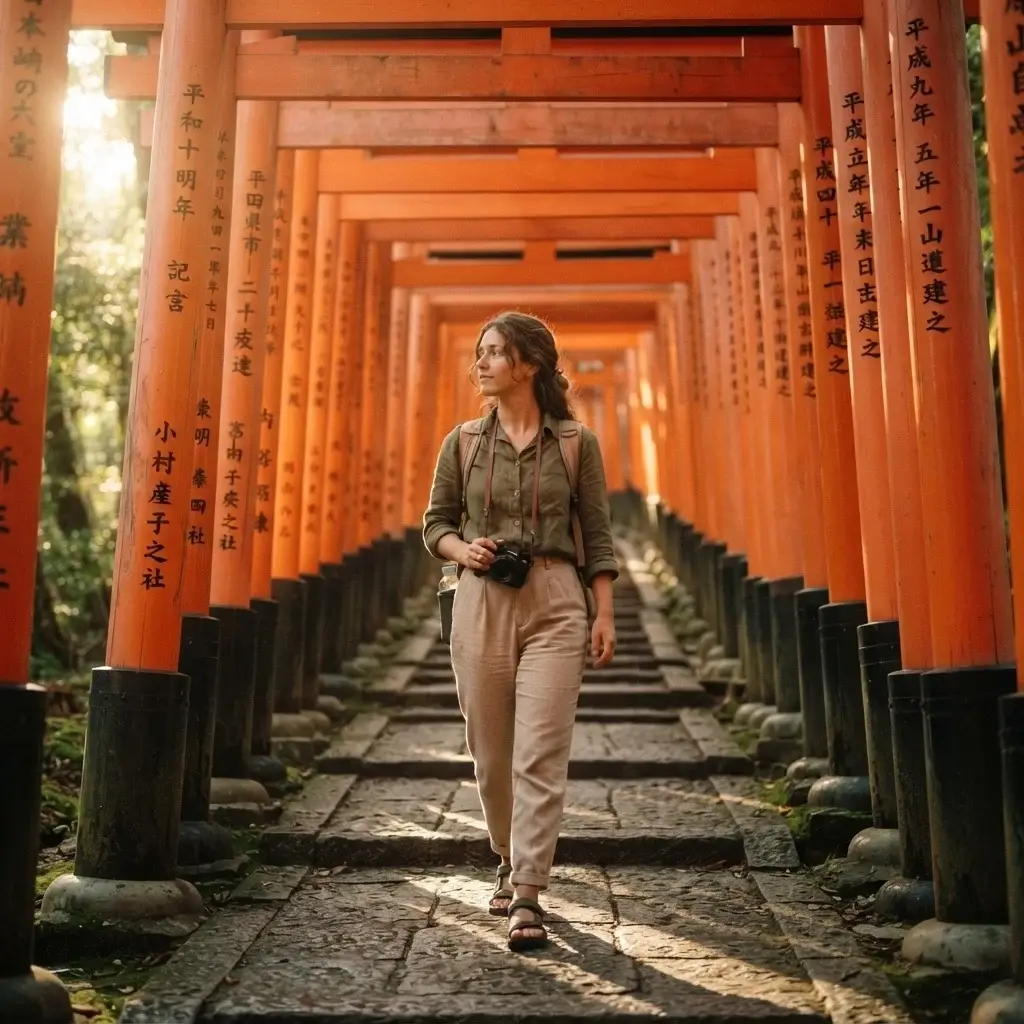
The most photographed places in Kyoto are the Fushimi Inari Shrine’s thousand vermilion torii gates, the Arashiyama Bamboo Grove, the Philosopher’s Path during cherry blossom season, and the preserved geisha district of Gion. These are genuinely extraordinary places. They are also genuinely crowded between roughly 9 AM and 5 PM during peak seasons. The move that solo travelers consistently make here is arriving before 7 AM. The light is softer, the streets are quieter, and you will have moments that feel entirely your own.
What makes Kyoto so good for solo travelers specifically is the city’s rhythm. Temples and shrines are built for contemplative individual exploration. Nobody looks at you strangely for sitting alone on a stone step watching the garden. The transit system is clean and easy to navigate. And the food culture encourages solo dining in a way that does not feel isolating. Find a small ramen counter with just eight seats, order a bowl, and eat it while people-watching through a foggy window. That is one of the better experiences Kyoto offers.
In terms of what to eat, look for tofu-based Kyoto cuisine called Kyo-ryori, particularly at smaller neighborhood spots rather than tourist-facing restaurants near the main shrines. Yudofu, a simple simmered tofu dish, is a local staple. Also try warabi mochi, a soft, chewy sweet dusted in kinako powder, from one of the small shops in Gion.
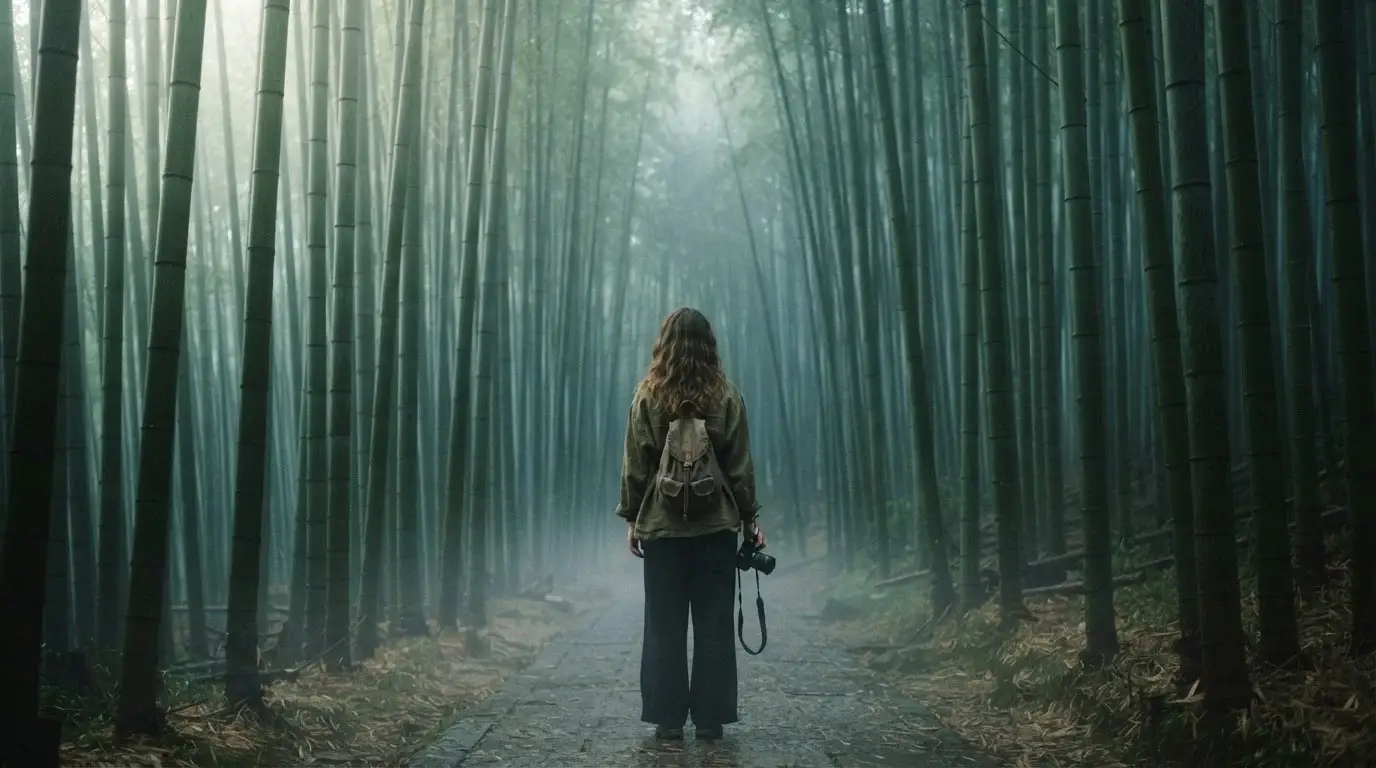
The Japan National Tourism Organization’s Kyoto destination page has solid orientation information including area maps and a breakdown of neighborhoods, which is useful when you are planning your first morning before you have the lay of the land.
Cherry blossom season (late March through mid-April) is the most photogenic time to visit but also the most crowded. Autumn foliage season (mid-November through early December) is a close second visually and tends to draw slightly fewer visitors. If your primary goal is photography with breathing room, aim for early November.
Chefchaouen, Morocco: Blue Walls and a Deeper Story
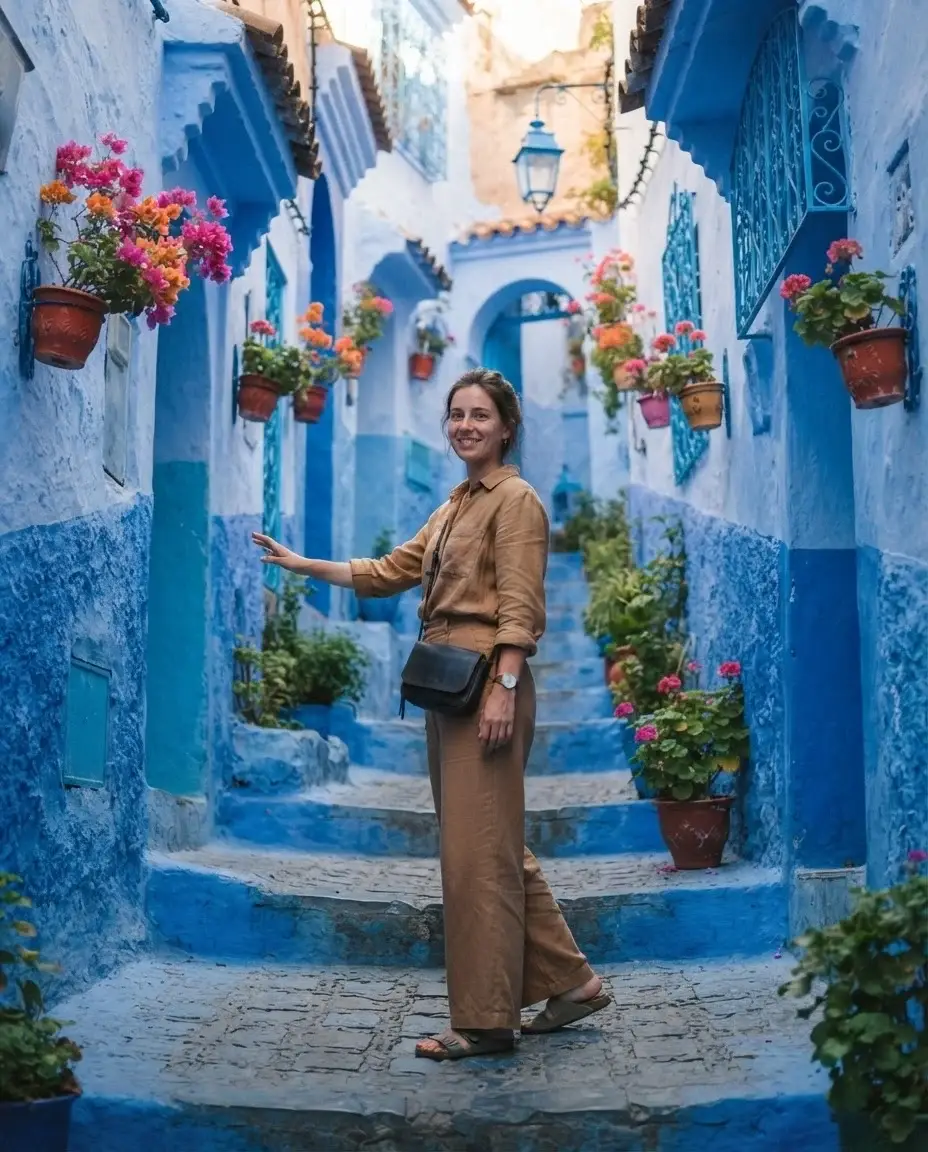
The Moroccan National Tourist Office officially calls Chefchaouen the most instagrammable city in Morocco, and it is not hard to see why. The entire medina of this Rif Mountain city is painted in varying shades of blue, from pale sky tones to deep cobalt. Every alleyway is a photograph. Every staircase draped in hanging pots is a photograph. The market squares, the old kasbah, the women moving through narrow lanes in traditional djellabas: all of it photographs beautifully.
What the images often leave out is the elevation. Chefchaouen sits at roughly 600 meters above sea level in the Rif Mountains, which means the air is cooler than you expect from Morocco, the streets are steep, and the surrounding landscape, green forested hills rising behind the medina, adds a dimension that you simply cannot capture in a single shot of a blue alleyway. From what solo travelers consistently report, the town feels more intimate and manageable than larger Moroccan cities like Marrakech, which makes it an excellent entry point for anyone doing their first solo trip in North Africa.
The Moroccan National Tourist Office’s Chefchaouen page notes that the old medina, the Kasbah, and the Akchour Waterfalls a short drive away are the main draws. The Kasbah in particular houses a small museum of old weapons, historical photographs, and local textiles that is genuinely worth an hour of your time. The garden inside the Kasbah is one of the quieter places to sit in the city.
For solo travelers, especially solo women, the general experience in Chefchaouen is more relaxed than in larger Moroccan cities. It is not without street attention, and you should use common sense about wandering quieter areas after dark. Dressing modestly, covering shoulders and knees, is both respectful and will reduce unwanted attention. The medina is compact enough that you learn it quickly, which gives you confidence in your navigation within a day.
Eat kefta tagine, the slow-cooked spiced meatball stew, at any of the small restaurants ringing the main square, Plaza Uta el-Hammam. Msemen, a pan-fried layered flatbread, with honey and argan oil is a simple, inexpensive breakfast that you will find at the small stalls early in the morning.
For solo photography, the blue walls are at their most vivid and crowd-free in the hour after sunrise. By 10 AM, tour groups begin arriving. By noon on weekends, the central alleys are very busy. Arrive early, go deep into the residential streets away from the main tourist drag, and you will find scenes that feel entirely personal.
Santorini, Greece: Managing the Expectation Gap
Santorini is, perhaps unfairly, the destination that most commonly disappoints solo travelers who arrive expecting the quiet, luminous images they saw online. The reality, especially between June and September, is that Oia in particular is extremely crowded. The famous sunset viewpoint near the Oia castle can hold several hundred tourists simultaneously, all pointing cameras in the same direction.
Here is the honest version: the island is still extraordinary. The caldera views are genuinely unlike anything else in the world. The white architecture glowing against the deep blue Aegean, the volcanic rock cliffs dropping away below the village, the light in the late afternoon, all of it is as beautiful as the photos suggest. The issue is access and timing, not the place itself.
The solo travel advantage here is significant. You can wake up at 5:30 AM, walk to the Oia viewpoint, and have the famous Three Domes Church and the winding blue-accented stairways almost entirely to yourself. The sunrise in Oia is quieter than the sunset and, depending on the morning, just as beautiful. Solo travelers who consistently report the best experiences in Santorini are the ones who flip the schedule: early morning exploration, midday rest at your accommodation or a quieter beach, late afternoon walk for softer light in less crowded parts of Fira or Imerovigli.
From a solo safety and logistics perspective, Santorini is extremely easy to navigate. The main bus system (KTEL) connects the major villages, and renting an ATV for a day gives you the freedom to reach the less visited southern beaches. The island is generally very safe for solo travelers of all genders.
In terms of food, skip the expensive caldera-view restaurants and look for local tavernas down the side streets in Fira or the village of Pyrgos, which is inland, higher up, and far less crowded than Oia. Fava, the split pea puree that is particular to Santorini, is a dish you will not find with this flavor profile anywhere else. Tomatokeftedes, the local tomato fritters made from the island’s small, intensely flavored tomatoes, are a must-order.
Iceland: When the Photo Itself Is Not Really the Point
Iceland occupies a unique category among photogenic destinations because the thing most people come to photograph, the Northern Lights, is not something you can plan for with certainty. That element of uncertainty is also what makes it one of the most exhilarating solo travel experiences in the world.
The aurora borealis over Iceland is genuinely one of the most visually dramatic things a person can witness. But from what solo travelers consistently report, the experience of standing alone in a dark field or on a black sand beach watching curtains of green and purple light move across the sky is less about the photograph you get and more about the feeling of complete smallness and wonder that hits you in the chest.
The Visit Iceland aurora guide recommends being outside between 10 PM and 1 AM during aurora season, which runs from late August through late April, and monitoring real-time space weather data rather than relying solely on app forecasts. Specifically, watching the Bz value (when it goes negative, aurora activity increases) gives you a more accurate picture than the Kp-index that most apps display. For the most up-to-date aurora and cloud-cover forecast, the Icelandic Meteorological Office aurora forecast is the most reliable free tool available.
Beyond the lights, Iceland is photogenic in practically every direction. Skogafoss and Seljalandsfoss waterfalls on the South Coast allow you to walk behind the water and photograph from inside. The black sand beach at Reynisfjara, with its basalt columns and dramatic sea stacks, is one of the most striking landscapes in the world and easily reachable on a day trip from Reykjavik. Landmannalaugar, in the highlands, offers surreal colored rhyolite mountains in shades of pink, green, and rust that look almost digitally enhanced.
Solo travel in Iceland is exceptionally safe and well-organized. The main risk is the weather changing faster than expected, particularly in the highlands and on any hiking trail. Always check road conditions at road.is before driving anywhere outside the Ring Road. Rent a car if your budget allows: Iceland rewards slow, spontaneous travel at your own pace in a way few places do.
What to eat: Icelandic lamb soup (kjötsúpa) is warming, cheap, and deeply comforting after a cold morning outdoors. The hot dogs (pylsur) from Baejarins Beztu, the famous stand in Reykjavik, are a legitimate local tradition and cost less than two dollars.
Lisbon, Portugal: The Photogenic City That Actually Rewards Slow Travel
Of all the destinations on this list, Lisbon is the one I would most confidently recommend to a first-time solo traveler who wants to come home with beautiful photos and a deep sense of having really experienced a place. The city photographs beautifully, it is extremely walkable, and its culture actively rewards the solo traveler who moves slowly and pays attention.
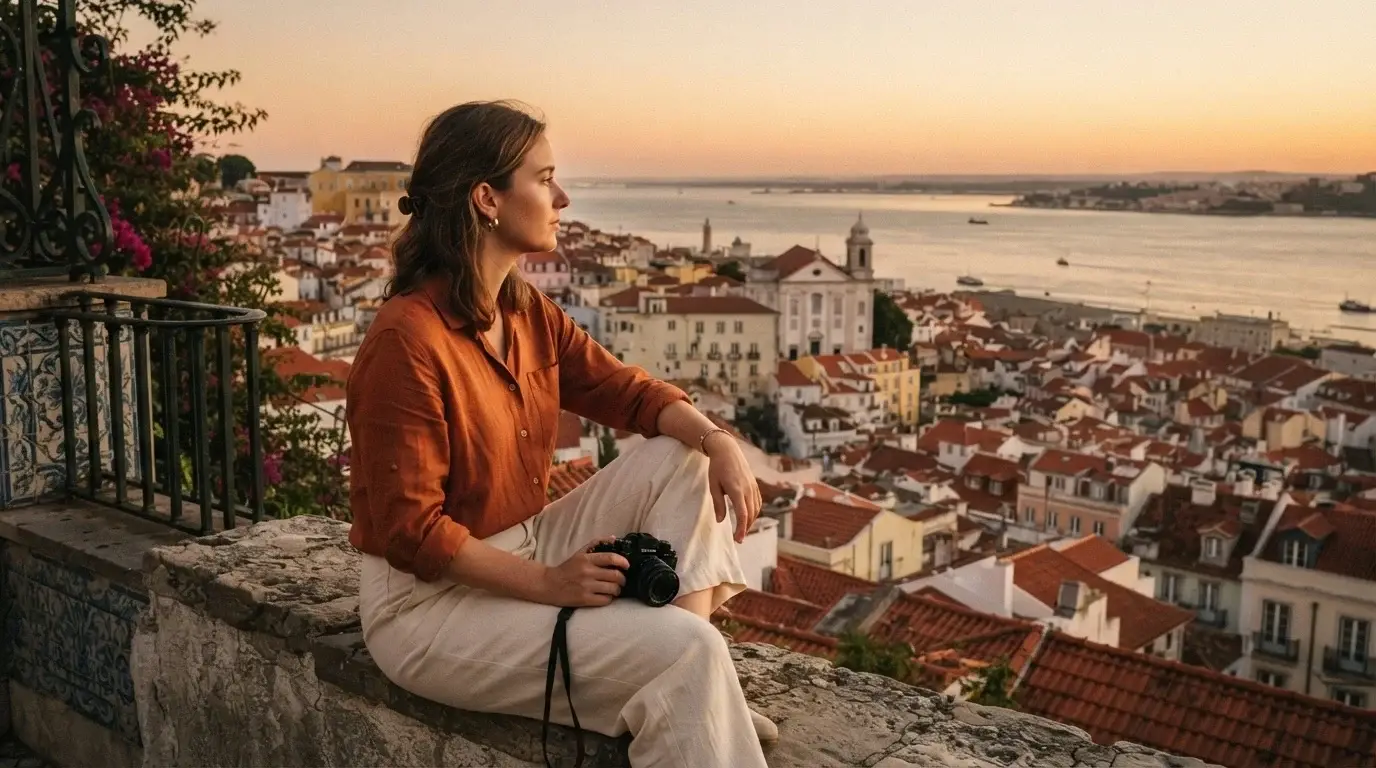
The Alfama district, Lisbon’s oldest neighborhood, is a labyrinth of narrow cobbled streets, faded azulejo-tiled facades, and viewpoints (miradouros) that look out over the red-roofed city and the wide mouth of the Tagus River. Miradouro da Graca and Miradouro da Senhora do Monte offer some of the most sweeping views in the city, and the latter is genuinely quiet even during peak tourist season because most visitors stop at the better-known Miradouro das Portas do Sol instead.
The trams, particularly the famous yellow Tram 28 winding up through Alfama, are both photogenic and practical. On weekday mornings before 9 AM, the ride is manageable. After 10 AM, the queues and crowds make it less fun. Lisbon rewards early risers consistently.
The Visit Portugal Lisbon guide highlights the Castle of Sao Jorge as a starting point for exploring Alfama, and it is good advice. The castle itself has a modest entry fee (around 15 euros for adults) but the views from the walls and the walk down through the medieval streets below justify it easily for solo travelers who want to orient themselves from above before wandering at street level.
In terms of food, Lisbon is one of the great solo dining cities in Europe. Pastel de nata, the warm custard tart from Pasteis de Belem, is the iconic bite and absolutely lives up to its reputation. Eat it standing at the counter, still warm from the oven, with a bica (Portuguese espresso) on the side. For lunch, find a tasca (small local restaurant) and order the prato do dia, the dish of the day, which is almost always a hearty Portuguese meal for under 10 euros.
Solo women consistently rate Lisbon as one of the most comfortable cities in Europe to navigate alone. Street harassment is lower than in many comparable European capitals, the city is well-lit and active until late, and locals are generally warm and willing to help with directions.
Bali, Indonesia: Beyond the Rice Terrace Swing
Bali is one of the most photographed destinations on earth and also, honestly, one of the easiest to over-rate if you rely entirely on the curated version you see online. The good news is that when you get past the tourist-facing experience and slow down, Bali delivers something genuinely special.
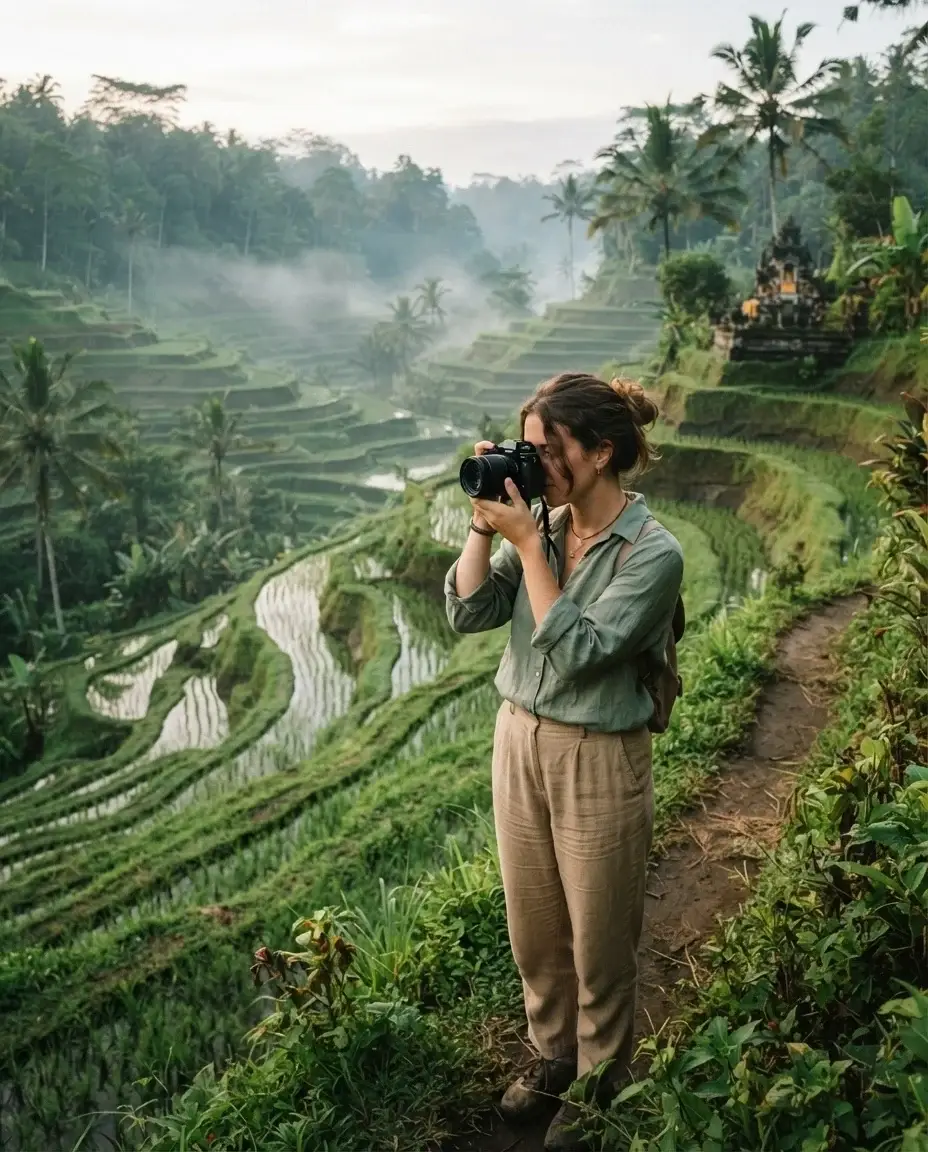
The visual highlights are real. The Tegalalang Rice Terraces north of Ubud are as green and cascading and lush as every photograph suggests. The temples, particularly Pura Ulun Danu Beratan sitting on the water’s edge of Lake Bratan in the highlands, are architecturally striking. The famous rice field walk through Ubud offers a mix of sculpted green terraces, gurgling irrigation channels, small shrines, and flowering trees that is uniquely Balinese in character.
The Wonderful Indonesia official tourism site covers Bali broadly, but for the most practical detail on the Tegallalang terraces specifically, the entry fee is approximately IDR 15,000 to 25,000 (roughly $1 to $2 USD) depending on the access point, and the site is open daily from 7 AM to 6 PM. The optional swing experiences cost significantly more (around IDR 200,000 extra) and are, frankly, not necessary for great photography. Arriving before 8 AM means you often have the main viewpoints almost to yourself before tour buses arrive.
What solo travelers consistently report is that the Ubud area specifically, as opposed to the beach areas of Seminyak or Kuta, is the version of Bali that tends to resonate most deeply. The cultural life is active and accessible: you can watch a Kecak fire dance performance at Pura Uluwatu (set on a dramatic cliff above the Indian Ocean) for around 150,000 IDR in the evening, wander Ubud’s art market in the morning, and spend an afternoon walking the rice fields with a simple map from your guesthouse.
Solo female travelers in Bali report mostly positive experiences, though the popular tourist areas can involve persistent vendor pressure. A calm, friendly but firm “no thank you” usually ends an interaction. Keep your valuables secure in crowded market areas and on scooters.
For food: eat at warungs, the small local Indonesian restaurants, rather than tourist-facing cafes. Nasi campur, a plate of steamed rice with small portions of various sides including tempeh, vegetables, and a choice of protein, is the daily staple and costs between 20,000 and 40,000 IDR. Babi guling, the slow-roasted suckling pig, is a Balinese cultural specialty available at specific local restaurants and warung in Ubud, and it is genuinely one of the more memorable meals you will eat anywhere.
Lisbon Bonus: Sintra as a Day Trip Worth Planning Separately
If you are based in Lisbon for a few days, the town of Sintra about 40 minutes by train is technically its own destination but deserves a mention here because the photography is extraordinary and it adds a completely different dimension to a Lisbon trip. The fairy-tale palaces, Palacio da Pena in particular, with its yellow and red towers rising from forested hilltops, produce images that look almost fictional. The train runs regularly from Rossio station and a day return ticket costs just a few euros. Go on a weekday, start with Pena Palace early in the morning, and work your way down through the town. By afternoon, when day-trippers arrive in force, you will already be heading back.
The Photo You Actually Want: Practical Solo Photography Notes
This section exists because it is the thing most articles leave out entirely.
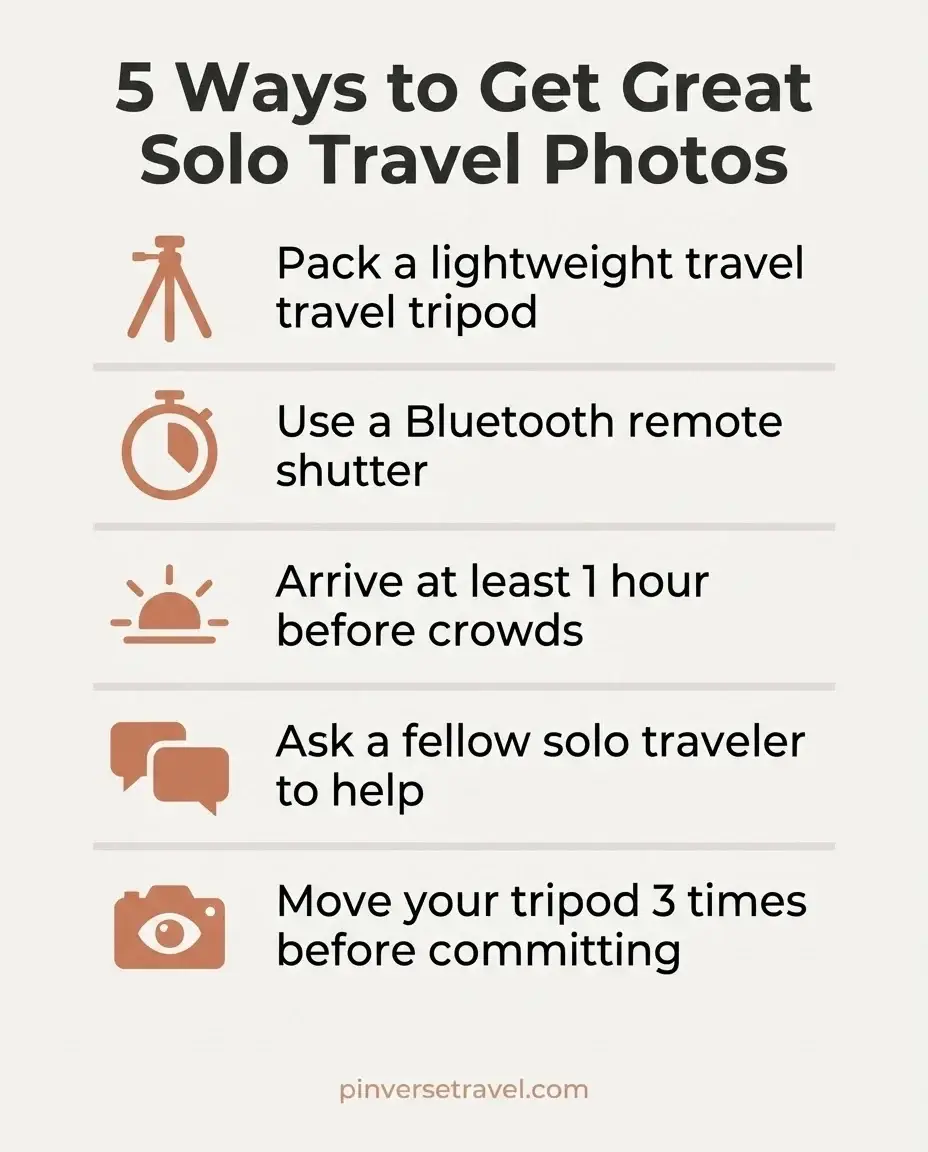
Getting great photos of yourself at these places without a travel companion is completely achievable. The tools you need are straightforward: a lightweight travel tripod (there are packable options under 300 grams that clip to a daypack), a Bluetooth remote shutter for your phone or camera, and a willingness to take 30 photos to find the one that works.
The timing conversation matters more than the gear. At every destination on this list, the single biggest factor determining photo quality is arriving early. Crowds not only fill your frame with other people; they create noise, pressure, and the feeling that you need to hurry. When you arrive at Oia at 6 AM, or at the Arashiyama Bamboo Grove at 7 AM, or at Tegalalang at 7:30 AM, you can set your tripod, take your time, move it three times until you find the right angle, and actually breathe.
The other underrated move: ask. At almost every popular photography spot in the world, you will find other solo travelers doing exactly what you are doing. Asking a fellow traveler to take a photo for you almost always works, and the resulting connection, even a brief one, is often one of the better moments of the day.
The Real Reason These Destinations Are Worth It
Here is what I want to leave you with. The reason to visit any of these places is not the photo you will post. It is the version of yourself who shows up to book the flight, navigate the airport alone, get on the tram in Lisbon without knowing exactly where it goes, wake up at dawn in Kyoto because you decided to, and stand in a field in Iceland at midnight watching the sky move.
The photograph is a receipt for an experience. The experience is the thing.
Every person I know who has traveled solo to visually stunning places, whether they told me about Japan or Morocco or Bali, says the same thing: it was better than I expected. Not because it looked exactly like the photos, but because they did it, and doing it changed something.
The destinations on this list are genuinely beautiful. More importantly, they are genuinely manageable as a solo traveler. You do not need a big group, a professional photographer, or the perfect moment. You need a flight, a little research, and enough confidence to show up.
That last part is the one that grows with every trip you take.