Vietnam Solo Travel for First-Timers: What to Know First

There is a specific kind of excitement that comes with looking at a map of Vietnam. That long, thin strip of coastline. The rice terraces up north. The ancient lantern-lit streets in the center. The buzzing, relentless energy of the south. And then, almost immediately, a very specific kind of anxiety: Can I actually do this alone?
I know that feeling well. Before I ever backpacked solo across Europe, or lived with a family in Ghana, or taught English in Thailand, I was the person staring at flight prices and talking myself out of a trip I desperately wanted to take. The gap between dreaming about a place and actually booking the flight can feel enormous when you’re going solo for the first time.
Vietnam is one of the most rewarding countries you can choose for a first solo adventure. It has a well-established traveler trail, genuinely warm people, spectacular food, and a transport network that makes north-to-south travel surprisingly manageable. But it is also a country that rewards preparation and punishes assumptions. So here is what you actually need to know before you go.
Before You Leave Home: Visa, Health, and the Paperwork That Actually Matters
Getting Your Vietnam E-Visa
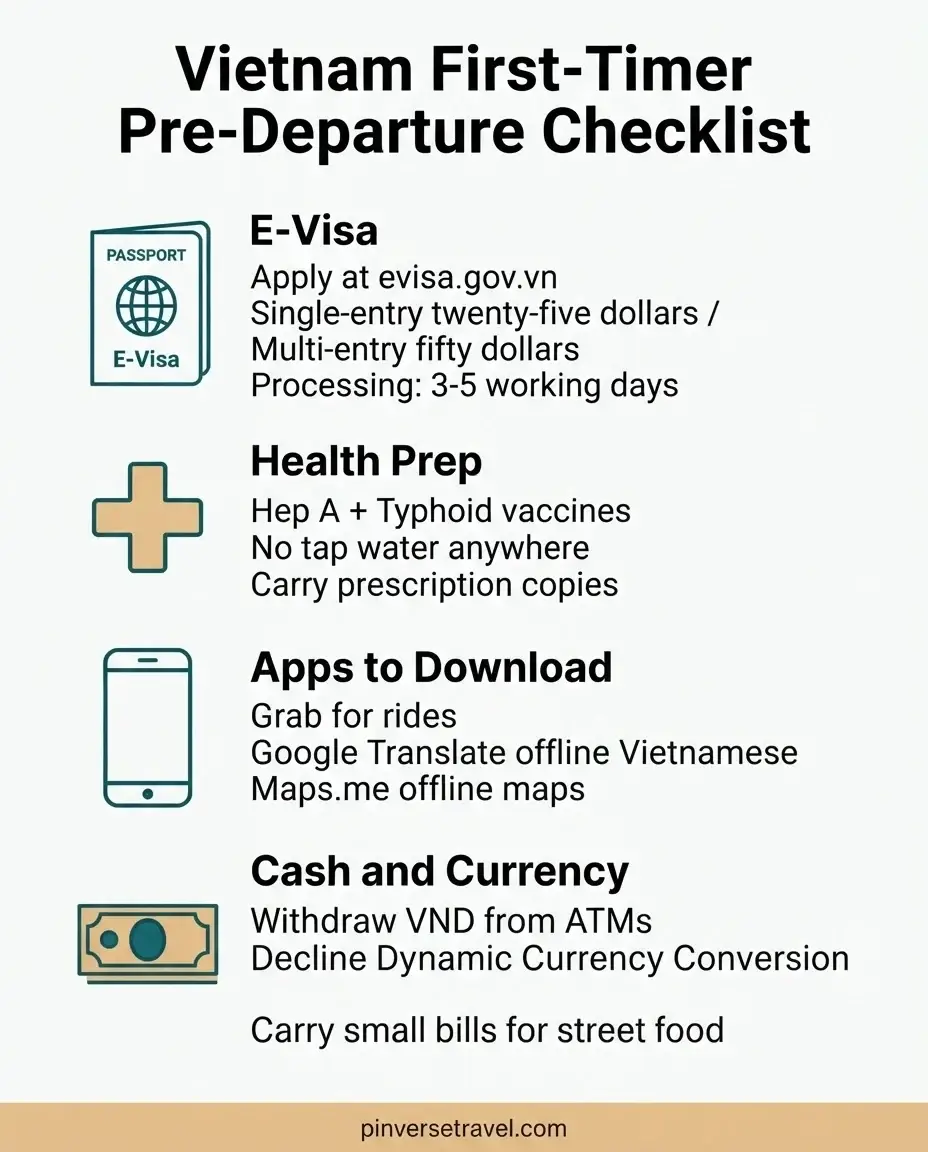
Most visitors can get a Vietnam e-visa, and the process is straightforward if you use the right source. The Vietnamese government’s official e-visa portal is evisa.gov.vn, and that is the only place you should apply. There are dozens of third-party sites that charge inflated fees for the exact same application, so skip them entirely.
A single-entry e-visa costs $25 USD and a multiple-entry visa costs $50 USD. Both are valid for up to 90 days. Standard processing takes 3 to 5 working days, so apply at least a week before you travel to give yourself a buffer. Once approved, print your e-visa and carry it alongside your passport at all times. Vietnam does not allow you to renew or extend an e-visa while you are in the country, so make sure your dates are accurate when you apply.
One important detail that most guides skip: if you are arriving at Tan Son Nhat International Airport in Ho Chi Minh City, you must also complete a pre-arrival declaration form online at prearrival.immigration.gov.vn, and you can submit it no earlier than 3 days before arrival. It is a quick form, but skipping it can create delays at immigration.
Health Preparation
The CDC Travelers’ Health page for Vietnam is worth a careful read before you depart. The recommended vaccinations include Hepatitis A, Typhoid, Hepatitis B, and Japanese Encephalitis if you’re spending time in rural areas. Make sure your routine vaccines (MMR, polio, influenza) are also up to date. If you’re planning any adventure activities like caving, trekking, or working with animals, ask your doctor about rabies pre-exposure prophylaxis.
Two critical points that almost no travel blog mentions: first, tap water in Vietnam is not safe to drink anywhere in the country, including in major cities. Drink sealed bottled water only, and ask for no ice in drinks unless you can confirm the ice is made from purified water. Second, marijuana and many common ADHD medications are illegal in Vietnam. Police sometimes conduct blood tests at bars and nightclubs, and you can be arrested for drug use that occurred in another country before your arrival. This is not an edge case. It happens.
Also worth noting: drones are illegal in Vietnam. The fine runs from $320 to $1,200, and flying near government buildings or military installations can result in arrest and deportation. Leave the drone at home.
When to Go: Vietnam Has Three Different Climates
Vietnam runs over 1,000 miles from north to south, which means talking about “the best time to visit Vietnam” is genuinely complicated. The country has three distinct climate zones, and they don’t all behave the same way.
The north (Hanoi, Sapa, Ha Long Bay) has four seasons. December to February brings cool, sometimes foggy weather, and while it is technically “dry season,” Ha Long Bay can have misty, grey days that some people love and others find disappointing. April and May offer warm, clear skies in the north before the summer rains arrive. September through November is typhoon season along the central and northern coast.
Central Vietnam (Da Nang, Hoi An, Hue) is best visited from February through May, when the weather is warm and dry. Hoi An floods regularly during October and November, so timing matters if this is a priority destination.
The south (Ho Chi Minh City, Mekong Delta) is hot year-round but has a clear dry season from November through April, which is when most first-timers visit.
For a classic north-to-south first trip, November through early April gives you the best shot at good conditions across the whole country.

The Destinations: A First-Timer’s Route That Actually Works
Most first-timers do Vietnam in one direction: Hanoi in the north down to Ho Chi Minh City (or the reverse). This makes sense geographically and logistically. Here are the anchors of that route and what makes each one worth your time.
Hanoi
Hanoi is where most northbound routes begin, and it is an excellent city to start in as a solo traveler. The Old Quarter is dense, chaotic, and completely alive. It is the best place in the country to learn the art of crossing the street (more on that shortly). The Temple of Literature is one of Vietnam’s oldest universities and a genuinely beautiful, quiet escape from the noise of the streets. The Ho Chi Minh Mausoleum complex is expansive and offers a fascinating window into Vietnamese history and political identity.
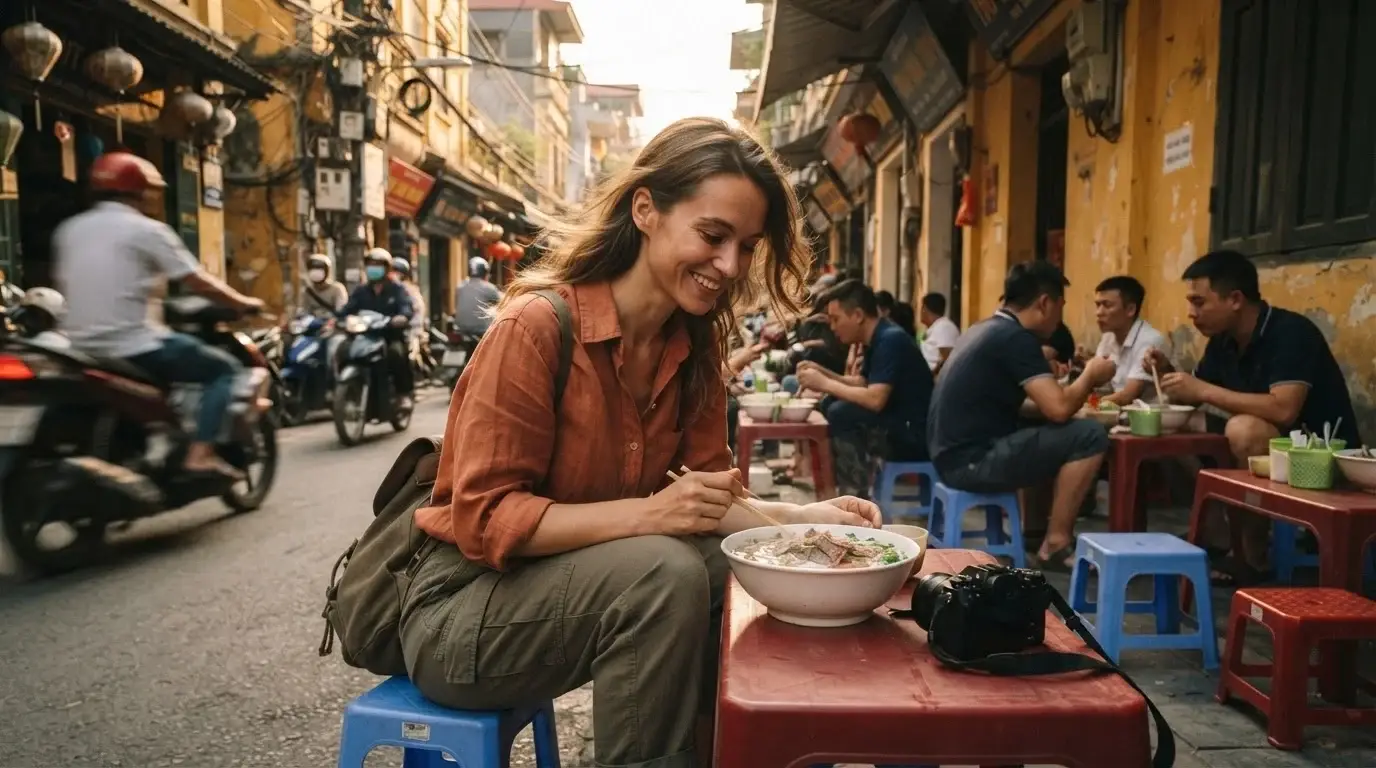
Budget 3 to 4 days in Hanoi. Eat bun cha (grilled pork and noodles) for lunch on a plastic stool and order a Bia Hoi, Vietnam’s draft street beer, which costs roughly 5,000-10,000 VND (less than $0.50 USD) per glass. The Hoan Kiem Lake area is ideal for solo evenings. It is safe, well-lit, and full of locals and travelers alike.
Ha Long Bay
Ha Long Bay is one of the most recognizable landscapes in Southeast Asia, and for good reason. The limestone karsts rising from the water are genuinely extraordinary. From what solo travelers consistently report, the cruise experience works surprisingly well when you go solo. You are placed with a small group on a junk boat, and the communal nature of the cruise makes it one of the easiest ways to meet people on the entire trip. A reputable two-day, one-night cruise typically runs $80 to $150 USD for a mid-range operator. Solo supplements exist on some boats but not all; ask directly when booking. Opt for a smaller boat with fewer than 20 passengers for a more personal experience.
Hue
Vietnam’s former imperial capital sits in the center of the country and is often overshadowed by its more photographed neighbors. That is a mistake. The Citadel, the Imperial Enclosure, and the Royal Tombs scattered across the surrounding countryside offer some of the deepest cultural immersion available in Vietnam. Hue is also famous for its royal cuisine, a distinct cooking tradition developed to satisfy the tastes of the Nguyen emperors. Try banh khoai (crispy Vietnamese pancakes) and bun bo Hue (a spicy beef and lemongrass noodle soup) while you’re here.
Hoi An
Hoi An Ancient Town became a UNESCO World Heritage Site in 1999 and is one of the best-preserved trading port towns in Southeast Asia. The narrow streets, the tailors, the lanterns at night, the river, and the beach nearby all make it one of the most photographed destinations in Vietnam. It is genuinely beautiful. As a solo traveler, Hoi An is particularly good for slow days: renting a bicycle and cycling to the beach, eating cao lau (a noodle dish unique to Hoi An that you literally cannot get made the same way anywhere else in the world) at a street-side restaurant, and wandering without a plan.
The town can feel touristy at peak times, but step two streets off the main drag and the authenticity returns immediately.
Ho Chi Minh City (Saigon)
Ho Chi Minh City is relentless, electric, and overwhelming in the best possible way. The War Remnants Museum is essential, difficult, and important. District 1 is tourist-friendly and a great base for a first-time visitor. The Cu Chi Tunnels day trip from the city is one of the most historically significant things you can do in southern Vietnam.
Budget 3 to 4 days. Eat banh mi from a street cart for breakfast (around 20,000-40,000 VND, or roughly $1-$2 USD). Try com tam (broken rice with grilled pork) for lunch. Take a beer on a rooftop bar in the evening to watch the motorbike traffic cascade through the streets below. It will not feel real.
Getting Around: Your Complete Transport Toolkit
Getting around Vietnam is more manageable than it looks from the outside. Here is what actually works. The Vietnam National Authority of Tourism’s transport guide gives a useful overview of the main options from the official source.
Sleeper Trains
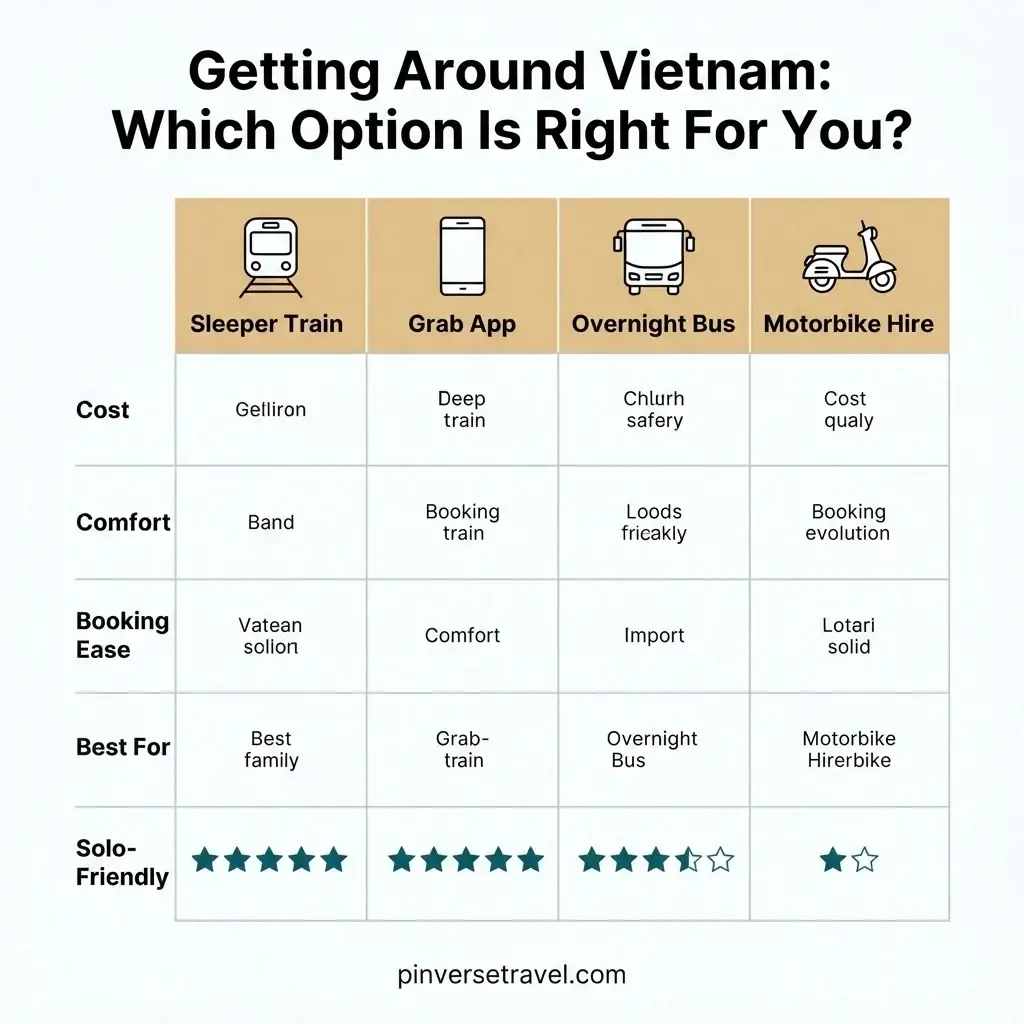
The Vietnam Railways sleeper train is the best way to cover long distances between cities, and it is one of the most genuinely enjoyable parts of a first Vietnam trip. A soft-sleeper berth (four-bunk cabin) from Hanoi to Da Nang takes roughly 14-16 hours and costs approximately $30-$50 USD depending on the route and class. It is comfortable, you wake up in a new city, and you save a night’s accommodation at the same time.
Book your berths in advance, especially for the Hanoi-Hue, Hanoi-Da Nang, and Da Nang-Ho Chi Minh City routes. Baolau has been an official ticketing agent for Vietnam Railways since 2015 and allows you to book online with your e-ticket sent by email. Open tickets 2 to 3 months ahead for peak season travel.

Grab App
Download Grab before you land. It is the dominant ride-hailing app in Southeast Asia, similar to Uber, and it works across Vietnam for both cars and motorbikes. The price is fixed before you accept the ride (no haggling, no inflated fares), and you can pay with cash or a linked international card. Always verify that your driver and vehicle match the app before getting in. Grab removes the biggest source of taxi frustration for first-time visitors: metered fare ambiguity and driver pressure.
Motorbikes: Honest Advice
Renting and riding a motorbike is romantic in theory and genuinely great for experienced riders. However, U.S. driver’s licenses and International Driving Permits are not valid in Vietnam. Riding without a Vietnamese license is technically illegal. More importantly, Vietnam’s roads involve dense, fast-moving motorbike traffic with its own unwritten logic that takes real time to learn. For a first solo trip, be honest with yourself about your skill level. Many first-timers find that Grab, trains, and overnight buses give them everything they need without the risk.
If you are in a rural area like the Ha Giang Loop or coastal stretches and motorbike riding is important to you, hire an experienced local driver guide (called a “xe om” or “Easy Rider” depending on the region) rather than riding solo with no local road experience.
Crossing the Street
This is not a joke. Crossing the street in Vietnamese cities, especially Hanoi and Ho Chi Minh City, is a legitimate skill that takes a few days to learn. Traffic does not fully stop for pedestrians the way it does in New York. The key is to walk at a slow, steady, predictable pace and let the motorbikes flow around you. Do not freeze. Do not sprint. Walk calmly and the traffic will navigate around you. It feels counterintuitive but it works, and within a day or two it becomes second nature.
Food: What to Eat and How to Find the Good Stuff
Vietnamese food is one of the great cuisines of the world, and a first-time solo visit gives you full freedom to eat at whatever pace and at whatever table you want. Vietnam’s official food guide from its national tourism authority is a solid starting reference, but here is the practical breakdown by dish and region:
- Pho: The national noodle soup. Best in Hanoi (pho bo, beef), served with lime, chili, bean sprouts, and fresh basil. Eat it for breakfast. It costs roughly 40,000-80,000 VND ($1.50-$3 USD).
- Bun cha: Grilled pork patties and belly served in a light broth with rice noodles and fresh herbs. A Hanoi specialty. Famous in part because Barack Obama ate it here with Anthony Bourdain. Worth the hype.
- Banh mi: A Vietnamese sandwich on a French baguette. Available everywhere, from carts to small shops, for 20,000-40,000 VND. In Ho Chi Minh City, Banh Mi Huynh Hoa is frequently cited as a benchmark.
- Cao lau: A Hoi An exclusive. Thick noodles with char siu pork and crispy croutons in a small amount of broth. Made only with water from a specific local well according to tradition. Eat it in Hoi An.
- Com tam (broken rice): A Saigon staple. Served with grilled pork chop, a fried egg, pickled vegetables, and a side of fish sauce dipping broth. Available at most local restaurants in Ho Chi Minh City from early morning.
- Banh xeo: A sizzling rice-flour crepe filled with shrimp, pork, and bean sprouts. Eaten by wrapping pieces in lettuce and dipping in nuoc cham sauce. Available across the country.
A few practical eating rules for first-timers: eat where locals eat. A plastic stool on a sidewalk with a queue of locals outside is almost always a better meal than a polished restaurant in the tourist district. Ask the price before ordering in smaller street stalls if no menu is visible, just to calibrate. And carry cash in Vietnamese Dong; many street food vendors and local markets do not accept cards.
Safety and Scams: What’s Real and What to Relax About
Here is the honest picture. The U.S. State Department currently rates Vietnam as a Level 1 destination, meaning “Exercise Normal Precautions,” which is the same advisory level as most of Western Europe. Violent crime against foreigners is genuinely rare. What is common is petty crime, and more specifically, scams that are designed to extract money through pressure, confusion, or distraction rather than force.
The most important scams to understand before you arrive:
The Taxi/Ride Scam: Only use Grab or recognized metered companies (Mai Linh, Vinasun, Green SM). Independent drivers at airports and tourist areas routinely quote dramatically inflated fares. The fix is simple: open Grab before you exit the terminal and use it every time.
The Shoe-Shine Scam: A friendly person approaches and starts shining your shoes without asking, then demands an inflated payment once they’re done. Walk away with confidence before they touch your shoes.
The Cyclo/Xe Om Price Agreement: Always agree on a price before getting on. Always. Not after. Before.
The Fake Currency Exchange: Use ATMs or banks for currency exchange, not independent money changers. Check your change carefully; Vietnamese Dong notes can look similar in the 20,000 and 200,000 VND range.
The “Closed Today” Redirect: A stranger tells you the place you’re looking for is closed today and offers to take you somewhere else (usually a shop where they get a commission). Your destination is almost certainly not closed. Thank them and keep walking.
Solo travelers consistently report that confidence and calm body language go a long way. Looking like you know where you’re going, even if you’re still figuring it out, discourages most approaches.
Culture, Customs, and Showing Up With Respect
Vietnam has a rich cultural identity shaped by thousands of years of history, Chinese influence, French colonial legacy, and its own fiercely independent spirit. Showing basic cultural respect as a solo traveler opens doors that staying in the tourist bubble keeps firmly closed.
A few things worth knowing. Remove your shoes before entering temples, pagodas, and many local homes. Dress modestly at religious sites, which means covering your shoulders and knees. Modest, lightweight layers are easy to pack and carry and save you the embarrassment of being turned away at the door of somewhere you really wanted to see.
Bargaining is common in markets but not in most restaurants, shops, or cafes with posted prices. When bargaining is appropriate, start at roughly 50-60% of the first asking price and work toward something that feels fair to both sides. The goal is a fair deal, not a “win.” Treating vendors as an obstacle to beat is both unpleasant and unnecessary.
Photographing people, especially older people and monks, always warrants a moment of eye contact and a smile before you raise the camera. A nod or a gesture asking permission is universally appreciated and often results in a far more genuine photograph than a stolen shot.
Budget: What Vietnam Actually Costs
Solo travel in Vietnam is genuinely affordable by almost any standard, but having a realistic number in your head helps you plan with confidence.
At a budget backpacker level (hostel dorms, street food, local transport, free attractions), you can travel comfortably on roughly $35-$45 USD per day. At a mid-range level (private guesthouse room, mix of street food and sit-down restaurants, occasional tours), $60-$100 per day gives you a comfortable and flexible trip. Multi-day cruises on Ha Long Bay and guided experiences add to this, but they are one-off costs rather than daily expenses.
ATMs are widely available in all cities and larger towns. Withdraw Vietnamese Dong directly rather than accepting the ATM’s offered conversion rate (always decline Dynamic Currency Conversion). Carry enough cash for a day or two when heading to smaller towns or rural areas, as ATMs become less reliable.

The Thing About Going Alone
I want to say something directly to anyone reading this who is still on the fence: Vietnam is one of the most rewarding countries I can imagine for a first solo trip. Not because it is easy (it isn’t, always) but because it pushes you just enough. You will navigate something confusing and figure it out. You will eat something extraordinary on a sidewalk at a table you chose alone. You will have a conversation with a local that you never would have had if you were with someone else, because solo travelers are approached differently.
When I was working as a sightseeing guide in New York, before any of my bigger trips, I used to watch the solo travelers in the groups I led. They asked different questions. They looked at things longer. They were present in a way that people traveling in groups sometimes weren’t. That observation stayed with me.
You don’t need a travel partner to have a meaningful trip. You need a decent plan, honest information, and the willingness to begin. Vietnam will meet you more than halfway.
If you’re planning your first solo trip and want a practical starting framework, Vietnam’s official tourism board at vietnam.travel is genuinely useful for orientation and destination research from the source.
Pack light, carry your patience, and book the flight.