Where Solo Travel Actually Changes You: 5 Destinations to Know

There’s a particular kind of restlessness that shows up when you’ve been sitting still too long. I know it well. It’s the feeling I had when I was working a conventional job in New York, watching my vacation days tick down while the world stayed enormous and mostly unexplored. I kept telling myself I’d travel more when things slowed down, when I had more money, when it felt like the right time.
Spoiler: the right time never came on its own. I had to go get it.
What I discovered, first in Australia during university and then backpacking solo across Europe, was that travel doesn’t just show you new places. It shows you a version of yourself you didn’t know existed. The person who figures out a missed bus connection in a foreign city, who eats alone at a restaurant and genuinely enjoys it, who has a real conversation with a stranger across a language barrier is not the same person who left home. That’s the shift people mean when they talk about life-changing travel.
But not every destination produces that shift equally. Some places are pleasant. Others get under your skin. According to Hostelworld’s 2025 State of Solo Travel Report, 78% of solo travelers say their trips boosted their confidence, mental health, or both, and 59% say connecting with other cultures is their top reason for going. The destinations in this article were chosen precisely because they do that work. They don’t just give you a nice vacation. They actively change how you move through the world.
Here are five of them.
Japan: The Place That Quietly Rewires You
Japan tends to ruin other countries. Not because they become less beautiful or interesting, but because you start noticing what’s missing elsewhere. The punctuality, the quiet respect between strangers, the extraordinary food, the way public spaces are treated with genuine care. Solo travelers consistently say Japan produces something they weren’t expecting: a shift in standards, for themselves and for the world around them.
From what solo travelers report across the board, Japan is one of the most beginner-friendly international destinations available, and it also happens to be the most aspirational solo travel destination in the world. It topped the Hostelworld 2025 solo traveler wish-list. The Japan National Tourism Organization has a thorough guide to why this particular moment is an ideal one to go, covering everything from solo dining culture to temple stays designed specifically for individual travelers. You can read it here: Solo in Japan: Why 2025 Is the Best Year to Explore Alone.
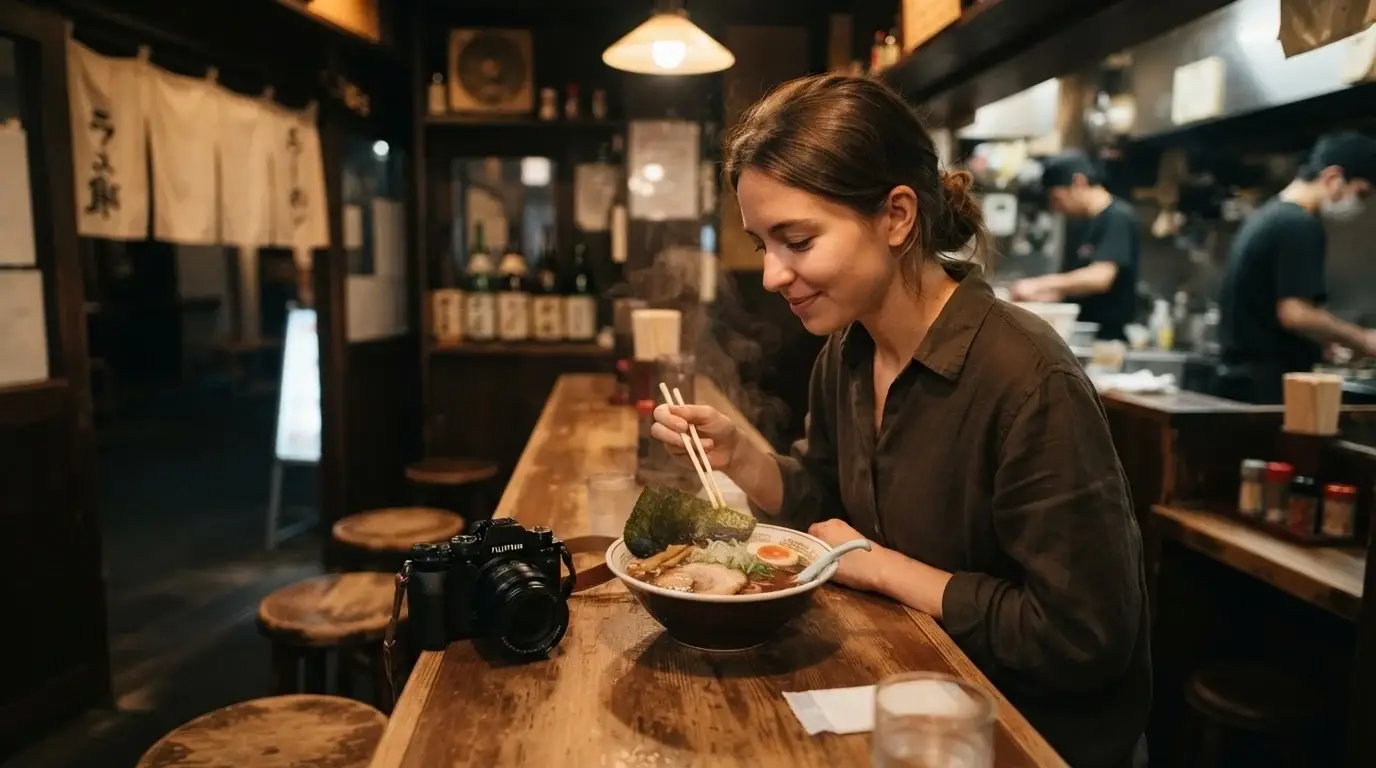
One thing that floors first-timers is how naturally solo-friendly Japanese culture actually is. Counter-seating at ramen shops and sushi bars means you’re not the odd one out at a table for one. Karaoke boxes are a solo activity. Onsens are communal but comfortable for people who arrive alone. You spend your days doing exactly what you want, at exactly your pace, in one of the most aesthetically careful countries on earth.
For navigation, get a Welcome Suica IC card as soon as you land at Narita or Haneda. It’s a prepaid contactless card that works on almost every train, subway, and bus across Japan, and also pays for convenience store purchases. Japan-guide.com has the clearest explanation of how it all works: Prepaid IC Cards in Japan: Suica, Pasmo, Icoca. The card is valid for 28 days from first use, which is more than enough for most trips.
A practical routing for a first solo trip: Tokyo first (stay in Shinjuku or Shibuya to be central), then a bullet train to Kyoto for a few days of temples and slow walking, then Osaka for the food. Osaka’s Dotonbori neighborhood alone is worth the trip. Look for takoyaki (octopus balls) from street stalls, tonkatsu pork cutlets at local lunch spots, and kushikatsu (skewered, battered, fried everything) at standing bars where you eat shoulder to shoulder with office workers. The food makes you feel welcomed in a way that transcends language.
The lesson Japan teaches solo travelers is one of self-sufficiency and presence. You are not lost when you are on your own here. You are free.
Peru: Where Humility Arrives at 7,972 Feet
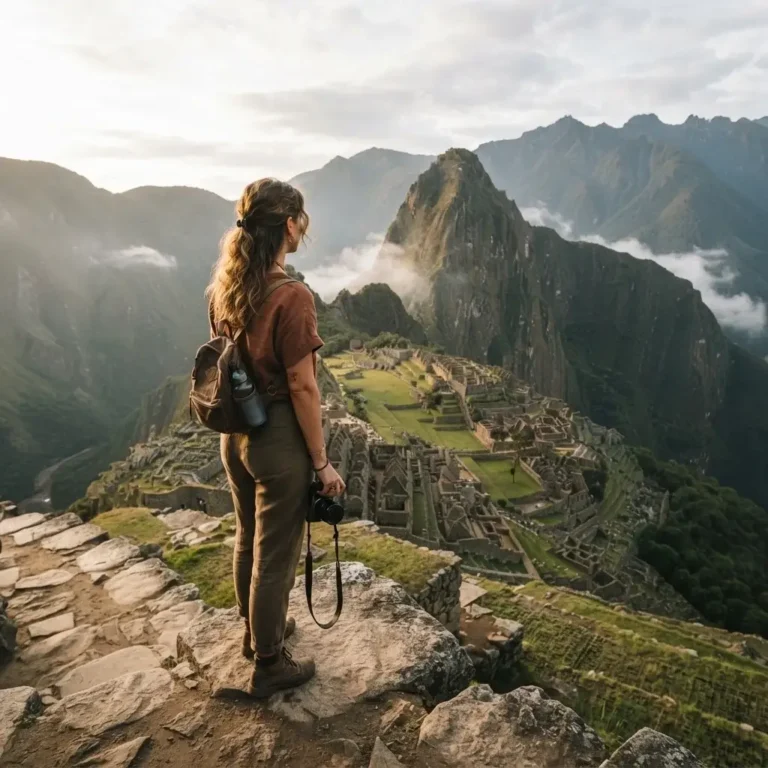
There’s a reason people cry at Machu Picchu and it’s not just altitude. Solo travelers who make the journey to the ancient Inca citadel above Cusco consistently describe something that sounds less like sightseeing and more like a reckoning. Standing inside a 500-year-old city perched impossibly on a ridge in the Andes, surrounded by clouds and silence, has a way of putting your ordinary anxieties in their place.
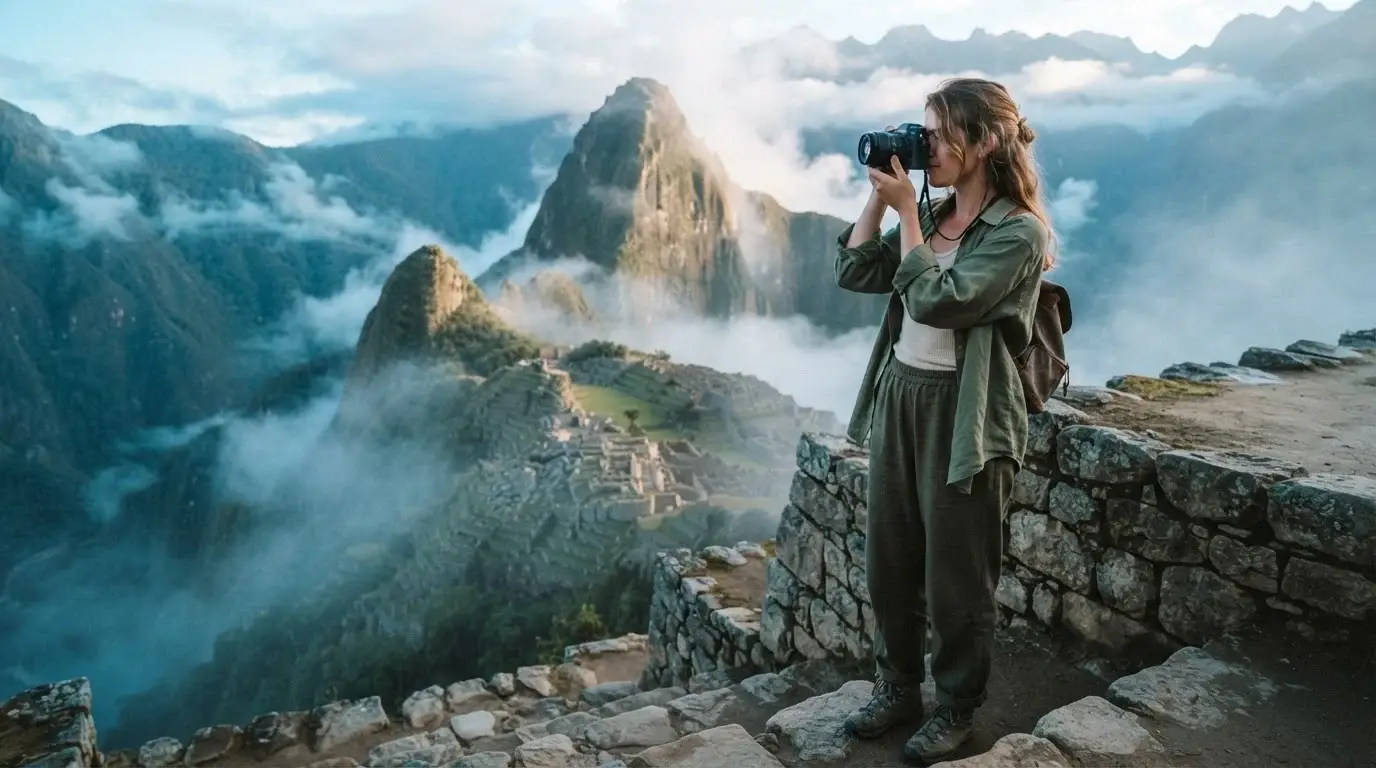
The logistics require real attention, which is part of what makes arriving feel so earned. Tickets to Machu Picchu must be booked in advance through Peru’s official government ticketing platform. Walk-up tickets are not reliably available, especially during high season (June through September). You can book directly at the official Machu Picchu ticketing site, and tickets currently start at around $40 USD depending on the circuit. Circuit 2A is the most popular for first-timers. Book several weeks ahead.
Getting there is part of the adventure. Most travelers fly into Lima first, and then take a domestic flight or overnight bus to Cusco. Spend at least two or three days in Cusco before attempting Machu Picchu. The altitude in Cusco sits at around 11,152 feet and your body needs time to adjust. Rushing this step is the most common mistake solo travelers make, and it will flatten you. Drink coca tea, move slowly, eat light, and don’t pretend you’re fine when you’re not.
From Cusco, take the PeruRail or Inca Rail train from Ollantaytambo to Aguas Calientes (the town at the base of Machu Picchu). The train ride through the Sacred Valley is genuinely stunning. From Aguas Calientes, either take the bus up the switchback road to the citadel entrance or hike up on foot if you want to arrive breathless in the best possible way.
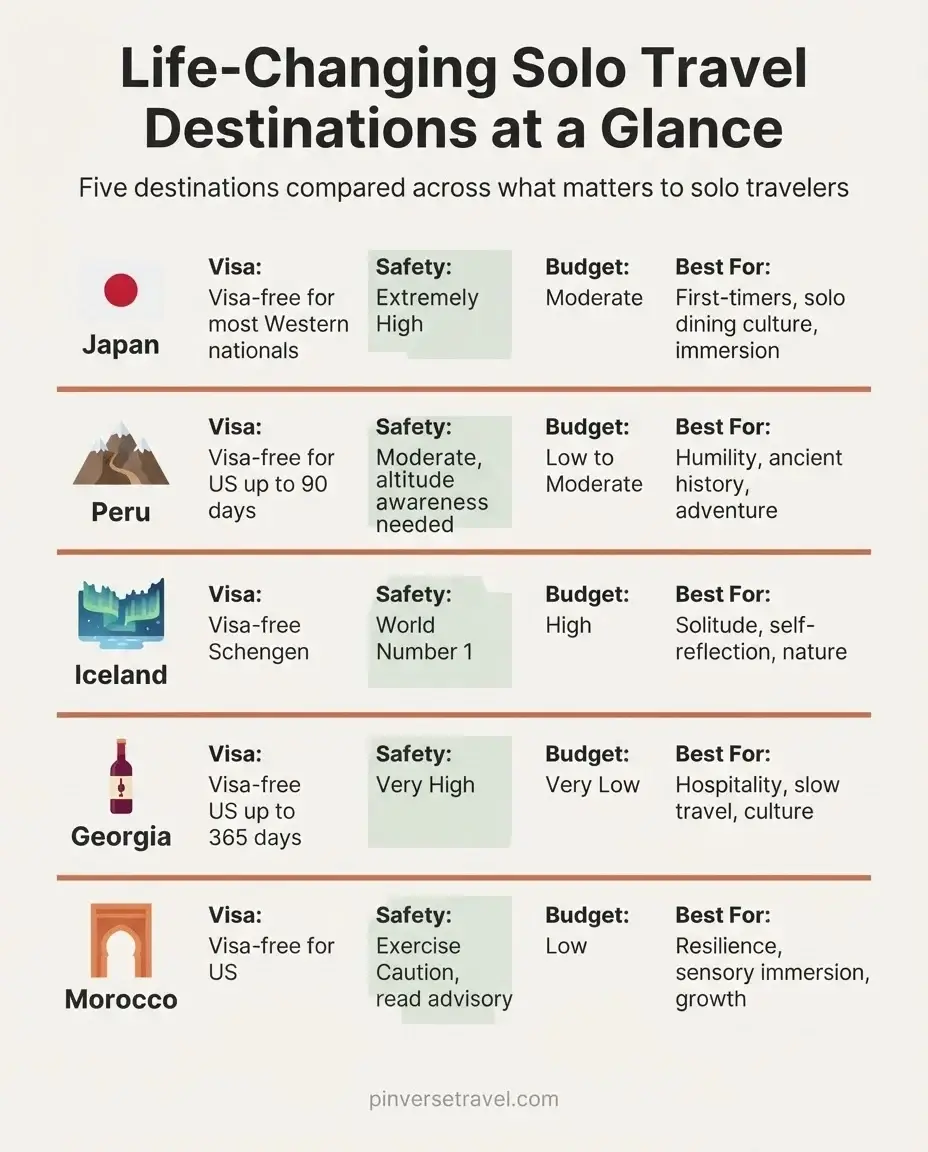
US citizens do not need a visa for Peru. Tourist stays of up to 90 days are allowed with a valid passport.
For food, Cusco’s San Pedro Market is the place to go for quinoa soup, fresh chicha morada (purple corn drink), and roasted corn with local cheese. In Lima, if you have a layover or choose to add a night, the Miraflores neighborhood has some of the best ceviche on the planet. Don’t skip it.
What Peru tends to teach solo travelers is humility, context, and the smallness of personal worry. When you’re standing in front of something ancient and vast, it becomes very difficult to keep feeding your anxieties. That is, perhaps, the most useful thing any destination can offer.
Iceland: Solitude That Builds You Back Up
Iceland is one of those places that acts like a mirror. Spending time alone in its landscapes, where it is entirely possible to go an hour on a road trip without seeing another car, encourages a kind of quiet that most of us never access at home. People return from Iceland changed not because of what happened to them there, but because of what they finally had space to think about.
It is also, practically speaking, the safest solo travel destination in the world. Iceland ranked number one for solo traveler safety and scored second place in the 2025/26 Women, Peace and Security Index across 181 countries. The official Visit Iceland travel guide is a reliable first stop for planning, covering road conditions, seasonal considerations, the Northern Lights, and sustainable travel practices.
The Ring Road (Route 1) is the classic way to experience the country, and renting a car gives you full freedom to pull over whenever the landscape demands it, which is often. If you’d rather not drive, guided day tours from Reykjavik cover most of the major natural sites including the Golden Circle (Gullfoss waterfall, Geysir hot spring area, and Thingvellir National Park), the South Coast, and the Jokulsarlon glacier lagoon. Reykjavik itself is a wonderfully walkable small city with a real arts scene, excellent coffee, and the kind of friendly locals who will give you thirty minutes of honest conversation if you let them.
For food as a solo traveler, Iceland’s restaurant culture has no awkwardness around solo dining. Try skyr (the thick Icelandic dairy product that falls between yogurt and cheese) at any cafe, lamb soup at a traditional spot, and fresh Arctic char if you see it on a menu. The fish is exceptional. Prices in Iceland are genuinely high, so budget accordingly: restaurant meals in Reykjavik typically run $20-40 USD per person, and a petrol fill-up will surprise you. Cooking some of your own meals from supermarkets like Bonus or Kronan stretches your money significantly.
The transformation Iceland offers is specifically about solitude without loneliness. There is a difference. Solo travel teaches you to distinguish the two, and Iceland is one of the best classrooms on earth for that lesson.
Georgia (the Country): The Place That Restores Your Faith in Hospitality
If you haven’t heard much about Georgia, the small Caucasus country tucked between Russia, Turkey, Armenia, and Azerbaijan, that’s exactly why it belongs on this list. It is one of those destinations where the gap between expectation and reality runs entirely in your favor.
Tbilisi, the capital, is a city of tremendous character. The old town is a chaotic, beautiful maze of carved wooden balconies, sulfuric hot baths (free or very affordable, and an institution in local culture), wine bars built into Soviet-era architecture, and churches that have been standing since the 5th century. The food alone could anchor a week-long trip. Georgian cuisine is one of the world’s great undiscovered culinary traditions: khinkali dumplings filled with spiced meat and broth that you eat with your hands, khachapuri (cheese-filled bread that comes in regional varieties and is essentially perfect), churchkhela (walnut-stuffed grape-must candy), and natural wine from the world’s oldest wine-producing region.
Solo travelers consistently report that Georgians are among the warmest and most genuinely hospitable people they’ve encountered anywhere. The concept of “guest as gift” runs deep in the culture. You will be invited to share meals, offered wine by strangers, and generally treated with a generosity that feels old-fashioned in the best sense. This is not a performance for tourists. It is simply how people are.
Georgia’s official tourism website covers regional attractions, cultural highlights, and travel logistics. US citizens can enter and stay in Georgia visa-free for up to 365 days, which makes it an extraordinary option for slow travelers or anyone thinking about a longer digital nomad stint. Most other Western nationalities also enjoy visa-free or very easy access.
For practical navigation: the Tbilisi metro is clean, cheap, and straightforward. A metro card costs 2 GEL (well under $1 USD) to load and individual journeys cost 1 GEL. Bolt (the ride-share app) works reliably and cheaply throughout the city. For day trips into the surrounding countryside, shared marshrutka minibuses run regularly from Didube bus terminal to most regional towns including Mtskheta (ancient capital, UNESCO-listed), Kazbegi (mountain village with views that don’t look real), and Signagi in the wine region of Kakheti.
Georgia tends to change solo travelers by restoring something. After years of guarded urban living, being treated with open, uncomplicated generosity from strangers is unexpectedly moving. People leave with their faith in human connection quietly repaired.

Morocco: The Place That Teaches You to Sit with Discomfort
Morocco is not the easiest destination on this list. That is precisely why it belongs here.
The medinas of Marrakech, Fes, and Chefchaouen are genuine labyrinths. No amount of Google Maps preparation fully prepares you for being genuinely, completely turned around inside a centuries-old maze of alleyways where the streets have no names and every passageway looks like the last one. Add the sensory intensity of a busy souk, the call to prayer echoing across rooftops, the smell of fresh-baked msemen flatbread and tanning leather and rose water, and Morocco quickly becomes an experience you cannot passively consume. You have to engage.
That engagement is uncomfortable at first and deeply rewarding afterward. Solo travelers who push through the initial overwhelm consistently describe Morocco as the destination that taught them to trust their instincts and adapt in real time. Both of those skills follow you home.
A few honest safety notes: the US State Department currently advises travelers to exercise increased caution in Morocco due to the threat of terrorism. This advisory applies broadly to North Africa and should be read before you go. In practice, the vast majority of solo travelers in cities like Marrakech, Fes, and Chefchaouen move around safely with basic awareness: not walking unfamiliar areas alone at night, keeping valuables secured, and dressing modestly in respect of local culture. Booking a riad (traditional guesthouse) inside or near the medina gives you a calm, secure base and typically includes staff who know the neighborhood well.
Hire a licensed guide for your first day in any new medina. This is one of the best pieces of advice for solo travelers in Morocco and one that most competitors don’t emphasize enough. A guide not only orients you to the layout but introduces you to the logic of the place: which souks sell what, how to navigate around the main tourist drags, where locals actually eat. After one guided morning, you will feel far more confident navigating alone.
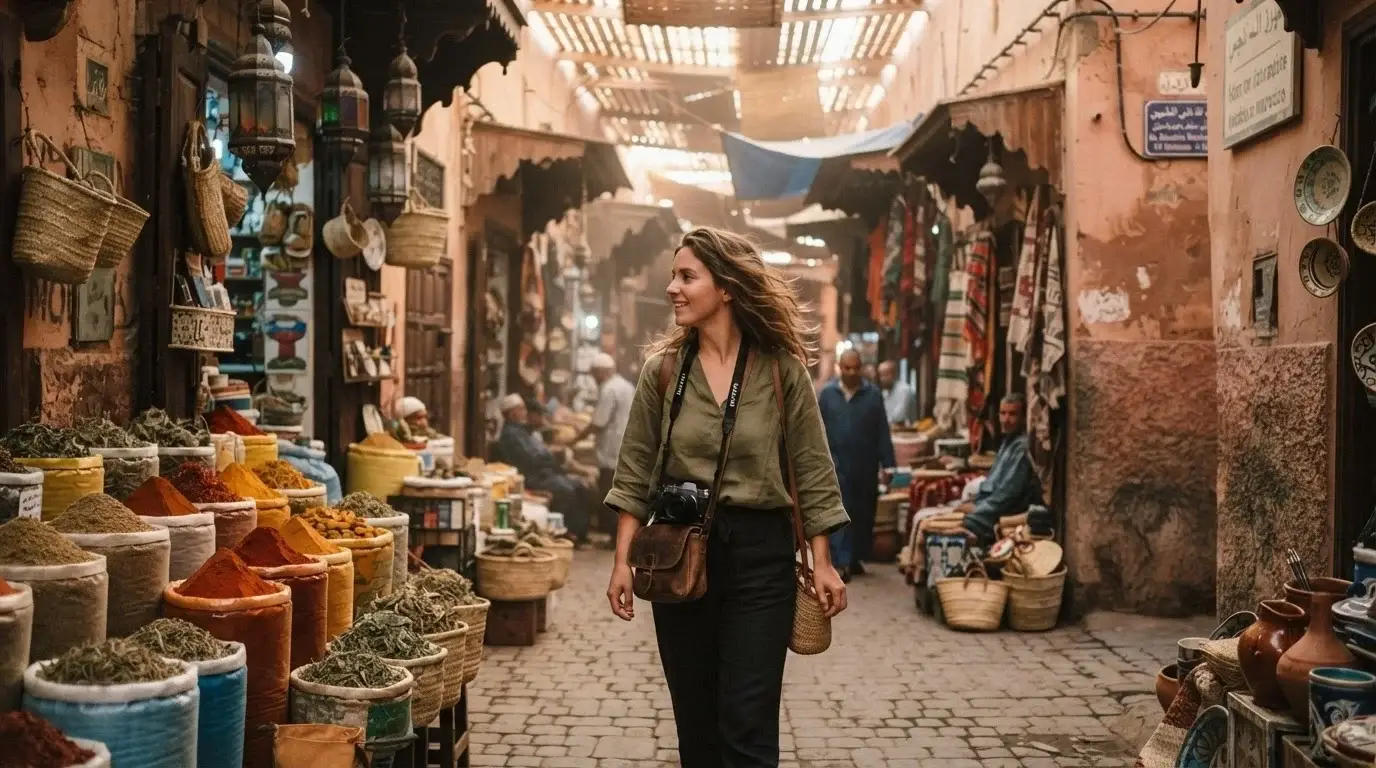
For food: a clay tagine of slow-cooked lamb with preserved lemon and olives from a family-run restaurant away from the main square, fresh harira soup in the early morning, bastilla (a savory-sweet pastry of pigeon or chicken with almonds and cinnamon), and fresh-squeezed orange juice from the stalls in Djemaa el-Fna square for about 5 Moroccan dirhams (roughly 50 cents). Eat where you see locals eating, not where someone on the street is waving you through a doorway.
Morocco teaches something that’s hard to learn anywhere comfortable: that uncertainty is survivable, that your own instincts are more reliable than you thought, and that the most disorienting experiences often become the best stories. That is a lesson worth crossing an ocean for.
What All Five of These Places Have in Common
None of these destinations change you by being perfect. They change you by being real. Japan challenges your assumptions about what daily life can feel like. Peru gives you a perspective that recalibrates ordinary worry. Iceland grants you the silence to hear yourself think. Georgia reminds you that human warmth still exists in abundance. Morocco asks you to stay present when everything in you wants to plan and control.
I left a steady job to build a life around exactly this kind of travel, not because travel is always easy or beautiful or Instagram-ready, but because it is consistently honest. It shows you who you are when the familiar scaffolding is removed.
If any one of these destinations has been living on a list in the back of your mind, that’s probably a sign. The perfect moment to go is not waiting for you down the road. It’s here, and it’s now, and it starts with a decision.
Pack the bag. Book the flight. The version of you that comes back will thank you for it.