Exploring Cambodia Alone for the First Time: What to Know

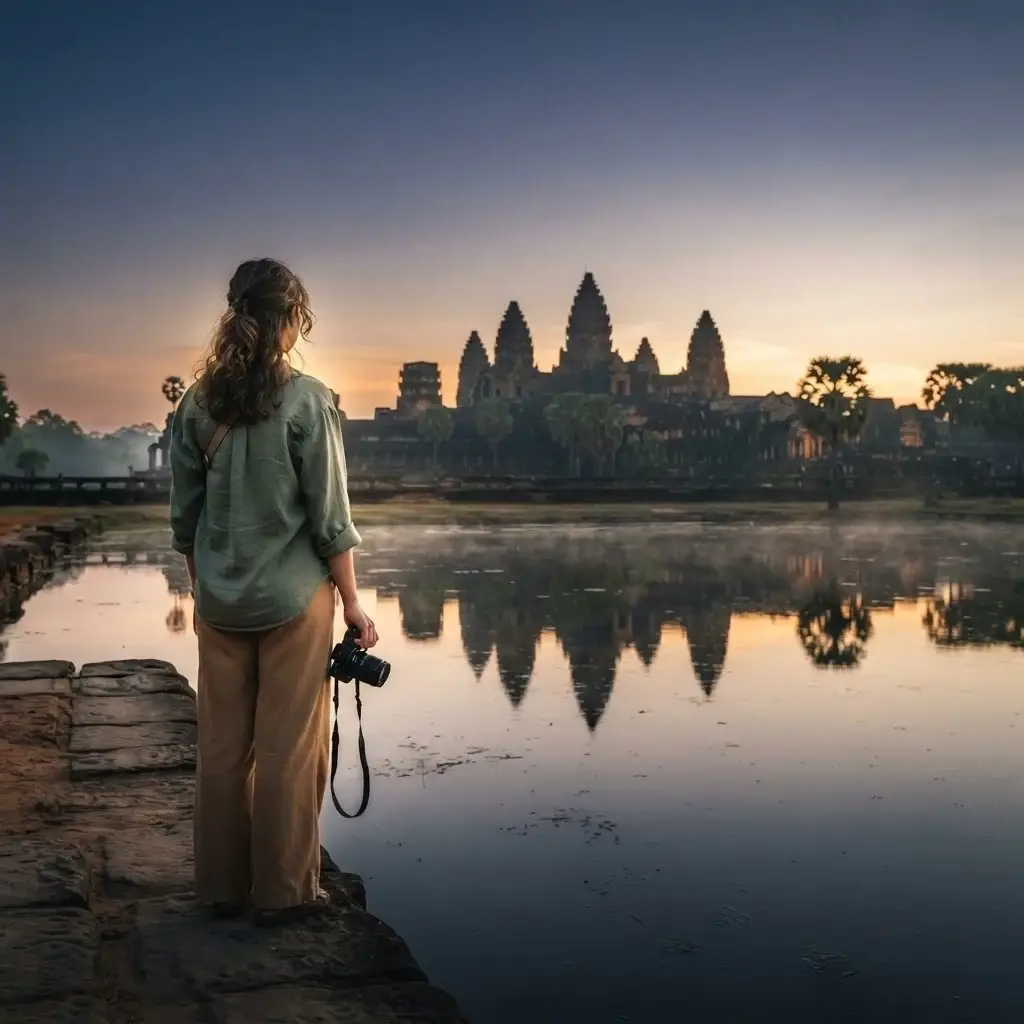
There is a moment that happens to almost every solo traveler in Cambodia. You are standing in front of Angkor Wat at sunrise, the stone towers turning gold while mist rolls off the reflection pond, and you realize with sudden clarity that you almost did not come. You almost waited for a friend to be free. You almost talked yourself out of it.
I have felt that same quiet ache of gratitude on solo trips, that specific feeling of being exactly where you are supposed to be, entirely on your own terms. Cambodia tends to produce it faster than almost anywhere. It is a country that demands your full attention, rewards your curiosity, and teaches you things about resilience and history that no other destination quite manages.
If you are thinking about exploring Cambodia alone and wondering whether it is practical, safe, and worth the leap, this is the guide I wish had existed before my first solo Southeast Asia trip. I have pulled together everything you actually need, with real information, honest safety context, and a clear picture of what the experience is like on the ground.
Is Cambodia a Good Destination for Solo Travel?
The short answer is yes, and the longer answer is that Cambodia rewards solo travelers in particular. The pace of the country suits independent travel. Cities are walkable and navigable. Accommodation for solo travelers is easy to find at every budget level. The Cambodian people have a warmth and quiet resilience that has struck virtually every solo traveler who visits, and the country’s history gives every journey a depth that you simply do not find in more touristy destinations.
That said, Cambodia is not a destination you can approach carelessly. It has a real and complex present, shaped by a traumatic past, and being an informed, respectful traveler makes your experience dramatically richer. The Cambodia Ministry of Tourism’s official site is a reasonable starting point for official entry and regional information before you start planning routes.
The question is not really “can I explore Cambodia alone?” It is “am I ready to show up with curiosity, patience, and genuine respect?” If the answer is yes, Cambodia will give you one of the most meaningful solo trips of your life.
Before You Go: Visas, Entry, and the Basics
Getting into Cambodia is straightforward for most travelers. Cambodia offers an e-Visa that you apply for entirely online through the official Cambodian e-Visa portal. The Tourist Visa (Visa T) costs $30 USD and gives you a single-entry, one-month stay with three months of validity from the date of issue. Processing takes about three business days, so apply at least a week before you travel to give yourself a buffer.
You can also get a visa on arrival at international airports in Phnom Penh (now Techo International Airport, which replaced the old Phnom Penh International Airport as of September 2025), Siem Reap Angkor International Airport, and Sihanoukville International Airport. If you are crossing a land border, note that e-Visa entry via the Poipet and Cham Yeam checkpoints is currently suspended, so verify your crossing point before you go.
A few non-negotiable basics for first-timers: bring your passport with at least six months of validity, and carry some small US dollars with you. Cambodia runs almost entirely on the US dollar for tourist transactions, with Cambodian riel used mostly for change and small local purchases. ATMs in Phnom Penh and Siem Reap are readily available, but always count your cash at the machine since there have been reports of counterfeit bills from certain ATMs. Ripped or heavily worn dollar bills are often refused, so keep your cash clean.
Siem Reap: Your First Stop, and Why
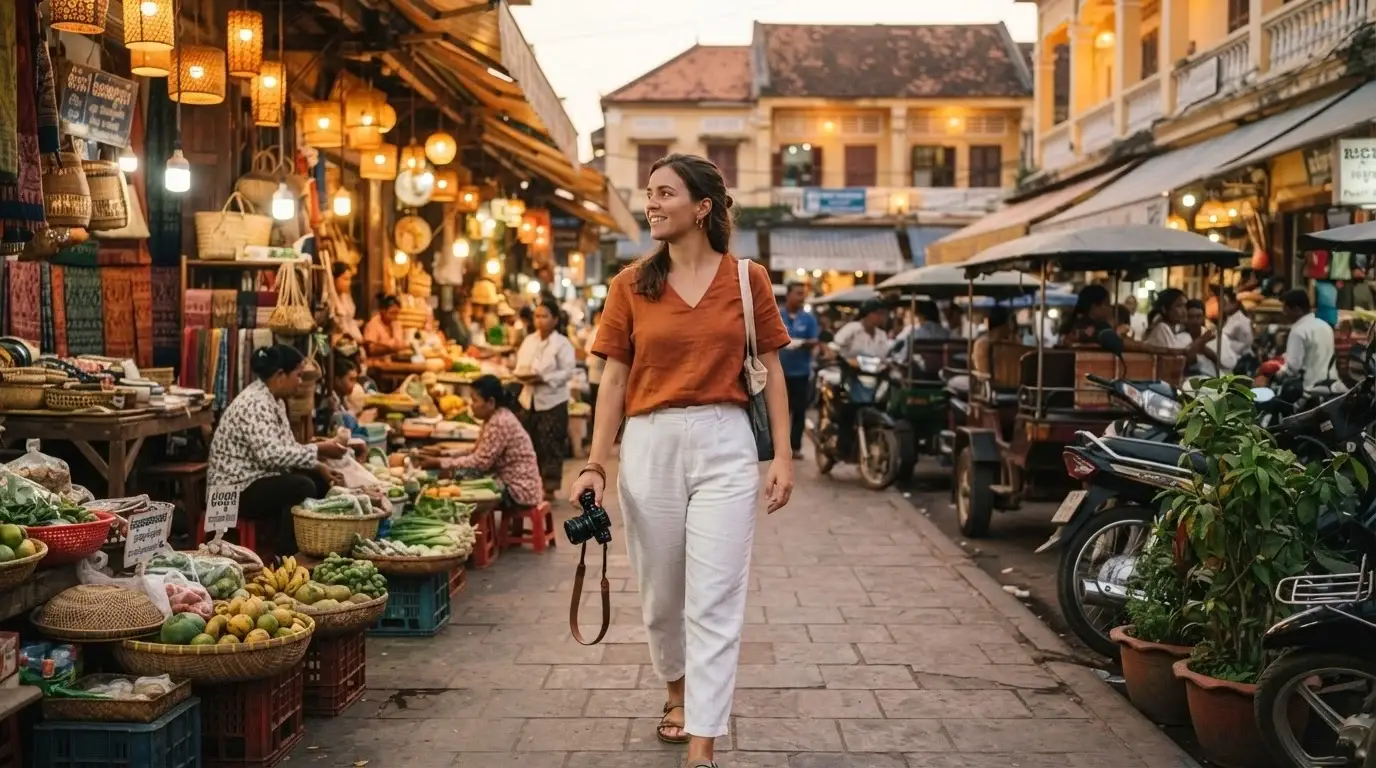
Most solo travelers to Cambodia start in Siem Reap, and there is a good reason for that. It is the most tourist-friendly city in the country, well set up for independent travelers, with a lively but manageable energy. The streets around the Old Market and Pub Street area are full of guesthouses, restaurants, and other travelers, which makes it an easy place to land, get your bearings, and find your feet before the rest of your trip.
But you are not here for Pub Street. You are here for Angkor.
Angkor Wat and the Temple Complex
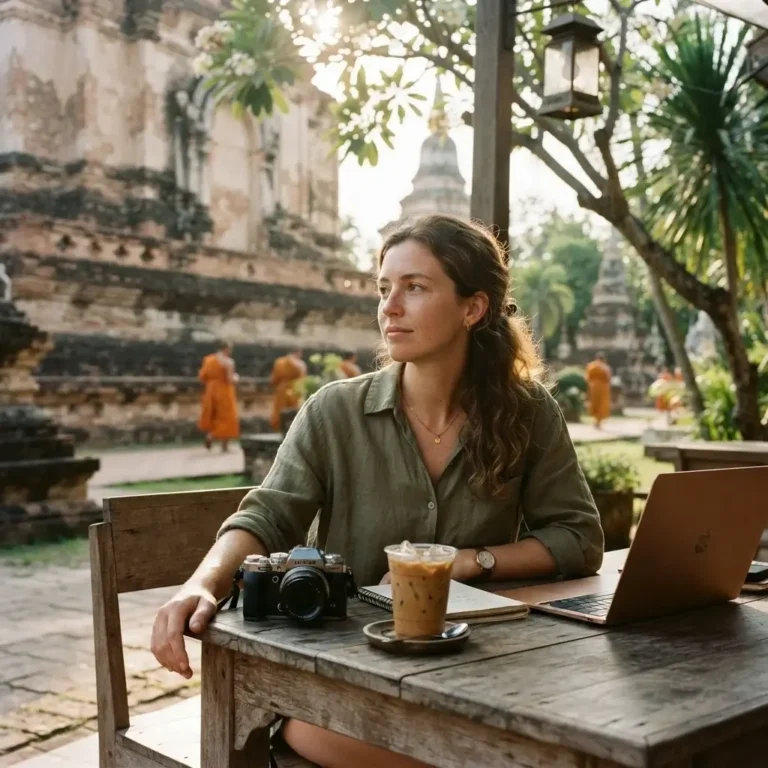
The Angkor Archaeological Park is one of the largest religious monuments ever built, and visiting it alone is genuinely one of the most extraordinary experiences solo travel can offer. You set your own pace. You linger at the details nobody else is photographing. You sit in a gallery watching light shift across a stone carving and nobody rushes you onward.
Tickets are purchased only through Angkor Enterprise, the official and only legitimate ticket source. A one-day pass is $37, a three-day pass is $62, and a seven-day pass is $72. The ticket office opens at 5:00 AM, which is when the sunrise crowd starts moving in. Most experienced travelers recommend the three-day pass at minimum, because the park is enormous and genuinely requires that time to feel settled rather than rushed.
For your first morning, hire a tuk-tuk driver the evening before, agree on a rate for a full-day temple circuit (expect to pay around $15 to $20 for a full day), and ask them to pick you up at 4:30 AM for the sunrise. A good tuk-tuk driver in Siem Reap will become your guide, driver, and informal local expert rolled into one. Tip them well.
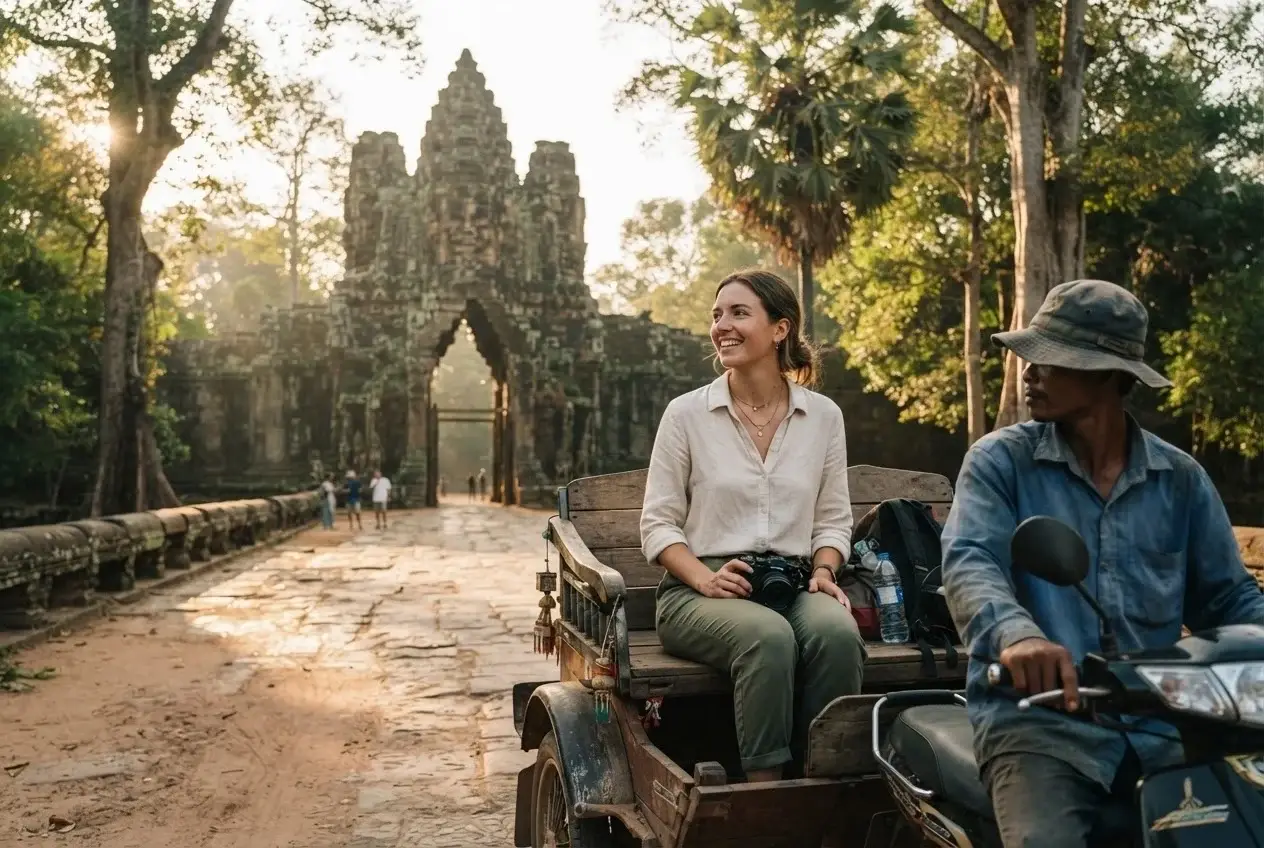
Beyond the main temple, do not skip Ta Prohm (the one with the trees growing through the stone), Bayon with its enormous carved faces, and Banteay Srei for its extraordinary detail. Each has its own personality, and the more time you spend, the more the complex stops feeling like a tourist site and starts feeling like a living piece of history.
One practical note: dress appropriately before you arrive. Both knees and shoulders must be covered to enter the temples. A lightweight linen shirt and loose pants or a long skirt work well in the heat and show respect for the sacred nature of the site.
Getting from Siem Reap to Phnom Penh Independently
The most popular way to make this journey as a solo traveler is by bus, and it is easier than you might expect. Several reliable companies run daily services between the two cities, and the journey takes roughly five to six hours. The cost is around $10 USD for a standard ticket, and tickets can be booked through your guesthouse or directly from the bus company offices near the Old Market.
The road between the two cities is in reasonable condition, and the journey passes through flat Cambodian countryside, rice paddies, and small towns. Bring snacks, a fully charged phone or book, and some patience for the occasional unscheduled stop. The buses are air-conditioned and usually comfortable.
Avoid traveling between cities at night. The US State Dept Cambodia travel advisory explicitly notes the risks of nighttime road travel in Cambodia, including poorly maintained vehicles, drivers ignoring traffic laws, and the absence of organized roadside assistance outside of urban areas. Stick to daytime journeys.
Phnom Penh: The City That Changes You
Phnom Penh sits at the confluence of the Mekong and Tonle Sap rivers, and it is a city of real contrasts: beautiful French colonial architecture alongside crumbling back streets, luxury riverfront restaurants next to local markets where a bowl of noodle soup costs less than a dollar. It is denser and more chaotic than Siem Reap, but solo travelers who take it slow are richly rewarded.
Spend time walking the riverfront promenade, visiting the Royal Palace and Silver Pagoda (dress conservatively: covered shoulders and knees, and shoes you can remove easily), and finding a local restaurant down a side street where you point at whatever the person next to you is eating.
The History You Cannot, and Should Not, Skip
Cambodia’s recent past is one of the most significant things you will encounter as a solo traveler, and approaching it thoughtfully matters. Between 1975 and 1979, the Khmer Rouge regime was responsible for the deaths of an estimated 1.7 to 2 million people, roughly a quarter of Cambodia’s population at the time.
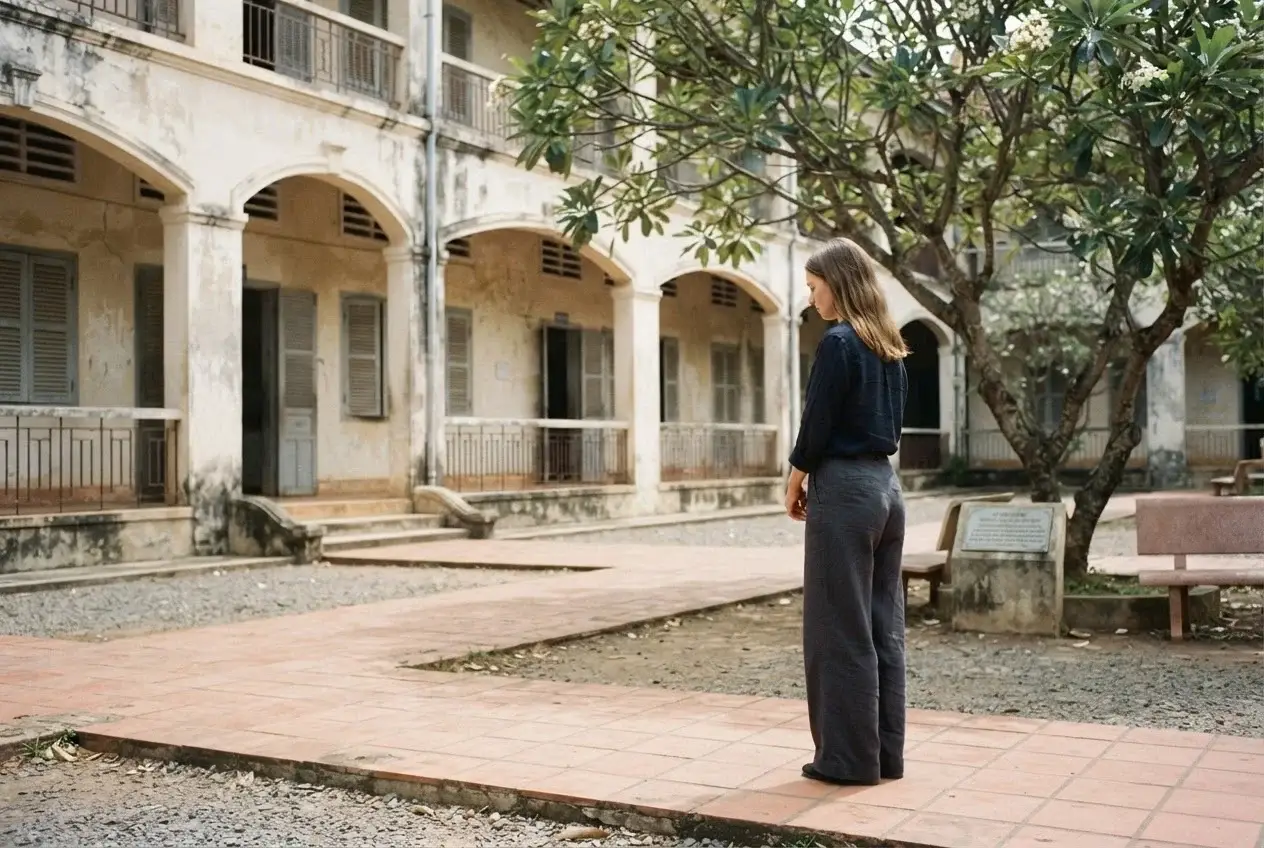
The Tuol Sleng Genocide Museum, located in central Phnom Penh, is the former S-21 prison where thousands of people were detained, interrogated, and killed. It is now a museum and memorial site open every day from 8:00 AM to 5:00 PM. Entry is $5 for international adults, with audio guides available for $5 in multiple languages including English. Go early, go slowly, and give yourself time afterward to sit quietly in the small garden or the White Lotus meditation room in Building D before moving on.
Choeung Ek, the Killing Fields memorial about 15 kilometers outside the city, is a companion visit that many travelers pair with Tuol Sleng. Together, they are among the most powerful memorial experiences available anywhere in the world. These sites have also been recognized by UNESCO as part of the Cambodian Memorial Sites World Heritage inscription, acknowledging their global significance.
Go with an open heart and a willingness to sit with uncomfortable emotions. This is not dark tourism for shock value. It is the history of the living people around you, and understanding it transforms your entire relationship with Cambodia.
The Food: Eat Khmer, Eat Often
Cambodian food is one of the most underappreciated cuisines in Southeast Asia, and exploring it alone means you can eat at the exact pace and place you want without coordinating with anyone else.
Fish amok is the dish you will hear about most, and for good reason. It is a creamy, coconut-based fish curry steamed in banana leaf, mild enough to eat comfortably in the heat, and deeply savory. Order it at a proper Khmer restaurant, not a tourist imitation. Nom banh chok, rice noodles in a light herbal fish-based broth, is what locals eat for breakfast and it is one of those dishes that feels entirely specific to Cambodia. Kuy teav, a pork or beef noodle soup, is the other breakfast staple and you will find it at market stalls for around $2.
Go to the local markets for lunch. The Central Market in Phnom Penh and the Old Market in Siem Reap both have proper cooked food sections where you can eat a full, fresh, delicious meal for $2 to $4. Point, smile, and eat whatever looks busy.
One food note for solo travelers in particular: Cambodia is one of those countries where eating alone at a street stall or small local restaurant is entirely normal and comfortable. You will not feel out of place. In fact, eating alone often invites conversation with the owner or other diners in a way that group dining never does.
Safety When Exploring Cambodia Alone
Cambodia is not a dangerous country for travelers, but it does require specific awareness. The most common issue solo travelers encounter is snatch-and-grab theft, where a motorbike passes and grabs a bag, camera, or phone from a pedestrian or tuk-tuk passenger. The Australian Government Smartraveller advisory for Cambodia and the US State Department both recommend carrying bags on the side away from the road, keeping your phone in a pocket rather than your hand while walking, and avoiding displaying expensive gear openly.
For solo female travelers specifically: Cambodia is generally considered manageable and safe when you exercise normal urban awareness. Avoid walking alone in unlit areas after dark, especially in Phnom Penh, Sihanoukville, and around nightlife areas. Use apps like Grab (Southeast Asia’s ride-hailing service) for tuk-tuks and taxis, because it removes the negotiation, gives you a record of your journey, and adds a layer of accountability. Avoid accepting drinks from strangers at bars, and trust your instincts if something feels off.
Keep photocopies of your passport, store the originals securely, and do not hand your actual passport over as collateral for any motorbike rental or hotel arrangement.
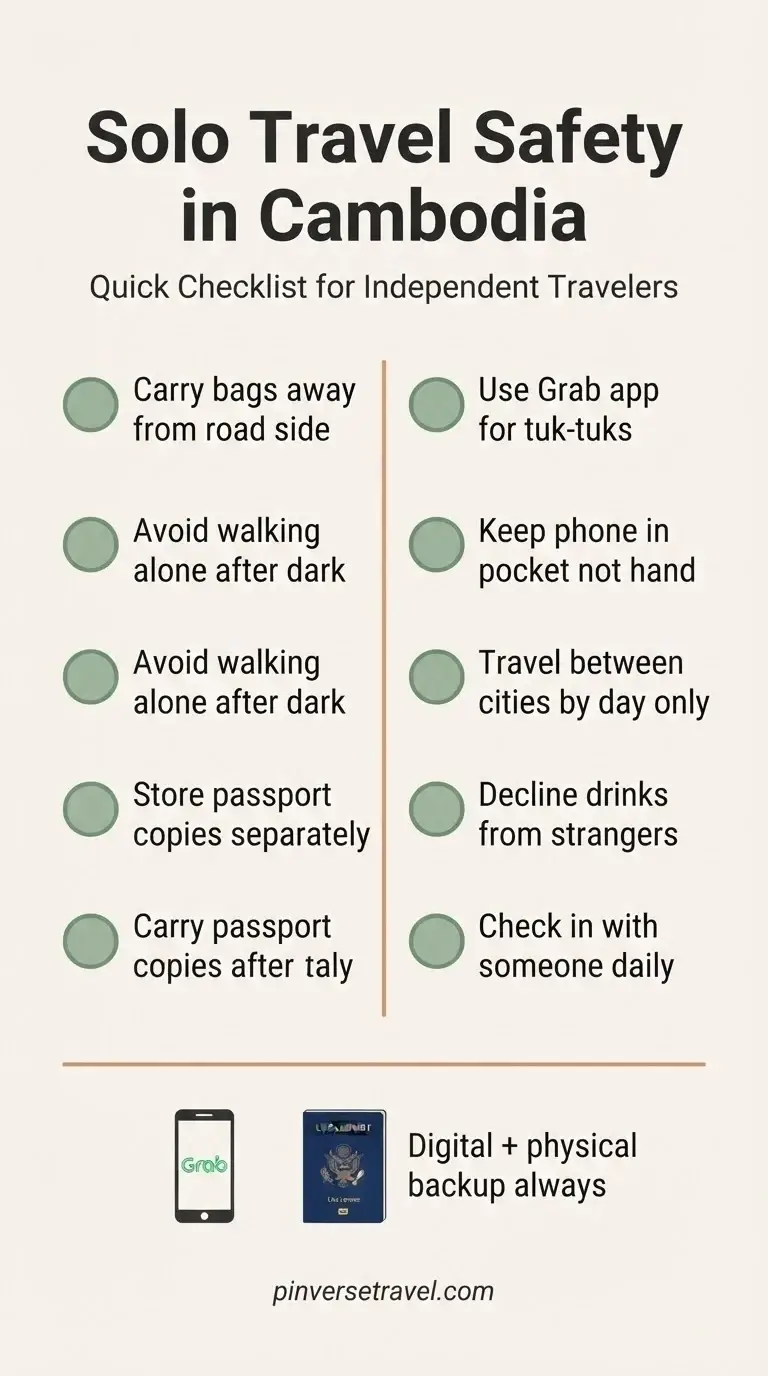
A few things I tell any first-time traveler heading into an unfamiliar country: don’t walk around looking overwhelmed with a map open on your phone, don’t flash cash, and check in with someone back home every day or two. These habits are not paranoia. They are just the foundation of smart solo travel, and I built all of them through years of learning the hard way.
Beyond Siem Reap and Phnom Penh: Kampot and the Islands
If you have more than a week, the best decision you can make is to slow down and head south. Kampot is a small riverside town with colonial-era buildings, a genuinely relaxed pace, and a surrounding countryside of pepper farms, karst mountains, and rice paddies. It is the kind of place that attracts solo travelers who want to think, write, read, and breathe. The famous Kampot pepper, considered among the finest in the world, grows in small farms you can visit by bicycle.
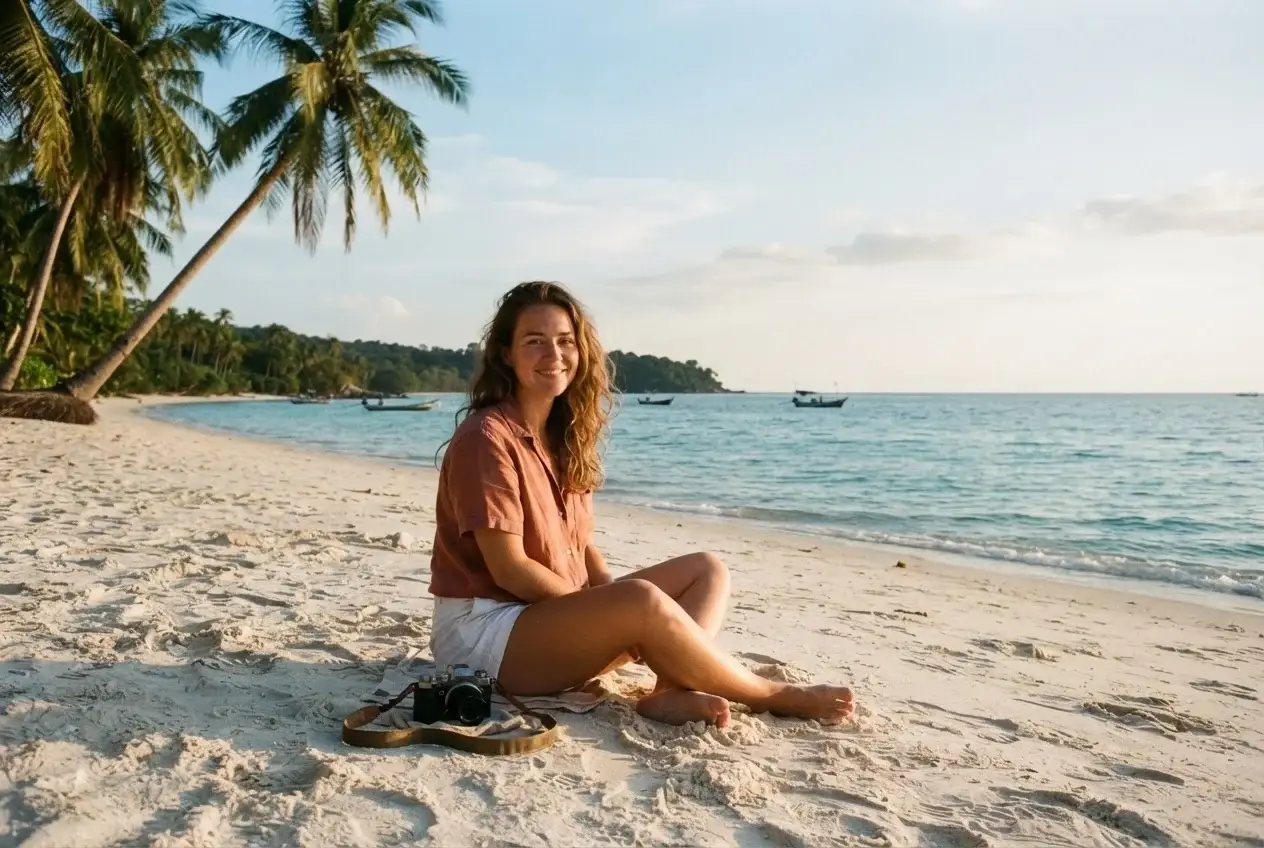
From the coastal city of Sihanoukville (which has changed dramatically in recent years and is no longer the backpacker paradise it once was), ferries run to Koh Rong, Cambodia’s largest island. The beaches there are genuinely beautiful: white sand, clear water, not yet overcrowded on the quieter stretches. Koh Rong Samloem is the calmer, less party-focused sister island and tends to draw solo travelers who want peace over noise. The bioluminescent plankton in the water at night is the kind of thing you will still be talking about years later.
A Realistic Budget for Exploring Cambodia Alone
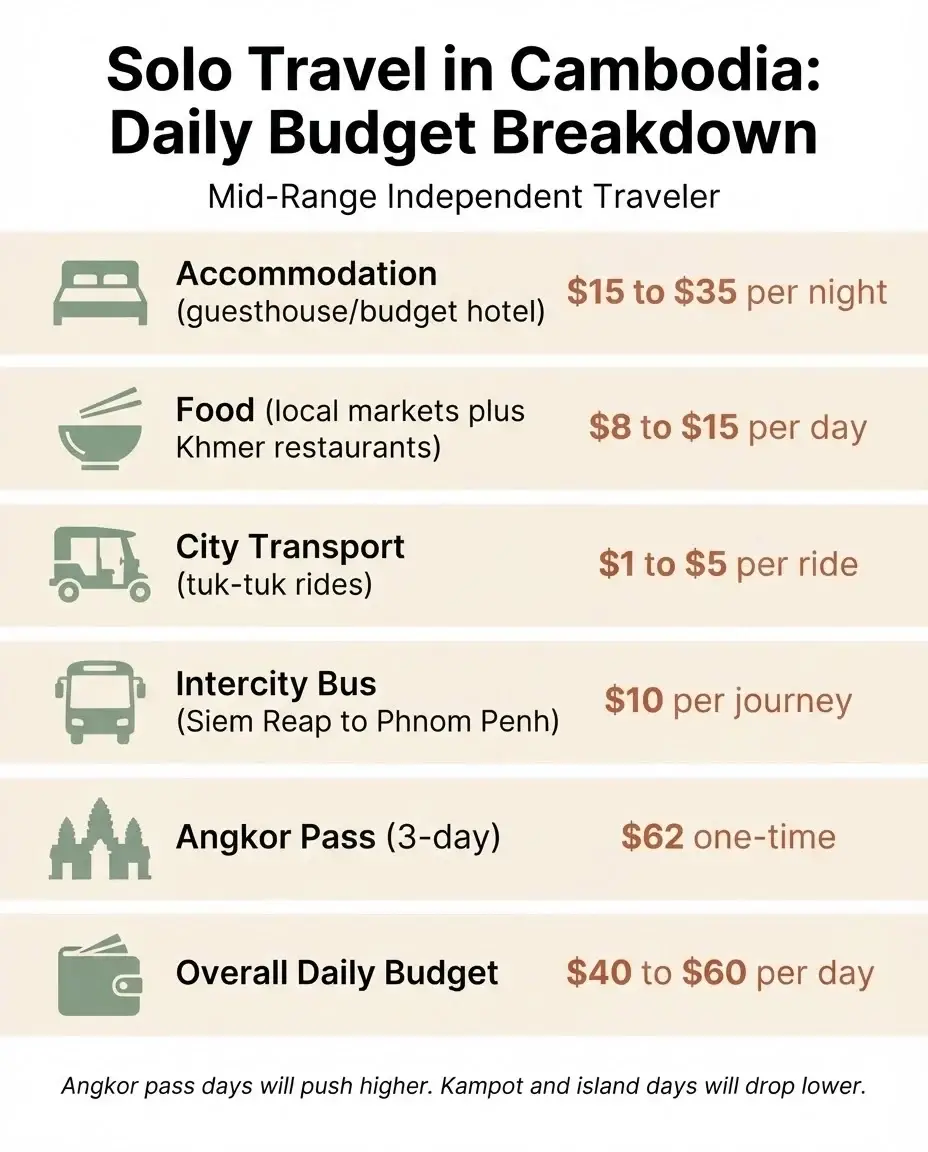
Cambodia is one of Southeast Asia’s most affordable destinations for independent solo travelers. Here is what to expect on a reasonable mid-range solo budget, based on what travelers consistently report:
Accommodation in a comfortable guesthouse or budget hotel in Siem Reap or Phnom Penh runs roughly $15 to $35 per night. Food is where Cambodia genuinely shines: eating at local markets and small Khmer restaurants, you can feed yourself well for $8 to $15 a day. Transport between cities by bus costs around $10. Tuk-tuk rides within a city run $1 to $5 depending on distance. The Angkor three-day pass at $62 is your single biggest one-time expense.
A realistic overall budget including accommodation, food, local transport, entrance fees, and some flexibility sits around $40 to $60 per day for a solo mid-range traveler. Angkor pass days will push that higher. Kampot and island days will drop it lower.
A Note on Cultural Respect
Cambodia is a deeply Buddhist country, and the cultural norms around temples, monasteries, and everyday interaction matter. Remove your shoes before entering any temple or private home. Dress modestly at religious sites. Do not touch monks or hand anything directly to them if you are a woman. Speak quietly around pagodas. Bargain respectfully and good-naturedly in markets, not aggressively.
One thing I have learned from living with a host family in Ghana and teaching in Thailand is that the most meaningful solo travel experiences come when you stop performing the role of tourist and start genuinely paying attention to how people around you live. In Cambodia, that means sitting at a local noodle shop and watching the morning rhythm of the neighborhood. It means listening more than you talk. It means coming in curious rather than assuming.
Every destination has something specific and irreplaceable to teach you. Cambodia’s lesson, for most solo travelers who show up with the right mindset, is about the extraordinary resilience of human beings and the value of bearing witness to history rather than looking away from it.
Before You Book: The Best Time to Go
Cambodia has two distinct seasons. The dry season runs from November through April and is the most popular time to visit: clear skies, manageable heat, good road conditions. November to February is the sweet spot, with cooler temperatures that make temple-hopping genuinely comfortable. The wet season from May through October brings heavy rain and occasional flooding in low-lying areas, but also dramatically fewer tourists, lower prices, and a lush green landscape that many travelers prefer. If you are flexible on timing and on a budget, the shoulder months of October or April offer a good balance.
Avoid the Khmer New Year in mid-April if crowds stress you out. The Water Festival in Phnom Penh in November draws millions of people and requires extra vigilance around the riverfront area.
The Thing Nobody Tells You
Solo travel in Cambodia will probably bring up feelings you did not expect. The history is heavier than most travelers anticipate, and the country’s resilience in the face of it is more moving than any guidebook quite captures. You may find yourself sitting at a riverside cafe in Phnom Penh, watching boats cross the Mekong, feeling something that is hard to name, somewhere between grief and admiration.
That is part of what makes Cambodia different from everywhere else. It does not just show you temples and beaches, though it has extraordinary ones. It asks you to engage with the full story of a place, and in doing so, it asks you to engage more fully with your own capacity for empathy, curiosity, and growth.
That is exactly what solo travel is supposed to do.
Go. Plan carefully, arrive curious, stay respectful, and let Cambodia be as complicated and beautiful as it actually is.