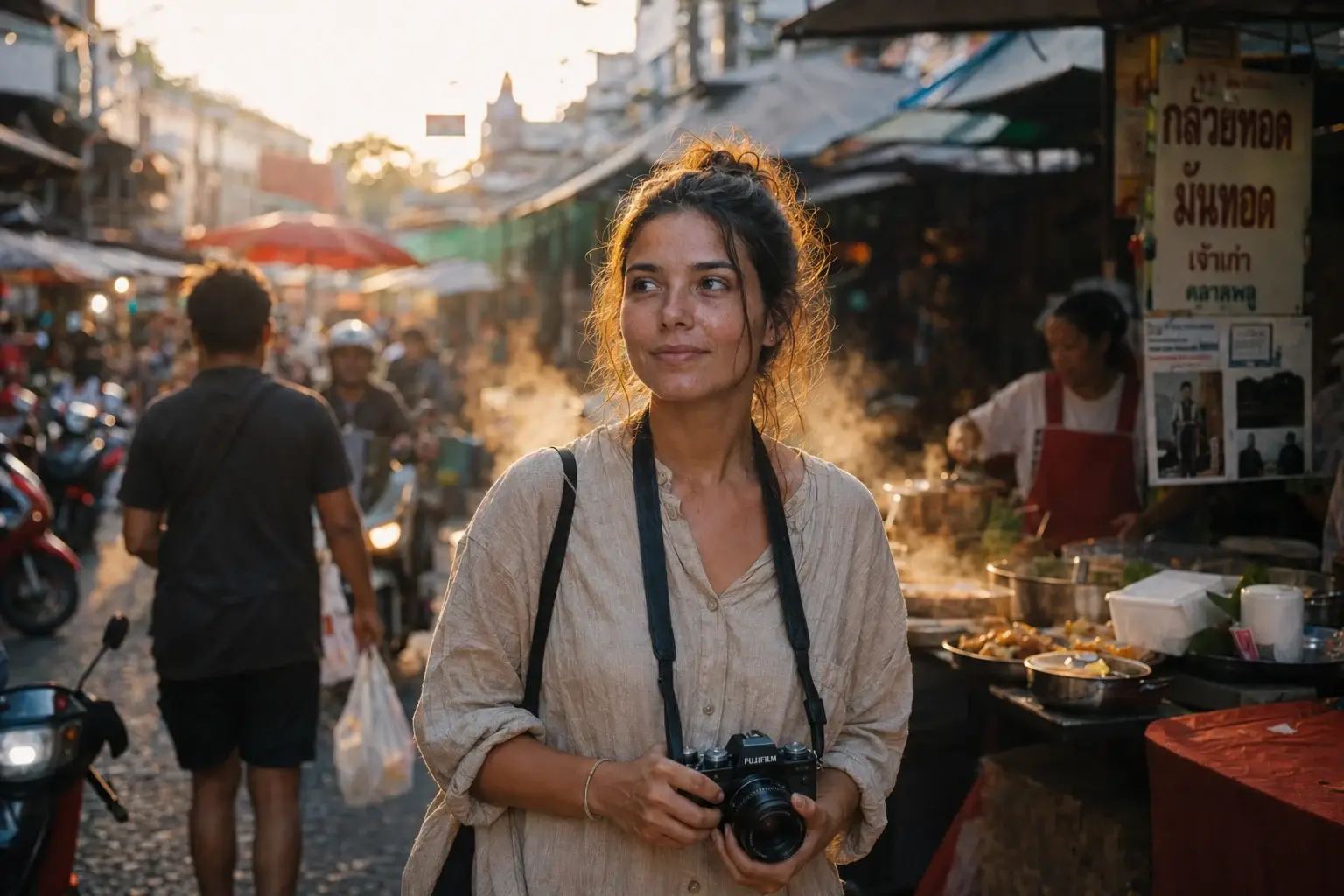
I remember sitting in a tiny, crowded cafe in Bangkok during my first month teaching English abroad. I had my entire life—my passport, my emergency cash, and my backup credit card—stuffed into a loose side pocket of my backpack. Every time a motorbike roared past or a stranger bumped my shoulder, my heart would jump into my throat. I wasn’t just anxious; I was actively distracted. I couldn’t focus on the spicy pad krapow in front of me or the conversations happening around me because I was constantly “guarding” my bag.
That’s when I realized that freedom isn’t just about quitting the office grind or booking a one-way ticket. Freedom is the ability to walk through a bustling night market or navigate a subway system in a foreign city without that low-level, constant hum of worry.
After years on the road—from the winding backstreets of China to the hidden alleys of Europe—I have learned that the best hidden travel pouches for security are not just accessories; they are tools for mindfulness. When you know your essentials are secure, you can actually be present. You can stop being a target and start being an explorer.
Why Your Security Matters More Than You Think
When you travel solo, you are your own primary security detail. There is no travel partner to watch your back while you use the restroom or pay for a coffee. This isn’t meant to scare you; it’s meant to empower you. Once you accept that you are the architect of your own safety, you stop feeling like a victim and start feeling like a prepared traveler.
Many people think that if they just “don’t look like a tourist,” they’ll be fine. While blending in is a great skill, it doesn’t replace the need for physical security. A hidden pouch—often called a money belt or an under-garment stash—is your last line of defense. Even if your main bag is snatched or your pockets are picked in a crowd, the items you keep against your skin remain safe.
Before you even step on the plane, it is wise to head over to the US Department of State Travel website to check the latest safety ratings and entry requirements for your specific destination. Knowing the local situation helps you choose the right gear for the environment. For example, if you are heading to a dense, urban environment where pickpocketing is common, a slim, moisture-wicking belt is better than a bulky pouch.
Anatomy of the Perfect Hidden Pouch
I’ve spent a fortune on gear that sounded good on a website but felt like sandpaper against my skin in 90-degree heat. Here is what I’ve learned about what truly matters:
- Material: It must be breathable. If it’s plastic-y or non-porous, you will sweat. When you sweat, you get irritated, and when you get irritated, you end up taking the pouch off and tossing it in your bag—which defeats the entire purpose. Look for silk or high-quality synthetic blends.
- Profile: If it’s too thick, you will look like you’re wearing a weird, square brace under your shirt. The best pouches are virtually invisible even under a light linen top.
- Zipper Quality: If the zipper jams while you are trying to discretely grab a card in a checkout line, you are going to draw attention to yourself. Test the zippers before your trip.
- Accessibility: You shouldn’t have to go through a five-minute struggle to find your passport. It needs to be hidden, but you should be able to access it quickly in a controlled, private environment (like a bathroom stall).
How to Wear Them Without the Bulk
The secret to wearing a hidden pouch successfully is understanding layering. I rarely wear mine directly against my skin; I wear it over a thin undershirt and under my main shirt. This creates a barrier that prevents chafing and keeps the pouch from getting damp.
If you are traveling through a place like Thailand, where the heat is intense, you might want to look into the official Tourism Authority of Thailand guides to understand the cultural expectations for dress. While you want to be comfortable, dressing modestly often means wearing looser clothing, which actually makes it even easier to hide your security gear.
When you are in a crowded place, like a festival or a busy subway, keep your hand casually near the area where the pouch is hidden. You don’t need to be paranoid, but a subtle, natural gesture—like adjusting your shirt—can act as a psychological deterrent to anyone watching for “easy” marks.
Addressing the “What If” Factor
One of the biggest lessons I learned while working as a sightseeing guide in New York is that even the most prepared people face challenges. Stuff happens. Sometimes it’s a lost bag, sometimes it’s a stolen wallet. This is why a hidden pouch is only one part of your safety net.
I always tell new solo travelers to look into World Nomads Travel Insurance before they leave. It provides that essential layer of safety that gear cannot cover. If your hidden pouch is safe but your primary luggage is lost, insurance can be the difference between a ruined trip and a minor inconvenience. It’s about building a system where no single point of failure can end your journey prematurely.
Navigating Local Markets and Food Safes
One of the greatest joys of travel is the food. Whether it’s street corn in Mexico or dim sum in Hong Kong, I want to be in the middle of it. But markets are prime territory for pickpockets.
When I’m out in a crowded market, I have a “payment protocol.” I never pull my wallet out in the open. Before I even enter the market, I put a small amount of cash in an easy-access pocket. My “big” money, my extra cards, and my passport stay in my hidden pouch, completely unreachable to anyone but me.
If you are planning to travel to areas where water or food safety is a concern, it is a good idea to check the CDC Travelers’ Health portal. They offer incredible destination-specific advice. It’s interesting how many people worry about their money being stolen but don’t think about the “hidden” dangers of bad water or street food that hasn’t been handled properly. Being a smart traveler means thinking about security as a whole—not just your wallet, but your health and your wellbeing.
Common Mistakes Beginners Make
- Storing Everything in One Place: Never keep your primary bank card, your emergency credit card, and your passport in the same pouch. If the pouch is lost or stolen, you are stranded. Keep a backup card in a separate, hidden location in your luggage.
- The “Bathroom” Error: The most common place people lose their hidden pouch is in public restrooms. They take it off to adjust their clothes and leave it on the hook or the sink. Make a rule: the pouch stays on until you are back in your hotel room.
- Trusting “Fake” Hiding Spots: Don’t rely on hollowed-out books or fake soda cans if you are leaving things in a hostel or hotel. Real thieves know all the tricks. If you are staying in a shared space, a cable-lock bag or a portable travel safe is a much better investment.
My Personal Routine for Long-Term Travel
My life changed when I stopped treating my travel gear like “special occasion” items and started treating them like my daily uniform. In my early days, I would only wear my security belt on “travel days.” But I quickly realized that pickpockets don’t care if you just landed or if you’ve been in a city for a week.
Now, I wear a slim, lightweight belt every single day I am out exploring. It becomes as habitual as putting on my watch or my glasses. I don’t think about it; it’s just there. This consistency is the true secret to the best hidden travel pouches for security. They are only effective if you are actually wearing them when you need them.
If you are heading to a city that is a recognized UNESCO World Heritage site, expect crowds. Sites like the historic centers of Prague or Rome are beautiful, but they are also magnets for crowds. In these places, I tighten my belt and keep my focus on the history and the art rather than my bag. The peace of mind allows me to take photos, talk to locals, and soak in the culture without looking over my shoulder.
How to Choose the Right One for Your Body Type
We all have different builds, and what works for me might not work for you. If you have a shorter torso, some of the longer, vertical pouches might dig into your hip bones. If you are taller, those same pouches might be perfect.
If you are planning to take long-distance buses or trains—like the extensive network available in parts of Europe or Southeast Asia—you might want a pouch that is slightly more comfortable for sitting for long periods. Some of the newer designs use memory foam or soft-touch fabrics that are much more forgiving during a ten-hour train ride.
Remember, when you are using an app to get around a city, such as using Grab to book a ride, your phone is usually out. This is the moment when most people are most vulnerable. While you are staring at the screen, your surroundings fade away. This is exactly when you need that physical security barrier under your shirt. Always confirm your ride, then put the phone away and scan your environment.
The Mental Shift: From Fear to Freedom
I want to leave you with one final thought. The goal of all this gear, all this research, and all this planning is not to create a bubble where nothing can happen to you. The goal is to reach a state of mind where you feel confident enough to engage with the world.
Fear is a natural part of solo travel. It’s okay to be nervous. It’s okay to double-check your zippers. But don’t let the fear of what could happen stop you from experiencing the beauty of what does happen. When you are sitting on a train in the mountains or walking through a market in a city where you don’t speak the language, that feeling of independence is worth every bit of effort.
You are capable. You are resourceful. You are going to make mistakes—I still do!—but you are going to learn from them. Use these tools, prepare your gear, and then go out there and live the life you’ve been dreaming of. The world is waiting for you, and it’s much more welcoming than you think.