Best Vineyard Stays in Europe for Wine Lovers Who Travel Solo

Let me tell you about the version of me that never went.
For years, a vineyard stay lived in my head as a “someday” thing. Someday when I had a partner to split it with. Someday when I understood wine well enough to swirl a glass without feeling like a fraud. Someday when I had the money for something that fancy. I was still working my old office job back then, counting vacation days, and the whole idea felt like a postcard I was allowed to look at but not step into.
Here is what I know now, after leaving that desk, saving through flexible work, and building a life on the road: almost every excuse I had was wrong. Vineyard stays in Europe are more solo-friendly, more affordable, and more welcoming than the glossy hotel lists make them look. You do not need a partner. You do not need to be a sommelier. And in several regions, you do not even need a car.
So this is the guide I wish someone had handed nervous, spreadsheet-bound me. Real regions, honest costs, how to get there without driving, and how to do it alone without feeling out of place. Let’s plan it properly.
First, what a “vineyard stay” actually means
The phrase covers a few very different experiences, and knowing the difference saves you money and disappointment.
An agriturismo in Italy is a working farm that hosts guests, often a family operation with a few rooms, homemade breakfast, and wine made right there. It is usually the most affordable and the most personal.
A quinta in Portugal is a wine estate, often centered on a historic manor house surrounded by terraced vineyards. Some are simple and rustic, some are polished hotels.
A bodega in Spain is a winery, and many now run their own small hotels or guest rooms. A château in France leans grander and pricier, though budget rooms exist in the villages nearby.
The magic is the same across all of them: you wake up inside the landscape that made the wine in your glass. But the price and the vibe swing enormously, from a 90-euro farmhouse room to a 900-euro design suite. Match the type to your budget, not to the prettiest photo you saw online.
The Douro Valley, Portugal: my top pick for first-timers
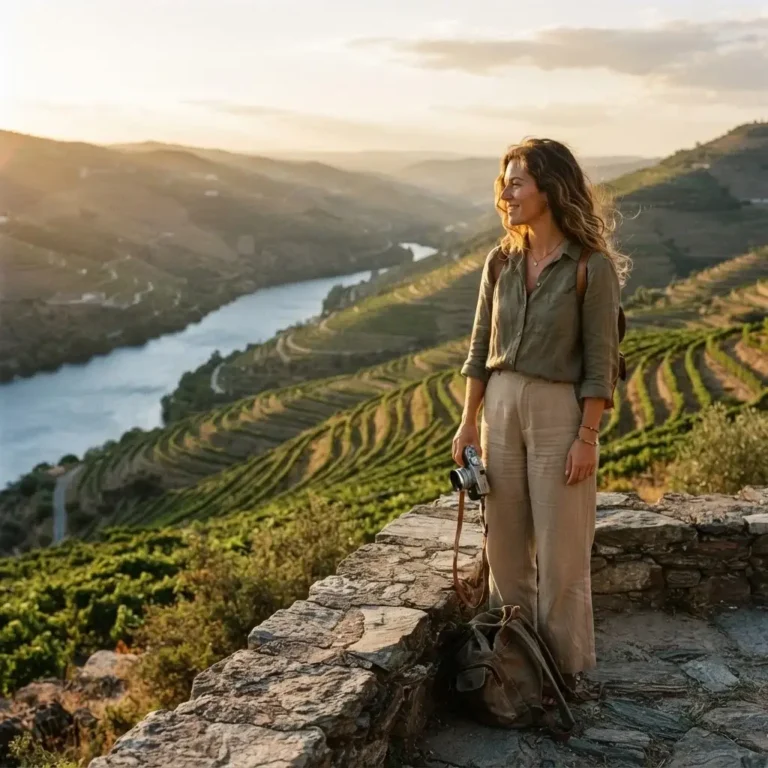
If you only do one vineyard stay in Europe, make it the Douro. It is the region I steer nervous first-timers toward more than any other, and the reason is simple: it is stunningly beautiful, deeply authentic, genuinely affordable, and, crucially, you can reach it without a car.
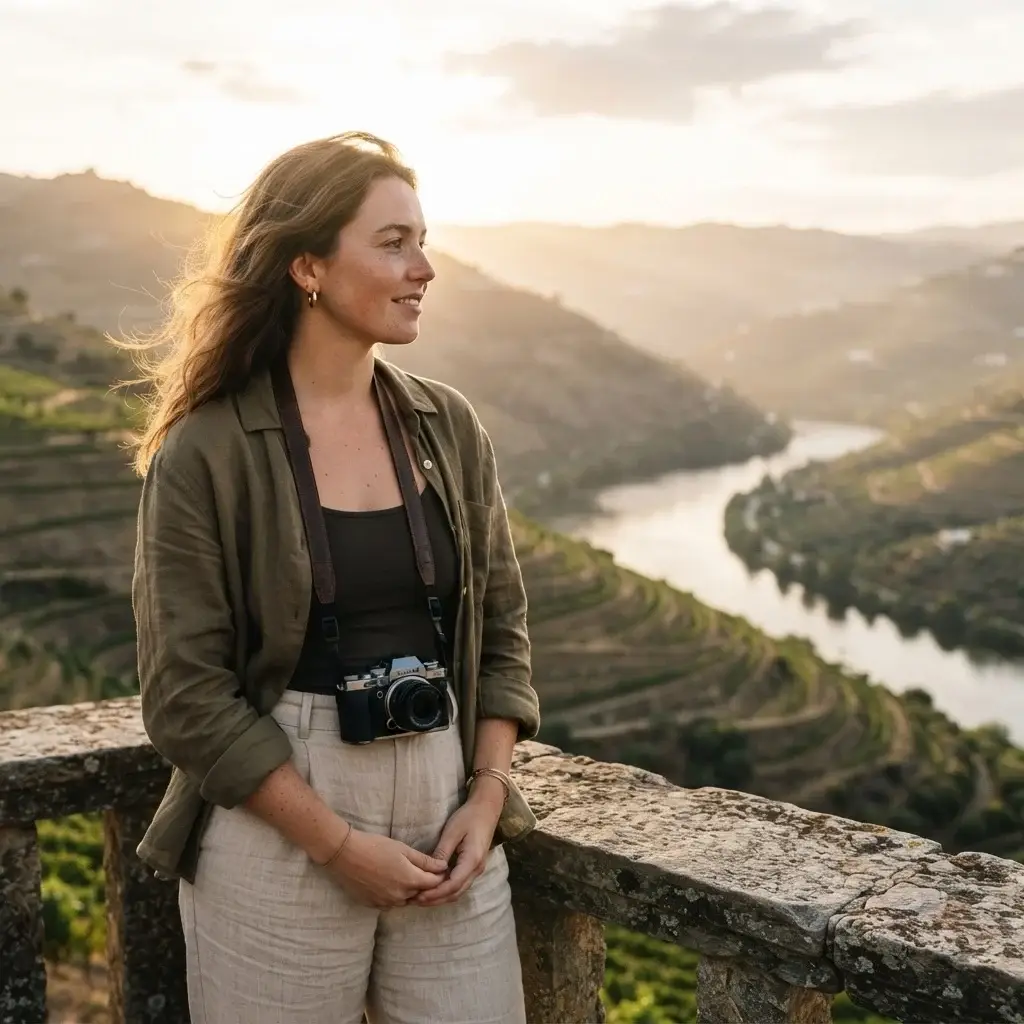
The Douro is the oldest demarcated wine region in the world and a UNESCO World Heritage cultural landscape, with around 24,600 hectares of terraced vineyards carved into steep schist hillsides above the river. This is the birthplace of Port wine, though the dry reds and whites have quietly become world-class too. The terraces were built by hand over centuries, and standing among them you feel the human effort in a way no tasting room can teach you.
Here is the part that changes everything for car-free travelers. The scenic Linha do Douro railway, run by Comboios de Portugal, hugs the river from Porto São Bento station straight into wine country. Porto to Pinhão, the heart of the quinta region, costs roughly 12 euros each way, and the full line out to Pocinho runs about 15 euros one way. The ride itself is one of the most beautiful train journeys in Europe.
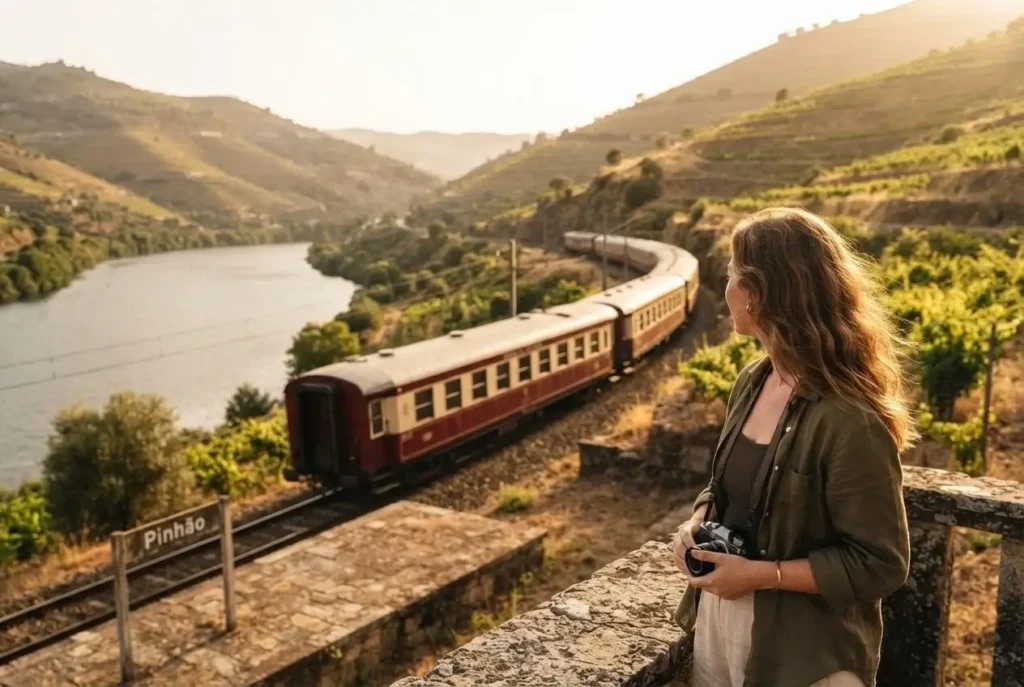
From June to about October, a restored historical steam train also runs on part of the route if you want the romance turned up to full.
Where to stay: quintas near Pinhão and Peso da Régua put you within walking or short-taxi distance of tastings. Budget travelers can find simple guesthouse rooms in Pinhão from around 70 to 100 euros; mid-range quinta stays run roughly 150 to 250 euros; and the famous design hotels climb well beyond that. I would happily take a plain room with a river view over a suite with none.
What to eat: this is hearty country food. Try posta à mirandesa, a thick regional steak, and the local olive oil and bread, and end with a small glass of tawny Port instead of dessert. Book your winery tastings a day or two ahead in shoulder season, and further out in autumn harvest.
Tuscany, Italy: the agriturismo dream, done affordably
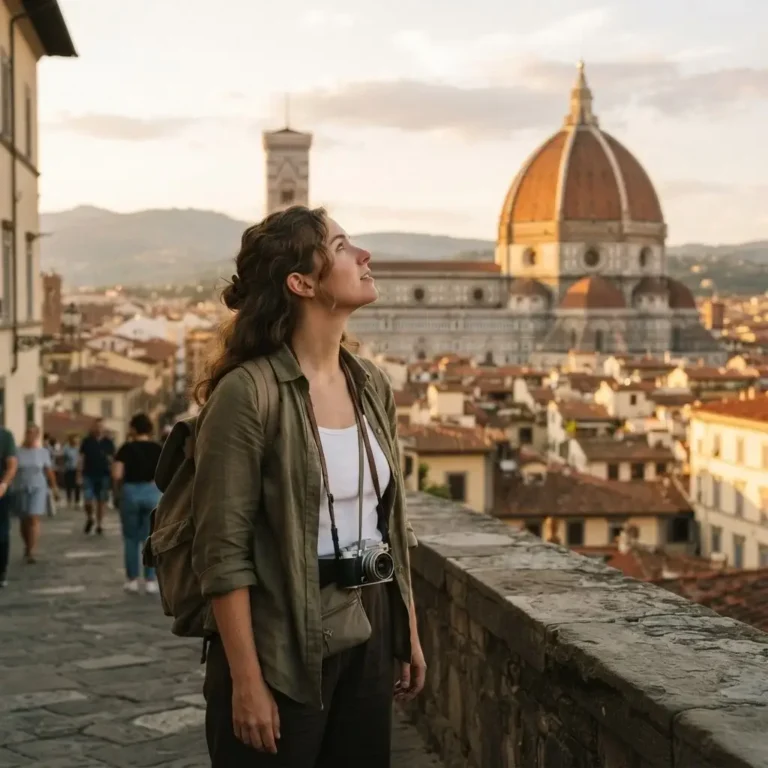
Tuscany is where the vineyard-stay fantasy was practically invented, and the good news is the reality can be reached on a modest budget if you choose an agriturismo over a design hotel.
The Chianti hills between Florence and Siena are the classic base. This is the home of Chianti Classico, marked by the Black Rooster seal, and the official Chianti Classico consortium, founded back in 1924, lists producers across the region who welcome visitors for tastings and cellar tours. Rather than chasing famous names, I would pick two or three smaller producers near your farm and walk or cycle between them.
An agriturismo here is the sweet spot. You get a simple room or apartment on a working estate, a homemade breakfast, olive groves out the window, and often a family dinner with the estate’s own wine. Prices vary widely by season, but rustic agriturismo rooms in the shoulder months are far gentler on the wallet than the region’s reputation suggests, while the polished vineyard hotels sit at the luxury end.
Getting around: Tuscany is the one region on this list where a car genuinely helps, since agriturismi sit down long gravel lanes. If you do not drive, base yourself in a town like Greve in Chianti reachable by bus from Florence, and join a small-group tasting tour for the vineyard hopping. Solo travelers, those small tours are also the easiest way to meet people.
What to eat: ribollita, the thick bread-and-bean soup, pici pasta with a simple garlic sauce, and pecorino cheese with local honey. Order the house Chianti with dinner. It will often be the estate’s own, and it will taste better in that setting than anything you could buy at home.

Rioja, Spain: modern wineries meet old villages
Rioja is Spain’s most famous wine region, and it strikes a lovely balance between serious wine culture and unpretentious warmth. La Rioja has around 500 wineries, and more than 80 of them open their doors to visitors, according to the regional wine-tourism board, so you are spoiled for choice without feeling like a tourist in a theme park.
The headline stay is the Marqués de Riscal hotel in Elciego, wrapped in a wild titanium ribbon designed by Frank Gehry, sitting right among the vines. It is a splurge, no question. But you do not have to sleep there to visit, and the surrounding medieval villages like Laguardia offer far cheaper rooms with the same vineyard views and a fraction of the price tag.
Getting there: the nearest hubs are Logroño and Bilbao, both reachable by train or bus, and local buses connect the wine villages. It is doable car-free, though a driver gives you more freedom among the scattered bodegas.
What to eat: Rioja does tapas beautifully. Wander the pintxos bars of Logroño’s Calle Laurel in the evening, ordering one small plate and one small glass at each stop. It is the perfect solo-traveler ritual, because you are moving, standing at the bar, and it is completely normal to be on your own.
Alsace, France: fairy-tale villages along a wine road
If your idea of heaven is half-timbered houses draped in flowers with vineyards rolling right up to the village edge, Alsace is your region. Tucked against the German border, it feels like a storybook, and it is one of the easiest French wine regions to enjoy without a car.
The Alsace Wine Route runs about 170 kilometers through a string of villages like Riquewihr, Colmar, and Obernai, and much of it is linked by regional trains and seasonal wine-route buses. You can base yourself in Colmar, reachable by direct train, and day-trip out to the smaller villages. Alsace is white-wine country, all crisp Riesling, aromatic Gewürztraminer, and Pinot Gris, which many people find friendlier and easier to explore than heavy reds.
From what solo travelers consistently report, Alsace is especially comfortable to visit alone, because the villages are compact, walkable, and full of cozy winstubs, the traditional wine taverns where sitting solo at a small table is completely ordinary.
What to eat: tarte flambée, a thin crispy flatbread with cream, onion, and bacon, and choucroute, the Alsatian take on sauerkraut with sausage. Pair with a dry Riesling and you will understand why this region quietly obsesses wine lovers.

Champagne, France: bubbles at the source
There is something a little magical about drinking Champagne in Champagne, and it is more approachable than its glamorous image suggests. The Champagne Hillsides, Houses and Cellars were inscribed as a UNESCO World Heritage site in 2015, recognizing not just the vineyards but the deep chalk cellars where the wine is aged.
Reims and Épernay are the two main bases, both reachable from Paris by fast train in well under two hours, which makes even a car-free weekend realistic. The grand houses run structured cellar tours, but the smaller grower-producers in the villages offer more personal, often cheaper tastings where you actually meet the person who made the wine.
A solo note: a cellar tour is a wonderful thing to do alone, because you are part of a small group with a guide, so there is built-in company and conversation without any pressure. Book the bigger houses ahead, especially on weekends.
What to eat: keep it simple with local cheese, charcuterie, and the pink biscuits de Reims that locals dip into their glass. It sounds odd. Try it anyway.
Two value alternatives most lists ignore
The famous French names are wonderful, but they are not the only way in, and honestly they are not always the best value or the most relaxing for a first solo trip.
Austria’s Wachau Valley, a UNESCO cultural landscape along the Danube between Melk and Krems, is a personal recommendation for anyone who wants beauty without crowds. The Austrian national tourism board describes it well: apricot orchards, riverside wine taverns called Heuriger, and crisp Grüner Veltliner whites. It is easily reached from Vienna by train and boat, and it is genuinely peaceful, which matters a lot when you are traveling alone.
Then there is Tokaj in Hungary, another UNESCO wine landscape and one of the best-value regions in Europe right now. It is famous for sweet golden wines aged in labyrinthine cellars, and as National Geographic Traveller has highlighted, it is having a quiet revival among food-and-wine travelers while remaining refreshingly affordable. Your money stretches dramatically further here than in Champagne or Tuscany.
How much does a European vineyard stay really cost?
Let me be honest about numbers, because the luxury lists distort expectations badly.
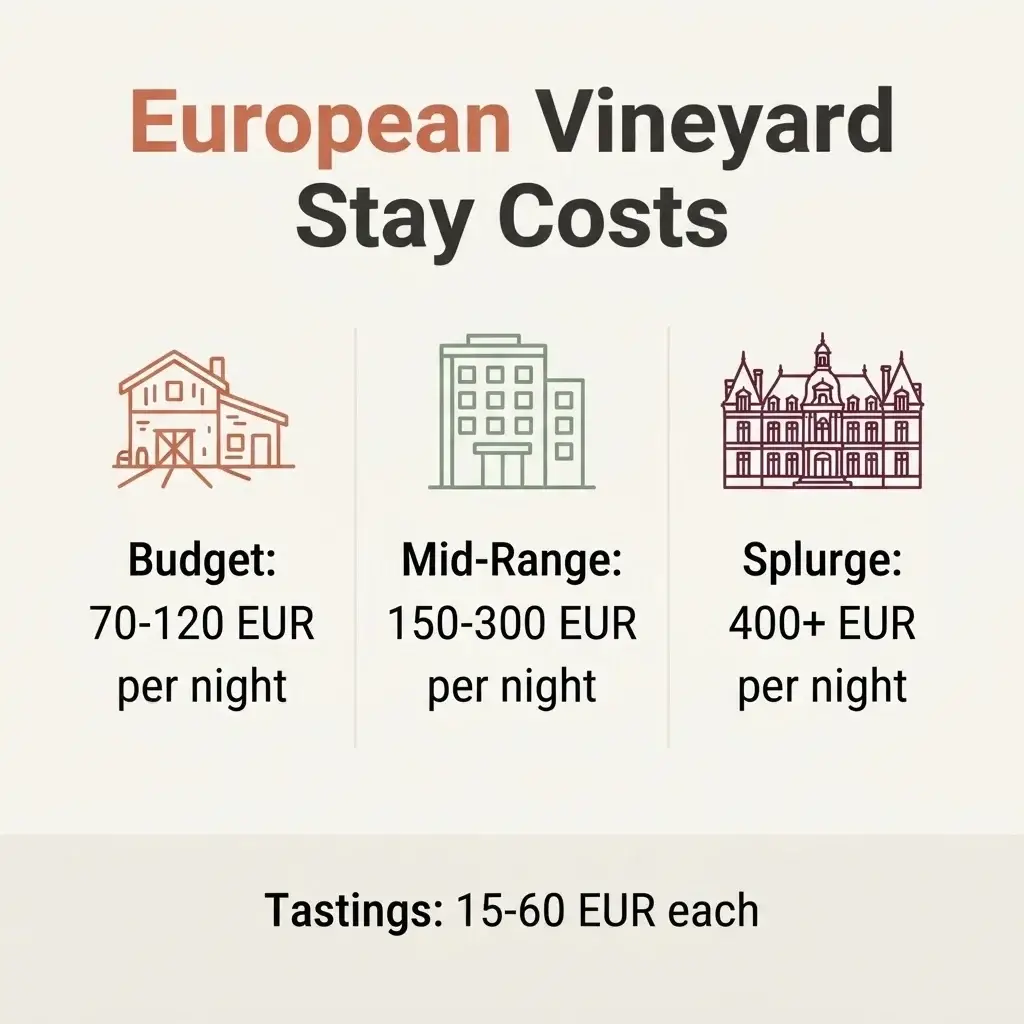
At the budget end, a simple agriturismo room, a village guesthouse in the Douro, or a small guest room in Tokaj can run roughly 70 to 120 euros a night, breakfast often included. The mid-range, a comfortable quinta or a proper wine hotel with vineyard views, sits around 150 to 300 euros. The splurge tier, the design icons and grand châteaux, climbs from 400 euros into four figures. Tastings usually cost somewhere between 15 and 60 euros depending on how many wines and how prestigious the estate, and they are almost always worth it.
The trick I learned while saving for travel on flexible income is to spend on the region and the experience, not the thread count. A modest room in a spectacular valley beats a lavish suite in a dull one, every single time.

Doing it solo without feeling out of place
This is the fear I hear most, so let me address it directly. Yes, you can absolutely do vineyard stays alone, and no, you will not feel like the odd one out if you plan a little.
Choose group tastings and cellar tours over private ones, because they give you built-in company and a guide to talk to. Base yourself in walkable villages rather than isolated estates down long lanes, so an evening stroll to a wine tavern feels natural. Pace yourself, eat properly, and never let tasting become drinking, especially when you are navigating a new place on your own. And drop the pressure to be a wine expert entirely. The single most useful sentence you can carry is “I don’t know much, what do you love here?” It opens every door. The people who make wine want to share it, not test you.
I have spent a lot of my traveling life as a solo woman figuring things out as I go, and cultural experiences like this are exactly where I have felt most capable, not least. There is a particular confidence that comes from sitting alone at a village table with a glass of something local, watching the light go down over the vines, and realizing you made this happen entirely by yourself.
When to go, and one last nudge
Late spring and early autumn are the sweet spots: mild weather, green or golden vineyards, and fewer crowds than high summer. Harvest, called vindima in Portugal or vendemmia in Italy, usually falls in September and early October. It is a thrilling, chaotic, beautiful time to visit, though estates are busy and you must book well ahead. Winter is quiet and cheap but many small producers close.

Here is the thing I most want you to hear. The version of me who kept this trip as a “someday” was waiting for permission that was never going to arrive. The wine will still be there when you are richer, or partnered, or more expert. But the confidence you build by simply going, by booking the train and turning up alone and figuring it out, that is the part you cannot buy later. Pick a region from this list, open the train timetable, and choose a date. Your first vineyard morning is closer than you think.