The first time I ever swirled a glass of wine on purpose, I did it wrong. I sniffed too hard, tipped the glass at a weird angle, and quietly panicked when the person next to me started saying words like “tannic” and “long finish.” I had no idea what I was doing. And you know what? It didn’t matter at all.
I want to start there because I think it’s the thing that keeps most people from booking a wine trip in the first place. Not the money, not even the solo part. It’s the fear of walking into a beautiful old cellar and feeling like everyone can tell you don’t belong. So before we talk about a single region, let me promise you this: you do not need to know anything about wine to have one of the best travel experiences of your life tasting it. Curiosity is the only ticket you need.
This guide is for the daydreamer who has a vineyard afternoon saved in their head but keeps talking themselves out of it. We’ll cover where to go, what each place actually feels like, what to eat, how much to budget, how to do it alone if that’s your situation, and how to get around when you very sensibly should not be driving. Let’s plan the real version, not the postcard.
Why Europe Is Where I’d Learn to Love Wine
Here’s the thing that makes Europe special for a beginner. Wine here isn’t a luxury add-on. It’s lunch. It’s the thing the grandmother pours without asking. Whole landscapes have been shaped by it for thousands of years, and people are genuinely happy to share it with a curious stranger who admits they’re new.
That last part matters. When I backpacked across Europe on almost no money, the moments I remember most weren’t the famous sights. They were the small tables where someone poured me something local and watched my face to see if I liked it. Wine regions run on exactly that energy. You are not intruding on an expert’s world. You’re a guest, and guests get taken care of.
The other reason is variety packed into short distances. In a single trip you can go from steep river terraces to flat medieval villages to chalk cellars deep underground. That range is what makes choosing your first region genuinely fun instead of overwhelming.
The Douro Valley, Portugal: My Top Pick for a First Trip
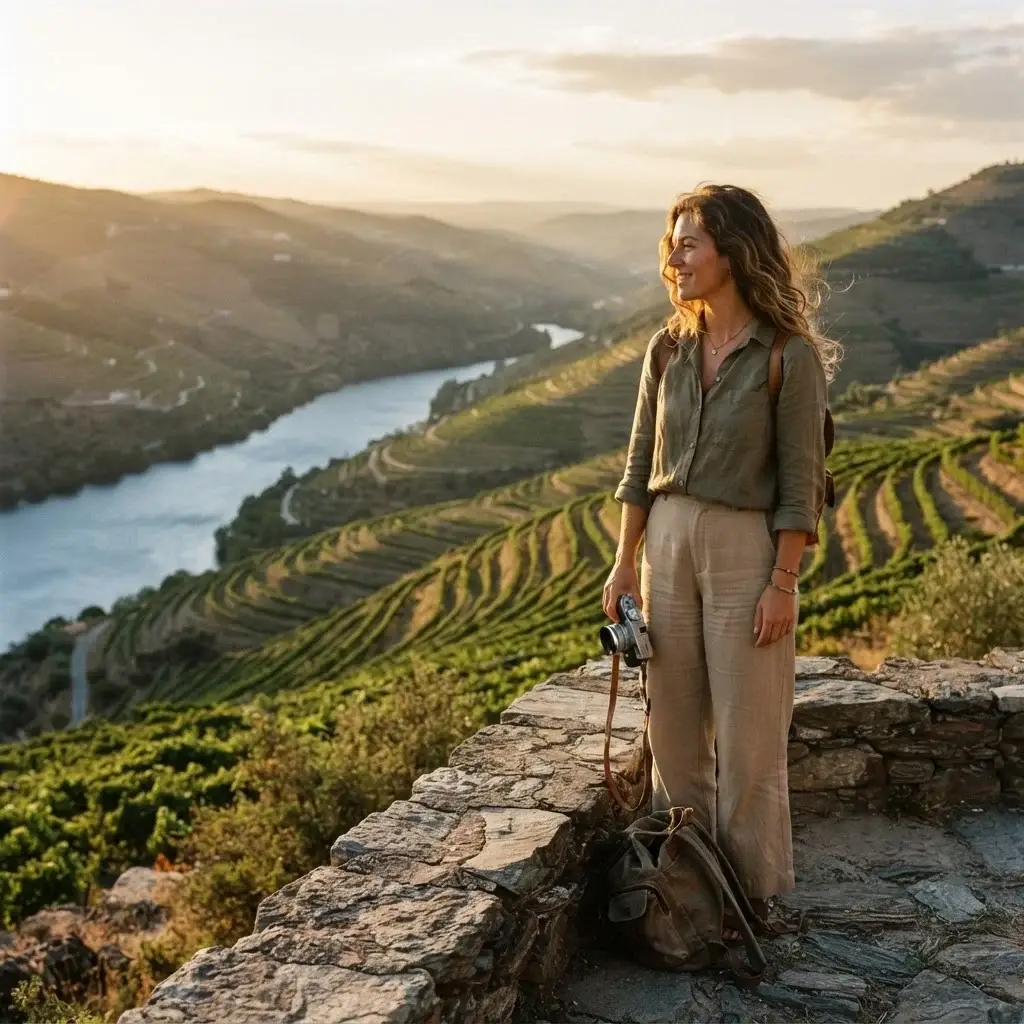
If you asked me where a nervous first-timer should go, I’d say the Douro Valley in northern Portugal without much hesitation. It’s warm, it’s affordable by European standards, and it’s stunningly beautiful in a way that makes even a bad photographer look good.
The Douro is the oldest demarcated wine region in the world, and its terraced hillsides are a protected UNESCO World Heritage cultural landscape covering roughly 24,600 hectares of vines that people have carved into schist rock by hand over nearly two thousand years. Standing on one of the river viewpoints, looking at those ribbon terraces stacked up the slopes, is the kind of view that reorganizes something in your chest. This is Port country, but they also make excellent still reds and whites here.
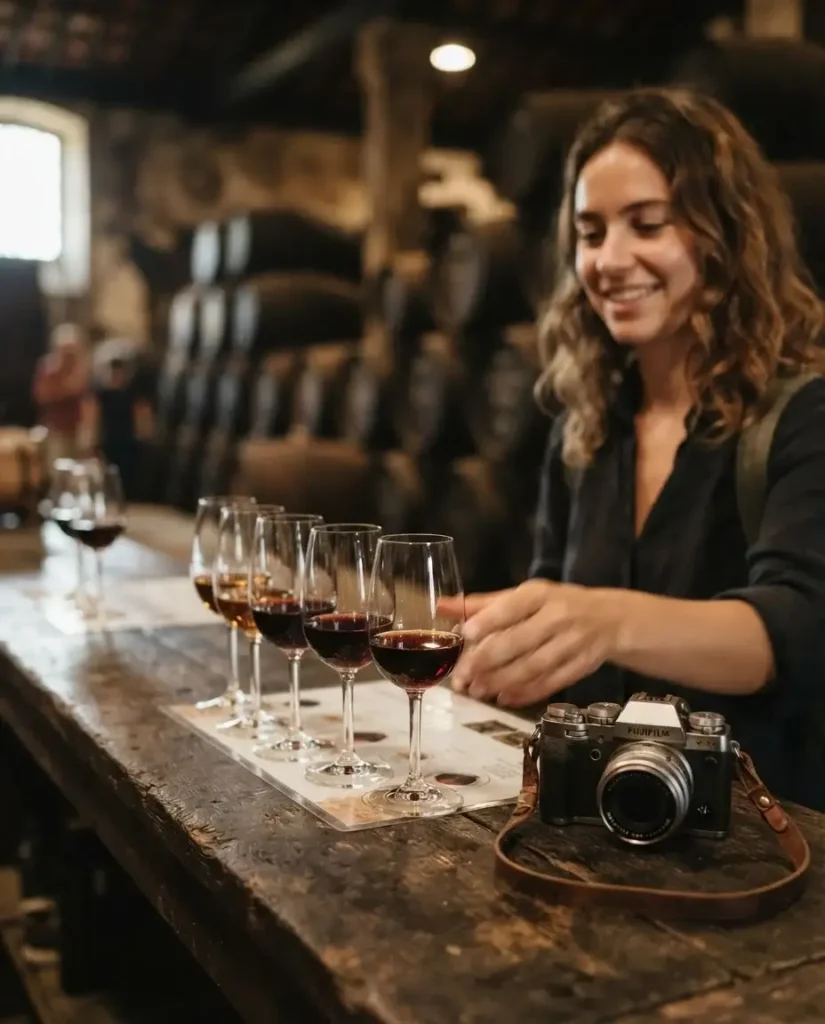
Most people base themselves in Porto and start in Vila Nova de Gaia, the riverside district lined with the famous Port lodges. This is the gentlest possible introduction because the lodges are used to complete beginners, tours are short, and you can taste several styles of Port side by side to figure out what you even like. The Portuguese tourism board’s official Douro Valley guide lays out the different ways to reach the valley itself, and the one I’d push you toward is the train. The Linha do Douro railway from Porto hugs the river for part of the route and is one of the prettiest, cheapest rides in the country. No car, no stress, no worrying about that second glass.
What to eat here: order a slice of something rich to go with sweet Port. A dense chocolate dessert or a plate of aged cheese with a tawny Port is a genuinely magical first pairing. For the still wines, the region’s roast meats and hearty stews are the natural match.
Insider tip from what solo travelers consistently report: the small family quintas (wine estates) up the valley are warmer and less rushed than the big riverside operations, but many prefer you book ahead rather than walk in. A day trip by train to Pinhão, with a couple of pre-booked quinta visits, is a near-perfect first solo wine day.
Bordeaux, France: For the Traveler Who Wants Structure
Bordeaux gets a reputation for being intimidating and expensive, and parts of it are. But it’s also one of the easiest cities in the world to ease into wine, because it built an entire museum to help you do exactly that.
I’d start any Bordeaux trip at La Cité du Vin, the striking wine museum on the river. This is my favorite recommendation for anyone who feels behind on the whole subject, because it teaches you the history, the geography, and the tasting basics through interactive exhibits, and finishes with a glass on a panoramic top floor. From 3 April to 31 October 2026 it’s open every day from 10am to 7pm, with shorter winter hours after that and closures around Christmas, so check the day before you go. Doing this on day one means you’ll walk into actual châteaux later feeling like you’re in on the conversation instead of nodding along.
The city itself is flat, walkable, and full of wine bars where the staff are used to helping travelers pick something by the glass. That’s a gift for a solo traveler. You don’t need a tour to taste well in Bordeaux. You can build a self-guided evening of two or three wine bars and learn a huge amount just by asking “what’s a good local red for someone new to this?”
What to eat: Bordeaux reds love red meat. A simple steak, or the local entrecôte à la bordelaise, is the classic. For a lighter option, the region’s oysters from nearby Arcachon with a crisp white is a combination I’d cross a city for.
Tuscany, Italy: The Romantic Choice That’s Easier Than It Looks
Tuscany is the region people picture when they daydream, and honestly, it lives up to it. Rolling hills, cypress trees, medieval hilltop towns, and wine woven into every meal. Chianti is the famous name, but the area also gives us Brunello di Montalcino and Vino Nobile di Montepulciano.
The reason I’d steer a first-timer here is the food-and-wine culture is so relaxed. Tuscans don’t perform wine. They drink it with pasta and shrug. Tuscany’s tourism board maps out the wine and olive oil roads that thread through Chianti, and following even a small piece of one, tasting station to tasting station, is a lovely low-pressure way to spend a day. Many Chianti wineries along the main roads take walk-ins, though booking a slot removes the guesswork.
If you don’t drive, base yourself in Florence or Siena and take a small-group tour into the hills, or use regional buses to reach a town like Greve in Chianti. This is one region where a group tour actually solves the solo problem beautifully, because you get company, transport, and a guide handling the logistics, and you’ll almost always meet other solo travelers on board.
What to eat: keep it simple and local. Chianti Classico with a plate of pici pasta or a Florentine steak is the pairing the whole region is built around. Ask for the house wine at a family trattoria and you’ll often get something better than a fancy label.
Rioja, Spain: The Underrated One I’d Send Friends To
Rioja doesn’t get the daydream billing that Tuscany does, and I think that’s a shame, because it might be the friendliest wine region for a real conversation with locals. Northern Spain, more than 500 wineries, and a food scene that turns eating into a sport.
The town of Haro is the heart of it, with historic bodegas clustered close together, and Logroño is the bigger base with one of the best tapas streets in the country. The La Rioja tourism office frames wine here as a shared culture rather than a product, and that’s exactly how it feels on the ground. Tastings tend to be generous and unpretentious.
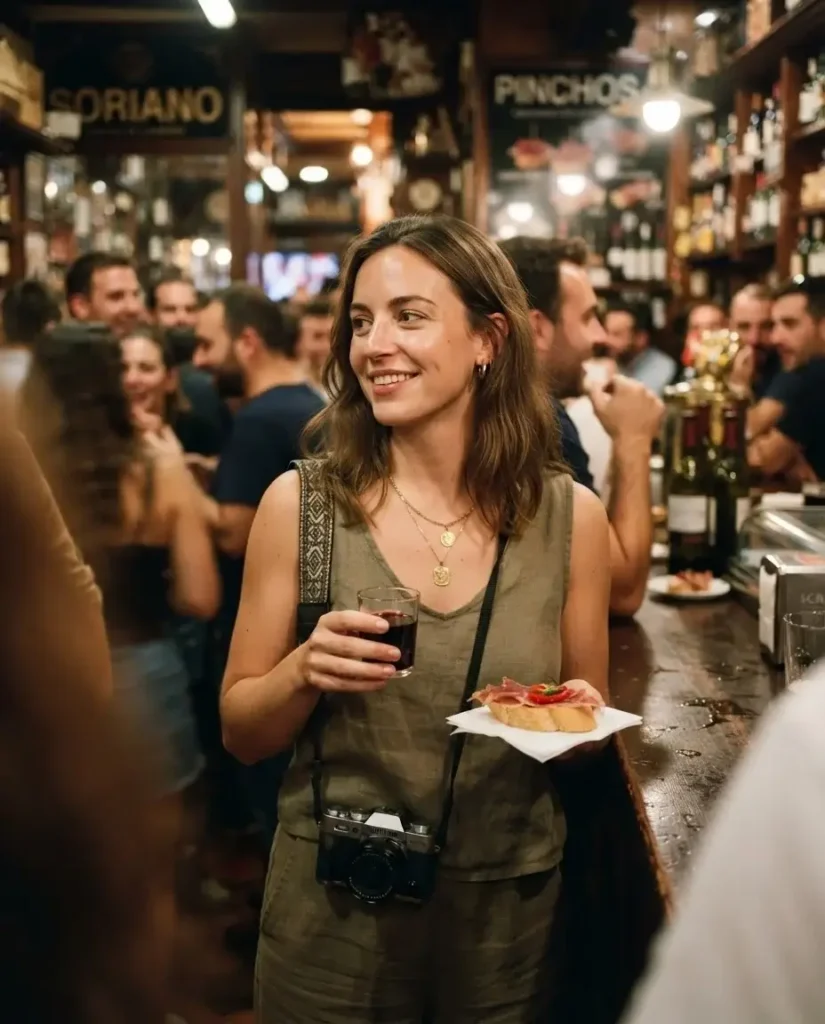
For a solo traveler, Rioja has a secret weapon: the tapas bar. On Calle Laurel in Logroño, you hop from bar to bar, each with its own tiny specialty and a glass of local red for a couple of euros. You’re standing shoulder to shoulder with locals, no reservation, no awkward table for one. It’s the most natural solo wine experience I can point you toward, and it costs very little.
What to eat: order pinchos as you go, and try a glass of young, juicy Rioja alongside grilled mushrooms or chorizo cooked in cider. The classic aged Reserva reds shine next to roast lamb.
Champagne and Alsace, France: For Something a Little Different
If bubbles are your thing, the Champagne region east of Paris is the only place on earth that can legally call its sparkling wine Champagne. The hillsides, grand houses, and deep chalk cellars were recognized by UNESCO in 2015, and the official Champagne heritage body is a good place to understand why this place is so protected. Base yourself in Reims or Épernay, both reachable quickly by train from Paris, and tour a mix of one big famous house and one small grower to feel the contrast. The underground cellars alone are worth the trip.
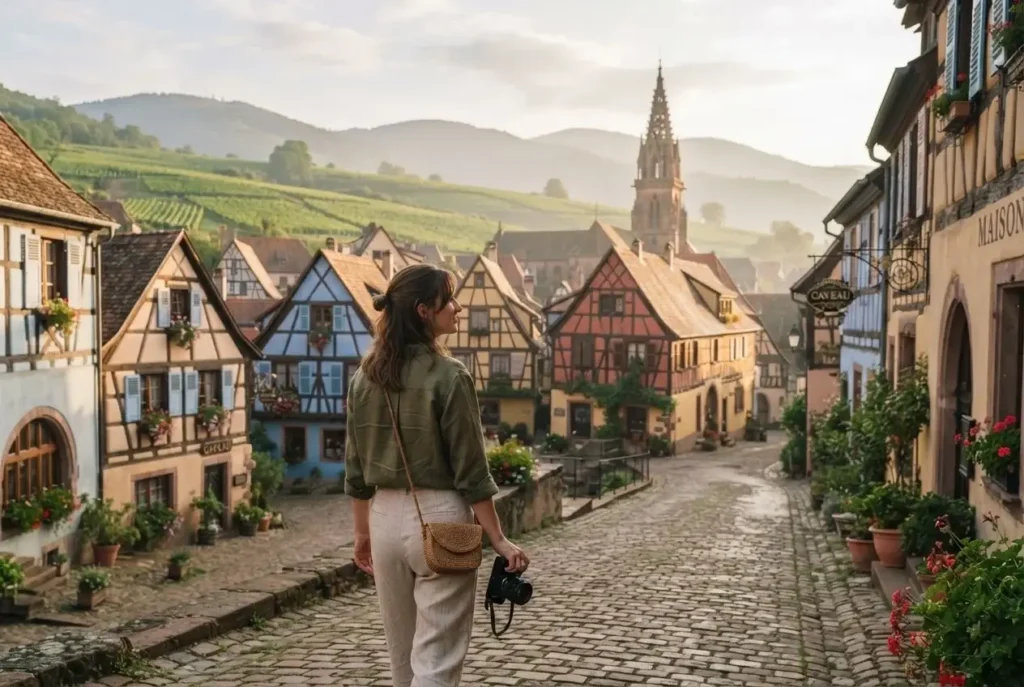
Just south, the Alsace Wine Route is my pick for the prettiest low-stress drive-free wandering. It runs about 170 km through storybook villages, and the Alsace Wine Route’s official site lists ways to explore without a car, including seasonal hop-on hop-off options between villages. Alsace whites, especially Riesling and Gewürztraminer, are aromatic and forgiving for a beginner’s palate, and the wine villages are so walkable you can taste, eat, and wander on foot all day. This is where I’d send someone who wants the fairytale look without the intimidation.
What to eat: in Champagne, the bubbles pair shockingly well with something salty and simple, even good potato chips, but locally try it with Chaource cheese. In Alsace, tarte flambée and choucroute alongside a crisp Riesling is the comfort-food dream.
How to Actually Taste Wine (Without Faking It)
Let me demystify the ritual, because the fear of “doing it wrong” is the number one thing holding people back.
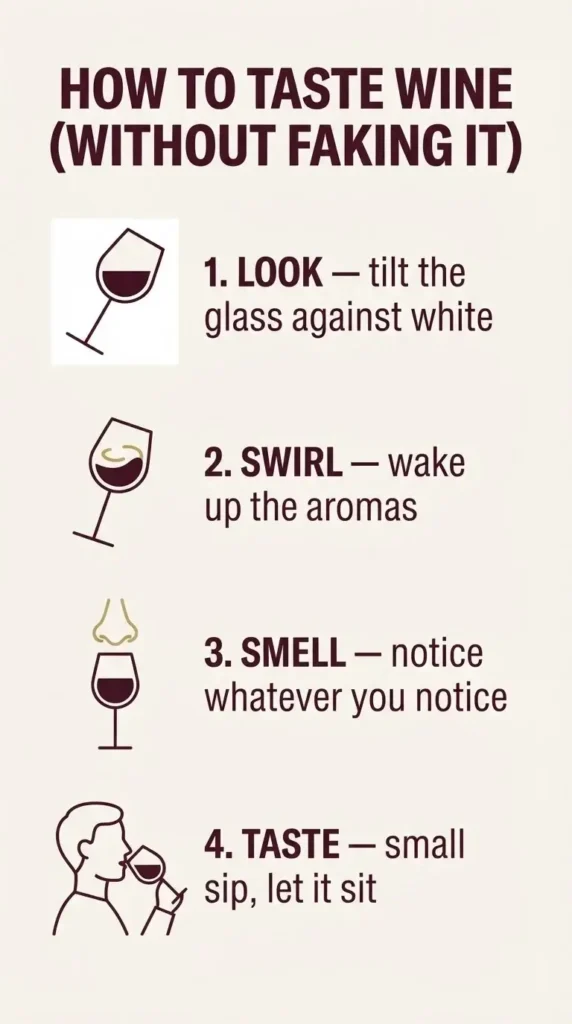
There are really only four steps, and none of them require expertise. Look at the color by tilting the glass against something white. Swirl gently to wake up the aromas, keeping the base on the table if you’re nervous about spilling. Smell it and just notice whatever you notice, fruit, flowers, something earthy, there are no wrong answers. Then taste a small sip and let it sit for a second before swallowing.
Here’s the permission you might need: you are allowed to spit. Those buckets on the counter, the spittoons, exist so that professionals and smart tourists can taste ten wines without getting drunk by noon. Using one doesn’t make you rude. It makes you experienced. And you’re allowed to not like something. “This one isn’t for me” is a completely acceptable, adult thing to say in any cellar in Europe.
If you want two words to sound like you’re paying attention, “tannic” describes that drying grip on your gums in a young red, and “the finish” is how long the flavor lasts after you swallow. That’s genuinely enough to start a real conversation with a winemaker.
Doing It Solo: Yes, You Absolutely Can
I’ve seen the online threads where solo travelers say wine tours feel awkward alone, and I understand the worry. But solo wine travel is not only possible, it’s often better, because you set the pace and you talk to more people.
A few things make it easy. Choose wine bars and tapas streets over private tours when you want zero pressure, because standing at a bar is inherently social and nobody blinks at a solo drinker there. When you do want a proper winery visit, join a small-group tour, which handles transport and pairs you with other travelers, and quietly solves the two-person minimum problem that so many tours have. Sit at the bar rather than a table when you can, because bartenders become your guides. And go for lunch tastings rather than late dinners if you’d rather be back before dark, which is one of my standing rules for solo travel anywhere.
The confidence you build doing this is real and it transfers. Learning to walk into a cellar alone, ask a beginner’s question, and enjoy the answer is the same muscle that gets you through every other solo travel moment. That’s the part these trips quietly teach you.
What It Costs, Honestly
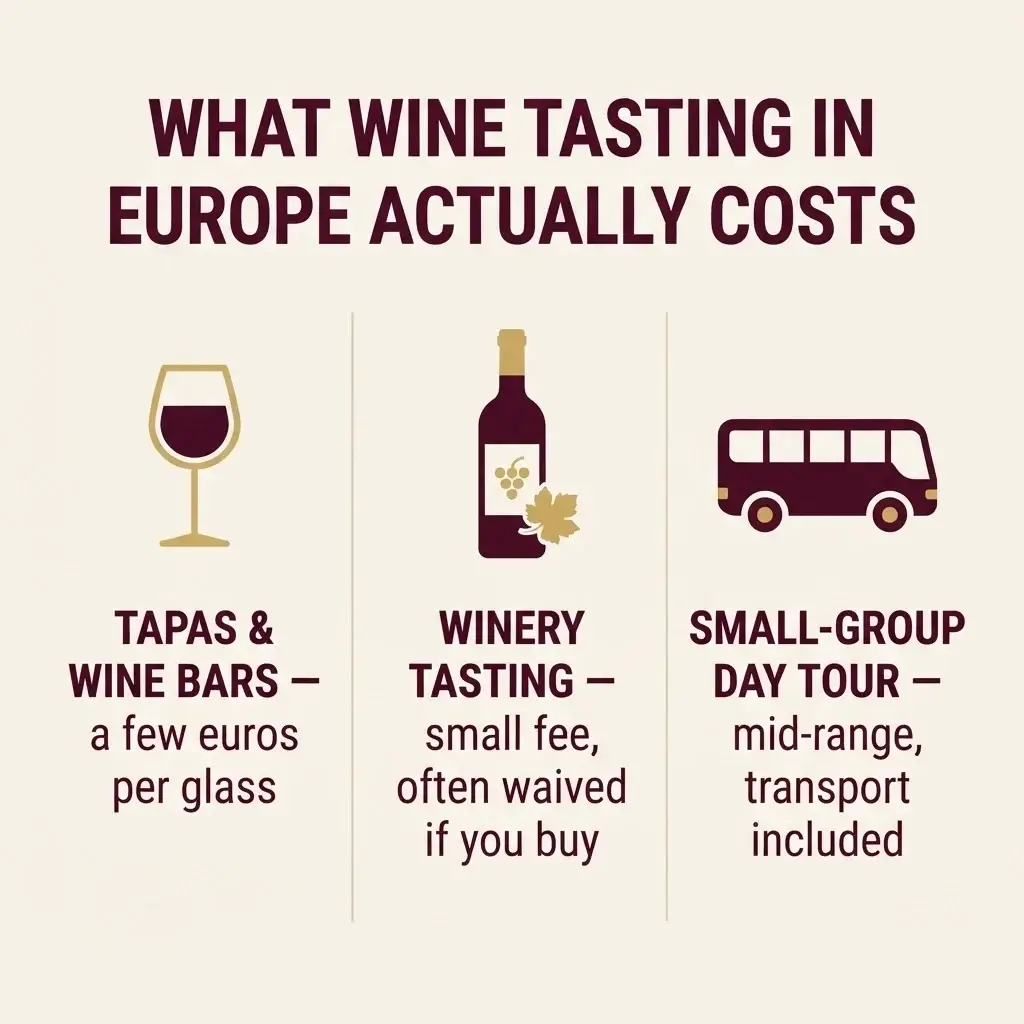
Individual tastings at wineries commonly run in the range of a modest restaurant meal, and many charge a small tasting fee that’s often waived or discounted if you buy a bottle. Small-group day tours from a nearby city, including transport and several tastings, tend to land in the mid range for a full day. And you are almost never obligated to buy after a tasting, though a fee usually means you’re welcome not to. If a place is free, buying a bottle you enjoyed is a kind gesture, not a requirement.
The cheapest, most authentic version of all of this is the one I keep coming back to: tapas bars and wine bars where a glass of excellent local wine costs a few euros and comes with the region’s food. You can have a genuinely wonderful wine day in Rioja or Alsace for the price of a single fancy tour elsewhere.
The Practical Stuff That Keeps the Day Great
Do not drink and drive. This sounds obvious, but wine regions are rural and rental cars feel convenient. Use trains, small-group tours, or village-to-village transit instead. Portugal’s Douro train, France’s fast trains to Reims, and Alsace’s village hops all exist precisely so you don’t have to choose between tasting and driving safely.
Book the famous names ahead, walk in at the small ones. Big flagship houses and popular Chianti estates can fill up, while tiny family producers often prefer a quick call ahead but are delighted to see you. Eat before and during, always, because a good meal is what turns a tasting from a blur into a memory. And think about timing: harvest season, roughly late summer into October depending on the region, is thrilling and busy, with the vines full and the cellars working, but spring and early summer are calmer and just as beautiful.
Start With Curiosity, Not Expertise
The best wine-tasting experiences in Europe aren’t the most expensive ones or the ones with the most famous labels. They’re the afternoons where you slowed down enough to actually notice something, said “I have no idea what I’m doing” out loud, and got a warm answer back.
You don’t need to become a connoisseur. You need to book the train, pick one region that makes you a little excited, and let a stranger pour you something they’re proud of. That first clumsy swirl I told you about at the start of this? It led to some of the most human, unhurried, quietly confidence-building days I’ve spent anywhere. Yours are waiting. Go find out what you like.