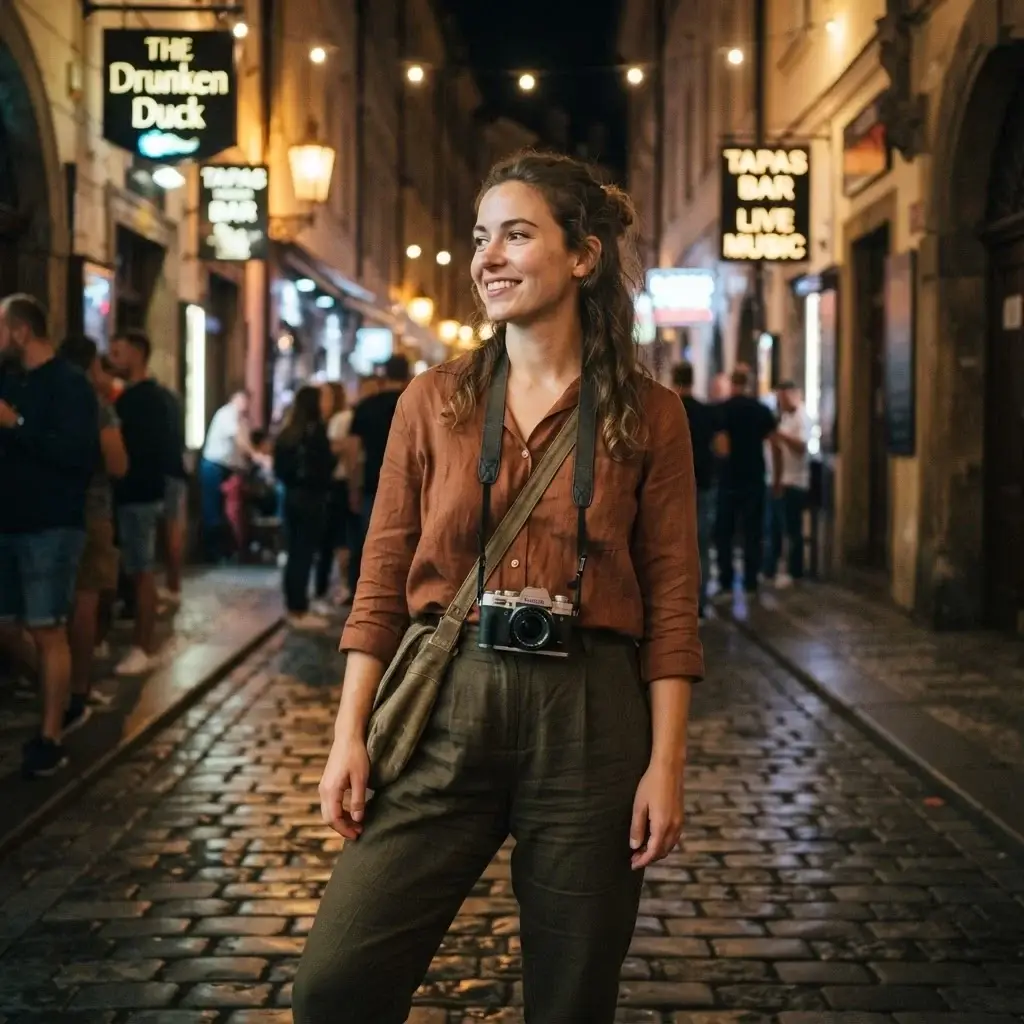
The first time I went out at night alone in a foreign city, I stood outside the bar for a full ten minutes before I went in. I remember it clearly from my backpacking days across Europe. Everyone inside seemed to already know each other. The music was in a language I didn’t speak. And I was convinced that the second I walked through the door, every single person would turn and know I didn’t belong.
I went in anyway. And within an hour I was sharing a table with two locals who redrew my entire mental map of the city on a napkin.
That’s the thing nobody tells you about Europe’s famous nightlife districts. They look intimidating from the outside, all neon and noise and confident-looking crowds. But most of them are far more welcoming than they appear, especially if you know a few small things before you arrive. This guide is the version I wish someone had handed me back then. Not a ranked list of clubs, but a real walkthrough of how to actually experience these places, feel like you belong, and get home safely, whether you’re with friends or completely on your own.
Let’s take the fear out of it.
First, let go of the “I’ll look like a tourist” fear
Here’s a lesson I learned the slow way, and later saw confirmed over and over while working as a sightseeing guide in New York: locals are not watching you nearly as closely as you think. Everyone out at night is focused on their own night. The nervous energy you feel is almost entirely internal.
The single best move you can make is to walk in with a small amount of purpose. Know the name of one bar you’re heading to. Know how you’re getting home. That’s it. Those two anchors turn “wandering tourist” into “someone who has a plan,” and it changes how you carry yourself completely.
If you’re anything like me when I first planned a trip like this, you’ll want to over-research every venue. Don’t. Pick one starting point per night and let the district do the rest. Nightlife districts in Europe are built for wandering. The good ones spill from bar to bar, and half the magic is stumbling into somewhere you never planned.
Berlin: techno temples and the art of the late night
Berlin is the deep end of the European nightlife pool, and I mean that as a compliment. This is a city where clubs genuinely have no fixed closing time and the party can roll from Saturday night straight through to Monday morning. Its reputation is real.
The main action clusters in a few districts. Friedrichshain is home to the legendary techno clubs, including Berghain, the most mythologized club in the world. Kreuzberg, just across the river, is the cult, alternative, anything-goes neighborhood, centered on lively streets like Oranienstraße. Neukölln is the hip, multicultural, lower-key option with a wall-to-wall bar scene on streets like Weserstraße. If you want to plan around neighborhoods rather than single venues, the official Berlin tourism site breaks the nightlife districts down by mood and area, which is genuinely the clearest starting map I’ve found.
A few things to know so you don’t feel lost. Berlin door culture is famously strict at the big techno clubs. Go in a small group or solo rather than a rowdy pack, dress down in dark clothing rather than dressing up, and be calm and quiet in the queue. Phones and cameras are a hard no inside most serious clubs, so don’t even reach for yours near the door. And nobody arrives at 10pm. Berliners often don’t head out until well after midnight, so pace yourself.
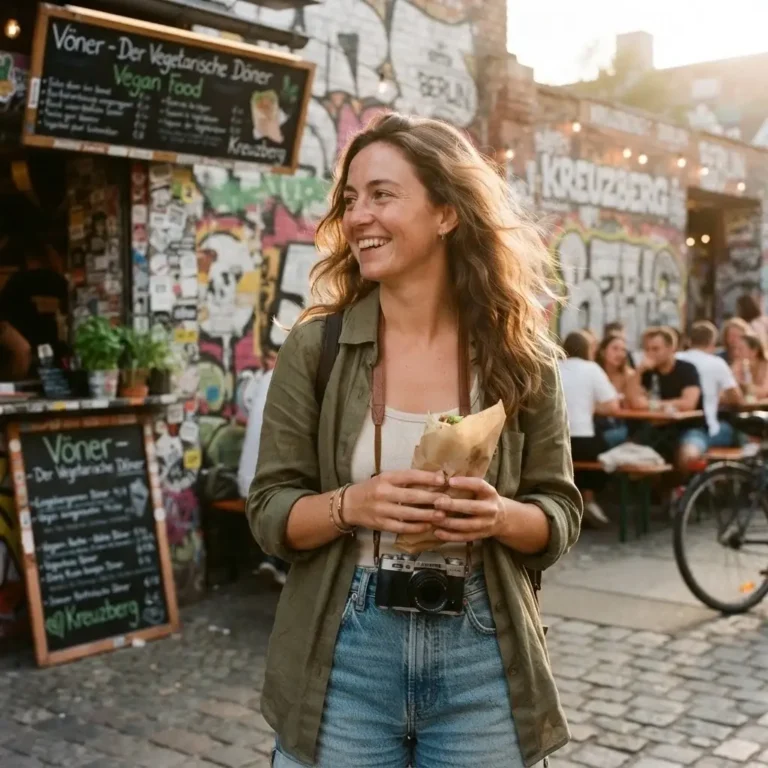
What to eat: Currywurst is the classic late-night fuel, and there’s a döner kebab spot on practically every corner that will save your life at 4am. Berliners treat the Späti, the little corner shops that stay open all hours, as an unofficial part of the night. Grabbing a cheap beer from a Späti and drinking it on the street is completely normal and legal here.
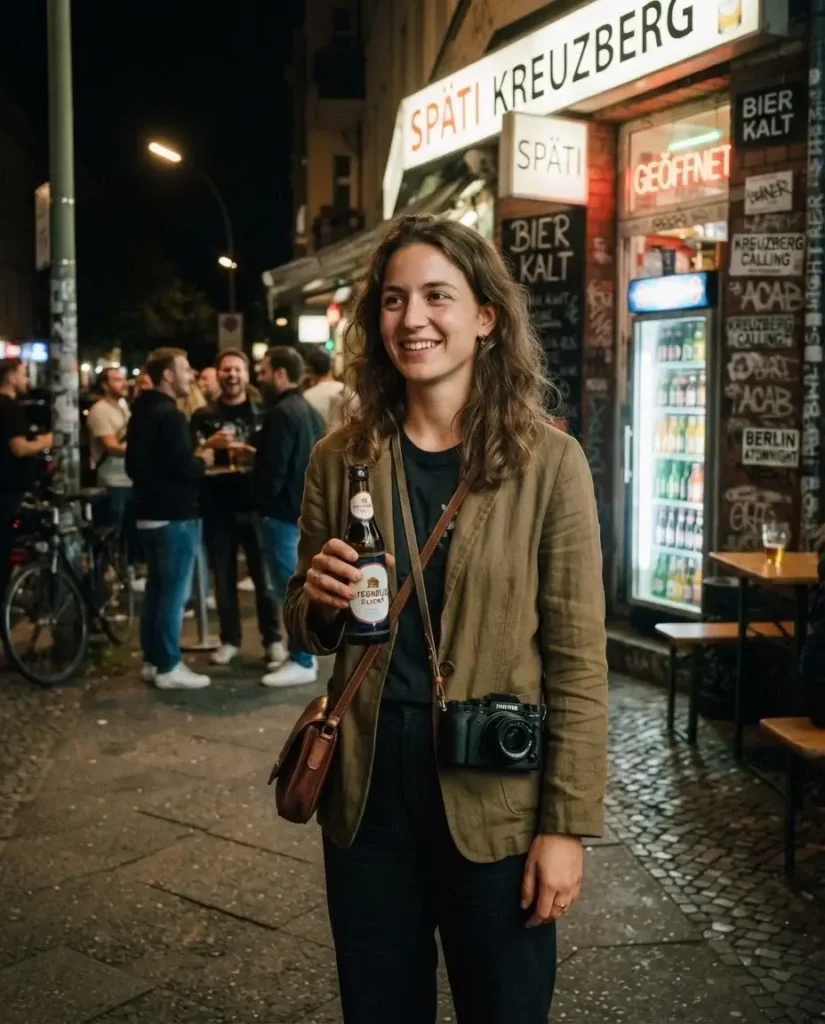
Getting home: This is where Berlin quietly shines. On weekends, most of the U-Bahn and buses run around the clock, so you’re rarely stranded. I’d get familiar with how the BVG public transport network actually works before your first night out, because knowing your night route home is what lets you relax and enjoy yourself.
Amsterdam: the district everyone misunderstands
Amsterdam’s Red Light District, known locally as De Wallen, is probably the most famous and most misunderstood nightlife area in Europe. People arrive expecting chaos. What they actually find is a very old, very beautiful canal neighborhood that happens to have a legal, regulated sex industry running through it.
If you go, go with respect, because this is a working neighborhood and the workers are people doing a legal job. There is one rule that matters more than any other: do not photograph or film the women in the windows. It is strictly prohibited, signs are posted everywhere, and it’s a serious breach of both etiquette and rules. This isn’t a suggestion. The Amsterdam city guides spell out the district’s rules and history clearly, and reading up before you go will help you understand the neighborhood rather than gawk at it.
Beyond De Wallen, Amsterdam’s real nightlife is broader and better than its reputation. Leidseplein and Rembrandtplatz are the big square-based club zones, and the Jordaan is full of cozy “brown cafés,” the traditional Dutch pubs that are perfect for a solo traveler who wants conversation over chaos.
What to eat: Bitterballen, the crispy deep-fried snack balls served with mustard, are the go-to bar food and pair perfectly with a local beer. For the walk home, a paper cone of fries with mayo is non-negotiable.
A safety note: Amsterdam is generally very safe, but the Red Light District at peak hours gets packed and pickpockets work the crowds. Keep your bag zipped and in front of you. And skip the aggressive drug dealers who approach on the street. Whatever they’re selling isn’t what they say it is.
Barcelona: two districts, two completely different nights
Barcelona gives you a choice of moods, and I love it for that. El Raval is the gritty, artsy, wonderfully diverse district just off La Rambla, packed with tiny bars where students, artists, and travelers all pile in together. The best bar-hopping is concentrated on and around Carrer de Joaquín Costa. It’s loud, it’s cheap, and it’s the easiest place in the city to fall into conversation with strangers.
For something more local and less touristy, head to Poble Sec at the foot of Montjuïc. This is where I’d send a first-timer who wants the authentic version. The heart of it is Carrer de Blai, a street lined with pintxos bars where small tapas cost just a euro or two each. You eat, you move to the next bar, you eat again. It’s the perfect low-pressure way to spend a solo evening because you’re always doing something with your hands and there’s a natural rhythm to it. Time Out’s rundown of the best bars in Poble Sec and Montjuïc is a solid, current shortlist if you want a name or two to start with.
What to eat: On Carrer de Blai, the pintxos game is simple. You grab a plate, take whatever skewered bites look good, and pay at the end by counting your toothpicks. Patatas bravas and a small glass of vermouth is the classic Barcelona pre-night ritual.
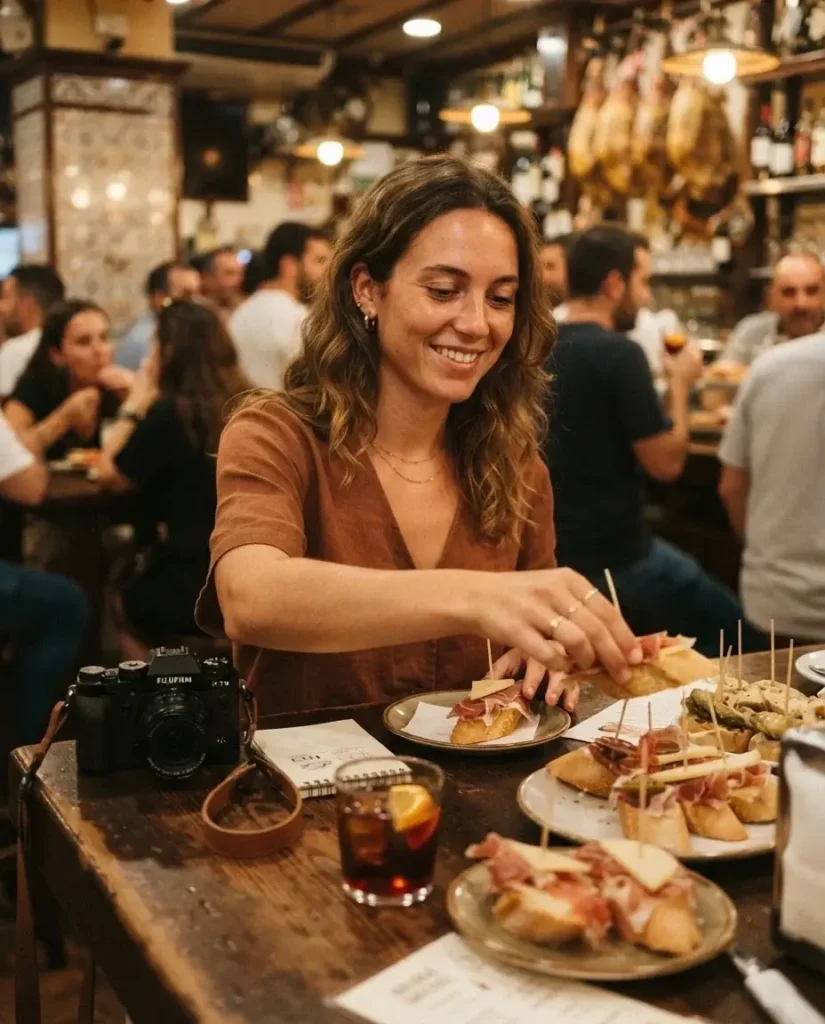
Timing: Spanish nights run late. Dinner at 9 or 10pm, bars filling after 11, clubs not really moving until 1 or 2am. Don’t fight it, lean into it, and take a late-afternoon nap if you need one.
Madrid: the city that genuinely never sleeps
If Barcelona runs late, Madrid runs later. This is a city where people talk about watching the sunrise as the natural end of a good night, not a mistake. The energy is infectious.
The two districts to know are Malasaña and Chueca, which sit side by side. Malasaña is the alternative, indie, slightly hipster heart of Madrid nightlife, born out of “la movida,” the explosive countercultural scene of the 1980s. Legendary bars like La Vía Láctea and El Penta still anchor it. Right next door, Chueca is the vibrant, welcoming LGBTQ+ district, open and fun for absolutely everyone. The official Madrid tourism board maps out the city’s main nightlife zones by area, which helps you pick your neighborhood before you head out.
What I appreciate about Madrid for solo travelers is how social and unpretentious it feels. People are out to talk, and the bars are small enough that you’re never anonymous for long. Plaza de Chueca and Plaza del Dos de Mayo in Malasaña are great open-air spots to start the night and get your bearings.
What to eat: Madrid is a tapas city, so eat as you drink. A bocadillo de calamares, the fried squid sandwich, is the beloved local street food. And if you make it to sunrise, do what Madrileños do and get chocolate con churros at a churrería to close the night.
Getting home: The Madrid Metro stops running around 1:30am and restarts around 6am, so for the deep middle of the night you’ll want the night buses, nicknamed “búhos” (owls), or a licensed taxi or ride app. Never get in an unmarked “taxi” offered on the street.
Prague: gorgeous, cheap, and worth navigating carefully
Prague’s nightlife reputation is built on beautiful old streets, some of the best and cheapest beer in the world, and a party scene that draws huge crowds. All of that is true, and it’s a genuinely fun city at night. But it’s also the one district on this list where I’d tell a first-timer to keep their guard up a little more.
The central tourist nightlife around Wenceslas Square is convenient but full of traps: overpriced tourist clubs, aggressive promoters, and the classic “absinthe” gimmick bars. For a better night, do what locals do and head out to the neighborhoods. Žižkov has the highest density of pubs of any district and a rowdy, unpretentious charm. Vinohrady is the more relaxed, grown-up wine-bar and cocktail area. Karlín is the newer, trendier spot.
A few honest cautions. Prague has a reputation for tourist scams after dark, so agree on prices before ordering in unfamiliar bars, always check your bill, and be wary of anyone who approaches you offering a “great club” or a strip venue. Standard bad idea, universally.
What to eat: Czech pub food is hearty and perfect for soaking up beer. Get the smažený sýr, fried cheese, from a late-night window, or a proper plate of goulash earlier in the evening. And the beer really is the point here. A local pilsner in a neighborhood pub costs a fraction of what you’d pay back home.
Budapest: ruin bars and the most fun district in Europe
If I could send a nervous first-timer to just one nightlife district in Europe, it might be Budapest’s. The city’s famous ruin bars, or “romkocsmák,” are clustered in the compact, walkable District VII, the old Jewish Quarter, and they are unlike anything else on the continent.
A ruin bar is exactly what it sounds like: a bar built inside a crumbling, once-abandoned building, filled with mismatched furniture, wild art, fairy lights, old bathtubs turned into seats, and a warren of rooms and courtyards to explore. The original and most famous is Szimpla Kert, and while it gets busy and touristy, it’s still genuinely worth seeing at least once. The beauty of District VII is that everything is within a few minutes’ walk, so you can bounce between spots easily and never need transport between them.
This is the ideal solo nightlife district precisely because it’s so unstructured. Nobody’s dressed up. Nobody’s judging. You can wander from room to room with a drink, find a courtyard, and end up in conversation without any pressure. It’s playful rather than intimidating.
What to eat: Lángos is the iconic Hungarian street food, deep-fried dough topped with sour cream and cheese, and it’s the perfect ruin-bar-night snack. You’ll find stands around the district well into the small hours.
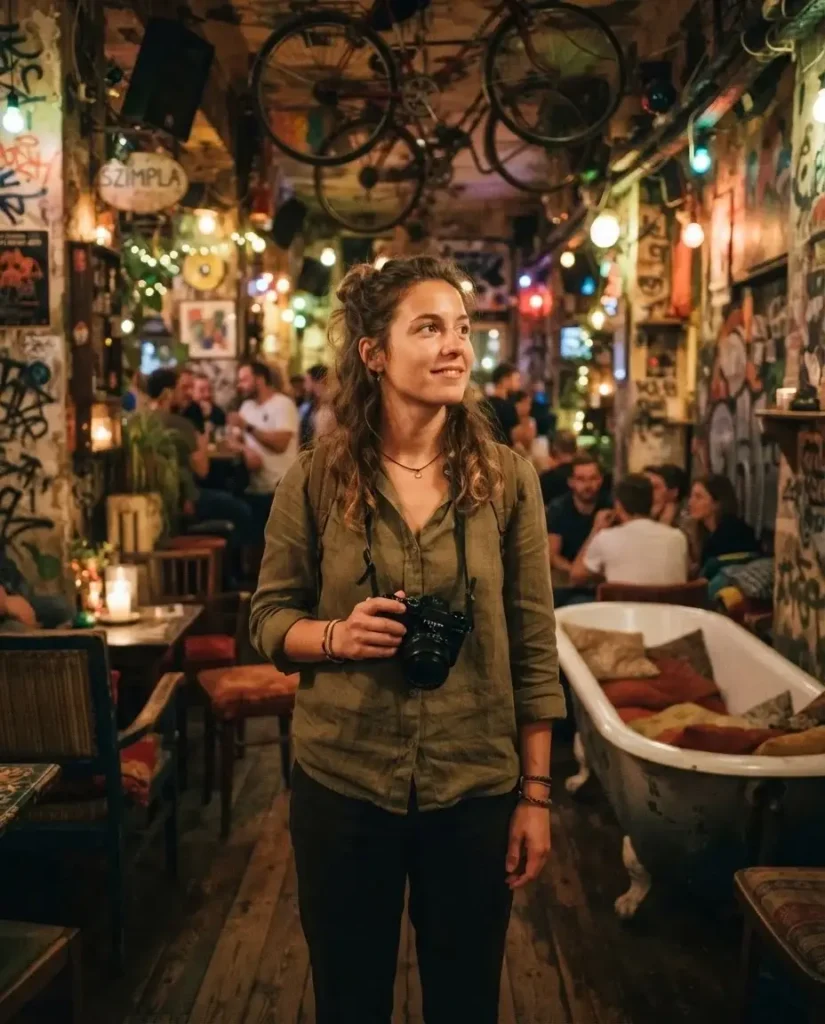
A budget note: Budapest remains one of the most affordable nightlife cities in Europe, which makes it forgiving for first-timers. Drinks are cheap, food is cheap, and the whole district is walkable, so a great night out costs far less than in Berlin or Amsterdam.
Lisbon: a night that flows downhill
Lisbon has one of the most charming nightlife rhythms in Europe, and once you understand the pattern, the whole city clicks into place. As the official Lisbon tourism board describes it, a Lisbon night is essentially a steady downhill journey.
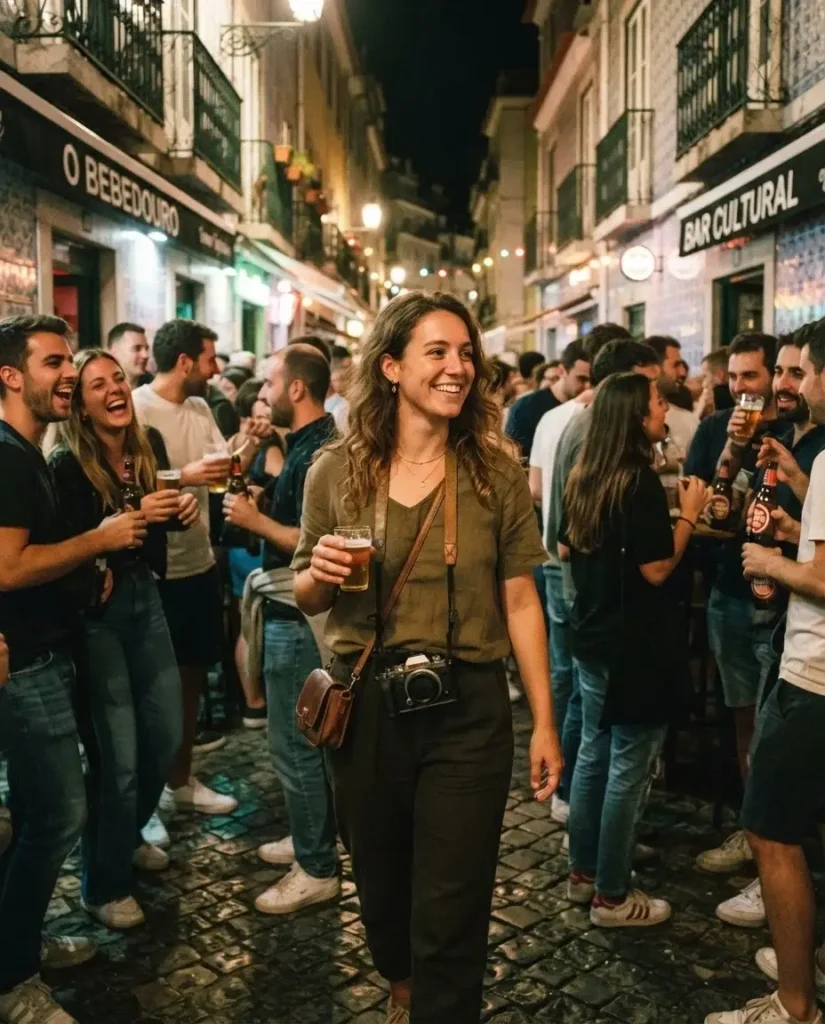
It starts in Bairro Alto, a maze of narrow, cobbled streets crammed with tiny bars. The magic here is that everyone spills out into the street with their drinks, so the whole neighborhood becomes one big open-air gathering. You don’t sit in one bar all night. You drift, drink in hand, from door to door. Because of noise rules, the Bairro Alto bars wind down around 2am on weekdays and 3am on weekends, and that’s when the crowd migrates downhill to Cais do Sodré.
Cais do Sodré is home to Pink Street, a former red-light lane now painted pink and packed with clubs and late bars that carry the night through to sunrise. In between, the tiny Bica neighborhood offers a quieter drink with a view. If you want a deeper sense of the area’s character and history before you go, Rough Guides has a solid Bairro Alto travel guide that captures the neighborhood well.
What to eat: Duck into a tiny tasca for petiscos, the Portuguese version of tapas, before the night gets going. A bifana, the simple marinated pork sandwich, is the classic cheap and delicious fuel. And a small glass of ginjinha, the sour cherry liqueur served from hole-in-the-wall shops, is the quintessential Lisbon way to start an evening.
The solo traveler’s night-out survival kit
Everything above changes a little when you’re on your own, so here’s what I’ve learned about doing nightlife solo, and it’s genuinely one of the fastest ways to build travel confidence there is.
Start early and social. Bar crawls, pintxos streets, and ruin bars are your friends because they’re built for mingling. You’re never awkwardly sitting alone at a table. You’re moving, snacking, and naturally bumping into people.
Protect your drink and your limits. Never leave a drink unattended, and know your own line. You are in an unfamiliar city and your judgment is your best safety tool, so keep it sharp. Pace yourself with water and food.
Sort your ride home before you’re tired. I cannot stress this enough. Screenshot your route, know whether the metro runs all night, and have a licensed taxi or ride app ready. Getting home is the part of the night where things go wrong, so make it the part you’ve already solved.
Trust your gut and give yourself permission to leave. If a place feels off, or a person won’t take a hint, you owe nobody an explanation. Being polite is not worth your safety. The best skill I ever developed as a solo traveler was leaving early with zero guilt.
Tell someone where you are. Even a quick message to a friend back home with your plan and location costs nothing and gives you a safety net.
What a night out actually costs
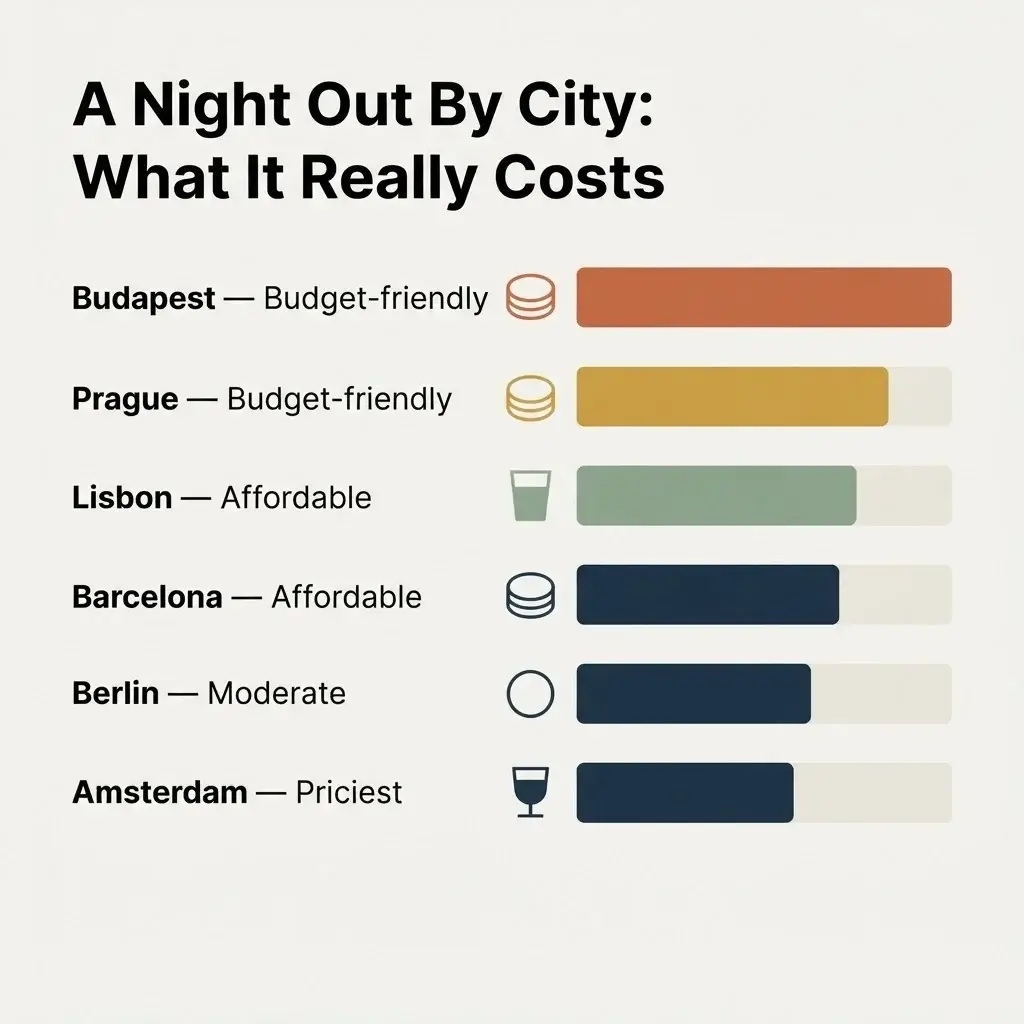
Budgets vary wildly across these districts, so plan by city. Budapest and Prague are the gentle on the wallet options, where drinks are cheap and you can have a full, memorable night for very little. Lisbon and Barcelona sit in the affordable middle, especially if you eat at pintxos and petisco spots rather than sit-down restaurants. Berlin is moderate, with reasonable club entry and cheap Späti beer balancing things out. Amsterdam is the priciest of the group, both for drinks and for how quickly a night adds up.
The trick that saved me in my early travel days, back when I was working flexible jobs to fund the whole thing, was to set a cash budget for the night and physically carry only that. When it’s gone, the night’s over. It sounds strict, but it’s freeing. You stop doing anxious mental math and just enjoy yourself.
The real reason these nights matter
I’ll be honest with you about why I think this is worth doing, even if the idea makes you nervous. It isn’t really about the clubs or the drinks. It’s about what happens to you when you walk into an unfamiliar place, alone, in a city that isn’t yours, and discover that you can handle it.
The first time I did it, hovering outside that bar for ten minutes, I was terrified. Every time since, I’ve been a little less afraid, because each night out in a new place quietly proves to you that you’re more capable than you thought. That confidence doesn’t stay at the bar. It follows you home and shows up everywhere else in your life.
So pick one district. Learn your one bar and your one route home. Then go stand outside the door, feel the nerves, and walk in anyway. That’s the whole secret. The rest of the night takes care of itself.