From Pinterest to Pillow: How to Find Cheap Accommodation Fast

Let me tell you what happens to almost every first-time solo traveler. They spend an hour scrolling Pinterest, save twenty beautiful pins of cozy guesthouses and sun-drenched hostel rooftop pools, and then close the tab without booking a single thing. The inspiration is there. The action isn’t.
I get it completely. When I was planning my first solo backpacking trip through Europe, Pinterest was one of the first places I turned. The boards were stunning. What they lacked was a bridge from “this looks amazing” to “here’s how you actually secure a bed there for under $20 a night.” That bridge is what this post is about.
Finding cheap accommodation isn’t complicated, but it does require a strategy. And when you combine Pinterest’s research power with the right booking tools, timing knowledge, and a few overlooked options most travelers don’t even consider, your accommodation budget can shrink dramatically without sacrificing comfort or safety. Here’s how to do it.
Pinterest Is a Research Tool, Not Just a Mood Board
Most people use Pinterest as a visual wishlist. That’s fine for home decor inspiration, but for travel planning it leaves real money on the table. According to Pinterest’s own research on how travelers use the platform, Pinterest connects the gap between travel inspiration and actual booking decisions, with users actively planning their trips using saved pins, boards, and search results long before they open a booking site.
The key shift is treating Pinterest as the first layer of your research, not the last stop before you scroll Instagram.
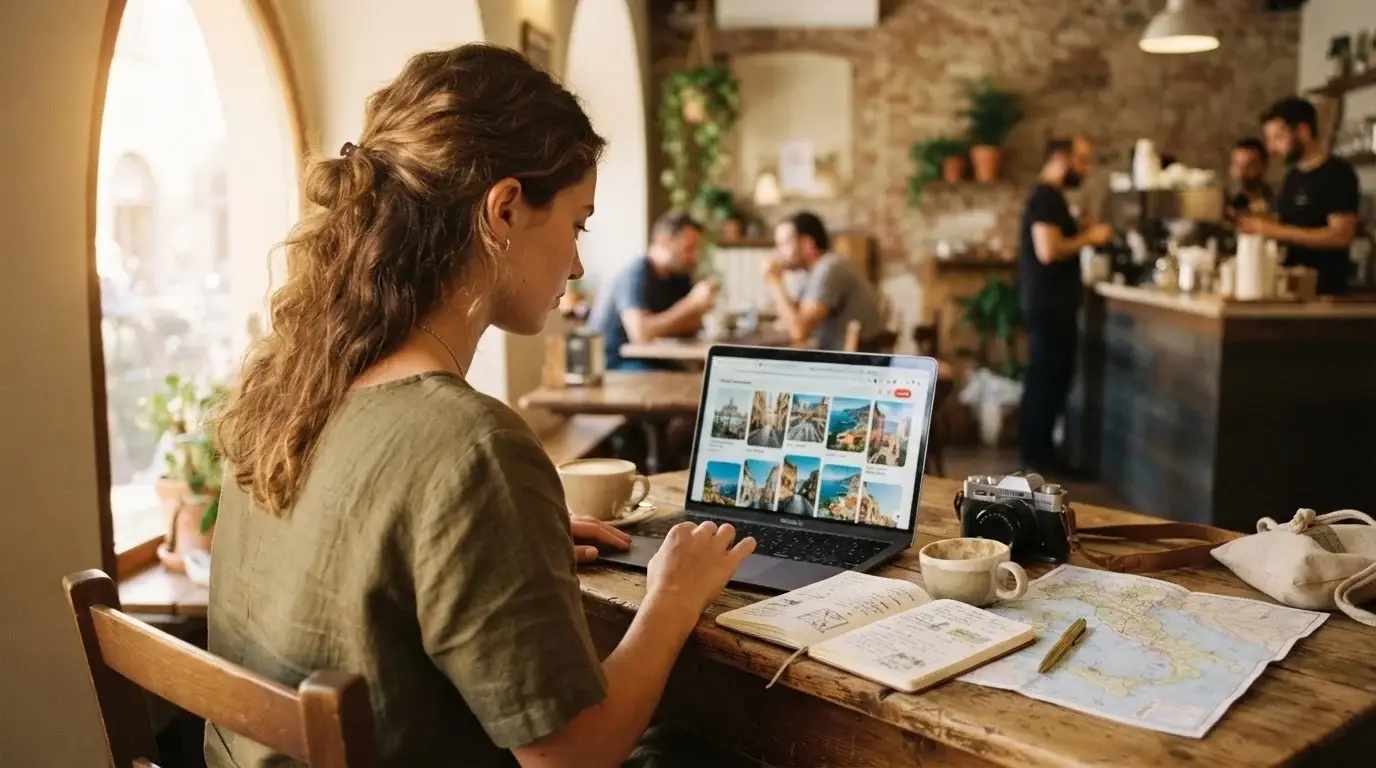
Here’s how to actually use it. When you search for cheap accommodation on Pinterest, go beyond the generic searches. Instead of typing “budget travel accommodation,” try specific searches like “hostel tips Southeast Asia,” “budget guesthouses Lisbon solo traveler,” or “cheap places to stay backpacking Central America.” The more specific your search, the more useful and practical the pins you’ll find. Save pins not just for the pretty images, but for the information in them. Many bloggers and experienced travelers pin posts that contain real pricing, booking strategies, and honest reviews. These are gold.
Create separate boards for each destination you’re considering. Within each board, add a “Accommodation Research” section using Pinterest’s board sections feature. As you save, you’re building a reference library you can return to throughout your planning process. When a pin leads to a blog post with useful detail, save the full article to your reading list or notes app. Pinterest is the funnel. The research happens once you click through.
Know Your Options Before You Book Anything
One of the biggest mistakes travelers make is defaulting to one accommodation type because it’s familiar. The budget accommodation world is much wider than most people realize, and each option serves a different kind of trip.
Hostels remain the gold standard for solo budget travelers. They range from basic dorm rooms to beautifully designed social spaces with rooftop bars, co-working areas, and organized events. For solo travelers specifically, hostels provide something no hotel or Airbnb can: an instant community. When I backpacked solo across Europe, hostels were where I met people who became travel companions, shared local recommendations, and occasionally saved me from a wrong turn on a train platform. The social environment is genuinely part of the value.
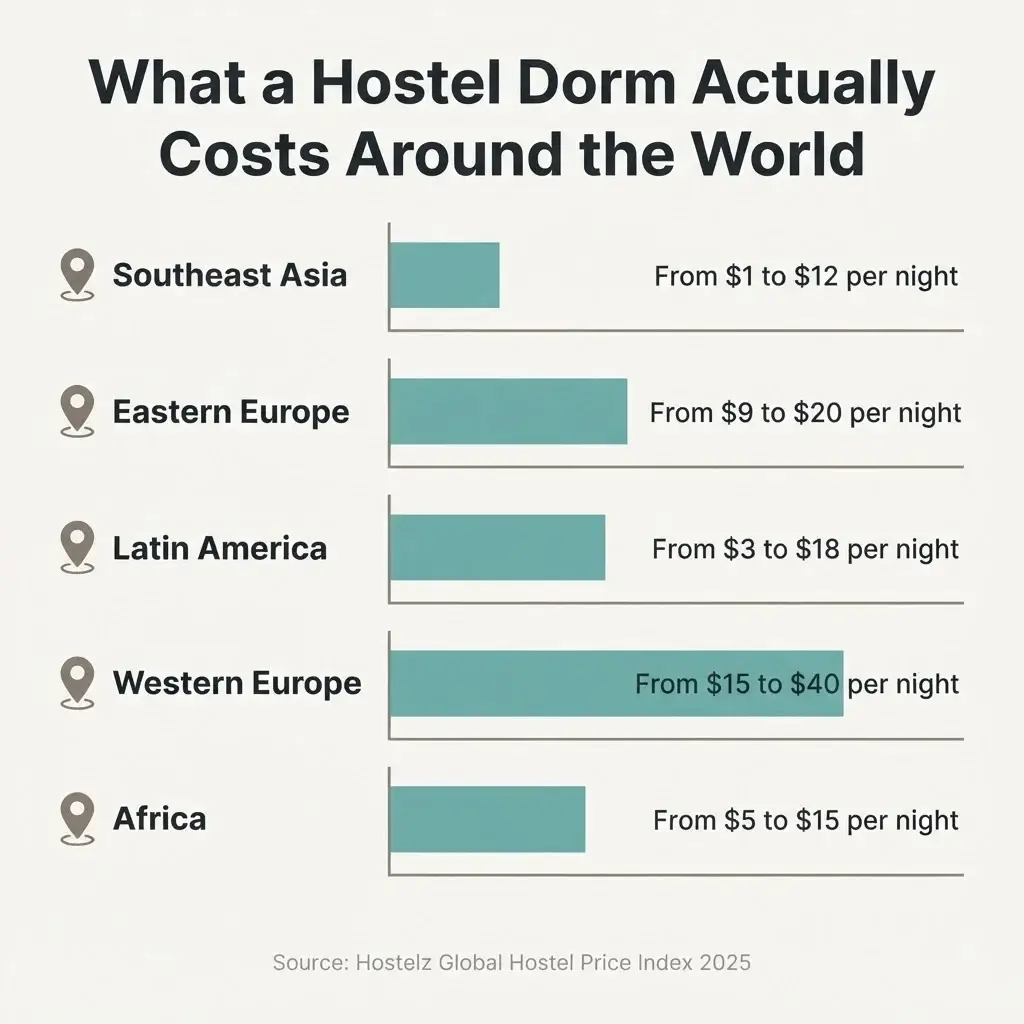
On current pricing, the numbers are more encouraging than most people expect. The Hostelz Global Hostel Price Index shows dorm beds as low as $1 a night in Yogyakarta, Indonesia, around $3 in Bogota and Havana, $5 in Athens, and $8 to $15 in most of Western Europe. In Paris, off-season dorm beds have dipped under $39 in December, while budget hotel double rooms start closer to $86. The global median dorm price sits around $19 a night. Southeast Asia, Latin America, Eastern Europe, and parts of Africa offer the lowest prices per night consistently.
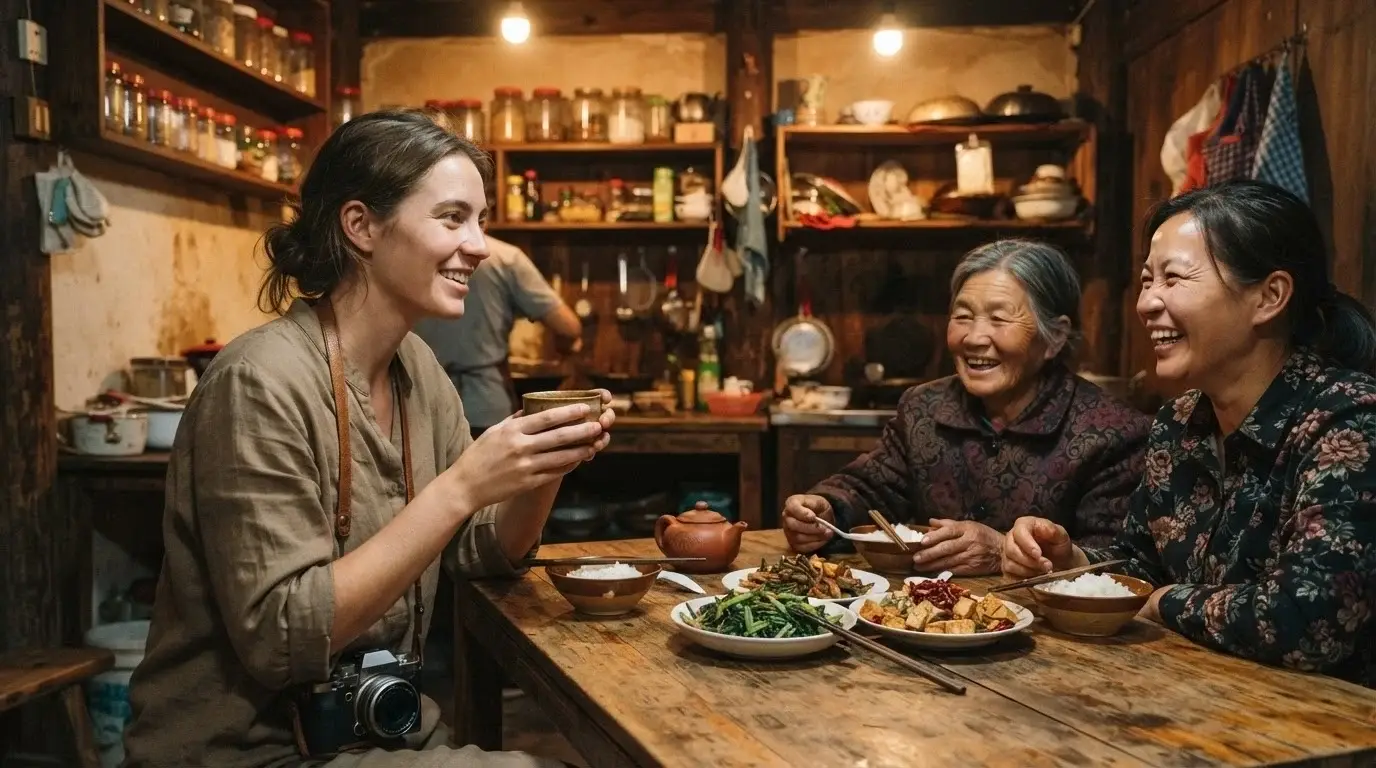
Guesthouses and family-run pensions are often the most culturally rewarding option and frequently the least discussed. When I lived with a family in Ghana, the connection I built with daily life there was something no hotel stay could have replicated. Guesthouses run by local families often include breakfast, operate in residential neighborhoods rather than tourist corridors, and give you a window into how people actually live. They’re usually significantly cheaper than branded hotels and bookable through Booking.com or directly through a Google search.
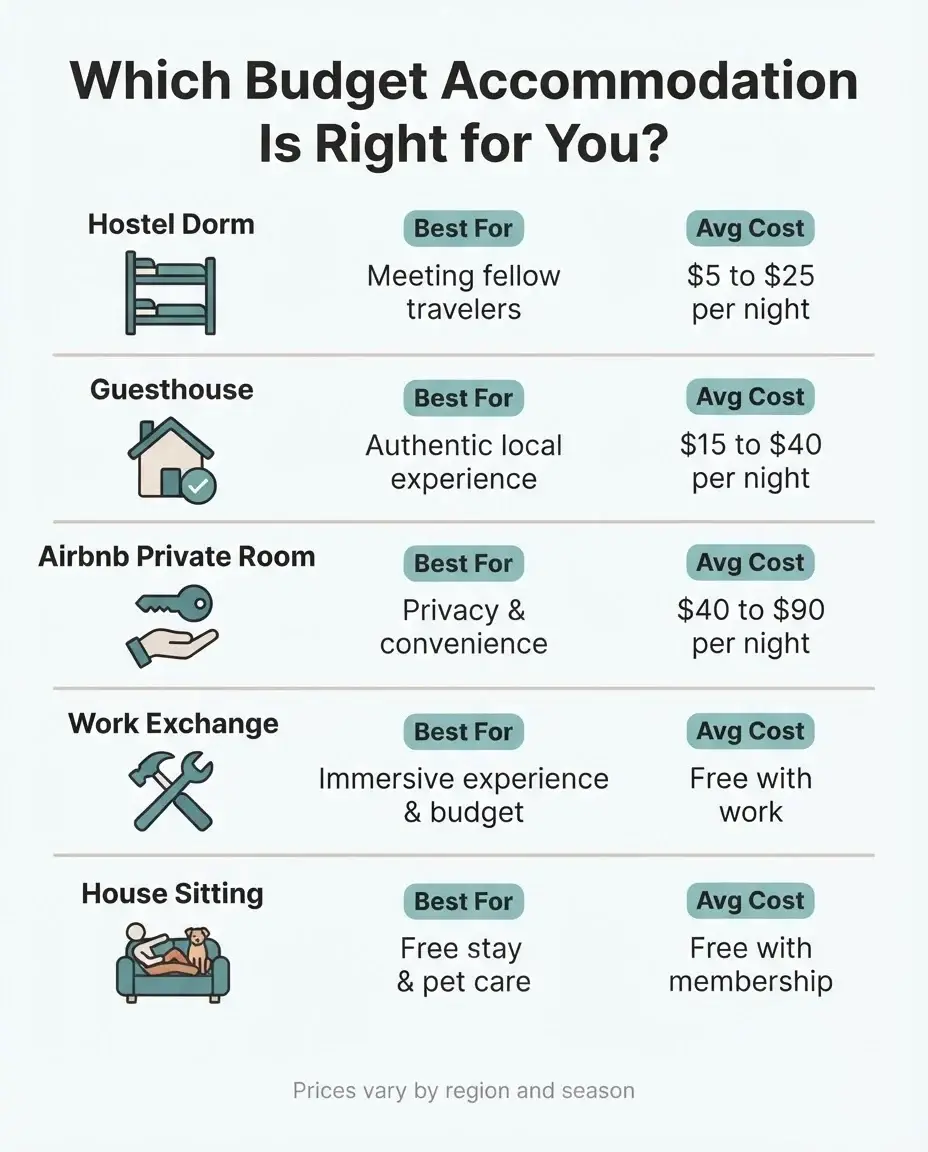
Private rooms through Airbnb can make sense if you’re staying longer than five nights or traveling somewhere with limited hostel options. The critical thing solo travelers often miss is that a private Airbnb room for one person is almost always more expensive per night than a hostel dorm unless you negotiate or stay long enough to unlock discounts. Airbnb’s own system offers weekly and monthly discounts that some hosts set at 10 to 50 percent. But you can also message hosts directly, tell them your dates and budget honestly, and ask if they have any flexibility. Many will say yes, especially in quieter periods. A polite, genuine message works far more often than people expect.
The Free Accommodation Options Most People Overlook
This is where the real savings live, and also where Pinterest research pays off the most because these options are consistently underrepresented on mainstream booking platforms.
Work exchange programs let you trade a few hours of your time each day for free accommodation and meals. Workaway is the most established of these platforms, with over 50,000 host opportunities across 170 countries. You might help with social media for a small guesthouse in Portugal, assist on an organic farm in Japan, or support a language school in Colombia. Hosts typically ask for around 5 hours of work per day, 5 days a week, in exchange for a bed and usually meals. If you’re anything like me when I was waitressing to fund travel, the idea of trading some hours for a roof over your head and food on the table makes a lot of sense, especially for slow travelers who want to stay somewhere for a few weeks rather than just passing through. The Workaway blog itself breaks down the difference between volunteering and house-sitting clearly if you want to understand which approach fits your travel style.
House sitting is a different model. TrustedHousesitters connects homeowners who need someone to look after their home and pets while they travel with travelers who want free accommodation in exchange for that care. You pay an annual membership fee (around $129/year for a sitter membership), and from there the accommodation itself costs nothing. House sits range from a weekend in a London flat to two months in a villa in Tuscany. For digital nomads and slow travelers, this is one of the most underrated strategies in travel. You get a real home, a kitchen, often a garden, and the kind of peaceful daily rhythm that a dorm room can’t provide.
Worldpackers works similarly to Workaway with a network of hostels, ecolodges, NGOs, and social enterprises offering accommodation in exchange for work. Following significant updates in 2025, Worldpackers now provides a backup accommodation guarantee, placing you in a partner hostel if a host arrangement falls through. That extra safety net makes it a particularly solid option for first-time work exchangers who are nervous about things going sideways.
The Pricing Comparison Habit That Will Save You Money Every Time
Here is a simple habit that most travelers skip: before booking through any single platform, compare the same property across multiple sites. This sounds obvious, but in practice most people find a hostel on Hostelworld, see a price they’re okay with, and book it there without checking anywhere else.
Hostelz.com exists specifically to solve this problem. It compares prices for the same hostel bed across Hostelworld, Booking.com, and other platforms simultaneously, and according to their own data, can surface savings of up to 23.7% on the identical bed. That’s real money over the course of a trip. It takes thirty seconds and costs nothing.
For hotels and guesthouses, the same logic applies. Run a quick comparison between Booking.com, the property’s direct website (if it has one), and Agoda or similar regional platforms depending on where you’re traveling. Properties often offer slightly better rates or free extras for direct bookings because they avoid the platform commission. This is especially true in Southeast Asia and Latin America.
Timing: When You Book Matters as Much as Where
Accommodation pricing is seasonal, and getting this right can halve your costs without changing your destination at all. The principle is simple: avoid peak season and the costs drop significantly. But the nuance matters for solo travelers who need to weigh price against social atmosphere.
Hostels in places like Prague, Budapest, Lisbon, and Bangkok fill up quickly in summer and over major holidays, and prices reflect that. The same beds in shoulder season (generally spring and autumn in Europe, the dry season edges in Southeast Asia) drop noticeably. Prague hostel dorms that run $25/night in July can dip under $9 in November without any drop in quality.
For last-minute bookings, the results are genuinely mixed. Some hostels discount unsold beds the day before or morning of. But as a solo traveler, especially if you’re female, arriving somewhere without a confirmed bed and then scrambling to find availability at 9pm is a stress you don’t need. My general rule from backpacking through Europe was this: in high-traffic cities, book at least a week ahead. In smaller towns and off-season destinations, you often have the flexibility to decide more spontaneously.
Staying Safe Without Spending More
Budget accommodation and safety are not opposites, but you do need to know what to look for. Solo travelers searching for the cheapest possible option sometimes book places with a handful of reviews or ratings well below 7 out of 10, and this is where the real problems happen. Not because cheap is inherently unsafe, but because a low review score on a hostel usually signals specific issues: poor security, unresponsive staff, or a location that requires a long walk alone at night to get anywhere.
A good safety rule for budget accommodation booking is to prioritize review volume alongside score. A hostel with a 8.5 rating and 1,200 reviews is a far safer bet than a 9.0 rating from 14 reviews. Read the most recent one-star reviews specifically. They tend to be the most specific and honest about actual current conditions.
For female solo travelers specifically, it is worth knowing that many hostels now offer female-only dorm options. These aren’t a comment on whether mixed dorms are unsafe. They’re simply a comfort and sleep-quality preference that many women find worthwhile, especially in their first few solo trips. Solo Traveler World’s guide to saving on accommodation also touches on this practically, and it’s one of the better resources for thinking through accommodation decisions through a solo travel lens.
Location matters enormously for solo travel safety at a price. A cheap room in an isolated part of a city that puts you in taxis alone late at night may end up costing you more than a slightly pricier option that’s walkable to everything. Factor the cost of transport into your accommodation comparison, not just the nightly rate.
Building Your Pinterest Accommodation Research System
Let me pull this all together into a practical workflow, because the best research system is one you’ll actually use.
Start by opening a new Pinterest board for your destination and naming it something specific, like “Lisbon Trip Planning 2026.” Create a section within it called “Accommodation Research.” Then search Pinterest with targeted phrases: “solo travel Lisbon hostel tips,” “budget accommodation Lisbon guide,” “cheap guesthouses Lisbon neighborhood.” Save pins that contain practical information, not just beautiful photos. When a pin links to a blog post with real booking tips or pricing details, open it and read it. Save the useful ones to your notes app or a separate research document.
From there, take the accommodation types and neighborhoods the Pinterest research surfaces and move them over to Hostelz or Booking.com for actual pricing. Cross-reference anything that looks interesting directly with Google to check for a direct booking option. If work exchange or house sitting is part of your plan, browse Workaway and TrustedHousesitters in parallel, since availability moves quickly and the best opportunities go fast.
Pinterest is the start of the conversation. It’s where the ideas come from. The booking platforms, comparison tools, and review systems are where the decision gets made. Using both together is the whole strategy.
One Thing Most Articles Won’t Tell You
The cheapest accommodation isn’t always the one with the lowest nightly price. It’s the one that fits your actual travel style at the price you can afford. A $9 hostel dorm in Prague might be the best possible decision if you want to meet fellow travelers, share tips, and have a built-in social life. But the same $9 dorm might be miserable for someone who needs quiet mornings to work or travels with light sleep. A slightly more expensive private room, or a free work exchange stay, might be a better investment of your trip budget.
The people who find the best accommodation deals are the ones who are clear about what they actually need, search strategically rather than impulse-saving pretty photos, and have the patience to compare rather than just book the first result.
That’s the whole system. Pinterest opens the door. Research and strategy walk you through it.
Happy trails, and happy saving. Emma