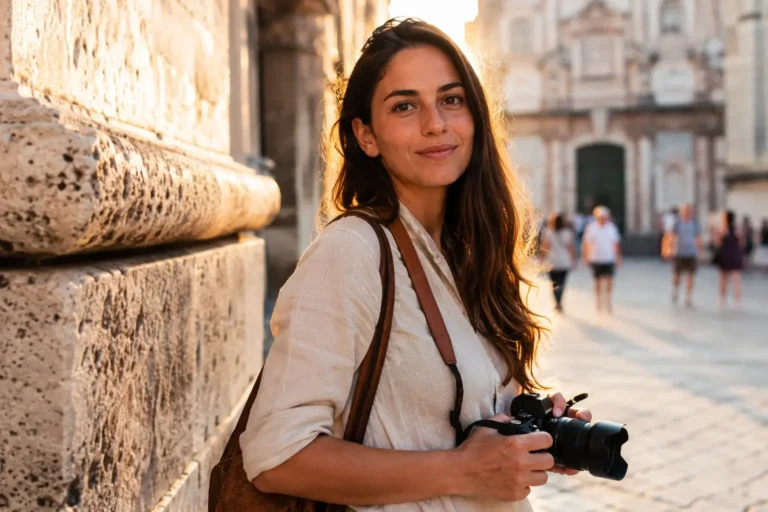

When I sat on the floor of my cramped studio apartment in Astoria, Queens, surrounded by three massive suitcases, a duffel bag, and two backpacks, I felt completely defeated. It was 2018, and I had just handed in my resignation letter at my traditional 9-to-5 corporate communications job. I was trading a predictable paycheck for a life of remote writing and slow travel.
But looking at the mountain of gear before me, I didn’t feel free. I felt weighed down. I kept asking myself: How do I pack my entire life into a single bag without leaving behind the tools I need to earn a living?
In my early days as a New York sightseeing guide and later when I moved to Chiang Mai to teach English, I watched hundreds of travelers break their backs hauling oversized luggage over cobblestones and up endless flights of stairs. I made those same mistakes myself. On my first solo backpacking trip across Europe, I packed four pairs of heavy jeans, three thick sweaters, and a massive hairdryer that fried the second I plugged it into a European outlet.
Now, after years of living out of a single 40-liter backpack while managing a full-time digital business, I have downsized packing to a science. Packing light is not about deprivation. It is about emotional freedom and physical mobility.
When you learn how to pack for a digital nomad lifestyle properly, you stop worrying about airline baggage fees, lost luggage, and sore shoulders. Instead, you focus on what really matters: diving into new cultures, meeting incredible people, and working efficiently from anywhere on the planet.
This is the ultimate, unfiltered, highly practical guide to downsizing your life. I am going to walk you through every single item that goes into your bag, the psychological shifts you need to make, and the exact gear that will keep your remote business running smoothly without overloading your spine.
The Psychology of Overpacking: Why We Bring Too Much
Before we even look at a packing cube, we have to talk about the mental traps that cause us to overpack. Overpacking is almost never about the clothes or the gadgets. It is about fear.
When we pack for an uncertain future, we try to buy our way out of anxiety. We pack for “what-if” scenarios. What if I get invited to a black-tie gala in Bali? What if it snows while I am in the mountains of Colombia? What if my favorite brand of dental floss isn’t available in Vietnam?
Letting Go of the “Just in Case” Mentality
Every “just in case” item you put in your bag is a brick of anxiety you are choosing to carry on your back. Here is a hard truth I learned while living with a local host family in a small village in Ghana: people live there.
They buy soap, they wash their clothes, they use electronics, and they wear jackets when it gets cold. If you land in Chiang Mai and suddenly need a raincoat, you can walk into any local convenience store or night market and buy a cheap, lightweight poncho for less than two dollars.
By purchasing what you need on the ground, you support the local economy and save yourself months of physical strain.
The 80/20 Rule of Travel Gear
The Pareto Principle applies perfectly to travel. You will wear 20% of your clothes 80% of the time. Think about your current daily life at home. You probably have a closet full of garments, but you consistently reach for the same comfortable t-shirts, the same reliable pair of pants, and the same broken-in shoes.
When you live a location-independent life, you do not need a massive wardrobe to show off. You need a highly functional, interchangeable capsule wardrobe where every single top matches every single bottom.
Choosing the Perfect Vessel: Backpack vs. Rolling Suitcase
The bag you choose determines how you will travel. If you buy a massive, 75-liter rolling suitcase, you will find a way to fill it. If you restrict yourself to a 40-liter to 45-liter carry-on backpack, you force yourself to make smart, minimalist choices from the very beginning.
The Case for the Carry-On Backpack
I am a fierce advocate for carry-on-only travel, especially for solo digital nomads. When your bag is small enough to fit in the overhead bin of an airplane, your travel experience changes instantly.
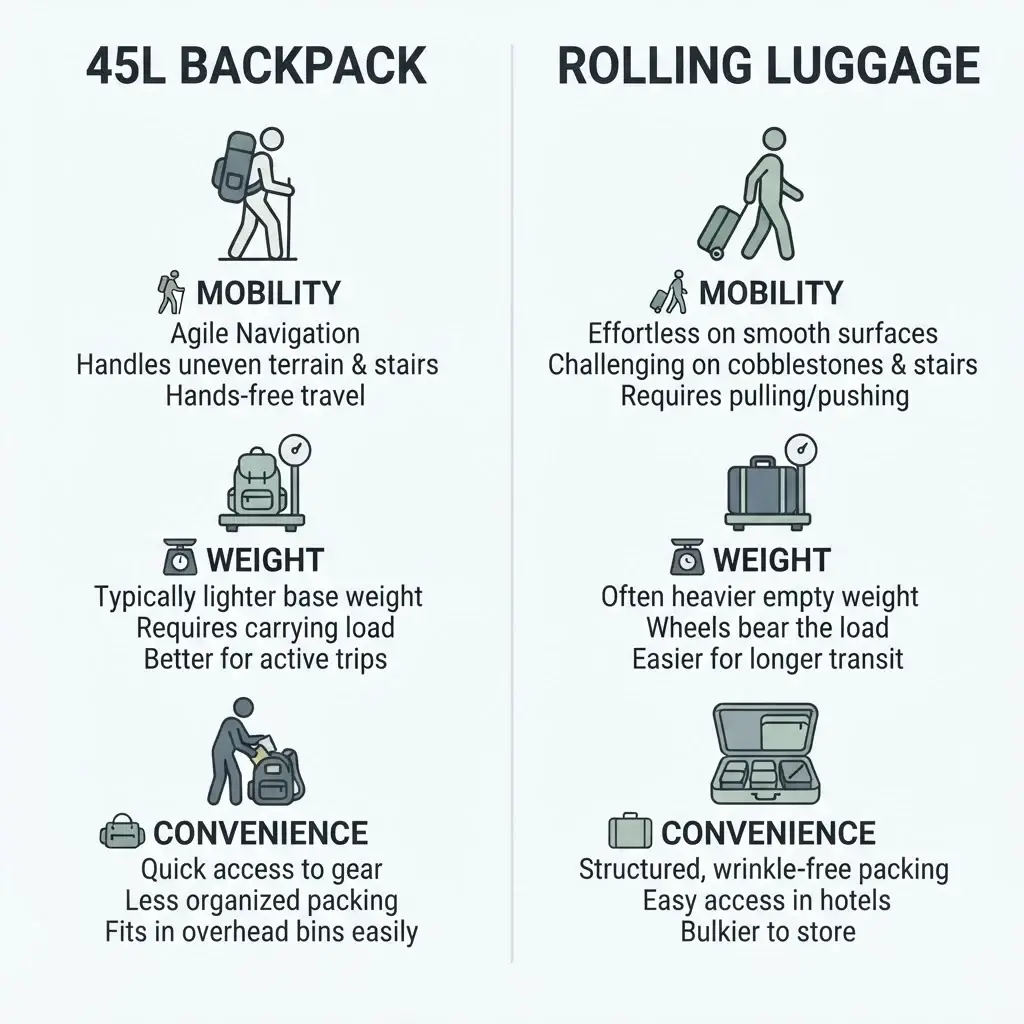
You never have to stand in long check-in lines at the airport. You never have to worry about an airline losing your laptop charger or your favorite boots. Most importantly, when you step off a bus in a bustling city like Bangkok, you can simply walk past the aggressive taxi drivers and navigate the streets with ease.
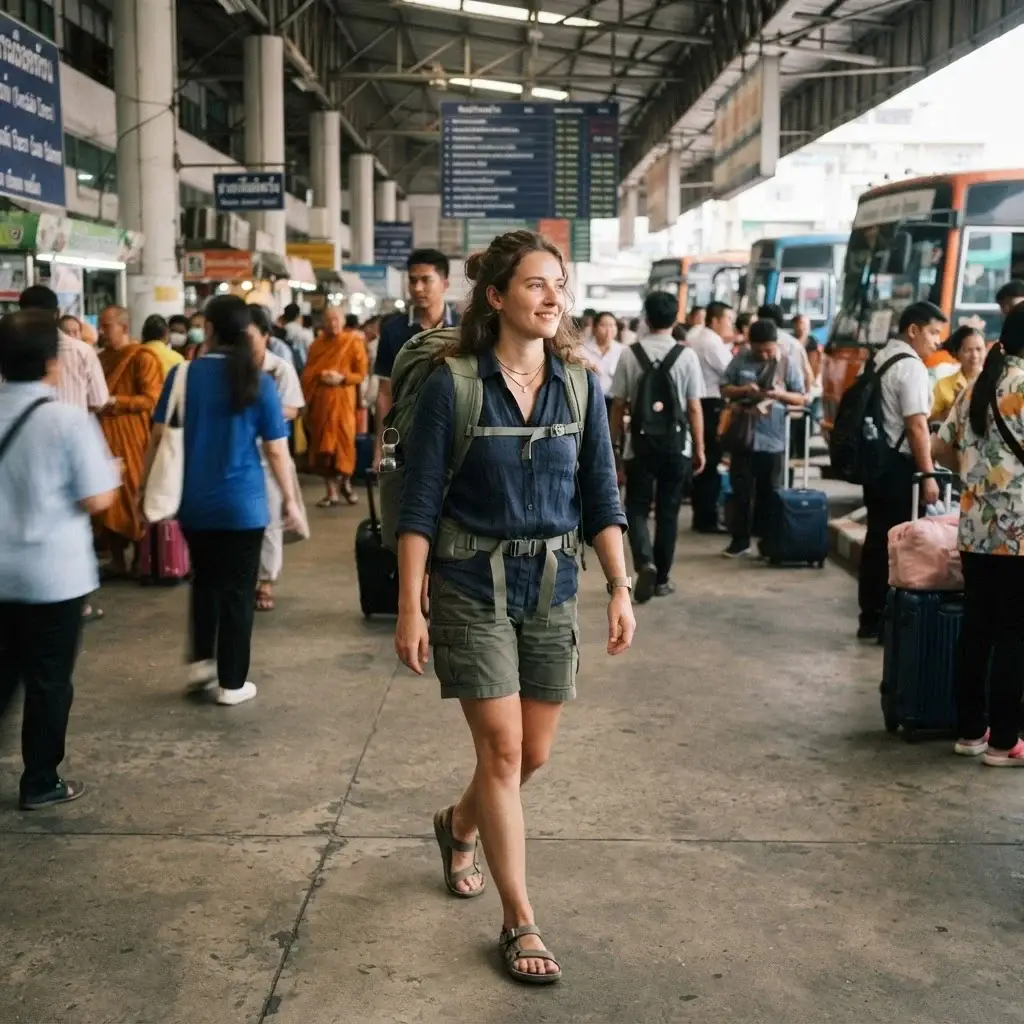
Look for a backpack that features a full-panel zip, often called a “clamshell” opening. Avoid top-loading hiking packs. Top-loaders require you to pull out every single item just to reach a pair of socks at the bottom of the bag. A clamshell pack opens flat like a suitcase, letting you organize your belongings efficiently. Ensure the bag has a dedicated, padded laptop sleeve that rests directly against your back for optimal weight distribution and security.
When a Rolling Bag Makes Sense
While I prefer a backpack, a rolling suitcase can work if you practice slow travel. If your strategy is to fly to an apartment in Lisbon, stay for three months, and then fly directly to an apartment in Buenos Aires, a high-quality, two-wheeled rolling bag is acceptable.
Avoid cheap four-wheeled “spinner” bags. Those tiny wheels break easily on the cobblestones of Europe and the unpaved roads of Southeast Asia. Look for rugged, oversized wheels that can handle cracks, dirt, and curbs.
The Digital Nomad Tech Stack: Work From Anywhere Safely
Your tech gear is your livelihood. If your clothes get ruined, it is an inconvenience. If your laptop breaks or your data is stolen, your business grinds to a halt. The challenge is balancing professional capability with physical weight.
The Core Hardware
- The Laptop: Your primary tool should be lightweight and highly reliable. A 13-inch or 14-inch laptop strikes the perfect balance between screen size and portability. Ensure it has a solid-state drive (SSD), as they are more durable and less prone to damage from accidental drops on rough bus rides.
- The Smartphone: Your phone is your secondary work device, your navigation system, and your emergency lifeline. Ensure your phone is fully unlocked before you leave your home country so you can easily swap in local physical SIM cards or activate digital eSIMs when changing regions.
- Universal Travel Adapter: Do not buy separate adapters for different countries. Invest in a single, high-quality universal adapter that features multiple built-in USB-C and USB-A ports. This allows you to charge your laptop, phone, and power bank simultaneously using a single wall outlet.
Ergonomics on the Road
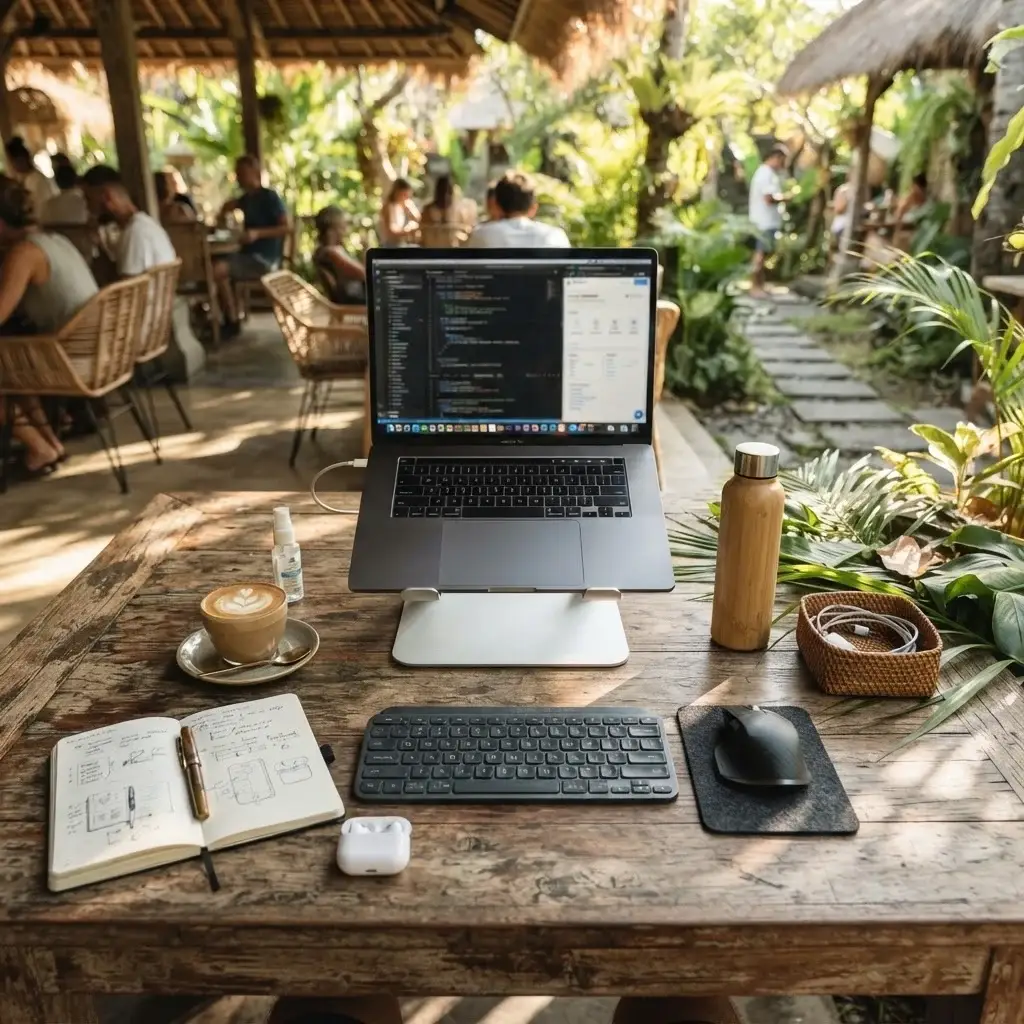
Working from coffee shops, kitchen counters, and beachside picnic tables will destroy your neck and back over time. To prevent long-term injury, carry a compact, lightweight laptop stand that raises your screen to eye level. Pair this with a small wireless keyboard and a portable mouse. It takes less than 60 seconds to set up, turning any standard table into a healthy, ergonomic workstation.
Power Security and Backup Systems
Power outages are a regular part of life in many digital nomad hotspots. Whether you are working through a tropical storm in Costa Rica or navigating an unexpected blackout in a rural town, you need a backup plan.
Carry a heavy-duty, airline-compliant power bank (around 20,000mAh) capable of charging your laptop. Additionally, always maintain two separate backup systems for your digital files: one continuous cloud backup and one rugged external hard drive stored in a waterproof pouch in a separate part of your bag.
The Ultimate Minimalist Capsule Wardrobe
The secret to packing light is choosing versatile fabrics and a unified color scheme. Stop thinking about “outfits” and start thinking about individual pieces that can be layered and combined effortlessly.
Choosing the Right Fabrics
Avoid heavy, 100% cotton clothing. Cotton absorbs sweat, takes forever to dry in humid climates, and starts to smell quickly. Instead, invest in high-performance materials:
- Merino Wool: The ultimate fabric for long-term travel. Merino wool regulates body temperature beautifully, keeping you cool in the heat and warm in the cold. Best of all, it is naturally antimicrobial, meaning you can wear a Merino t-shirt multiple times without it developing any odor.
- Linen: Excellent for hot, tropical environments. It is incredibly breathable and dries in minutes when hung on a clothing line. Do not worry about the wrinkles; they are part of the relaxed, slow-travel aesthetic.
- Synthetic Blends (Nylon/Polyester): Look for lightweight shorts and pants with built-in stretch. They are durable, wick moisture away from your skin, and can be easily washed by hand in your bathroom sink.
The Exact Clothing Checklist (Unisex Guide)
This specific list is designed to carry you through months of travel across temperate and tropical climates:
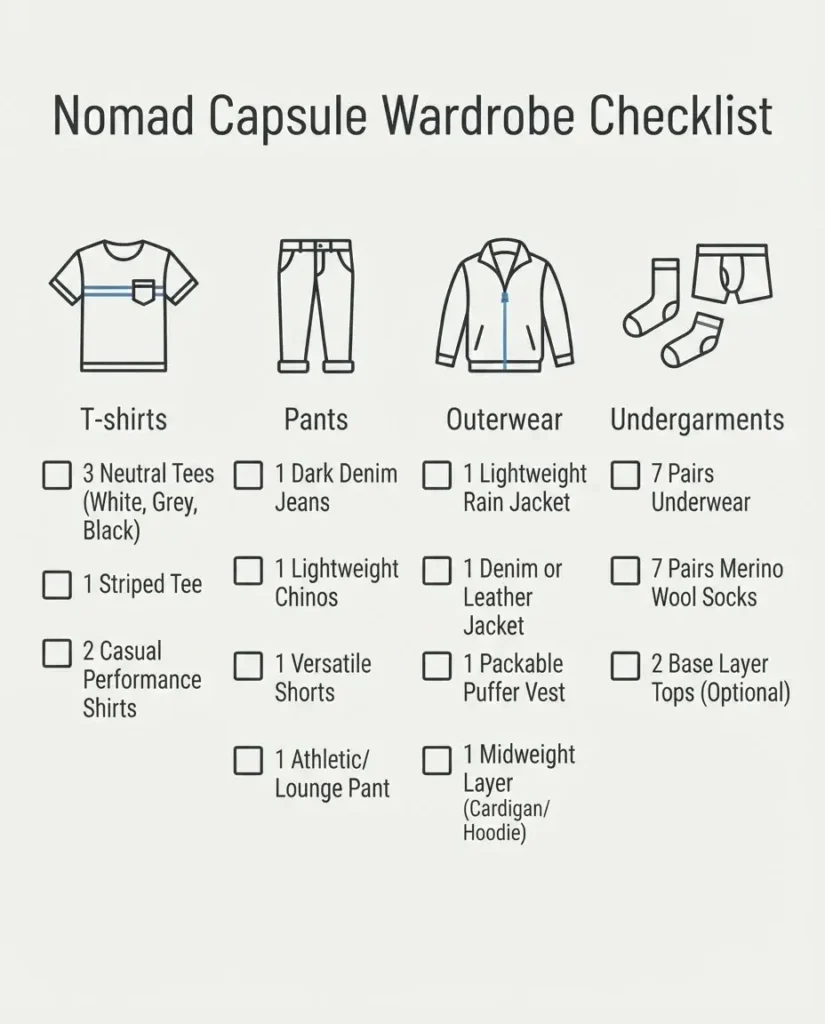
- 3–4 Neutral T-Shirts: Stick to grey, black, navy, or white.
- 1 Long-Sleeve Button-Down Shirt: Great for professional video calls or cooler evenings.
- 1 Pair of High-Quality Long Pants: Choose a versatile style that looks appropriate for both a casual co-working space and a nice dinner.
- 2 Pairs of Lightweight Shorts: One pair should double as swimwear.
- 5 Pairs of Moisture-Wicking Underwear: Synthetic or Merino wool blends dry overnight after hand washing.
- 3 Pairs of Durable Socks: Look for reinforced heels and toes.
- 1 Lightweight Rain Jacket: A packable, breathable shell that protects you from sudden downpours.
- 1 Ultra-Light Down Jacket: This compresses down to the size of a coffee mug but provides instant warmth during chilly flights or night buses.
The Footwear Strategy
Shoes take up the most physical space and add the most weight to your bag. You only need two pairs, plus a basic pair of flip-flops.
Wear your heaviest pair on transit days to save space in your pack. This should be a comfortable, high-quality walking shoe or minimalist trail runner with excellent grip.
Your second pair should be a clean, casual lifestyle sneaker that looks smart enough for social outings. For beach days, communal hostel showers, or walking around your apartment, pack a flat, lightweight pair of sandals.
Toiletries and Health: Staying Well on the Road
When you are constantly moving between different ecosystems, water qualities, and cuisines, taking care of your health is essential. The key to minimalist toiletries is eliminating liquids wherever possible.
Solid Toiletries vs. Liquids
Liquids are a major hassle at airport security checkpoints, and leaky bottles can easily ruin your clothes and expensive electronics. Transition to solid alternatives for your daily hygiene routine.
Solid shampoo bars, solid conditioner, and solid bar soap last significantly longer than liquid versions and require zero plastic packaging. You can also buy solid toothpaste tablets that crush down into a paste when you brush.
For the few liquids you must carry, such as face sunscreen or contact lens solution, use small, silicone travel bottles stored inside a transparent, leak-proof toiletry bag.
The Compact Medical Kit
Never travel without a basic, curated first-aid kit. You do not need a massive medical box; a small nylon pouch will do.
Pack a small supply of pain relievers, antihistamines for unexpected allergic reactions, rehydration salts for recovery after a bout of food poisoning, and a handful of blister band-aids. If you require specific prescription medications, keep them in their original pharmacy bottles with your name clearly printed on the label.
Before heading out to a new region, it is always smart to check the official CDC Travelers’ Health advisories to see if there are any specific local disease outbreaks or vaccine recommendations you need to plan for.
Organizing Like a Professional: Compression and Packing Cubes
If you throw your clothes loosely into a backpack, your bag will turn into a chaotic, messy cavern within 48 hours. Proper organization is the secret weapon that allows a minimalist pack to function smoothly.
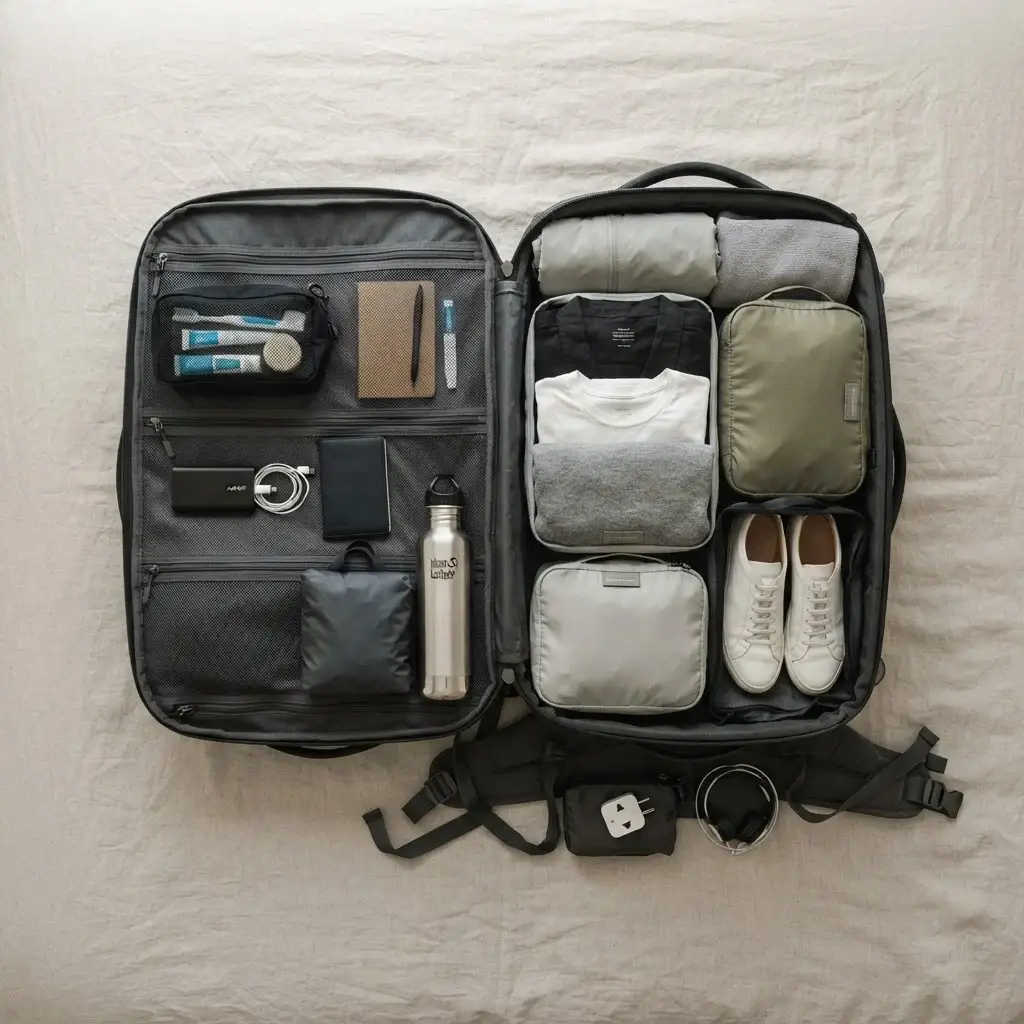
The Magic of Compression Packing Cubes
Do not use standard fabric packing cubes. Invest in double-zipper compression packing cubes. These cubes feature a heavy-duty secondary zipper that manually squeezes out all excess air once the cube is packed, reducing the physical volume of your clothing by up to 40%.
When packing your cubes, roll your clothes tightly instead of folding them. Rolling minimizes wrinkles, makes it easy to see every garment at a glance, and maximizes every square inch of space.
Managing Dirty Laundry
Never mix your dirty, sweaty clothes with your clean wardrobe. Pack a ultra-lightweight, silicone-coated nylon laundry bag that draws closed tightly. This keeps any dampness or odor contained.
When it is time to do laundry, you can easily use a local wash-and-fold service. In places like Chiang Mai or Bali, local laundromats will wash, dry, and neatly fold your clothes for just a few dollars per kilogram.
Important Documents, Visas, and Banking Setup
Losing your physical gear is expensive, but losing your identity or your financial access can turn into a serious crisis. Managing your paperwork digitally is just as important as managing your physical backpack.
Physical Document Management
Keep your physical passport, international driving permit, and yellow fever vaccination card inside a slim, RFID-blocking passport wallet. Always store this wallet in a secure, zippered internal pocket of your backpack—never in an easily accessible front pocket where pickpockets can target it.
Before entering a new country, ensure your passport has at least six months of validity remaining from your planned departure date and contains several blank pages for customs stamps.
To ensure you comply with local laws and entry requirements, it is essential to check the US Department of State Travel advisories for up-to-date details on entry visas, safety warnings, and stay limits for your specific destination.
Digital Security and Cloud Storage
Before you head to the airport, take high-resolution digital photos of your passport photo page, your visas, your credit cards (front and back), and your health insurance policy cards. Upload these encrypted files to a secure cloud storage folder that you can access offline from your phone.
Additionally, email a copy of this folder to a trusted family member or close friend back home so someone else always has access to your data in an emergency.
Nomad Banking Essentials
Never travel with just one debit card or credit card. If an ATM in a remote town malfunctions and swallows your card, you need an immediate backup. Carry at least two checking account debit cards and two major credit cards from different banking institutions.
Look for checking accounts that offer global fee ATM reimbursements, allowing you to withdraw local currency anywhere without paying high bank fees. Set up travel notices on all your financial accounts before you depart so your cards do not get automatically frozen for suspicious international activity.
Real-World Destination Deep Dives: Packing for Specific Hotspots
To show you how this minimalist packing strategy functions in the real world, let us look at three classic digital nomad destinations. Each location requires a slightly different approach to local transport, cultural etiquette, and daily work environments.
1. Chiang Mai, Thailand (The Tropical Hub)
Chiang Mai is an incredible city nestled in the mountainous region of Northern Thailand. It offers fantastic co-working spaces, delicious food, and a wonderful community of remote workers.
- Local Navigation & Apps: The absolute best way to get around the city safely without getting overcharged by local red songthaew trucks is to use the Grab mobile app. You can read up on how to safely navigate transport by downloading the Grab official app overview for international travelers, which lets you link your credit card securely and book rides on demand.
- Cultural Etiquette: When visiting the stunning historic temples within the Old City, you must dress respectfully. This means your shoulders and knees must be completely covered. For these cultural excursions, wear your lightweight linen pants and a modest t-shirt.
- What to Eat: Do not miss out on Khao Soi, a rich, coconut curry noodle soup served with crispy noodles on top. Head to a local spot like Khao Soi Khun Yai, tucked away between two temples near the north gate, for an incredible bowl that costs less than two dollars.
2. Medellín, Colombia (The Mountain City)
Known as the “City of Eternal Spring,” Medellín sits beautifully inside the Aburrá Valley. The weather is generally pleasant year-round, but it can get quite cool in the evenings.
- Safety & Logistics: While the city has made incredible progress, petty theft remains common in crowded tourist zones like El Poblado. Keep your phone out of sight when walking along the streets.
- What to Eat: Fuel your long work sessions with a traditional Bandeja Paisa, a massive, protein-heavy platter featuring ground meat, crispy chicharrón, fried eggs, plantains, rice, and fresh avocado.
- Local Exploration: On your days off, take the clean, efficient Metro system up to the Cable car network to visit the sprawling green spaces of Parque Arví. It is an amazing way to experience the local geography and enjoy stunning views of the valley.
3. Lisbon, Portugal (The European Coastal Escape)
Lisbon offers a beautiful blend of historic charm, coastal breezes, and a bustling tech scene. However, its unique geography requires specific packing choices.
- Footwear Warning: Lisbon is famous for its steep hills and beautiful, slippery limestone cobblestones (calçada portuguesa). If you wear smooth-soled shoes, you will lose your footing. This is where your high-quality walking sneakers with deep rubber traction become absolutely essential.
- What to Eat: Take a break from typing and stop by a local bakery (pastelaria) to enjoy a warm Pastel de Nata, a perfectly blistered, creamy egg custard tart dusted with fresh cinnamon and powdered sugar. Pair it with an espresso (café simples) for a cheap afternoon boost.

- Insurance Planning: Because you will be walking constantly through crowded tram routes and steep historic districts, protect your journey. You can research flexible coverage options by checking out the World Nomads Travel Insurance guide pages to find a policy that covers your laptop, cameras, and emergency medical needs while working throughout Europe.
5 Items Digital Nomads Overpack (And What to Bring Instead)
When you are packing, you have to be brutal about what gets cut. Here are the five most common space-wasters I see remote workers carry, along with their minimalist alternatives.
1. Too Many Heavy Cotton Hoodies
- The Mistake: Packing three thick, bulky sweaters because you worry about cold airports or chilly co-working spaces.
- The Alternative: Carry one ultra-lightweight down jacket and one high-quality Merino wool long-sleeve top. They layer perfectly together, provide twice the warmth of cotton, and compress down to a fraction of the physical size.
2. Bulky Extension Cords and Power Strips
- The Mistake: Hauling a heavy, full-sized domestic power strip from home so you can plug in multiple devices at once.
- The Alternative: Buy a compact, multi-port GaN (Gallium Nitride) wall charger. These modern chargers use advanced tech to output high wattage through multiple USB ports simultaneously, allowing you to charge your laptop and phone from a single, pocket-sized plug.
3. Multiple Heavy Hardcover Notebooks
- The Mistake: Carrying thick leather journals or planners for your daily brainstorming sessions, adding pounds of paper weight to your pack.
- The Alternative: Transition to digital note-taking apps or carry a single, ultra-slim, pocket-sized paper notebook. If you prefer handwriting, consider a lightweight digital writing tablet that syncs your notes directly to the cloud.
4. A Massive Collection of Backup Shoes
- The Mistake: Bringing separate shoes for running, casual walking, formal dining, and beach outings.
- The Alternative: Stick strictly to two high-quality pairs. Choose a sleek, neutral lifestyle runner that looks clean enough for a dinner date but offers enough support for an all-day walking tour of a new city.
5. Full-Sized Liquid Product Bottles
- The Mistake: Packing giant bottles of your favorite shampoo, conditioner, and body wash because you worry you won’t find them abroad.
- The Alternative: Use solid bars or buy your liquid hygiene items once you land at your destination. Local supermarkets carry incredible international brands, and trying out local products is part of the fun of cultural travel.
The Pre-Departure Test: The 20-Minute Minimalist Walk
Once you have packed your bag according to this guide, it is time for a reality check. Do not just zip your bag up and set it by the front door until it is time to head to the airport. You need to know how that weight actually feels on your body.
The Test Method
Put on your travel shoes, strap your fully loaded backpack onto your shoulders, secure the hip belt, and walk out your front door. Walk continuously around your neighborhood for a full 20 minutes. Find a flight of stairs and walk up and down it three times.
The Evaluation
If your shoulders are burning, if your lower back feels strained, or if you feel clumsy and off-balance after 20 minutes, your bag is too heavy. Take it back to your room, open it up, and remove 25% of your clothing.
Remember, you do not need those extra shirts. You do not need those extra gadgets. Your physical health, your posture, and your peace of mind are worth far more than a few extra clothing options.
Final Thoughts: The Road Rewards Simplicity
When I finally learned how to pack for a digital nomad lifestyle with just a single carry-on bag, my entire relationship with travel transformed. I stopped feeling like a stressed-out tourist moving a mini-household across borders. I started feeling like a true global citizen, light on my feet and entirely adaptable.
Leaving behind the safety net of a 9-to-5 job and a mountain of material possessions can feel terrifying. But the moment you step off that plane, feeling the cool breeze of a new city, with all your basic earthly needs resting comfortably on your shoulders, you will realize that security isn’t found in things. Security is found in your own resourcefulness, your curiosity, and your willingness to adapt.
Pack less. Experience more. The world is waiting for you, and it is much easier to explore when you are not carrying the past on your back.