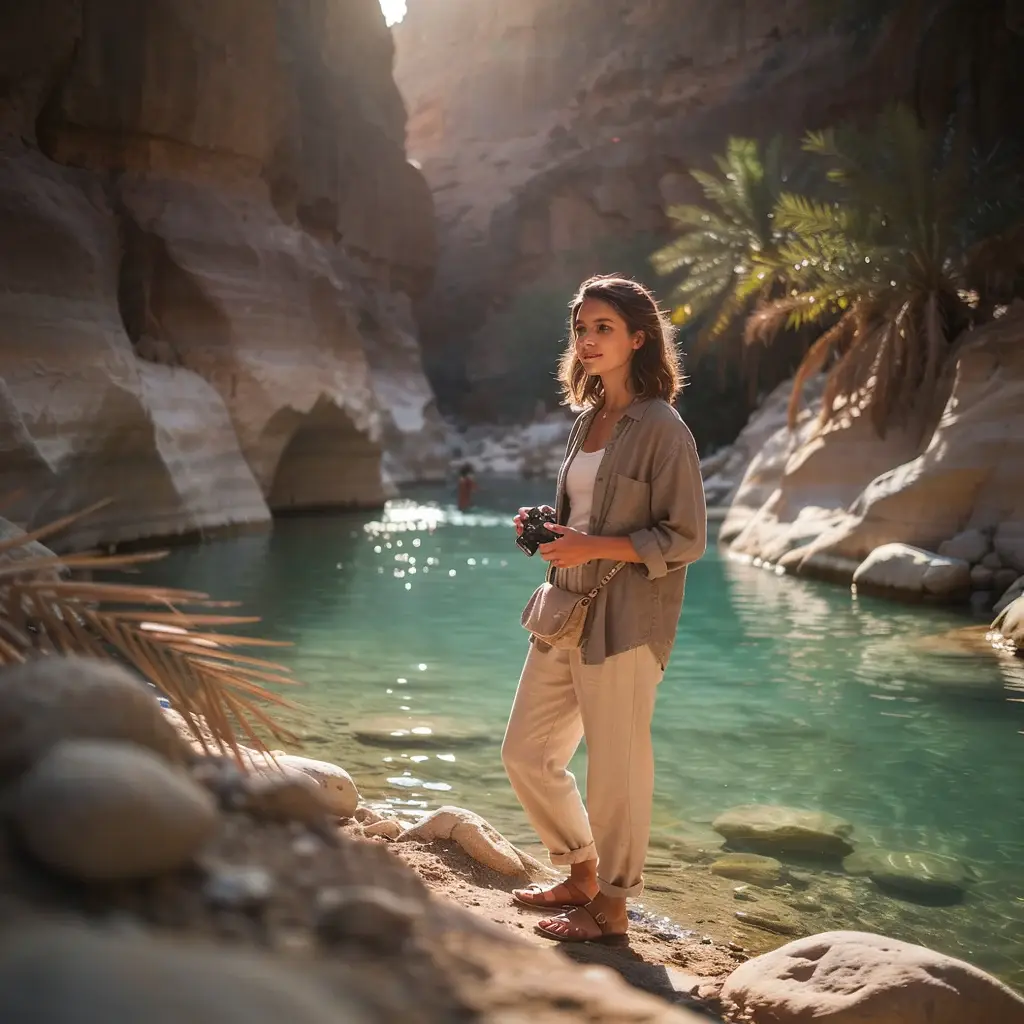
I still remember sitting at my desk in my old New York City office, staring blankly at a spreadsheet. The gray sky outside my window matched my mood. I was daydreaming about warm sun, strange new smells, and places that felt completely different from my daily routine. I wanted an adventure, but I was also nervous. Taking a trip by myself to the Middle East felt like a huge leap.
If you are reading this, you might be feeling that exact same mix of excitement and fear. You want to see the world, but the logistics feel overwhelming. Trust me, I get it. Before I left my 9-to-5 job to travel full-time, I had to save every penny from extra waitressing shifts just to buy a plane ticket. I needed to know my plan was solid before I spent my hard-earned money.
That is why I wrote this guide. Figuring out how to plan a 4-day trip to Muscat, Oman does not have to be scary. Muscat is one of the most welcoming, peaceful, and stunning cities I have ever visited. It is a place where mountains crash right into the bright blue sea, and the air smells like sweet frankincense.
In this guide, I am going to walk you through every single step. We will cover where to sleep, how to get around safely, what you should wear, and what to do every single day. No fluff, no luxury resort ads you can’t afford. Just honest, real advice from someone who has been there. Let’s get your trip out of the group chat and into reality.
Why Muscat is Perfect for Your First Solo Trip
A lot of people ask me if Oman is safe. The short answer is yes. The long answer is that it is one of the safest countries in the entire world. When I worked as a sightseeing guide in New York, I constantly had to watch my pockets and look over my shoulder in Times Square. In Muscat, I felt completely at peace.
Omani culture is built on deep respect and hospitality. As a solo traveler, nobody bothered me. People were polite, helpful, and kind. If you look lost, someone will likely offer you a cup of coffee and point you in the right direction.
Muscat is also very clean and organized. It does not have the chaotic, overwhelming traffic you might find in other big cities. The city moves at a slow, gentle pace. This makes it the perfect soft landing if you want to experience the Middle East for the first time without feeling completely overwhelmed. You can relax, take your time, and actually enjoy the culture.
Before You Go: Essential Logistics for Muscat
Before you pack your bags, we need to take care of the boring stuff. Getting these details sorted out early is the secret to a stress-free trip. When you know your paperwork is done, you can actually relax on the airplane.
Visas and Entry Requirements
You cannot just show up at the airport in Oman and hope for the best. Most travelers need an e-visa before they land. The process is fully online and usually very fast, but you should never leave it to the last minute. I always do my paperwork at least a month early. Before you book anything, it helps to check the official entry requirements and visa rules for Oman so you are not caught off guard at the airport. You will need a passport that is valid for at least six months from the day you arrive.
Travel Insurance and Health
I will be very honest with you. When I first started traveling, I skipped travel insurance to save money. That was a huge mistake. Once I got sick while teaching English in Thailand, and paying out of pocket almost drained my entire bank account. Now, I never travel without it. Because the unexpected is just a part of traveling, I always travel with a solid plan and suggest looking into flexible coverage options to protect your trip in case a flight gets canceled or you twist an ankle on a hike.
You also want to make sure your basic health needs are covered. Oman is very modern, and the hospitals in Muscat are excellent. Still, I also make it a habit to read the latest health and vaccine recommendations for travelers just to be on the safe side, especially regarding food and water safety in a new climate. The tap water in Muscat is generally safe to drink, but bottled water is cheap and available everywhere if you have a sensitive stomach.
When to Visit
Do not go to Muscat in the summer. Let me repeat that: do not go in June, July, or August. The heat is extreme, often reaching over 100 degrees Fahrenheit. You will be miserable, and it is not safe to be hiking or walking around outside.
The absolute best time to visit is between October and March. During these months, the weather is perfect. The days are sunny and warm (usually in the 70s or 80s), and the evenings are cool and breezy. This is the perfect weather for exploring the markets and spending time on the beach.
Getting Around: How to Navigate Muscat
Muscat is not a walkable city. It is very spread out along the coastline. You cannot just step out of your hotel and walk to all the major sights. You need a plan for transportation.
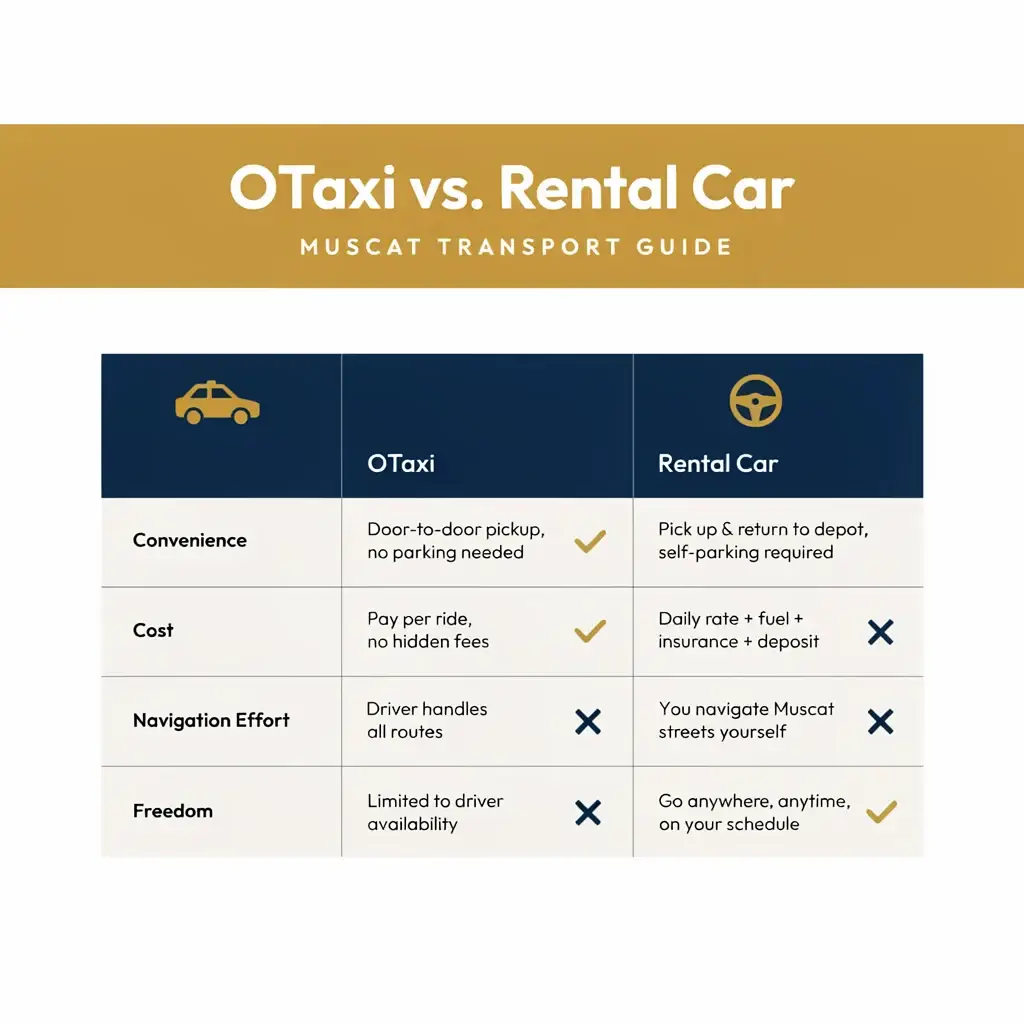
Using Taxis (OTaxi)
Uber does not work in Oman. Instead, you need to download an app called OTaxi. This is the local ride-hailing app, and it works perfectly. You just put in your location, and a driver comes to get you. The prices are set in the app, so you never have to worry about haggling over the fare or getting scammed. I used OTaxi every single day. The cars are clean, the drivers are professional, and the air conditioning always works. Download the app and set up your account while you are still at home on your own Wi-Fi.
Renting a Car
If you feel confident behind the wheel, renting a car is a great option. The roads in Oman are smooth, wide, and very well maintained. The signs are in both Arabic and English, making them very easy to read. Renting a car gives you total freedom, especially if you want to take day trips outside the city limits. Just know that speed cameras are everywhere. Do not speed, or you will get a hefty fine when you return the car.
Where to Stay in Muscat
Because the city is so spread out, picking the right neighborhood is very important. I recommend staying in one of two main areas, depending on the vibe you want.
Mutrah (The Cultural Heart)
If you want to feel the history of Oman, stay in Mutrah. This is the older part of the city. It sits right on a beautiful harbor. You can wake up, step outside, and watch the wooden ships bobbing in the water. This area is home to the famous Mutrah Souq (the traditional market). Staying here means you can easily walk to the market in the evening when it is most alive. It feels authentic, slightly chaotic, and very real.
Al Qurum (The Beach Vibe)
If you want a more relaxing, modern stay, look at the Al Qurum neighborhood. This area is right on the beach. It is full of nice cafes, quiet walking paths, and shopping malls. It lacks the old-world charm of Mutrah, but it makes up for it in comfort and ocean views. I personally prefer Mutrah, but Al Qurum is a fantastic choice if you just want to sit by the water with a good book.
The Ultimate 4-Day Muscat Itinerary
Now for the fun part. Here is exactly how to plan a 4-day trip to Muscat, Oman, day by day. This schedule is full, but it will not leave you feeling exhausted. Travel is not a race.
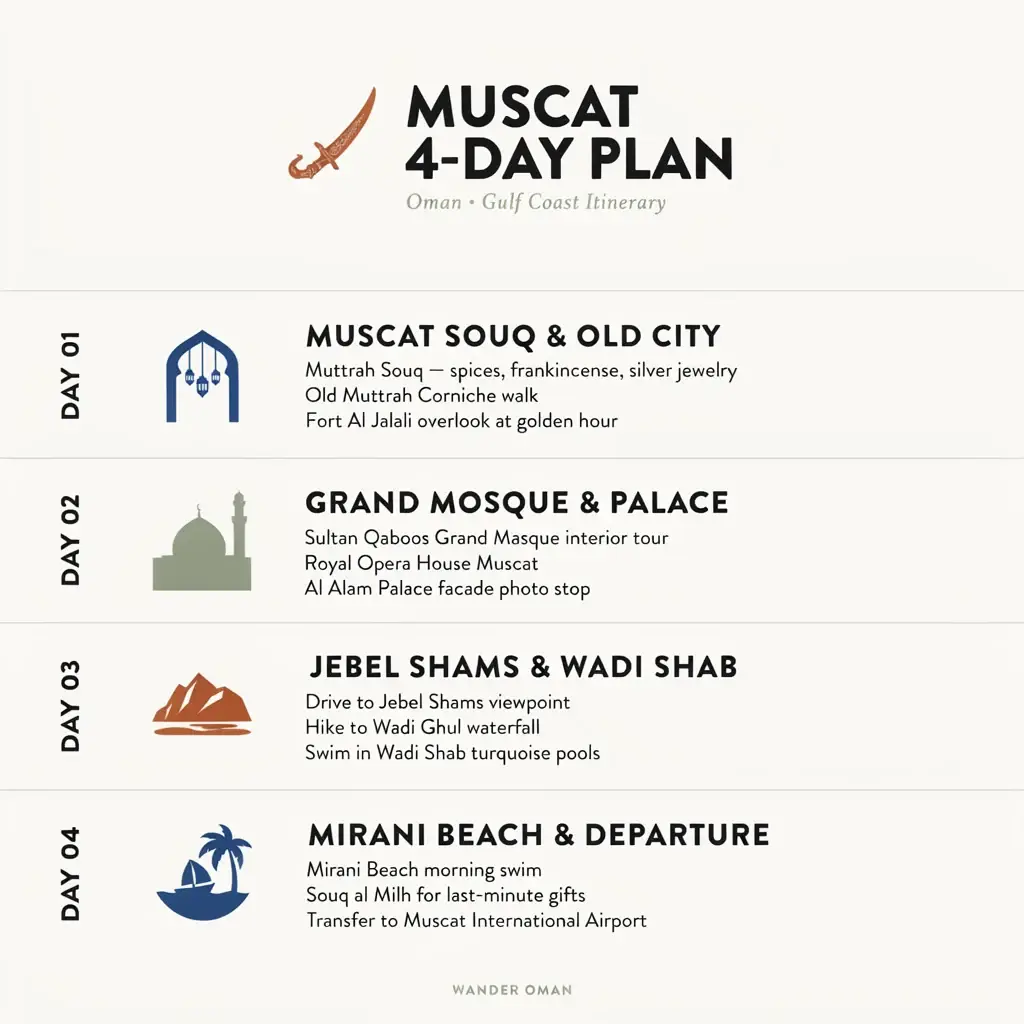
You should have time to sit on a bench and just watch the world go by.
Day 1: The Heart of Old Muscat and Mutrah
Your first day is all about easing into the culture. Wake up early, grab a cup of coffee, and head straight to the Mutrah Corniche. This is a long, curving walkway right along the ocean. In the morning, the air is fresh, and you can watch the fishermen bringing in their catch.
Take a slow walk along the water until you reach the Mutrah Fort. You have to climb a lot of stairs to get to the top, but the view is worth it. You can see the whole harbor and the white houses tucked into the dark, rocky mountains.
In the afternoon, escape the heat by going into the Mutrah Souq. This is a traditional Arab market. It is a maze of narrow, twisting alleys with wooden roofs. The smell hits you right away—a thick, sweet mix of frankincense and spices.
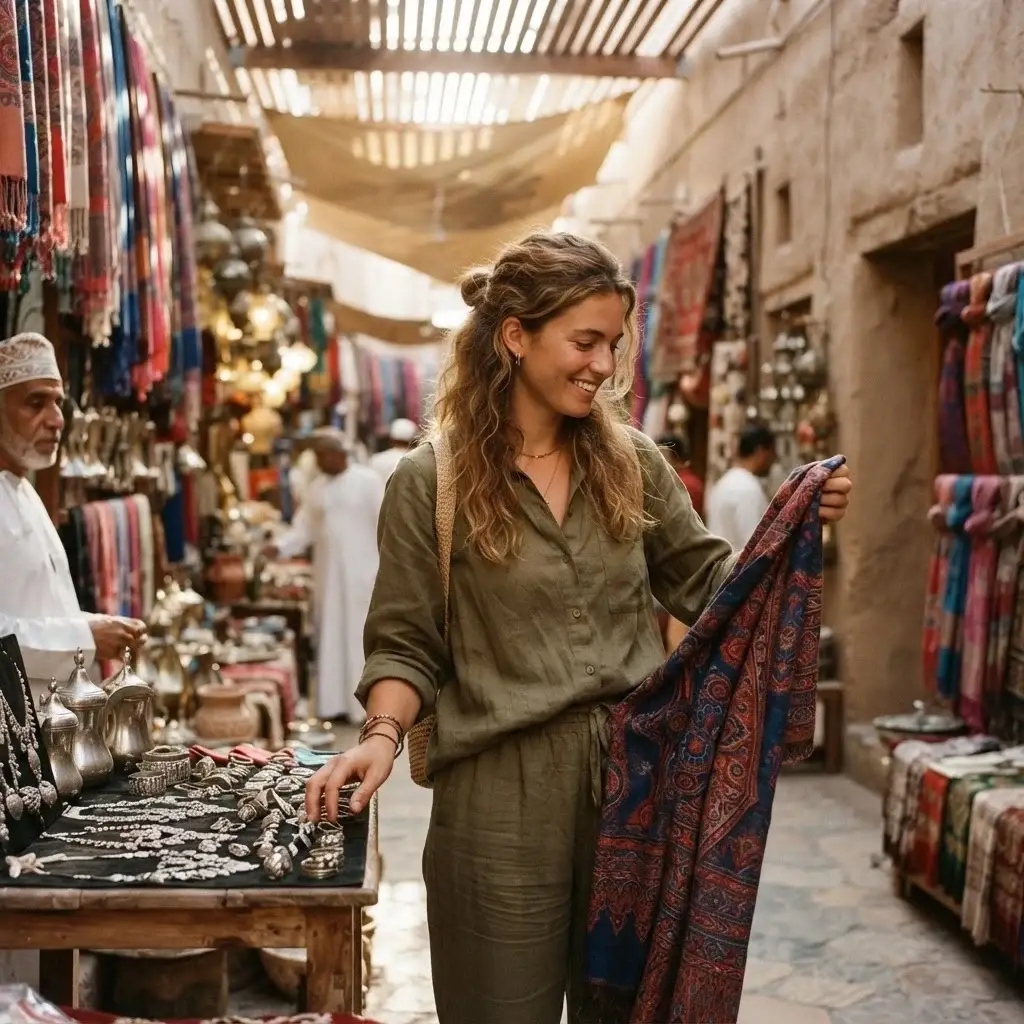
You will find shops selling silver jewelry, colorful lamps, and soft pashmina scarves.
A quick tip on buying things here: you are expected to negotiate. Do not pay the first price they tell you. Smile, be friendly, and offer a lower price. If they say no, you can always politely walk away. Often, they will call you back with a better deal.
End your first day by finding a small café near the water. Order a fresh mint tea, sit outside, and watch the sunset turn the mountains a deep, glowing orange.
Day 2: Architectural Wonders and Royal History
Start your second day at the Sultan Qaboos Grand Mosque. This is the most famous building in Oman, and it is completely free to enter. You must go in the morning (it is only open to non-Muslims from 8:00 AM to 11:00 AM, and it is closed to tourists on Fridays).
The mosque is breathtaking. It is made of bright white marble that shines in the sun. Inside the main prayer hall, you will see a massive chandelier made of Swarovski crystals and a hand-woven carpet that took four years to make.
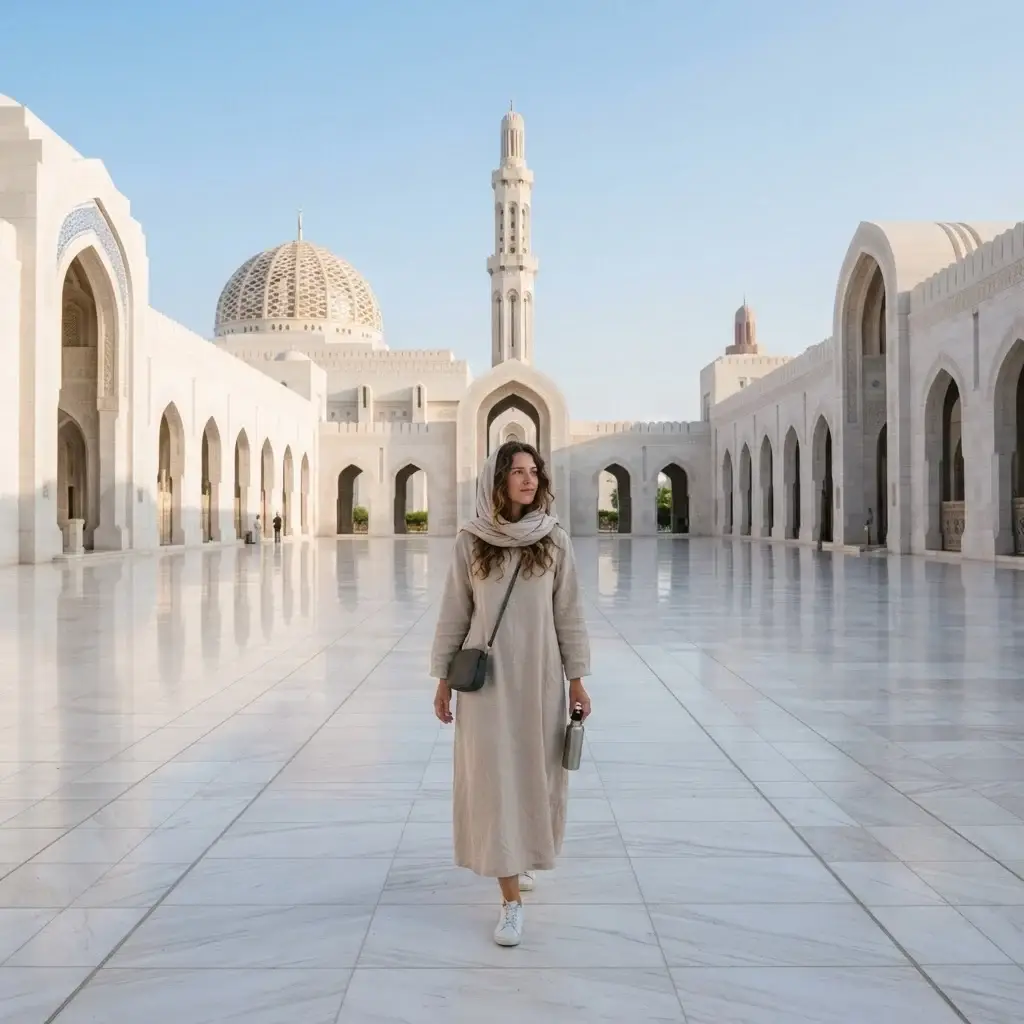
Very important note on clothing: The dress code here is strictly enforced. Men must wear long pants. Women must wear long pants or a long skirt down to the ankles, long sleeves down to the wrists, and a headscarf that completely covers all hair. They will not let you inside if you are showing your ankles or hair. I brought my own wide scarf and draped it over my head before walking through the gates.
After the mosque, take a taxi to Old Muscat. This is where the government buildings are. Walk to the Al Alam Palace. This is one of the royal palaces of the Sultan. You cannot go inside, but the outside is stunning, with bright blue and gold pillars. It is super quiet and peaceful here.
Right near the palace, you will see two old Portuguese forts sitting high on the rocks: Al Jalali and Al Mirani. You cannot go inside these either, but they make for amazing photos.
Spend your evening at the Royal Opera House in the modern part of the city. Even if you don’t buy a ticket for a show, you can walk around the outside and the attached shopping area. The architecture is beautiful, and it is a great place to grab a nice dinner.
Day 3: A Day Trip to Wadi Shab and Bimmah Sinkhole
You cannot go to Oman and stay in the city the whole time. Nature here is too wild and beautiful. For Day 3, you are getting out of Muscat. You are going to Wadi Shab.
A “wadi” is a dry riverbed in a valley. Wadi Shab is about a two-hour drive south of Muscat. You can rent a car, or you can hire a local driver for the day (your hotel can easily help you book a safe, reliable driver).
When you arrive at Wadi Shab, you pay a very small fee to a local man with a small motorboat. He will take you across the river. From there, you start hiking. The hike takes about 45 minutes to an hour. You are walking over smooth rocks and through tall green palm trees, with massive canyon walls on both sides.
Wear sturdy water shoes. Do not wear flip-flops. Your feet will hurt, and you might slip on the rocks.
Eventually, the hiking path ends, and the water begins. You leave your bag on the rocks and jump in. The water is crystal clear and perfectly warm. You swim through a series of natural pools. At the very end, you have to swim through a narrow crack in the rocks. It looks scary at first, but push through. Inside, you will find a hidden cave with a rushing waterfall. It is pure magic. It was easily one of the best days of my life.
On your way back to the city, you might pass by areas that use the ancient, UNESCO-recognized Aflaj irrigation systems which have kept the desert green for centuries. You should also ask your driver to stop at the Bimmah Sinkhole. It is a massive, perfectly round crater in the ground filled with bright turquoise water.
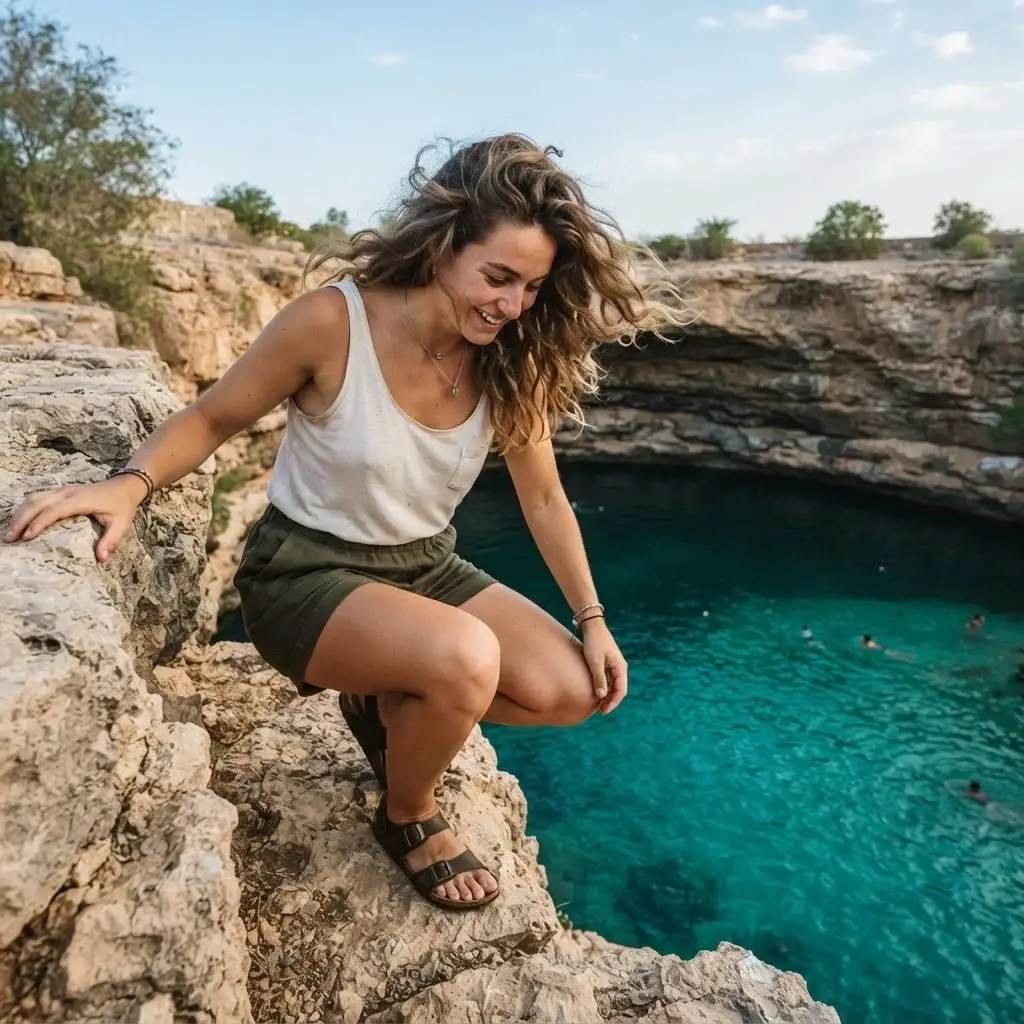
It is a great spot for a quick, refreshing dip before you drive the rest of the way back to your hotel.
Day 4: Beach Morning and Final Souq Shopping
Your final day should be slow and easy. After a long hike yesterday, your body needs a break.
Head over to Qurum Beach in the morning. The sand is soft, and the water is very calm. You will see local families walking along the water and kids playing football in the sand. It is a very normal, happy local scene. Grab an iced coffee from one of the cafes on the beach road and just enjoy the sunshine.
In the afternoon, I recommend doing any last-minute shopping. Head back to Mutrah Souq to buy some Omani dates or a small bag of frankincense resin to take home. It makes your house smell amazing when you burn it, and it is the perfect cheap souvenir. If you decide to stay longer and explore the deserts or mountains, you might want to look at a broader overview of Oman’s regions to see what else fits your style.
For your final dinner, treat yourself to a massive plate of traditional Omani food. Sit outside, listen to the evening call to prayer echo over the mountains, and be proud of yourself for taking this trip.
What to Eat in Muscat (Omani Food Guide)
One of my favorite things about traveling is the food. Food in Oman is comforting, rich, and full of warm spices like cardamom, saffron, and cinnamon. It is not overly spicy or hot, just very flavorful.
Here are the things you absolutely must try:
- Shuwa: This is the national dish. It is lamb or goat meat that has been covered in spices, wrapped in banana leaves, and cooked slowly in an underground sand oven for up to two days. The meat literally falls apart when you touch it with your fork. It is usually served with huge portions of spiced rice.
- Majboos (also called Makbous): A mixed rice dish, very similar to Indian biryani. It is made with yellow rice, vegetables, and chicken or meat. It is a daily staple.
- Omani Bread (Khubz): This bread is very thin, almost like a crispy crepe. Locals eat it for breakfast, often smeared with cheese or honey. It is simple but incredibly good.
- Omani Halwa: This is the traditional dessert. It is a sticky, sweet, jelly-like treat made with sugar, rose water, saffron, and nuts. It is very sweet, so you only need a little bite.
- Kahwa (Omani Coffee): Coffee here is not like coffee at home. It is brewed with strong cardamom and served in tiny cups without sugar. Because the coffee is bitter, it is always served with a plate of sweet, sticky dates.
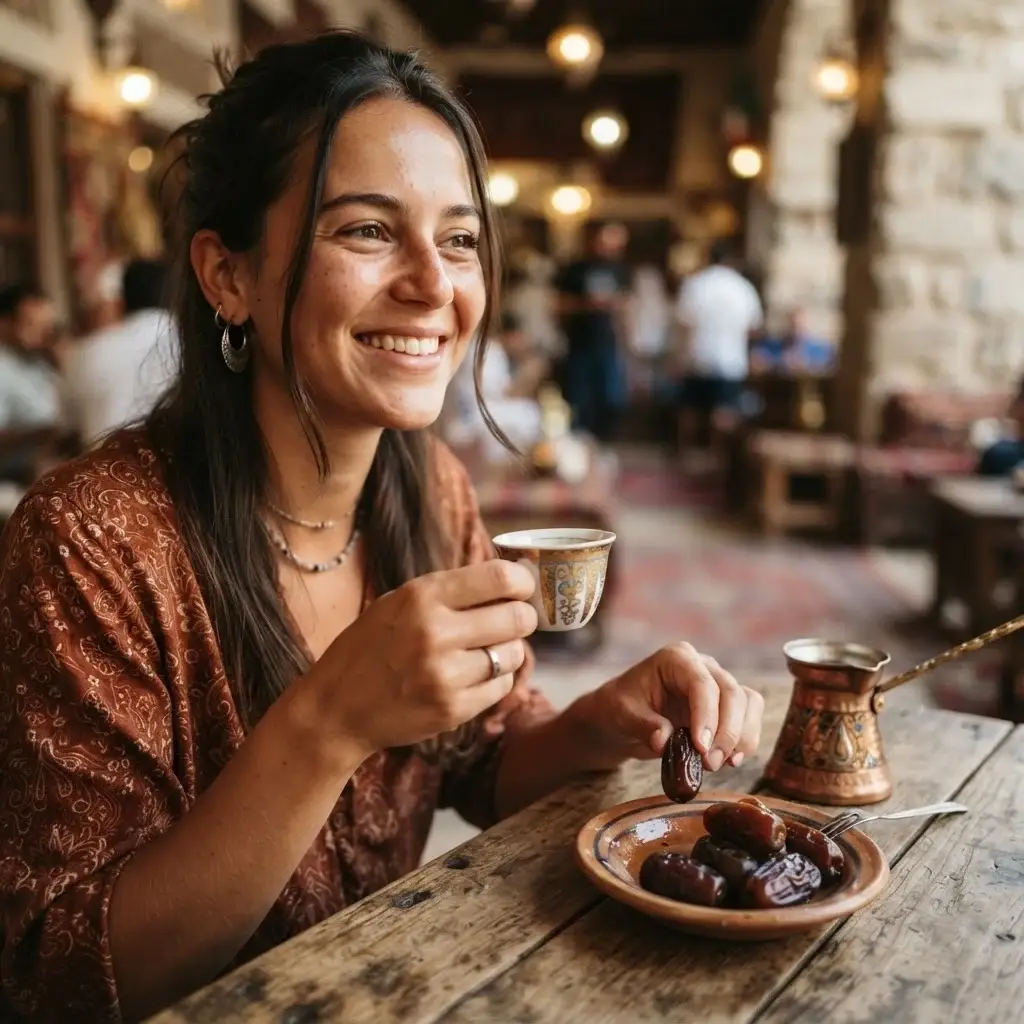
- Drinking Kahwa with a local is a big part of Omani hospitality.
You can find cheap, amazing food at small local restaurants. Look for places with plastic chairs outside where lots of local men are eating. That is always the sign of cheap, delicious, safe food.
Cultural Etiquette and What to Wear
This is a big one. The biggest mistake tourists make is ignoring the local culture. Oman is an Islamic country with deep, traditional values. You must dress modestly out of respect.
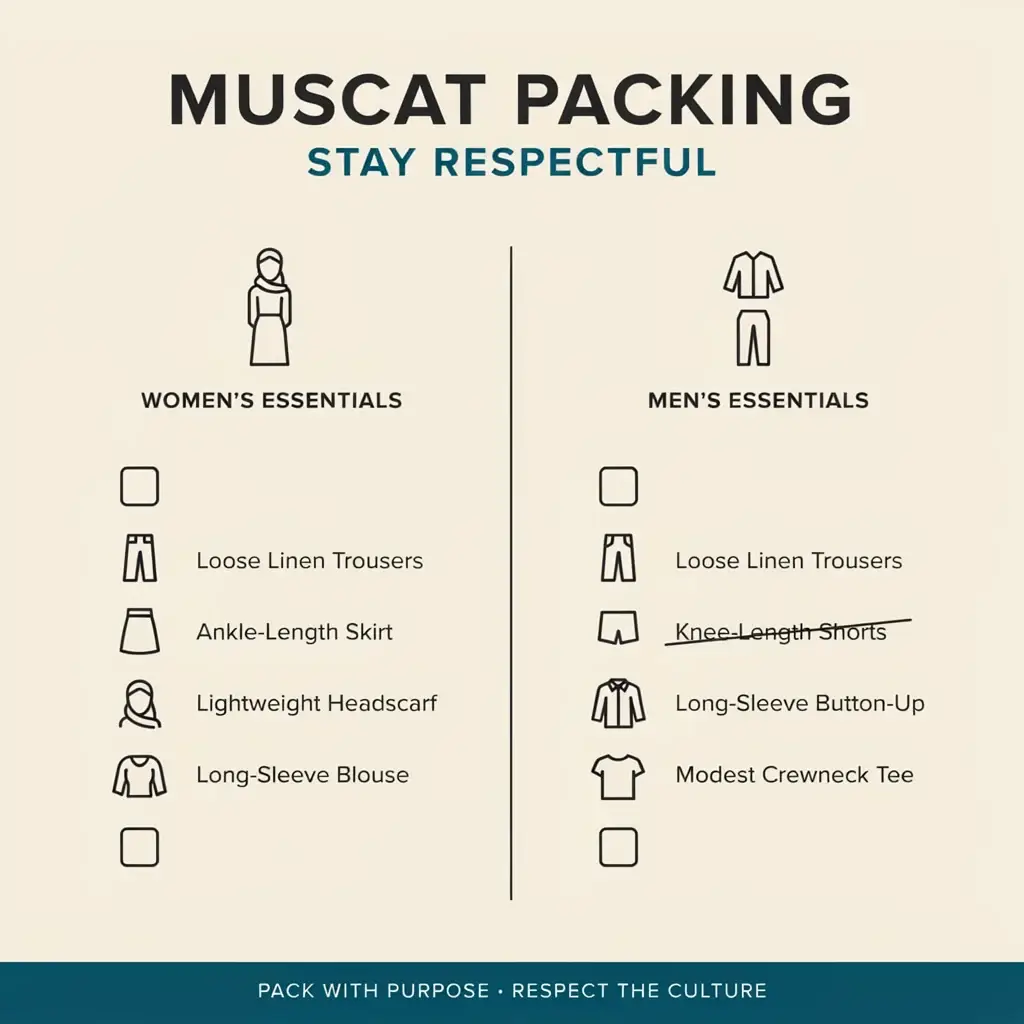
If you walk around in tiny shorts and a tank top, nobody is going to yell at you or arrest you. But they will look at you, and you will make them uncomfortable. More importantly, it shows a lack of respect for the country that is hosting you.
For women: You do not need to cover your hair (except in the mosque). However, your shoulders and your knees must always be covered. I lived in loose linen pants, maxi skirts, and breathable cotton t-shirts. Linen is your best friend in this climate. It keeps you cool while keeping you covered. If I wore a sleeveless top, I always kept a light scarf draped over my shoulders.
For men: Do not walk around the city without a shirt on. Keep your shirt on unless you are literally swimming in the ocean. Shorts are okay for the beach, but long, lightweight pants are much better for walking around the city and the souq.
Also, avoid public displays of affection. Holding hands is generally fine, but save the heavy kissing for your hotel room. Lastly, always ask permission before taking a photo of an Omani person, especially women. It is just basic politeness.
Final Thoughts on Taking the Leap
Planning a trip to a place you have never been can feel like climbing a mountain. You might feel anxious right up until the moment your plane takes off. I still get nervous sometimes, even after years of solo travel.
But figuring out how to plan a 4-day trip to Muscat, Oman is totally within your power. You don’t need a luxury travel agent. You don’t need endless amounts of money. You just need a solid plan, a little bit of bravery, and a willingness to step outside your comfort zone.
Oman is waiting for you. The mountains, the smell of the souq, the warm water of the wadi—it is all real, and it is all out there. Stop waiting for the perfect moment. Stop waiting for someone else to come with you. Book the flight. Pack your bags. Go see the world for yourself.