
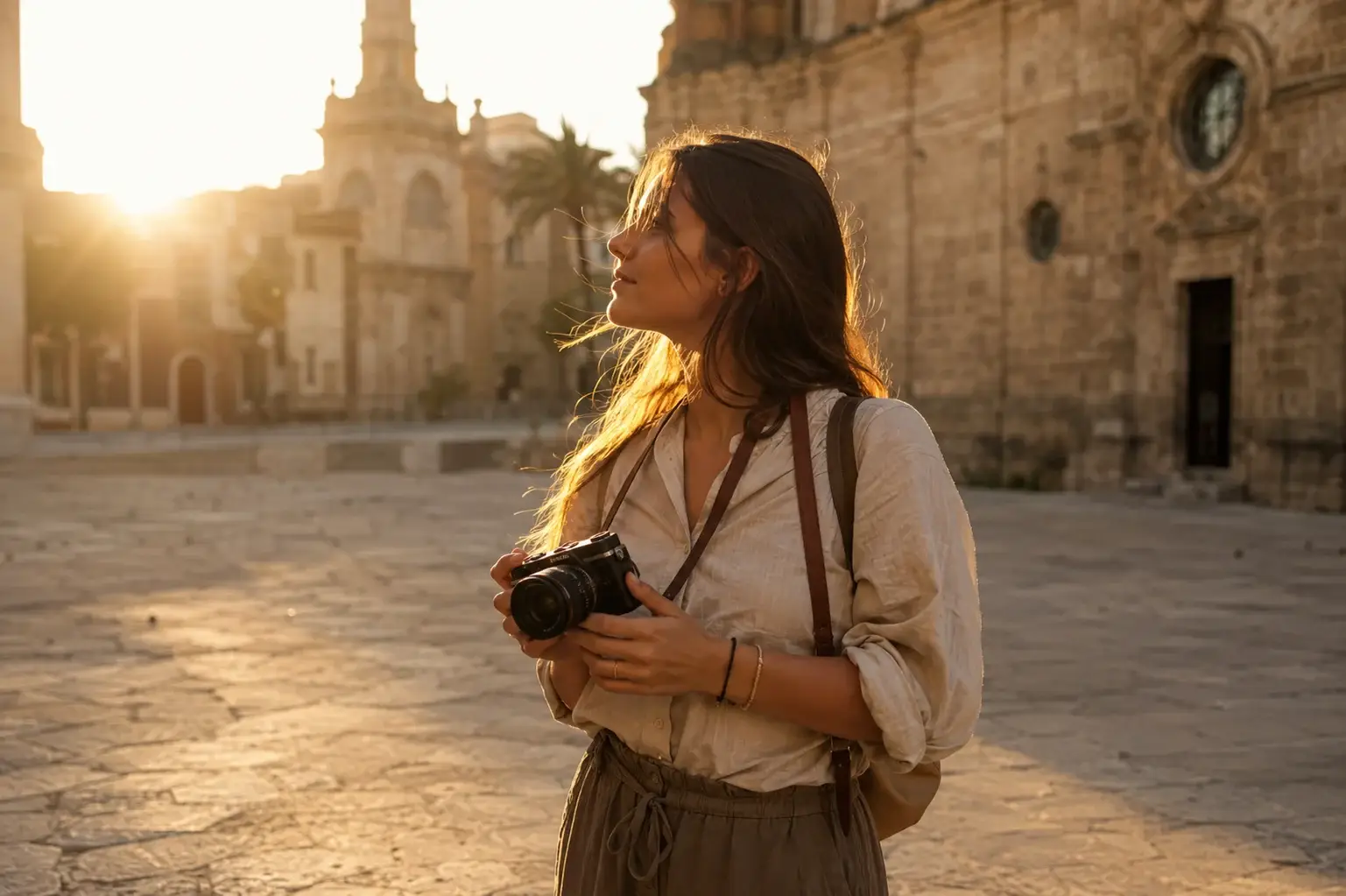
When I was living that rigid, nine-to-five life in a gray office cubicle in New York, my world felt small. I spent my days staring at a screen, waiting for the clock to hit five. I had two weeks of vacation a year, and the pressure to make those two weeks “perfect” made me miserable. I thought travel was a competition to see who could tick the most boxes off a list.
Everything changed when I finally walked away. I started working flexible jobs—waitressing, tutoring, anything that kept me afloat—just so I could see the world on my own terms. I learned that the true value of travel isn’t found in a postcard photo. It’s found in the quiet moments: the smell of incense in a Bangkok temple, the rough texture of ancient stone in a European alleyway, or the feeling of navigating a subway system in a language you don’t speak and realizing, I can actually do this.
If you are currently sitting where I was—feeling that pull to explore but scared of being alone—I want to help you figure out how to find the must-visit cultural sites in global cities that actually matter. It is not about the crowds; it is about the stories those places tell and how they change you.
Why Cultural Sites Matter More Than Tourist Traps
When people ask me for advice on how to plan their first solo trip, they usually show me a list of “top ten” sites found on random travel sites. Most of the time, those lists are full of places designed for high-volume tourism. They are pretty, sure, but they often lack soul.
When I was working as a sightseeing guide in New York, I saw thousands of people rushing through landmarks. They took a photo, checked the box, and ran to the next spot. They missed the texture of the city. As a solo traveler, you have a massive advantage: you can slow down. You don’t have to compromise on what to see or how long to stay. You can sit on a bench for an hour and just watch life happen.
True cultural sites are the heartbeat of a city. They are museums, yes, but they are also neighborhood markets, historic squares, and hidden community centers. To find the real ones, you have to look past the marketing. You have to ask yourself: “Does this place represent the history, the struggle, or the art of the people who live here?”
Preparing for the Journey: The Practical Side
Before you set foot on a plane, you need a solid foundation. Solo travel is amazing, but it requires a bit more planning because you are your own safety net. Start by checking the official requirements for your destination through the US Department of State Travel website to make sure you understand the entry rules and safety landscape before you commit to a flight.
I learned the hard way that health is the biggest variable. When I lived with a family in Ghana, I had to be incredibly careful about food and water safety. Before you leave, visit the CDC Travelers’ Health portal. It gives you the real-deal information on vaccines and how to handle health risks, which makes a world of difference when you are on your own and don’t want to get sick in a foreign place. Being prepared doesn’t kill the adventure; it gives you the confidence to dive in deeper once you arrive.
Identifying Authentic Sites in Busy Metropolises
How do you sort the “must-visit” wheat from the “tourist-trap” chaff? I use a few simple rules. First, I look for places that are preserved, not just polished. If a site is on the UNESCO World Heritage list, it’s usually a great starting point, but don’t stop there. Look for the “buffer zones” around these sites. The streets surrounding a major historical site often house the most authentic local food and craft shops.
Another secret? Go to the university or the local library of the city. These places are never “must-visit” on the big travel blogs, but they are the centers of cultural life. In my experience, if a city’s residents hang out there, the culture is authentic.
Navigating the Urban Landscape
Moving around a global city alone can be the most intimidating part. In places like Bangkok, for instance, the sheer scale of the city can be overwhelming. I always recommend using local transit apps to get your bearings. If you’re in Southeast Asia, learning how Grab works for travelers before you land is a game changer. It saves you from the stress of haggling with taxis and keeps you safe because the ride is tracked on your phone.
When you are exploring, don’t be afraid to take the long way. If the map says “walk,” walk. You will find small, hole-in-the-wall cafes and historical plaques that you would never see from the window of a tour bus.
Culinary Culture as a Historical Site
One of my core beliefs is that you cannot understand a city until you eat its history. Food isn’t just fuel; it’s a living museum. When I taught English in Thailand, I learned more about the local culture by eating street food than I did from any textbook.
Look for markets where the locals shop, not the ones selling souvenirs. If you’re in a big city, head to the central market early in the morning. Watch what people are buying. If you see a line of locals waiting for a specific dish, get in that line. That is a must-visit cultural site in its own right.
Safety and Growth: The Solo Traveler’s Mindset
Solo travel is the most powerful tool for building self-awareness. But you need to stay smart. Protecting yourself is about more than just physical safety—it’s about peace of mind. I never travel without ensuring I have clear information on insurance guidance and traveler safety content to cover those “what-if” moments. Knowing you have support makes you much more willing to step out of your comfort zone.
Every time I’ve had a “mistake”—like taking the wrong train in China or getting lost in a city maze—it ended up being the part of the trip I remembered most vividly. It taught me that I could solve my own problems. You aren’t just visiting a cultural site; you are adding your own chapter to the story of that city.
Creating Your Own “Must-Visit” Map
Don’t worry if your map looks different from someone else’s. That’s the point. Whether you are exploring the official destination guides and cultural etiquette provided by local authorities or just wandering through a neighborhood that isn’t mentioned in any guidebook, you are doing it right.
As you plan, start with one or two big, well-known cultural sites. Then, for every “big” site, balance it with two “small” ones—a local market, a quiet park, or a small art gallery. This balance prevents you from burning out and keeps the experience grounded in reality.
The Journey is Yours
Remember, the goal is not to finish a list. It is to grow. When you walk through a historic gate, don’t just look at the stone. Think about who built it, why they built it, and how they lived. Ask questions. Talk to the person working the entrance desk or the person sitting on the bench next to you.
You are capable of far more than you think. You don’t need a group, a fancy tour, or a “perfect moment” to start. You just need to walk out the door. The world is waiting for you to see it with your own eyes.



