There is a specific moment during a twenty-hour journey when the initial excitement of heading somewhere new completely wears off. You are stuck in a middle seat, the cabin lights are dimmed, the air feels like a dry desert, and your phone battery drops into the single digits. If you forgot a vital piece of gear, you cannot just run to the corner store. You are trapped thousands of feet in the air, completely dependent on whatever you brought inside your small shoulder bag.
Years ago, before I started traveling full-time, I worked a rigid office job in New York City. I spent my days staring at spreadsheets, dreaming of the world, and hoarding my tiny allotment of vacation days. When I finally saved enough money by waitressing on the weekends to book a massive multi-stop trip across Asia and Europe, I made a classic beginner mistake. I overpacked my heavy checked luggage but completely neglected my small carry-on bag. During my very first fourteen-hour flight, I found myself without an eye mask, without a backup power source, and without a simple change of clothes. I landed at my destination exhausted, dirty, and stressed out.
That miserable flight taught me a massive lesson. As a solo traveler, your bag is your ultimate safety net. Being self-reliant means you do not need to ask flight attendants for extra pillows, you do not need to beg neighbors for a charger, and you never have to panic if the airline loses your checked baggage.
This comprehensive packing list for long-haul flights is built from a decade of mistakes, late-night layovers, and solo adventures. Whether you are prepping for your very first international flight or heading out to teach English abroad like I did in Thailand, this blueprint will help you stay comfortable, healthy, and perfectly organized from takeoff to landing.
The Psychology of the Long-Haul Carry-On: Think in Zones
When you walk down the narrow aisle of a wide-body airplane, you are entering a tiny, shared ecosystem. To keep your sanity and your independence, you cannot just throw your items blindly into a backpack. You need to organize your gear into two distinct physical zones: the overhead bin zone and the seat pocket zone.
The Overhead Bin Zone
This is for your larger carry-on suitcase or a big duffel bag. This space holds items you only need if things go completely wrong. It stores your backup outfit, your heavy jacket, and your extra liquids. Once you lift this bag into the bin, you should not touch it again until the captain turns on the seatbelt sign at your destination. Fighting the aisle crowd mid-flight to grab a small lip balm is stressful and unnecessary.
The Seat Pocket Zone
This is your personal command center. This should be a small, zip-up pouch or a compact crossbody bag that fits completely under the seat in front of you. It contains your phone, your headphones, your passport, your water bottle, and your basic hygiene tools. Everything in this zone must be easily reachable without you having to unbuckle your seatbelt or stand up in the dark.
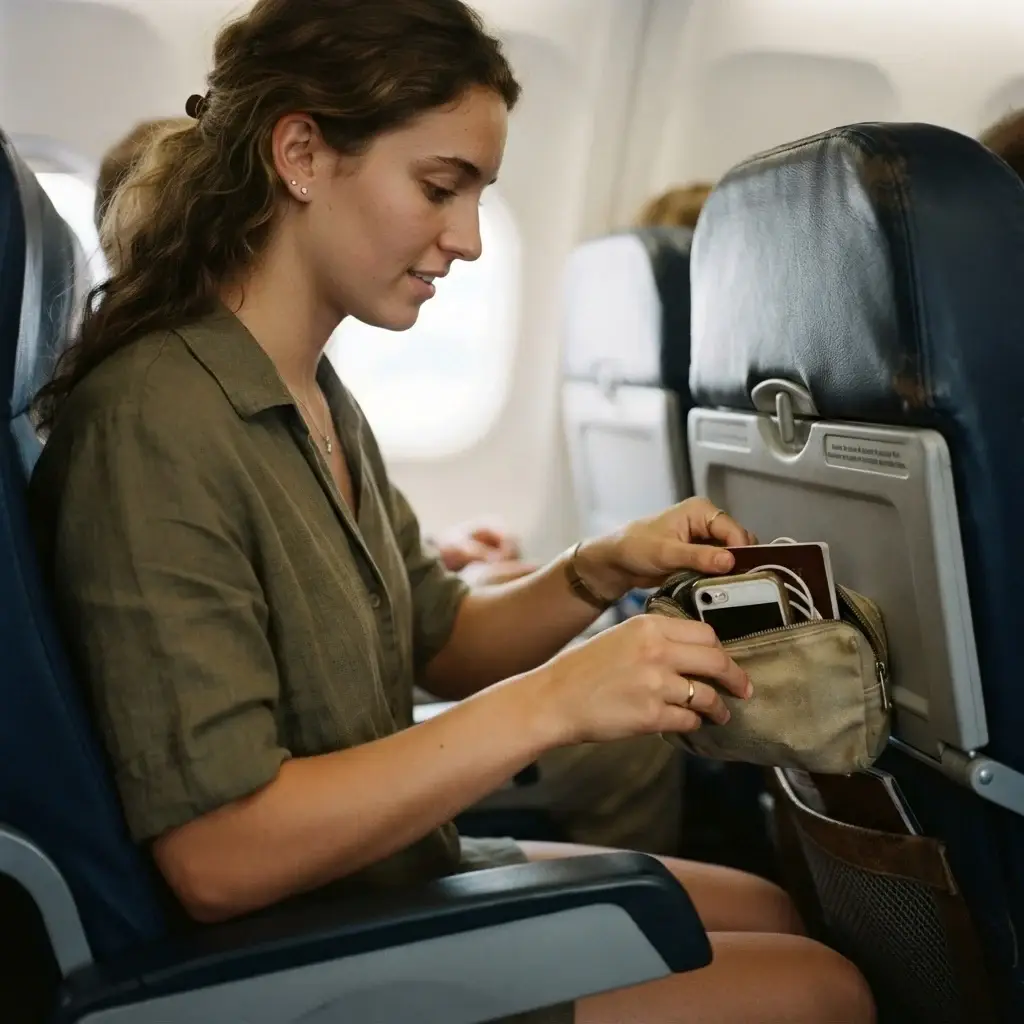
By separating your gear this way, you reduce transit anxiety. You will never have to worry about blocking the aisle while hunting for a stray pen during customs declarations. You can just sit back, slide your personal pouch into the seat pocket, and relax.
1. The Core Electronics: Powering Your Independence
Entertainment is not just a luxury during a long flight; it is a tool to keep your mind calm and occupied. While most international flights offer seatback screens, those screens break more often than you think. I have sat through an eleven-hour flight where my screen was completely frozen on a static image. Because I brought my own charged devices, I was totally fine.
The Heavy-Duty Power Bank
Never board an international flight assuming your seat will have a working USB port. Many older planes have broken outlets, or the voltage is too low to actually charge a modern smartphone. Carry a high-capacity power bank that can charge your phone at least three full times. Make sure it is clearly labeled with its watt-hour rating, as airport security officers around the world will check this before letting you through the checkpoint. Keep this battery bank in your seat pocket pouch, not in the overhead bin.
Noise-Canceling Headphones
A long flight is incredibly loud. The constant drone of the jet engine sits at around eighty decibels, which causes subtle physical fatigue over long periods. A pair of high-quality noise-canceling headphones is worth every single penny. They block out the engine roar, the loud metallic clatter of the galley kitchen, and the ambient noise of a crowded cabin.
Insider Secret: Always pack a cheap, two-prong airline headphone adapter. Many international airplanes still use those old-school double jacks for their inflight entertainment screens. If you only have a standard single jack or a wireless connection, you will not be able to hear the movie audio without an adapter.
E-Reader or Loaded Tablet
Physical books are wonderful, but they are heavy and take up precious physical space in a carry-on. An e-reader lets you carry hundreds of novels without adding any weight to your back. Before you leave your house, make sure you download every single book, movie, podcast, and music playlist directly to your local device storage. Never rely on the airport Wi-Fi or the airplane internet to download media at the last minute.
2. Comfort and Sleep Architecture: Creating Your Private Oasis
Sleeping on an airplane is an art form. The cabin is bright, people are constantly moving around, and the temperature swings from freezing cold to uncomfortably hot within minutes. To get actual rest, you have to build a barrier between yourself and the rest of the plane.
The Contoured 3D Eye Mask
Standard flat fabric eye masks press directly against your eyelids. This can cause blurry vision when you wake up, and it lets ambient light leak in around the edges of your nose. Instead, use a contoured 3D eye mask. These masks have hollow cups over your eyes, allowing you to blink naturally while blocking out every single photon of light. When the flight attendants turn on the bright cabin lights for breakfast three hours before landing, you can keep sleeping peacefully.
Temperature Control: The Layering System
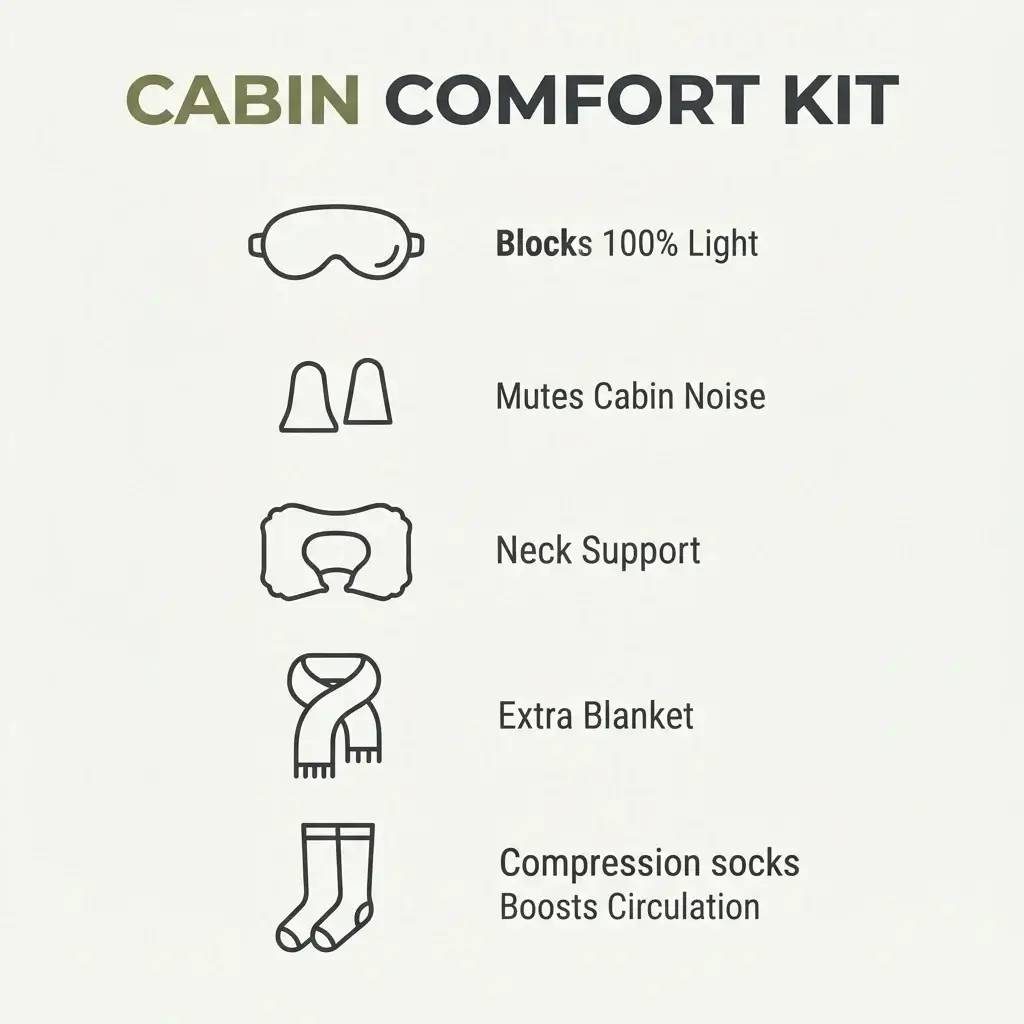
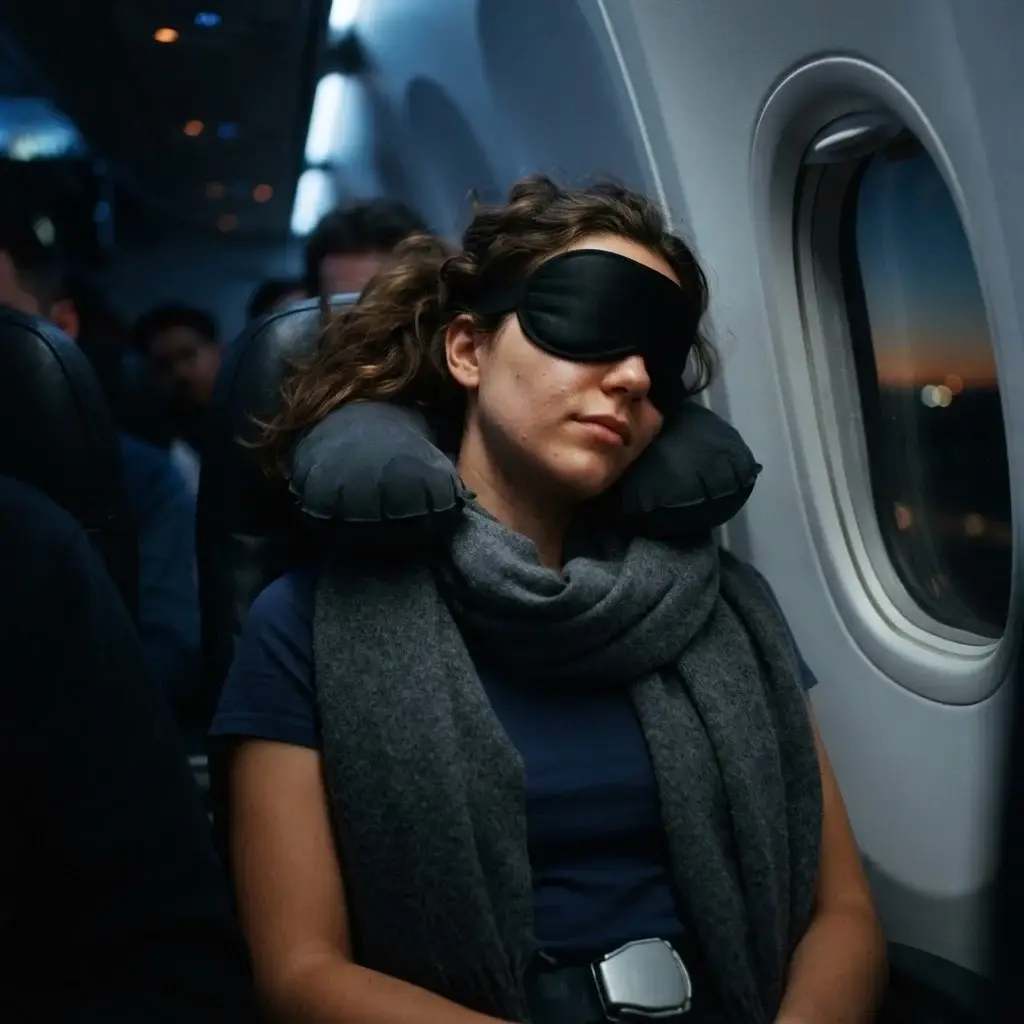
Airplane cabins are notorious for extreme temperature shifts. When the plane is sitting on the tarmac before takeoff, it can get incredibly warm. Once you reach cruising altitude, the air turns chilly. Never wear a single heavy sweater. Instead, wear a light cotton t-shirt, a breathable long-sleeve shirt, and a wide merino wool scarf or pashmina. A large scarf is my ultimate secret weapon. It looks stylish when you land, but during the flight, it can be folded into a pillow or draped over your shoulders as an extra blanket.
The Inflatable vs. Foam Pillow Debate
If you are traveling light, space is your priority. Molded memory foam pillows are highly comfortable, but they are bulky and annoying to carry through an airport terminal. I prefer a high-quality inflatable neck pillow with a soft, washable fabric cover. You can deflate it to the size of a wallet when you land, saving tons of room in your backpack.
3. In-Flight Health and Hydration: Staying Well in Dry Air
The humidity inside an airplane cabin drops down to around ten to twenty percent. For context, that is significantly drier than the Sahara Desert. This dry air rapidly dehydrates your skin, your eyes, and your nasal passages, making you much more vulnerable to airborne germs. Staying healthy in transit requires an active, practical plan.
Multi-Use Reusable Water Bottle
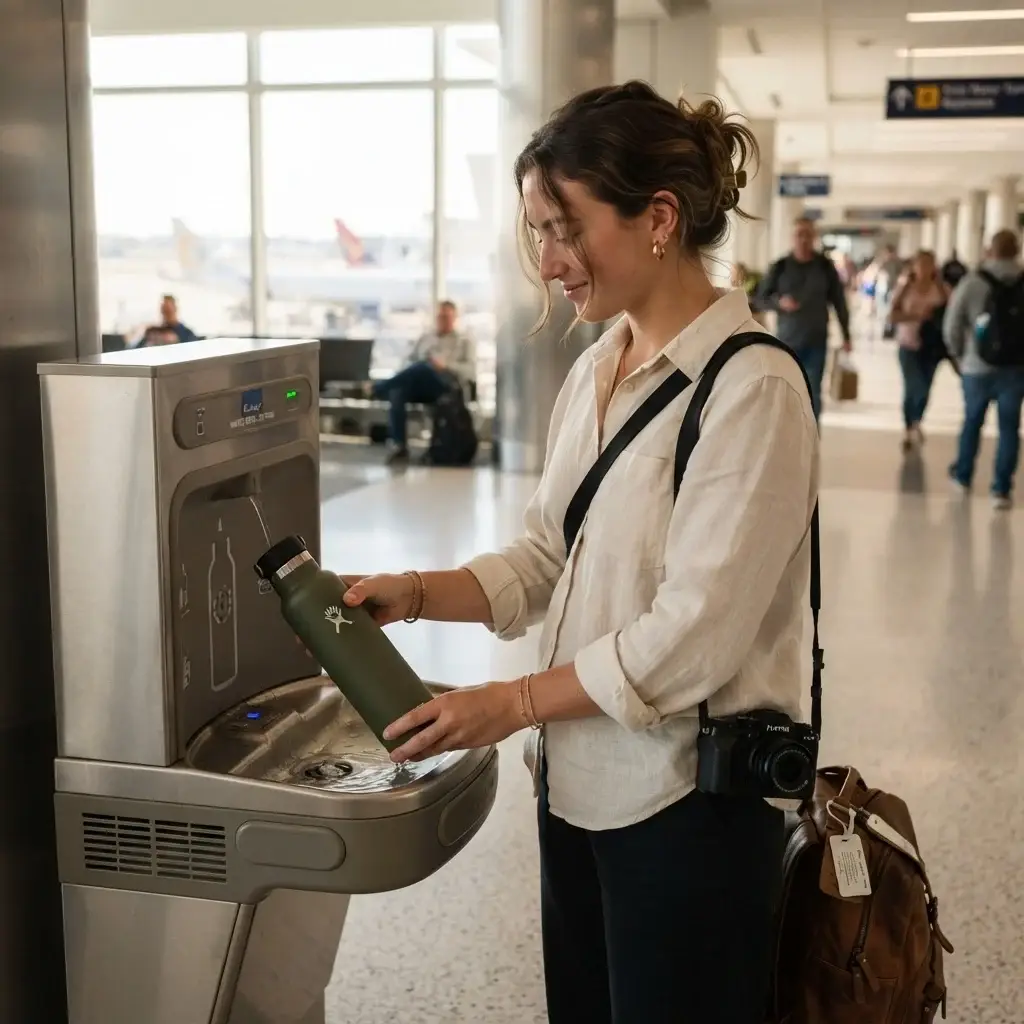
Do not rely on the tiny plastic cups of water handed out by the flight crew. They are never large enough to keep you truly hydrated. Bring a sturdy, empty reusable water bottle through airport security. Once you cross the security line, find a water filtration station and fill it to the very top. Having your own large water bottle means you can drink whenever you feel thirsty, without waiting for the beverage cart to rattle down the aisle.
Protecting Your Internal Ecosystem
Because the dry cabin air compromises your natural defenses, it is highly useful to check real-world medical guidelines before a massive multi-continent trip. I always review the formal medical travel advisories on the CDC Travelers’ Health page to ensure I have the right preventative care, local vaccine knowledge, and food safety tips before stepping off a long journey into a new country.
To manage the immediate dryness inside the cabin, pack these simple items inside a clear ziplock bag in your seat pocket:
- Saline Nasal Spray: A quick spray every three hours keeps your nasal passages moist and helps your body filter out airborne dust and bugs.
- Lubricating Eye Drops: If you wear contact lenses, switch them out for glasses before you board. Use preservative-free eye drops to stop that gritty, tired feeling.
- Heavy Lip Balm: Apply a thick layer of beeswax or petroleum-based lip balm before you fall asleep to prevent painful, cracked lips.
The Magic of Compression Socks
Sitting still in a tight economy seat for half a day causes blood to pool in your lower legs. This leads to swollen ankles, heavy feet, and an increased risk of deep vein thrombosis. Put on a pair of graduated compression socks before you board the plane. They apply gentle pressure to your lower legs, pushing blood back up toward your heart and keeping your legs feeling light and energetic when you finally land.
4. The Self-Reliant Hygiene Kit: Arriving Fresh
When you step off a sixteen-hour flight, you want to feel ready to face a new city, pass through immigration with confidence, and find your transit options without feeling gross. A tiny, well-curated hygiene kit lets you hit the reset button right in the airplane bathroom about an hour before landing.
The One-Hour-Before-Landing Routine
When the pilot announces that the plane is beginning its gradual descent, grab your hygiene kit and head straight to the lavatory before the lines get too long. Brush your teeth thoroughly. Wash your face with a gentle, rinse-free facial wipe. Apply a light layer of moisturizer and pop a fresh mint into your mouth. This simple routine signals to your brain that the long night is officially over, giving you a massive burst of mental clarity.
Essential Hygiene Components
Keep all liquids under three ounces (one hundred milliliters) to satisfy international airport security rules. Your kit should contain:
- Travel-Sized Toothbrush and Paste: Brushing away stale airplane taste is the fastest way to feel human again.
- Deodorant Wipes or Solid Stick: Avoid heavy aerosol sprays, as they can trigger asthma or allergies in tight cabin spaces.
- Unscented Moisturizer: A simple, high-quality lotion to repair your skin barrier after hours of dry air.
- A Small Hairbrush or Comb: To fix unruly airplane hair before you head into immigration photography lines.
5. Security, Documents, and Solo Safety: Protecting Your Life
When you travel with a partner, someone can always watch your bags while you use the restroom or fill out a customs form. When you travel solo, you are entirely on your own. You must set up a foolproof system to protect your money, your identity, and your legal documents.
Digital and Physical Redundancy
Never keep all your financial tools or documents in one place. I split my money into three separate locations. My primary credit card and a small amount of local currency go into my pocket. My backup debit card sits deep inside my seat pouch. My main cash reserves stay hidden inside an inner pocket of my overhead carry-on.
Before I leave New York, I always review official government entry rules. For instance, I use the comprehensive country guidelines provided on the US Department of State Travel site to double-check my specific visa types, entry fees, and local embassy contact numbers before making a major international move. I print out physical copies of my hotel confirmations, insurance policies, and onward flight tickets. If your phone battery dies or local airport customs officials ask for proof of accommodation, you can simply pull out your paper documents without a single worry.
Safe Navigation in the Lavatory
One of the most awkward moments for a solo traveler is figuring out what to do with your valuables when you need to use the tiny airplane restroom mid-flight. Never leave your passport, your wallet, or your primary electronics sitting out on your seat tray table. Even if your seatmates seem completely lovely, people walk down the aisles constantly in the dark. Always slide your passport and wallet into your small crossbody bag or jacket pocket and take them into the restroom stall with you.
6. Culinary Strategies: Navigating Airplane Food and Solo Snacks
Long-haul flight meals are loaded with sodium to make up for the fact that your sense of taste drops by about thirty percent in a pressurized cabin. This extra salt can make you feel bloated, heavy, and incredibly thirsty. Managing your food intake is a major component of staying comfortable.
The Special Meal Hack
When you book your international flight ticket online, go into your booking profile and select a “Special Meal” option, such as a vegetarian, kosher, or low-sodium meal. Airlines always prepare and distribute these special orders first, long before the standard food carts rattle down the aisle. You will get your hot food quickly, allowing you to finish eating, store your tray table away, and fall asleep while the rest of the cabin is still waiting for their options.
High-Energy, Non-Perishable Snacks
Airplane meal schedules are designed around the time zone of the country where the plane took off, which rarely matches your personal hunger cues. Avoid sugary candies or salty potato chips, which cause rapid energy spikes and crashes. Instead, pack real, whole foods that keep you full for long periods:
- Raw Almonds or Walnuts: Packed with healthy fats and protein to keep hunger pangs away.
- Oatmeal Packets: You can ask a flight attendant for a cup of plain hot water mid-flight and mix your own warm, comforting meal right at your seat.
- Dried Fruit: Dates, figs, or mango slices offer natural sweetness and fiber to keep your digestion moving normally.
7. The Just-In-Case Outfit: Preparing for Lost Luggage
There is nothing quite as discouraging as landing in a beautiful new country, waiting by the baggage carousel for an hour, and realizing your large checked suitcase never made it onto the plane. If you have to wait forty-eight hours for the airline to track and deliver your luggage, you do not want to spend that time wearing the exact same clothes you wore during a long transit day.
Selecting Your Backup Gear
Your overhead carry-on bag should always hold a lightweight, highly compressible change of clothes. This is not about style; it is about practical function. Pack one pair of lightweight tencel trousers or leggings, a clean breathable t-shirt, a fresh set of underwear, and a clean pair of socks. Roll these items up tightly together into a small bundle or a compression packing cube to save maximum space.
Smooth Ground Transitions
Having a backup outfit also allows you to wash up and change right at the arrival airport. If you land early in the morning before your hotel room is ready for check-in, you can drop your heavy bags at the front desk, change into your fresh clothes, and immediately start exploring a historic old town or finding a local breakfast spot without feeling weighed down by flight grime.
Step-by-Step Long-Haul Routine: From Packing to Arrival
Knowing what to pack is only half the battle. You also need a solid, step-by-step game plan for how to manage your time and your physical body during the actual journey. Here is exactly how I manage a twenty-four-hour travel day to minimize jet lag and maintain my energy.
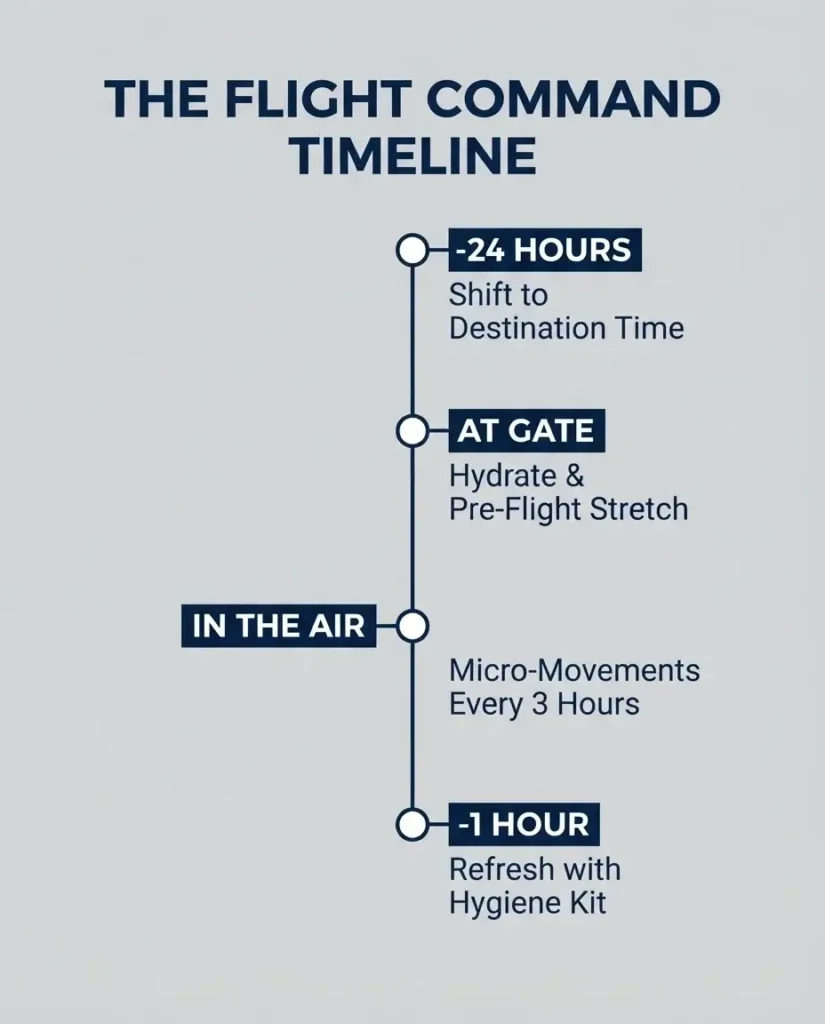
THE LONG-HAUL FLIGHT COMMAND TIMELINE
[ DEPARTURE MINUS 24 HOURS ]
• Adjust your watch to the local time zone of your destination.
• Start eating and sleeping according to that new rhythm.
[ AIRPORT TERMINAL PRIOR TO BOARDING ]
• Fill your large reusable water bottle at a filtration station.
• Walk the terminal floors to stretch your muscles before sitting.
[ INITIAL THREE HOURS IN THE CABIN ]
• Set up your seat pocket command center with your personal pouch.
• Eat a light meal, hydrate deeply, and put on your compression socks.
[ THE MIDDLE MID-FLIGHT STRETCH ]
• Stand up every three hours to walk the aisles and boost circulation.
• Do simple seated ankle rolls and calf raises to prevent swelling.
[ ONE HOUR UNTIL LANDING CITADEL ]
• Head to the cabin lavatory with your personal hygiene kit.
• Brush teeth, wash face, apply moisturizer, and change clothes.
24 Hours Before Departure: The Mental Shift
The battle against jet lag begins before you even step inside the airport. Twenty-four hours before your flight leaves, manually adjust your watch and your phone to the exact local time zone of your destination. Start eating your meals and sleeping according to that new time. If it is currently three in the morning at your destination when you board your afternoon flight, put on your eye mask and try to sleep immediately.
At the Airport Terminal: The Pre-Flight Stretch
Do not sit down at the boarding gate for two hours before your flight. You are about to spend half a day trapped inside a tight metal tube. Use your time at the departure gate to walk up and down the terminal hallways. Get your blood flowing, stretch your hamstrings, and do a few gentle shoulder rolls.
In the Air: The Micro-Movement Plan
Once the plane reaches its cruising altitude, make a conscious effort to move your body every three to four hours. Walk down the long aisles to the back galley kitchen, even if it is just to ask for a cup of water.
When you are sitting in your seat, perform simple micro-exercises: lift your heels off the floor twenty times to activate your calf muscles, roll your ankles in slow circles, and gently pull your knees toward your chest to release lower back tension. These tiny movements keep your circulation active and prevent extreme muscle stiffness.
Final Thoughts: Embracing the Journey
When I left my comfortable office job to travel the world alone, I used to view long-haul flights as a painful obstacle—a miserable tax I had to pay to see beautiful places. But over time, my perspective completely transformed. Today, I look forward to those long hours in the sky.
A long flight is a rare gift. It is a quiet pocket of time where no one can send you work emails, no one can ask you to run errands, and you are completely free from the frantic rush of daily life. It is a space to read a wonderful book, reflect on your personal goals, listen to beautiful music, and mentally prepare for the cultural adventures ahead.
When you pack your carry-on bag with care, organization, and a deep commitment to self-reliance, you stop fearing the journey. You enter the airplane cabin not as a passive passenger hoping for a comfortable ride, but as an independent, empowered traveler ready to embrace whatever surprises the world has in store for you. Pack light, plan smart, and enjoy every single mile of the ride.