Eco-Friendly Destinations Where Digital Nomads Can Thrive

There is a question I think about more than I probably let on: is the digital nomad lifestyle actually sustainable?
I left a rigid office job years ago because I wanted to live differently. I wanted slow travel, cultural depth, and the freedom to spend real time in real places instead of rushing through a checklist. What I didn’t fully reckon with at first was the footprint I was leaving. Flights. Air conditioning units running in short-stay apartments. Eating convenience food in plastic containers because I didn’t know the local market yet. Moving on after three weeks because the Wi-Fi got spotty.
The more honest I got about all of that, the more I started asking better questions when choosing where to base myself. Not just “is the coworking cheap?” but “does this city have good public transport?” and “what is this government actually doing about its environment?” and “how do I show up here in a way that gives something back?”
This guide is my answer to those questions. Not a greenwashed list of “eco-resorts” you can’t afford, and not an idealistic fantasy about living in a treehouse. These are real destinations with solid remote work infrastructure and genuinely meaningful sustainability credentials, plus the honest caveats where they exist, because every place has trade-offs.
Before we get into the specific destinations, it’s worth being clear about what “sustainable” actually means in a useful context. The Global Sustainable Tourism Council (GSTC) is one of the few international bodies that certifies destinations against rigorous, independently verified sustainability standards. That kind of framework covers everything from local community benefit and cultural preservation to environmental management and governance. It’s a helpful north star when you’re trying to cut through vague claims about a destination being “green.”
The Sustainability Paradox You Probably Already Feel
Let’s address it directly, because you’ve already thought about it. The research backs up the uncomfortable truth: frequent international flights are by far the largest single contributor to a digital nomad’s carbon footprint. According to Sustainable Travel International, air travel accounts for the largest portion of tourism’s overall carbon impact. Moving between countries every four to six weeks compounds that significantly.
So the most powerful sustainability decision a nomad can make isn’t which city to choose. It’s to stay longer in fewer places. This is the core logic of slow travel, and it happens to align perfectly with the kind of cultural immersion I find most rewarding anyway. When I backpacked through Europe solo, the places that genuinely changed me were the ones where I stayed long enough to find a routine, learn a few words of the local language, figure out where the neighborhood market was. The places I whipped through in two days are a blur.
Choosing a destination with a legal long-stay visa option matters enormously for sustainability, because it removes the temptation to keep moving and gives you a real stake in a community. With that in mind, the destinations below were selected for having a combination of: genuine environmental credentials, practical remote work infrastructure, long-stay visa options, and the kind of depth that rewards staying.
Ljubljana, Slovenia: The Greenest Small Capital in Europe
If you want to base yourself somewhere in Europe that takes sustainability seriously at a policy level rather than just a marketing level, Ljubljana is hard to beat. Slovenia’s capital won the European Green Capital award from the European Commission back in 2016 and has continued building on that legacy. Three-quarters of Ljubljana’s territory is green space. The city planted over 2,000 trees in the past decade, created five new parks, revitalized riverfront areas, and made a firm commitment to zero waste in its municipal planning. The historic center is largely car-free, and the cycling and pedestrian infrastructure is genuinely excellent for a European capital.
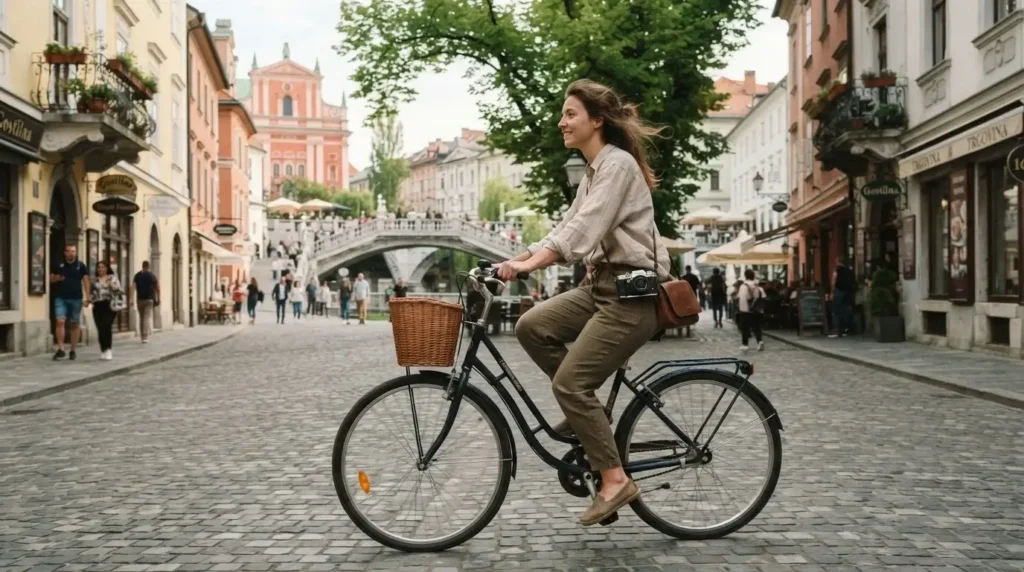
For remote workers, Ljubljana is an underrated base. It’s small and navigable in a way that cities like Lisbon and Medellín are not, which means your daily friction is low. Coworking spaces are dotted through the city. Internet infrastructure is strong and reliable across Slovenia. The country is also physically stunning in a way that tends to surprise people. From Ljubljana you can reach Alpine peaks, Adriatic coastline, and wine-growing hill country all within roughly an hour or two, by bus or train.
Slovenia launched its official Digital Nomad Visa on November 21, 2025. The permit covers one year and is available through Slovenia’s official tourism and immigration portal. The income requirement sits at approximately EUR 3,080 to 3,200 per month (calculated as twice the average Slovenian net salary), and you’ll need health insurance covering at least EUR 30,000, a clean criminal record, and proof of remote employment or freelance contracts. The application fee is approximately EUR 162. Note that the visa is currently not renewable under the same program, so it’s designed for a one-year stay rather than indefinite residency.
Cost of living is moderate by Western European standards. Budget roughly EUR 1,500 to 2,200 per month for a comfortable life in Ljubljana, more if you want a spacious central apartment. The food scene is small but genuinely good, with excellent farm-to-table options throughout the city and a strong local market culture. Try anything featuring local pumpkin seed oil, fresh trout from the Soča River, and a glass of Teran, the indigenous red wine from the Karst region.
For eco-conscious nomads, the lifestyle alignment here is almost effortless. You can walk or cycle most days, eat locally without any extra effort, and live inside a city where the government is genuinely invested in its environmental future.
Medellín, Colombia: Urban Transformation as a Way of Life
Medellín’s story is one of the most remarkable urban transformations in the world, and sustainability is now core to its identity rather than an add-on. The city launched its “Green Corridors” program in 2016, planting trees and vegetation along 18 major roads and 12 waterways to directly combat the urban heat island effect. The results were measurable, with the BBC reporting a 2-degree Celsius temperature reduction across affected areas. That is not a greenwashing press release. That is documented, independently reported climate impact from a city that decided to act.
Beyond the green corridors, Medellín’s Metrocable system connecting hillside neighborhoods to the city center is one of the most studied examples of inclusive sustainable urban mobility in Latin America. The metro itself is clean, reliable, and genuinely used by locals across all income levels.

Walking, cycling, and the Metrocable can handle most of your daily movement without needing a car or cab. The official Colombia urban planning profile of Medellín outlines how the city pivoted from a reputation for violence to becoming a model for participatory, sustainable urban development. It’s a transformation that gets studied at universities worldwide, and being present in the city makes you feel it on the street.
From a remote work perspective, Medellín is one of the strongest options in Latin America. The El Poblado and Laureles neighborhoods both have dense concentrations of coworking spaces, reliable fiber internet, good coffee shops with consistent Wi-Fi, and a large expat and nomad community. Monthly costs for a comfortable setup run roughly $800 to $1,200, covering rent, food, transport, and a coworking membership. The city’s “City of Eternal Spring” reputation is well-earned. Temperatures hover around 22 to 28 degrees Celsius year-round at roughly 1,500 meters of altitude.
What to eat: Medellín’s food culture is proud and delicious. Eat a bandeja paisa at least once, a massive platter of beans, rice, chorizo, chicharrón, and plantain that is as honest as Colombian food gets. Shop at the Mercado del Río for a more curated but genuinely local experience. Street fruit stalls are everywhere and cheap. The emerging restaurant scene in Laureles is worth exploring if you want to eat well without spending much.
For nomads who care about community impact, Medellín rewards intentionality. The city is still navigating gentrification pressure from the nomad community, so choosing local businesses, learning some Spanish, and being a present and respectful neighbor matters here more than almost anywhere else.
Tbilisi, Georgia: Low Cost, Long Stay, Surprising Sustainability
Tbilisi doesn’t always come up in conversations about sustainability, and that’s partly because it doesn’t package itself that way. But from a practical sustainability standpoint, it has real advantages that are easy to overlook.
Start with the most basic one: citizens of 95 countries can stay in Georgia for up to 365 days without any visa at all, no application, no fee, no income threshold. That means you can commit to a full year in one place without any bureaucratic runway, which is one of the most friction-free paths to slow travel that exists anywhere in the world right now. From a carbon footprint perspective, one flight to Tbilisi followed by twelve months of staying put is genuinely more sustainable than six two-month stints in different cities. Monthly living costs of roughly $800 to $1,400 make it possible to live comfortably without working exhausting hours, which tends to lead to a more present, more local way of living.
Tbilisi itself is compact and walkable in its historic center. The old town, known as Abanotubani with its sulfurous natural baths, the Narikala Fortress ridge, and the wooden balconied houses of the Kala district, is the kind of place where you can genuinely live rather than just tourist.
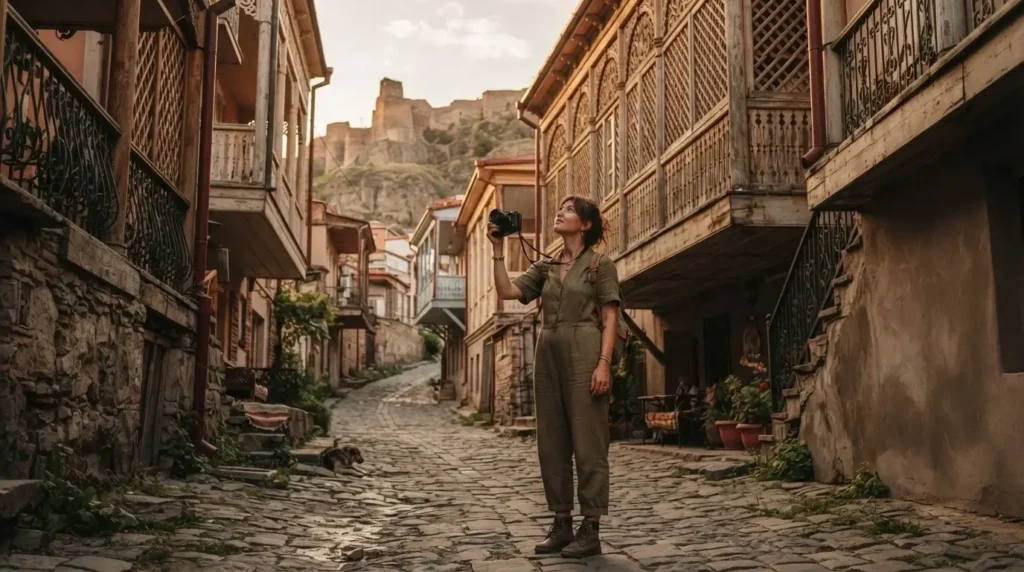
The food culture is extraordinary, built on 8,000 years of winemaking, natural wine traditions, and communal feasting. Eat khinkali (soup dumplings), khachapuri (cheese bread, specifically the Adjarian version with an egg), and anything cooked with walnut paste. Shop at the Deserter’s Bazaar rather than supermarket chains to put money directly into local hands.
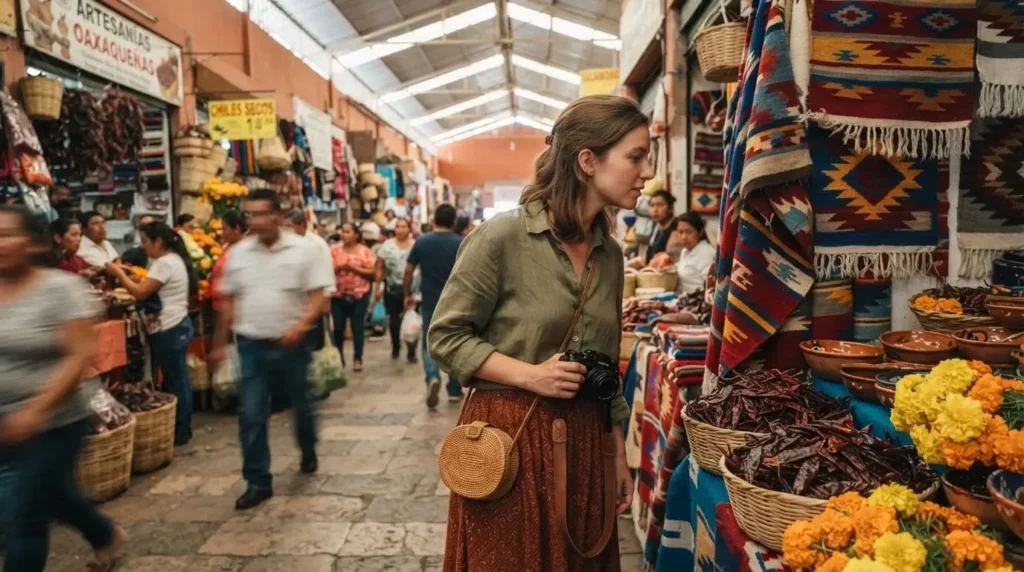
Georgia’s natural environment is one of the country’s defining assets. The country ranges from Black Sea coastline to the Greater Caucasus mountains, with extraordinary hiking in Kazbegi and the Svan region accessible by shared marshrutka minibuses from Tbilisi. The outdoor access paired with the low-cost urban base makes Georgia a genuinely well-rounded sustainable nomad choice.
The honest caveats: Tbilisi is not building the kind of formal green infrastructure that Ljubljana or Medellín is. Air quality in the city can be poor at times, particularly during winter when older vehicles and heating systems contribute to particulate matter. The city is becoming increasingly popular with nomads, which is creating some housing cost pressure in central areas. Being mindful about supporting local rather than nomad-economy businesses is worth thinking about.
Oaxaca, Mexico: Slow Travel as Cultural Responsibility
Oaxaca is the kind of destination that rewards a long stay in a way that few places do. The state has the largest number of indigenous communities of any Mexican state, with rich Zapotec and Mixtec cultures that have shaped everything from the food to the architecture to the living calendar of festivals. Coming to Oaxaca for three weeks, hitting the highlights, and moving on is genuinely not the way to experience it. Staying for two to four months, learning how the city actually operates, building a relationship with a neighborhood market vendor, showing up for Día de los Muertos as a present participant rather than a spectator — that is where Oaxaca starts to matter.
From a practical standpoint, Oaxaca City works well for remote workers in a specific bandwidth range. Apartment Wi-Fi in the city consistently tests around 40 Mbps, which is comfortable for video calls and cloud work. Coworking spaces are available, though the scene is smaller than Medellín or Chiang Mai. Monthly costs run roughly $800 to $1,200 for a comfortable setup. Mexico doesn’t currently have a dedicated federal digital nomad visa, but temporary resident status (Residente Temporal) can be obtained for up to four years and is accessible to most nationalities with sufficient demonstrated income, typically around $1,620 per month.
What to eat: Oaxaca is one of Mexico’s great culinary regions, full stop. Tlayudas, the large crispy tortilla loaded with beans, quesillo cheese, and meat or vegetables, are a daily staple. Mole negro is the dish you’ll think about for years afterward. Mezcal is Oaxaca’s drink, and sipping it slowly at a mezcalería while talking to the person next to you is exactly the kind of slow-travel experience that this destination does best. Go to the Mercado Benito Juárez for produce, cheese, and the best grasshopper tacos (chapulines) you will probably ever have.
The sustainability dimension in Oaxaca is about cultural preservation as much as environmental policy. Indigenous community-based tourism projects offer direct economic benefit to communities that are working to sustain traditional practices in the face of globalization. Supporting those experiences rather than chain hotels and internationally-owned restaurants is where your presence actually counts.
A Note on Chiang Mai: The Destination That Deserves Honesty
Almost every digital nomad listicle includes Chiang Mai, and for legitimate reasons. The city has one of the most established and affordable nomad infrastructures anywhere. Cost of living under $1,107 per month is well-documented. Coworking spaces are everywhere. The Thai food is extraordinary. The temples and the surrounding mountains are genuinely beautiful.
But if sustainability is your actual focus rather than a checkbox, Chiang Mai has a serious problem that most content glosses over: its burning season. Every year, roughly from February through April, agricultural burning in the surrounding regions creates particulate matter (PM2.5) concentrations that have, in documented cases, exceeded WHO guidelines by more than twentyfold. Mongabay’s environmental reporting on the Chiang Mai haze crisis covers this in depth. Reddit threads from the nomad community are full of accounts of people who had to leave during burning season because of health impact. This is a real, annual, and unresolved environmental issue, and presenting Chiang Mai as an eco-friendly destination without mentioning it would be dishonest.
If you choose Chiang Mai, go between October and January when air quality is at its best. Stay long enough to genuinely engage with the city. Support the community organizations and social enterprises that are doing meaningful local work. But go in with accurate expectations, not the filtered version.
How to Actually Be a Sustainable Nomad, Wherever You Go
The destination you choose is only part of the equation. Here’s how I think about minimizing impact regardless of where I land:
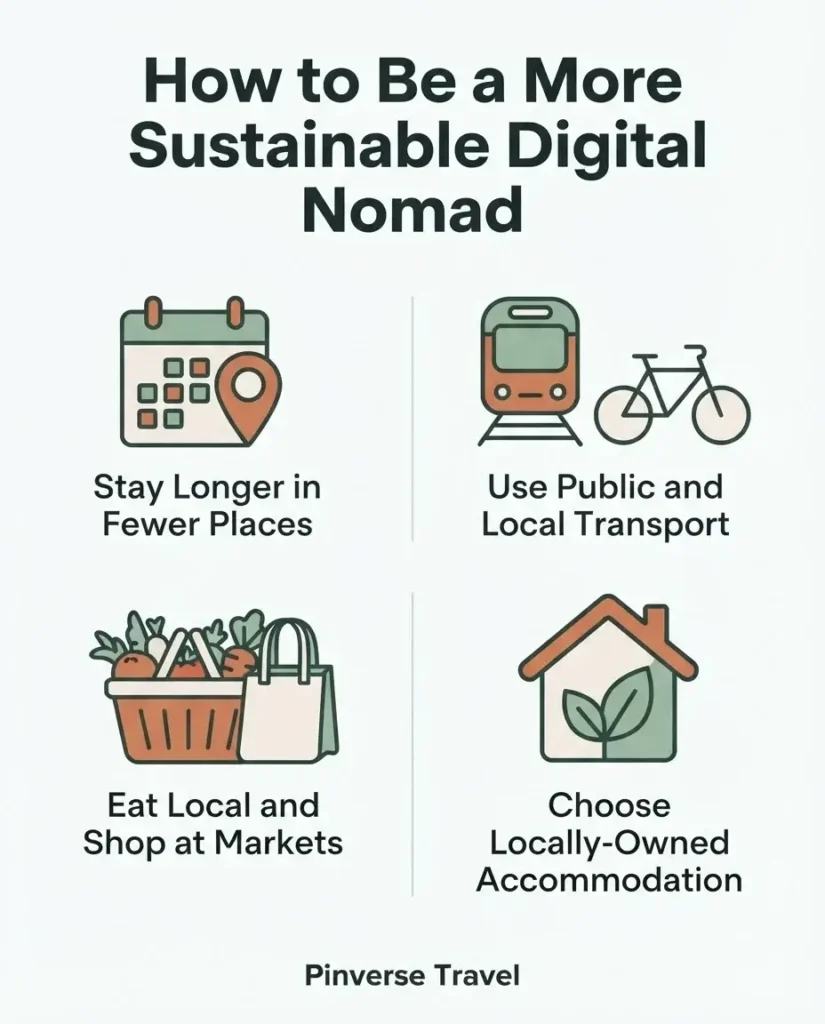
Stay longer. This is the single biggest lever. Three months in one place means one flight instead of three. It means you learn how to navigate the city by foot and local transit. It means you become a regular at a local restaurant rather than a revolving tourist.
Use local and public transportation as your default. In Ljubljana, cycle. In Medellín, take the metro. In Tbilisi, take the metro and marshrutky. Renting motorbikes and taking taxis everywhere might feel convenient, but the transport system of a city is one of its key sustainability investments. Use it.
Eat local and shop at markets. This isn’t just about experience. It directly benefits small producers, keeps money in the local economy, and typically involves far less packaging than international or convenience options.
Choose accommodation intentionally. A locally-owned guesthouse or long-term apartment rental where you’re paying a local family is a materially different economic act than a booking on a platform-owned short-term rental that contributes to housing displacement.
Final Thoughts: Where Values and Practicality Overlap
I don’t think the digital nomad lifestyle and environmental responsibility are fundamentally incompatible. But I do think you have to be honest with yourself about the trade-offs and deliberate about the choices that actually matter.
The destinations in this guide aren’t perfect. No destination is. What they offer is a combination of genuine environmental credentials, practical remote work infrastructure, and the kind of depth that makes staying worthwhile. Ljubljana for European structure and green policy leadership. Medellín for urban transformation and Latin American energy. Tbilisi for radical simplicity and one of the world’s most welcoming cultures. Oaxaca for cultural richness and the kind of slow immersion that changes how you see things.
The perfect time to make a more intentional choice about where you live and work isn’t coming. It’s right now, with whatever booking window is in front of you. Pick somewhere meaningful. Stay longer than you planned. Learn how the city works from the inside. That’s where the good stuff is, and it happens to be easier on the planet too.