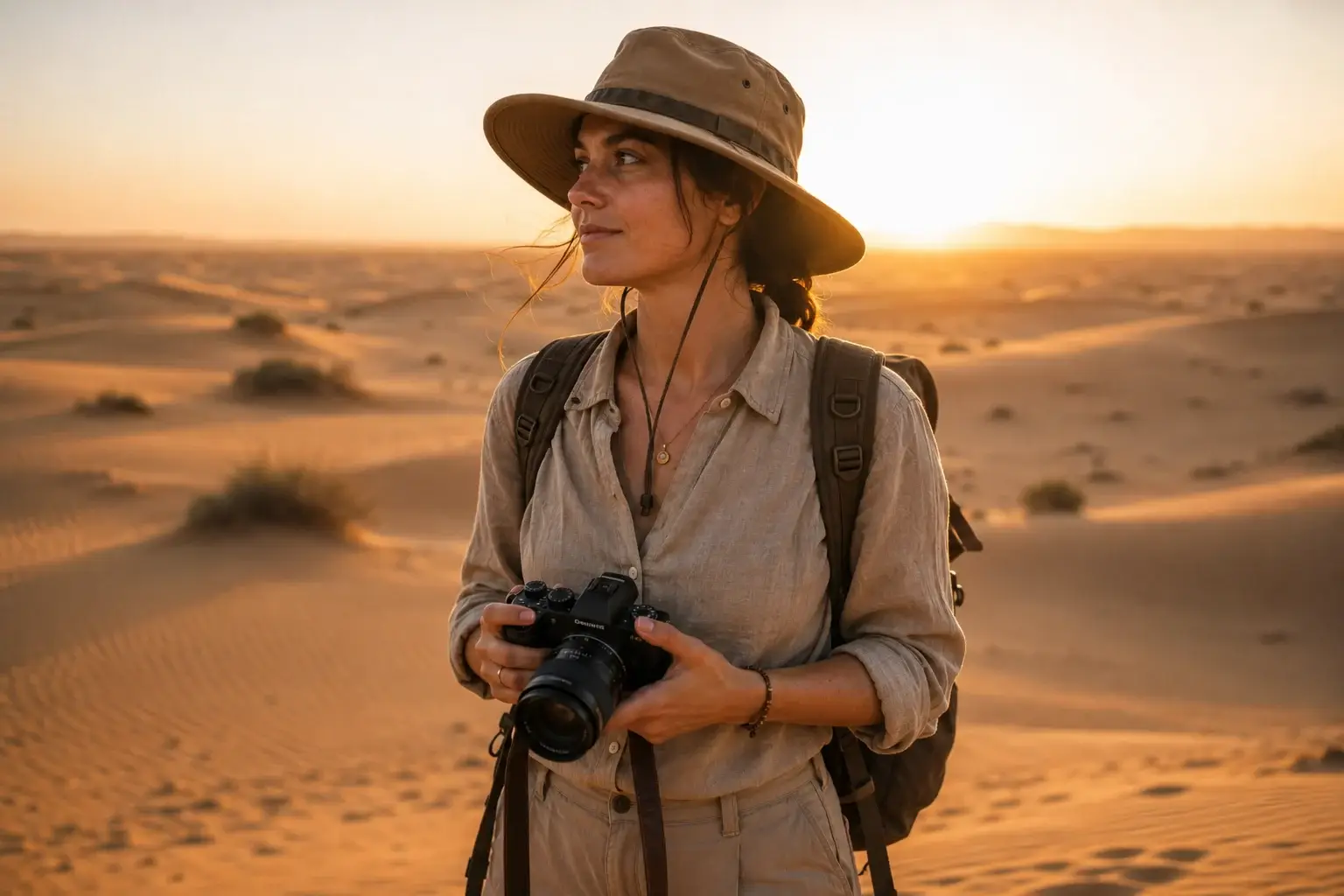
I remember sitting in my tiny, windowless office in New York City, staring at a calendar and counting down the days until my next vacation. I felt trapped by the rigid routine of the 9-to-5 grind, dreaming of vast horizons and the silence of a landscape that hadn’t been paved over. That restlessness is what eventually pushed me to trade my heels for hiking boots and start my life as a full-time traveler.
One of the most transformative experiences of my life was stepping off a plane into the shimmering heat of a desert. It was a complete sensory reset. But I’ll be honest—I was terrified. I had no idea how to pack for an environment that could drop from 100°F during the day to freezing at night, or how to manage water, sun exposure, and navigation on my own. If you’re feeling that same mix of nervous energy and excitement, you’re in the right place. Packing for these regions isn’t just about what fits in your bag; it’s about preparation, respect, and learning to thrive where most people think you can’t.
The Foundation: Thinking Like a Desert Traveler
When you’re packing for a city break in Europe, it’s easy to focus on aesthetics. In the desert, you have to prioritize survival and functionality. The desert is a harsh teacher, but it rewards those who show up prepared. My biggest mistake early on was overestimating my own endurance and underestimating how quickly an environment can turn on you.
Before you even start picking out clothes, look at the big picture of where you’re going. Is it a sandy expanse, a rocky plateau, or a high-altitude desert? Each requires different gear. You should always cross-reference your specific destination against the official safety ratings and entry requirements on the US Department of State Travel website to ensure you know the political and safety climate of the region you’re visiting. Knowing you have your legal and safety bases covered allows you to focus your mental energy on the practicalities of the terrain itself.
Clothing Strategy: The Art of Layering
The biggest myth about desert travel is that you should wear as little as possible. In reality, the best approach is to cover up. You want loose-fitting, breathable fabrics that act as a shield against the relentless sun and the abrasive sand.
Fabrics That Save You
Forget denim. Jeans are the enemy in the desert. They hold sweat, they chafe, and they take forever to dry. Instead, look for synthetic blends or high-quality linens that wick moisture away from your skin. I live by lightweight, long-sleeved hiking shirts with UPF protection. They keep the sun off your skin, which actually keeps you cooler than being exposed.
The Temperature Swing
Desert nights are notoriously cold. Even if the day is blistering, you need a high-quality fleece or a down jacket that packs down to nothing. I’ve spent many nights shivering because I assumed “desert” meant “heat.” Don’t make that mistake. Your layering system should be:
- Base: Moisture-wicking tee or tank.
- Mid: Long-sleeve breathable shirt (the “sun-shield”).
- Outer: A lightweight shell for wind and a warm layer for the night.
Footwear: Why Your Feet Are Your Priority
In a city, you can hail a cab if your feet hurt. In the middle of a desert, your feet are your only form of transportation. I’ve learned the hard way that cheap, un-broken-in shoes are a recipe for disaster. You need sturdy, mid-height hiking boots that provide ankle support, especially if you’re walking on shifting sand or uneven rocky ground.
Sand is sneaky; it finds its way into everything. Consider wearing gaiters over your boots to keep the grit out. Blisters are not just an annoyance in the desert; they can become infected incredibly fast in the heat. Pack a small, dedicated foot-care kit with moleskin and antiseptic. If you’re planning on visiting a major site, you can look up the details on the UNESCO World Heritage site to see if the terrain is mostly pathways or rugged wilderness, which will help you decide if you need a heavy-duty boot or a lighter trail runner.
Hydration and Nutrition: Fueling the Adventure
Hydration is your religion in the desert. Never rely on the hope that you’ll find water along the way. I carry a 3-liter hydration bladder in my pack and at least one 1-liter steel bottle for electrolytes.
The Salt Factor
Drinking plain water isn’t always enough. When you’re sweating buckets, you’re losing vital salts. I always carry electrolyte powder packets. They don’t take up space, and they can be the difference between a minor headache and full-blown heat exhaustion.
Food That Withstands the Heat
Skip the chocolate. It will melt into a mess. Think about high-energy, heat-stable snacks:
- Nuts and seeds (almonds, walnuts).
- Dried fruits (apricots, dates).
- Beef or plant-based jerky.
- Hard cheeses that hold up well for a few hours.
If you’re eating at local villages or markets, stay curious but cautious. It’s always smart to check the CDC Travelers’ Health portal before you depart to see if there are specific food and water warnings for your destination. It’s better to be informed than to spend your trip in a tent recovering from a stomach bug.
Sun Protection: Beyond the Sunscreen
The sun in the desert is not the same as the sun at the beach. It reflects off the sand and rocks, hitting you from angles you don’t expect.
- Wide-Brimmed Hat: It must have a chin strap. Desert winds are no joke, and losing your hat in a canyon is a headache you don’t need.
- Polarized Sunglasses: The glare off the sand can cause serious eye strain. A good pair of sunglasses is a piece of safety gear, not a fashion accessory.
- Lip Balm with SPF: Your lips will dry out and crack faster than you can blink. Apply this every two hours, without fail.
The Solo Traveler’s Safety Kit
Traveling solo gives you freedom, but it also means you are the first and last line of defense. When I pack my gear, I think about what happens if I twist an ankle or get turned around.
Always carry a satellite messenger or a personal locator beacon if you’re heading off the beaten path. It’s an investment, but for a solo traveler, it provides peace of mind that allows you to actually enjoy the experience. Additionally, keep a paper map and a compass. Technology fails—batteries die in the heat, and GPS signals can be spotty in deep canyons.
I also recommend looking into insurance that specifically covers adventure travel. You can find useful information on the World Nomads Travel Insurance site regarding what level of coverage is appropriate for the activities you’re planning. It’s the kind of thing you hope you never need, but it’s essential for that sense of self-reliance I constantly preach.
Navigating the Environment
When you arrive at your destination, the best way to orient yourself is to spend the first few hours observing how the locals move. How do they handle the heat? Where do they hang out during the mid-day sun?
If you’re in a city near the desert, check to see if the city has reliable ride-sharing services. For instance, in many developing regions, understanding how Grab works for travelers can be a massive weight off your shoulders, as it removes the stress of haggling for prices and navigating language barriers in public transit.
When you go out into the wild, always tell someone your plan. Even if you’re a seasoned solo traveler, leave your itinerary with your hostel or a friend back home. It sounds simple, but it’s the most important safety rule I follow.
Embracing the Challenges
I’ve been stuck in a sandstorm, I’ve had my water bottle leak in my bag, and I’ve felt completely overwhelmed by the vastness of the desert. But these moments taught me more than any guidebook ever could. They taught me to pause, to breathe, and to adapt.
The desert isn’t trying to defeat you; it’s just existing. When you pack for the desert, you’re packing for a relationship with an environment that requires you to be humble. Don’t worry if you look a little dusty or if your hair is a mess. That’s just part of the experience. The goal isn’t to look perfect; it’s to move through the world with enough confidence to know that whatever happens, you’ve got the tools—and the mindset—to handle it.
Organizing Your Pack
I’m a firm believer in using packing cubes. They keep your gear organized by function, not just type. I have a “desert essentials” cube that stays in my bag, filled with my headlamp (always, always bring a headlamp, even if you think you’ll be back before dark), extra batteries, a multi-tool, and a first-aid kit.
When you’re in the desert, your pack should feel like an extension of yourself. If it’s too heavy, you’ll be miserable. If it’s too light, you’ll be underprepared. Aim for the middle ground. Keep your water and snacks accessible without having to unzip your main compartment. Every time you have to take your bag off to find something, you’re exposing your gear to sand and sun.
Final Thoughts on Your Adventure
Travel is about curiosity, and the desert is the ultimate place to be curious. It forces you to slow down. It demands that you listen to the wind, notice the subtle shifts in light, and respect the delicate ecosystems around you.
Don’t wait for the “perfect” time to book that trip. If you’re worried about the heat, go in the shoulder season. If you’re worried about safety, stick to well-marked trails first. Your confidence will grow with every mile you walk. You are more capable than you think, and the world is much bigger and more beautiful than the routine you’re living in right now. Pack your bags with care, keep your head on a swivel, and go out there and create your own story.