How to Maximize Savings on Flights and Hotels This Year

I want to tell you about the version of me who almost didn’t travel at all.
Back when I was sitting at a desk in New York, counting my two weeks of vacation like they were gold coins, I believed travel was something for people with more money than me. Then I actually started doing it, working flexible jobs to fund it, backpacking Europe on a shoestring, teaching English in Thailand, living with a family in Ghana, and I learned something that changed everything. The people who travel the most are almost never the richest. They’re the ones who learned how to stop overpaying.
Flights and hotels are the two biggest line items in almost any trip. If you can shrink those two numbers, you don’t just save money. You unlock more trips, longer trips, and the freedom to say yes when an opportunity shows up. So let’s talk honestly about how to maximize savings on flights and hotels, without the confusing myths, the sketchy hacks, or the advice that quietly assumes you have a companion to split every bill with.
First, Let Go of the Myths That Keep You Frozen
Before we get to the good stuff, I need to clear away the noise, because bad advice costs you more than no advice.
You’ve probably heard that there’s one magic day of the week to book, or that clearing your cookies or using a VPN unlocks secret cheap fares. I understand why these stories spread. They make a chaotic system feel controllable. But the truth is messier and, honestly, freeing once you accept it. Airfare prices move constantly based on demand, seat availability, competition, and time until departure. There is no single trick that beats all of that.
Here’s what I want you to internalize: your goal is not to find the theoretical lowest price that ever existed. That way lies madness and missed trips. Your goal is to consistently pay a fair, low price and then book with confidence. Perfect is the enemy of booked, and a trip you actually take beats a hypothetical bargain you kept waiting for.
When to Book Your Flight (The Part Everyone Gets Wrong)
Timing matters more than any gimmick, so let’s get specific.
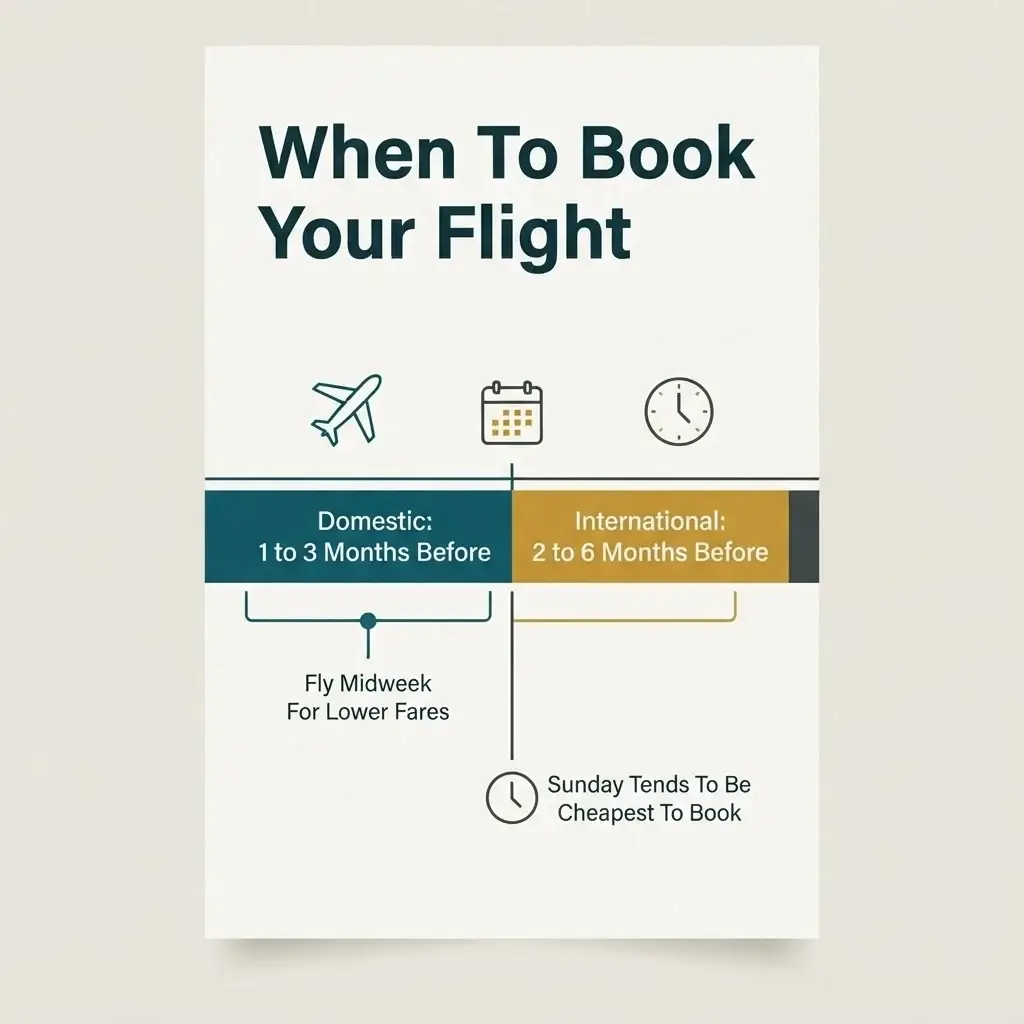
For domestic flights, the sweet spot for most trips is roughly one to three months before departure. For international flights, widen that window to about two to six months out, and stretch it further for peak-season travel like summer in Europe or the winter holidays. Book too late and you’re paying the desperate-traveler premium. Book absurdly early, like a year out, and you’re often seeing prices before the airline has released its cheaper fare buckets.
Now, about the “best day to book.” The old advice said Tuesday. Newer data disagrees. According to the analysis in Expedia’s 2025 Air Hacks Report, which studied real booking data, Sunday now tends to be the cheapest day to book for both domestic and international trips. Does that mean you should refuse to book on a Wednesday? No. The difference is usually small, a few percent. Treat it as a tiebreaker, not a religion. If you’re already comfortable with a price on a Tuesday, book it.
The bigger lever is when you fly, not when you book. Midweek departures, especially Tuesdays and Wednesdays, and early-morning or red-eye flights are reliably cheaper than Friday-evening and Sunday-return slots when everyone else wants to move. When I backpacked through Europe, my whole itinerary bent around flying and moving on the “boring” days. It saved me real money and, as a bonus, meant emptier trains and quieter hostels.
Track Prices Instead of Refreshing Them
You do not need to check fares fifty times a day. Let the tools watch for you.
My core routine is simple. I pick my route and rough dates, then I set a price alert and let it do the worrying. Google Flights’ price tracking will email you when the fare for your route goes up or down, so you learn what “normal” looks like for your trip and can pounce when it dips. Watching a route for a week or two teaches you more than any article ever could, because you see the actual price rhythm with your own eyes.

A few habits that stack on top of this. Search with flexible dates turned on so you can see a whole calendar of prices at a glance. Check nearby airports, because flying into a secondary airport an hour away can slash the fare, though you’ll want to factor in the cost and safety of getting from that airport to your accommodation, especially as a solo traveler arriving at night. And always compare a round-trip booking against two separate one-way tickets, sometimes even on different airlines, because the combination can beat the “official” round trip.
The Money-Saver Almost No One Uses: Know Your Refund Rights
This is the section I wish someone had handed me years ago, because it’s not a hack. It’s the law, and it puts cash back in your pocket.
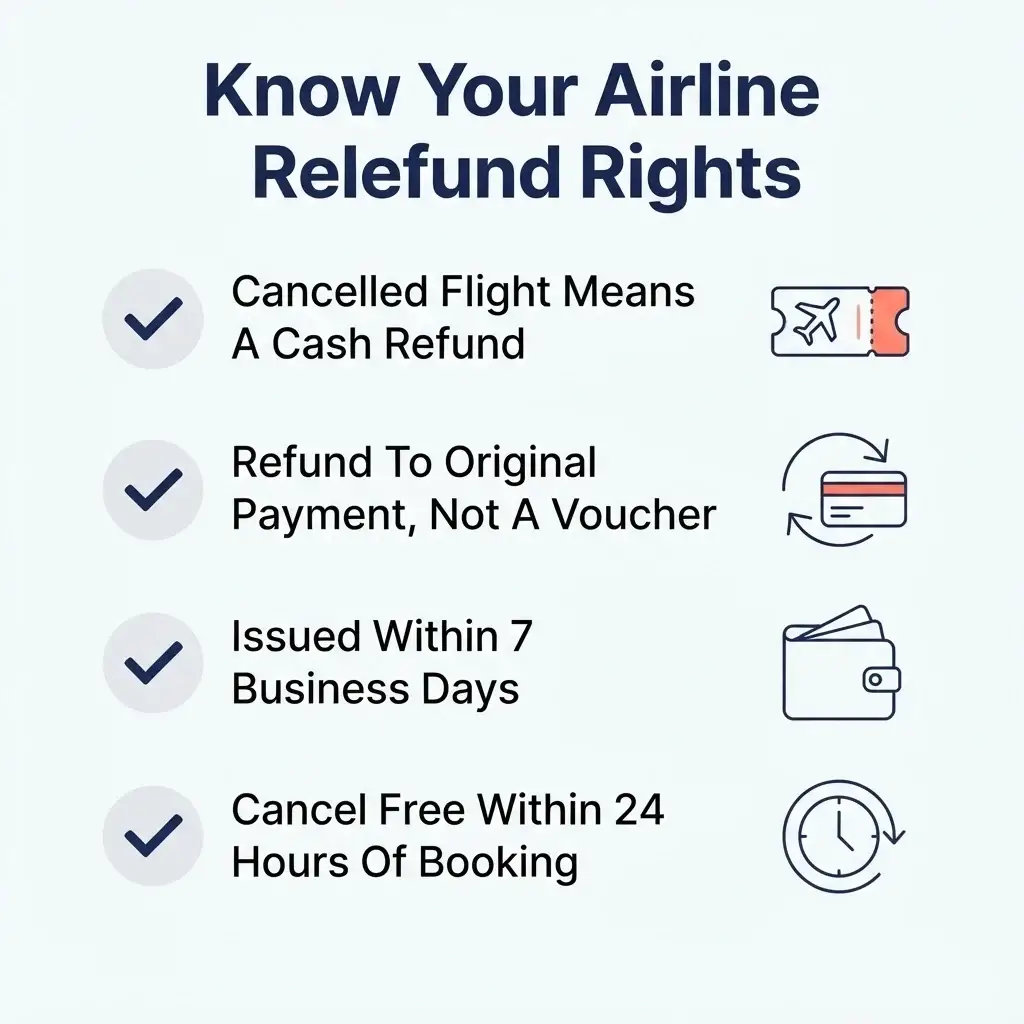
If an airline cancels your flight or significantly changes it, and you choose not to take the alternative they offer, you are entitled to an actual refund to your original payment method, not a voucher you’ll forget to use. Under current US Department of Transportation rules, these refunds are required to be automatic and prompt, issued within seven business days for credit-card purchases. Airlines are counting on you to accept a travel credit out of habit. Don’t, unless a credit genuinely serves you better.
There’s more buried in your consumer rights. Most major US airlines let you hold or cancel a booking within 24 hours of purchase for a full refund, which is a quiet superpower. It means you can book a good fare now to lock it in, then keep checking for something better for a day without risk. The DOT’s own consumer guide to air travel spells out this 24-hour rule along with your protections around overbooking and delays. Reading it once will make you a calmer, savvier traveler for life.
About Those “Advanced” Hacks (An Honest Take)
Let’s talk about the tactics that get whispered about in travel forums, because you deserve the full picture, risks included.
Mistake fares, also called error fares, are real. Sometimes an airline or booking site publishes a wildly wrong price, like an international business-class ticket for the cost of a nice dinner. People do snag them. But they’re unpredictable, often cancelled by the airline before you fly, and not something you can build a plan around. If chasing them sounds fun, treat it as a lottery ticket, never as your actual travel budget.
Hidden-city ticketing, where you book a flight with a layover in your real destination and simply skip the final leg, can look cheaper on paper. I’m going to be straight with you: it comes with genuine downsides. You can’t check a bag, your return can get cancelled if you skip a leg on a round trip, and airlines actively dislike it and can penalize frequent use. For most travelers, and especially for a solo traveler who values a smooth, low-stress trip, the small savings rarely justify the hassle and risk. I’d rather you sleep well the night before your flight.
Now for Hotels: Where the Real Solo Savings Hide
Flights get all the attention, but accommodation is where solo travelers quietly get squeezed, because you’re covering a room built and priced for two. Here’s how I fight back.
First, understand that the price you see is finally becoming the price you pay. Thanks to the FTC’s junk-fees rule targeting hidden hotel and resort fees, lodging providers are now required to show the all-in total, including mandatory resort fees, up front rather than ambushing you at checkout. This matters for saving money because it finally lets you compare hotels honestly. A room that looked ten dollars cheaper used to balloon with a surprise fee. Now you can trust the number you’re comparing.
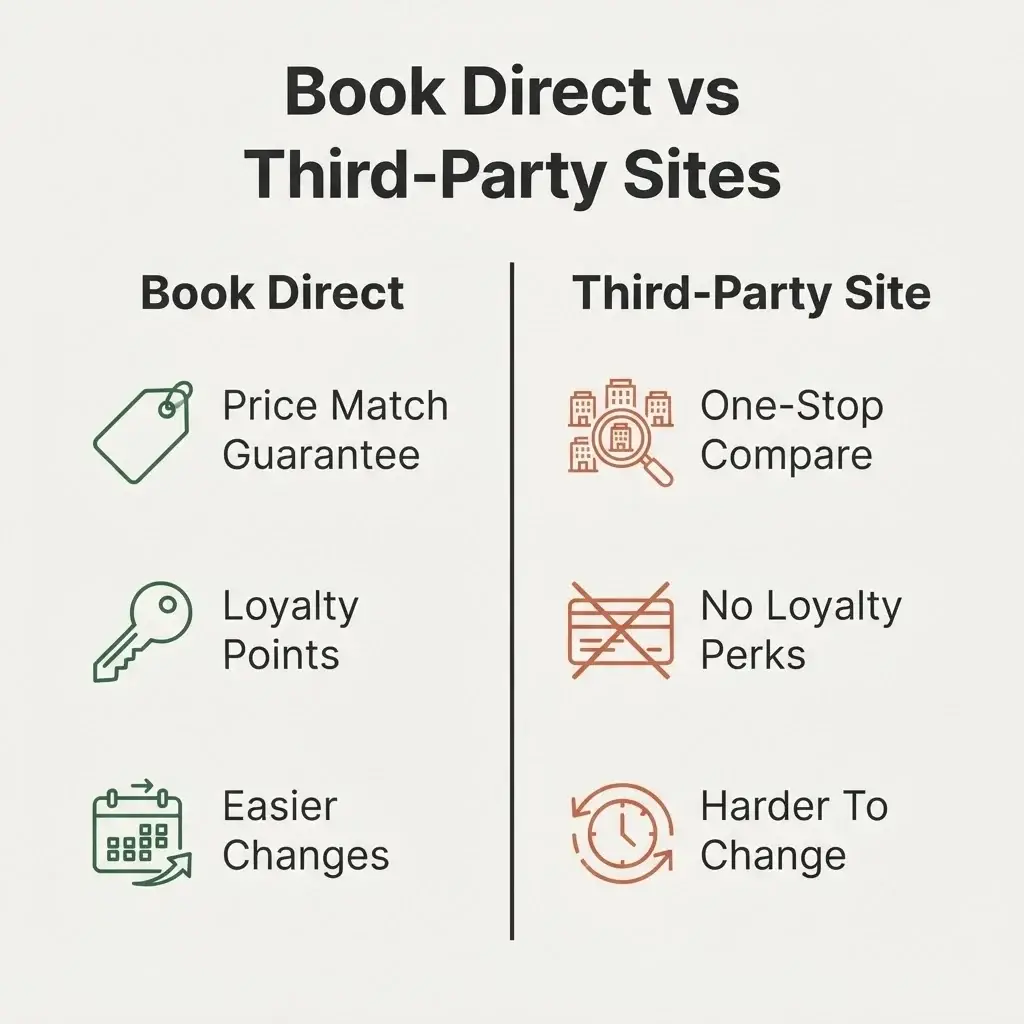
Second, book direct more often than you think. The big chains want you off the third-party sites, so they offer real incentives to book on their own channels. Hilton’s price-match guarantee will match a lower qualified rate you find elsewhere and knock a bit more off on top, and IHG runs a similar best-price guarantee that matches the rate and hands you bonus points. Booking direct also makes you a real customer to the hotel rather than an anonymous reservation, which helps enormously if you need to change plans, and it’s the only way to earn and use loyalty benefits.
Think Beyond Hotels Entirely
Some of my favorite, cheapest, and most human stays have never been hotels at all.
Modern hostels are not the cramped bunk-room stereotype. Many offer clean, lockable private rooms for far less than a hotel, plus a built-in social scene that is honestly a gift when you’re traveling alone. When I was moving through Europe by myself, hostels were where I found dinner companions, hiking buddies, and the local tips no guidebook had. Guesthouses and family-run places, like the kind of home I stayed in while living with a family in Ghana, often cost less and give you a warmth and cultural immersion that a chain simply can’t.
For longer stays, apartment-style rentals let you cook, which quietly saves a fortune. My rule of thumb: for one or two nights, a well-located room near transit is worth paying a little more for, because your time and safety matter. For four nights or more, an apartment with a kitchen usually wins on both cost and comfort. And always, always weigh a cheaper neighborhood against how safe and easy it is to get back there after dark. A bargain that leaves you anxious walking home at night is not a bargain.
Timing Your Whole Trip, Not Just the Booking
The single biggest lever on your total cost isn’t a flight trick or a hotel code. It’s when you go.
Shoulder season, the shON THEse quieter weeks just before or after peak, is my not-so-secret weapon. You get lower flight and hotel prices at the same time, thinner crowds, and locals who have the breathing room to actually talk with you. Traveling to a beach town right after the summer rush or a city in early spring can cut your two biggest costs together while making the experience richer, not poorer. This is where flights and hotels stop being two separate puzzles and become one connected plan: pick a smart season first, and both prices drop for you at once.
Be flexible on the destination itself, too, if your real goal is simply to travel. Some of the most rewarding trips I know of started with a traveler asking “where is cheap to fly right now?” instead of fixating on one place. Curiosity and a flexible mindset are, genuinely, budget tools.

Points and Cash, Without the Obsession
You don’t need to become a full-time points hobbyist to benefit, and I’d gently steer you away from that rabbit hole if it stresses you out.
Here’s the simple version. Pick one airline alliance and one hotel loyalty program that actually match where you tend to go, and concentrate your bookings there so your points build into something usable. A no-annual-fee travel rewards card, used responsibly and paid off in full every month, quietly earns points on spending you’d do anyway. But please hear the honest caveat: points are only “free” if you’re not carrying a balance or chasing sign-up bonuses into debt. If juggling all that drains your energy, ignore it entirely and just get good at the timing and comparison habits above. Those alone will save you more than most people ever earn in points.
Putting It All Together
If this feels like a lot, let me shrink it into the mindset I actually carry with me. Watch prices instead of guessing. Book domestic one to three months out and international two to six, aiming to fly midweek. Know your refund rights and never accept a voucher on autopilot. Compare hotels now that the full price is finally visible, book direct to unlock guarantees, and stay open to hostels, guesthouses, and apartments. And above all, choose a smart season, because that one decision quietly discounts everything.
The reason I care so much about this isn’t the money for its own sake. It’s what the money buys back: another trip, a longer stay, the freedom to keep exploring. Every dollar you don’t overpay is a dollar that funds the next adventure. You don’t need to be rich to see the world. You just need to stop leaving money on the table, and then go.