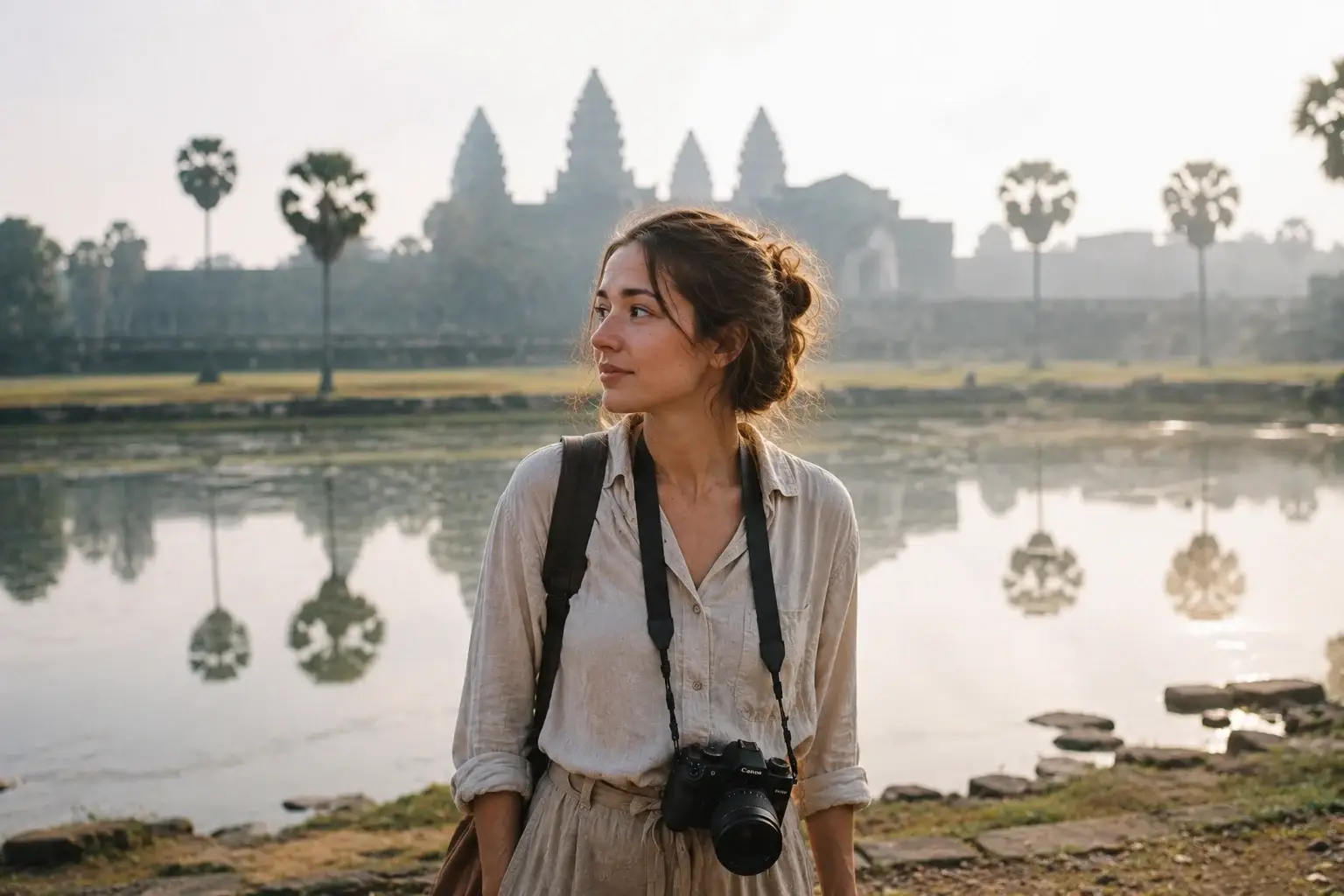
I remember standing in my tiny New York apartment, staring at a massive, hard-shell suitcase that weighed nearly as much as I did. I was heading off for my first solo backpacking trip through Europe, and I was terrified. I thought I needed to bring my entire life with me “just in case.” I packed three pairs of shoes I never wore, a hairdryer that didn’t work with the local voltage, and enough clothes for a month, even though I was only gone for two weeks.
That trip was a lesson in humility. By the second day, I was lugging that heavy bag over cobblestone streets in Rome, sweating, frustrated, and missing out on the beauty around me because I was so focused on my gear. I learned the hard way that when you carry your home on your back, you cannot truly be present in the world.
Over the years—through teaching English in Thailand, living with a host family in Ghana, and working as a guide back home—I’ve completely overhauled how I prepare. I stopped looking at packing as a chore and started looking at it as an exercise in freedom. I began hunting for tips, and yes, I spent hours looking at those viral infographics and packing hacks Pinterest boards. While some of them are just fluff, I found a handful of strategies that actually work. These are the methods that allow me to travel indefinitely with nothing but a carry-on, keeping me nimble enough to catch a last-minute train or walk three miles to a quiet, local neighborhood cafe.
The Philosophy of Packing Light
Before we talk about folders and cubes, let’s talk about why we pack the way we do. Most of us pack out of fear. We fear being cold, being hungry, or not having the “perfect” outfit for a photo. But when you travel solo, you realize that the world is full of shops and resources. Unless you are heading into the deep wilderness, you can usually buy what you forget.
The biggest secret I learned from seasoned travelers on community boards is to lay out everything you think you need, and then put half of it back. It sounds like a cliché, but it is the golden rule of mobility. When you aren’t fighting with a giant bag, you are more approachable. You look like a traveler, not a tourist. You can take local transport instead of expensive taxis. Speaking of moving around, I always suggest checking the official resources on how the Grab app works for travelers if you are heading to Southeast Asia; it completely changed how I navigate cities like Bangkok without needing to haggle with tuk-tuk drivers. It’s one of those digital tools that feels like a physical packing hack because it keeps your mind clear of logistical stress.
Mastering the Art of the Roll
You have probably seen this on every social media platform, but rolling your clothes is non-negotiable. Folding clothes creates air pockets, and those pockets are dead space. When you roll your items—tightly—you create solid, dense cylinders of fabric.
I use this for everything: t-shirts, leggings, and even my heavier sweaters. The trick is to lay the garment flat, fold the sleeves in, and roll from the bottom up. Once you have a tight roll, you can stack them like logs in your bag. This not only saves space but makes it incredibly easy to see exactly what you have at a glance. You never have to dig to the bottom of your bag and ruin your perfect stack.
The “Packing Cube” Revolution
If you search for packing hacks Pinterest enthusiasts swear by, you will inevitably find packing cubes. At first, I thought they were just another way to sell us more gear. Then I tried them, and I was converted.
Think of packing cubes as drawers for your suitcase. I use three distinct cubes: one for tops, one for bottoms, and one for undergarments. This keeps my bag organized even after living out of it for a week. When I arrive at a hostel or a hotel, I don’t have to unpack everything. I just pull out my cubes and place them in the drawer. If I need to go through security, I don’t have to worry about my personal items being exposed to the world. It’s about maintaining your dignity and your sanity.
Managing Your Health and Safety
Part of being a responsible solo traveler is preparing for the unexpected. I never leave home without doing a little research on the health landscape of my destination. Before any major trip, I always verify health advisories and vaccine requirements via the CDC Travelers’ Health website. They provide the most reliable data on what you might need to stay safe, from food-borne illness prevention to regional disease risks.
Packing a small “just-in-case” kit is essential. I keep this in a separate, small pouch inside my main bag. It contains basic pain relievers, band-aids for the inevitable blisters that come from walking all day, and a small tube of antiseptic. I don’t go overboard, but having these items accessible means I don’t have to wander into a foreign pharmacy and try to explain my needs in a language I don’t speak well.
Choosing the Right Fabrics
Another common mistake I see new travelers make is packing cotton everything. Cotton takes forever to dry and gets heavy when damp. If you are traveling through humid climates like Thailand, cotton can be your enemy.
Look for merino wool or synthetic blends. I have a few merino wool shirts that I can wear for three days in a row without them holding onto odors. They breathe, they wick sweat, and they dry overnight if you need to sink-wash them. This is the ultimate hack: bringing fewer clothes that perform better. If you are planning a cultural trip to a place with specific religious sites, keep a lightweight sarong in your bag. It weighs almost nothing, but it serves as a skirt, a blanket on a cold bus, or a towel in a pinch. It’s the most versatile item I own.
Dealing with Documents and Visas
I’ve had moments where my heart stopped because I thought I’d lost my passport. Now, I keep my documents in a dedicated, waterproof sleeve. I also carry physical copies of my passport, visas, and proof of travel insurance. While digital copies are great, sometimes the internet fails, or your phone battery dies exactly when you need to prove your entry status.
It is also crucial to stay updated on current entry requirements. I make it a habit to check the US Department of State Travel portal to see the latest safety ratings and entry rules for every country on my list. It’s a simple check that keeps you from being denied boarding at the gate or caught in a political situation you didn’t know about. A well-prepared traveler is a confident one, and confidence is your best tool for navigating the world solo.
The Electronics Trap
We all carry more technology than we need. I used to pack a laptop, a tablet, and a massive camera rig. Unless you are a professional photographer or a digital nomad working on high-end video editing, you probably don’t need all of that.
I’ve switched to a simple smartphone with a high-quality camera and a lightweight power bank. If you do bring electronics, use a single organizer pouch for your cables. I use rubber bands to keep my cords from tangling, or I use small velcro strips. There is nothing worse than arriving at a hotel after a ten-hour train ride and spending forty minutes untangling a mess of USB cables. Keep them together, keep them labeled, and keep them dry.
Cultural Immersion and Respect
When I travel, I try to pack with the local culture in mind. In many parts of the world, dressing respectfully opens doors. If you are visiting a site designated as a UNESCO World Heritage area, you are a guest in a place of deep historical and cultural significance. Dressing in a way that respects the local customs shows that you aren’t just there to take photos, but to learn.
I’ve learned that carrying a light scarf or a light jacket is a simple way to adapt to dress codes on the fly. You might be in a bustling city in the morning and a sacred temple in the afternoon. Having one item that can change the tone of your outfit is a game-changer. It’s not about changing who you are; it’s about honoring the home of the people you are visiting.
Navigating the Challenges
Solo travel isn’t always the dream-like version you see on social media. It can be lonely, exhausting, and stressful. Sometimes you miss your bus, or you get a stomach bug, or you feel like you just want to go home. That is completely normal.
I always suggest having some form of backup, whether that is a physical notebook with important addresses or a solid travel insurance policy. I personally find that World Nomads travel insurance provides great resources for travelers who are looking to understand their coverage and stay safe while on the road. Knowing that you have support if something goes wrong is a huge weight off your shoulders, and it allows you to be more daring with your itinerary.
A Note on Toiletries
This is where most people fail. You don’t need the full-sized shampoo bottle. You can buy soap, shampoo, and toothpaste anywhere. I carry solid bars of shampoo and soap—they last forever, they don’t leak in my bag, and they don’t count toward my liquid limit at airport security.
If you are a skincare enthusiast, buy small, reusable silicone containers. Don’t buy the “travel size” versions at the store, which are usually overpriced and create a lot of plastic waste. Invest in a good set of refillable bottles once, and they will last you years.
The “Departure Day” Checklist
On the day I leave, I have a specific routine. I check my bag to make sure my “essential” pocket is stocked. That pocket always has my passport, my wallet, a pen (you’d be surprised how often you need a pen for customs forms!), and a small notebook. Everything else is secondary.
If I can reach my most important items without opening my main compartment, I can move through airports and train stations with ease. I don’t panic when I’m asked for my ticket because it’s right there. I don’t get flustered at customs because my passport is in the same place every time.
Staying Inspired and Organized
Remember that the goal of packing is to make your life easier, not to create a rigid system that prevents you from being spontaneous. If you arrive at a beach and decide to spend the day swimming, you shouldn’t be worried about your bag.
Some of the best days I’ve had in Thailand were when I packed my bag, dropped it off at a trusted local guesthouse, and spent the entire day just wandering. I recommend checking the Tourism Authority of Thailand for their official guides, which often include great tips on local etiquette and festival dates. Knowing when a local festival is happening might mean you choose to stay in a town longer, and that is where the magic happens.
Final Thoughts on Travel Gear
You don’t need the most expensive gear. You don’t need the latest tech. You need things that work, things that are reliable, and things that make you feel like yourself. My favorite backpack is one I’ve had for years; it’s patched up in places, but it fits me perfectly. It feels like a companion.
Don’t spend your time worrying about whether your packing is “perfect” according to a viral post. Use these tips as a foundation, but make them your own. If you have a system that works for you, stick with it. If you find that you’re carrying something you never use, leave it behind next time. Every trip is a chance to refine your process.
Travel is about growth. It’s about learning that you are capable of handling whatever comes your way. It’s about the people you meet, the food you try, and the realizations you have when you’re far away from everything you know. Don’t let your luggage be the thing that keeps you from your adventure.
Pack light, stay curious, and remember why you wanted to go in the first place. The world is waiting for you, and it’s much bigger than the space in your suitcase. When you step out of your comfort zone, you aren’t just traveling—you are discovering the best parts of yourself. So, take that first step. Book the ticket. Pack your bag. The journey is yours to define.