How I Learned My Best Airport Hacks for Stress-Free Travel

When I worked as a certified sightseeing guide in New York, I spent my days helping visitors figure out the city, but the conversation that came up over and over was not about the subway or the museums. It was about the airport. People would tell me, half joking and half serious, that JFK or Newark had already worn them out before their vacation even started. I understood exactly what they meant, because a few years later, when I backpacked solo across Europe for the first time, I made almost every airport mistake there is to make. I packed liquids in the wrong spot, sprinted to a gate that had already changed, and once stood at security in a full coat, a belt, and boots I had to practically peel off while a line of people waited behind me.
None of that had to happen. Airports reward a little preparation and punish improvisation, and once I built a repeatable system, they stopped feeling like a test I might fail. Here is everything that system is made of.
Start the Night Before, Not the Morning Of
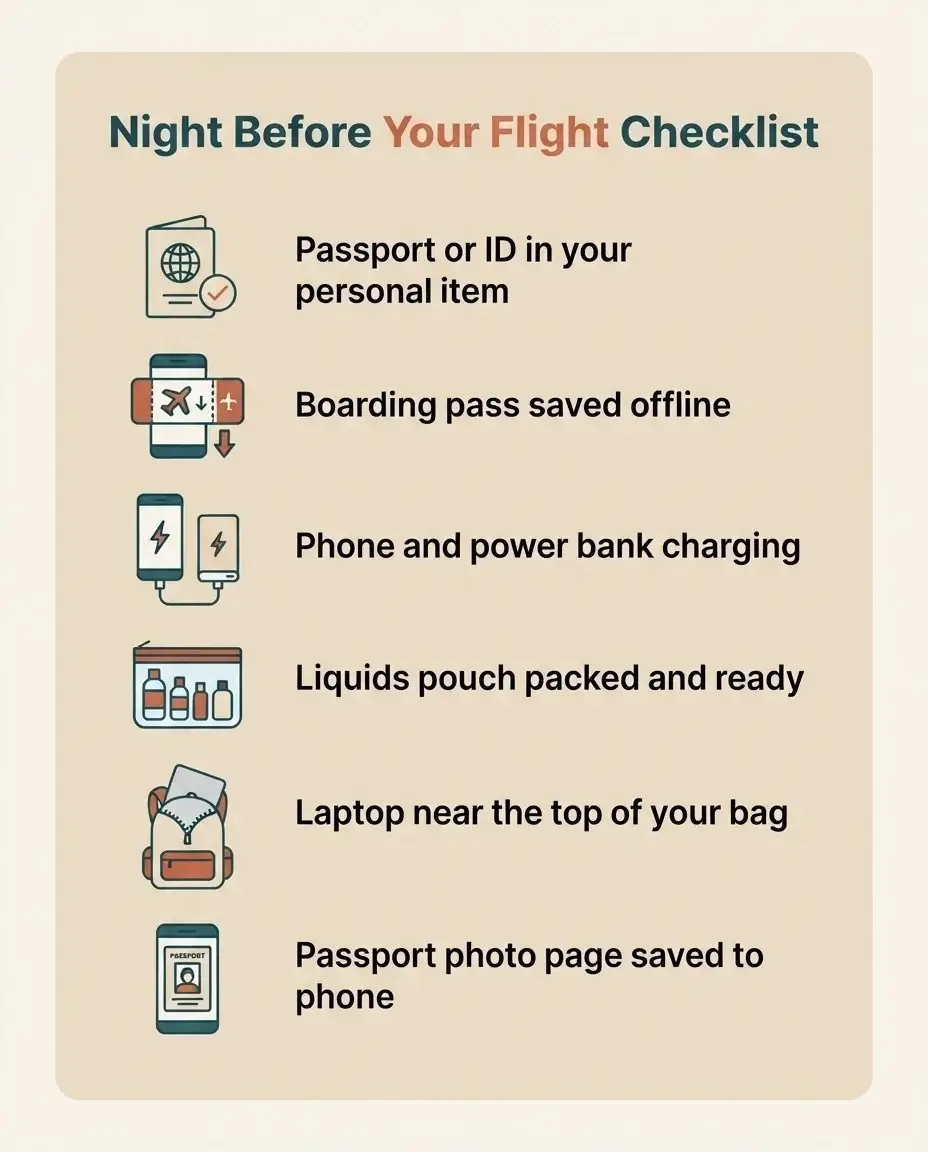
Most airport stress is actually decided the night before you fly, not the moment you walk through the doors. Before I sleep, I do a quick sweep and confirm my passport or ID is in my personal item, my boarding pass is saved offline, my phone and portable charger are charging, and any essential medication is somewhere I can reach without digging.
Documents deserve extra attention if you are flying internationally. Passport validity rules vary by country, some require six months of validity remaining beyond your travel dates, and visa requirements can change without much warning. Before any international trip, I check entry rules well ahead of time rather than at the gate, and a good starting point for this kind of research is the IATA Travel Centre, which compiles passport, visa, and health requirements by route. I also photograph my passport photo page and boarding pass the night before, just in case my phone dies or a form asks for details I cannot recall on the spot.
Packing with security in mind matters just as much as packing with your destination in mind. Liquids belong in one grab-and-go pouch, and under the TSA’s 3-1-1 liquids rule, that means containers of 3.4 ounces or less, all fitting into a single quart-sized clear bag. Laptops and larger electronics should sit near the top of your bag, not buried under three days of clothes.
Time Your Journey to the Airport, Not Just the Flight
It is almost never the flight itself that causes airport stress. It is the commute. General airline and TSA guidance suggests arriving about two hours before a domestic flight and three hours before an international one, and I pad that further for major hubs, holidays, or unfamiliar cities. When I am choosing between transport options, I think less about the cheapest choice and more about the one least likely to fail me: how often does it run, is there a real risk of delay at that hour, and will I need to change lines while hauling a full bag. Sometimes the calmer route is worth the extra few dollars.
Move Through Security Like You Have Done This Before
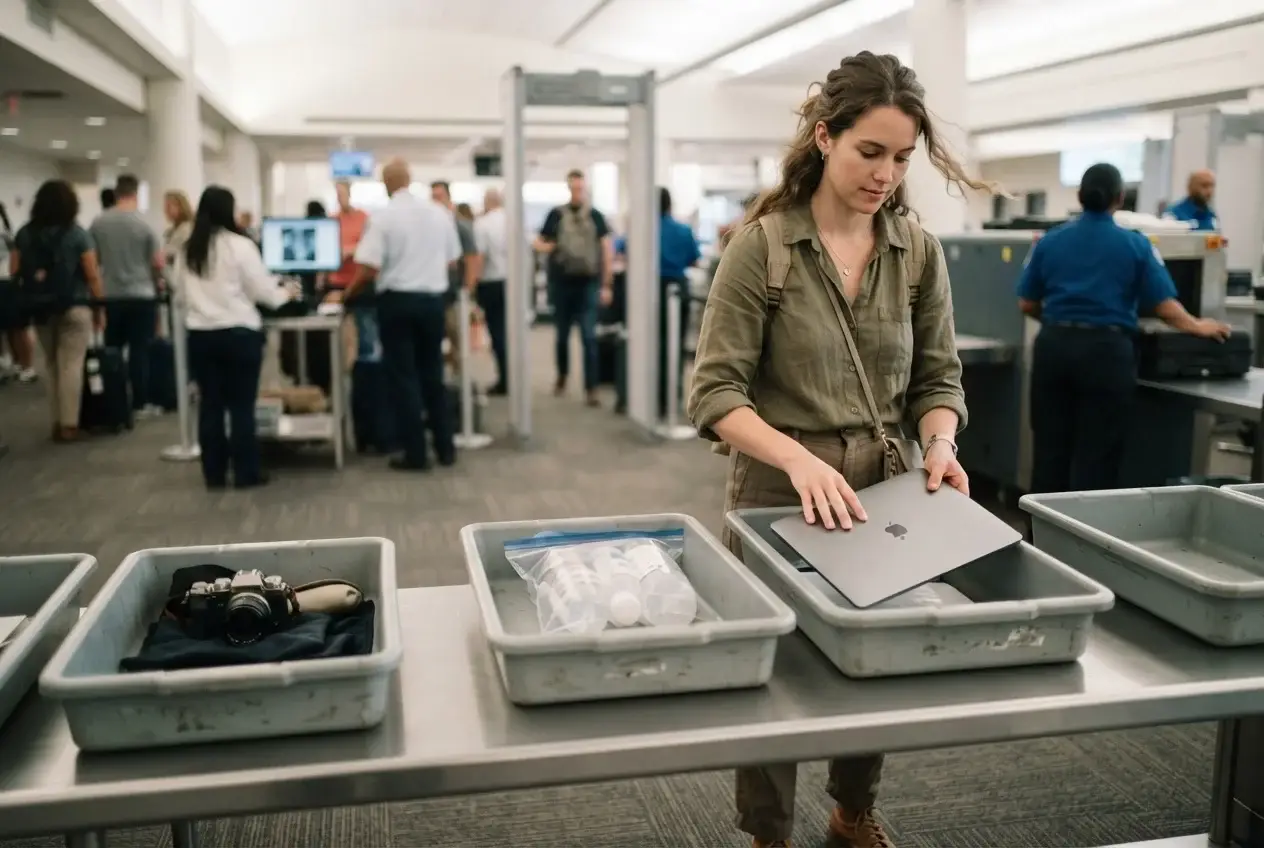
Security is where most travelers feel their heart rate spike, but a few habits change that completely. While still in line, before you reach the bins, empty your pockets into your personal item, remove bulky jackets and belts, and pull your laptop and liquids pouch out so they are ready to place, not dig for. Using more bins than feels necessary, one for shoes, one for your bag, one for electronics, one for loose items, actually speeds you up, because screeners see everything clearly and you are less likely to get flagged for a secondary check.
If you fly a few times a year, TSA PreCheck is genuinely worth considering. Fees shift over time, but at last check it ran about 78 dollars for five years, letting you keep your shoes and light jacket on in a shorter, calmer lane. If you also travel internationally, Global Entry runs closer to 120 dollars for five years and automatically includes PreCheck benefits, plus it speeds up your return through customs. Many travel credit cards reimburse these fees entirely, so it is worth checking before paying out of pocket.
Pack Your Personal Item Like You Will Need Everything Fast
I keep a small pouch inside my personal item with my passport, boarding pass, a pen for paper forms, and a few comfort basics like lip balm and tissues. It travels with me through security, to the gate, and onto the plane, so I am never digging through my whole bag mid-line. Alongside it, I carry a tiny “just in case” kit: an empty reusable water bottle to fill after security, a few snacks, basic pain relief, and an eye mask for long waits. None of this needs to be elaborate. It just needs to protect your energy when the day does not go exactly to plan.

Have a Plan for When Plans Change
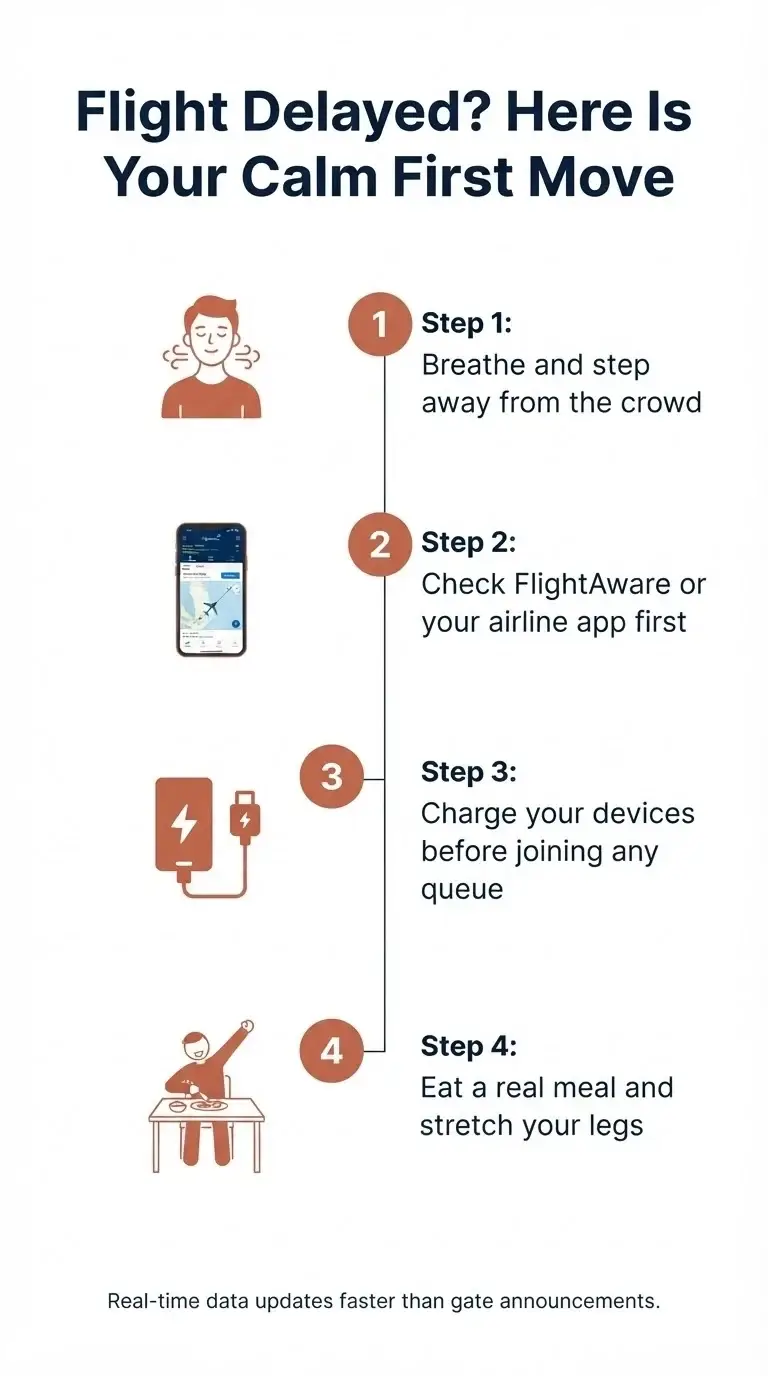
Even a perfect system cannot prevent every delay or gate change. What it can do is give you a calm first move. When something shifts, I take a slow breath, step away from the densest part of the crowd, and check my airline app or a live tracker like FlightAware before joining any line at the counter, since real-time data often updates faster than a gate agent can announce it. If a delay stretches on, I use the time on purpose: charge devices, get a real meal instead of standing at the gate getting more tense, and stretch my legs with a loop of the terminal. Knowing exactly how you will spend delay time removes a surprising amount of its sting.
Make Long Layovers Work for You
A long layover does not have to mean hours in an uncomfortable chair. Many major airports now offer free quiet rooms or rest areas that are calmer than the main terminal, and it is worth checking your specific airport’s website before you fly. If you do not have a paid lounge membership, single-entry day passes are sometimes worth the cost on a long international layover, especially when a shower and a hot meal are on offer. Some of the world’s top-rated airports, based on passenger research from the Airports Council International, even offer free short city tours for travelers with long enough layovers, so it is worth checking whether your layover city allows a quick visit before assuming you are stuck at your gate for six hours.

Build Confidence as a Solo Traveler, Not Just a System
If you are flying alone and still feel a little shaky about it, that feeling is normal, and it fades with practice, not luck. When I was navigating airports solo across Europe for the first time, I did not know which lane to choose or whether I was allowed to ask for help. What I eventually learned is that airports follow a logic. Security always comes before the gate. Gates are always numbered in some order you can trace. Help desks are always staffed. You are rarely as lost as you feel in the moment.
During long solo waits, a few small choices matter. Sit near other travelers rather than in an empty corner, keep your passport and wallet in a zipped pocket close to your body, and if you doze off, loop a strap of your bag around your leg or the chair. None of this is about being paranoid. It is about removing one more thing you have to think about while you rest.
Land Without the Overwhelm
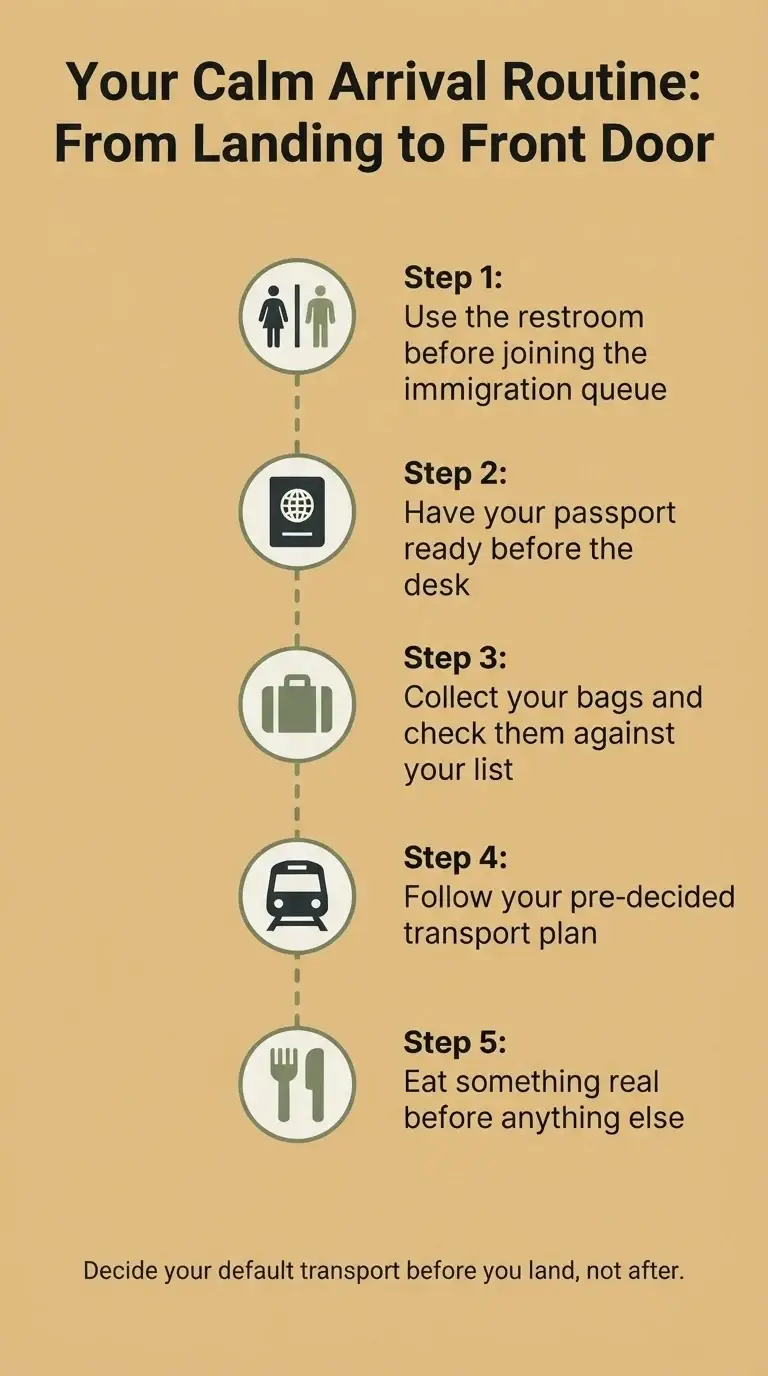
The final stretch after landing is where energy usually dips fastest. Use the restroom before you join the immigration queue if you can, since those lines can run long and you will have more patience without discomfort added on top. Before you fly, decide on one default way to get from the airport to your accommodation, including roughly what it should cost, so you are not making decisions under pressure while exhausted. You can always change your mind once you see better options in front of you, but having a default removes the arrival-day scramble entirely.
Airports are not the obstacle standing between you and your trip. They are simply the part of travel that rewards a little preparation and punishes rushing. Build a system that fits how you actually travel, adjust it after every trip, and you will notice something over time. The airport stops being the hardest part of the story and becomes just the doorway you know how to walk through.