Best Bicycle-Friendly Cities in Europe for Nervous Riders

I still remember the first time I gripped a set of handlebars in a foreign city. My palms were damp, my brain was screaming about which side of the road to use, and a local pedaled past me with a coffee in one hand and zero fear in her eyes. I wanted to be her. And here is the good news I wish someone had told me back then: in the right European cities, becoming her is much easier than it looks.
If you have been daydreaming about seeing a city from the seat of a bike but keep talking yourself out of it, this guide is for you. I am going to walk you through the friendliest cities on the continent for someone who is a little scared, tell you what renting actually costs and how it works in 2026, and share the small habits that turn a nervous rider into a confident one. You do not need to be athletic. You do not need special gear. You mostly need a plan and a little courage, and I can help with both.
Why a bike is the best travel decision you are not making yet
When I was scraping together money between flexible jobs to fund my travels, I learned to love anything that was cheap, immersive, and fun all at once. A bike is all three. It moves faster than walking but slower than a train window, which means you actually notice things: the smell of a bakery, a side street you would never have found, the way a neighborhood changes block by block. It costs a fraction of taxis and tours. And for a solo traveler, it gives you a wonderful sense of control over your own day.
There is also real substance behind the hype. The cities I recommend below were not chosen at random. Many of them sit at the top of the respected 2025 Copenhagenize Index published by EIT Urban Mobility, which ranks how seriously cities invest in safe, everyday cycling. Ten European cities now have a quarter or more of all trips made by bike. That number matters to you as a nervous rider, because the more locals ride, the more the whole city is built to keep riders safe. Protected lanes, gentle speed limits, and drivers who genuinely expect you to be there. That is the difference between white-knuckling it and actually enjoying yourself.
The gentlest place to start: the Dutch cities
If you take nothing else from this article, take this: begin your cycling life in the Netherlands. The Dutch have spent decades building a country where bikes come first, and it shows in how calm and forgiving the riding feels.
Utrecht, the beginner’s dream
Utrecht quietly took the top spot on the latest Copenhagenize ranking, and once you ride there you understand why. It is smaller and less frantic than Amsterdam, with wide, clearly marked cycle tracks that are separated from cars almost everywhere you need to go. The city famously built the world’s largest bike parking facility right under its central train station, and if you want to feel just how deep the cycling culture runs, the City of Utrecht’s own page on the Stationsplein parking garage is worth a look before you go. Around 12,500 bikes fit inside. Walking through it is genuinely moving.
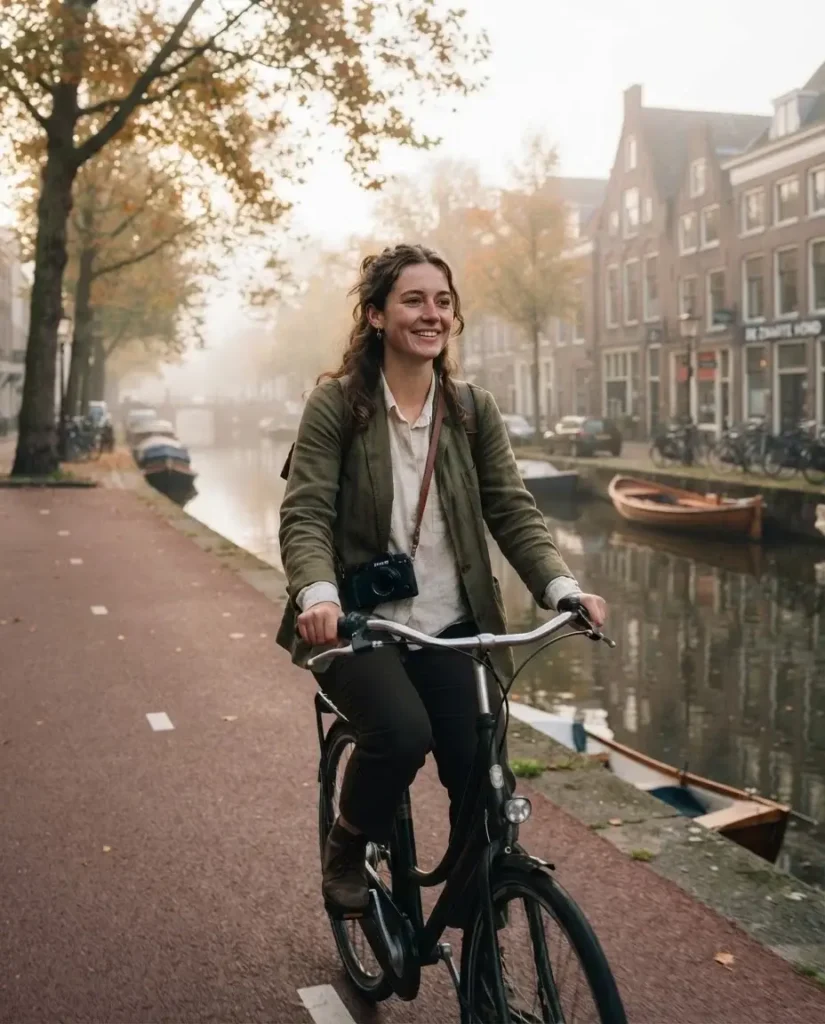
Navigation tip: Utrecht is flat and compact, so you can loop the old canals, ride out to the leafy neighborhoods, and be back at the station in an afternoon without stress. Follow the red asphalt. In the Netherlands, red almost always means the path is yours.
What to eat after: grab a warm stroopwafel from a market stall while it is still soft, or sit canal-side with a plate of bitterballen, those crispy little meat croquettes locals love with a cold drink.
Amsterdam, once you have your legs
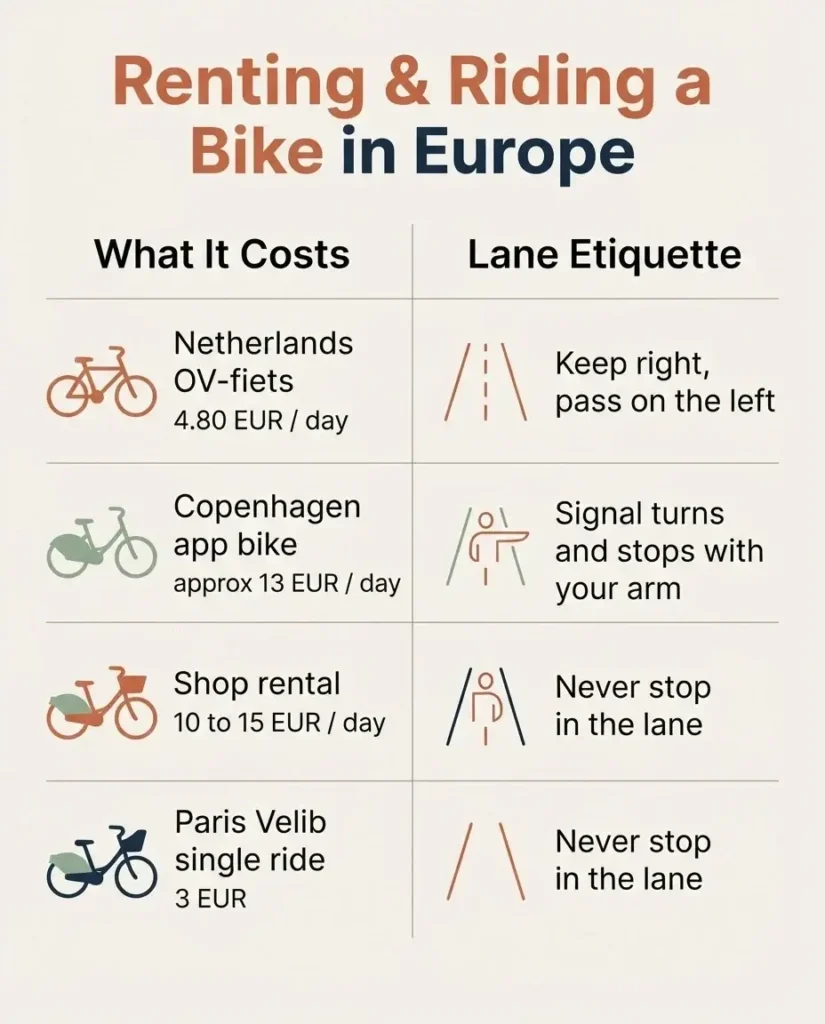
Amsterdam gets all the postcards, and it deserves them, but I would not make it your very first ride. The bike traffic is fast, the lanes are busy, and the tram tracks can catch a wheel if you cross them at the wrong angle. Do Utrecht first, then come here feeling like a pro. When you do, keep to the right, signal your turns with your arm, and never stop dead in a bike lane. Locals move with purpose and they expect you to keep flowing.
How to actually rent a bike in the Netherlands
Here is the part competitors skip. The Dutch have a brilliant national system called the OV-fiets, run through the railway. If you buy a personal OV-chipkaart, you can grab a bike at more than 300 stations for about €4.80 per 24 hours, as explained on the official Dutch railways OV-fiets page. It is the cheapest, most local way to ride. If the card setup feels like too much for a short trip, ordinary shop rentals and app-based bikes are everywhere too, usually landing somewhere around €10 to €15 a day.
The city that made cycling cool: Copenhagen
Copenhagen is the place people picture when they imagine effortless European cycling, and the reputation is earned. The city has roughly 400 kilometers of cycle tracks and the highest density of protected bike lanes in the world. What that means for you is simple: you are almost always physically separated from cars by a curb, not just a painted line. That single design choice is what melts away nervousness faster than anything else. If you like knowing the story behind a place, the City of Copenhagen’s official cycling page lays out how they became the world’s best cycling city.
Renting is easy through the app-based Donkey Republic bikes scattered across the city, where a 24-hour deal runs around 99 Danish kroner, roughly 13 euros. You unlock and return through the app, so there is no counter, no deposit drama, and no fixed closing time.
Navigation tip: Copenhagen riders are fast and disciplined. Use hand signals, a flat hand held up behind you means “I am stopping,” and pull fully out of the lane before you check your phone or your map. Ride the harbor bridges like the Cykelslangen, the orange “bicycle snake” ramp, for a view that will make you forget you were ever scared.
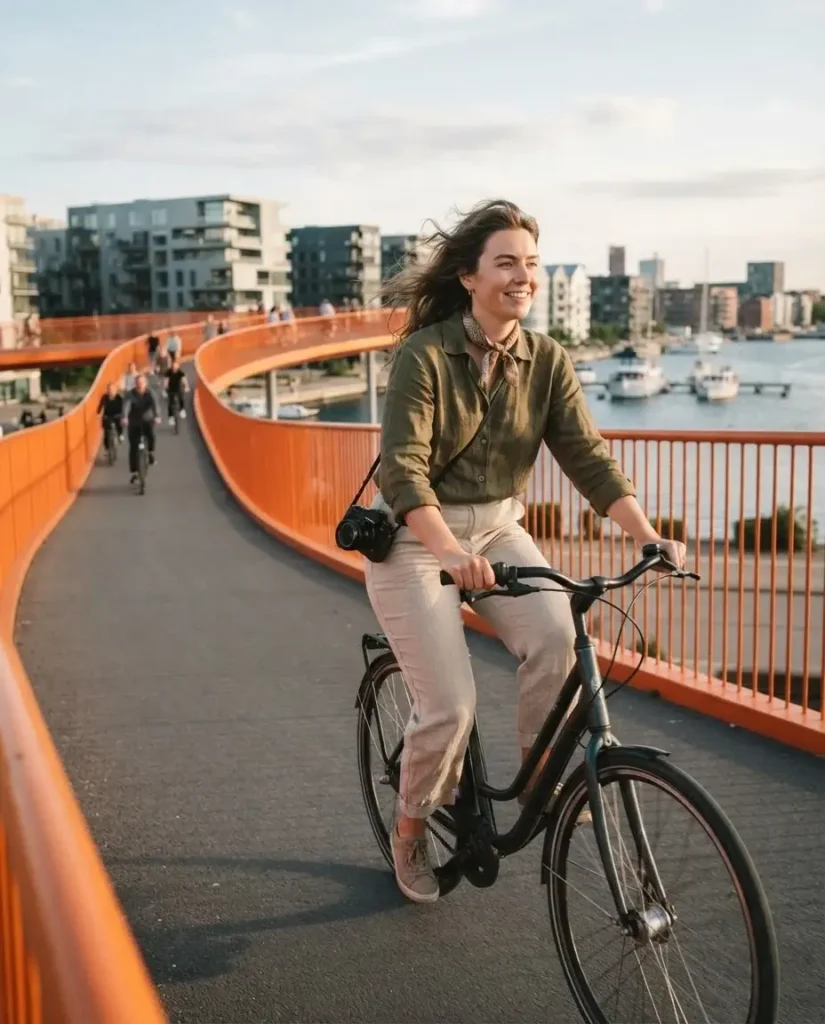
What to eat: a proper smørrebrød, the open-faced rye sandwich piled with things like pickled herring or roast beef, is the perfect midday refuel.
The surprise star of the south: Seville
People assume great cycling only happens in cold northern cities. Seville proves them wrong. In just a few years the city built a connected network of protected lanes and became one of Spain’s cycling success stories. Today it offers close to 200 kilometers of bike lanes and hundreds of Sevici share stations open around the clock, all laid out on the official Visit Seville cycling page.
Why I love Seville for nervous riders: it is flat, it is warm, and the lanes are wide and unhurried compared to the northern speed demons. Rolling past the Plaza de España or along the Guadalquivir river at golden hour is the kind of moment that hooks people on cycling forever.
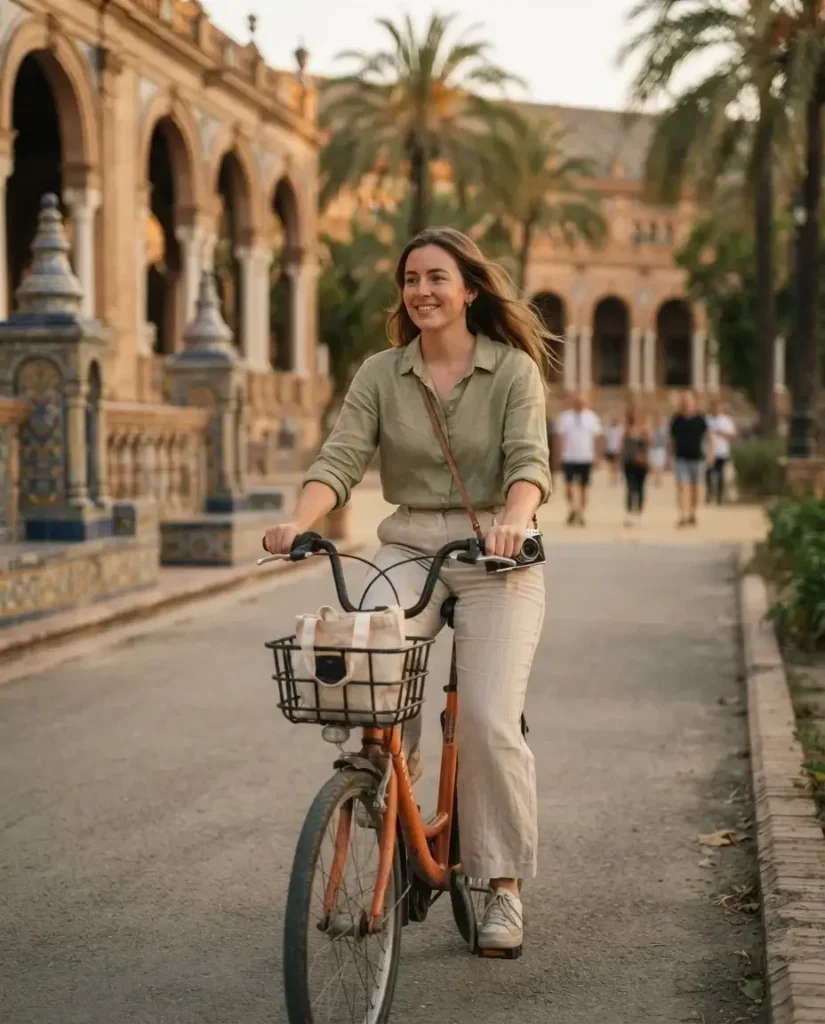
Navigation tip: the summer heat is real. Ride early in the morning or in the cooler evening, carry water, and never underestimate how much shade matters. What to eat when you stop: a plate of shared tapas and, if you can find it, a bowl of cold salmorejo, the thick chilled tomato soup that tastes like relief on a hot day.
The car-free charmer: Ghent, Belgium
Ghent is my quiet recommendation for anyone who wants medieval-city magic without the traffic terror. The city famously reworked its center to push cars out and let people walk and cycle, and the result is a historic core that feels almost designed for wandering on two wheels. The official Visit Ghent cycling guide points you toward rental options, including the city’s own bike service and cargo bikes if you are traveling with kids or a lot of gear.
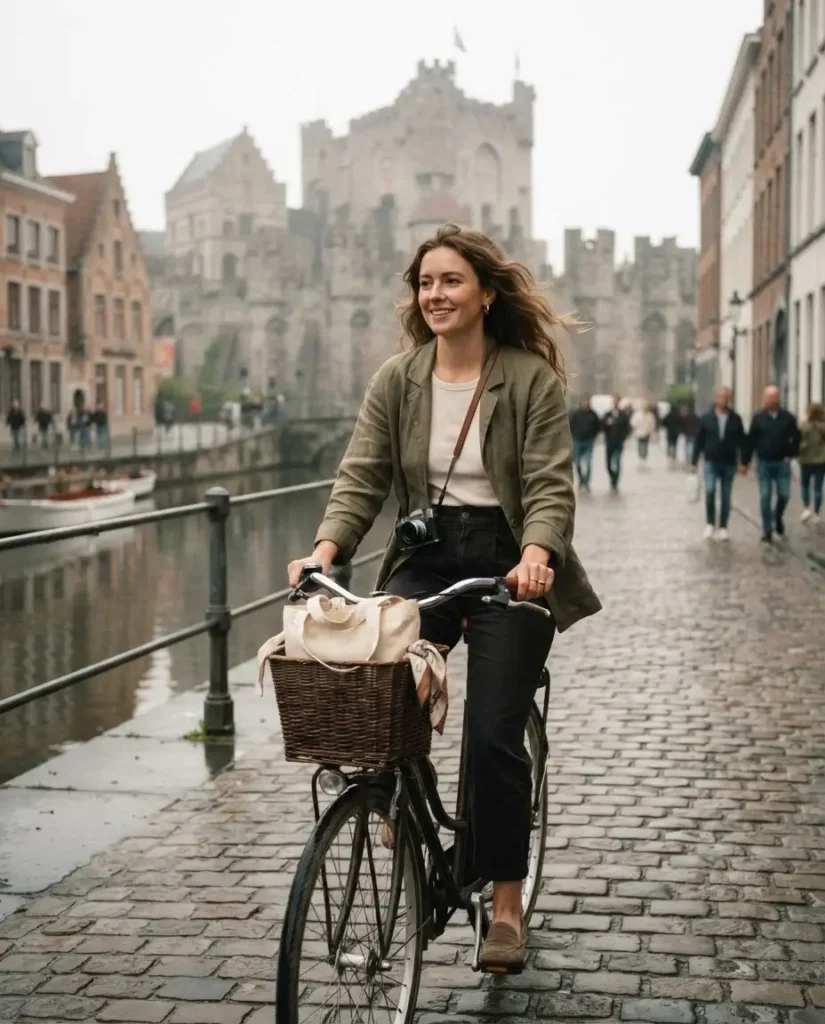
Riding past the canals and the towering Gravensteen castle, with almost no cars to worry about, is the sort of experience that quietly rebuilds your confidence. Ghent is smaller and slower than the big capitals, which is exactly what makes it so good for easing in.
The one for true bike lovers: Münster, Germany
If you catch the cycling bug, put Münster on your list. This university town in western Germany has more bikes than people and built a beloved green ring called the Promenade, a car-free path on the site of the old city walls that loops the entire center. Locals call their bikes “Leezen,” and cycling here is not a novelty, it is simply how everyone gets around. It is flat, friendly, and refreshingly free of the pressure you feel in a big capital.
What every nervous rider actually needs to know
Let me answer the questions I hear most, the ones the ranking sites never bother with.
Do you need a helmet? In most of these cities, no law requires adults to wear one, and you will notice many locals do not. That said, I always tell new riders to wear one anyway if it helps you relax. Feeling safe is what gets you out the door, and getting out the door is the whole point.
Regular bike or e-bike? For flat cities like Amsterdam, Utrecht, Seville, and Münster, a normal bike is plenty. For anywhere hilly, or if you simply want to cover more ground without arriving sweaty, an e-bike is a lovely confidence booster. It costs a bit more but removes the “can I physically do this” worry entirely.
How do the lanes work? Learn three habits and you will blend right in: keep to the right so faster riders can pass on your left, signal turns and stops with your arm, and never stop in the middle of a bike lane. Pull off to the side like you would a highway. These cities move like clockwork because everyone follows the same simple rhythm, and once you join it, you feel it too.
The solo confidence piece. When I first started traveling alone, I thought confidence was something you either had or you did not. It is not. It is built through small, slightly scary actions that go fine. Renting your first bike in gentle Utrecht is exactly that kind of action. You will wobble, you will take a wrong turn, and then you will realize you are doing it. That feeling carries far beyond the bike lane, into every future decision about traveling on your own terms.
How I would plan a first bike-city trip
If you are anything like me when I first planned a trip like this, you want a shape to follow. Here is what I would do. Pick one gentle city to build your legs, Utrecht or Ghent, and give it two or three days. Rent for a full day rather than by the hour so you never feel rushed. Plan one “big feeling” ride, something scenic like a canal loop or a riverside path, so you get the emotional payoff that makes it stick. Then, if you loved it, add a bolder city like Copenhagen or Amsterdam later in the trip when your nerves have settled. Do not try to conquer five cities in a week. Slow travel is where the real memories live, and a bike is the perfect speed for it.
The perfect moment to try this will never politely arrive and knock on your door. But a rented bike, a flat red lane, and a warm afternoon in a city built for exactly this? That is about as close to a perfect moment as travel gets. Go wobble a little. You are more capable than your nerves are telling you.