Best Cheap Beach Resorts: 6 Destinations to Book Now

Here’s a thing I used to believe, back when I was counting vacation days at my desk in New York: that a real beach vacation, the kind with warm water, white sand, and a cold drink in your hand, required a budget I didn’t have. I thought “cheap” and “beach resort” were two words that couldn’t honestly share a sentence.
I was wrong.
The world is full of places where your money goes further than you’d ever expect, where the beaches are genuinely stunning, the accommodation is comfortable and clean, and the whole experience costs a fraction of what you’d spend on a Caribbean all-inclusive that’s been marketed to the masses. But finding those places requires knowing where to look, what questions to ask, and what traps to avoid.
This post is my honest guide to the best cheap beach resort destinations in the world right now. Not cheap as in grim or disappointing. Cheap as in extraordinary value for money, places where a budget traveler can have a life-changing beach experience without financial regret.
Let’s get into it.
What “Cheap Beach Resort” Actually Means
Before I give you the list, I want to clear something up. A “cheap beach resort” doesn’t always mean a single sprawling all-inclusive complex. In many of the world’s best beach destinations, you’ll find small locally-run beachfront resorts and boutique guesthouses that offer the same dream: a room close to the water, a pool or direct beach access, breakfast included, and that slow, sun-drenched feeling of having nowhere urgent to be. These properties often deliver more authenticity and better food than the big chains, and they cost significantly less.
The destinations below all share a common thread: your dollar, pound, or euro genuinely stretches. That’s partly because of currency exchange, partly because of competition in the local accommodation market, and partly because these are places where the local economy hasn’t been fully priced for Western tourists yet. That won’t last forever. So if any of these destinations are on your list, sooner really is better.
According to US News Travel’s research on affordable beach destinations, some of the world’s best beach getaways can be experienced for well under $150 per night including accommodation, and a smart traveler who knows where to go can do it for considerably less. Here’s where I’d point you.
1. Phu Quoc, Vietnam: Southeast Asia’s Quiet Overachiever
If you asked me to design the ideal budget beach destination from scratch, it would look a lot like Phu Quoc. This island in the Gulf of Thailand, off Vietnam’s southwestern coast, has 150 kilometers of coastline, warm turquoise water year-round, and a travel infrastructure that genuinely caters to people who want comfort without a luxury price tag.
According to Vietnam’s official tourism authority, Phu Quoc is Vietnam’s most popular destination for water sports, and its beaches range from the long, sunset-facing Long Beach, which stretches 20 kilometers of unobstructed shoreline, to quieter northern beaches like Ganh Dau and Bai Thom, where dirt roads and budget resorts sit tucked under palm trees away from the crowds. More than half the island has been protected as a UNESCO Biosphere Reserve since 2006, which keeps the north largely wild and undeveloped.

From what solo travelers consistently report, mid-range beachfront resorts on Phu Quoc run between $30 and $80 per night depending on season, with the sweet spot being October through December before the peak holiday rush begins. The dry season officially runs from November through March, which is also when the water is clearest and calmest for swimming and snorkeling.
What to eat here matters as much as where you sleep. Phu Quoc is famous for its fish sauce, produced locally in traditional wooden factories you can actually tour. At the floating restaurants in Ham Hinh fishing village, you can sit over the water and eat fresh seafood seasoned with locally-grown black pepper for a few dollars. This is the kind of meal that stays with you.
Getting there typically involves a short domestic flight from Ho Chi Minh City or Hanoi, and once you land, you can hire a scooter to get around the island independently. For the solo traveler who wants beach relaxation without isolation, the Long Beach strip has enough cafes, restaurants, and common areas at guesthouses to make meeting other travelers easy.
2. Zanzibar, Tanzania: Africa’s Most Beautiful Budget Beach Secret
Zanzibar is one of those destinations that photos genuinely cannot prepare you for. The Indian Ocean here is an improbable shade of turquoise, the sand is soft white powder, and the culture is a layered, fascinating mix of Swahili, Arab, African, and South Asian influences that makes it unlike any beach destination I’ve researched.
The good news for budget travelers is that Zanzibar has a wide spectrum of accommodation. According to zanzibar.com’s comprehensive beach guide, budget hotels at Nungwi Beach on the north coast include properties like Kivulini Garden Lodge and Badolina Bungalows, while at Jambiani Beach on the southeast coast, options like New Teddy’s on the Beach and PiliPili Swahili Lodge offer affordable stays in a less touristy, more culturally rich setting. Jambiani is particularly good for slow travelers who want to spend real time in a local community rather than a tourist bubble.
The beach geography matters here: the north coast (Kendwa and Nungwi) offers tide-free swimming all day long, which is ideal if you want uninterrupted beach time. Kendwa Beach was recently voted the best beach in all of Africa and 4th best in the world. The east coast beaches like Paje are better for kitesurfing and diving, but can be inaccessible during low tide when the water retreats several hundred meters. First-timers should check tide times before choosing their base.

Stone Town, the island’s historic capital and a UNESCO World Heritage Site, is where you should spend at least a day or two. The narrow spice-scented alleyways, ornate carved doors, and bustling Darajani Market make it one of the most culturally compelling places in East Africa. The food in Stone Town is wonderful: grilled meat and seafood at Forodhani Gardens night market (look for the octopus and the Zanzibar pizza), and fresh fruit juices for pennies. This is exactly the kind of destination where eating like a local doesn’t just save you money, it makes the trip.
The best time to visit for value and good weather is June through October (the cool dry season) and January through February. July and August see more tourists, but the weather is reliable. Getting there usually means flying into Abeid Amani Karume International Airport on Unguja Island, with connecting flights from Dar es Salaam, Nairobi, or Addis Ababa.
3. Palawan, Philippines: Jaw-Dropping Beauty, Reasonable Prices
From what travelers and independent research consistently confirm, Palawan is one of the most beautiful island destinations on earth. Its limestone cliffs, impossibly clear lagoons, and biodiversity-rich waters have earned it repeated recognition as one of the world’s top islands, yet it remains genuinely accessible to budget-minded travelers.
According to Philippines Tourism USA, Palawan is an archipelagic strip bounded by the West Philippine Sea and the Sulu Sea, best known for El Nido, Coron, and Puerto Princesa. Puerto Princesa, the island’s capital, is the main jump-off point and home to the Puerto Princesa Subterranean River National Park, a UNESCO World Heritage Site that you can tour by boat through a cathedral-sized underground cave. El Nido is the destination that earns the most superlatives: island-hopping tours through dramatic limestone karsts and hidden lagoons typically run $15 to $25 per person for a full day on the water. That’s an extraordinary experience for the price.

Budget beach resorts and guesthouses are plentiful in El Nido, with dorm-style accommodation starting around $10 to $15 per night and private beachfront cottages available from $30 to $60. If you want a more developed resort experience, Coron is slightly more upscale while remaining affordable by Western standards.
If you’re anything like me when I first planned a trip like this, you’ll wonder whether this is too complicated to navigate alone. It’s not. The Philippines runs on a well-worn backpacker circuit, and Puerto Princesa’s airport connects easily to Manila. From there, domestic flights to El Nido Airport (Lio Airport) are short and increasingly frequent.
The dry season, November through May, is the ideal visiting window, with the peak being December through April. June through October sees rougher seas and occasional typhoon activity, so timing matters here. On the food side, look for fresh grilled seafood along the beachfront restaurants in El Nido town, and try the sinigang soup and lechon (roasted pork) if you head into local eateries off the main strip.
4. Cartagena, Colombia (and Its Islands): Caribbean Culture on a Real Budget
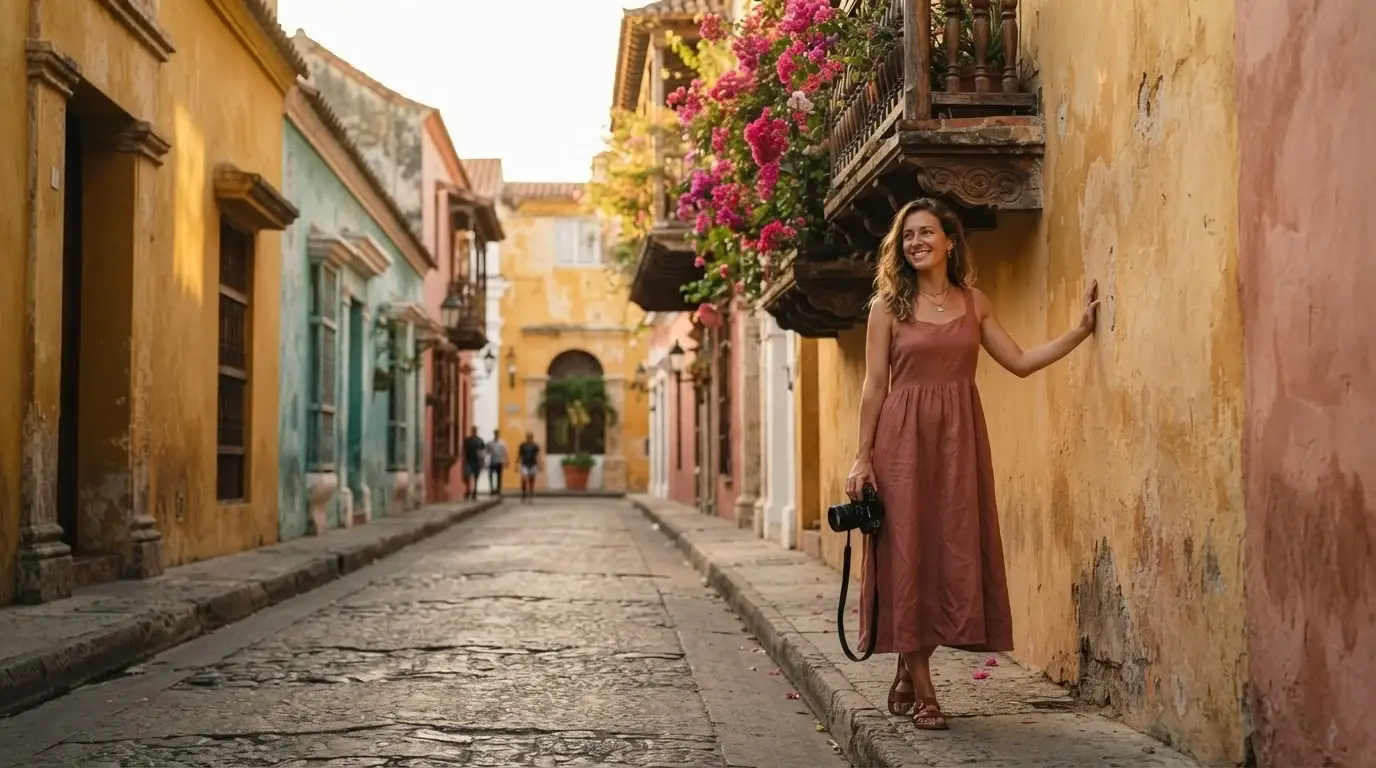
Cartagena surprises people. Most visitors arrive expecting a beach city and discover they’ve walked into one of the most beautiful, historically rich places in the Americas. The walled old city, a UNESCO World Heritage Site since 1984 according to Colombia’s official tourism board, is all candy-colored colonial buildings, bougainvillea-draped balconies, and cobblestone streets that inspired Gabriel Garcia Marquez. It’s a place you could spend days simply wandering.
But the beaches are the real draw for this guide. The best ones aren’t in the city proper. Playa Blanca on Baru Island and the Islas del Rosario are the standout options: clear Caribbean water, warm temperatures year-round, and a fraction of the cost of nearby Caribbean islands like Aruba or Turks and Caicos. Day trips and overnight stays to Playa Blanca run cheaply and are easy to arrange from Cartagena’s waterfront. Within the city, the Bocagrande beach strip is convenient if you want a quick dip without leaving town, though it’s more urban in feel.
Budget accommodation in Cartagena is excellent in the Getsemani neighborhood, just outside the walled city walls. Boutique hostels and small guesthouses here typically run $15 to $40 per night. The neighborhood itself is vibrant, with street art, local cafes, and live music most evenings. Food is outstanding and affordable: look for arepas de huevo, ceviche, and bandeja paisa at small local restaurants rather than the tourist-facing spots inside the walled city.
I do want to be honest here because you deserve it: Colombia currently carries a Level 2 US travel advisory (“exercise increased caution”), which you can review on the US Department of State travel advisory page before you book. Cartagena as a tourist destination is generally considered one of Colombia’s safer cities for visitors, but street smarts apply. Don’t leave valuables visible, use official taxis or app-based rides rather than hailing from the street, and stay aware in quieter areas after dark. Thousands of solo travelers visit Cartagena every year and have wonderful experiences. Just go in informed.
The best time to visit is late November through April, when the dry season brings calmer waters and clear skies. Direct flights from Miami, New York, and other US cities connect to Rafael Nunez International Airport.
5. The Albanian Riviera: Europe’s Wildly Underrated Beach Bargain
If you want a stunning beach experience in Europe for far less than you’d spend in Greece or Croatia, the Albanian Riviera deserves to be your next serious consideration. Albania is still one of Europe’s least-visited countries, which means the beaches remain relatively uncrowded and the prices haven’t caught up with the scenery yet.
Ksamil, on the country’s southern tip near the Greek border, is the beach town that gets the most attention: turquoise water, small sandy islands you can swim to, and guesthouses that run $30 to $60 per night in summer. Dhermi and Himara, further up the coast, offer similar natural beauty with an even more local, less-touristed feel. From what solo travelers in the Balkans consistently report, Albania Riviera budget trips are entirely achievable for $50 to $80 per day including accommodation, food, and transport.

For context on why this budget works: Albania uses the lek as currency, local restaurants serve fresh grilled fish and feta-based salads for just a few euros, and the country has invested significantly in road infrastructure in recent years, making the coastal drive between beach towns genuinely scenic and manageable.
The best time to visit is June or September when temperatures are hot but the August peak crowd has either not yet arrived or has gone home. July and August can get busy, particularly in Ksamil. Visa-free entry for most Western passport holders makes logistics simple.
Don’t skip the UNESCO-listed ancient city of Butrint, which is a short trip from Ksamil. It’s an archaeological site that sits alongside a lake and has been inhabited since ancient Greek times. It costs just a few euros to enter and is the kind of place that reframes what a beach trip can be: not just sand and sun, but a layered experience of a place.
6. Dominican Republic (Punta Cana and Cabarete): All-Inclusive Value Done Right
If the all-inclusive model appeals to you, Punta Cana is one of the most cost-effective places in the world to do it. Package deals, particularly when booked in the low season between May and November, can bring week-long stays at mid-range all-inclusive resorts to under $150 per night for two people including flights from the US East Coast. During shoulder seasons, some properties advertise even lower rates.
Here’s what the all-inclusive model does well for a solo traveler or first-timer: it removes almost all the logistical friction. Your food, drinks, and beach access are covered. You don’t have to navigate a local currency, find restaurants, or worry about whether that roadside stall is safe. It’s a soft entry point to international travel, and there’s nothing wrong with starting there.
But if you want a Punta Cana experience that feels less resort-bubble and more real, take a day trip or a few days to Cabarete on the north coast. This small, laid-back beach town is a global hub for kitesurfing and windsurfing, with a bohemian, international vibe and accommodation options ranging from $20 guesthouses to stylish boutique properties. The beach itself is gorgeous, and the town’s main strip is walkable, social, and full of good food at honest prices.
Cabarete’s Kite Beach, in particular, is the kind of place where you’ll find solo travelers from a dozen different countries sitting in the same beachfront bar, all happy to talk about where they’ve been and where they’re going next. For anyone nervous about solo travel, that kind of spontaneous community is worth more than any resort amenity package.
Flights to Punta Cana International Airport connect from multiple US and European cities year-round, and US citizens don’t need a visa, just a tourist card that’s often included in the cost of your airline ticket.
How to Actually Book a Cheap Beach Resort (Without Getting Burned)
Finding the destination is step one. Booking it intelligently is step two. Here’s what consistently makes the difference.

Travel in the shoulder season. This advice is not glamorous, but it works. Almost every destination in this list has a sweet spot of four to six weeks on either side of peak season where prices drop significantly and crowds thin, but weather remains perfectly fine. For tropical destinations, “shoulder season” usually means the tail end of the dry season or the first weeks after it ends.
Book accommodation directly with the property when possible. Many small beachfront resorts and guesthouses offer a discount of five to ten percent when you email or call them directly rather than booking through an OTA like Booking.com or Expedia. This is especially true in Southeast Asia and the Caribbean. It also gives you a direct line of communication if anything needs adjusting.
Be honest about what you actually want. A beachfront bungalow with a fan and cold water is going to cost a third of the price of air-conditioned rooms with resort pools. If you can handle simpler infrastructure, you can often land directly on a beach that a $300-per-night resort charges for access.
Finally, don’t underestimate the food budget as a savings lever. In every destination on this list, eating where locals eat costs a fraction of what tourist restaurants charge, and the food is almost always better. This is the consistent lesson that every experienced traveler comes back to: the best meal is usually the cheapest one.
A Final Thought on What “Affordable” Really Gives You
I want to close on something that I think gets lost in the “budget travel” conversation. When you choose a destination like Phu Quoc over a mass-market Caribbean resort, or Jambiani Beach over a European luxury coast, you’re not settling. You are, in many ways, getting more. More culture, more authenticity, more of the local life that makes a trip actually memorable years later.
The beach is beautiful everywhere on this list. But the texture of the place, the food you’ll try, the people you’ll meet, the unexpected things that happen when you step outside the resort bubble, that’s the part you’ll actually talk about when you get home.
Budget travel done thoughtfully isn’t a compromise. It’s a different set of priorities. And in my experience, they tend to be the better ones.