
Best European Cities for Zero-Waste Travel Without Stress

Let me clear something up before we go one step further, because it’s the thing that stops most people from ever starting. Zero-waste travel does not mean you fit a whole trip’s worth of trash into one tiny jar and post about it. That version is a fantasy, and honestly, it’s a little exhausting. Real low-waste travel is quieter than that. It’s a reusable bottle, a few good habits, and choosing cities that make the sustainable choice the easy choice.
That’s the whole trick, really. You don’t have to become a different, more disciplined person. You just have to go somewhere that’s already set up for it.
I care about this because I’ve watched how travel actually happens. Back when I worked as a certified sightseeing guide in New York, I spent my days with visitors from every corner of the world, and the ones who had the best time were never the ones chasing a perfect, curated experience. They were the ones who relaxed into the place and let it carry them. Zero-waste travel works exactly the same way. The right city carries you.
So instead of handing you a generic list of “green cities,” I want to walk you through the European cities where traveling with less waste feels natural, and show you what you’d actually do on the ground in each one. We’ll cover the water, the food, the shops, the transit, and yes, the mistakes, so you can plan a trip that’s kind to the planet and easy on your nerves.
First, What “Zero-Waste Travel” Really Means
Think of it as low-waste, not no-waste. You’re aiming to skip single-use plastic where you reasonably can, drink tap instead of buying bottles, eat food that isn’t drowning in packaging, and move around by foot, bike, or public transit instead of taxis and short flights. That’s it. That’s the entire philosophy.
Here’s the scale of why it matters, and why cities are leaning into this. EU residents generate well over 180 kilograms of packaging waste per person every year, and only a fraction of that plastic actually gets recycled. A lot of that waste is the disposable stuff we barely notice: the coffee cup, the water bottle, the plastic bag, the takeaway container. Travel tends to multiply those small moments because everything is unfamiliar and rushed. Choose a city where refilling, reusing, and refusing are already built into daily life, and suddenly you’re producing a fraction of the waste without even trying hard.
One more mindset note, because it’s the one I believe in most. You will slip up. You’ll forget your bottle one morning, or a well-meaning waiter will bring a plastic straw before you can wave it off. That is completely fine. Low-waste travel is not a test you pass or fail. It’s a direction you point yourself in.
Ljubljana, Slovenia: The City That Wrote the Playbook
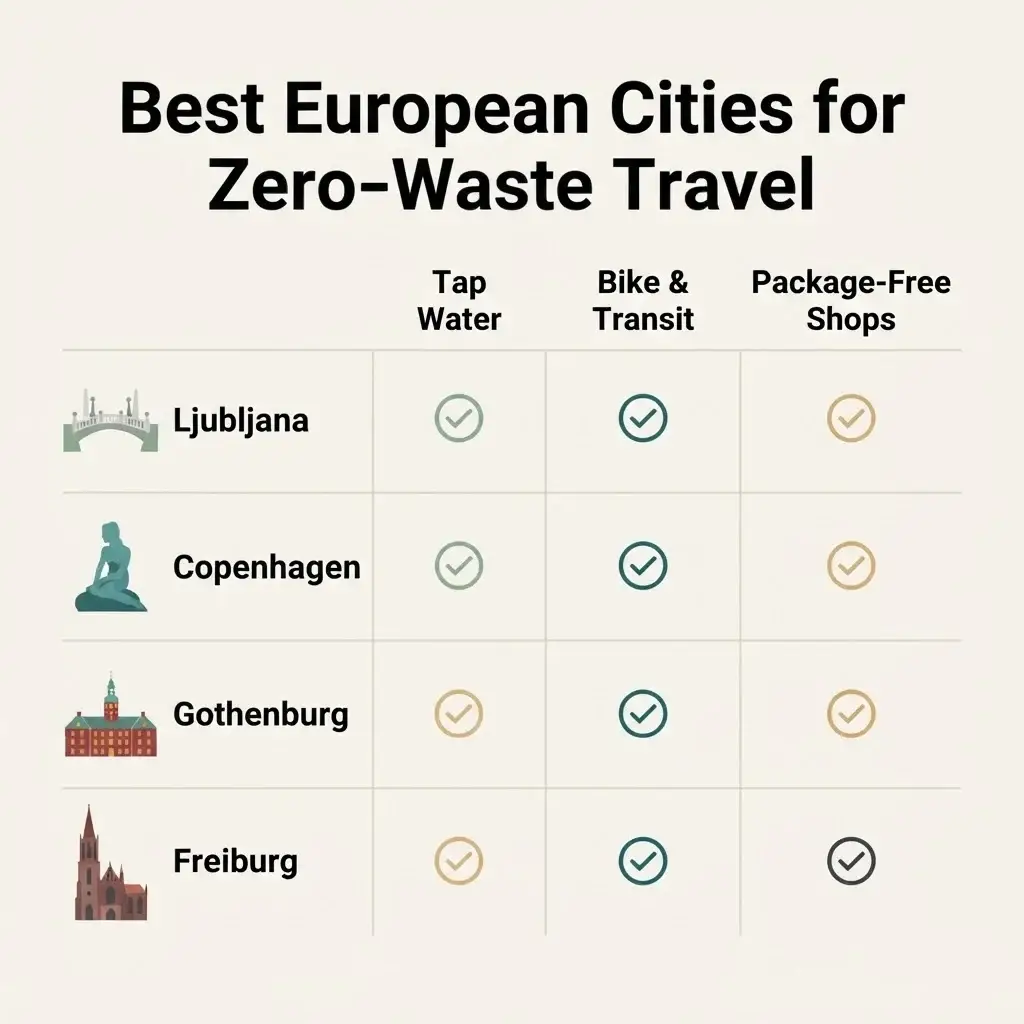
If you want to start with the city that basically invented this whole movement in Europe, start with Ljubljana. Back in 2014, it became the first European capital to formally commit to a zero-waste goal, joining the Zero Waste Europe network, and it wasn’t a marketing stunt. You can read the surprisingly detailed backstory of that decision through Zero Waste Europe’s case study on Ljubljana, and it’s genuinely inspiring how much a mid-sized city changed in a decade.
The results are real. By 2023 the city was separately collecting close to 70 percent of its municipal waste, one of the best rates in Europe, and its tourism board is now running projects to bring zero-waste practices into hotels. If you want to see how a destination treats this as policy rather than a slogan, the city’s own responsible waste management page lays it out plainly.
What does that mean for you as a visitor? The whole city center is car-free, so you walk everywhere along the Ljubljanica river, past the market and the pastel buildings, and the air feels different for it. Tap water is excellent and free, so a reusable bottle covers you all day. Getting around beyond the center is cheap and simple with an Urbana card, which costs 2 euros, holds up to 50 euros of credit, and charges about 1.50 euros for a 90-minute central-zone ride, and you can see the current fares on Ljubljana’s official city bus page.
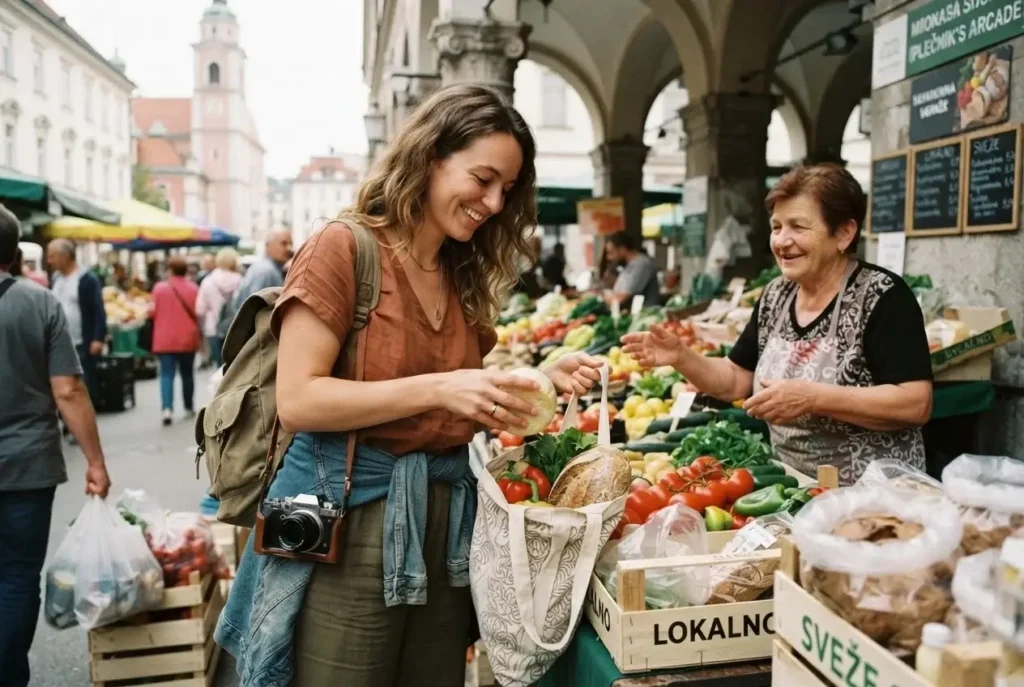
For food, head to the Central Market and its arcades. Slovenian eating is seasonal and local by default, so fill a tote with fresh bread, cheese, and produce, and picnic by the river. When you sit down, try a plate of štruklji, rolled dumplings that come in savory or sweet versions, and jota, a hearty bean and sauerkraut stew. Bring your own container and market vendors will happily fill it. As a solo traveler, this city is a dream, small enough to feel safe and walkable at night, social enough that you’re never truly alone.
Copenhagen, Denmark: Where Refusing Plastic Is Effortless
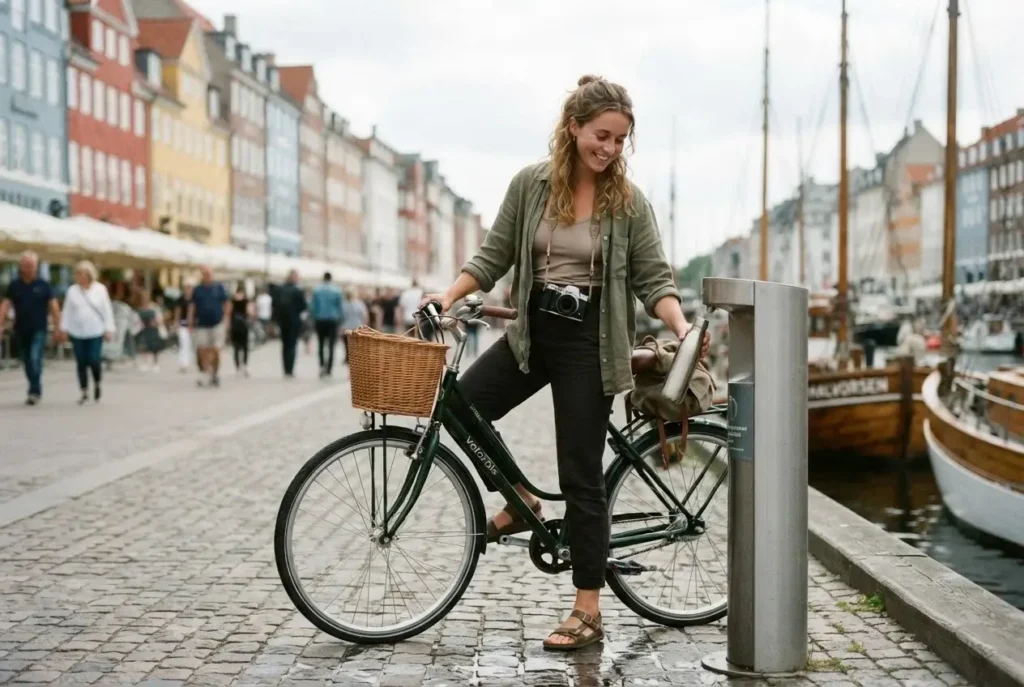
Copenhagen is the city I’d send someone who’s nervous about the logistics, because the infrastructure does the work for you. The city has installed more than 60 public drinking fountains, and Danish tap water is some of the cleanest and best-tasting in the world, held to strict daily quality checks with no need for added chlorine. You can find the fountain map and the reasoning behind it on Copenhagen’s official water utility page. Practically speaking, this means you will never have a good reason to buy a bottle of water here.
Then there’s the bike thing, which isn’t a cliché, it’s just how the city moves. Rent a bike and you’ll blend right in, gliding along dedicated lanes past the harbor at Nyhavn and out to the beaches. No car, no fuss, no fumes.
For low-waste eating, aim for Torvehallerne, the glass market halls, where you can buy loose produce, refill on bulk goods, and grab a smørrebrød, the classic open-faced rye sandwich, that comes on a plate rather than in a wrapper. If you’re a coffee person like me, bring your keep cup, because Copenhagen’s cafe culture runs deep and most places will happily fill your own cup, sometimes for a small discount. Solo travelers, the city is famously safe and calm, and cycling everywhere gives you a lovely sense of independence.
Gothenburg, Sweden: The Quiet Overachiever
Gothenburg doesn’t shout, which is exactly why I love recommending it. This Swedish port city topped the Global Destination Sustainability Index every single year from 2016 through 2023, a run no other city has matched, and you can check where it and other destinations currently rank on the Global Destination Sustainability Index results page. That index measures the boring, important stuff, waste management, public transport, certified green hotels, the systems that make a low-waste trip possible without you thinking about it.
On the ground, this looks like excellent trams that get you anywhere, tap water you can drink straight from any faucet, and a strong secondhand and reuse culture. Gothenburg has whole shopping areas dedicated to preloved goods, so if you need a jacket for the weather or want a souvenir, you can buy something with a past life instead of a fresh plastic tag. For food, the fish market known as Feskekôrka and the covered Saluhall market let you eat local seafood and Swedish classics without the takeaway clamshells. Order a proper sit-down plate of shrimp or a cinnamon bun with your reusable cup of coffee and you’re doing fika, the Swedish coffee-break ritual, the low-waste way.
Freiburg, Germany: The Solar City in the Black Forest
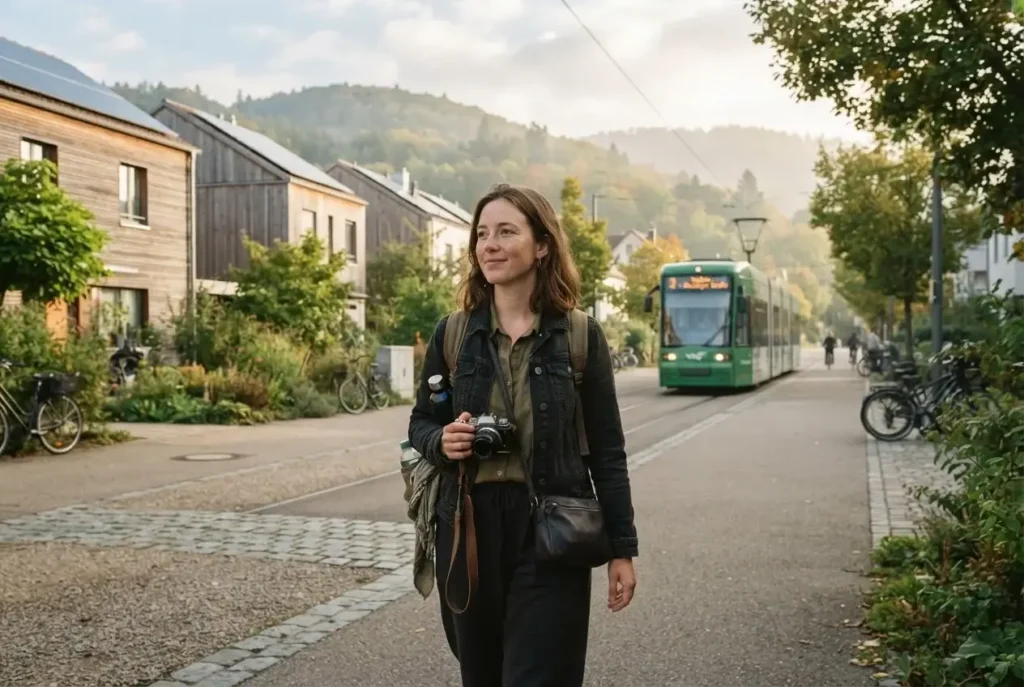
Freiburg is less famous than the capitals, and that’s part of the appeal. Tucked at the edge of the Black Forest, it’s long been treated as a blueprint for sustainable urban living, with car-restricted streets, one of Europe’s most extensive networks of bike paths and tramlines, and neighborhoods designed to run largely on renewable energy. From what travelers and urban planners consistently report, walking through districts like Vauban feels like stepping into a version of the future that actually works, quiet streets, solar roofs, kids playing where cars would normally be.
For a low-waste visit, the setup is ideal. The compact old town means you walk or tram everywhere, tap water is safe and good, and the surrounding region is farm country, so markets overflow with local produce, bread, and Black Forest classics. Try Flammkuchen, a thin crispy tart, and of course a slice of proper Black Forest cake if you have a sweet tooth. Because the city sits right against the forest, it’s also a brilliant base for low-impact day hikes straight from town, no car required. For a solo traveler who wants nature and city in one small package, Freiburg punches far above its size.
Amsterdam and Ghent: Two More Easy Wins
I’ll group these because they share the same superpower, they’re built for bikes and feet, and both have thriving package-free shopping scenes. In Amsterdam, skip the tourist-trap center when you can and cycle out to neighborhoods like De Pijp, where you’ll find package-free grocery stores, farmers markets, and refill shops for everything from grains to shampoo. Tap water is excellent, and the canal-side walking is free entertainment for hours.
Ghent, in Belgium, is the underrated gem here. It has a large car-free center, one of the earliest and most serious commitments to plant-based eating in Europe with its weekly veggie day tradition, and a very walkable medieval core. Both cities reward the traveler who slows down, and slowing down is the heart of low-waste travel anyway.
The European Green Capital List: A Cheat Sheet for Choosing
If you ever want a shortcut to finding a low-waste-friendly city, look at which places have won the European Green Capital Award. It’s an official EU recognition given each year to a city that’s genuinely leading on environmental living, and the winners rotate through some wonderful, sometimes overlooked destinations. Recent and upcoming holders include Valencia, Vilnius, and Guimarães in Portugal, and you can browse the full roster with short profiles on the European Commission’s winning cities page. I treat that list like a travel wishlist, because a city doesn’t win it without having the walkability, transit, and waste systems that make a light-footprint visit easy.
How to Actually Travel Low-Waste in These Cities
The city sets you up. These habits do the rest, and none of them require sacrifice.
Start with water, because it’s the single biggest win. In every city above, the tap water is safe and often excellent, so a refillable bottle replaces dozens of plastic ones over a trip. When you’re somewhere unfamiliar and not sure where to top up, apps built for this help enormously. In the UK, for example, the free Refill app maps tens of thousands of cafes, shops, and public taps that will fill your bottle for nothing, and similar refill culture exists across these European cities.
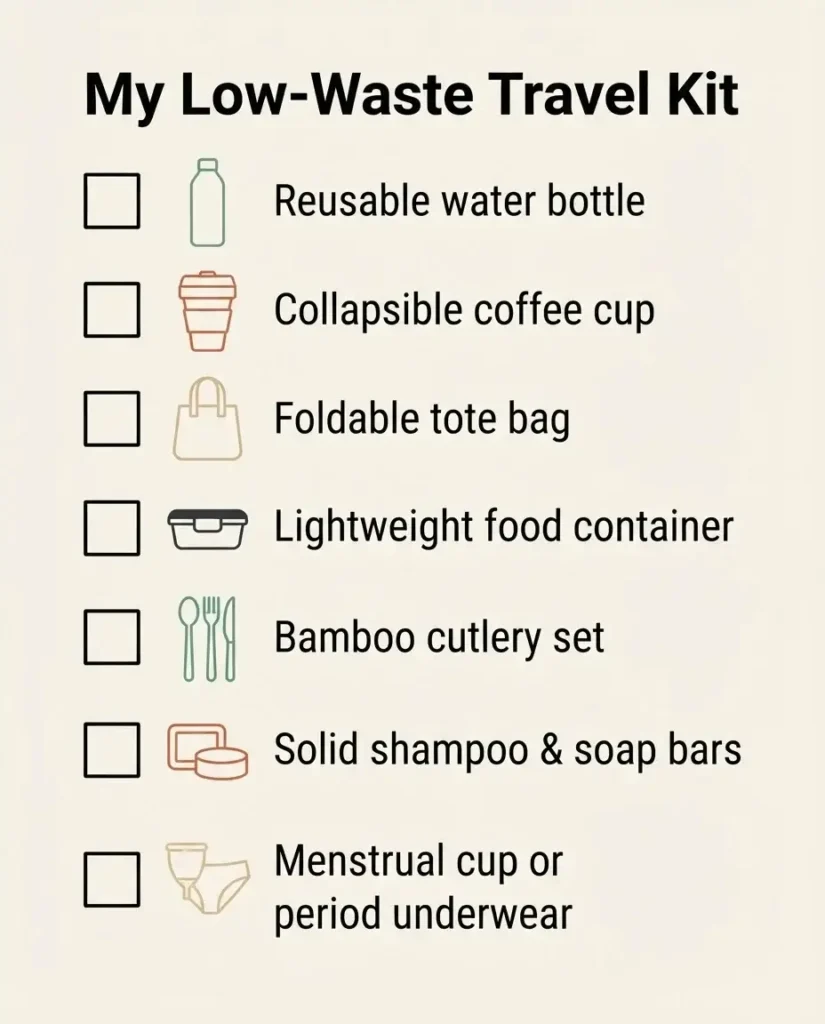
Pack a tiny low-waste kit and you’re set for almost anything: a reusable bottle, a collapsible coffee cup, a foldable tote, a lightweight food container, and a set of bamboo or metal cutlery. That’s genuinely all you need. Solid shampoo and soap bars save you from travel-size plastic and breeze through airport security. If you menstruate, a cup or period underwear removes a surprising amount of waste and hassle on the road.
For food, make markets your default. Every city here has a covered market or farmers market where you buy loose, seasonal, local food, and it’s almost always cheaper and tastier than packaged options. Learn one phrase in the local language for “no bag, thank you,” and use it constantly. Eat in rather than taking away when you can, so your meal comes on a real plate.
Get around on foot, by bike, or on public transit, all of which are excellent in these cities and cost a fraction of taxis. And for the bigger picture, travel between cities by train instead of flying wherever the route allows. Europe’s rail network, including a growing revival of night trains, makes it realistic to see several of these cities in one trip while producing a tiny fraction of the carbon a flight would.
The Mistakes I’d Gently Warn You About
The first mistake is chasing perfection and then giving up. I’ve seen this pattern in travelers again and again, one plastic straw slips through, they feel like a fraud, and they abandon the whole effort. Please don’t. Progress beats purity every time.
The second is buying a whole new “eco” travel wardrobe and gadget collection before you go. That’s just consumption wearing a green costume. Use the reusable bottle and tote you already own. The most sustainable gear is the stuff already in your cupboard.
The third is over-packing your itinerary. When you cram six sights into a day, you end up grabbing plastic-wrapped snacks and taxis because you’re rushed. Slow travel and low-waste travel are the same skill. Do less, and you’ll waste less and enjoy more, which is a trade I’ll take every time.
The last one is assuming this costs more. It usually costs less. Tap water is free, market food is cheap, public transit is a bargain, and secondhand shopping saves money. The sustainable choice and the budget choice point in the same direction more often than not, something I learned the hard way when I was working flexible jobs and stashing tip money to fund my travels.
You’re More Ready Than You Think
Here’s what I want you to take from all this. You don’t need to be an expert or a purist to travel in a way you feel good about. You just need to pick a city that’s already doing the heavy lifting, pack a bottle and a tote, eat at the market, walk a lot, and forgive yourself when you slip. That’s the entire skill.
Pick one of these cities. Book the trip you keep daydreaming about. The version of low-waste travel that actually lasts isn’t the perfect one, it’s the one you’ll genuinely enjoy, and every one of these places is ready to give you exactly that.