Best Beer-Tasting in Europe: A Solo Traveler’s Real Guide

I’ll be honest with you. When I first started traveling, I thought “beer tourism” was for loud groups on stag weekends, not for a solo woman who mostly wanted to understand a place. I was wrong, and it took wandering through Europe with a backpack and very little money to figure out why.
Beer in Europe isn’t really about beer. It’s about the room it’s served in. It’s the old cafe where three generations are arguing about football, the monastery whose recipe hasn’t changed in a century, the brewery where someone’s grandfather worked the same copper kettles. When you sit down for a beer in these places, you’re not drinking. You’re listening to a culture talk about itself.
So this guide isn’t a drinking bucket list. It’s a calm, practical map for experiencing some of the best beer-tasting Europe offers, especially if you’re going alone, feeling a little unsure, and want the real thing instead of a souvenir photo. I’ll cover where to go, what it honestly costs, how to not feel awkward, and how to stay safe and in control the whole way through.
First, let’s kill the biggest fear: you don’t need to know anything about beer
Here’s the thing almost nobody tells nervous first-timers. You do not need to know a single beer term to have an incredible time. I certainly didn’t when I started.
The people who work in these breweries and cafes spend all day with tourists. Saying “I don’t know much about beer, what would you recommend for someone who likes lighter and less bitter?” is one of the most normal sentences they hear. It doesn’t mark you as clueless. It marks you as someone worth helping.
If you’re anything like me when I first planned a trip like this, the fear isn’t really about beer. It’s about looking lost in public, alone. That fear shrinks fast once you realize that curiosity is welcome everywhere. Order small, ask questions, and let yourself be a beginner. Being a beginner in public is a muscle, and travel is the gym.
Belgium: where beer is officially cultural heritage
If you only have time for one beer-focused trip in Europe, I’d point you toward Belgium. This is a country that takes beer so seriously that its beer culture is formally recognized by UNESCO as part of the intangible cultural heritage of humanity, inscribed back in 2016. Almost 1,500 types of beer are produced there. That’s not a marketing line. That’s a living tradition.
Brussels and the magic of lambic
Brussels calls itself the beer capital of the world, and it earns it. The official city tourism site keeps a genuinely useful rundown of Brussels’ beer cafés, breweries, and tastings, which is where I’d start planning rather than a random blog list.
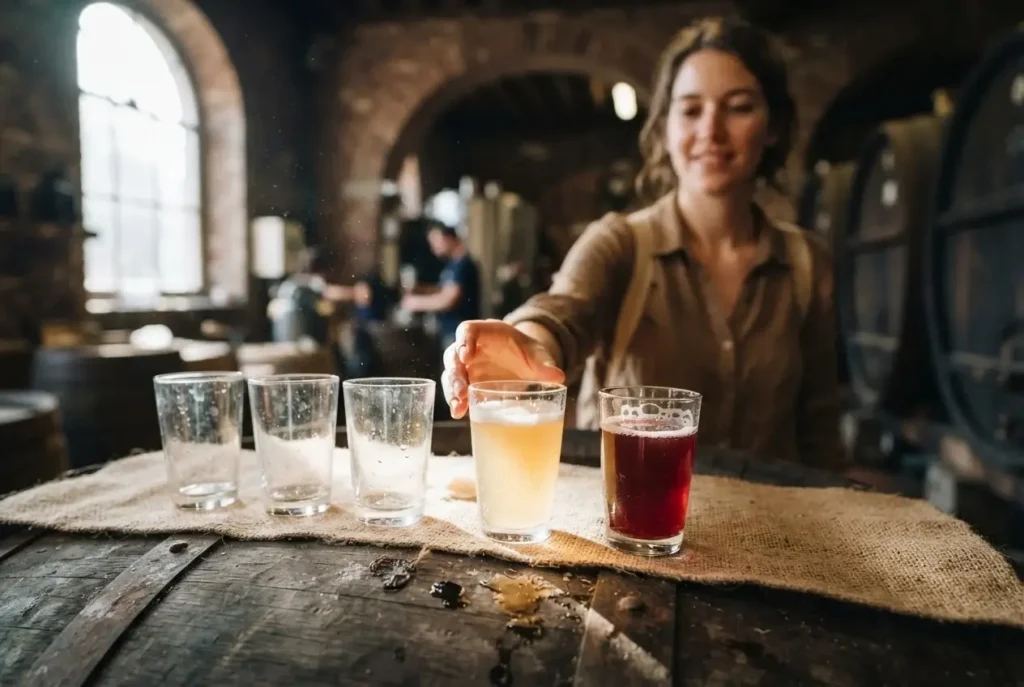
The experience I’d send a curious solo traveler to first is Cantillon, home to the Brussels Museum of the Gueuze. This is a working family brewery that makes lambic, a wild-fermented beer left open to the air so natural yeast can do the work. The visit is self-guided with a booklet, ends with tasting samples, and costs only a few euros. It’s quiet, it’s slow, and it’s perfect for going alone because you set your own pace. Fair warning: lambic and gueuze are sour and funky, nothing like a normal lager. Try a small sample first before you commit to a full glass. A sweet kriek (cherry lambic) is a friendlier entry point.
Ghent, Bruges, and the café culture
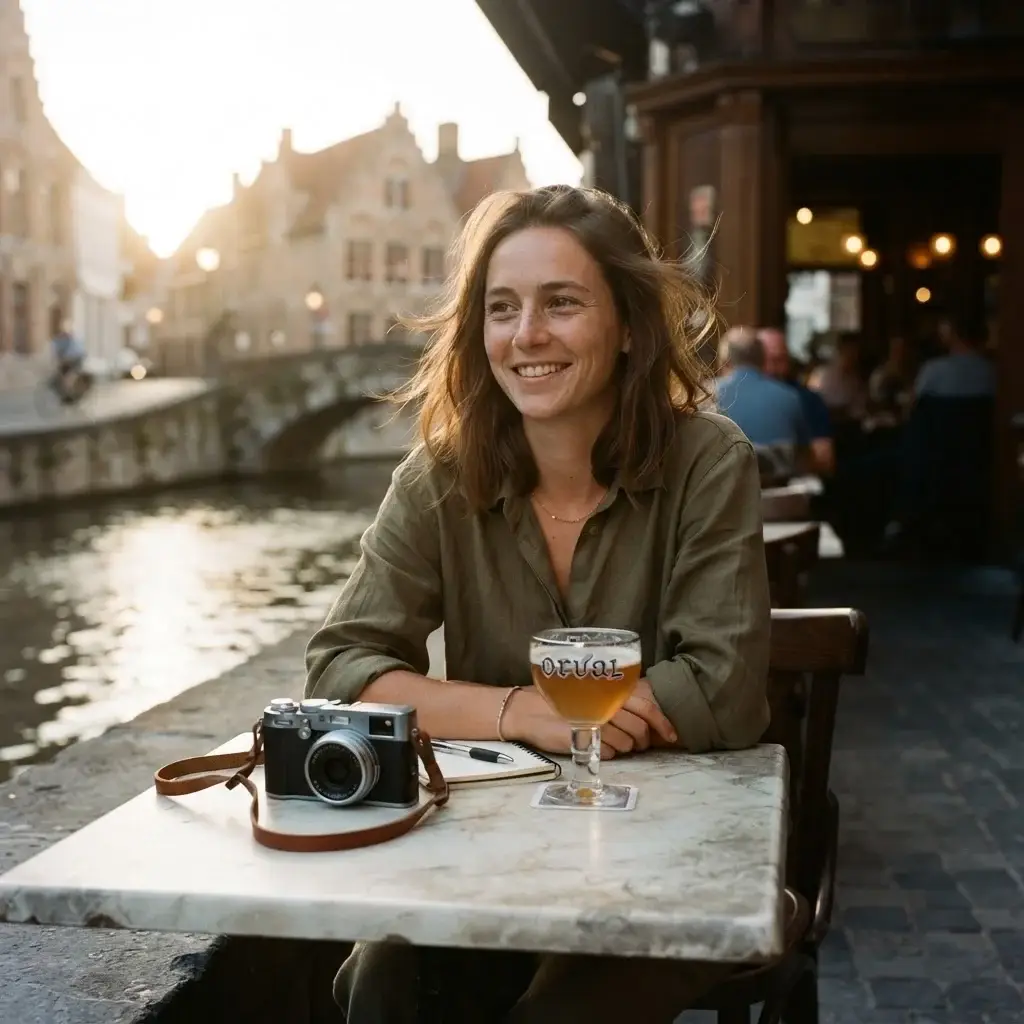
Beyond Brussels, the smaller Flemish cities are where beer culture feels the most human. In Ghent there’s a famous old cafe where the giant beer glasses are served in a way that has become a bit of local theater, and the walls are lined with hundreds of Belgian beers. In Bruges you can nurse a Trappist beer beside a canal and feel like you’ve stepped into a painting.
A quick reality check on Trappist beer, because a lot of guides get people’s hopes up. Belgium’s Trappist monasteries, the ones behind Westvleteren, Chimay, Orval, Rochefort, and Westmalle, mostly do not run public brewery tours. The monks brew in peace. So don’t plan a trip expecting to walk the abbey floor. Instead, taste these beers the proper way: at a good cafe, slowly, with the local food they were made to go with. Chimay with cheese is a fine way to spend an afternoon by yourself with a book.
What to eat: frites with mayonnaise, moules (mussels), Flemish beef stew called stoofvlees which is often cooked with beer, and waffles when your willpower gives out.
Germany: tradition, tents, and a smoky surprise
Germany’s beer culture is built on centuries of tradition and a deep respect for doing simple things extremely well.
Munich and Oktoberfest, planned properly
Everyone knows Oktoberfest. Fewer people plan it well. If it’s on your list, know the real dates: the official Oktoberfest site confirms the 191st Oktoberfest runs from 19 September to 4 October 2026 on the Theresienwiese in Munich. Yes, it starts in September. The name confuses everyone.
Can you do Oktoberfest solo? Absolutely, and plenty of people do. The tents are communal, so you’ll end up sharing a bench with strangers within minutes, which is honestly the whole point. My honest advice for going alone: arrive earlier in the day when the crowd is calmer, eat a full meal because the beer is served in one-liter Maß glasses that sneak up on you, and keep your phone and cash in a zipped inner pocket. If huge crowds stress you out, Munich’s classic beer gardens and beer halls run all year and give you the same warmth at a tenth of the chaos.
Bamberg, my quiet favorite recommendation
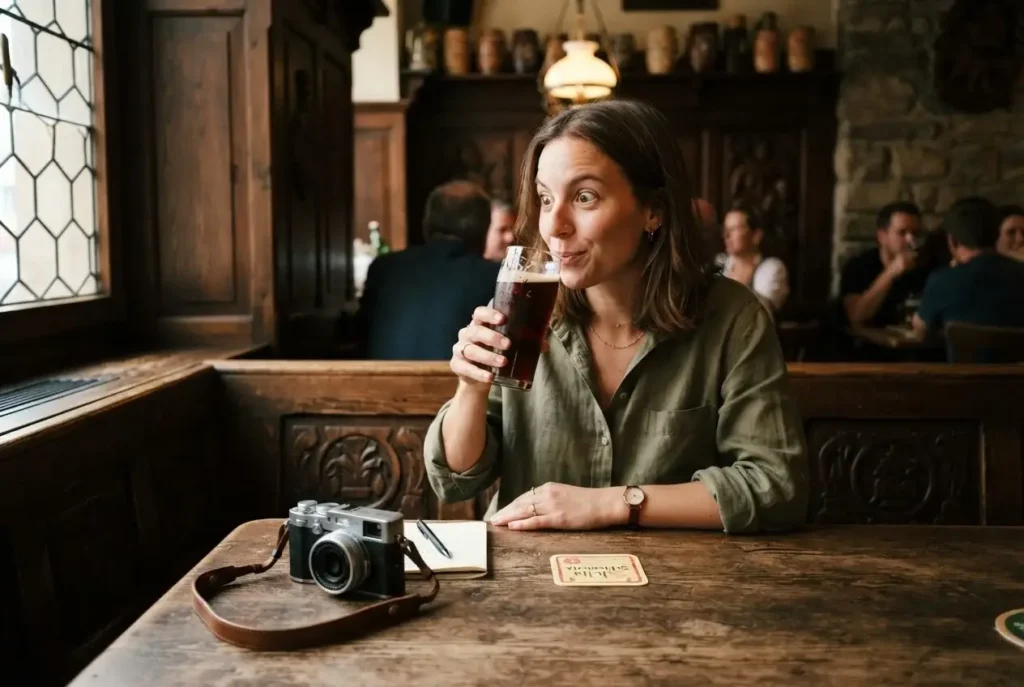
If you want the beer experience that feels most like discovering a secret, look at Bamberg, a gorgeous UNESCO-listed town in Bavaria. Its specialty is Rauchbier, or smoked beer, made from malt dried over open beechwood fires. The most famous producer is the historic Schlenkerla tavern, and their own site tells the story of the original smoked beer beneath Bamberg’s cathedral beautifully.
The first sip tastes like drinking a campfire, or smoked bacon in a glass. Some people recoil. I think that’s exactly why it’s worth trying. Travel that only ever confirms what you already like isn’t teaching you much. Order one small glass, sit in the old wood-paneled room, and let it change your mind. Even if it doesn’t, you’ll have a story.
What to eat: pretzels, sausages, pork knuckle, and in Bamberg, the smoked flavors of the beer pair shockingly well with hearty meat and mustard.
The Czech Republic: the birthplace of the beer you already drink
Here’s a fact that reframes everything. If you’ve ever had a pale lager anywhere in the world, you’ve been drinking a descendant of a beer invented in one Czech city.
Plzeň (Pilsen) and the original pilsner
In 1842, a Bavarian brewmaster named Josef Groll brewed the first golden pilsner lager in the town of Plzeň, and it changed global beer forever. You can visit the source. The Pilsner Urquell Brewery sits about an hour from Prague and draws over half a million visitors a year. According to the official Pilsen tourism page, adult brewery admission is CZK 430 with reduced rates for students and seniors, and the tour walks you through historic and modern brewhouses before ending in nine kilometers of hand-carved cellars, where you taste unfiltered, unpasteurized beer straight from oak barrels. That unfiltered pour is something you genuinely cannot get from a bottle at home.
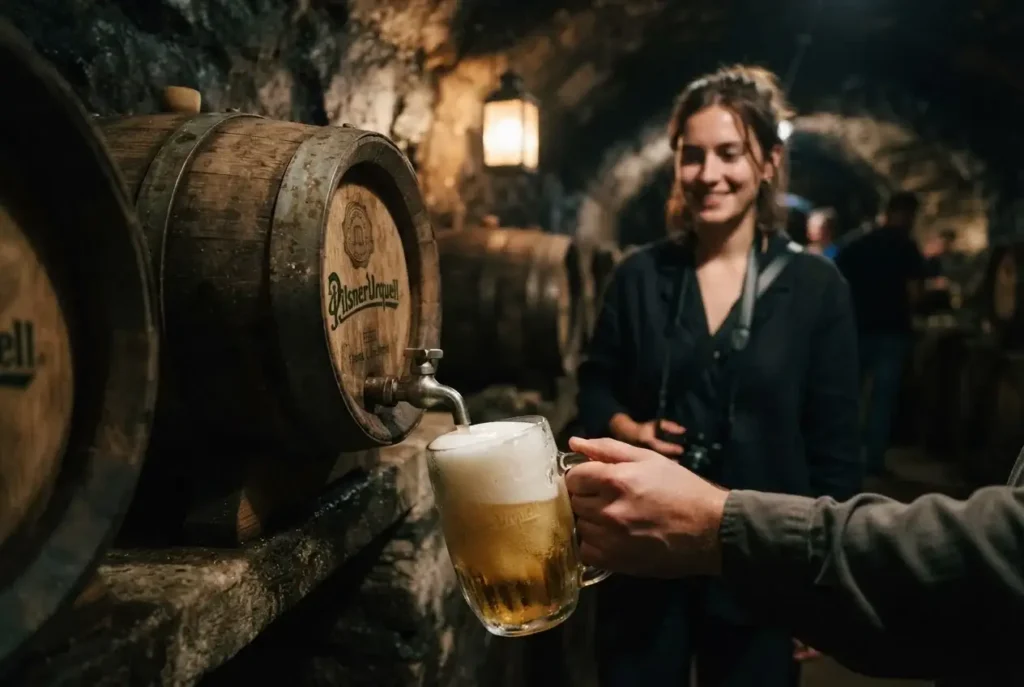
I’d book the English tour ahead through the official Pilsner Urquell visit site because slots fill up, especially in summer. As a solo traveler this is an easy day trip from Prague by train, and touring alongside a small group means you’re never truly alone even if you came by yourself.
Prague, pubs, and yes, a beer spa
Prague itself is one of the friendliest beer cities in Europe for a solo traveler, partly because Czechs drink more beer per person than anyone on earth and pubs are simply where life happens. A local pilsner often costs less than bottled water, which still amuses me.
Prague is also home to the beer spa, where you soak in a wooden tub of warm water infused with hops and malt while drinking unlimited beer from a tap beside you. It sounds ridiculous. It is ridiculous. It’s also lovely. Prices run roughly €60 to €120 depending on whether you book a shared or private solo tub, and several spas offer single-person rates specifically for people traveling alone, so you don’t need a partner to enjoy it.
What to eat: goulash, roast pork with dumplings and cabbage, and fried cheese (smažený sýr), the glorious late-night hero of Czech pubs.
Ireland: Dublin and the pint that built a city
Ireland’s beer story is really a stout story, and it centers on one very famous black pint. The Guinness Storehouse in Dublin is the most visited paid attraction in the country, and it’s genuinely well done for first-timers. The standard self-guided experience starts from €22 per person and takes about 90 minutes, ending with a pint at the rooftop Gravity Bar with views over the whole city. You can check current options and times on the official Guinness Storehouse booking page, and I’d book online in advance because it sells out often.
If you want to go deeper, there’s a Guinness Academy add-on from around €30 where you learn to pour your own perfect pint and get a certificate, and a fully guided tour from €48. For solo travelers, the self-guided version is ideal. You move at your own speed, and the Gravity Bar is a naturally easy place to strike up a conversation with other travelers.
Then leave the Storehouse and go find a real Dublin pub with live traditional music. The tour is the education. The neighborhood pub is the experience.
What to eat: a proper Irish stew, seafood chowder with brown bread, and yes, oysters, which locals have paired with stout for generations.
How to taste beer without getting drunk (this matters more than any destination)
I want to be direct here, because your safety and your memories both depend on it. The goal of beer tasting is tasting, not volume.
A few habits I’d genuinely stick to, especially traveling alone: order small sizes or tasting flights instead of full pints so you can try more with less alcohol, drink a glass of water between beers, always eat while you drink, and know that European beers are often stronger than what you may be used to, with plenty in the 7 to 11 percent range. A Belgian Trappist beer can be double the strength of a standard lager. Two of those is a real evening.

If you want the culture without much alcohol at all, that’s completely valid and increasingly easy. Many breweries, including Guinness, now offer excellent non-alcoholic versions, and ordering the local low-alcohol option is a perfectly respectable way to spend a night in any of these cities.
Staying safe as a solo drinker abroad
Solo travel taught me that confidence and caution are not opposites. They work together. When I’m drinking alone in an unfamiliar city, a few rules keep me relaxed enough to actually enjoy myself.
I never leave a drink unattended, and I don’t accept a drink I didn’t watch being poured. I keep enough money for a taxi separate from the rest of my cash. I let someone know roughly where I’m going, even if it’s just a text to a friend back home. I stick to busier, well-reviewed cafes and breweries rather than empty bars down quiet streets. And I always, always keep enough presence of mind to find my way back. The moment the fun starts tipping into fog, I stop. Nothing about a trip is improved by one drink too many, and everything can be ruined by it.
None of this is about fear. It’s about staying in charge of your own night so the experience stays yours.
How to string these cities together
The beautiful thing about European beer travel is how close these places sit. Brussels, Munich, Prague, and even a hop to Bamberg are all connected by an excellent, scenic rail network, and trains drop you in city centers instead of far-flung airports. A realistic two-week solo loop might run Brussels for Belgian cafe culture and lambic, then a train toward Germany for Bamberg’s smoked beer and Munich’s beer halls, then onward to Prague and a day trip out to Plzeň.

Don’t try to do all of it. That’s the mistake I see most. Pick two or three cities, stay long enough to have a slow afternoon in each, and let one unplanned pub become the memory you talk about for years. The best beer experiences I know of never came from a schedule. They came from sitting still long enough for a place to reveal itself.
You don’t need a group. You don’t need beer expertise. You don’t need the perfect moment, because it doesn’t exist. You just need enough curiosity to pull out a chair, order something small, and say hello. The world is remarkably generous to people who show up willing to learn. Go find out for yourself.