The first meal I ever ate alone in a foreign country was a plate of dumplings during my hiking trip through China. I remember sitting there, holding my chopsticks a little too tightly, convinced everyone could tell I had no idea what I was doing. Then the food arrived, and something shifted. Nobody was watching me. The dumplings were incredible. And I realized that eating alone in a new place is not something to survive. It is one of the best parts of traveling.
That feeling is exactly why I want to write about food this way. Not as a ranked list of pretty markets, but as a guide for the person who is dreaming about eating their way across Europe and quietly wondering if they can pull it off solo. You can. The best foodie streets and neighborhoods in Europe are not reserved for people who speak five languages or have a food critic’s palate. They are for curious people who are willing to show up hungry and pay attention.
So let’s walk through the places worth building a trip around, what to actually order when you get there, and the practical stuff nobody tells first-timers. By the end you should feel less like a nervous tourist and more like someone who knows how to find the good stuff.
What Actually Makes a Foodie Neighborhood Worth the Trip
Before we get to specific places, it helps to know what you are looking for. A great food neighborhood is not just a market with a famous name. It is a place where locals still shop and eat, where the specialties are tied to that region and not shipped in for tourists, and where you can wander on foot from a morning coffee to a late dinner without needing a car.
Here is my honest rule of thumb after years of doing this: if a street is packed with menus in six languages and someone is standing outside waving you in, keep walking one or two blocks. The real food is almost always slightly off the main drag, where the sign is only in the local language and the line is full of people on their lunch break.
The neighborhoods below all pass that test. They are famous for good reason, but each still has a living, local heart if you know where to look.
Barcelona: La Boqueria and the Quieter Streets of El Born
Barcelona is where a lot of people take their first solo food trip, and I understand why. It is walkable, warm, and generous with flavor.
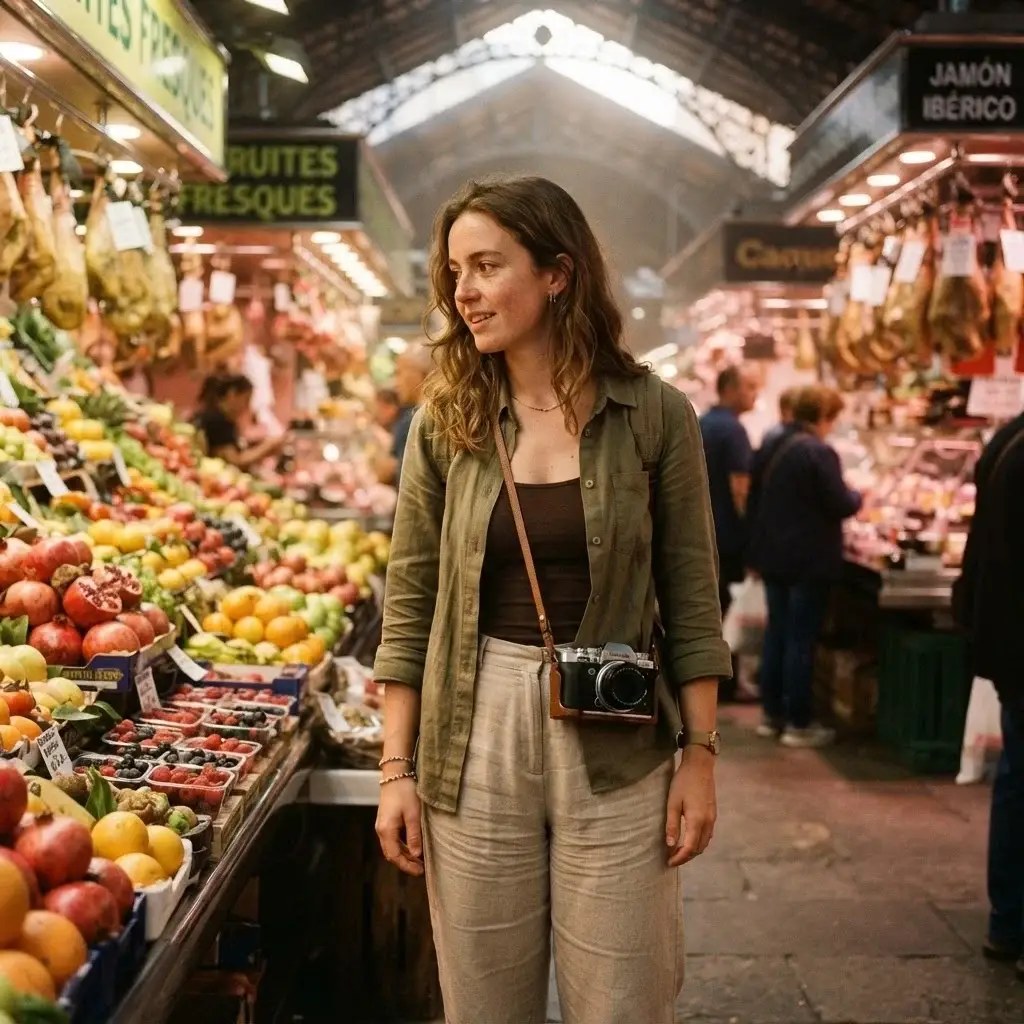
Everyone starts at La Boqueria, the sprawling covered market just off La Rambla. It deserves the hype, but timing is everything. The market runs Monday to Saturday from 8am to 8:30pm and is closed on Sundays, and if you go mid-morning before the tour groups arrive, you can watch the city actually shop for its food. I always suggest checking the current stall and event details on the market’s own site at La Boqueria’s official market page before you go, since the front stalls are the touristy ones and the good eating is deeper inside. Head to the back for a stool at a counter bar, order a plate of grilled prawns or a paper cone of jamón, and you have a perfect solo lunch.
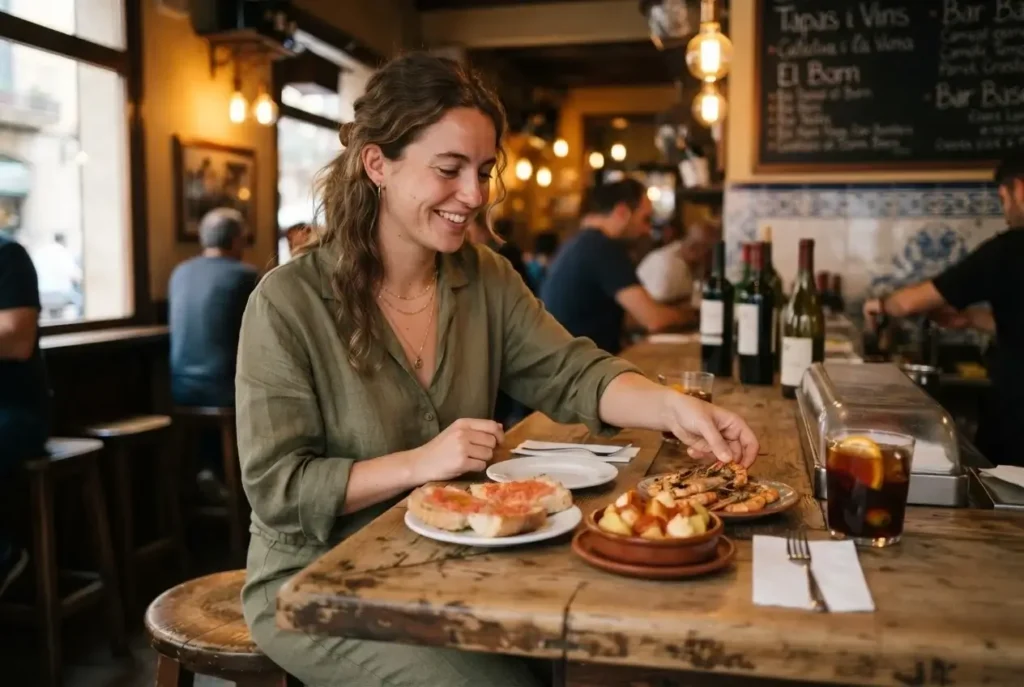
The mistake first-timers make is treating La Boqueria as the whole story. Walk fifteen minutes to El Born, and you find the Barcelona locals actually love. This is tapas country. The move here is to eat standing up at a bar, ordering two or three small plates at a time rather than committing to a big meal. Try pan con tomate, patatas bravas, and whatever seafood is fresh that day. Solo travelers, the bar is your best friend. Nobody blinks at one person eating alone at a tapas counter. It is the most natural thing in the world.
Naples: Pizza on Via dei Tribunali and the Streets of Spaccanapoli
If you care about pizza even a little, Naples belongs on your list. This is the birthplace of the thing, and the difference is real.
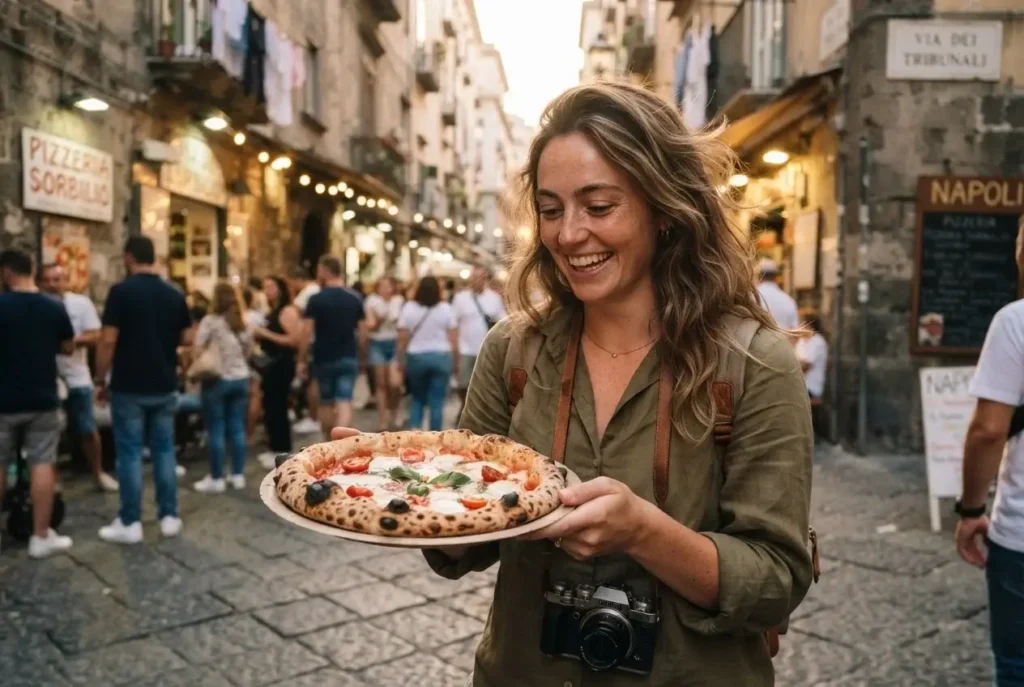
The heart of it runs along Via dei Tribunali and Spaccanapoli, the dead-straight lane that slices through the old center. The craft here is so central to Neapolitan identity that the art of the Neapolitan pizza maker is recognized on the UNESCO list of intangible cultural heritage, which tells you how seriously the city takes its dough. What you want is a classic pizza margherita or marinara, blistered and soft in the center, from a proper wood-fired oven. It should be a little floppy. That is correct, not a mistake.
Two things I’d tell any newcomer. First, expect a wait at the famous spots, and know that a slightly less famous pizzeria one street over is often just as good with no line. Second, try the fried food while you walk. Naples does street snacks like frittatine and pizza fritta beautifully, and eating on your feet in Spaccanapoli is half the experience. Keep your bag in front of you in the crowds, stay aware, and enjoy the wonderful chaos. Naples rewards travelers who lean in.
Rome: Testaccio Market and Dinner in Trastevere
Rome gets crowded, but its food neighborhoods are where the city feels human again.
Start with Testaccio, a working-class district south of the tourist core with a covered market full of ready-to-eat stalls. This is where I’d send anyone nervous about Roman food, because you can point at what looks good and eat it at a stand-up counter without a formal restaurant commitment. Look for supplì, the fried rice balls, and the famous sandwich stalls piled with slow-cooked meats. It is affordable, it is real, and it is beginner-friendly.
For evening, cross the river to Trastevere. The cobbled lanes get busy after dark, so eat early or wander a few streets past the main squares to find the trattorias where Romans actually go. Order the Roman pasta trio at least once across your trip: cacio e pepe, carbonara, and amatriciana. One important heads-up that trips up first-timers. Many Italian restaurants add a small per-person cover charge called coperto, usually a euro or two, and it is normal and legal. It is not a scam. Just factor it in and you won’t feel caught off guard.
London: Borough Market and the Global Streets Around It
London does not always get credit as a food city, but that reputation is badly out of date, and Borough Market is my favorite argument against it.
Tucked under the railway near London Bridge, Borough is one of the oldest markets in the country and a genuine feast. Do check the hours before you plan your day, because it is closed on Mondays and runs roughly 10am to 5pm from Tuesday to Friday, 9am to 5pm on Saturday, and shorter hours on Sunday, all of which you can confirm on Borough Market’s official visit page. Go hungry and graze. A salt beef sandwich, a raclette scraped over potatoes, a proper British cheese, fresh oysters if you are feeling brave. This is a place to eat with your hands and try things you can’t name.
What makes London special beyond Borough is its range. Within a short ride you can eat some of the best South Asian, Middle Eastern, West African, and East Asian food outside those regions. As someone who lived with a family in Ghana and grew to love that cuisine, I find London one of the few European cities where you can eat across the whole world in a single day. Follow your curiosity here.
Madrid: Mercado de San Miguel and the Tapas Crawl
Madrid eats late and eats well, and it is one of the friendliest cities for a solo traveler who loves food.
The Mercado de San Miguel, a beautiful iron-and-glass market near Plaza Mayor, is the easy entry point. It is more polished and pricier than a traditional market, closer to a gourmet food hall, and it stays open impressively late, from 10am to midnight most nights and until 1am on Fridays and Saturdays, with current details on the official Mercado de San Miguel site. Go for a few bites and a glass of wine, not a full dinner, since prices add up quickly.
The real Madrid magic is the tapas crawl. The tradition is to move from bar to bar, having one drink and one small plate at each, then moving on. In some bars a small free tapa still comes with your drink. Do this solo without a second thought. Order at the bar, stand, eat, pay, move on. Try jamón ibérico, tortilla española, and croquetas. Spanish dinner starts around 9pm or later, so pace your afternoon and don’t panic when restaurants look empty at 7.
Lisbon: Time Out Market and the Alleys of Alfama
Lisbon has become one of Europe’s most loved food cities, and it manages to be both trendy and deeply traditional at once.
The Time Out Market in the Cais do Sodré area is the modern face of it, a huge food hall where respected chefs and local institutions run stalls under one roof. It is open daily from 10am to midnight, and you can browse the current lineup of kitchens on the Time Out Market Lisboa page so you know what you’re walking into. For a solo traveler this format is a gift. You grab whatever you want, sit at a communal table, and nobody expects you to be part of a group.
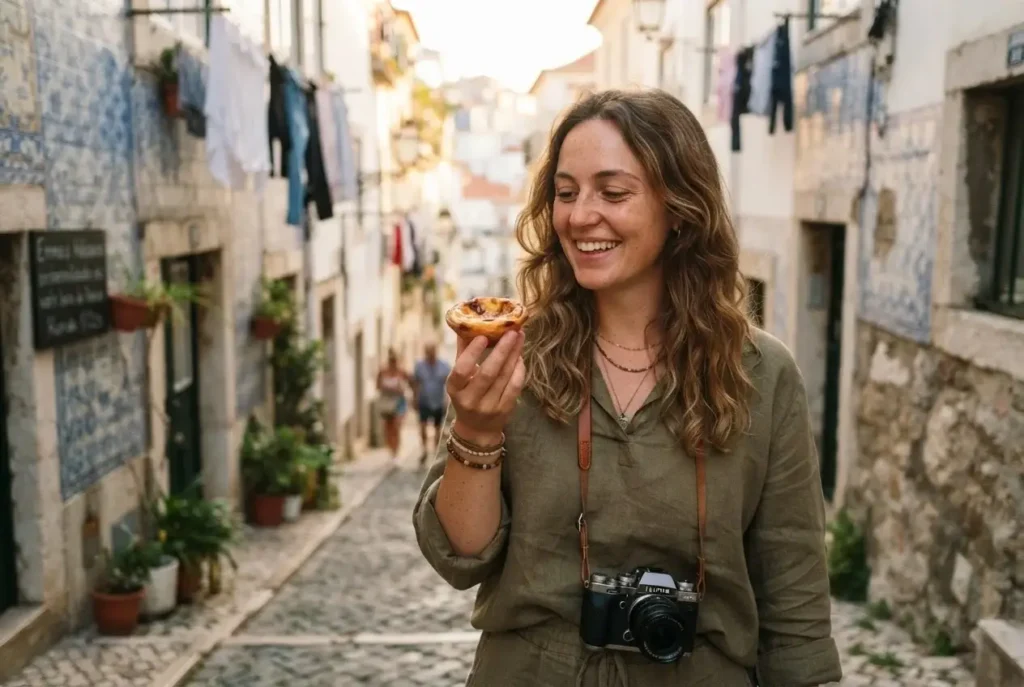
Then get lost in Alfama, the oldest neighborhood, a tangle of steep alleys and tiled houses where the sound of fado music drifts out of tiny restaurants. Eat grilled sardines, order bacalhau, the salt cod that Portugal cooks a hundred ways, and absolutely have a pastel de nata, the warm custard tart, ideally still slightly wobbly with a dusting of cinnamon. Lisbon is hilly, so wear real shoes and treat the walking as part of the meal.
Berlin: Kreuzberg and the Ritual of Street Food Thursday
Berlin’s food scene is younger, scrappier, and more international than most people expect, and Kreuzberg is its beating heart.
The neighborhood is a mix of Turkish, Middle Eastern, and modern German food, and the single best introduction is Street Food Thursday at Markthalle Neun. Every Thursday evening from 5pm to 10pm, this historic market hall fills with vendors cooking dishes from all over the world, and the current lineup and any schedule changes are posted on the Markthalle Neun Street Food Thursday page. Come hungry, bring some cash, and graze across several countries in one evening. Some stalls run out before closing, so don’t arrive at the last minute.
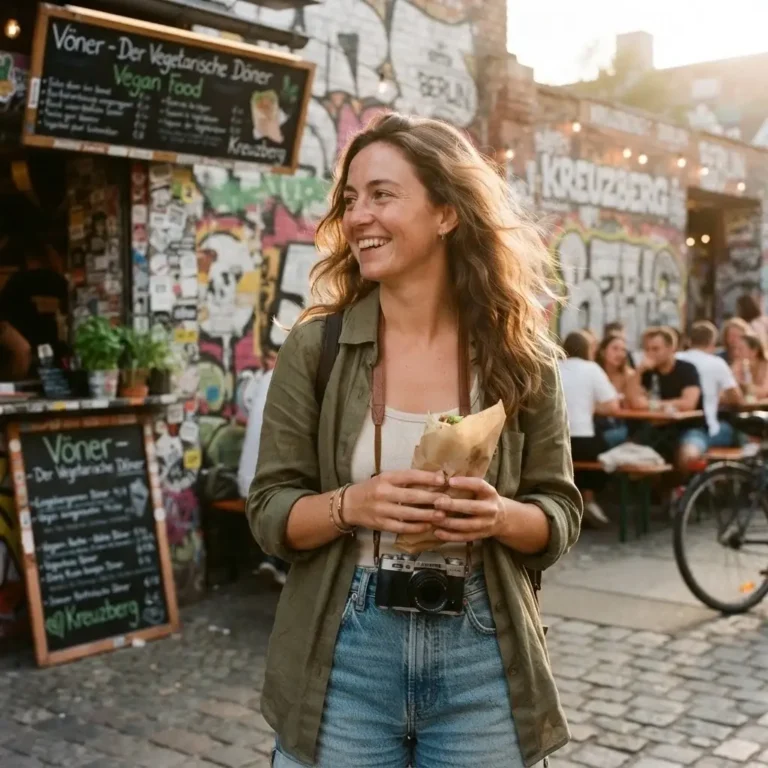
Beyond that one night, Kreuzberg is where you eat a proper döner kebab, a dish Berlin’s Turkish community made iconic, plus currywurst if you want the classic German street snack. This is a low-pressure city for solo eating. The vibe is casual, counters and stalls are everywhere, and eating alone is completely normal.
Budapest: The Great Market Hall and Hungary’s Bold Flavors
Budapest is one of the best value food cities in Europe, which makes it perfect if you are traveling on a budget, something I did plenty of when I was working flexible jobs to fund my trips.
The Great Market Hall, a grand neo-Gothic building near the Danube, is the place to start. It is open Monday to Friday from 6am to 6pm, Saturday until 4pm, and Sunday with limited vendors, and it closes on public holidays, with details on the official Central Market Hall site. The ground floor is produce and butchers, but head upstairs where food stalls sell hot, hearty Hungarian dishes. Try goulash, the famous paprika-rich stew, langos, a deep-fried dough topped with sour cream and cheese, and chimney cake for something sweet.
Budapest flavors are bold and comforting, heavy on paprika and slow-cooked meat. It is warming, affordable, and unpretentious. For a solo traveler watching their spending, this city proves that eating memorably has nothing to do with eating expensively.
How to Eat Alone Without Feeling Awkward
Let me talk to the nervous solo traveler directly, because this is the fear that stops so many people.
Eating alone feels strange for about ten minutes, and then it doesn’t. The trick is to choose the right settings, which is exactly why I lean on markets, food halls, and counter bars throughout this guide. Standing at a tapas bar or sitting at a communal food-hall table, you are surrounded by people and yet perfectly free to be on your own. Nobody is staring. They are eating.
A few things that help. Sit at the bar or counter rather than a table for two, since it feels natural and you can chat with staff. Bring something to look at if you want, but try eating without your phone at least once, because paying attention to your food is part of the joy. And go earlier in the evening if crowds feel intimidating, then work your way up to the busy hours as your confidence grows. Confidence is built one meal at a time, and food is the gentlest place to practice.
Ordering, Money, and Not Getting Ripped Off
A little practical knowledge removes most of the anxiety about ordering in a language you don’t speak.
Learn five words in the local language: hello, please, thank you, the check, and delicious. That last one earns you smiles everywhere. Pointing at what someone else is eating is a completely acceptable ordering strategy, and most food stalls are used to travelers. On money, cards are widely accepted in cities, but always carry some cash for small stalls and markets, especially in Berlin and at street vendors. Tipping in Europe is modest, not the American style. Rounding up or leaving a small percentage is plenty, and in Italy that coperto cover charge often covers the service.
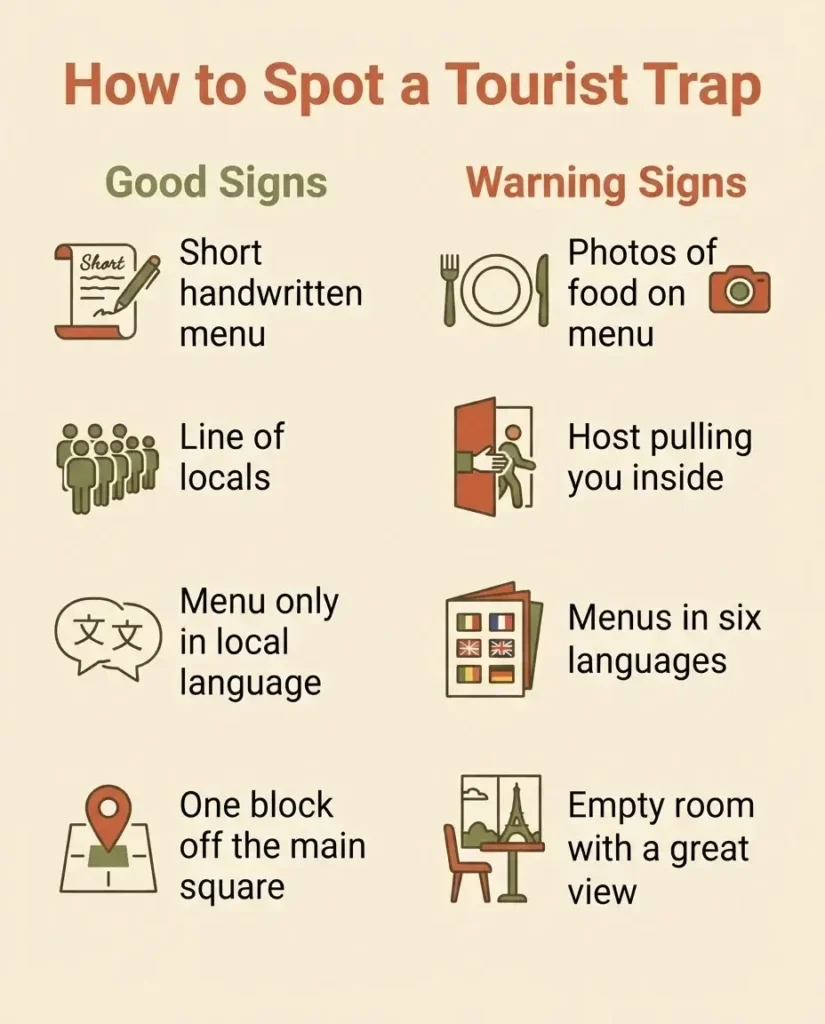
On avoiding tourist traps, trust a few signals. A short handwritten menu is a good sign. Photos of the food on the menu and a host trying to pull you inside are warning signs. A line of locals beats an empty room with a great view. And if a place is one block off the famous square, it is usually cheaper and better than the one on it.
Are These Neighborhoods Safe for Solo Travelers
Yes, with normal city awareness. The main risk in crowded food markets is not danger, it is pickpocketing, because busy stalls and distracted eaters are easy targets.
Keep your bag zipped and in front of you, especially in La Boqueria, around Trastevere, and in the packed streets of Naples. Don’t put your phone or wallet in a back pocket. Carry only the cash you need for the day. Beyond that, these are all lively, well-trafficked areas where solo travelers, including solo women, eat happily every single day. The presence of so many other people is part of what makes them feel safe.
How I’d Turn This Into an Actual Trip
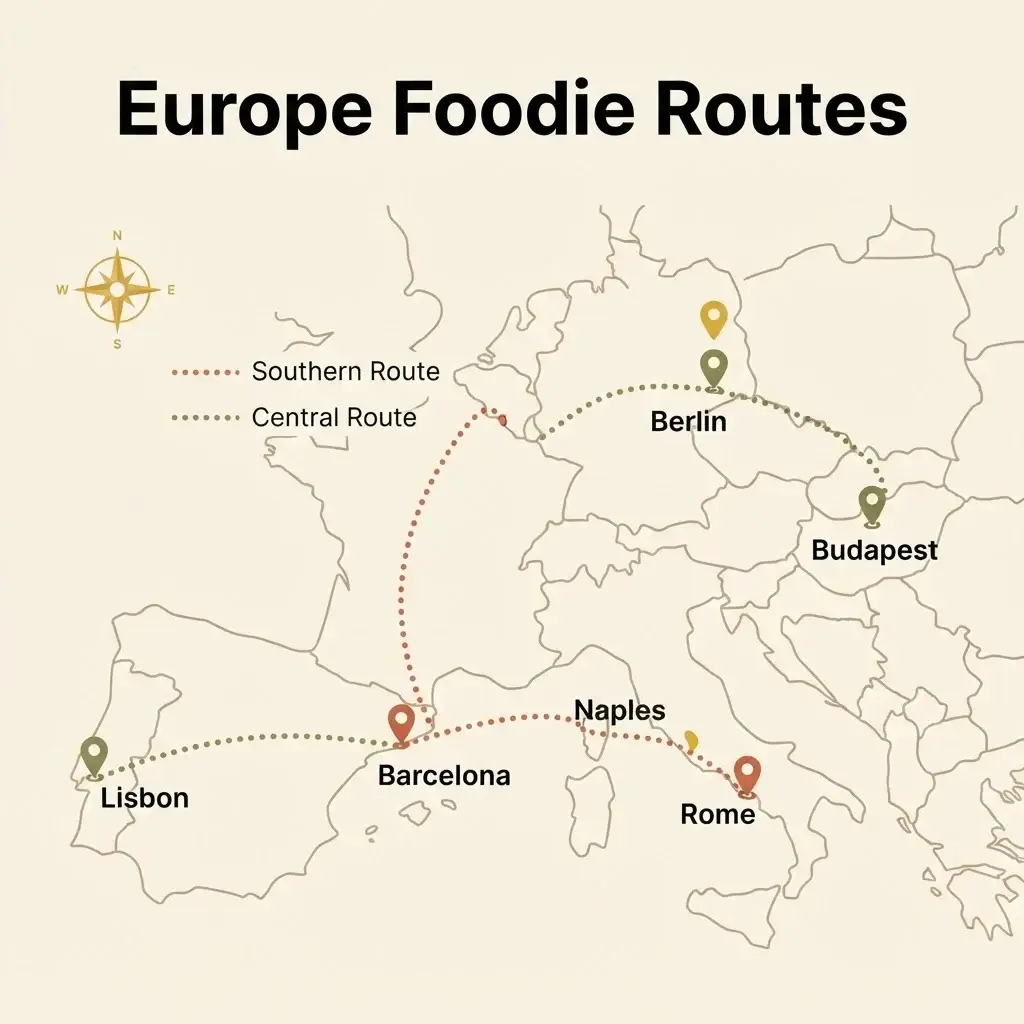
If you want to string these together, think in clusters rather than trying to hit everything. A first trip built around southern Europe might flow Barcelona to Naples to Rome, three cities with strong food identities and easy connections, which keeps flights short and your stomach happy.
A different route could pair Lisbon with a Spanish city, or link Berlin and Budapest for a central European run that goes easy on the budget. My advice is to give each city at least three nights. Food travel is about slowing down. You want time to eat badly one night and brilliantly the next, to return to a market you loved, to let a neighborhood reveal itself. Rushing six cities in ten days is how you end up remembering nothing but train stations.
Wherever you start, remember why you are doing this. The best foodie streets and neighborhoods in Europe are not really about the food alone. They are about the version of you that shows up hungry, curious, and brave enough to sit down at a counter in a country where you know no one, and to discover that you belong there just fine. That person has been waiting for you. Go feed them.