The first time I saw a real medieval town wall, I was on a train somewhere in Central Europe, half asleep with my backpack wedged between my knees. I remember the moment the tracks curved and a stone wall came into view, taller and older than anything I’d grown up around in New York. It felt like the train had slipped backward a few centuries. I didn’t know it yet, but that little jolt of wonder would become one of the things I chase most when I travel. There’s something about walking through a gate that people have walked through for eight hundred years that resets your sense of scale.
If you’re dreaming about medieval towns in Europe right now, you’re probably picturing the same thing: cobblestones, watchtowers, maybe a market square with a fountain older than your country. The good news is that feeling is real and accessible, even if you’re traveling completely solo and have never planned a European trip before. The tricky part is knowing which towns deliver that feeling without turning into a rushed, overcrowded day trip. I’ve spent years researching, backpacking, and talking to other solo travelers about exactly this, and I want to walk you through the towns that consistently earn their reputation, along with the practical details that most guides skip.
What Actually Makes a Town “Medieval”
Before we get into specific places, it helps to know what you’re actually looking for. A genuinely medieval town usually means the core layout, walls, or major buildings date back to somewhere between the 5th and 15th centuries, and crucially, that layout has survived largely intact rather than being rebuilt after wars or modern development. That’s different from a town that simply has some old buildings mixed into a modern city. The towns on this list either kept their fortifications, their narrow medieval street plans, or both, which is exactly why so many of them carry UNESCO World Heritage recognition today. That status isn’t just a nice badge. It usually means stricter preservation rules, which is part of why these places still feel the way they did centuries ago instead of getting swallowed by strip malls and parking garages.
How to Actually Plan a Medieval Town Route
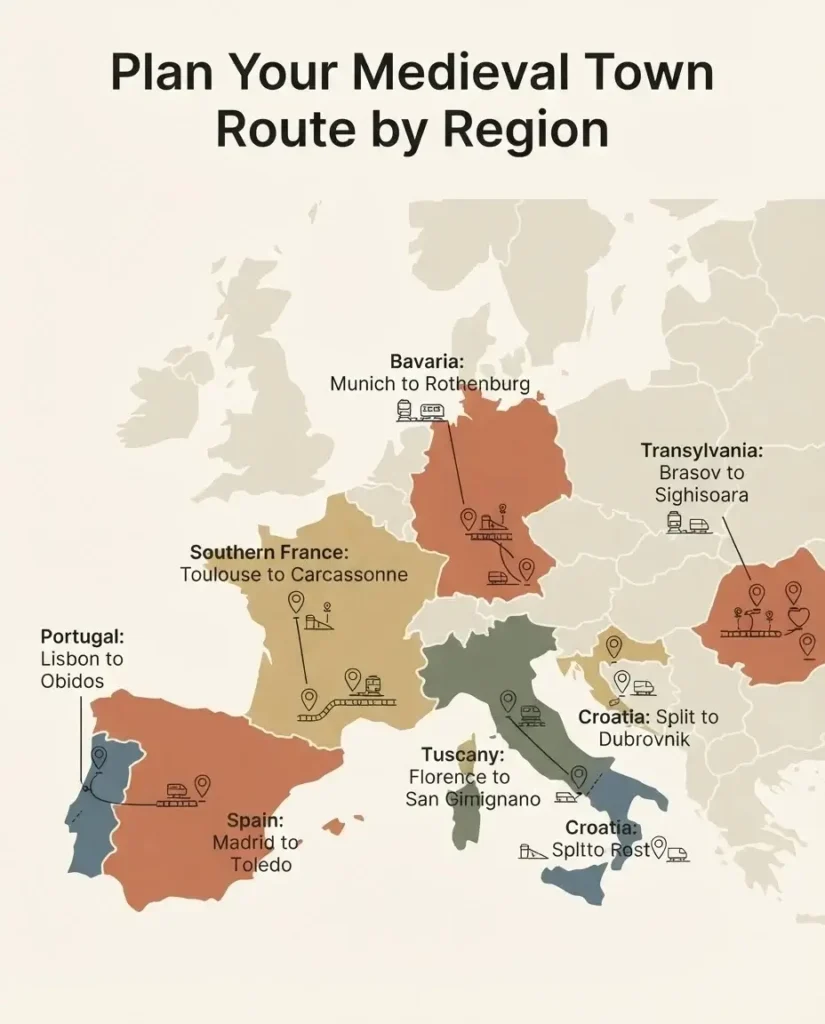
Here’s something most articles gloss over. You don’t need a rental car to see incredible medieval towns in Europe, but you do need to think regionally rather than picking towns at random off a map. Group your towns by country or region and use a home base city with good rail connections. Munich works well for Bavarian towns, Toulouse or Montpellier work for southern France, Florence is your launchpad for Tuscan hill towns, and Bucharest or Brasov work for Transylvania. From my own backpacking days across Europe, the single biggest planning mistake I made early on was trying to zigzag between countries instead of clustering nearby towns together. It cost me hours of unnecessary train transfers I could have avoided with a little more upfront research.
Rothenburg ob der Tauber, Germany: The Fairy Tale Walled Town
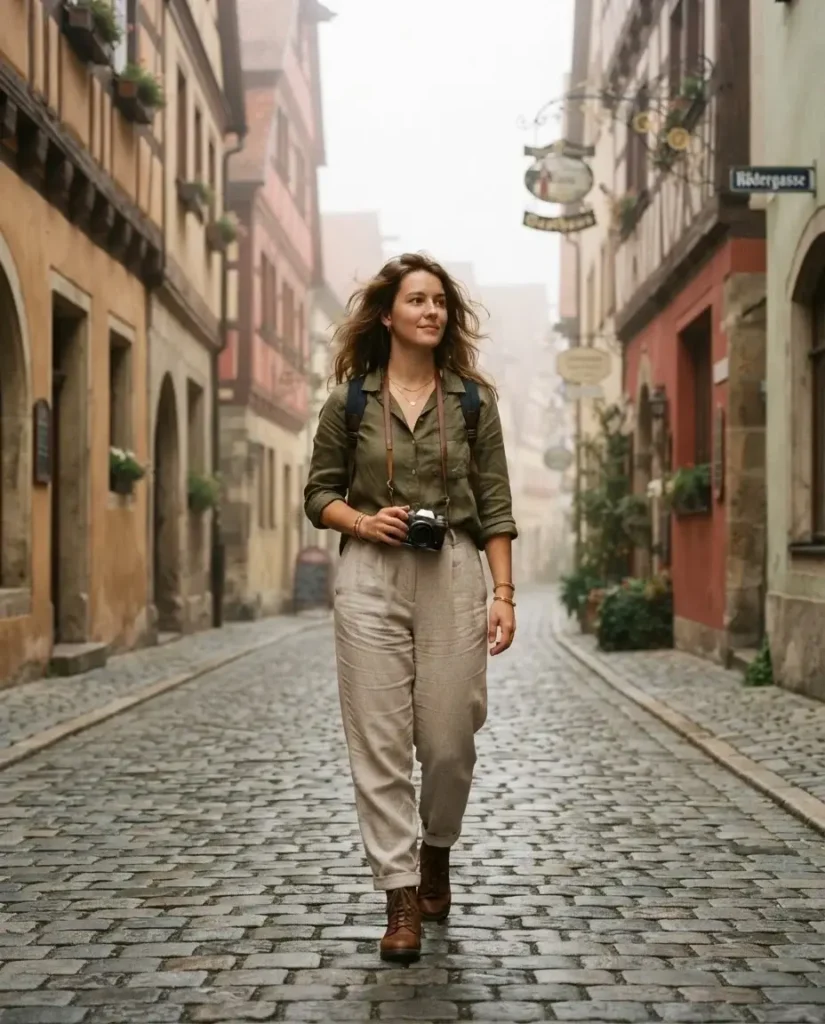
Rothenburg is probably the town most people picture when they imagine medieval Europe, and it earns that reputation honestly. The entire old town sits inside a still-standing wall you can walk almost the whole way around, with half-timbered houses, a market square, and a night watchman tour that runs after dark most of the year. What surprises first-time visitors is how small it actually is. You can walk from one end to the other in about twenty minutes, which means the real trick is arriving early or staying overnight, since day-trip buses from Munich and Frankfurt tend to flood the town between late morning and mid-afternoon. If you’re building a route, the Rothenburg tourist information office is a genuinely useful first stop for current walking tour times and seasonal events like the Christmas market, which runs from late November through the days before Christmas. For food, look for Franconian wine and the local pastry called Schneeball, a deep-fried dough ball dusted with sugar that’s sold at nearly every bakery window in town.
Carcassonne, France: Europe’s Largest Fortified City
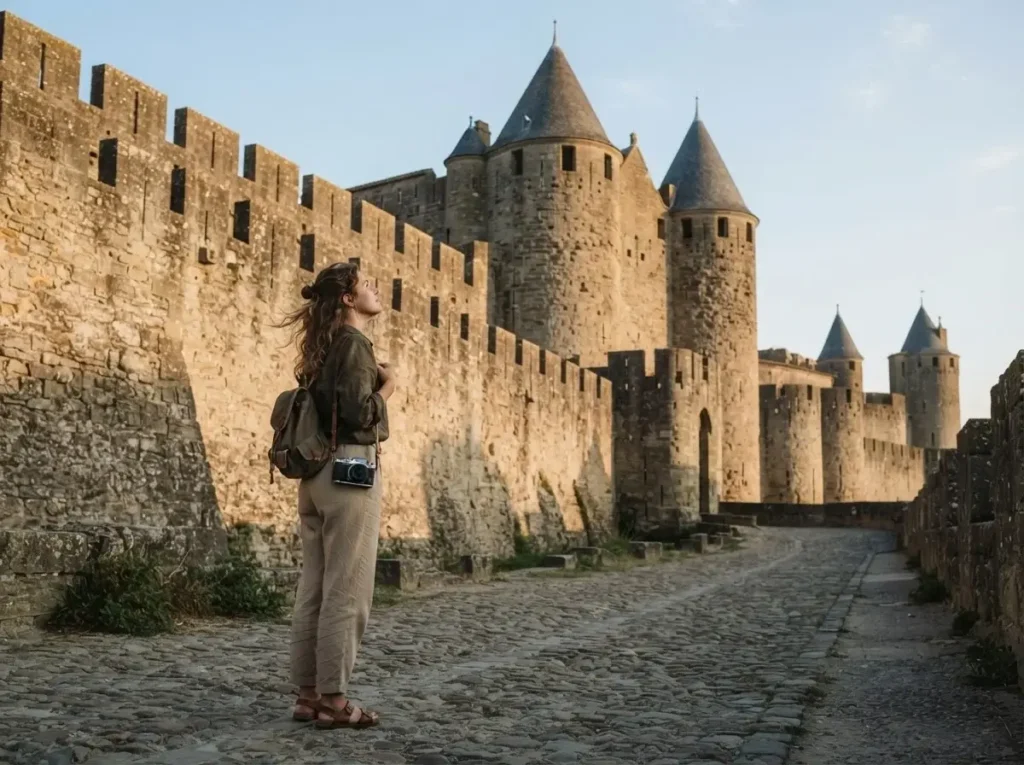
Carcassonne is a different scale entirely from Rothenburg. This is a full fortified city, double-walled with more than fifty towers, sitting on a hilltop above the modern town below. Walking through the Narbonnaise Gate into La Cité feels genuinely cinematic, and access to wander the streets is free day and night. What costs money is entry into specific sites inside, like the Château Comtal. The honest downside, and something I want you to know before you plan around it, is that Carcassonne can feel like a theme park during peak summer hours, with souvenir shops lining nearly every lane. My advice, and this echoes what solo travelers consistently report, is to stay the night in La Cité itself or in the lower town, then walk the ramparts at sunrise or after the tour groups clear out in the evening. That’s when the place actually feels medieval instead of commercialized. The official Carcassonne tourism site has detailed maps and current opening hours for the paid sites, which change seasonally. For food, this is cassoulet country, a slow-cooked bean and duck or sausage stew that pairs well with a local Malepère wine.
San Gimignano, Italy: Tuscany’s Tower-Studded Hilltop
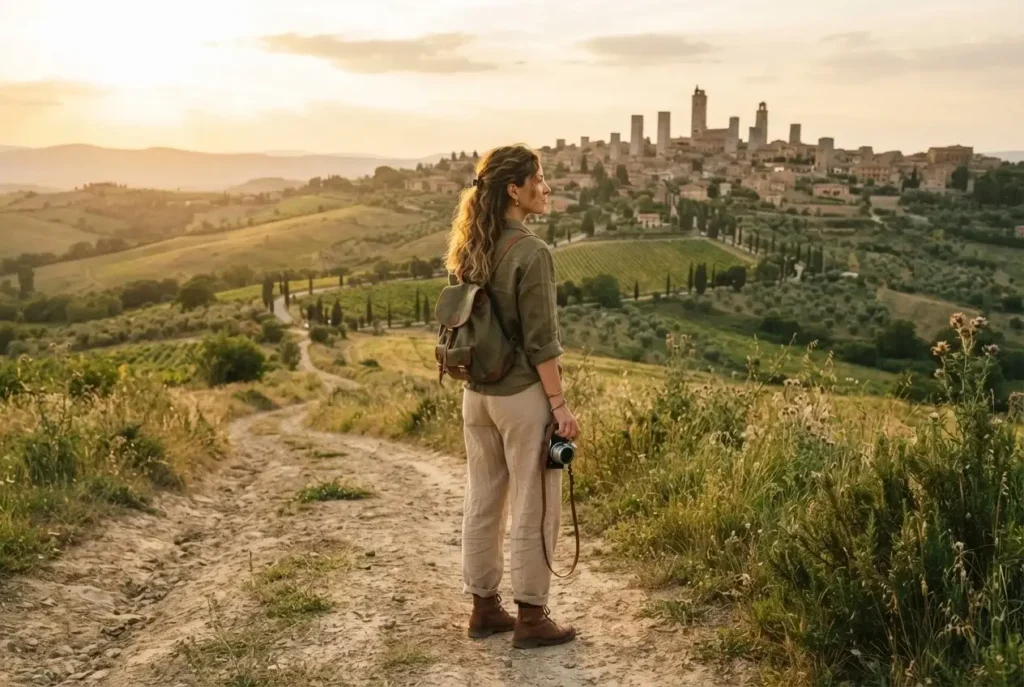
San Gimignano rises out of the Tuscan countryside with medieval stone towers still standing, a rare survival since most Italian hill towns lost their towers to demolition or collapse over the centuries. The town’s UNESCO listing specifically recognizes how intact its original medieval urban layout remains, which you can read more about on the UNESCO World Heritage page for San Gimignano. It’s an easy day trip from Florence or Siena, though there’s no direct train, so you’ll typically bus in through Poggibonsi. Give yourself at least half a day to climb the Torre Grossa for the view and to wander beyond the main street, since most visitors stick to a single crowded lane and miss quieter corners entirely. This is also saffron country, and the town’s Vernaccia di San Gimignano is one of Tuscany’s oldest white wines, worth pairing with a plate of local pici pasta.
Sighișoara, Romania: Transylvania’s Saxon Citadel
Sighișoara tends to surprise people, mostly because it’s less photographed than the towns above but arguably just as impressive. This fortified citadel was built by Transylvanian Saxon settlers, and its historic centre earned UNESCO World Heritage status in 1999 for its 850 years of continuous history, detailed on the UNESCO listing for the Historic Centre of Sighișoara. What makes it stand out is how lived-in it still feels. Locals actually reside inside the citadel walls, so it doesn’t have the same museum-piece stillness that some heavily touristed towns develop. Brasov makes a convenient base with regular train connections, and the trip itself cuts through genuinely dramatic Transylvanian countryside. If Vlad the Impaler’s birthplace claim intrigues you, know that the historical connection is debated among scholars, so treat it as folklore-flavored fun rather than settled fact. For food, look for sarmale, cabbage rolls stuffed with rice and meat, a staple across Romanian home cooking that you’ll find in nearly every guesthouse in town.
Óbidos, Portugal: A Walled Village Locals Still Call Home
Óbidos is smaller and quieter than most towns on this list, which is exactly its appeal. The walls encircle a genuinely tiny village of whitewashed houses with blue and yellow trim, and you can walk the entire rampart loop in under an hour. It’s roughly an hour from Lisbon, making it one of the easiest medieval day trips in Portugal, though I’d argue it rewards an overnight stay far more than most towns its size. The official Óbidos tourism office lists current opening hours for the castle and walls, which typically open around 9:30am. The local specialty is ginjinha, a sour cherry liqueur traditionally served in a small chocolate cup, sold from little wooden stalls tucked into the town walls themselves.
Toledo, Spain: Three Cultures Within One City Wall
Toledo sits on a rocky outcrop above the Tagus River, and its layered history sets it apart from the other towns here. This is a city where Christian, Muslim, and Jewish communities coexisted and built side by side for centuries, and you can still see that layered heritage in the cathedral, the synagogues, and the old mosque architecture within a single walkable old town. It’s a genuinely easy day trip from Madrid by high-speed train, taking around thirty minutes, though staying overnight lets you see the city lit up against the cliffs after the day-trippers leave, which is worth the extra cost of a room. Spain’s official national tourism resource has a dedicated Toledo destination page with practical sightseeing details and seasonal event listings. Food-wise, this is the place to try marzipan, a Toledo specialty since medieval times, alongside hearty Castilian stews like carcamusas.
Dubrovnik, Croatia: The Adriatic’s Medieval Powerhouse
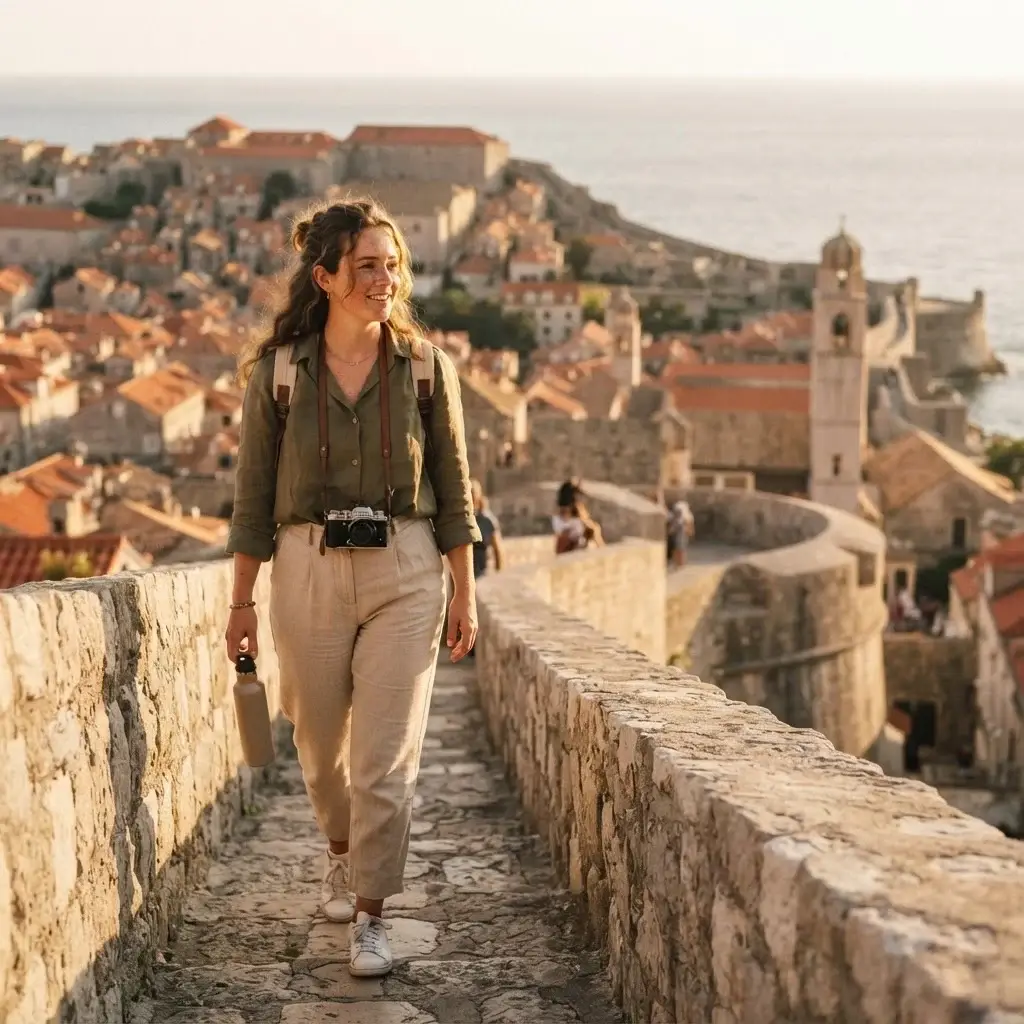
Dubrovnik’s walls are some of the most complete city fortifications left in Europe, and walking the full 1,940-meter loop takes you past sixteen towers and three fortresses with sweeping Adriatic views the entire way. Current entry to the official Dubrovnik City Walls site runs 39 euros for adults and 15 euros for children and students, with kids under seven entering free, and the walls are open daily from 8am to 7:30pm. The honest challenge here is cruise ship crowds. Multiple ships can dock on the same morning and flood the old town by 9am, so if you want the walls to yourself, aim for the first opening hour or the last two hours before closing. Dubrovnik is also genuinely more expensive than the other towns on this list, so budget accordingly if you’re traveling solo on a tighter plan. Look for black risotto made with cuttlefish ink, a Dalmatian coastal specialty you’ll find on nearly every old town menu.
Common Mistakes First-Timers Make in These Towns
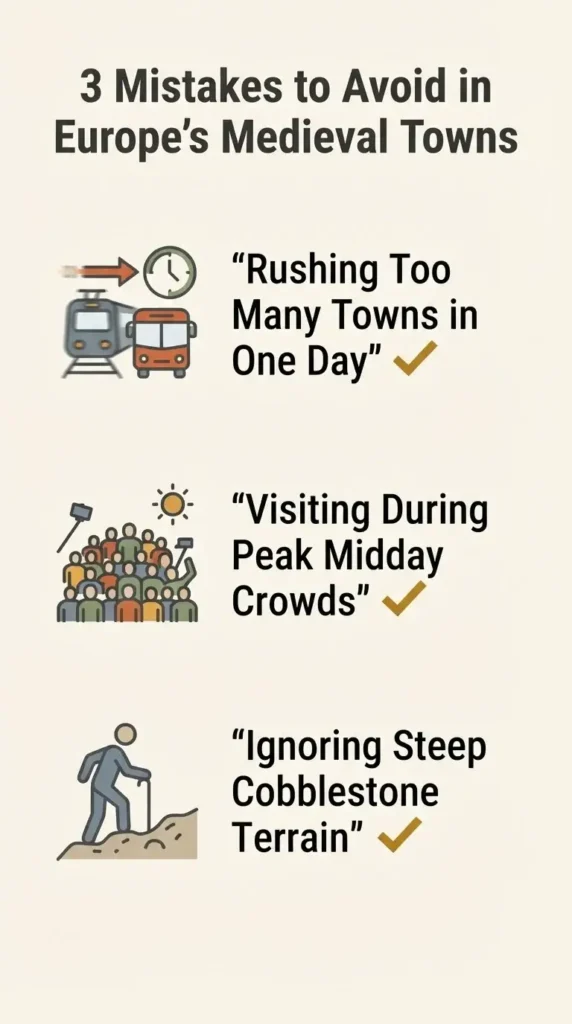
A few patterns show up again and again when I talk with readers planning trips like this. The biggest one is trying to see too many towns in too little time, which turns every stop into a rushed photo session instead of an actual experience. Give each town at least a half day, and consider staying overnight in your one or two favorites rather than day-tripping through all of them. The second mistake is showing up during peak midday hours without realizing that’s exactly when every tour bus arrives, then judging the town as overcrowded when the truth is you just picked the busiest possible window. And the third, especially relevant for solo travelers, is assuming these towns are entirely walkable without checking terrain. Several of them, San Gimignano and Toledo especially, involve steep hills and uneven medieval cobblestones that are worth planning for if mobility or footwear is a concern.
Budgeting and Safety for Solo Travelers
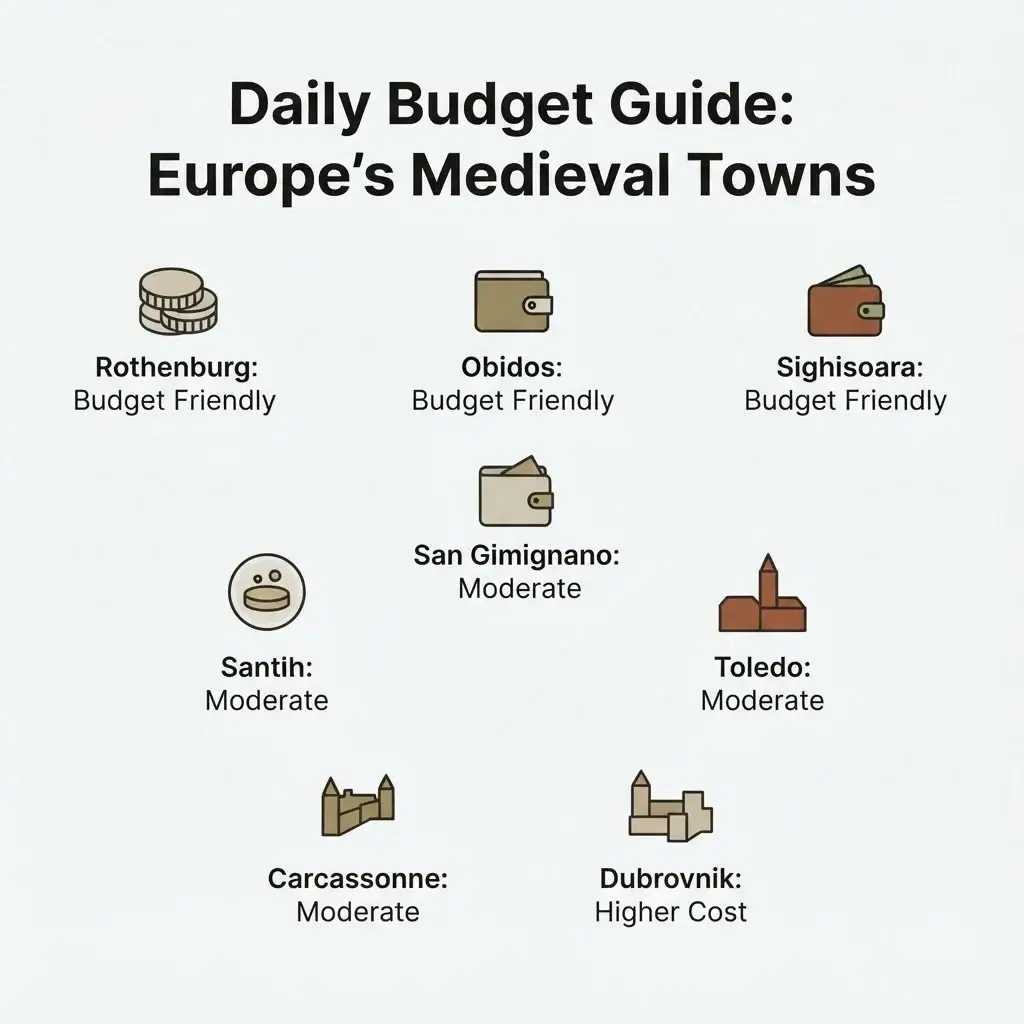
Medieval towns tend to be cheaper than major capital cities, especially outside peak summer months, but Dubrovnik and Carcassonne can spike in price during high season. A realistic daily budget for food and a mid-range guesthouse in most of these towns lands somewhere between 50 and 100 euros, with Rothenburg, Sighișoara, and Óbidos on the more affordable end. As for safety, these towns are generally very low crime, and walking alone after dark inside the walls feels calmer than in most big cities, mainly because there’s simply less foot traffic once the day crowds leave. That said, smaller towns also mean fewer people around late at night, so basic solo travel habits still apply: let someone know your general plans, keep a charged phone, and trust your instincts if a street feels unusually empty or poorly lit.
Medieval towns have a way of teaching you something bigger than history. They remind you that things built slowly, with care and permanence in mind, tend to last. That’s not a bad lesson to carry into how you plan your own travel life too. Pick one or two towns from this list, build a simple route around them, and give yourself permission to slow down once you arrive. That’s when these places actually start to feel like more than a postcard.