
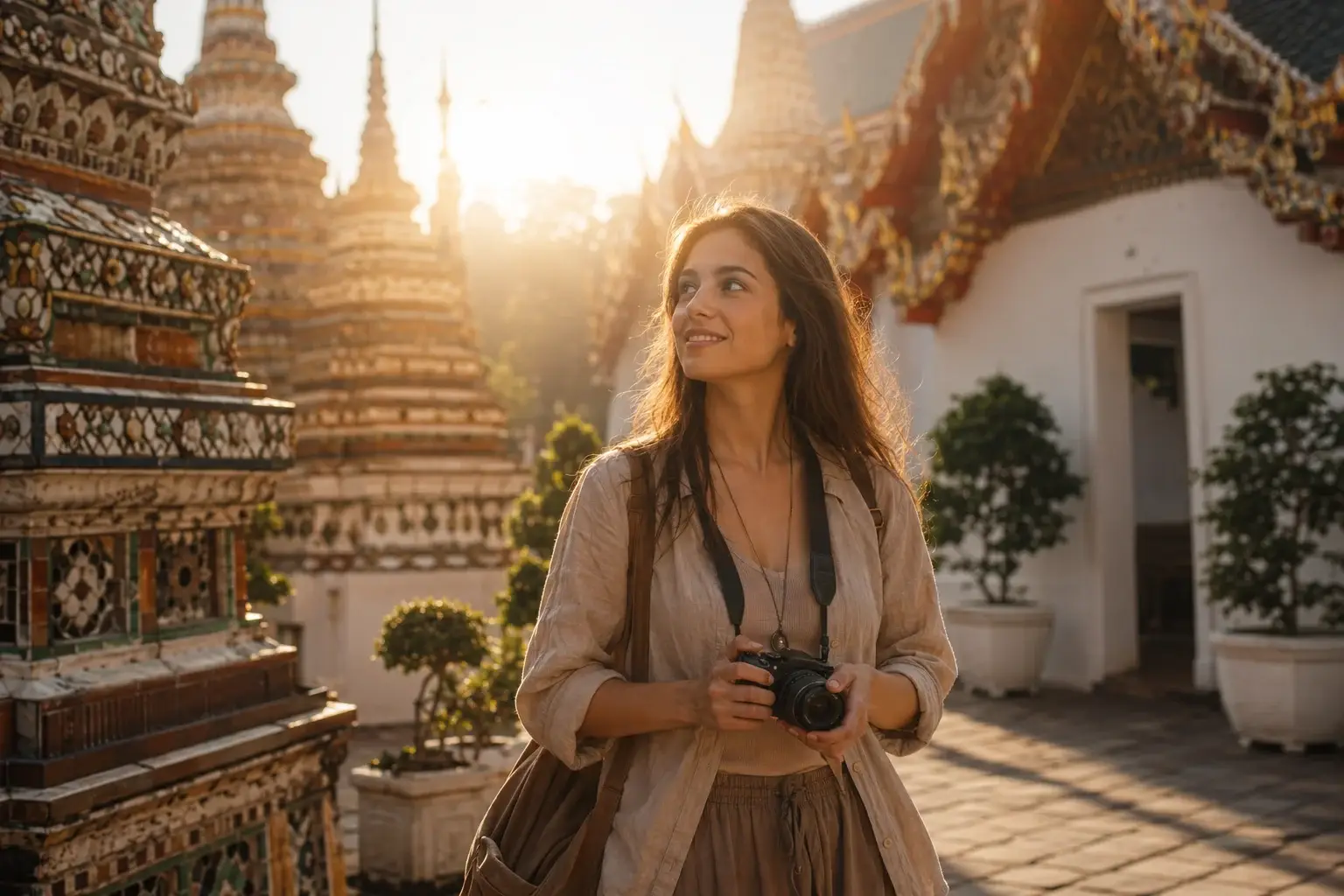
When I was working my first office job after university, I remember staring at the clock, watching the seconds tick by. I felt like I was living someone else’s life. I had a BA in Communication, a steady paycheck, and a desk that felt like a cage. My soul was craving movement. I started planning my first real solo trip, and I was terrified. Cities felt loud, intimidating, and complex. I thought if I didn’t have a perfect, minute-by-minute plan, I would get lost or fail.
That was years ago. Since then, I’ve navigated the bustling markets of Bangkok, the winding streets of Rome, and the hidden lanes of Tokyo. I learned that you don’t need a rigid schedule to succeed. You need a rhythm. When you find your flow in a major city, you stop being a tourist and start being an explorer. Here is how I structure the best solo travel itineraries for major cities so you can stop worrying and start living.
The Art of the “Slow-Arrival” Day
My biggest mistake during my early days of backpacking was trying to do everything on day one. I would land, drop my bags, and run to the nearest famous landmark. I usually ended up exhausted, hungry, and feeling overwhelmed by the crowds.
Now, I practice the “Slow-Arrival” method. I dedicate the first 24 hours to simply existing in the space. I walk. I sit in a park. I find a local coffee shop and just watch how people interact. Before you even set foot on the plane, it is a great idea to check the latest entry requirements and safety alerts on the US Department of State Travel website. Knowing the basics of your destination’s legal environment gives you a massive confidence boost before you arrive.
Once you are there, don’t worry about the “must-see” sites. Find a local neighborhood that isn’t in the center of the tourist action. Grab a map, wander until you get hungry, and find a place that is full of locals. If the menu is in a language you don’t speak and there are no pictures, you are in the right spot.
Navigating Like a Local: Logistics and Tools
Getting around a major city can feel like a riddle. In Bangkok, for example, I quickly realized that taking random taxis was a headache. I started using apps that were designed for the local market, which made my life so much easier. If you are traveling through Southeast Asia, it is worth reading about how the Grab app helps solo travelers navigate safely and affordably without the stress of haggling for prices in a foreign language.
Safety is the shadow that hangs over many first-time solo travelers. I’ve been there. I remember walking through the backstreets of a new city, clutching my bag, and checking behind me. Over time, I learned that safety comes from confidence and preparation. Always keep a digital copy of your documents, but also have a physical plan. Before I travel to a new country, I always review the health advisories and food safety tips on the CDC Travelers’ Health page to make sure I know what to eat, drink, and pack for my specific destination.
Building Your Itinerary: The “Two-Action” Rule
When I build an itinerary, I use what I call the “Two-Action” rule. I pick one “big” activity for the day—like a museum visit or a long hike—and one “small” activity, like visiting a local market or sitting in a specific plaza. Everything else is open time.
This prevents the burnout that often ruins solo trips. If you are in a city like Bangkok, don’t just rush to the temples. Spend your afternoon learning about the deep cultural traditions and festival etiquette provided by the Tourism Authority of Thailand to gain a better appreciation for the spiritual side of the city. You’ll find that when you respect the local rhythm, the city opens up to you in ways that a guidebook never could.
Finding Culture in the Chaos
Major cities are often home to some of the most significant historical sites on the planet. I love spending time at places that have been recognized for their universal value. For instance, when I am in a city with a historic center, I check if there are official UNESCO World Heritage sites nearby to guide my cultural exploration in a way that respects the history of the people who live there.
However, culture isn’t just about old buildings. It’s about the pulse of the city. It’s in the way a grandmother sells street food at 10 PM. It’s in the music playing from a small basement bar. My advice? Follow the noise. If you hear music, go toward it. If you see a line for a food stall, join it. That is how you find the true heart of a metropolis.
Preparing for the Unexpected
Even with the best plans, things go wrong. I have missed trains, lost bags, and been caught in downpours. These moments used to terrify me. Now, they are some of my favorite stories. The key is having a safety net so that an accident doesn’t become a disaster. I always suggest that travelers read up on the types of protection available through World Nomads Travel Insurance so they understand what they are covered for, whether it’s a stolen camera or a missed connection.
When you are alone, you have to be your own advocate. Learn the basic phrases in the local language. Even a simple “hello,” “thank you,” and “excuse me” can change the way people treat you. It shows that you are curious about their world, not just passing through it.
The Solo Traveler’s Daily Rhythm
A perfect day in a city for me looks like this:
- Morning: Early start. I head to a local bakery or cafe before the main crowd wakes up. This is where I write in my journal and plan my loose “Two-Action” list.
- Mid-Day: My “Big” activity. I do the main site I want to see, but I do it at my own pace. I don’t look at my watch.
- Afternoon: This is for the “Small” activity. I walk a neighborhood, visit a library, or sit by the river.
- Evening: I eat dinner at a place with counter seating. It is much easier to start a conversation with a local or another traveler when you are sitting side-by-side rather than across a table.
I have found that the most important part of solo travel isn’t the destination at all. It is the person you become while you are there. You become someone who can navigate a subway system in a foreign language. You become someone who can eat alone without feeling self-conscious. You become someone who trusts their gut.
If you are feeling scared, start small. Take a solo day trip to a city near you. Use these strategies. Find your rhythm. The world is much smaller, kinder, and more beautiful than you think. You have the courage to explore it—you just have to take that first, imperfect step.



