Mistakes to Avoid on the Best Road Trips in Ireland: Tips

There is a specific moment during a road trip when the romantic dream of travel collides hard with reality. For me, it happened on a terrifyingly narrow road in County Kerry. The Atlantic Ocean crashed against jagged cliffs hundreds of feet below my left tire. On my right, a ancient stone wall stood centimeters from my side mirror. Suddenly, a massive tour bus appeared around a blind bend, heading straight toward my tiny rental car.
I had to reverse down a winding hill with a manual gear stick using my left hand, sweating through my jacket, while a local sheepdog barked at me from a nearby field.
Before I chose this life on the road, I spent years working a traditional 9-to-5 office job in New York. I saved every dollar I could by working extra shifts as a certified sightseeing guide in the city. I knew how to navigate chaotic traffic, but rural Ireland was a completely different beast.
Taking the best road trips in Ireland is one of the most freeing, life-changing adventures you can experience. It is the ultimate way to build your confidence as a solo traveler. But if you rely on glossy travel brochures, you will run into unexpected trouble.
To help you avoid the common pitfalls, I have broken down the biggest mistakes travelers make on Irish scenic routes. Here is everything you need to know to drive Ireland safely, confidently, and authentically.
1. Misjudging Driving Times and Road Widths
The single biggest mistake people make when planning their itinerary is trusting digital maps blindly. A route that looks like a quick one-hour drive on your phone can easily take two or three hours in real life.
The Illusion of Short Distances
Ireland looks small on a global map, but its geography is dense. Outside of the major motorways connecting Dublin to cities like Cork and Galway, the roads are narrow, winding, and full of surprises. You are not driving on wide, straight highways.
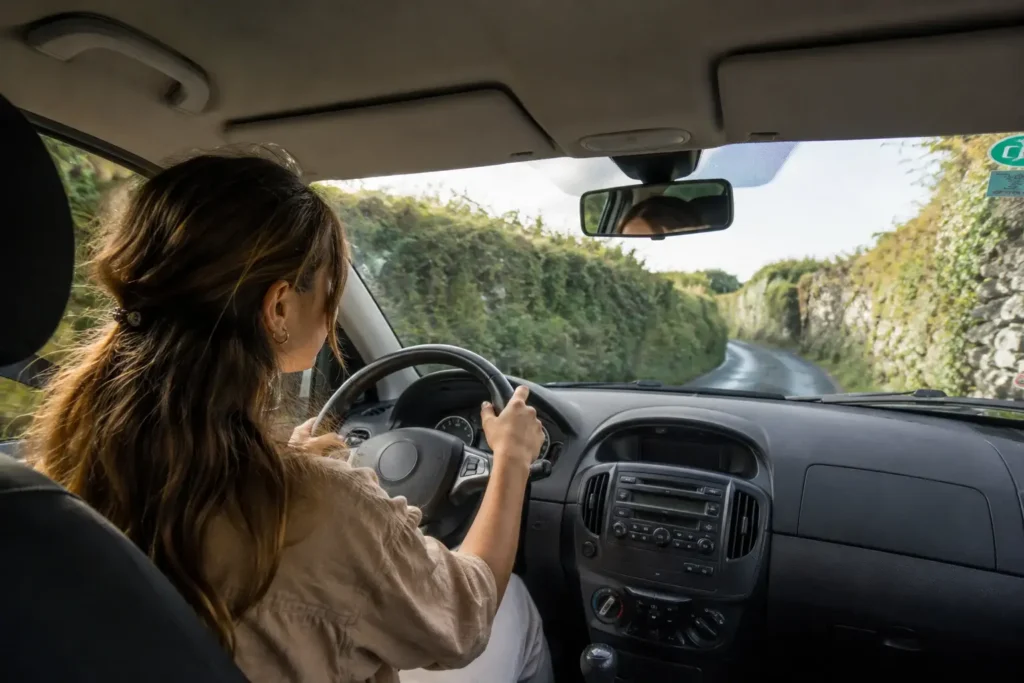
You are navigating regional roads (marked as R-roads) and local roads (marked as L-roads).
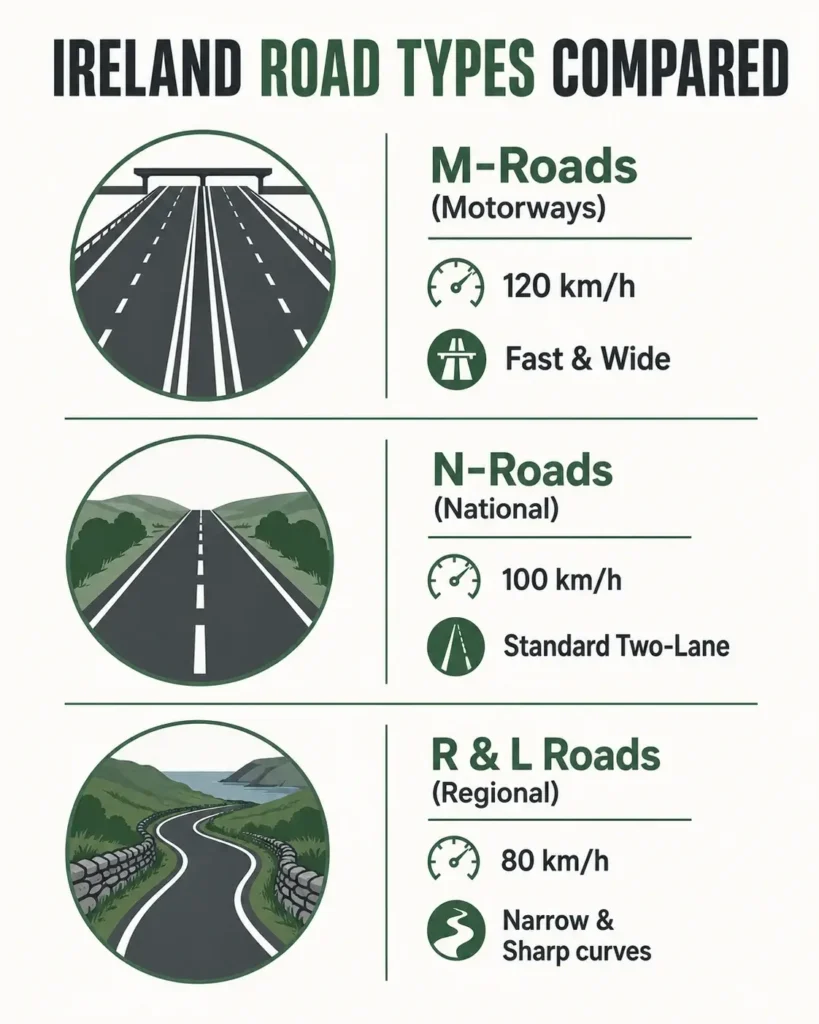
These paths are often framed by high hedges, ancient stone walls, or steep ditches that leave zero room for error.
The Reality of Rural Traffic
On the regional routes, you will regularly share the pavement with heavy agricultural tractors, slow-moving milk trucks, and herds of livestock. If a flock of sheep decides to take a midday nap on a coastal road in Donegal, your schedule is instantly cleared.
Insider Secret: Never plan to cover more than 100 to 120 miles in a single day if you are exploring scenic coastal routes. If you jam too many destinations into one day, you will spend the entire trip staring tensely at the bumper of the car ahead of you instead of enjoying the landscape.
2. Choosing the Wrong Rental Car and Insurance Coverage
Renting a vehicle in Ireland is not like renting one in North America or continental Europe. If you do not pay attention to the fine print, you might end up stranded at the airport counter with a massive unexpected bill.
The Standard Transmission Trap
By default, most rental cars in Ireland are manual transmission (stick shift). If you grew up driving an automatic, an Irish road trip is definitely not the time to learn how to change gears. Remember, you will be sitting on the right side of the vehicle, which means you must shift gears using your left hand. This requires significant muscle memory.
Always explicitly book an automatic car months in advance. They are in high demand and cost significantly more, but the peace of mind is worth every single penny.
The Heavy Insurance Requirements
Ireland has incredibly strict car rental insurance rules due to the high frequency of minor scratches, dents, and broken side mirrors on narrow roads. Many standard credit cards that offer worldwide collision damage coverage specifically exclude Ireland.
Before you leave home, it is smart to check your safety nets. I always recommend checking official government advisories, and the US Department of State Travel site provides excellent up-to-date international travel alerts and passport entry requirements to make sure your paperwork is solid before you even look at a rental contract.
When you get to the rental desk, the agent will require proof of coverage or hold a massive deposit—often thousands of Euros—on your credit card. To sleep easy at night, buy the super collision damage waiver (CDW) directly from the rental company. It lowers your financial deductible to zero. If you accidentally scrape a stone wall while squeezing past a tractor, you can simply hand over the keys at the end of the trip without paying a massive penalty.
3. Driving the Ring of Kerry in the Wrong Direction
The Ring of Kerry is easily one of the best road trips in Ireland. It offers stunning ocean views, historic ruins, and beautiful mountain passes.
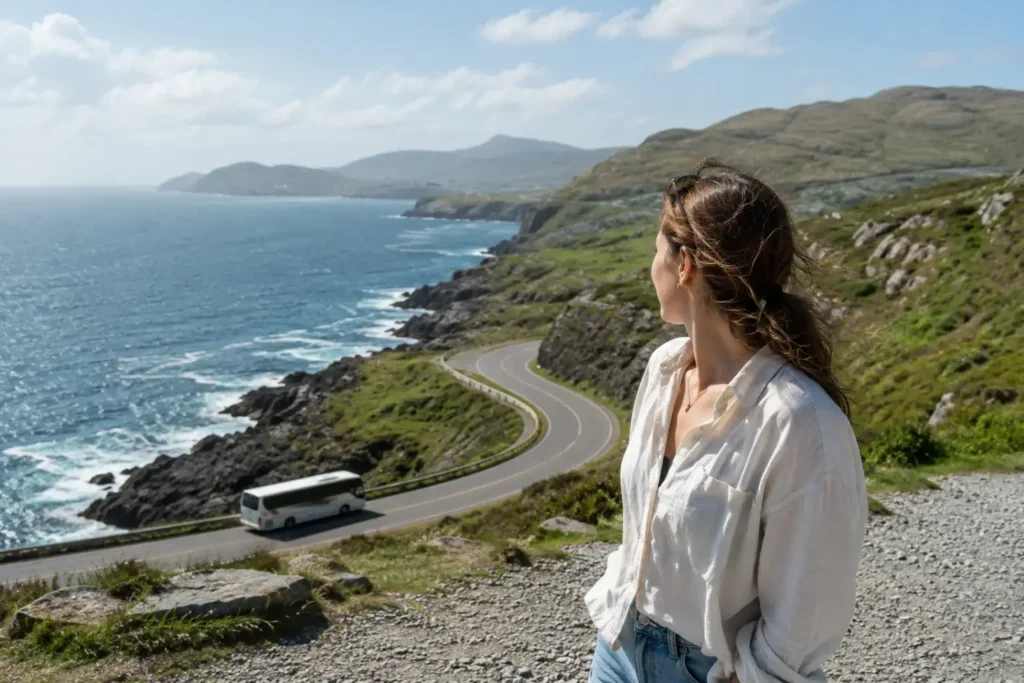
However, it is also a magnet for massive tour buses. If you drive it the wrong way, you will spend your entire afternoon backing into tiny gravel pullouts to let giant motorcoaches pass you.
| Driving Direction | Who Uses It | The Experience |
| Clockwise (Killarney to Kenmare) | Standard Tour Buses | Sticking to the inside lane, avoiding cliff edges but meeting oncoming cars. |
| Counter-Clockwise (Killarney to Killorglin) | Smart Independent Drivers | You follow the flow of major traffic, meaning you rarely face a bus head-on. |
How to Navigate the Ring Securely
Large tour buses are legally required to travel clockwise around the Ring of Kerry to avoid getting stuck against each other on the narrowest bends. Therefore, as an independent road tripper, you should drive counter-clockwise.
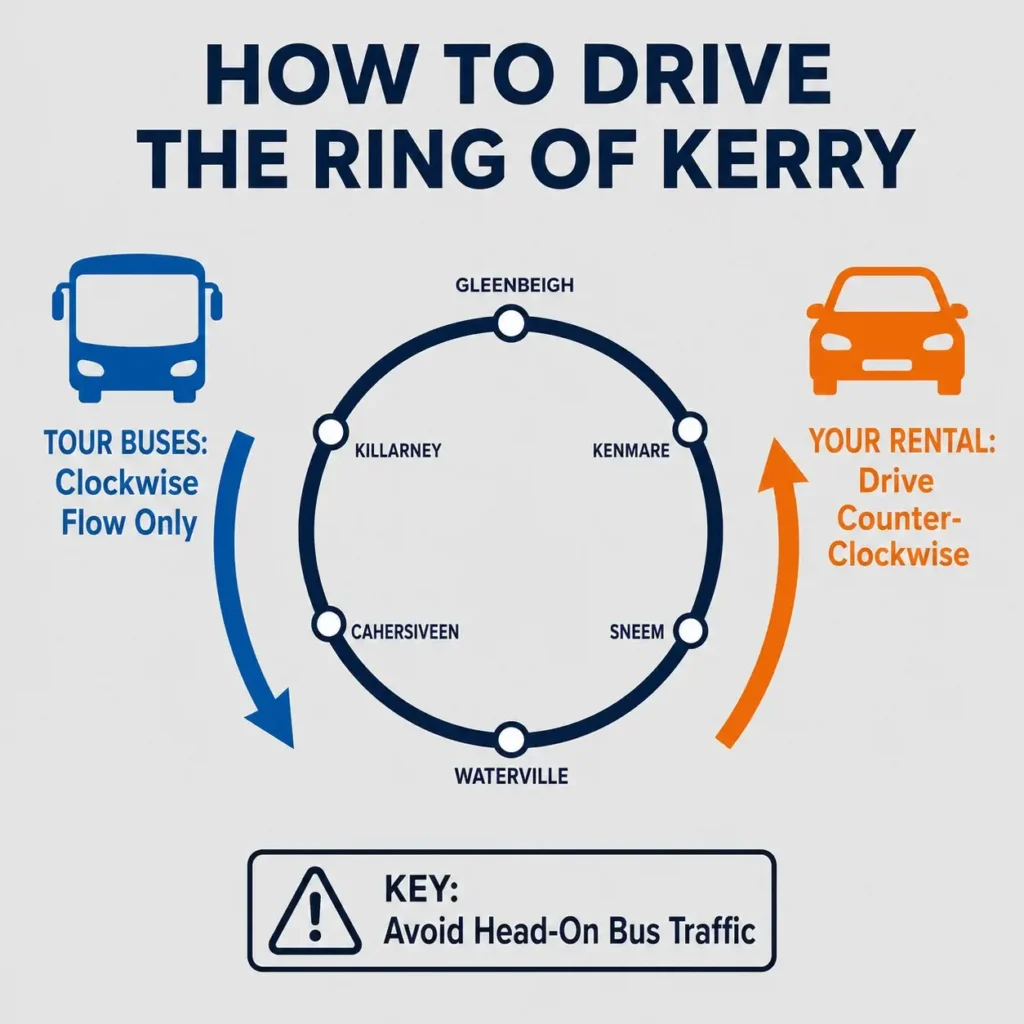
Start your journey in Killarney and head toward Killorglin first. By moving in the same direction as the buses, you will travel behind them rather than facing them head-on around terrifyingly blind coastal curves.
What to Eat Along the Way
When you pull over in the coastal village of Portmagee, skip the generic tourist cafes. Walk into a traditional local pub like The Moorings and order a steaming bowl of traditional seafood chowder. It is packed with fresh Atlantic salmon, cod, and smoked haddock, served alongside a thick slice of dense, dense Irish brown soda buttered bread. It is comfort food at its absolute finest.
4. Missing the Striking Cultural Stops Along the Routes
It is easy to get so focused on driving that you view Ireland entirely through your windshield. But the true magic of an Irish road trip happens when you turn off the ignition, step out of the vehicle, and engage with the local culture and deep history.
Stepping into Living History
Many of the most scenic driving routes pass directly by world-class historic sites that deserve hours of your time. For example, if you are driving through County Meath, you will pass near the ancient Boyne Valley.
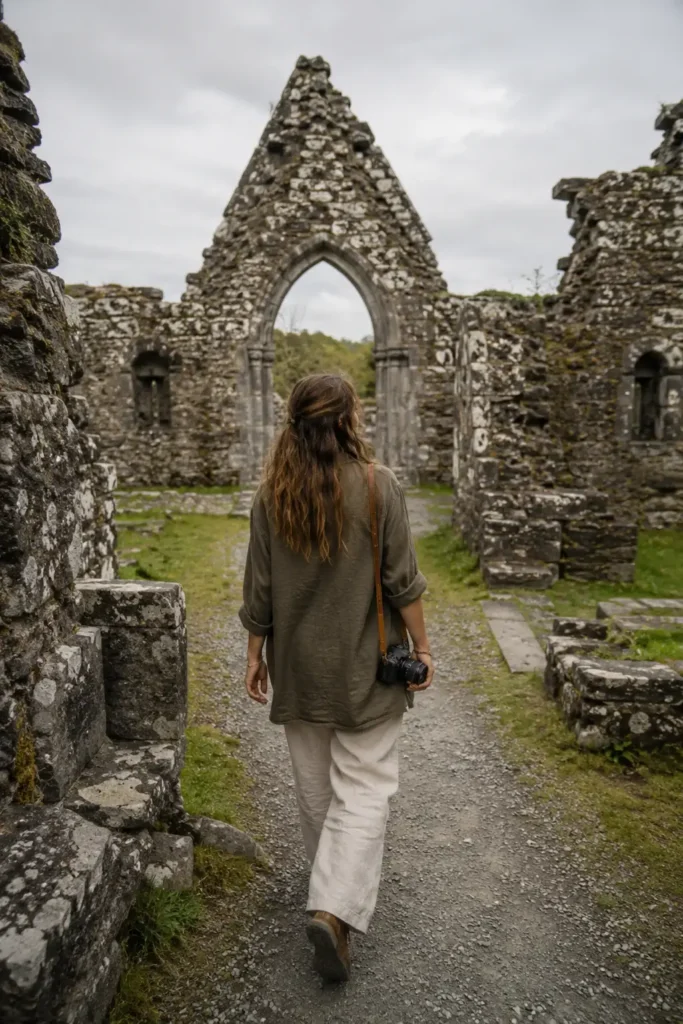
Take the time to plan stops at globally recognized monuments. You can explore archaeological wonders across the globe by looking at the UNESCO World Heritage list, which showcases protected historical gems like Brú na Bóinne and Sceilg Mhichíl so you can easily weave history into your itinerary.
Navigating the Gaeltacht Regions
As you drive through parts of County Galway, Mayo, and Donegal, you will notice road signs switching entirely into the Irish language (Gaeilge). These are the Gaeltacht regions, areas where Irish is the primary spoken language of the community.
Do not be intimidated by this. Everyone speaks English fluently, but the signs will show names like An Spidéal instead of Spiddal. Settle into a local pub here, listen to the musical cadence of the language spoken around you, and appreciate the living history of the island.
5. Driving at Night in Rural Areas
When I worked as a sightseeing guide in New York, the city never slept, and the streets were always brightly lit. Rural Ireland is the exact opposite. Once the sun dips below the Atlantic horizon, the countryside enters total, absolute darkness.
The Lack of Road Infrastructure
Outside of major towns and motorways, Irish country roads do not have overhead streetlights. The edges of the road are marked only by small reflective studs, and often, those are covered by summer overgrowth or winter mud.
Furthermore, Irish weather changes rapidly. A clear afternoon can transform into a thick, blinding wall of coastal fog or a heavy downpour within fifteen minutes.
Animal Hazards on the Road
At night, the local wildlife and farm animals become a major road hazard. Deer frequently leap out from forests in places like Killarney National Park.
More commonly, sheep that have escaped from mountainside pastures will lie directly on the asphalt because it retains the day’s residual heat. Hitting an animal can total your rental car and leave you stranded miles from the nearest town.
Emma’s Rule: Always schedule your driving so that you arrive at your evening bed and breakfast or guesthouse at least one hour before sunset. Use the dark evening hours to walk to a local pub, enjoy a pint of local stout, and chat with the residents.
6. Squeezing into the Peak Summer Season Crowds
Many first-time travelers assume that July and August are the only months worth visiting Ireland. While the summer offers long daylight hours, it also brings crushing crowds and skyrocketing prices that can ruin the independent, slow-travel vibe of a road trip.
The Shoulder Season Advantage
If you want to experience the best road trips in Ireland without bumper-to-bumper traffic, book your trip for the shoulder seasons: May and September.
- May: Offers some of the driest weather of the year, blooming yellow gorse bushes along the roadsides, and quiet viewing points.
- September: Brings warm autumn colors across the hills, cozy peat fires in pub hearths, and significantly lower car rental rates.
Protecting Your Travel Investment
No matter what time of year you choose to explore, traveling solo down rural roads means taking personal responsibility for the unexpected. Flat tires, lost bags, or sudden trip interruptions can happen to anyone.
To feel secure as you navigate these remote paths, it is a smart move to look at specialized protection options. I highly recommend researching comprehensive travel safeguards through the World Nomads Travel Insurance site, which offers flexible plans tailored specifically for independent road trippers and adventure travelers.
7. Following the Main Highways and Skipping the Smaller Loops
It is incredibly easy to get stuck on the major tourist routes like the Wild Atlantic Way and simply drive from one famous viewpoint to the next. But if you only follow the primary signs, you miss the true essence of Irish rural life.
The Magic of the Peninsulas
When you are driving the southwest coast, do not just rush down to the tip of the Dingle Peninsula or the Iveragh Peninsula. Take a detour onto the Beara Peninsula or the Sheep’s Head Peninsula. These areas receive a tiny fraction of the tourist traffic but offer scenery that is equally breathtaking, if not more wild and untouched.
How to Find Authentic Local Dining
When your stomach starts rumbling on a backroad, look for small village butcher shops and grocery stores rather than highway service stations. Walk into a local village bakery and ask for a fresh sausage roll—savory pork sausage meat wrapped in flaky, golden puff pastry.
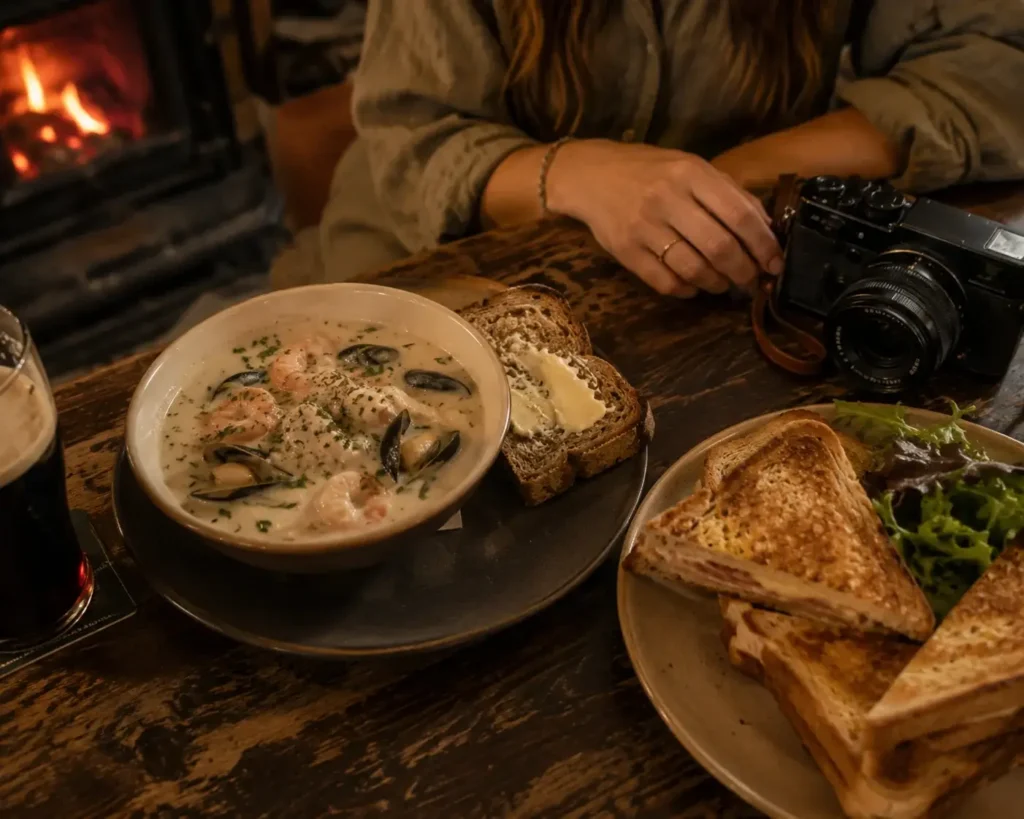
For a true local lunch, stop at a small village pub and order a toasted special. This is a classic Irish pub staple consisting of cheddar cheese, thick ham, tomatoes, and onions toasted crispy on sliced white bread, served with a side of potato crisps. It is simple, affordable, and completely authentic.
8. Letting the Fear of Left-Side Driving Hold You Back
The thought of sitting on the opposite side of the vehicle and driving on the left side of the road stops many aspiring travelers from booking their dream Irish road trip. It can feel completely terrifying if you have only ever driven on the right.
Overcoming the Mental Block
Your mind adapts to left-side driving much faster than you think. When you pull out of the airport rental lot, you will naturally follow the flow of the cars ahead of you. The most critical moments to pay close attention are when you are turning right across traffic at an intersection, or when you wake up in the morning and pull out of a quiet hotel parking lot with no other cars around to guide you.
Mastering the Irish Roundabout
Roundabouts are everywhere in Ireland, and they are excellent for traffic flow once you understand the simple rules.
- Traffic already inside the roundabout always has the absolute right of way.
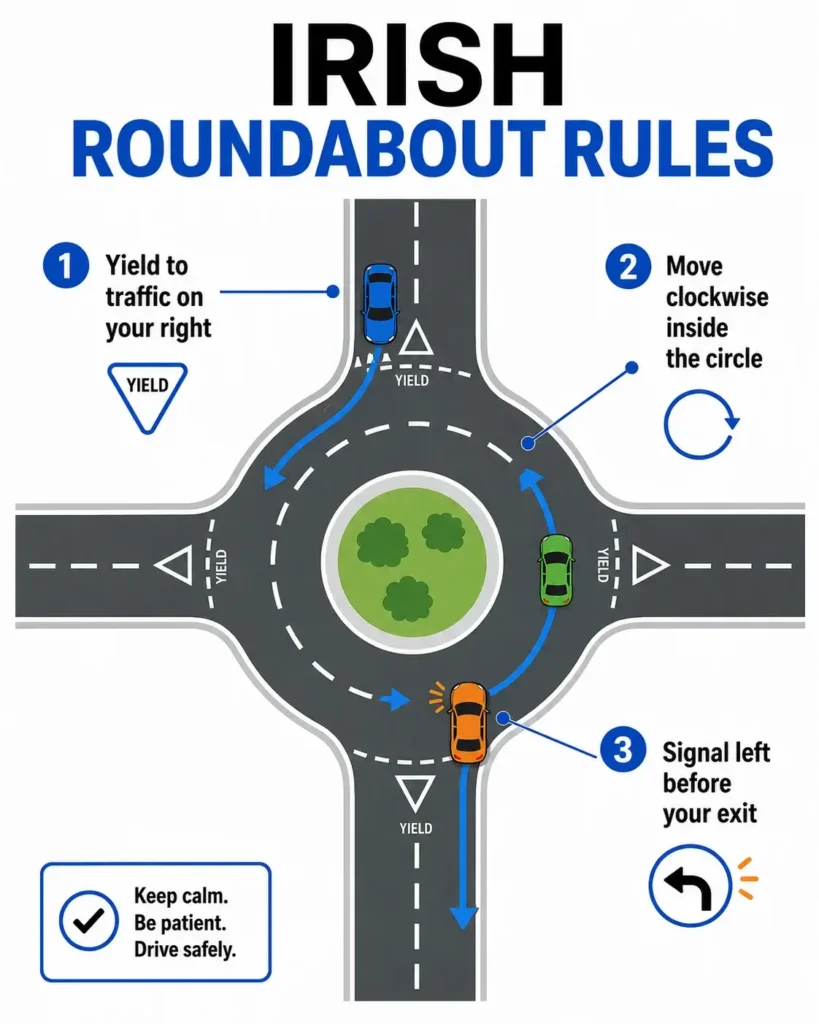
- You must always enter the roundabout by turning to the left and moving in a clockwise direction.
- If you miss your specific exit, do not panic or slam on your brakes. Simply stay in the circle and drive around it a second time until your exit comes up again.
To keep yourself physically ready for the mental focus required on these roads, prioritize your basic well-being. Before you jet off, check out the medical prep guidelines on the CDC Travelers’ Health portal, which outlines essential health tips and wellness reminders for global travelers to ensure you stay sharp behind the wheel.
The Open Road is Waiting For You
Leaving my comfortable office job in New York to pursue a life of travel was terrifying. I had to face a massive wave of uncertainty. But just like navigating a narrow, winding Irish coastal road, you build your confidence by taking action, staying alert, and moving forward step by step.
The mistakes, the missed turns, and the unexpected sheep blockades are not obstacles to your journey—they are the journey. They are the stories you will tell for the rest of your life.
Pack your bags, reserve that automatic rental car, and get ready to experience the best road trips in Ireland. The country lanes, the warm fires, and the incredible coastal views are waiting to welcome you.