The Best Hot Springs in Europe: A Calm First-Timer’s Guide

The first time I lowered myself into naturally warm mineral water on a cold day, my shoulders dropped about two inches. I hadn’t realized I’d been holding them up near my ears for weeks. That feeling, that quiet exhale, is the whole reason I keep steering people toward thermal water when they ask me where to go in Europe.
Here’s the thing though. A lot of the advice out there treats hot springs like items on a shopping list. Go here, snap the photo, move on. That’s not how these places want to be experienced, and honestly it’s a great way to waste money and end up disappointed. So I want to do something different with you. I want to walk you through the best hot springs and thermal baths in Europe the way I’d explain them to a friend who’s nervous, curious, and traveling on a real budget. What they cost. What surprised me. What I’d skip. And the little etiquette things nobody warns you about until you’re standing there, wrapped in a towel, wondering if you did something wrong.
Let’s take the fear out of it, one warm pool at a time.
First, Let’s Clear Up What You’re Actually Choosing Between
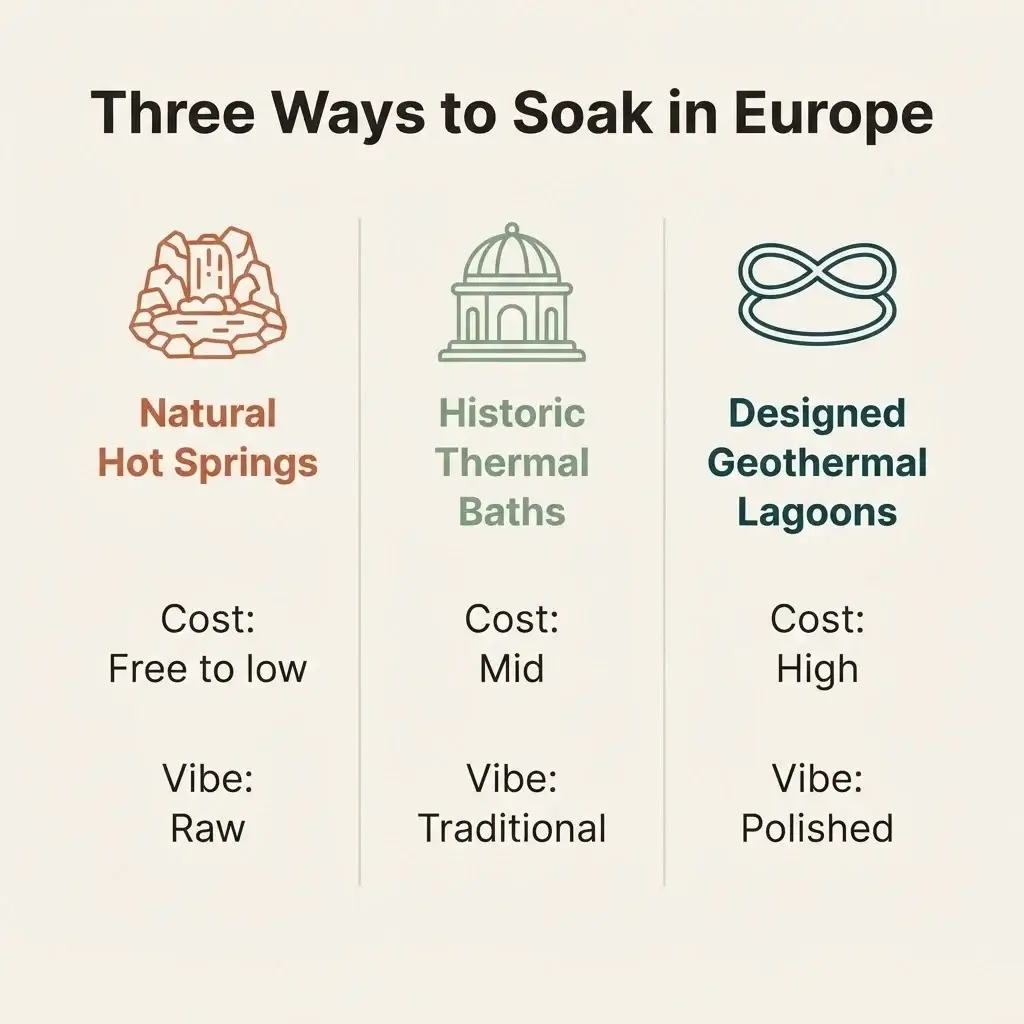
When people say “hot springs,” they’re usually picturing three very different experiences, and knowing which one you want saves you a lot of grief.
There are natural hot springs, where geothermal water bubbles up outdoors and you soak in a river, a rock pool, or a waterfall. These are often free or nearly free, wonderfully raw, and short on facilities. Then there are historic thermal baths, the grand old bathhouses, many of them a century or two old, with tiled pools, saunas, and a whole culture around them. And finally there are designed geothermal lagoons, the modern, photogenic, spa-resort style places that are gorgeous and pricey and heavily managed.
None of these is “better.” They’re just different moods. A free Tuscan waterfall and a sleek Icelandic lagoon are both wonderful, but they ask different things of you, cost wildly different amounts, and reward different kinds of travelers.
Keep that in the back of your mind as we go, because I’ll tell you honestly which is which.
Budapest: The Easiest Place in Europe to Fall in Love With Bathing
If you’re new to all of this and you want one city that makes thermal bathing feel welcoming, go to Budapest. The whole city sits on hot springs, bathing is woven into daily local life, and you can do it well without spending a fortune.
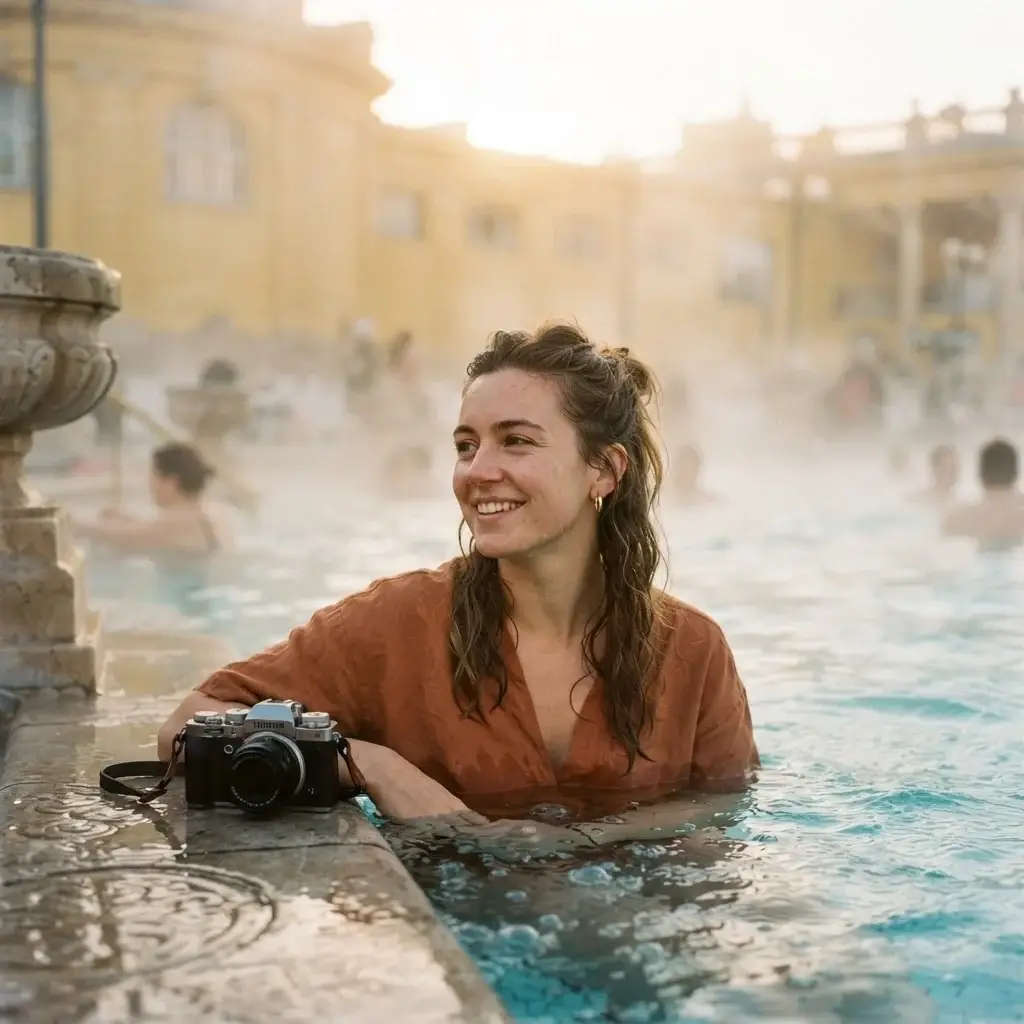
The famous one is Széchenyi, the enormous yellow palace of a bathhouse with steamy outdoor pools where locals play chess in the water. It’s the crowd-pleaser, and yes, it earns the hype, especially in winter when steam rises off the surface into the cold air. A full-day ticket runs roughly €46 to €56 depending on the day of the week, and you can check the current tiers and the early-morning options straight from the official Széchenyi pricing page so you’re not caught off guard at the counter. My honest tip: go right at opening, around 6am if you can manage it, or aim for a weekday. By late morning the outdoor pools fill up and the magic thins out a little.
But here’s the one most first-timers overlook, and it’s the one I’d actually send a friend to first. Rudas is a genuine Ottoman-era Turkish bath, small and atmospheric, with an octagonal domed pool that’s over 400 years old. It has single-sex days midweek and mixed days on weekends, plus a rooftop hot tub with a view over the Danube. Because the vibe is more traditional, the etiquette matters more, so it’s worth glancing at the official Rudas bath site before you go to see which days are men-only, women-only, or mixed. On single-sex days in the historic section, swimwear is sometimes optional, which brings me to the thing everyone’s secretly wondering about.
The naked question. In Budapest’s main pools you wear a swimsuit, always. The nudity you may have heard about is limited to certain saunas or single-sex historic sections, and it’s clearly signposted. Nobody is going to spring it on you. When you’re unsure, keep your suit on and watch what regulars do. That rule will carry you through almost every bath in Europe.
What to eat after: a bowl of gulyás (goulash) somewhere unfussy, and if it’s cold, a shot of pálinka to warm up. You’ll have earned it.
Iceland: Worth It, But Book Before You Fly
Iceland is where the modern geothermal lagoon reaches full drama, milky-blue water, black lava all around, sometimes snow falling on your head while your body stays warm. It is genuinely special. It is also the category where people most often overpay or, worse, show up and can’t get in.
The Blue Lagoon is the icon. It’s large, polished, close to the airport, and it does not do walk-ins, so pre-booking is essential. Day tickets start around USD 96 for the Comfort entry and about USD 120 for Premium, and you reserve a specific time slot directly through the Blue Lagoon’s official day-visit page. A lot of travelers book it as their first or last stop because it sits between Keflavík airport and Reykjavík, which is genuinely smart planning.
If the Blue Lagoon feels too big or too expensive, I’d point you toward Sky Lagoon instead. It’s closer to Reykjavík, it has an ocean-edge infinity pool that’s honestly stunning at sunset, and every ticket includes a seven-step Skjól ritual: sauna, cold plunge, steam, the works. Packages start around USD 125 and you can compare them on the Sky Lagoon packages page. For a solo traveler, I actually think Sky Lagoon feels calmer and easier to enjoy alone.
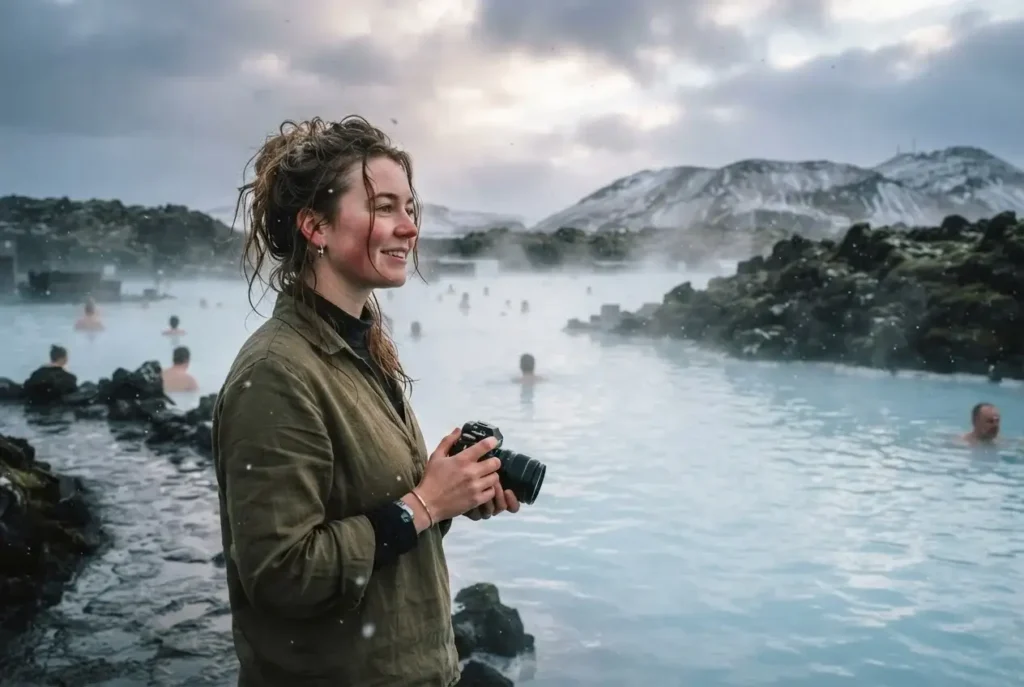
One etiquette rule Iceland takes seriously: you shower fully, without a swimsuit, before entering any pool. This is normal, expected, and locals will not be shy about it if you skip it. There are private stalls at both lagoons if you’re self-conscious. Also, take off silver jewelry, the mineral-rich water can tarnish it.
Turkey: The Otherworldly One, With a Catch
Pamukkale is the place that stops your scroll: brilliant white terraces of mineral rock stepping down a hillside, filled with shallow turquoise pools. It’s called the “cotton castle,” and it shares a spot on UNESCO’s list, which you can read about on the official Hierapolis-Pamukkale World Heritage listing, because right above the terraces sit the ruins of an entire ancient Roman spa city.
Now the honest part. Pamukkale is beautiful and it is busy, and the terraces are protected, so you walk barefoot and can only wade in designated sections. The entrance ticket, which covers both the terraces and Hierapolis, runs around €30, and gates open about 8am (earlier and later in summer). If you want to actually swim among sunken Roman columns, that’s the separate Antique Pool, sometimes called Cleopatra’s Pool, which costs extra.
Is it worth it? Yes, if you go early or late in the day to dodge the tour-bus crush and the harsh midday light, and if you treat Hierapolis as half the reason you came rather than an afterthought. If your only goal is the exact Instagram shot in a crowd, you may leave a little let down. Go for the strangeness of the landscape and the layers of history, and it delivers.
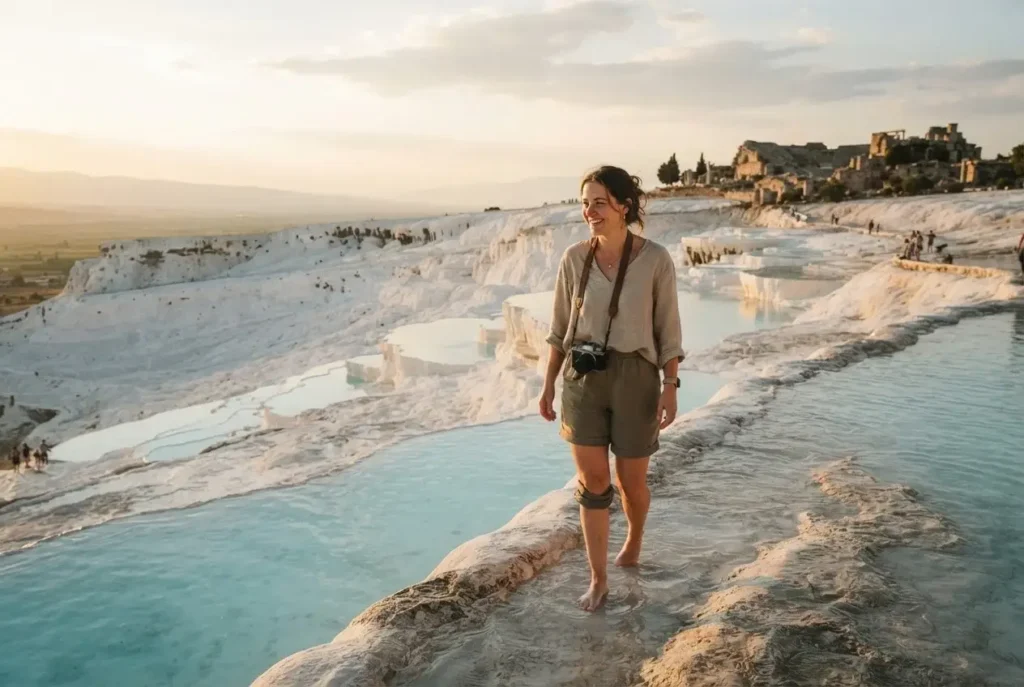
Barefoot warning: the travertine is slippery and can be sharp in spots. Go slow. This is not the place to rush.
Italy: The Free One That Feels Like a Secret (It Isn’t, But It Feels That Way)
If your budget is tight and your heart wants something raw and beautiful, Tuscany has an answer. At the Cascate del Mulino near Saturnia, warm sulphur water tumbles over pale limestone terraces into natural pools, and it is completely free, open around the clock, all year. You pay only for parking. The regional tourism board describes the falls and access on the Visit Tuscany page for Cascate del Mulino, which is a reassuring read before you go.
I love this kind of place because it strips bathing back to its simplest form. No lockers, no tiered tickets, just warm water and the Tuscan hills. The water hovers around a cozy 37 degrees Celsius even in winter, which is exactly when I’d tell you to go, when it’s cool out and the steam rises and the crowds thin.
A few honest logistics, because “free” doesn’t mean “effortless.” Facilities are minimal, so bring your own everything: water, a towel, sturdy sandals for the slippery rock, and a bag for wet clothes. The sulphur smell is real and lingers on swimwear, so don’t wear your favorite suit. Sunrise is genuinely worth setting an alarm for. And please, treat the site gently. It stays free and open because visitors respect it.
What to eat nearby: this is Maremma country, so wild boar pasta (pici al cinghiale) and a glass of local red is the reward I’d chase after a soak.
England: Know the Difference Before You Book
Here’s a mix-up I want to save you from, because I see it constantly. In the city of Bath, there are the Roman Baths and there is Thermae Bath Spa, and they are not the same thing.
The Roman Baths are a spectacular, beautifully preserved ancient site, and they’re a museum. You cannot bathe in them. The water there isn’t safe for swimming, and the whole point is to walk through 2,000 years of history. If that’s what you want, and it’s genuinely moving, you can plan your visit through the official Roman Baths visiting page. Just go in knowing you’ll be looking, not soaking.
To actually get into Bath’s warm mineral water, you go next door to Thermae Bath Spa, a modern building with an open-air rooftop pool that looks over the city’s honey-colored skyline. Steaming water, historic view, and no confusion once you know which door is which. Do the museum for the history, do the spa for the soak, and if you have the time, do both. They tell two halves of the same very old story.
The Grand Spa Towns: Slow Travel at Its Most Elegant
If Budapest is the friendly introduction, the historic spa towns of central Europe are the deep end of the tradition. In the loveliest way. Places like Karlovy Vary and Mariánské Lázně in Czechia, Baden-Baden in Germany, Vichy in France, and Spa in Belgium grew up over centuries around the idea of ‘taking the cure.’ Eleven of them together form a single UNESCO World Heritage Site called the Great Spa Towns of Europe, and reading the UNESCO listing for the Great Spa Towns is a lovely way to understand why they matter beyond just the water.
Baden-Baden is my top pick if you want to feel that grandeur without needing German. You’ve got two very different experiences side by side. Caracalla is the modern, swimsuit-on, family-friendly thermal complex with indoor and outdoor pools. Friedrichsbad is the historic Roman-Irish bath, a hushed, ceremonial 17-step ritual through hot rooms, steam, and pools. Admission to Friedrichsbad runs about €39. I have to be straight with you about Friedrichsbad, because this is exactly the kind of thing that ambushes unprepared travelers: it is textile-free. No swimsuit, and on many days the bathing areas are mixed. It’s deeply relaxing and completely non-sexual, everyone is quietly doing their own thing, but if that’s not for you, Caracalla next door is the swimsuit-friendly alternative and you lose none of the warm water. Pick the door that fits your comfort level and don’t let anyone shame you either way.
These towns reward the slow-travel mindset more than anywhere else on this list. Come for two nights, walk the colonnades, drink the mineral water from the springs (an acquired taste, I’ll warn you), and let the pace of another century wash over you.
How to Choose the Right One for You
Let me make this simple, because comparing across a whole continent gets overwhelming fast.
If you’re brand new and want warmth, ease, and value, start in Budapest. If you want raw, free, and beautiful, go to Saturnia in Tuscany. If you want the dreamy, once-you-see-it-you-get-it lagoon experience and you’ve budgeted for it, Iceland is worth every króna. Just book ahead. If you’re chasing something otherworldly and don’t mind crowds, Pamukkale delivers if you go early. And if you want elegance, history, and the full old-world ritual, the grand spa towns and Baden-Baden are calling.
A gentle nudge, especially if you’re traveling solo: bathing places are some of the most comfortable spaces in the world to be alone. Nobody’s watching you. Everyone’s just soaking. I’ve found thermal baths to be one of the easiest, least intimidating solo activities there is, which is part of why I recommend them so warmly to first-timers who are nervous about traveling on their own.
A Few Rules That Work Almost Everywhere
Shower before you enter, properly, it’s basic courtesy and often required. Keep your voice down; these are calm spaces, not pool parties. When in doubt about swimwear, keep it on and watch the locals. Take off silver jewelry near mineral-rich water. Stay hydrated, hot water plus a long soak can leave you lightheaded, so drink water and step out to cool down. And never bathe in a natural spring if signs say it’s off-limits or if the terrain is protected; those rules are why these places still exist for us to enjoy.
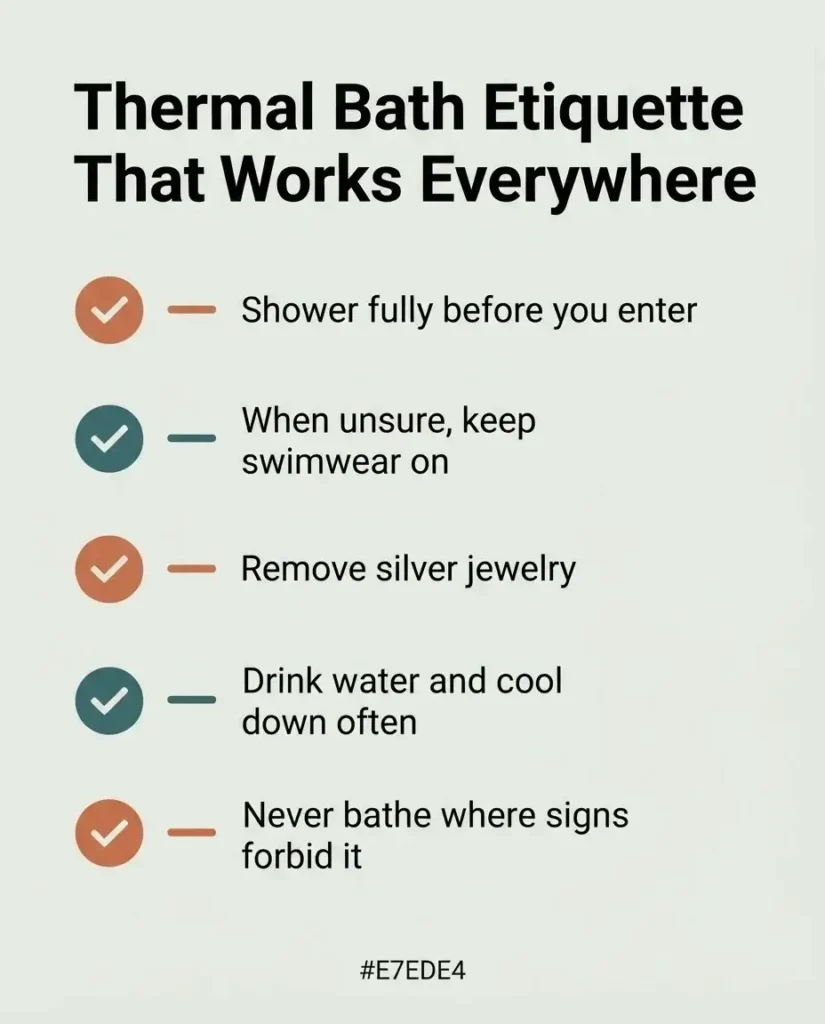
Master those, and you can walk into almost any bath in Europe like you’ve done it a hundred times.
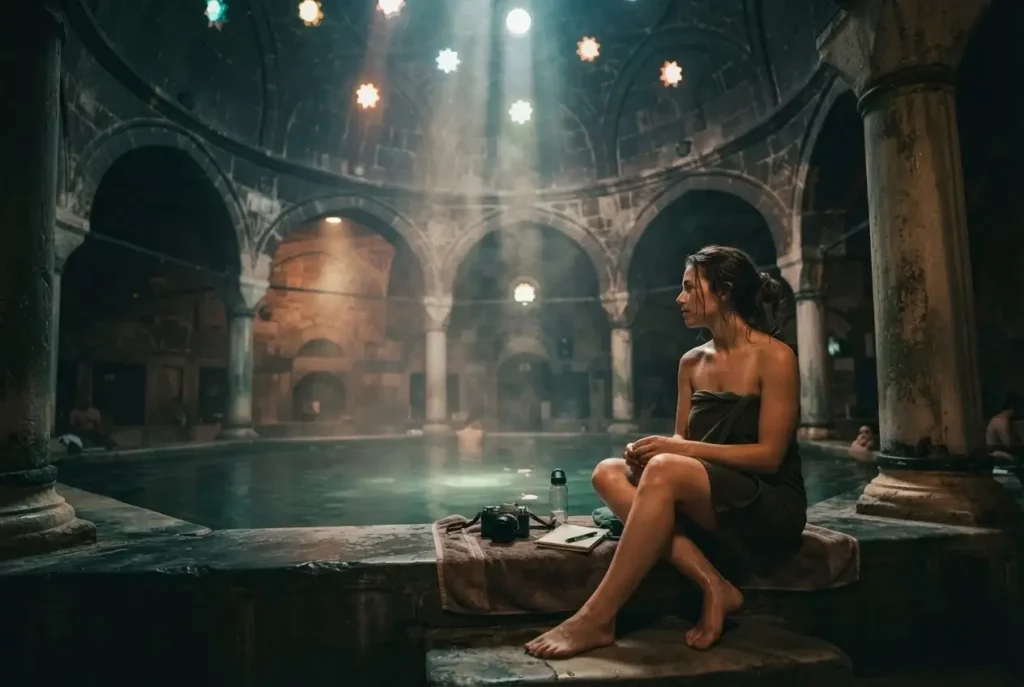
The truth I keep coming back to is that warm water has a way of dissolving the very hesitations that keep people from traveling in the first place. You sink in, your shoulders drop, and the trip stops being a to-do list and starts being an actual experience. That’s the whole point. So pick one, book what needs booking, pack a towel and a little courage, and go find your quiet exhale. The water will be waiting.